Olive oil is more than just a simple cooking fat; it's a foundational ingredient that can transform a good meal into a great one. While most home cooks use it for a basic sauté, its true potential lies in a wide array of culinary techniques that elevate flavor, improve texture, and add a professional touch to your dishes. This guide moves beyond the obvious, exploring seven specific and actionable olive oil uses for cooking that will unlock new levels of creativity in your kitchen.
We will not just list ideas; we will provide practical implementation details. You'll learn how to master everything from high-heat applications by understanding smoke points to the delicate art of finishing dishes with a drizzle of extra virgin olive oil. We will also cover the secrets to creating stable emulsifications, crafting flavorful marinades, and even cooking low-and-slow with the confit method.
By the end of this article, you will have a clear roadmap for using this pantry staple in ways you may not have considered. You'll gain a deeper appreciation for this liquid gold and see how a single bottle can become your most versatile culinary tool. Let's explore how to make olive oil a true superstar in your cooking.
1. Understanding Olive Oil Smoke Points and Heat Application
One of the most foundational, yet often misunderstood, aspects of using olive oil for cooking is mastering its relationship with heat. The "smoke point" is the critical temperature where an oil stops shimmering and starts to break down, producing a visible, bluish smoke. Pushing an oil past this point not only creates an acrid, burnt flavor but can also release free radicals and harmful compounds.
Successfully using olive oil hinges on matching the right grade to your cooking method. Not all olive oils are created equal in their heat tolerance, which is why a single bottle might not be suitable for every kitchen task.
Matching Oil Grade to Cooking Temperature
The key difference lies in the level of refinement. Extra virgin olive oil (EVOO), prized for its robust flavor and high antioxidant content, is the least refined and thus has a lower smoke point. It's perfect for sautéing vegetables over medium heat or poaching fish, where the temperature remains controlled. Its flavor is a primary feature, making it ideal for applications where you want its taste to shine.
Conversely, light or refined olive oils have been processed to remove impurities, resulting in a more neutral flavor, lighter color, and a significantly higher smoke point. This makes them the superior choice for high-heat methods like searing, roasting, or stir-frying, where you need an oil that can withstand intense temperatures without breaking down.
Pro Tip: Professional kitchens, from Mediterranean restaurants to shows like America's Test Kitchen, often keep multiple grades of olive oil on hand. They might use a robust EVOO for finishing a pasta dish but switch to a refined olive oil for pan-searing a steak, ensuring optimal results for both flavor and performance.
For a quick reference, the infographic below outlines the typical smoke points for common olive oil varieties.
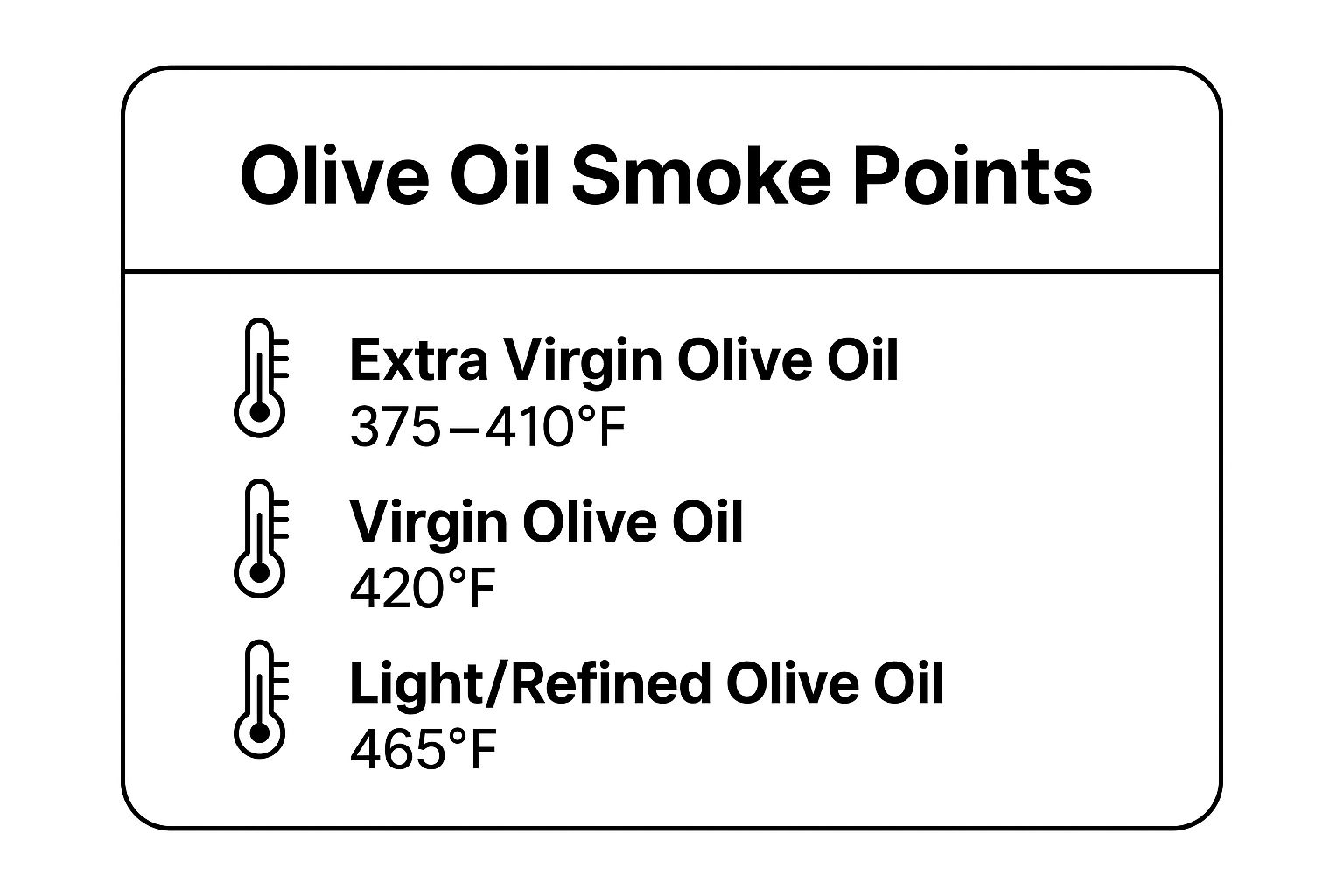
This visual guide clearly shows how refined olive oil can handle nearly 100°F more heat than some extra virgin oils, a crucial difference when deep-frying or stir-frying. By understanding this hierarchy, you can confidently select the right oil, preserve its flavor integrity, and make your cooking safer and more delicious.
2. The Art of Finishing Dishes with Extra Virgin Olive Oil
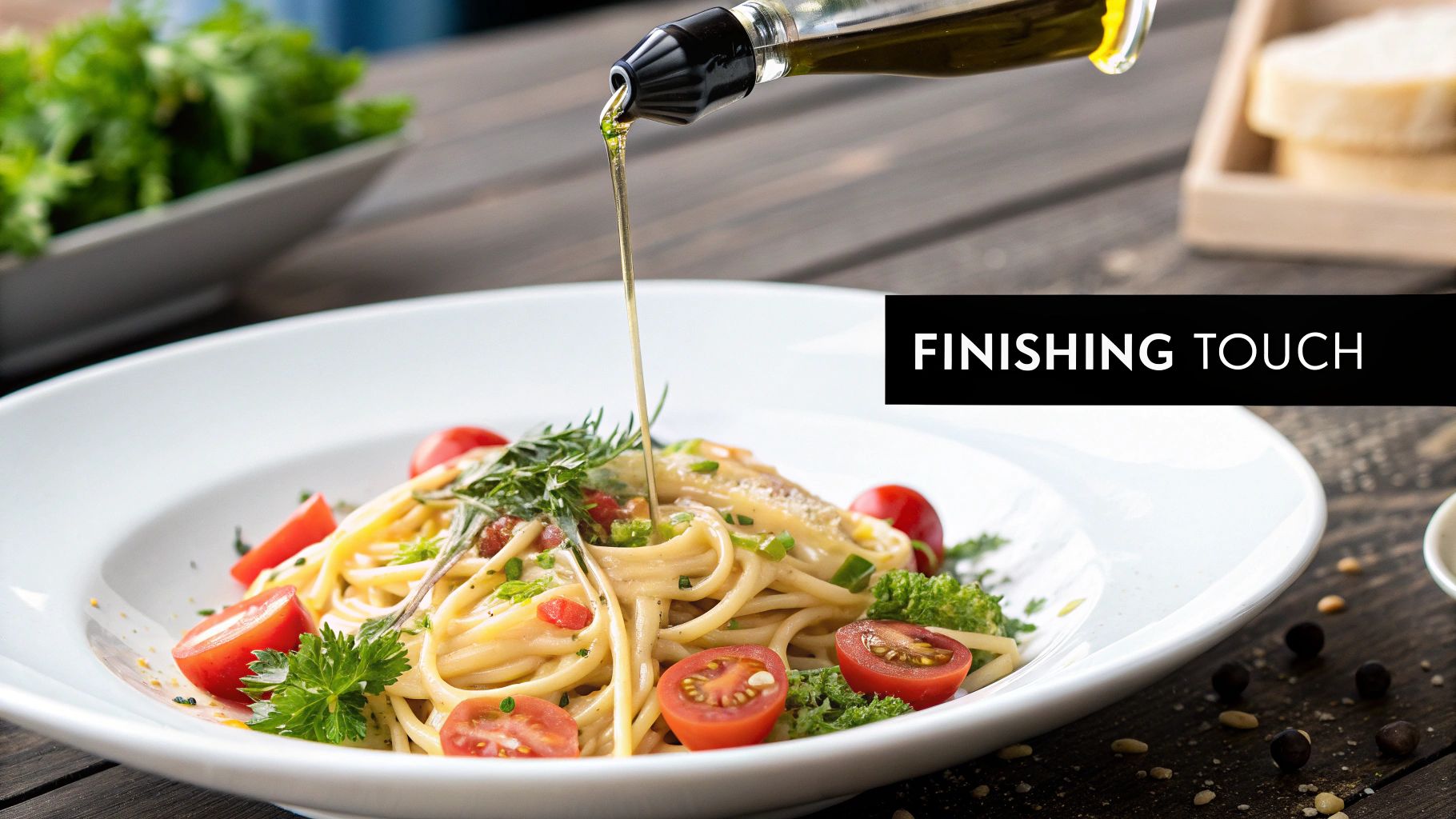
While many cooks associate olive oil with the start of a recipe, one of its most powerful applications happens at the very end. Finishing is a classic technique where a high-quality extra virgin olive oil is drizzled over a dish just before serving. This simple step elevates the meal by introducing the oil’s complex, raw flavors and aromas, which would be diminished or lost entirely when exposed to heat.
This method is a cornerstone of Mediterranean cuisine, used to add a final layer of richness, a peppery bite, or a fruity fragrance. It’s a testament to the idea that some of the best olive oil uses for cooking involve no cooking at all, but rather a thoughtful final touch that transforms a good dish into a great one.
Matching Oil to the Dish
The key to successful finishing is pairing the flavor profile of the extra virgin olive oil with the components of the dish. A robust, peppery Tuscan olive oil, for example, is brilliant when drizzled over a thick vegetable soup like minestrone or a perfectly grilled steak, cutting through the richness. In contrast, a milder, buttery olive oil from Liguria might be better suited for delicate steamed fish or a simple Caprese salad.
Renowned chefs like Jamie Oliver and Lidia Bastianich have popularized this practice, often instructing home cooks to finish pasta, risotto, or roasted vegetables with a generous "glug" of their best EVOO. This isn't just for show; it's a deliberate flavor-building step.
Pro Tip: When finishing a dish, taste your olive oil on its own first. Dip a small piece of bread or a spoon into the oil to understand its specific notes: Is it grassy, spicy, fruity, or bitter? This knowledge will help you pair it more effectively, ensuring it complements rather than overwhelms your food. Michelin-starred restaurants often use specific single-estate oils as a final flourish, treating it like a fine wine.
For best results, aim for about one to two teaspoons per individual serving, drizzled in a gentle circular motion for even distribution. Serve the dish immediately to capture the oil’s fresh aroma and vibrant taste at their peak. By embracing this technique, you can add a professional, flavor-forward dimension to your everyday meals.
3. Creating Perfect Marinades with Olive Oil
Olive oil is an exceptional base for marinades, serving as a powerful carrier for flavors and a protective agent against high heat. It works by emulsifying with acidic ingredients and helping fat-soluble compounds in herbs and spices penetrate the surface of meats and vegetables. This dual action ensures ingredients are infused with flavor while retaining their natural moisture during cooking.
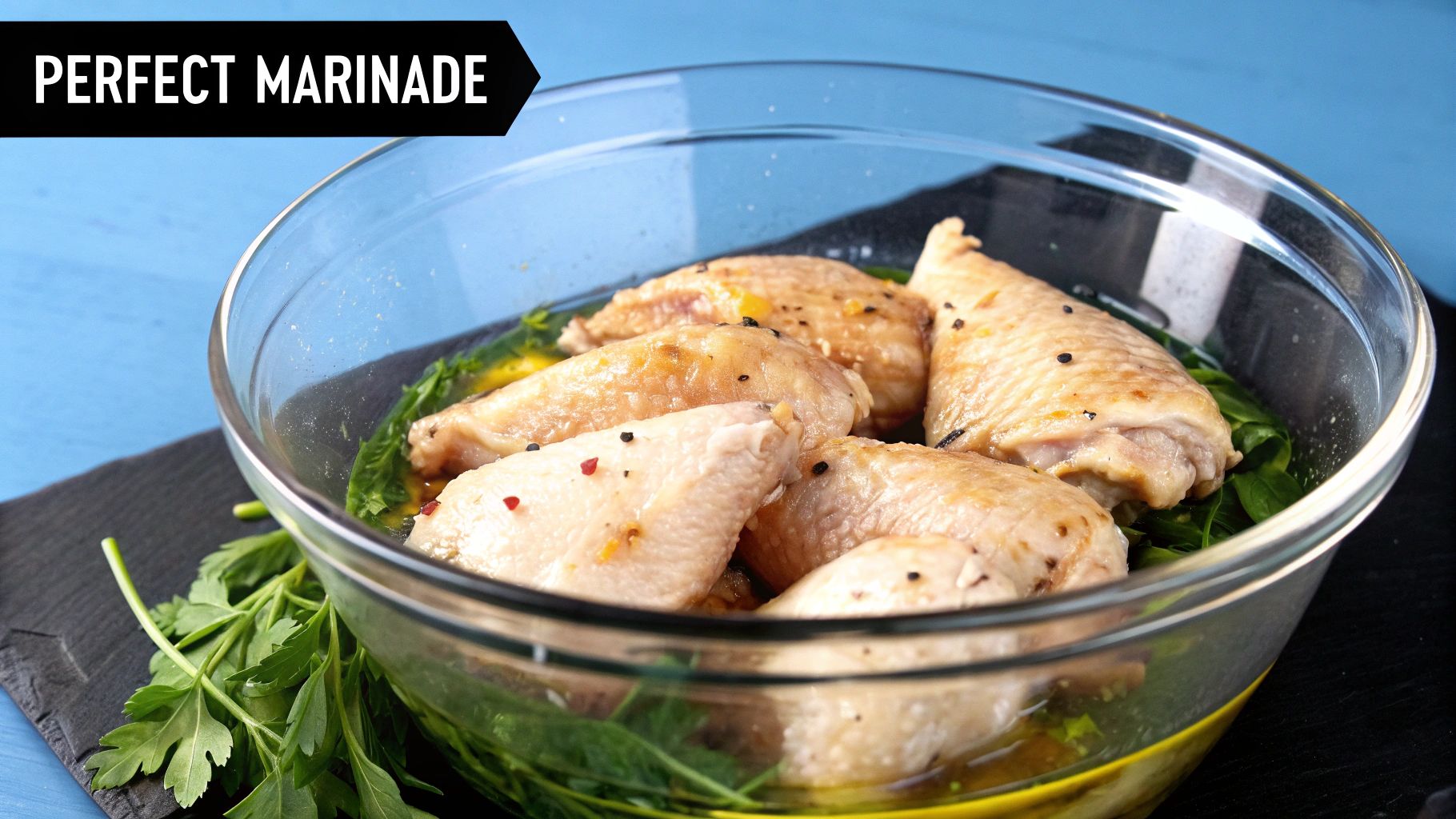
The monounsaturated fats in olive oil don't just add richness; they help create a barrier that prevents proteins from drying out. This makes it one of the most effective and classic olive oil uses for cooking, especially for grilling or roasting.
Matching Marinade Components to Your Dish
The success of a marinade lies in balancing its core components: fat (olive oil), acid (lemon juice, vinegar), and aromatics (herbs, spices). Extra virgin olive oil (EVOO) is the ideal choice here, as its robust, fruity, and peppery notes become an integral part of the final flavor profile.
For instance, a classic Greek chicken souvlaki marinade relies on the trinity of EVOO, fresh lemon juice, and oregano to both tenderize and flavor the meat. Similarly, a Spanish-style pork tenderloin achieves its characteristic smoky depth from a marinade of olive oil, smoked paprika, and garlic. Mediterranean grilled vegetables are transformed when tossed in an olive oil and balsamic vinegar marinade before hitting the grill.
Pro Tip: When preparing a marinade, always reserve a small, untouched portion before adding the raw protein. This separate batch can be safely used for basting during the cooking process or as a finishing sauce, avoiding any cross-contamination while layering on fresh, vibrant flavor.
To get the best results, use approximately two to three tablespoons of olive oil per pound of protein. Allow ingredients to marinate for at least 30 minutes to absorb the flavors, extending up to 24 hours for tougher cuts of meat to maximize the tenderizing effect. Just be sure to pat the protein dry before searing to prevent flare-ups and achieve a perfect crust.
4. Mastering Olive Oil Confit Cooking
A classic technique with roots in traditional French preservation, confit involves slowly cooking an ingredient while it's completely submerged in fat. While historically done with animal fats, using olive oil for this method elevates it, imparting nuanced flavor while creating an exceptionally tender texture. The food is gently poached at a very low temperature, typically between 160-180°F, allowing it to cook evenly without browning or becoming tough.
This slow-and-low approach breaks down connective tissues in proteins and softens vegetables until they are meltingly soft and infused with flavor. It is one of the most transformative olive oil uses for cooking, turning simple ingredients into luxurious components for a wide range of dishes.
Infusing Flavor and Tenderness with Olive Oil
The key to successful olive oil confit is precise temperature control. Unlike frying or searing, the goal is to gently poach, not sizzle. Extra virgin olive oil is an excellent choice for this application because the low cooking temperature remains well below its smoke point, preserving its delicate flavors and antioxidant properties. The oil not only acts as the cooking medium but also infuses the food with its character.
This method works wonders on everything from proteins to alliums. A classic example is garlic confit, where whole cloves become soft, sweet, and spreadable, perfect for smearing on toast or whisking into dressings. Similarly, salmon confit results in a silky, flaky texture that is impossible to achieve with high-heat methods.
Pro Tip: As championed by chefs like Thomas Keller, the leftover olive oil from the confit process is a valuable ingredient. After cooking, strain the oil to remove any solids and store it in the refrigerator. This infused oil, now packed with flavor from garlic, herbs, or spices, is perfect for making vinaigrettes, sautéing vegetables, or using as a finishing drizzle.
To get started, simply place your main ingredient, such as cherry tomatoes or fish fillets, in a small, oven-safe pot. Add aromatics like thyme, rosemary, or chili flakes, then pour in enough olive oil to cover everything completely. Cook in a low oven or on a stovetop with a thermometer to maintain the target temperature until tender. The result is a testament to how low heat and quality olive oil can create unparalleled depth of flavor and texture.
5. Olive Oil Emulsification Techniques
One of the most transformative olive oil uses for cooking is harnessing its ability to create emulsions, the magical process of blending oil and a water-based liquid like vinegar or lemon juice into a stable, creamy mixture. An emulsion breaks the oil into microscopic droplets, suspending them within the other liquid to create velvety textures and cohesive flavors. This technique is the foundation of countless dressings, sauces, and condiments.
Successfully creating an emulsion relies on a simple principle: gradual incorporation and constant agitation. Whether you're whisking by hand or using a blender, the key is to add the olive oil slowly, allowing it to disperse evenly without separating. This process elevates basic ingredients into sophisticated culinary creations.
Creating Stable and Flavorful Emulsions
The choice of olive oil significantly impacts the final result. A robust, peppery extra virgin olive oil (EVOO) will impart a bold, distinct flavor, making it perfect for a classic Caesar dressing or a rustic aioli where the oil's character is a central feature. For subtler applications, like a delicate lemon vinaigrette or certain mayonnaise variations, a milder olive oil might be preferred to let other ingredients shine.
The technique is crucial for stability. Start by vigorously whisking your base (e.g., lemon juice, egg yolk, or Dijon mustard), then add the olive oil literally drop by drop. Once the mixture begins to thicken and emulsify, you can increase the addition to a very thin, steady stream. This careful process, celebrated in French culinary schools and Mediterranean home kitchens alike, prevents the emulsion from "breaking" or separating.
Pro Tip: Many home cooks are intimidated by emulsification, but a simple trick can save a broken sauce. If your vinaigrette or aioli separates, start over in a clean bowl with a teaspoon of mustard or a fresh egg yolk. Whisk it well, then slowly drizzle the broken mixture back in while whisking constantly. This will re-emulsify the sauce, saving your ingredients and your dish.
For a visual demonstration of how to create a perfect vinaigrette, an essential olive oil emulsion, check out the video below.
Mastering this technique unlocks a new level of control in your kitchen, allowing you to move beyond store-bought dressings and create fresh, flavorful sauces tailored perfectly to your taste.
6. Seasoning and Maintaining Cast Iron with Olive Oil
A well-seasoned cast iron skillet is the cornerstone of many kitchens, and olive oil can be a key player in creating and maintaining its coveted non-stick surface. Seasoning is the process of polymerization, where oil is baked onto the pan, forming a hard, protective layer. When heated, the fatty acids in the oil bond with the iron, creating a natural, slick coating that prevents rust and helps food release easily.
This technique is one of the most practical olive oil uses for cooking, transforming a basic pan into a durable, high-performance tool. While a variety of fats can be used, refined olive oil offers a readily available and effective option for this essential kitchen ritual, valued by everyone from outdoor cooking enthusiasts to professional chefs.
Choosing the Right Olive Oil for Seasoning
The success of your seasoning depends entirely on using the correct type of olive oil. Extra virgin olive oil (EVOO) should be avoided for this process. Its low smoke point and flavorful, unrefined particles can result in a sticky, uneven, and sometimes rancid coating that doesn't fully polymerize.
Instead, opt for a light or refined olive oil. These oils have a higher smoke point and a neutral profile, which is ideal for creating a tough, durable seasoning layer. The refinement process removes the very components that make EVOO a poor choice, ensuring the oil bakes cleanly onto the cast iron without imparting unwanted flavors or a gummy texture.
Pro Tip: Cast iron manufacturers like Lodge often recommend using a neutral vegetable oil, and refined olive oil fits this profile perfectly. Southern cooking traditions, which rely heavily on cast iron, have long understood that a thin layer of the right oil, reapplied regularly, is the secret to a pan that lasts for generations.
To properly season your pan, apply a very thin, even coat of light olive oil to the entire surface, inside and out. Buff it with a clean cloth until it no longer looks greasy, then bake it upside down in an oven at 450°F for one hour. Repeat this process three to four times for a new pan to build a solid foundation. Regular re-seasoning, especially after cooking acidic foods like tomatoes, will keep your cast iron in prime condition.
7. Infusing Olive Oil with Herbs and Aromatics
One of the most creative olive oil uses for cooking involves transforming a standard bottle into a gourmet ingredient through infusion. This technique allows you to capture the essence of herbs, spices, and aromatics, creating a customized flavor profile that elevates your dishes. The process is straightforward, allowing even home cooks to craft artisanal oils that add a finishing touch or serve as a flavorful cooking base.
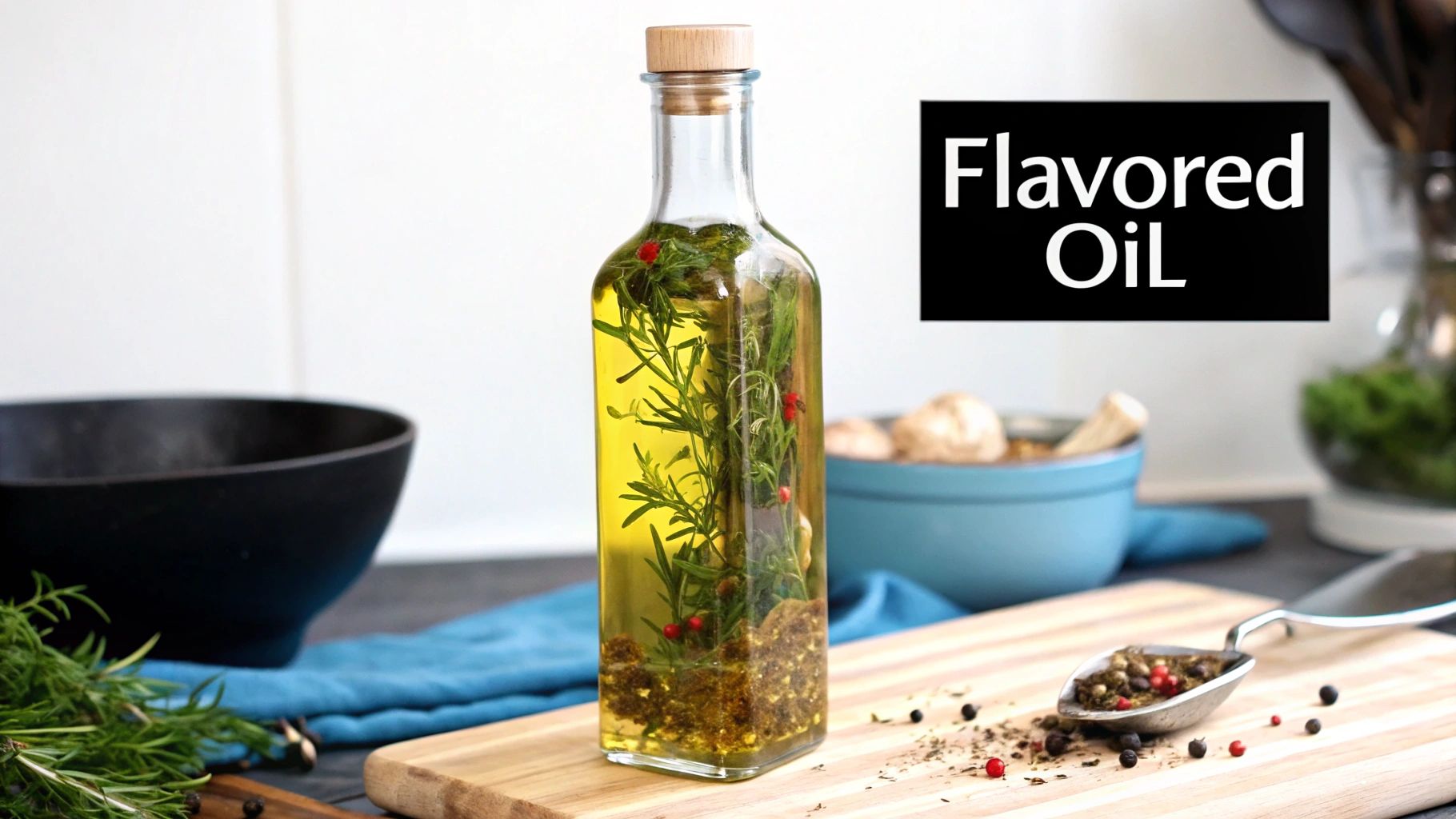
The resulting oils are incredibly versatile. A garlic and chili-infused oil can be drizzled over pizza, a rosemary-infused version is perfect for roasting potatoes, and a bright lemon-thyme oil can be used to dress grilled fish or chicken. This method turns a pantry staple into a powerful flavor agent.
Methods for Successful Infusion
The key to a successful infusion is controlling temperature and using the right ingredients. There are two primary methods: cold and warm infusion. Cold infusion involves simply steeping aromatics in oil at room temperature for several days or weeks, which is best for delicate flavors. Warm infusion requires gently heating the oil with the aromatics to a low temperature (around 150°F) to accelerate flavor extraction, which is ideal for heartier ingredients like rosemary or chili.
A high-quality extra virgin olive oil works best as a base, as its own flavor complements the infused elements. For safety and a longer shelf life, always use dried herbs and aromatics. Fresh ingredients contain water, which can promote botulism growth in an anaerobic oil environment.
Pro Tip: To ensure food safety and quality, always strain out the solid ingredients after infusing. Store your finished oil in a sealed, dark glass bottle in the refrigerator and plan to use it within two to three weeks. Labeling the bottle with the preparation date is a simple but crucial step.
By mastering infusion, you can experiment with endless combinations, from a spicy chili-garlic oil for pasta to a fragrant basil oil for Caprese salads. It’s an accessible technique, popularized by gourmet chefs and artisanal producers, that brings a layer of sophistication to everyday cooking.
7 Key Uses of Olive Oil in Cooking Compared
| Technique | Implementation Complexity 🔄 | Resource Requirements ⚡ | Expected Outcomes 📊 | Ideal Use Cases 💡 | Key Advantages ⭐ |
|---|---|---|---|---|---|
| Understanding Olive Oil Smoke Points & Heat Application | Medium – requires temperature monitoring | Moderate – different olive oil grades needed | Optimal flavor, prevents harmful compounds | Cooking methods matched to oil smoke points | Preserves antioxidants, avoids burnt flavors |
| Finishing Dishes with Extra Virgin Olive Oil | Low – simple drizzle technique | Low – requires high-quality extra virgin oil | Enhanced flavor, aroma, appearance, and nutrition | Adding oil to completed dishes, finishing touches | Maximizes flavor and health benefits |
| Creating Perfect Marinades with Olive Oil | Medium – planning and timing required | Moderate – olive oil plus fresh ingredients | Tender, flavorful, moist proteins | Marinating meats and vegetables before cooking | Improves tenderness, flavor penetration |
| Mastering Olive Oil Confit Cooking | High – slow cooking at controlled low temperatures | High – large oil amounts and time needed | Tender, moist texture, extended preservation | Slow cooking proteins/vegetables submerged in oil | Deep flavor infusion, long shelf-life |
| Olive Oil Emulsification Techniques | Medium to High – requires technique and practice | Low – basic ingredients plus olive oil | Stable creamy sauces and dressings | Making mayonnaise, vinaigrettes, aioli | Rich textures, versatile flavors |
| Seasoning and Maintaining Cast Iron with Olive Oil | Medium – repeated applications and oven heating | Low – requires specific olive oil type | Durable, natural non-stick cookware surface | Cast iron cookware seasoning and maintenance | Chemical-free, environmentally friendly |
| Infusing Olive Oil with Herbs and Aromatics | Medium – careful preparation and storage | Moderate – fresh or dried herbs/spices | Gourmet flavored oils for diverse culinary uses | Creating infused oils for cooking or finishing dishes | Custom flavors, creative expression |
Integrating These Techniques Into Your Daily Cooking
From the foundational science of smoke points to the nuanced art of finishing a dish, we have explored the incredible spectrum of olive oil uses for cooking. This journey reveals that olive oil is far more than a simple cooking fat; it is a versatile, dynamic ingredient capable of transforming everyday meals into culinary experiences. The seven techniques detailed in this guide are your new toolkit for unlocking its full potential.
By moving beyond the single-bottle mindset, you begin to see olive oil not just as a utility, but as a core flavor component. Think of it as a spice rack in liquid form, with each type and application offering a unique contribution to your final dish.
Key Takeaways for Your Kitchen
Mastering these concepts fundamentally shifts your approach to flavor development. The most critical takeaway is that the right olive oil for the right job is paramount.
- Heat Management is Key: Understanding the smoke point of your standard olive oil versus your extra virgin olive oil prevents bitter flavors and preserves the oil's integrity. Use your robust EVOO for finishing and gentle heating, and your standard olive oil for higher-heat applications like sautéing.
- Flavor is a Verb: Olive oil doesn't just cook food; it flavors it. The peppery, grassy notes of a high-quality EVOO drizzled over roasted vegetables or a hearty soup add a layer of complexity that heat-based cooking alone cannot achieve.
- Texture and Mouthfeel: Techniques like emulsification and confit demonstrate olive oil's power to change food's texture. A well-made vinaigrette brings a creamy, cohesive mouthfeel to a salad, while confit renders proteins unbelievably tender and succulent.
Actionable Next Steps to Elevate Your Cooking
Knowledge becomes skill only through practice. Don't feel pressured to master all these techniques at once. Instead, integrate them into your routine one step at a time to build confidence and intuitive understanding.
- This Week's Challenge: Choose one technique to try. Create a simple olive oil marinade for your chicken or fish, or focus on finishing at least three different meals (from eggs to pasta to ice cream) with a drizzle of your best EVOO.
- Experiment with Infusions: Start with a simple garlic and rosemary infusion. Use it to roast potatoes or as a dipping oil for bread. This small step opens up a world of customized flavors.
- Upgrade Your Vinaigrette: Ditch the store-bought dressing for good. Whisk together a basic olive oil, vinegar, and mustard emulsion. Notice the superior flavor and texture, and begin experimenting with different oil and acid pairings.
Embracing these diverse olive oil uses for cooking will not only make you a more proficient and creative home cook but will also deepen your appreciation for this ancient, healthful, and delicious ingredient. Let it be the quiet hero of your weeknight meals and the celebrated star of your dinner parties. The journey from routine to remarkable cooking starts with a single, golden drop.
Ready to discover the perfect bottle to inspire your next culinary creation? At Learn Olive Oil, we curate and explain the world of premium olive oils, helping you understand varietals, tasting notes, and ideal pairings. Explore our collections and continue your journey at Learn Olive Oil.

 Learn Olive Oil
Leave a comment