Once you've opened a beautiful bottle of extra virgin olive oil, you’re in a race against time to preserve that fresh, peppery flavor. The key is protecting it from its three biggest enemies: light, heat, and air. Storing it properly means keeping it in a dark, airtight container in a cool spot, like a pantry. For the absolute best taste, you'll want to use it within 3 to 6 months.
Your Quick Guide to Preserving Olive Oil
So, you've brought home a quality bottle of EVOO. Great! Now, let's make sure it stays that way. The most common mistake I see is people leaving their olive oil right on the kitchen counter, often next to the stove. It might be convenient, but it's a surefire way to ruin a perfectly good oil.
The whole game is about slowing down oxidation. This is the natural process that eventually turns that vibrant, fruity oil into something stale and rancid. To win, you just need to create the right storage conditions.
The Core Principles of Olive Oil Storage
Your storage strategy really boils down to three simple rules. Getting these right is what separates a flavorful finishing oil from a bottle that's destined for the bin.
-
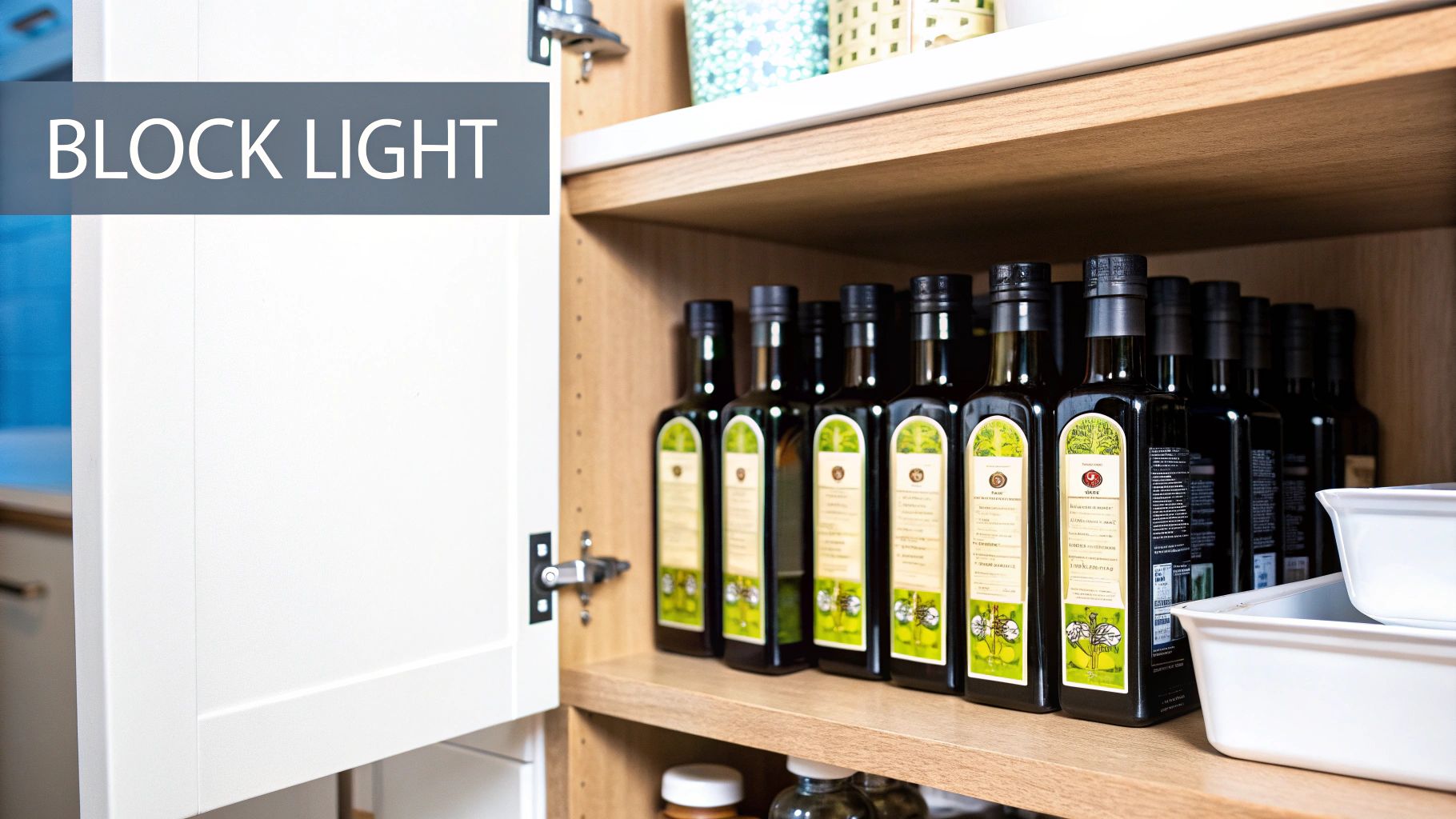
Block Out the Light: Never store your olive oil in direct sunlight or under bright kitchen lights. Light is a major catalyst for degradation. This is why good olive oil comes in dark glass or opaque tins. If yours is in clear glass, find a dark cabinet for it, fast.
-
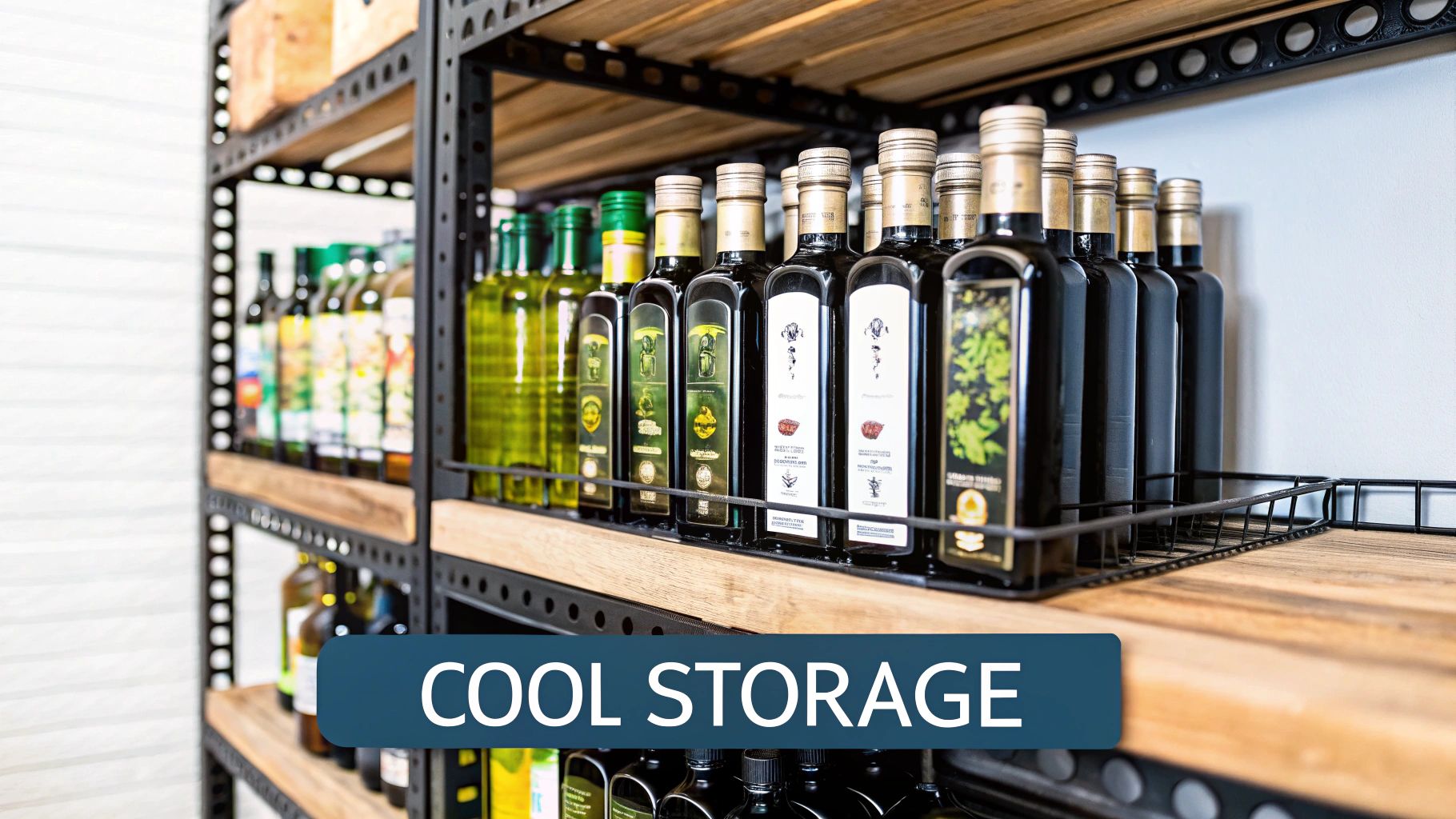
Keep it Cool: Heat is another enemy. The sweet spot for storage is between 57°F and 64°F (14°C to 18°C). A cool, dark pantry or a cellar is ideal. A cabinet right next to your oven or dishwasher? That's the absolute worst place for it.
-
Minimize Air Exposure: Oxygen is what makes oil go rancid. It's as simple as that. Always, always screw the cap on tightly after you pour. If you buy oil in large tins, it’s a smart move to decant a smaller amount into a bottle you’ll use over a week or two, keeping the larger tin sealed tight.
This handy visual breaks down exactly what you need to do.
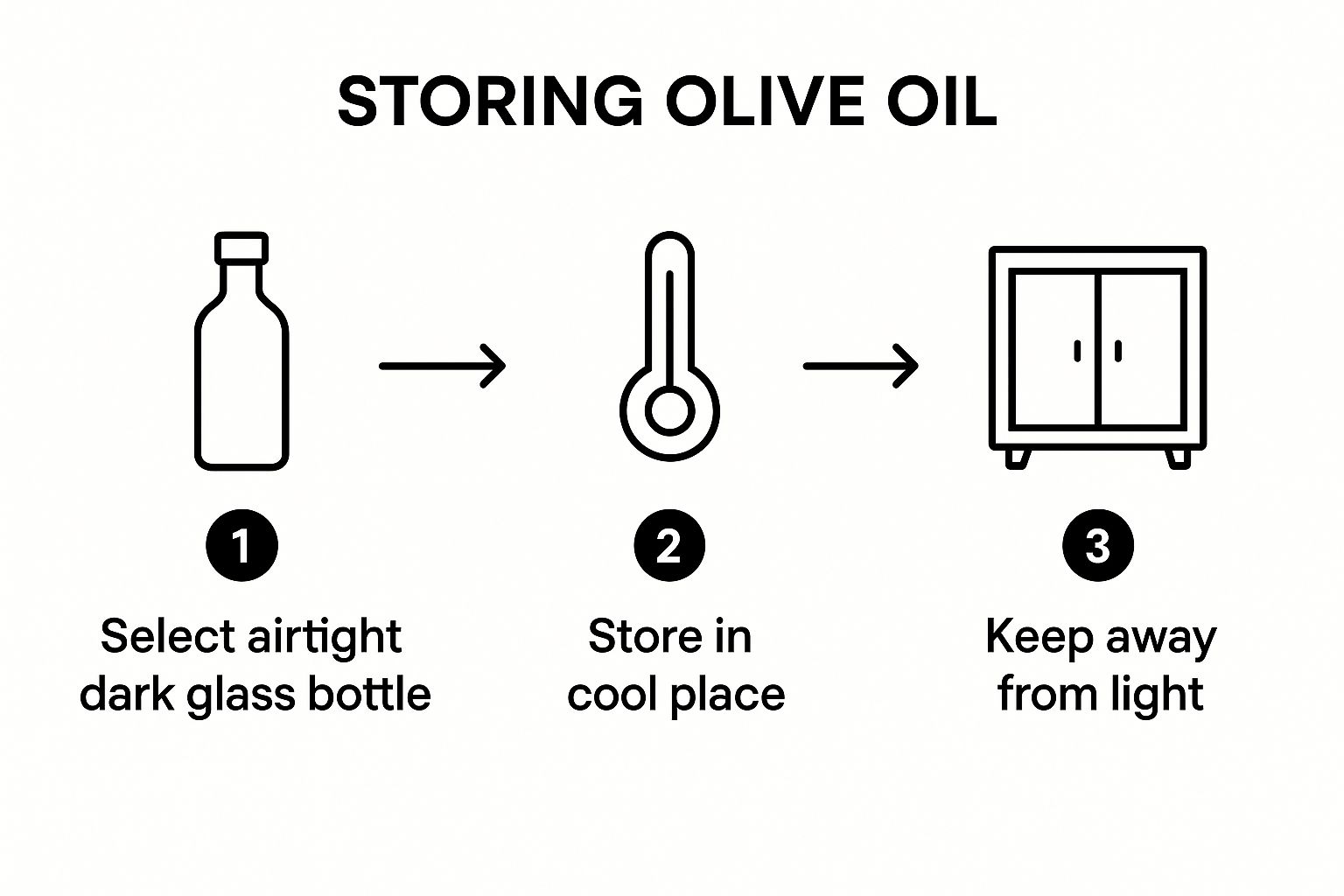
Think of it as your cheat sheet: a dark bottle, a cool location, and a tight seal are your best friends for keeping every last drop as delicious as the first.
To make it even simpler, here's a quick reference table comparing the best practices with the common mistakes that will sabotage your oil's flavor.
Olive Oil Storage Do's and Don'ts
| Practice | Do (For Freshness) | Don't (Leads to Spoilage) |
|---|---|---|
| Container | Use the original dark/opaque bottle or tin. Decant into smaller dark bottles if needed. | Transfer to a clear glass bottle or cruet for display. |
| Location | Store in a cool, dark pantry or cabinet, away from appliances. | Keep it on the countertop, especially near the stove or a sunny window. |
| Sealing | Screw the cap on tightly immediately after each use. | Leave the cap loose or use a pour spout that doesn't seal. |
| Temperature | Aim for a consistent, cool temperature (57-64°F). | Expose it to fluctuating temperatures or direct heat from cooking. |
| Purchasing | Buy a bottle size you can reasonably use within 3-6 months. | Buy a giant tin that will sit open in your pantry for over a year. |
Following these simple "do's" and avoiding the "don'ts" will make a world of difference in maintaining the quality and extending the life of your olive oil.
Here is the rewritten section, designed to sound like an experienced human expert.
Understanding Why Olive Oil Spoils
So, you've brought home a beautiful bottle of extra virgin olive oil. Ever wondered what actually makes it go from vibrant and peppery to dull and stale? It all comes down to a simple chemical reaction: oxidation.
Think about what happens when you cut an apple and leave it on the counter. That browning process is oxidation, and a similar thing happens to your oil once it's exposed to air. The difference is, instead of turning brown, the oil becomes rancid. Its healthy fats break down, and those lovely, fresh notes are replaced by a smell that’s often compared to old crayons or putty. It’s not a subtle change, and it completely ruins the taste.
The Three Enemies of Freshness
From my experience, there are three main culprits that will ruin a good olive oil faster than anything else. If you can control these, you're 90% of the way to keeping your oil fresh.
-
Oxygen: The clock starts ticking the second you break that seal. Every time you open the bottle, you're letting in more air, which fuels the oxidation process. This is why a secure cap is absolutely essential—no ifs, ands, or buts.
-
Light: Those beautiful dark green bottles aren't just for aesthetics; they’re armor. Both sunlight and even bright kitchen lights are incredibly destructive. UV rays degrade the very compounds—like polyphenols—that give high-quality olive oil its flavor and health benefits.
-
Heat: Heat is an accelerator. Storing your oil next to the stove or on a sun-drenched windowsill is like hitting the fast-forward button on spoilage. Even a consistently warm pantry can dramatically shorten its lifespan.
The real problem is that these three things often work together. An open bottle of oil sitting on a warm, sunny countertop is being attacked from all sides. It's a recipe for rapid rancidity.
Don't just take my word for it. Research has shown that oils stored in clear glass under normal kitchen lights can lose a significant chunk of their antioxidant power in just a few months. To really protect your investment, you need to store opened olive oil in a cool, dark place. The ideal temperature range is between 14°C and 18°C (57°F and 64°F).
For a deeper dive into quality standards, you can always check out the International Olive Council's market data. Ultimately, by getting a handle on these three simple factors, you’re doing everything you can to protect the flavor and quality of the oil you paid for.
Finding the Perfect Storage Spot in Your Kitchen
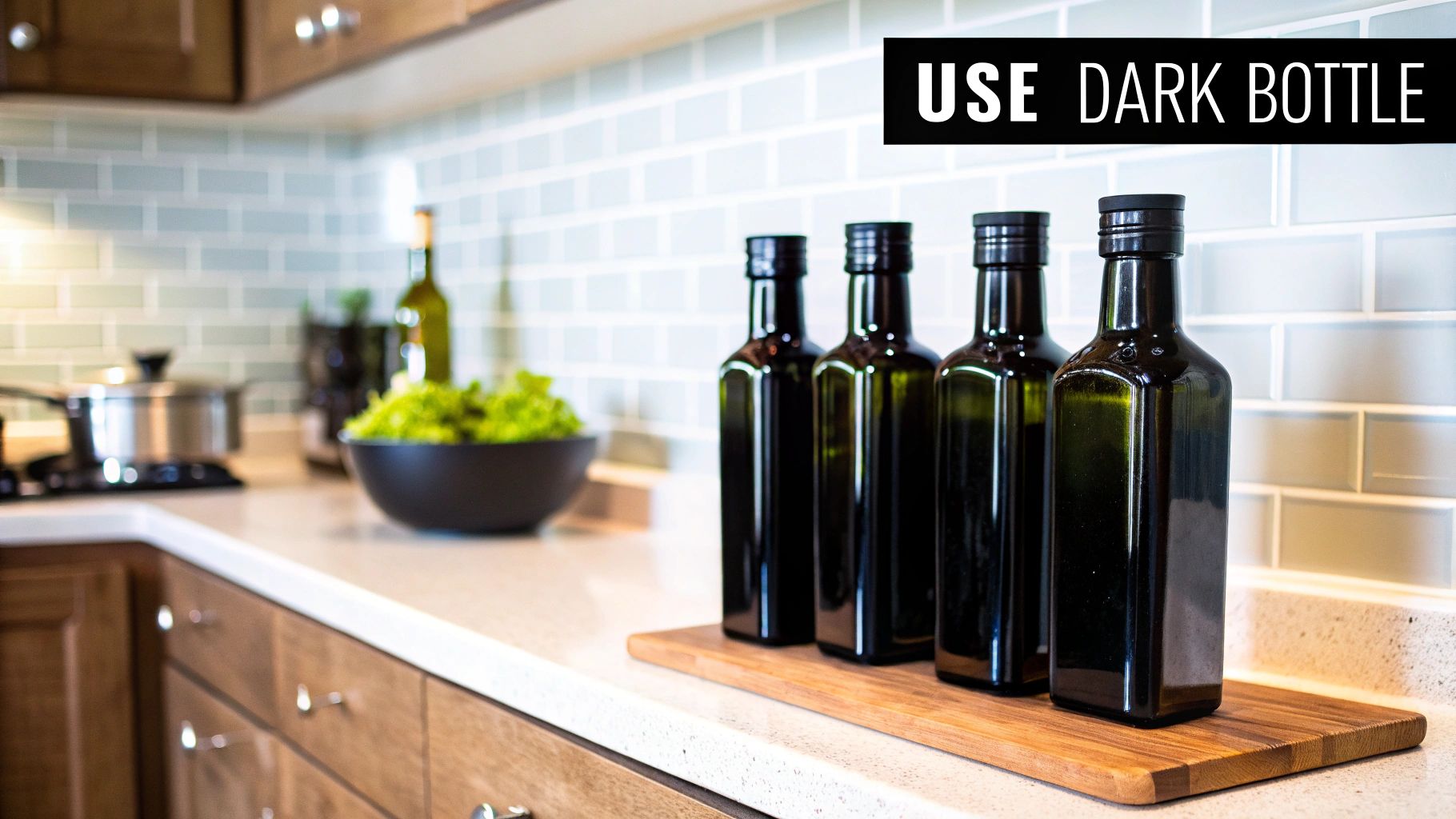
Everyone says to keep your olive oil in a "cool, dark place," but what does that really mean in a real, working kitchen? Let's get practical. The absolute worst place you can put your oil is in the cabinet directly above or next to your stove, oven, or dishwasher. These spots are constantly getting hit with waves of heat, which is a fast track to ruining your oil's delicate flavor.
Instead, scout out a spot in a pantry or a lower cabinet, far away from those heat sources. Consistency is your goal here. You're looking for a location that maintains a steady temperature, ideally somewhere around 57–64°F (14–18°C). It seems simple, but making this one change can have the biggest impact on preserving the life of your olive oil.
The Great Refrigeration Debate
So, what about the fridge? It's a common question, and the answer isn't a simple yes or no. While the cold does an excellent job of slowing down oxidation, it creates other problems.
Chilling causes the natural fats and waxes in olive oil to solidify, making it cloudy and thick. This isn't permanent damage—it will clear up as it warms—but the real issue is the constant temperature cycling. Pulling the bottle in and out of the cold fridge can lead to condensation forming inside, and water is a sworn enemy of oil, speeding up spoilage.
My personal take? I almost never refrigerate my olive oil unless my kitchen is exceptionally hot for a long period. A cool, dark pantry is a much better bet. If you find you have no other choice, try pouring a week’s worth of oil into a smaller, dark dispenser and keep the main bottle tucked away in the fridge to minimize the back-and-forth.
Choosing the Right Container for Daily Use
For long-term storage, the original dark glass bottle or tin it came in is perfect. But what if you bought a huge tin or, worse, an oil that came in a clear bottle? Never leave your olive oil sitting on the counter in a clear container. It’s like leaving the front door wide open for light to come in and wreck its quality.
If you have a large tin, your best move is to decant some of it into smaller, dark glass bottles for regular use. This keeps the bulk of your supply sealed off from repeated air exposure every time you cook.
For that handy bottle you keep by the stove for drizzling, a dedicated dispenser, or cruet, is fine, but you have to choose the right one.
- Your best options: Opaque ceramic or dark-coated stainless steel cruets. These block out all light.
- The worst offenders: Those pretty clear glass cruets, especially the ones with open pour spouts that let air flow in freely.
A good rule of thumb is to only fill your daily dispenser with enough oil to last you about a week. This strategy gives you the convenience you need without compromising the freshness of your main supply, striking the perfect balance for how to store olive oil after opening.
How to Know if Your Olive Oil Is Still Good
Even if you’ve stored your olive oil perfectly, it has a finite shelf life. So, how can you tell if it's still at its peak? The best way is to do what the pros do: use your senses. A quick smell and taste test is the most reliable method there is.
First, pour a little bit into a small glass and give it a swirl. Bring it to your nose and inhale deeply. A fresh, high-quality extra virgin olive oil should smell vibrant and alive. Think fresh-cut grass, green apple, tomato leaf, or even a pleasant peppery note.
Next, take a small sip. Slurp it a bit, pulling in some air, which helps spread the oil across your entire palate. You're looking for a clean taste and often a distinct peppery or bitter sensation at the back of your throat. That little kick is a fantastic sign—it's the powerful, healthy polyphenols letting you know they're still present.
Recognizing the Signs of Spoilage
If your oil has turned, you'll know it immediately. The most common problem is rancidity, a result of oxidation. A rancid oil doesn't just taste dull; it tastes genuinely bad.
Here’s what to look out for:
- The Smell: Rancid oil often smells waxy, like a box of old crayons. Other common off-aromas include stale nuts or even old window putty.
- The Taste: It will have a greasy, stale flavor and leave an unpleasant, waxy coating in your mouth. There’s no fresh, peppery finish—just a lingering off-taste.
A common mistake is judging an oil by its color. Color, which can range from brilliant green to pale gold, simply reflects the olive variety, ripeness at harvest, and processing—not the oil's quality or freshness. Always trust your nose and palate over your eyes.
Ultimately, your senses are your best guide. If it smells or tastes off, it's time to toss it.
How Global Trends Affect the Oil in Your Pantry
That beautiful bottle of extra virgin olive oil sitting in your kitchen didn't just magically appear on the shelf. Its story started months, maybe even a year, earlier in an olive grove in Spain, Italy, or Greece. Understanding that long journey is the key to realizing why what you do after you open the bottle matters so much.
From the moment an olive is picked, producers are fighting the clock to preserve its fresh, vibrant character. They manage enormous stocks of oil and work constantly to protect it from heat, light, and air—the three enemies of freshness. This isn't just about pride; it's a response to a huge shift in what we, as consumers, want. We've learned to appreciate the peppery, grassy notes of a true EVOO and won't settle for something flat and greasy.
The Global Push for Freshness
This demand for top-tier olive oil has forced the entire industry to get serious about quality. Producers know that a premium product can lose its value in an instant if it's handled poorly. So, they invest heavily in everything from modern harvesting methods to climate-controlled tanks and better packaging, all to make sure that what ends up in your hands is as good as it was the day it was pressed.
When you finally twist that cap, you're taking the baton. You become the last link in this long chain of preservation.
The scale of this global effort is staggering. Recent global olive oil production hovered around 2.56 million tonnes. To put that in perspective, a powerhouse like Spain can move over 76,500 tons of olive oil in a single month. These massive numbers really drive home why learning how to store olive oil after opening is so important. It's about respecting the product and preventing waste. If you're curious, you can explore more about these market forces and what they mean for the oil you buy.
By adopting the right storage habits at home, you are continuing the preservation process that began thousands of miles away. You’re ensuring that the integrity, complex flavor profile, and nutritional benefits of the oil remain intact from the first pour to the last.
Ultimately, those simple actions in your kitchen—keeping the bottle sealed, tucking it away in a cool, dark cupboard—are the final, critical steps. It’s how you protect the value and, more importantly, the incredible taste of the liquid gold you've chosen for your home.
Common Olive Oil Storage Questions Answered
Even when you know the basics, real-life situations can make you second-guess your olive oil storage. I get these questions all the time, so let's walk through the most common dilemmas to clear things up for good.
Should I Refrigerate My Olive Oil After Opening?
This is the big one, and the short answer is: probably not. While popping it in the fridge does slow down oxidation, it creates other problems. Cold temperatures cause the natural waxes in the oil to solidify and clump together. You'll see it turn cloudy and thick.
This isn't harmful, but the cycle of taking it out, letting it warm up, and putting it back can create condensation inside the bottle. Water is one of olive oil's worst enemies and will make it spoil faster.
Your best bet is a cool, dark pantry or cabinet that stays around 57-64°F (14-18°C). If you live in a very hot climate without a cool spot, the fridge might be the lesser of two evils.
- My Pro Tip: If you absolutely have to use the fridge, try this. Pour a week's supply of oil into a small, dark dispenser you can keep on the counter. Leave the main bottle in the fridge, so you aren't constantly exposing it to temperature swings.
How Long Does Olive Oil Last After It Is Opened?
Once you break that seal, the clock starts ticking. For a high-quality extra virgin olive oil, you've got about 3 to 6 months before the magic starts to fade. It won't be "bad" in the sense of being unsafe, but you'll lose all those beautiful, complex flavors—the peppery kick, the grassy aromas. It just becomes flat.
Keep in mind, a really robust, high-polyphenol EVOO might hold up a little longer than a more delicate one. Always check the harvest date on the bottle and buy a size you know you can get through in that 3-to-6-month window.
Is a Clear Glass Cruet on My Counter a Good Idea?
I'm going to be direct here: no, it's a terrible idea. Leaving your beautiful olive oil in a clear glass dispenser on the counter is the quickest way I know to ruin it. You're exposing it to its two biggest enemies at once: light and air.
The clear glass offers zero protection from sunlight or even your kitchen lights, and the typical pour spout lets oxygen flow in freely, kicking off the oxidation process immediately.
If you like having oil handy for cooking, invest in a dispenser made from opaque ceramic or dark-coated stainless steel. The key is to only fill it with what you'll use in a week or so.
What Is the Best Way to Handle Oil from a Large Tin?
Buying oil in a big tin is a great way to save money, but you have to handle it right. Every time you open that large container, you’re letting a huge amount of oxygen rush in and mix with the oil.
Here's the best approach: as soon as you get it home, decant the oil into smaller, dark glass bottles. Fill each bottle right to the top to push out as much air as possible, then seal them tightly. Store these smaller bottles in your cool, dark spot and just pull them out one at a time as needed. It’s a simple step that protects your investment and keeps that oil tasting fresh for months.
At Learn Olive Oil, we believe that understanding the journey from grove to table enhances every meal. Start your journey with us and discover the incredible world of premium olive oil.

 Learn Olive Oil
Leave a comment