Let's cut right to the chase: the glycemic index (GI) of olive oil is zero. That’s it. Because it’s a pure fat with virtually no carbohydrates, it doesn’t cause your blood sugar to rise after you eat it. This simple fact makes it a superstar for anyone focused on their metabolic health.
What Is the Glycemic Index of Olive Oil?
Think of the glycemic index like a ranking system for foods, from 0 to 100. It scores how quickly carbohydrate-containing foods make your blood sugar levels go up. High-GI foods, like a slice of white bread, act fast and cause a sharp spike. Low-GI foods release energy more slowly, giving you a steady, stable response.
Since olive oil is all fat and contains no carbs, it has a glycemic index of zero. It simply doesn't have the components that would trigger a blood sugar response. This is why it’s such a valuable player in a health-conscious diet. To get the full picture, it's helpful to see how other oils are classified on the glycemic index scale.
This chart puts things into perspective, showing just how different olive oil is from common carbohydrate sources.
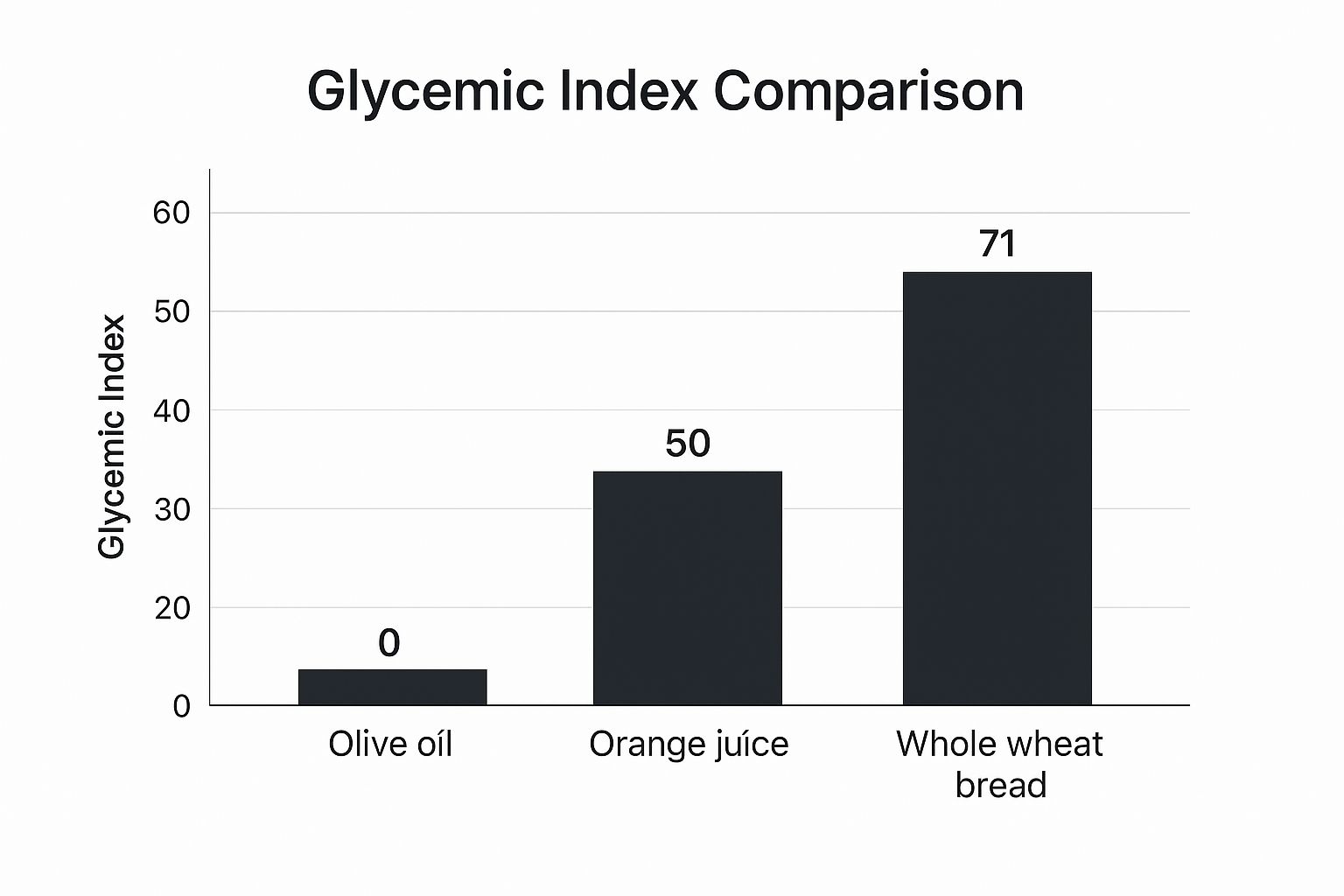
As you can clearly see, olive oil sits firmly at zero. Foods like orange juice and bread, on the other hand, have a measurable impact. But the story of olive oil and blood sugar doesn't end there.
Beyond a Zero Score
The real magic isn't just that olive oil has a GI of zero; it's what it does when you eat it with other foods. When you pair olive oil with carbohydrates, it can actually help buffer their effect on your blood sugar.
The healthy monounsaturated fats in olive oil can slow down the rate at which your stomach empties. This means the sugars from your meal are absorbed into the bloodstream more gradually, helping you avoid those sharp, unpleasant spikes.
This quality elevates olive oil from a simple cooking fat to a functional ingredient. It’s not just about what it doesn’t have (carbs), but about what it brings to the table—a powerful stabilizing effect on your entire meal.
Glycemic Index of Common Fats and Oils
So, how does olive oil stack up against other fats you might have in your pantry? As you'll see, it's in good company. Pure fats and oils don't contain carbohydrates, so they all share that coveted GI score of zero.
| Fat/Oil | Primary Fat Type | Glycemic Index (GI) |
|---|---|---|
| Olive Oil | Monounsaturated | 0 |
| Coconut Oil | Saturated | 0 |
| Avocado Oil | Monounsaturated | 0 |
| Butter | Saturated | 0 |
| Canola Oil | Monounsaturated | 0 |
The table makes it clear: when it comes to direct impact on blood sugar, all pure fats are on a level playing field. However, their overall health benefits, particularly regarding heart health and inflammation, can vary significantly based on their fatty acid profiles. Olive oil remains a top choice due to its high concentration of beneficial monounsaturated fats and antioxidants.
Understanding the Glycemic Index Beyond the Numbers
The Glycemic Index can sound a bit technical, but the core idea is actually pretty intuitive. Think of your body’s energy supply like a campfire and the food you eat as its fuel.
Some foods, like white bread or sugary cereals, are like tossing a handful of dry kindling on the flames. You get a big, bright flare-up—that quick energy rush—but it dies down just as fast. This is the all-too-familiar "sugar spike" followed by the dreaded energy crash.
Then you have other foods, like lentils, beans, and whole grains. These are more like a dense, solid log. They take a while to catch, but once they do, they provide a steady, reliable source of heat for hours. This slow, even burn gives you sustained energy without the wild swings.
Making Smarter Fuel Choices
Getting a handle on this difference is the secret to managing not just your daily energy but your long-term metabolic health. If you’re constantly feeding your body with that fast-burning "kindling," you're putting it on a metabolic rollercoaster of sugar spikes and crashes, leaving you feeling tired and craving more sugar.
By shifting your focus to foods that burn like a steady "log," you give your body the consistent fuel it needs to thrive. This approach helps keep your energy stable, makes you feel full longer, and supports a healthier metabolism. The fact that the olive oil glycemic index is zero is just the beginning; its real magic is in how it helps balance the other foods on your plate.
A food’s GI score simply tells you how quickly its carbohydrates will raise your blood sugar. Lower numbers mean a slower, more gradual rise, which is exactly what you want for sustained energy and metabolic health.
This isn't about cutting out carbs entirely. It's about being smarter with them. For example, pairing a higher-GI food with a zero-GI fat like olive oil can significantly slow down digestion and blunt the overall blood sugar impact. It’s a simple, powerful strategy for creating a more balanced meal every single time.
How Olive Oil Improves Your Blood Sugar Response
The fact that the olive oil glycemic index is zero is just the beginning. The real magic happens when you see how it changes your body's reaction to the other foods you're eating, especially carbs. It’s not just sitting there on the plate; it’s actively managing how your entire meal affects your blood sugar.
Think of olive oil as a friendly traffic cop for your digestion. When you add it to your meal, the healthy fats send a signal to your stomach to slow everything down. This process, called gastric emptying, determines how quickly food leaves your stomach.
With olive oil on the job, the carbohydrates in your meal break down and release their sugars into your bloodstream far more gradually. Instead of a sudden sugar flood that sends your system into a panic, you get a gentle, steady stream. This helps you avoid those sharp blood sugar spikes that often lead to energy crashes and more cravings.
The Power of Pairing
This slowing effect is surprisingly powerful. Just by adding a good drizzle of extra virgin olive oil to a meal with carbs, you can completely change its metabolic impact. The fats in the oil essentially run interference, blunting the glycemic effect of the starches and sugars you eat.
This makes olive oil an incredible partner for building more balanced meals. For instance:
- Roasted Potatoes: A generous coating of EVOO doesn't just make them delicious; it helps slow down how quickly you absorb their starches.
- Salad Vinaigrette: A classic vinaigrette with an olive oil base can help buffer the blood sugar response from any sweeter fruits or dressings in your salad.
- Pasta Dishes: Simply tossing your pasta in a quality olive oil can lead to a much more stable blood sugar reading than a fat-free sauce would.
The key takeaway is that olive oil doesn't just contribute a zero GI score to a meal; it actively lowers the overall glycemic impact of the foods it's paired with.
Scientific Proof of a Blunted Spike
And this isn't just wishful thinking—it's backed by solid science. A fascinating study involving patients with type 1 diabetes looked at meals prepared with extra virgin olive oil versus butter or a low-fat alternative. The results were striking.
The EVOO meal resulted in a significantly blunted increase in blood glucose afterward. Over a three-hour period, the total rise in blood sugar was roughly half of what was seen with the butter and low-fat meals. That’s a huge difference, and it showcases just how much of a powerhouse EVOO is for glycemic control. You can dive deeper into the study and learn more about how EVOO reduces the glycemic response on Diabetes Care.
Thinking Beyond a Single Score to Glycemic Load
Focusing only on the olive oil glycemic index is like judging a movie by watching a single scene—you miss the bigger picture. A food’s GI score tells part of the story, but to get a truly useful, real-world idea of how a food affects you, we need to introduce another concept: Glycemic Load (GL).
Glycemic Load is a much more practical metric because it considers two crucial factors at once:
- The quality of the carbs (the GI score).
- The quantity of carbs in a typical serving.
This distinction is incredibly important. A classic example is watermelon, which has a relatively high GI of around 72. On paper, that sounds alarming. But think about it—a normal slice of watermelon is mostly water and contains very few actual carbs. Because of this, its Glycemic Load is tiny, meaning it won’t send your blood sugar on a major roller coaster.
Why This Matters for Olive Oil
This is where olive oil really shines, and why its zero-GI status is just the beginning. The glycemic index is a fantastic tool, but it was designed to measure how carbohydrates raise blood sugar. Fats like olive oil play a different game entirely.
When you pair olive oil with carb-containing foods, it works behind the scenes to slow down how quickly your stomach empties. This simple act helps blunt the blood sugar spike you'd otherwise get from the carbs alone. To dive deeper into this relationship, check out this great explanation of how GI and GL work together on NASM's blog.
Olive oil isn't just a passive, zero-GI ingredient. It’s an active cornerstone of healthy eating patterns like the Mediterranean diet, contributing powerful anti-inflammatory compounds and heart-healthy fats that support your entire metabolic system.
Its benefits—from fighting inflammation to improving how your body responds to insulin—are far more significant than what a single number could ever tell you. The real magic of olive oil lies in its ability to elevate the health profile of your entire meal, not just its own score.
Putting Olive Oil to Work in Your Meals
Knowing the theory behind the olive oil glycemic index is great, but the real magic happens when you bring that knowledge into your kitchen. It’s time to move from concepts to your plate and start using olive oil as a strategic tool to manage your body’s blood sugar response.
The trick is to pair olive oil—a fat with a GI of zero—with your carbohydrate sources. This combination slows down how quickly your body digests the carbs and absorbs their sugars. The result? A much gentler rise in blood sugar instead of a sudden, sharp spike. It's a simple tweak that makes a big difference to your metabolic health.
Smart and Simple Food Pairings
Getting started is surprisingly easy. You don’t need to overhaul your diet or learn complex recipes. It’s really about changing how you assemble your meals. By adding a healthy fat like olive oil, you’re building a more balanced plate that your body can process more steadily.
Here are a few practical ideas you can use today:
- Elevate Your Veggies: Roasting some sweet potatoes or butternut squash? Drizzle them generously with extra virgin olive oil. It pulls out their natural sweetness and, more importantly, helps buffer the glycemic impact of their starches.
- Create a Smarter Salad: Ditch that sugary store-bought dressing. Whisk together a simple vinaigrette with EVOO, a splash of lemon juice, and some herbs. The oil's fat will help slow down the absorption of any carbs in your salad, whether they come from fruit or croutons.
- Balance Your Grains: Before you dig into that pasta, rice, or quinoa, give it a good toss with a tablespoon or two of quality olive oil. This simple move can help moderate the blood sugar response from these carb-heavy foods.
Choosing the Best Olive Oil for the Job
While any pure olive oil has a GI of zero, extra virgin olive oil (EVOO) is hands-down the best choice if you're aiming for maximum health benefits. Because it's cold-pressed and unrefined, it hangs on to the highest levels of polyphenols. These aren't just for flavor; they're powerful antioxidants that can help fight inflammation and even improve your body’s sensitivity to insulin.
When you choose EVOO, you're getting more than just a zero-GI fat. You're getting a functional food loaded with compounds that support your entire metabolic system, making it the most effective option for blood sugar management.
Think of standard, refined olive oil as a good starting point, but EVOO is the gold standard. When you're finishing a dish, making a dressing, or just drizzling it over cooked food, always reach for extra virgin. Its rich, peppery flavor and powerful health properties make it the perfect partner on your journey to better glycemic control.
For more inspiration, you can find premium olive oils perfect for any dish at Learn Olive Oil.
Your Questions About Olive Oil and Blood Sugar, Answered
Let's clear up a few common questions. Think of this as the practical part of the guide—the bits you'll want to remember next time you're in the kitchen.
Does the Type of Olive Oil Matter for Its Glycemic Index?
Nope. When it comes to the glycemic index, all pure olive oils are on the same page. Whether it’s extra virgin, virgin, or regular olive oil, the glycemic index is zero. It’s that simple.
Why? Because they are pure fats. There are no carbohydrates to break down into sugar, so they can't raise your blood sugar levels.
That said, Extra Virgin Olive Oil (EVOO) is still the hands-down winner for your overall health. It’s loaded with antioxidants called polyphenols, which are fantastic for reducing inflammation and can even help your body become more responsive to insulin. So, while the GI is the same, the health benefits are not.
If Olive Oil's GI is Zero, Can I Use as Much as I Want?
It’s a great question, but the answer is a firm no. While the olive oil glycemic index is zero, its calorie count is not. Olive oil is a fat, which means it's very calorie-dense.
Using too much can make it harder to maintain a healthy weight, and weight management is a cornerstone of good blood sugar control.
Think of olive oil as a healthy replacement, not a free-for-all. Swap out less healthy fats like butter or processed vegetable oils with olive oil. For most people, aiming for 1 to 2 tablespoons a day is a great sweet spot within a balanced diet.
How Does Olive Oil Stack Up Against Avocado or Coconut Oil?
Avocado oil is quite similar to olive oil. It’s also a monounsaturated fat with a zero GI, making it another fantastic choice for keeping blood sugar stable.
Coconut oil, on the other hand, is a bit different. It’s mostly saturated fat and also has a GI near zero, but there’s a lot more scientific debate about its long-term effects on heart health.
The monounsaturated fats in olive oil, especially EVOO, are backed by decades of research showing they support both a healthy heart and better insulin sensitivity. This makes it one of the most reliable, well-studied oils you can choose for your metabolic health.
Ready to experience the best in flavor and health? Learn Olive Oil is your ultimate guide to discovering premium olive oils from around the world. Elevate your meals and your well-being by exploring our expert insights and top recommendations at https://learnoliveoil.com.

 Learn Olive Oil
Leave a comment