It might sound strange to talk about using an oil—a pure fat—to lose weight, but hear me out. When it comes to managing your weight, a high-quality extra virgin olive oil (EVOO) can be one of the best tools in your kitchen. It's not about magic; it's about science, specifically how EVOO helps you feel fuller for longer and keeps your metabolism humming.
Let's Finally Put the "Fat Makes You Fat" Myth to Bed
For years, we were all told the same thing: cut out fat to lose weight. This led to a whole generation of "low-fat" products that were often packed with sugar and refined carbs instead. We now know that was a massive oversimplification.
The real story is much more nuanced. It’s not about the amount of fat, but the type of fat you're eating.
The healthy monounsaturated fats found in abundance in extra virgin olive oil are your friends. They are fundamentally different from the unhealthy saturated and trans fats lurking in processed snacks and fast food. Good fats support your body; bad fats work against it.
How a Drizzle of Olive Oil Helps You Get Leaner
So, what's the secret? It really comes down to EVOO's unique makeup. Its main component is a fatty acid called oleic acid, which is a powerhouse for promoting satiety.
Adding a bit of olive oil to your salad or roasted vegetables helps slow down digestion. This simple act keeps you feeling satisfied, stabilizes your blood sugar, and prevents those sudden energy crashes that send you running for the cookie jar. It's a natural, simple way to curb overeating.
But it doesn't stop there. True EVOO is also packed with potent antioxidants known as polyphenols. These compounds are fantastic for reducing inflammation and can give your metabolic function a helpful nudge. A healthier, more efficient metabolism is better at burning fat for fuel instead of tucking it away for later.
The real trick isn't just to add more olive oil to what you're already eating. It's about making a smart swap. Use it to replace less healthy fats like butter, margarine, or refined vegetable oils. You get all the benefits without piling on extra calories.
The Proof Is in the Research
This isn't just wishful thinking; there's solid science to back it up. A massive study looked at 30 years of data from over 121,000 people and found a compelling connection. People who consistently consumed just seven grams of olive oil a day—that’s about half a tablespoon—gained less weight over time than those who used other fats. You can read more about this on the Olive Oil Times.
And it's not just about keeping weight off. It's about actively losing fat. Other controlled studies compared diets with the exact same number of calories. The results? The groups whose diets were enriched with olive oil lost significantly more body fat. They even confirmed it with DEXA scans, which precisely measure body composition, showing that the olive oil was helping to target fat stores directly.
This evidence makes it clear: not all fats are the enemy. A good quality olive oil isn't just a healthy choice; it's a strategic part of a successful weight loss plan.
How to Select the Right Olive Oil
When you’re aiming to use olive oil for weight loss, the specific bottle you grab from the shelf truly makes all the difference. It’s easy to assume all olive oil is the same, but that’s far from the truth. Understanding what’s on the label is your first step to unlocking the real health benefits.
For this purpose, your absolute best choice is Extra Virgin Olive Oil (EVOO).
EVOO is the highest grade of olive oil you can buy. It's made by cold-pressing fresh olives without any heat or chemicals. This gentle process is crucial because it keeps the oil's powerful antioxidant compounds, called polyphenols, intact. These are the very compounds that provide anti-inflammatory benefits and help support a healthy metabolism.
In comparison, other types like "virgin" olive oil are a slight step down in quality. Anything labeled "regular," "pure," or "light" olive oil is usually a blend of refined oils. These lower-grade options have been processed with heat and chemicals, a method that unfortunately strips away most of those beneficial polyphenols. While they still provide monounsaturated fats, they lack the key ingredients that make EVOO so effective for a weight-loss plan.
Decoding the Label Like an Expert
The olive oil aisle can feel pretty overwhelming, but a few key details on the label will tell you everything you need to know about what’s inside the bottle.
First and foremost, look for the harvest date. Think of olive oil like a fruit juice—it’s best when it’s fresh. A recent harvest date, ideally within the last year, guarantees the oil has maximum flavor and its highest polyphenol content. Be wary of bottles that only show a "best by" date, as that can be set two years from bottling and doesn’t tell you how old the oil actually is.
A fantastic indicator of quality is a seal of origin. Look for certifications like PDO (Protected Designation of Origin) or PGI (Protected Geographical Indication). These European seals ensure the oil was grown, produced, and bottled in a specific region according to strict standards.
Spotting Fakes and Ensuring Potency
Sadly, the market has its share of low-quality oils pretending to be premium EVOO. To make sure you’re getting the real deal, here are a few final tips from someone who's learned the hard way:
- Choose dark glass bottles or tins. Light is one of olive oil's biggest enemies. It causes the oil to oxidize and break down, destroying its health benefits and flavor. A clear bottle is a major red flag for any producer who cares about quality.
- Look for single-origin oils. A label specifying a single country (like "Product of Italy" or "Product of Greece") is a good sign. Be cautious with vague blends from multiple countries, as it can be a way to hide lower-quality oils.
- Trust your taste. A genuine, high-quality EVOO should taste fresh, grassy, and even a little peppery or bitter at the back of your throat. That peppery kick is a sign of high polyphenol content! If it tastes greasy, bland, or metallic, it's likely old or simply not good quality.
By keeping these details in mind, you can confidently choose a potent, high-polyphenol EVOO that will be a true asset on your weight loss journey.
Finding Your Daily Olive Oil Sweet Spot
When you're trying to lose weight, it's easy to fall into the "more is better" trap. But with a calorie-dense food like olive oil, that thinking can backfire. The real key is finding that perfect balance—just enough to unlock its benefits without overloading your calorie count for the day.
So, what's the magic number? After years of seeing what works for people and looking at the research, the ideal daily amount for most is between one and two tablespoons. This seems to be the sweet spot for getting enough healthy fats and polyphenols to help you feel full and support your metabolism.
This is where olive oil starts a positive chain reaction in your body.
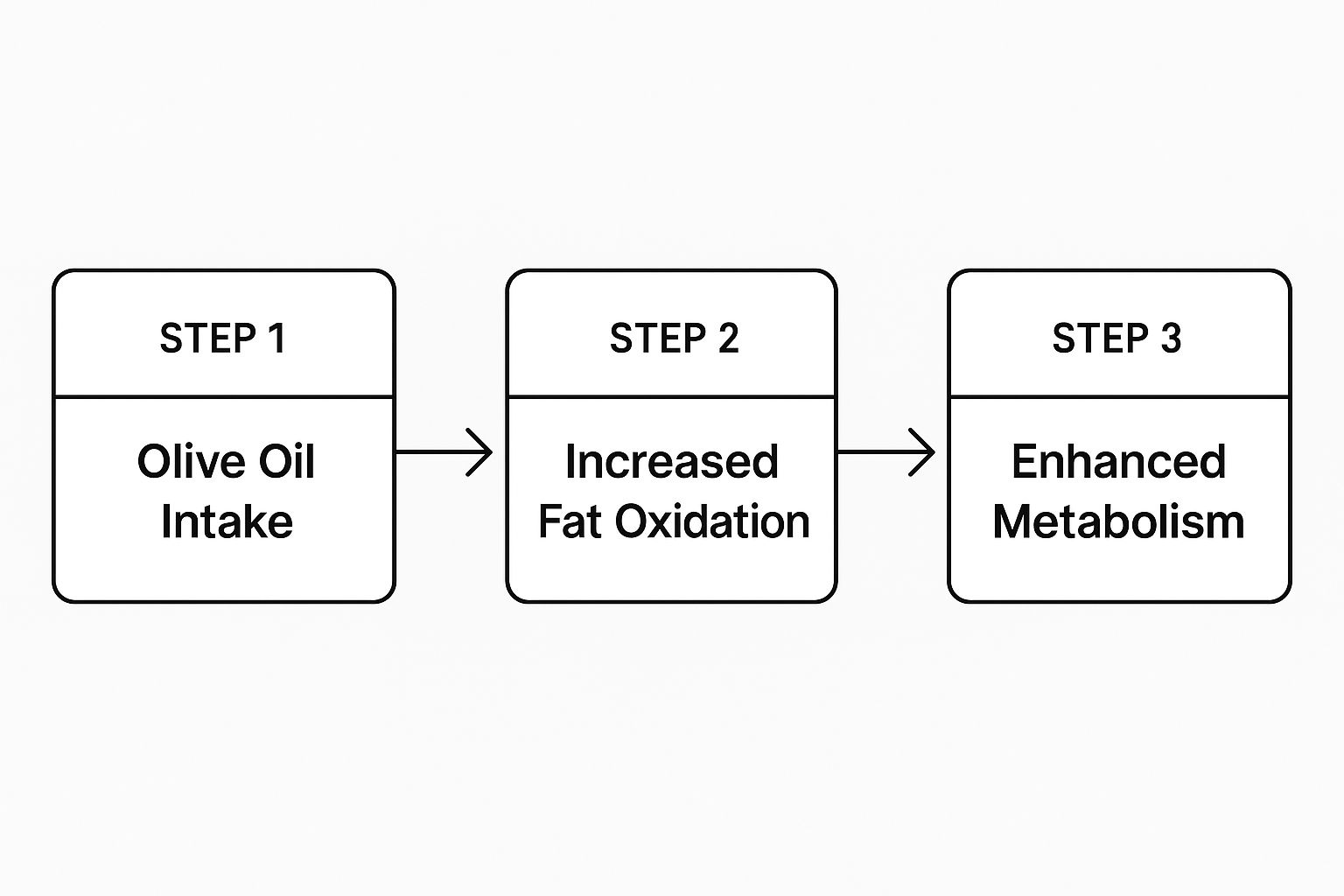
As you can see, that small daily dose encourages your body to become a more efficient fat-burning machine. And that's exactly what you want for lasting weight management.
The Power of a Smart Swap
Here’s the most important part of the strategy: you're not just pouring olive oil on top of your existing diet. The real power comes from smart substitution. It’s all about swapping out less healthy fats—think butter, margarine, or those generic vegetable oils—and putting high-quality extra virgin olive oil in their place.
This simple trade-up lets you tap into all the good stuff in olive oil without tacking on extra calories.
Think about your daily habits. It's easier than you think to make the switch:
- Instead of butter on your morning toast, try a light drizzle of a peppery EVOO. It's a game-changer.
- Ditch the creamy, store-bought salad dressings. A simple vinaigrette with olive oil, lemon juice, and a pinch of salt is far better.
- When you sauté vegetables or lean protein, reach for EVOO instead of other cooking oils.
A common mistake I see is people treating olive oil like a magic supplement they add to everything. Think of it as a replacement, not an addition. This way, you get the amazing monounsaturated fats and antioxidants while keeping your calories in check.
What Does That Daily Dose Look Like?
"One to two tablespoons" can feel a bit abstract. It’s tough to eyeball, especially at first. Having a clear mental picture of the amount makes it so much easier to get it right.
- One Tablespoon: Imagine lightly dressing a large personal salad, drizzling it over a bowl of hot soup, or finishing a plate of roasted vegetables. That's about one tablespoon.
- Two Tablespoons: This is what you'd use to make a vinaigrette for a family-sized salad or to sauté a good portion of chicken and veggies for a meal.
The science really stands behind this approach. A big 2018 review that looked at 11 different studies found that people on diets enriched with olive oil lost more weight and had smaller waists than those on standard diets. These weren't overnight results, either—the positive changes were seen over 12 weeks or more. If you want to get into the details, you can read the full research on the topic yourself.
Creative Ways to Enjoy Olive Oil Daily
Alright, now for the fun part: making olive oil for weight loss a genuinely enjoyable part of your day. Getting your daily tablespoon or two shouldn't feel like a chore. I see it as a chance to elevate your meals and make healthy food taste incredible. Let's think beyond just salad dressing and explore some truly delicious ways to weave it into your routine.
The trick is to build simple habits you'll actually stick with. One of my favorite ways to use it is as a "finishing" oil. That final, generous drizzle over a bowl of hot soup right before you dig in? It adds a velvety richness and a fresh, peppery bite that’s just fantastic. This works wonders on everything from a hearty lentil soup to a classic tomato or minestrone.
Another go-to for me is drizzling it over roasted vegetables. After you've pulled a tray of perfectly caramelized broccoli, asparagus, or sweet potatoes from the oven, a light stream of high-quality EVOO gives them a beautiful sheen and deepens their flavor in a way that just cooking with it from the start can't replicate.
Timing Your Intake for Maximum Benefit
When you consume your olive oil can be just as important as how you use it. If you want to really tap into its power to curb hunger, timing is key. I've found that having a small amount of EVOO about 20-30 minutes before your main meal can be a game-changer for appetite control.
This little trick gives the healthy fats enough time to send satiety signals to your brain. You end up feeling fuller faster and naturally serving yourself smaller portions. A simple way to do this is to have a piece of whole-grain bread dipped in a tablespoon of olive oil as a pre-dinner appetizer. Or, a small starter salad with a light vinaigrette works perfectly. It's a proactive strategy to head off overeating before you even sit down for the main course.
Expert Tip: For a powerful morning boost, try taking a tablespoon of EVOO on an empty stomach. I know it sounds a bit intense, but it can help kick-start your metabolism and promote better digestion, setting a healthy tone for the rest of the day.
Simple Mini-Recipes to Get You Started
You don't need elaborate recipes to get the benefits. Honestly, some of the most effective ways are also the simplest. Here are a few "mini-recipes" I use all the time that take seconds to prepare and can fit into any busy schedule.
-
The 30-Second Lemon-Herb Vinaigrette: This is my secret weapon against boring salads and it's way better than anything from a bottle. Just whisk together 1 tablespoon EVOO, the juice from half a lemon, a pinch of dried oregano, and a little salt and pepper. Shake it in a jar, and it's ready to go on salads, grilled chicken, or steamed veggies.
-
The Savory Yogurt Bowl: Forget the sugary fruit-on-the-bottom stuff. A savory yogurt bowl is an incredible high-protein, healthy-fat snack. Take a scoop of plain Greek yogurt and simply swirl in a drizzle of EVOO, a sprinkle of sea salt, and some fresh dill or cracked black pepper. It's surprisingly delicious and keeps you full for hours.
-
The Unexpected Smoothie Boost: This might sound a bit odd, but trust me on this one. Adding a teaspoon of olive oil to your morning smoothie is a brilliant hack. You won't taste it at all, but it adds those crucial healthy fats for sustained energy and helps your body absorb all the fat-soluble vitamins (like A, D, E, and K) from your fruits and greens. It’s an effortless win for your health goals.
Building a Lifestyle Around Healthy Fats
While using olive oil for weight loss is a smart move, let's be realistic: it's a powerful tool in your toolbox, not a magic wand. Lasting, sustainable weight management isn't about one single ingredient. It comes from weaving healthy choices together into a lifestyle, and this is where extra virgin olive oil truly shines.
Think of it as the foundation of the world-renowned Mediterranean diet. This isn't some restrictive fad; it’s a way of life built on an abundance of whole foods. We're talking plates piled high with vegetables, fruits, whole grains, and lean proteins from fish and legumes. Olive oil is the star fat source that brings it all together, pushing out the unhealthy saturated and processed fats.
Unlocking More Nutrients from Your Food
Here's a little-known trick of the trade: olive oil does more than just add incredible flavor and healthy fats. It actually helps your body absorb fat-soluble vitamins—think A, D, E, and K—found in all those veggies you're eating.
So, when you drizzle that beautiful EVOO over a salad or your roasted broccoli, you're doing more than just making it delicious. You're actually unlocking a greater nutritional punch from the vegetables themselves. It's a perfect example of synergy, where the whole meal becomes much healthier than its separate parts.
The real secret to long-term success is viewing olive oil as part of a complete system. It enhances the health benefits of everything else on your plate, making your entire diet more effective for weight loss and overall wellness.
This holistic approach is what gets results. A fascinating 2018 controlled study proved just how powerful this can be. Participants who added extra virgin olive oil to their diet lost approximately 80% more body fat than those who didn't. They saw an impressive average fat reduction of -2.4 kg, compared to just -1.3 kg for the control group, and their blood pressure improved, too. You can dive into the full study details on its additional health benefits to see the data for yourself.
Creating a Complete Wellness Strategy
Finally, always remember that diet is just one part of the equation. To make this a truly sustainable change, you need to combine these smart eating habits with regular physical activity and mindful eating.
-
Mindful Eating: Slow down and actually pay attention to your food. Savor the rich, peppery notes the olive oil adds to your meals. This simple practice helps you tune into your body’s hunger and fullness cues much more accurately.
-
Physical Activity: Moving your body regularly complements the anti-inflammatory effects of olive oil. This one-two punch helps boost your metabolism and supports your fat-loss goals even further.
When you build this kind of well-rounded lifestyle, olive oil transforms from a simple kitchen staple into an essential partner on your journey to long-term health and weight management.
Common Questions About Olive Oil and Weight Loss
https://www.youtube.com/embed/-k35KmI8hYs
When you first hear about using olive oil to help lose weight, it’s natural to have a few questions. Frankly, it sounds a bit backward at first. So let's clear the air and tackle some of the most common concerns I hear all the time.
My goal here is to give you clear, straightforward answers based on real-world experience, so you can feel confident and sidestep the usual mistakes.
Can I Just Drink a Spoonful of Olive Oil to Lose Weight?
While you technically can drink a tablespoon of olive oil, it's not a strategy I'd recommend. It misses the whole point. The real magic happens when olive oil works together with your food.
Think about it: when you drizzle that beautiful green-gold oil over a big salad or stir it into roasted vegetables, it actually slows down your digestion. This teamwork with fiber-rich foods is what really boosts that feeling of fullness, keeping you satisfied for hours.
Just shooting it straight gives you a quick hit of calories, but you lose out on the hunger-curbing power of a complete meal. Use it to make healthy foods taste incredible—that’s how you build sustainable habits.
But Isn't Cooking with Extra Virgin Olive Oil Bad?
This is probably the most persistent myth out there, and it’s time to put it to rest for good. Yes, you can—and should—cook with high-quality extra virgin olive oil (EVOO).
A good bottle of EVOO typically has a smoke point somewhere around 375-400°F (190-204°C). That range is more than high enough for the vast majority of your day-to-day cooking, like sautéing vegetables, roasting chicken, or even baking.
Not only does it add a fantastic layer of flavor, but the heart-healthy monounsaturated fats are remarkably stable under heat. Plus, many of those beneficial polyphenols actually transfer into your food as it cooks. You might want a different oil for something extreme like deep-frying, but for almost everything else, EVOO is an excellent and healthy choice.
The old idea that EVOO is just a finishing oil is completely outdated. High-quality extra virgin olive oils are true kitchen workhorses. Cooking with one is an easy upgrade that infuses your meals with health and flavor right from the start.
Won't All Those Calories in Olive Oil Make Me Gain Weight?
This is a totally fair question. After all, a single tablespoon of any oil packs about 120 calories. The secret, however, is all about substitution, not addition.
You’re not meant to just pour olive oil on top of your existing diet. The real power comes from using it to replace less healthy fats. I'm talking about things like butter, margarine, processed seed oils, or those sugary, creamy salad dressings.
Here’s what this looks like in practice:
- Ditch the butter: Instead of slathering butter on your morning toast, try a light drizzle of a peppery EVOO.
- Upgrade your dressing: Skip the store-bought ranch and whip up a simple vinaigrette with EVOO, lemon juice, and a pinch of herbs.
- Choose a better cooking fat: Sauté your onions and garlic in olive oil instead of a generic vegetable oil.
By making these simple swaps, you get the amazing appetite-suppressing benefits of olive oil without actually bumping up your total daily calories. Research consistently shows that its ability to promote satiety helps people eat less overall, making it a powerful ally for managing your weight.
How Fast Can I Expect to See Results?
Weight loss is different for everyone, depending on your starting point, your overall diet, and how active you are. It’s much healthier to think of adding olive oil as a long-term lifestyle upgrade, not a quick-fix diet trick.
In scientific studies, researchers often track significant changes in weight and body composition over a period of 12 weeks or more. That's a realistic timeframe to aim for when looking for measurable results.
That said, you’ll probably notice other positive shifts much faster. Within the first couple of weeks, many people tell me they feel much fuller after meals and have way more control over cravings. Those early wins are fantastic motivators that make it easier to stick with it for the long haul. Consistency is what really creates lasting success.
At Learn Olive Oil, we believe understanding the "why" behind healthy choices is just as important as the "how." Our goal is to empower you with the knowledge to select and use premium olive oils to elevate your health and cooking. Discover the world of authentic extra virgin olive oil and start your journey to a more flavorful, healthier lifestyle today.
 Learn Olive Oil
Leave a comment