Science has finally proven what Mediterranean grandmothers knew all along: a daily dose of high-quality extra virgin olive oil can work wonders for your blood pressure. The secret isn't magic, but a potent, natural synergy of polyphenols and heart-friendly monounsaturated fats. This liquid gold doesn't just coat your salad; it goes to work improving the very health and flexibility of your blood vessels, making it an indispensable ally in your quest for a healthier heart.
The Pantry Staple That Supports Your Heartbeat
Imagine a simple, daily ritual that quietly fortifies one of your body’s most critical functions. This isn't some fleeting health fad, but a time-honored food that has been the secret weapon for the world’s healthiest, longest-living populations for centuries. The powerful connection between extra virgin olive oil and blood pressure isn't just folklore; it's a fact, now backed by a mountain of undeniable scientific evidence.
This is about understanding how a simple drizzle of the right kind of oil can make a real, measurable difference in your life. It’s a story of powerful plant compounds, healthier arteries, and a proactive approach to wellness that begins right in your kitchen.
A Natural Ally For Your Arteries
Deep down, the reason olive oil is so profoundly good for your blood pressure lies in its unique molecular structure. Unlike highly refined vegetable oils or artery-clogging saturated fats, true extra virgin olive oil is teeming with bioactive compounds that your cardiovascular system craves.
Think of your arteries not as rigid pipes, but as supple, dynamic hoses. Their ability to expand and contract with every heartbeat is essential for maintaining healthy blood flow and pressure. The compounds in EVOO give your body a powerful helping hand in several key ways.
- Improving Endothelial Function: They nourish the delicate inner lining of your blood vessels (the endothelium), helping it stay slick, smooth, and responsive.
- Boosting Nitric Oxide: Certain polyphenols trigger the production of nitric oxide, a magnificent little molecule that signals your arteries to relax and widen.
- Fighting Oxidative Stress: Potent antioxidants get to work neutralizing the free radicals that damage vessel walls and cause them to stiffen and age prematurely.
This isn't just theory; it’s proven in the real world. In one landmark study, an astonishing 35% of participants were able to reduce or even eliminate their blood pressure medication entirely after consistently using extra virgin olive oil for just six months.
Let's break down how these benefits work for you.
How Olive Oil Supports Healthy Blood Pressure
This table gives a quick summary of the primary ways extra virgin olive oil supports cardiovascular health and helps manage blood pressure.
| Benefit Area | How It Works for You |
|---|---|
| Artery Flexibility | Boosts nitric oxide, a natural vasodilator that helps arteries relax and widen, improving blood flow. |
| Vessel Health | The monounsaturated fats and antioxidants protect the delicate lining of your blood vessels from damage. |
| Reduces Inflammation | Compounds like oleocanthal have anti-inflammatory effects, which is crucial for long-term cardiovascular health. |
| Combats Oxidative Stress | Polyphenols act as powerful antioxidants, neutralizing harmful free radicals that can stiffen arteries over time. |
Of course, this is no overnight miracle. The real secret is consistency.
"The daily consumption of extra virgin olive oil, a cornerstone of the Mediterranean diet, is not just a culinary choice but a therapeutic one. It offers a natural, evidence-based strategy for supporting vascular health and maintaining healthy blood pressure levels."
Making high-quality EVOO a non-negotiable part of your daily meals allows these benefits to compound, building a more resilient cardiovascular system from the inside out. To get a better sense of everything packed into this amazing oil, you can learn more about the complete nutrition facts of olive oil in our detailed guide.
Unlocking the Science Inside the Bottle
So, what is it inside extra virgin olive oil that makes it so astonishingly effective for blood pressure? It's not magic, but a powerful cocktail of natural compounds working in perfect harmony inside every single drop.
To truly grasp this, let's look at your circulatory system. Your arteries aren't just stiff pipes; picture them as flexible, living hoses that must expand and contract with every beat of your heart. Keeping them in peak condition is everything. This is where EVOO enters the picture—it delivers a team of highly specialized compounds that act as tireless protectors for these vital pathways.
The Polyphenol Powerhouse
The undisputed champions in the olive oil story are its polyphenols. This isn't just a fancy word; these are potent antioxidant compounds that give high-quality EVOO its signature peppery kick and the lion's share of its health benefits. Two of the most studied are oleuropein and hydroxytyrosol.
These compounds are like a microscopic special-ops team for your blood vessels. They patrol your arteries, neutralizing damaging molecules called free radicals that cause oxidative stress—a process you can think of as rust forming inside your body. This protection is vital for keeping the smooth inner lining of your arteries, the endothelium, healthy and responsive.
A happy endothelium is the gatekeeper of your entire vascular system. When it’s working correctly, your body can properly produce one of its most important signaling molecules: nitric oxide.
Think of nitric oxide as a natural muscle relaxant for your arteries. It’s the messenger that tells the smooth muscles in your artery walls to ease up, allowing them to widen. This makes it far easier for blood to flow through, which naturally lowers the pressure in the system—just like opening up the nozzle on a garden hose reduces the force of the water.
This visual breaks down how olive oil's key players work together to support your circulatory health.
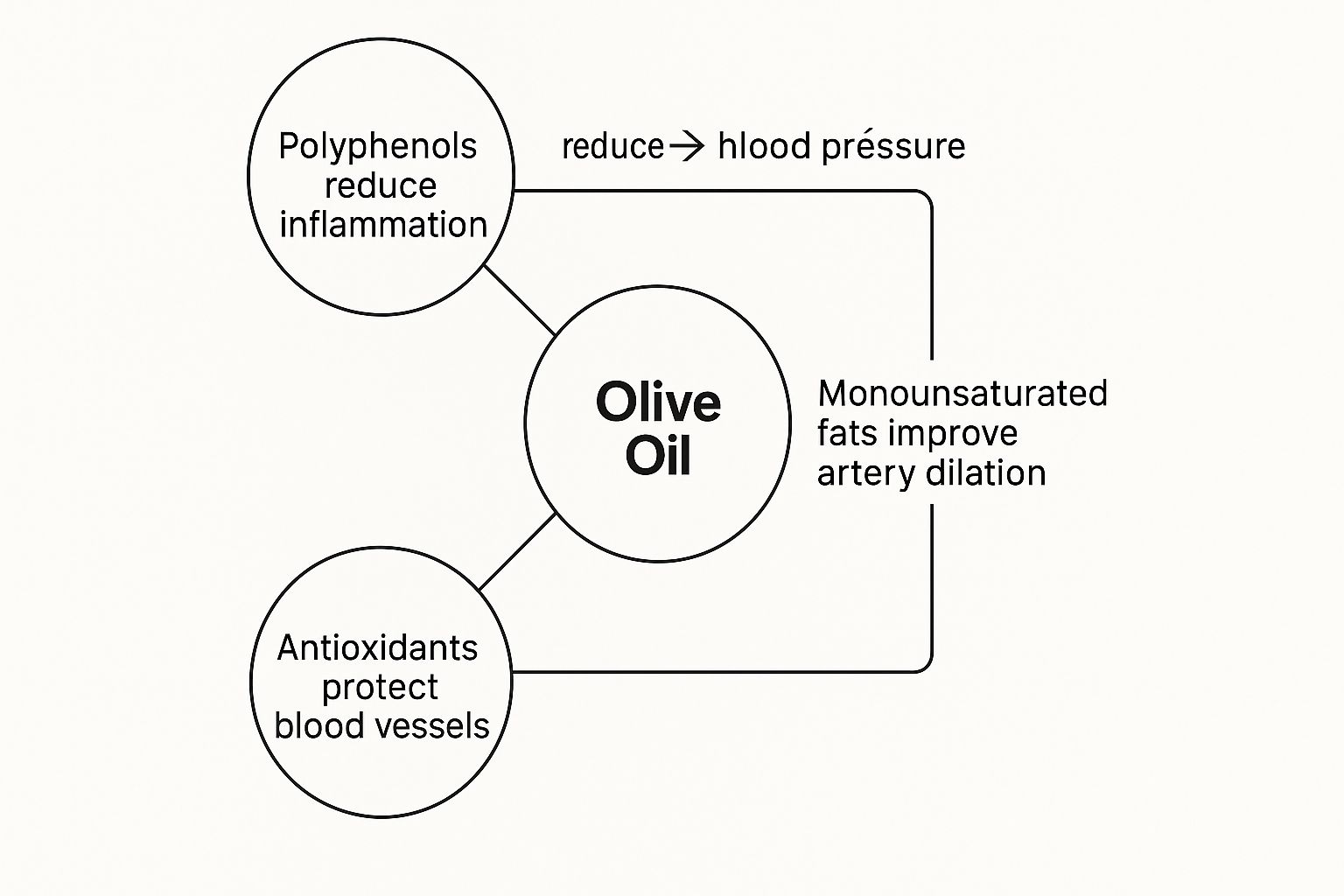
As you can see, the polyphenols, healthy fats, and other antioxidants in olive oil create a powerful, multi-pronged approach to managing blood pressure.
Calming Inflammation and Boosting Function
But the benefits don't stop there. We now know that chronic, low-grade inflammation is a silent enemy of heart health, making arteries stiff and less flexible over time. The polyphenols in EVOO have a remarkable ability to cool this internal fire. If you want to dive deeper into this, our guide on how olive oil combats inflammation is a great next step.
This anti-inflammatory action works hand-in-hand with its antioxidant properties to create a much healthier environment inside your arteries. The science on this is remarkably clear. Research has proven that EVOO intake can directly lower blood pressure by influencing the exact pathways involved in oxidative stress and nitric oxide production. In essence, compounds like oleuropein and hydroxytyrosol improve vascular function by dialing down inflammatory signals and protecting the vessels from damage.
Don't Forget the Healthy Fats
While polyphenols often steal the spotlight, we can't forget the very foundation of olive oil: its high concentration of monounsaturated fats, mostly in the form of oleic acid. These healthy fats play a critical supporting role.
They help improve your overall cholesterol profile by lowering "bad" LDL cholesterol while supporting "good" HDL cholesterol. This is huge, because high LDL levels can lead to plaque buildup in the arteries (atherosclerosis), which narrows the vessels and forces blood pressure to climb.
When you replace saturated and trans fats in your diet with the monounsaturated fats from olive oil, you're not just getting a dose of antioxidants—you're fundamentally upgrading the building blocks of your cardiovascular health. It’s this one-two punch of powerful polyphenols and superior fats that makes extra virgin olive oil such a valuable ally.
Why Not All Olive Oils Are Created Equal
You've stood there in the grocery store aisle, I'm sure of it. Staring at a wall of olive oil bottles labeled 'Pure,' 'Light,' 'Virgin,' and the one that always seems to have a premium price tag, 'Extra Virgin.'
These labels aren't just marketing fluff. They signify a world of difference in how the oil was made, what it tastes like, and most importantly for our purposes, how much good it can do for your body—especially your blood pressure.
If there's one single takeaway from all of this, let it be this: for the powerful, blood-pressure-lowering effects we're talking about, only Extra Virgin Olive Oil (EVOO) will do the job.
Think of EVOO as the cold-pressed, fresh juice of the olive. It’s pure and unadulterated. In contrast, oils labeled 'Light' or 'Pure' have been refined using heat and chemicals, a process that strips them of the very compounds—the polyphenols—that are the heroes of this story.
The Proof Is in the Peppery Bite
Have you ever tasted a truly great olive oil and felt a slight tickle or a peppery sensation at the back of your throat? That’s not a flaw. That's the hallmark of power.
That distinct kick is the calling card of a high-polyphenol oil, specifically from a compound called oleocanthal. It's nature's way of telling you this oil is fresh, packed with antioxidants, and ready to get to work protecting your cardiovascular system. An oil that just tastes greasy or buttery is missing these critical components. It’s fine for cooking, but it won’t provide the therapeutic punch you’re after.
A fantastic real-world example of this is the Australian OLIVAUS trial. Researchers split volunteers into two groups. One got a high-polyphenol EVOO (360 mg/kg), and the other got a low-polyphenol version (86 mg/kg). The results were night and day. After just three weeks, only the group taking the high-polyphenol oil saw a meaningful drop in their systolic blood pressure. You can see the full research on polyphenol impact for yourself.
This study makes it crystal clear: the polyphenol count is directly tied to the oil's power to support healthy blood pressure.
Your Guide to Choosing a Powerful Oil
You don’t need to be a professional taster to pick a winning bottle. You just need to know the secret signals to look for. Here’s how to go from a confused shopper to a confident buyer.
- Hunt for the Harvest Date: This is the single most important date on the label, far more so than the "best by" date. Polyphenols degrade with time. You want the freshest oil you can find, so always look for a bottle from a harvest within the last year.
- Insist on Dark Packaging: Light is the mortal enemy of olive oil. It demolishes those precious polyphenols and causes the oil to go rancid faster. Always, always choose oil in dark glass bottles or opaque metal tins. A clear bottle is a giant red flag.
- Trust Your Senses: A genuine EVOO shouldn't taste neutral. It should have character! Look for "green" flavors like fresh-cut grass, artichoke, or herbs, followed by that signature peppery finish in your throat.
Making these small adjustments when you shop ensures the oil you bring home isn't just another ingredient, but a potent tool for your heart health. This is just one of many ways food can be your ally; you can explore the many other health benefits of olive oil in our guide.
Finding Your Daily Dose for Optimal Results
Knowing that high-quality extra virgin olive oil is good for you is one thing. Figuring out exactly how much you need to see a real difference in your blood pressure—that’s where the magic truly happens.
This isn't about guesswork or drowning your food in oil. It's about translating solid science into a simple daily habit. The most successful clinical trials didn't have people chugging bottles of the stuff. Instead, they landed on a consistent, moderate amount that's surprisingly easy to work into your life.
Most research points to a sweet spot of two to four tablespoons per day. This is the range that has repeatedly been shown to move the needle on blood pressure readings.
What Does That Look Like on Your Plate?
So, what does two to four tablespoons actually look like in a day? It's probably less than you think, and it fits into your meals more naturally than you'd imagine. You definitely don’t need to drink it straight (unless you want to).
The best way to think about it is making EVOO your primary source of fat. When you use it, you’re naturally replacing less healthy options like butter, margarine, or other processed vegetable oils. This swap gives you a double benefit: you're adding the good stuff while taking out the bad.
Here’s how easily you can hit that target:
- One tablespoon makes a fantastic, generous dressing for your lunchtime salad.
- One tablespoon is perfect for sautéing your vegetables for dinner.
- Another tablespoon drizzled over finished soup, pasta, or roasted fish adds a huge pop of flavor.
See? Suddenly, hitting that daily goal feels less like a prescription and more like a delicious upgrade to every meal.
Daily EVOO Intake Recommendations from Key Studies
To give you a clearer picture, here's a look at the daily amounts used in some important studies and the effects they observed. This helps connect the science to your daily routine.
| Daily Amount (Approx.) | Observed Blood Pressure Effect | Study Context |
|---|---|---|
| 30-40 mL (~2-3 tbsp) | Significant reduction in both systolic and diastolic readings | High polyphenol EVOO given to hypertensive patients over several weeks |
| 50 mL (~3.5 tbsp) | Notable drop in blood pressure, allowing some to reduce medication | Part of a Mediterranean diet intervention for individuals at high cardiovascular risk |
| 25 mL (~1.5-2 tbsp) | Improved endothelial function and reduced blood pressure | Compared against sunflower oil in a crossover trial with healthy adults |
These studies reinforce that a consistent, moderate daily intake is what delivers the results. You don't need excessive amounts, just quality oil used regularly.
The real goal is to make high-quality EVOO your go-to fat, not just an occasional guest star in your kitchen. Consistency is far more important than the amount you use on any single day. A steady daily intake is what allows the oil's powerful polyphenols to really get to work on your vascular system.
Making Every Drop Count
Now, let's tackle a couple of common questions. Should you have it all at once? And does heating it destroy all the benefits?
Spreading your intake throughout the day is generally the best approach. This gives your body a steady supply of those beneficial compounds. A little at breakfast, some more at lunch, and a final drizzle at dinner is a perfect strategy.
And what about cooking? The idea that you can't cook with EVOO is a stubborn myth. A good quality extra virgin olive oil has a smoke point that is more than high enough for everyday cooking methods like sautéing and light roasting. While some of the most delicate polyphenols can be lost to very high heat, plenty of the good stuff remains.
For the best of both worlds, use it both cooked and raw. Cook with your EVOO, but also make a habit of using it as a finishing oil on dishes or in dressings. This ensures you’re getting the full, powerful spectrum of its blood pressure-lowering benefits.
If you want to dive deeper, you can explore our complete answer to how much olive oil you should have per day.
More Than a Number: The Ripple Effect on Heart Health

Watching your blood pressure numbers improve is great, but that's really just the tip of the iceberg. The real magic of bringing extra virgin olive oil into your diet is the incredible ripple effect it sends across your entire cardiovascular system. It's not a one-trick pony; think of it as a comprehensive support system for your long-term heart health.
When you start using EVOO regularly, you're kicking off a whole cascade of positive changes. This isn't just about tweaking a single health metric. It’s about building a stronger, more resilient circulatory system from the inside out, creating an environment where your heart can truly thrive.
Taming Cholesterol: The Good, The Bad, and The Oily
One of the biggest wins for your heart is how extra virgin olive oil handles cholesterol. Your bloodstream has a couple of different cholesterol carriers, and keeping them balanced is non-negotiable for good health.
- LDL (Low-Density Lipoprotein): This is the infamous "bad" cholesterol. When LDL levels get too high, it leads to fatty plaque building up in your arteries—a process called atherosclerosis. This narrows and hardens the vessels, making your heart work overtime and pushing blood pressure up.
- HDL (High-Density Lipoprotein): Meet the "good" guy. HDL acts like a cleanup crew, grabbing excess cholesterol from your arteries and hauling it back to the liver to be processed and removed.
Thanks to its rich supply of monounsaturated fats, extra virgin olive oil is brilliant at this balancing act. It has been shown to help lower harmful LDL levels while at the same time maintaining or even boosting protective HDL levels. This one-two punch is fundamental for keeping your arteries clear and flexible, which is a cornerstone of healthy blood pressure.
Cooling the Fires of Silent Inflammation
Beyond cholesterol, another sneaky threat to your heart is chronic inflammation. We're not talking about the obvious swelling from a sprained ankle. This is a low-grade, constant irritation simmering inside your blood vessels, contributing to all sorts of cardiovascular issues.
This is where the polyphenols in EVOO, especially a compound called oleocanthal, really step up. They have powerful anti-inflammatory properties, essentially acting as a natural soothing agent for your entire circulatory system.
By consistently taming this internal fire, you're not just managing a symptom—you're addressing one of the root causes of arterial stiffness and dysfunction. This creates a healthier, less reactive environment within your blood vessels, allowing them to function as they were designed.
This holistic approach to heart wellness is exactly why the Mediterranean diet, with EVOO as its star player, is so effective. It’s not just about one ingredient, but the cumulative benefits that build up day after day. For a deeper look at the science, check out our complete guide on using olive oil for blood pressure management.
Seeing those numbers drop on the blood pressure cuff is a fantastic victory. But the real peace of mind comes from knowing you’re also optimizing cholesterol, fighting silent inflammation, and protecting your arteries for the long haul. That’s the full, reassuring picture of what you’re doing for your heart.
Your Questions Answered
Alright, let's get down to brass tacks. When you decide to make a real change for your health, the "how-to" questions always start bubbling up. It's great to know the science, but it's even better to feel confident about weaving it into your daily life.
This is where we clear the air on the most common questions about using olive oil for blood pressure. Think of this as your straight-talk guide to making this simple, powerful change a natural part of your life.
Can Olive Oil Replace My Blood Pressure Medication?
This is the big one, and the answer is a firm and absolute no—not without a direct, detailed plan from your doctor.
Think of extra virgin olive oil as your medication's most powerful ally, not its replacement.
Incredible studies have shown that a diet rich in high-quality EVOO can sometimes reduce the need for medication, but it's a supportive measure. Your prescription is a highly specific tool designed to keep your blood pressure in a safe range right now. Olive oil works differently, playing the long game by investing in the health of your entire vascular system. It helps improve artery flexibility, cool inflammation, and fight off oxidative stress.
It’s working to make your body a healthier, more responsive place, which in turn can make your doctor's treatments even more effective. You must always—without exception—discuss any significant dietary changes with your healthcare provider. Never, ever adjust or stop your medication on your own.
Here's a good way to see it: your medication is the emergency response team, while olive oil is the crew working day in and day out to strengthen the entire infrastructure. They are partners, not competitors.
Will Cooking with EVOO Destroy Its Health Benefits?
This is a persistent myth that we can finally put to bed. The fear of cooking with extra virgin olive oil is largely unfounded and, frankly, keeps people from enjoying its full potential.
High-quality EVOO is much more stable than most people think. Its smoke point is usually between 375°F and 410°F (190°C to 210°C). That’s well above the heat you’d use for most everyday cooking, like sautéing, roasting, and even light frying.
So what about those precious polyphenols? While it's true that scorching heat over a long time can degrade some of them, a surprising number hold up just fine during normal cooking. More importantly, the foundation of the oil—its heart-healthy monounsaturated fats—is very stable. You're still getting tremendous cardiovascular benefits when you cook with it.
The best strategy is a two-pronged approach:
- Cook with It: Make it your go-to oil for sautéing vegetables, building sauces, or roasting fish and chicken.
- Finish with It: Drizzle a fresh, raw stream over your finished dishes. A splash on soup, salad, grilled bread, or steamed veggies gives you that full, unadulterated dose of polyphenols and flavor.
That way, you get the best of both worlds.
How Quickly Can I Expect to See a Difference?
In our world of instant gratification, this is a tough but necessary truth: dietary changes are a marathon, not a sprint. The blood pressure benefits from olive oil are cumulative. They build slowly and consistently over time.
Think of it like planting a tree. You don’t see a giant oak overnight. But with steady watering and good soil, the roots grow deep and strong long before you see much happening above ground. It's the same with EVOO. From day one, those polyphenols and healthy fats are working behind the scenes to nourish your blood vessels and calm inflammation.
Most clinical studies that see a noticeable drop in blood pressure run for several weeks, if not a few months. That’s because the physical changes to your vascular system—like improving endothelial function and reducing arterial stiffness—are gradual biological processes.
Let go of any expectation for an overnight fix. Instead, embrace this as a foundational, long-term habit. Your reward isn't just a better number on a machine; it's the deep, lasting resilience you're building inside your body. Patience and consistency are your two greatest allies here.
Is It Possible to Have Too Much Olive Oil?
While extra virgin olive oil is a nutritional champion, it's still a fat, which means it's calorie-dense. A single tablespoon has about 120 calories. So yes, it is absolutely possible to have too much of a good thing if it leads to you consuming too many calories overall.
The real magic of the Mediterranean diet isn't just about adding gallons of olive oil to what you already eat. It’s about substitution.
You’re using this incredibly healthy fat to replace less healthy ones.
- Instead of butter on your toast, a drizzle of EVOO.
- Instead of a creamy, saturated-fat-based dressing, a simple vinaigrette.
This simple act of swapping is where the benefits truly compound, letting you upgrade the quality of your fats without just piling on extra calories.
The common recommendation of two to four tablespoons a day is a great target for most people as part of a balanced diet. This gives you a therapeutic dose of polyphenols and healthy fats without sending your calorie count sky-high. It’s all about smart, delicious integration.
At Learn Olive Oil, we believe that understanding the nuances of this incredible food is the first step toward unlocking its profound health benefits. Our goal is to empower you with the knowledge to choose, taste, and use the best olive oils with confidence.
Explore our expert guides and discover how to make this liquid gold a delicious and rewarding part of your heart-healthy lifestyle. Discover the World of Premium Olive Oil at learnoliveoil.com


Leave a Reply