Close your eyes for a moment. Imagine ancient olive groves, their silvery leaves shimmering in the African sun, reaching towards the majestic Atlas Mountains. Can you feel the crisp, clean air? You are standing in the heartland of Moroccan olive oil, a treasure hidden from the world for centuries, and now, its story is finally being told. This isn't just another bottle on the shelf; it's a taste of a rugged land, a tenacious culture, and a history that flows as deep as the roots of its ancient trees.
The Unforgettable Character of Morocco's Liquid Gold
You may think you know olive oil. You've tasted the soft, buttery notes of Italy, the fruity whispers of Spain. But prepare yourself. Moroccan olive oil is a different beast entirely. So, what is its secret? What gives it a character so bold it threatens to rewrite the rules of a world long dominated by its European neighbors? It's not one thing. It's a powerful conspiracy of land, tree, and tradition. Think of it less like a generic cooking fat and more like a fine, single-vineyard wine—every detail matters profoundly.
It begins with the terroir—a simple word for the soul of the place where the olives grow. In Morocco, many groves cling to life in rugged, mountainous landscapes. The harsh growing conditions force the olive trees to fight for survival. This struggle, however, is a blessing in disguise. It compels them to produce an arsenal of protective compounds. The result? An oil with an electrifyingly intense flavor and a payload of nutrients almost unheard of in milder climates.
A Flavor Profile That Stands Alone
Forget what you expect. Moroccan olive oil announces its presence with authority. It is bold, complex, and defined by a signature peppery kick that blossoms at the back of your throat. That tingling sensation is not a flaw—it's a promise. It is the unmistakable calling card of an oil brimming with life-giving polyphenols.
That "spicy" or "peppery" sensation you feel is not a defect. It is the very taste of power. It's the mark of potent antioxidants called polyphenols, nature's bodyguards, doing their job. A stronger kick signals a healthier, more potent oil.
These microscopic powerhouses are the secret to the oil's magic. They don't just forge its vibrant, pungent taste; they are the very source of its legendary health benefits. You are not just tasting flavor; you are tasting pure, unadulterated potency. If you wish to understand the science behind this sensation, our guide on high-polyphenol olive oil unveils precisely why this peppery finish is so coveted by those in the know.
Why the World is Finally Paying Attention
For generations, this remarkable oil was a secret jealously guarded by Moroccan families. But secrets this good don't stay hidden forever. The world is waking up. The most discerning chefs and food lovers across the globe are now hunting it down, discovering that it brings a depth and complexity to their dishes that other oils simply cannot touch.
Here is the anatomy of its greatness:
- A One-of-a-Kind Olive: The native Picholine Marocaine olive is the undisputed star, a tenacious fruit that yields an oil with distinctive notes of fresh-cut grass, green almond, and that iconic spicy finish.
- A Flood of Healthy Fats: It is brimming with oleic acid, a monounsaturated fat that is the cornerstone of heart health.
- An Antioxidant Arsenal: Forged in those tough growing conditions, the oil is naturally supercharged with antioxidants, making it a formidable addition to any wellness-focused diet.
In this guide, we will pull back the curtain on this liquid gold. We will journey into its rich history, witness how it's made, and reveal exactly why a bottle of authentic Moroccan olive oil has earned its place in your kitchen. Prepare to meet your new favorite ingredient.
From Ancient Groves to a Global Contender
The story of olive oil in Morocco is as ancient as the gnarled, twisted trees that punctuate its landscape. This is a history written in roots that plunge deep into Berber, Roman, and Arab soil, with some groves having stood as silent witnesses for centuries. These are not just farms; they are living monuments, the lifeblood of Moroccan families for generations.
For most of that time, this liquid gold was a story told only around Moroccan tables. It was the heart of the kitchen, the cornerstone of daily life, but it rarely ventured beyond the nation's borders. But something has changed. A quiet revolution has been unfolding in these sun-drenched groves.
What was once a cherished local staple is rapidly becoming a global powerhouse, challenging an industry long dominated by European giants. It is a classic underdog story—a tale of how profound tradition is fueling a modern triumph.
The Dawn of a New Era
What ignited this incredible rise? It wasn't a single spark, but a perfect storm of God-given growing conditions and sheer human ambition. Morocco's unique climate, with its intense sun and rugged terrain, naturally "stresses" the olive trees. It sounds cruel, but this hardship is a gift, forcing the olives to develop astonishingly robust flavors and a high concentration of powerful antioxidants.
This natural advantage is now being sharpened by a new generation of passionate producers. They are fusing time-honored harvesting wisdom with state-of-the-art milling technology to craft oils of breathtaking quality. The result? A product that feels both deeply, authentically Moroccan and is polished enough for the world's most discerning palate.
Morocco isn't just testing the waters of the global olive oil market; it's launching an invasion. By marrying its unique terroir with modern precision, the nation is challenging the old guard and rewriting what consumers should expect from a premium olive oil.
This is more than an agricultural success story; it is a narrative of national pride and unwavering ambition.
A Production Boom Echoing Around the World
The numbers tell a story of explosive power. Morocco's olive oil output is rocketing, with projections showing the country is on a trajectory to produce about 200,000 tons—more than doubling its recent figures. This stunning surge is fueled by ideal weather, which is expected to yield a harvest of 2 million tons of olives. With Moroccans consuming around 140,000 tons themselves, a massive surplus is ready for export, signaling the country's readiness to meet fierce international demand. You can get the full story on this incredible growth in this in-depth agricultural report.
Growth this explosive does not go unnoticed. It is a direct challenge to the established order, and the world is sitting up and taking notice.
Morocco’s Unique Advantages
What is Morocco's secret weapon in this global contest? It comes down to a few key factors:
- A Signature Olive: While other nations cultivate a wide array of olives, Morocco's identity is forged almost entirely by one native variety: the Picholine Marocaine. This creates a remarkably consistent and distinctive flavor profile that cannot be mistaken.
- The Perfect Terroir: The mountainous landscapes create a unique microclimate that coaxes a bold, peppery character from the olives—a taste that is nearly impossible to replicate anywhere else on Earth.
- A Rich Heritage: The olive tree is woven into the very fabric of Moroccan culture, from ancient recipes to its powerful symbolism. This deep connection tells a powerful story that resonates with consumers searching for real, authentic products. You can trace the fascinating lineage of this fruit by reading about the origin of olive oil.
From the silent, ancient groves to the bustling international marketplace, the journey of Moroccan olive oil is a powerful lesson in what happens when deep tradition meets forward-thinking ambition. This is not a fleeting trend; it is the arrival of a formidable new player on the world's culinary stage.
The Unmistakable Flavor of the Picholine Marocaine Olive
So, what is the secret behind Moroccan olive oil's distinct, almost unforgettable personality? It isn’t a complex blend or a hidden production trick. The entire story—the bold flavor, the peppery fire, the deep green hue—flows from one incredibly resilient olive: the Picholine Marocaine.
This native variety is the heart and soul of the nation's liquid gold. Nearly every single drop of Moroccan olive oil owes its character to this one magnificent fruit.
Consider this: Italy is famous for its hundreds of olive cultivars, each with its own subtle voice. Morocco, on the other hand, stakes its entire reputation on this one remarkable olive. This singular focus creates a signature flavor that is both powerful and instantly recognizable the moment it touches your tongue.
The rugged terrain and intense sun of the Atlas Mountain foothills forge the Picholine Marocaine's character. The trees here do not have it easy, and this "positive stress" pushes the fruit to produce a higher concentration of protective compounds. Those very compounds are the source of both its intense flavor and its powerful health benefits.
A Sensory Journey in Every Drop
Tasting a high-quality Picholine Marocaine oil is a world away from its milder European cousins. It doesn't just sit politely in the background; it announces its presence with a confidence and complexity that is utterly unique. This is not a buttery, mellow finishing oil—this is an ingredient with a strong, unapologetic point of view.
The experience unfolds in three dramatic acts:
- A Bright, Green Overture: The first thing you'll notice is a vibrant, green note. Imagine the clean aroma of fresh-cut grass or the nutty snap of a green almond. It is an invigorating opening that awakens the palate.
- Earthy, Fruity Heart: Immediately following that green burst, a more complex fruitiness emerges. It’s less like sweet, ripe fruit and more in the realm of artichoke or even green tomato leaf—savory, complex, and deeply earthy.
- The Signature Peppery Finale: This is the grand climax. The experience culminates in that trademark peppery kick in the back of your throat. This assertive, spicy sensation is the undeniable hallmark of a high-polyphenol Moroccan olive oil.
That peppery finish is not a defect—it is the calling card of a premium Moroccan oil. The tingling you feel is a direct signal from oleocanthal, a potent anti-inflammatory polyphenol that is the ultimate confirmation of the oil's freshness and power.
This bold, assertive profile is what makes Moroccan olive oil such a potent culinary weapon. It can stand up to powerful spices in marinades, add profound depth to a tagine, or give a zesty dressing an unbreakable backbone. If you're curious about honing your own tasting skills, our guide on what olive oil tastes like can help you develop your palate.
To give you a clearer sense of where Moroccan olive oil fits in the global landscape, here's how it stands against other major players.
A Taste of Terroir: Comparing Major Olive Oil Varieties
| Origin | Primary Olive Variety | Dominant Flavor Notes | Best Culinary Use |
|---|---|---|---|
| Morocco | Picholine Marocaine | Grassy, artichoke, with a strong, peppery finish. | Robust dishes, marinades, tagines, grilling. |
| Spain | Picual | Green tomato leaf, fig, slightly bitter. | Gazpacho, paella, drizzling on cured meats. |
| Italy | Frantoio | Fruity, herbal, with a pleasant, mild bitterness. | Pasta sauces, bruschetta, dipping bread. |
| Greece | Koroneiki | Green banana, herbaceous, with a gentle peppery finish. | Greek salads, grilled fish, lemon-based dressings. |
As you can see, the Picholine Marocaine stands out for its sheer intensity, making it a powerful and thrilling addition to any kitchen.
The Heart of a Growing Industry
The Picholine Marocaine is not just a cultural touchstone; it is the engine of a massive agricultural sector. Morocco now boasts over 1 million hectares of olive groves, and the vast majority are dedicated to this one phenomenal variety.
This colossal cultivation effort has propelled annual production to around 200,000 tons, cementing Morocco's place among the world's elite olive oil producers.
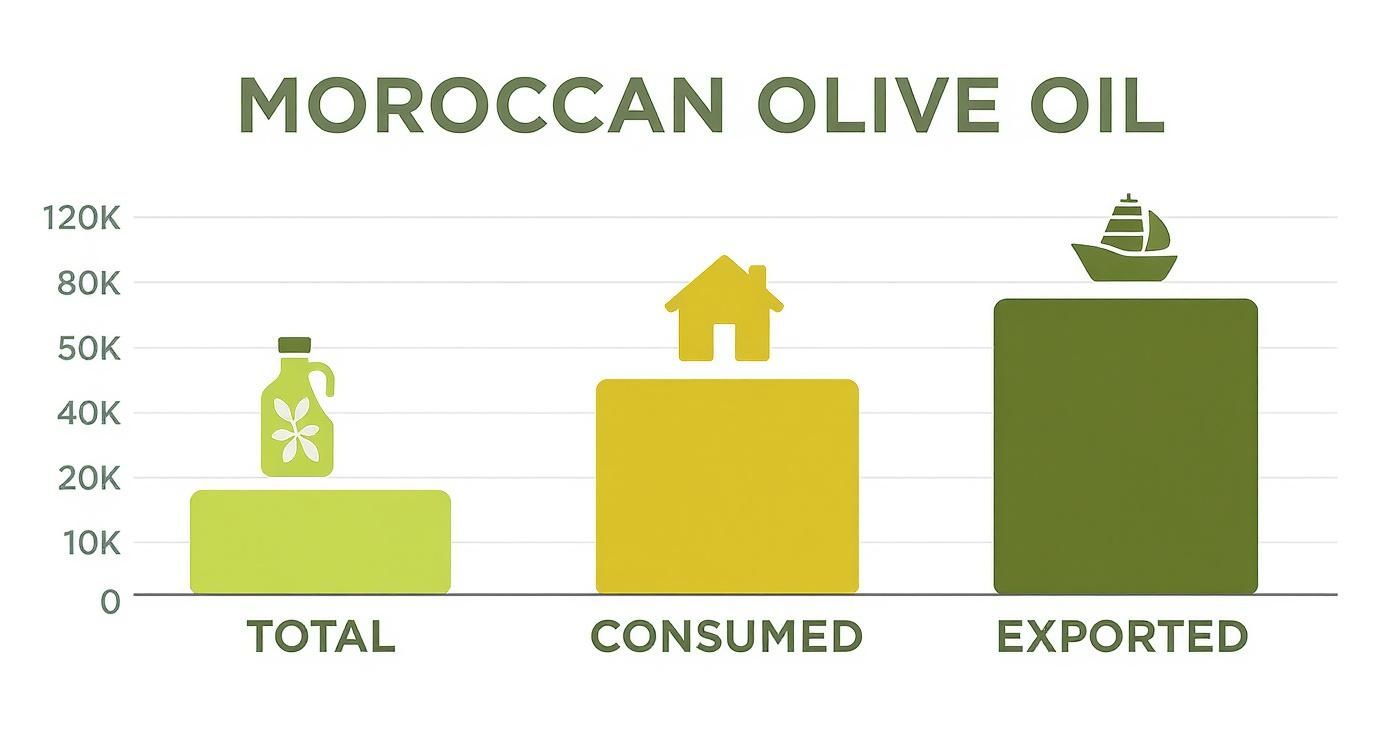
This data reveals a fascinating story. While Moroccans clearly cherish their native oil, a growing portion is now destined for international markets. The world is finally getting a taste of the unique, bold flavor of the Picholine Marocaine, and this one olive is shaping the entire country's agricultural destiny.
The Powerful Health Benefits in Every Drop
Yes, the vibrant, peppery taste of Moroccan olive oil is reason enough to give it a place of honor in your kitchen. But the real story—the one that truly matters—is what's happening at a molecular level. Hidden within that incredible flavor lies a powerhouse of health-promoting properties that makes every single drizzle an investment in your well-being.
The magic begins with something you can actually feel. You know that assertive, spicy kick at the back of your throat? That is the tell-tale sign of polyphenols, potent antioxidants that serve as the olive tree’s own natural defense system. When you consume them, they get to work protecting you, too.
These microscopic bodyguards wage war on your behalf against oxidative stress—a destructive process you can think of as cellular rust. By neutralizing unstable molecules known as free radicals, they help shield your cells from damage and keep chronic inflammation at bay.
The Heart of the Matter: Oleic Acid
One of the undisputed champions in Moroccan olive oil is its impressive concentration of oleic acid. This isn't just any fat; it’s a monounsaturated omega-9 fatty acid, the very foundation of the famously heart-healthy Mediterranean diet. It is the "good fat" your cardiovascular system was designed to thrive on.
Study after study has confirmed that a diet rich in oleic acid helps maintain healthy cholesterol levels. It works by helping to lower LDL (the "bad" cholesterol) while sometimes giving a boost to HDL (the "good" cholesterol). Simply incorporating this oil into your daily meals is a delicious and profoundly effective way to support one of your body's most vital organs.
The true power of an olive oil like this is not found in a single compound, but in the beautiful synergy of all its parts. The polyphenols, oleic acid, and vitamin E work in concert, creating a health benefit far greater than the sum of its individual components.
This potent combination gives your body a shield against the daily stressors that wear it down. You're not just dressing a salad; you're arming your body with a natural toolkit for wellness. For a deeper dive, explore our complete guide on the health advantages of olive oil.
More Than Just Heart Health
The good news doesn't stop with your heart. The powerful anti-inflammatory properties of the polyphenols in Moroccan olive oil, especially a compound called oleocanthal, send ripples of wellness throughout the body. In fact, oleocanthal is renowned for its ibuprofen-like effects, helping to cool inflammation naturally and effectively.
This natural anti-inflammatory action can play a crucial role in:
- Supporting Brain Function: Since chronic inflammation is linked to cognitive decline, the compounds in high-quality olive oil can help protect neural pathways and support long-term brain health.
- Promoting Healthy Skin: The combination of antioxidants and healthy fats nourishes your skin from within, helping it fight back against damage from UV rays and pollution.
- Aiding Joint Health: By taming systemic inflammation, regular consumption may help soothe the discomfort linked to conditions like arthritis.
Beyond these specific benefits, Moroccan olive oil is a superb source of antioxidants. To get a better sense of how to build an all-around protective diet, you can explore other foods rich in antioxidants. At the end of the day, every spoonful of this liquid gold is a step toward a more vibrant, resilient you.
How to Use Moroccan Olive Oil in Your Kitchen
An exceptional bottle of Moroccan olive oil was never meant to sit on a shelf looking pretty. Its assertive, complex character practically demands to be put to work. You should think of it less as a background ingredient and more as a star player—one that can elevate a simple meal into something truly unforgettable.
Do not make the mistake of thinking its bold flavor is limiting. The opposite is true. This oil has the structural integrity to stand up to intense spices, complement rich meats, and completely transform the most humble vegetables.
Let’s get practical. Here is how you can unleash its full potential in your kitchen, moving far beyond a simple finishing drizzle.
The Foundation of Flavor
In Moroccan cooking, olive oil is far more than a simple cooking fat; it is the very soul of the dish. It serves as the starting point for the incredible layers of flavor that define the country's most iconic recipes.
-
For the Perfect Tagine: Begin by warming a generous amount of Moroccan olive oil in the base of your tagine. Sautéing onions, garlic, and spices like cumin, turmeric, and ginger in the oil creates an aromatic foundation that infuses the entire dish. Its peppery notes are the perfect counterpoint to the sweetness of apricots or prunes often found in these slow-cooked masterpieces.
-
As a Base for Chermoula: This quintessential Moroccan marinade is a vibrant, explosive blend of herbs, spices, lemon, and olive oil. Using an authentic Moroccan oil is non-negotiable here. Its robust character binds the flavors of cilantro, parsley, and garlic together, creating a zesty, pungent sauce that is absolutely transformative on grilled fish, chicken, or roasted vegetables.
Beyond Traditional Moroccan Cooking
While it is the cornerstone of its native cuisine, the versatility of Moroccan olive oil extends far beyond the tagine pot. That assertive profile makes it a powerful weapon in any kitchen.
Use it to create dressings that refuse to be ignored. A simple vinaigrette made with this oil, lemon juice, and a touch of Dijon mustard can stand up to bitter greens like kale or arugula, where a milder, more delicate oil would simply vanish.
Think of it as your secret weapon for grilling. Brushing vegetables like bell peppers, zucchini, and eggplant with Moroccan oil before they meet the flames adds a smoky, peppery dimension that beautifully enhances their natural sweetness. It does the same for grilled fish, cutting through the richness of salmon or swordfish with its bright, green notes.
The rule of thumb is simple: If your dish has bold, confident flavors, it demands an olive oil that can match its energy. A delicate oil gets lost in the noise, but a powerful Moroccan oil joins the conversation and elevates it.
Understanding Its Limits: The Smoke Point
Every home cook must understand an oil's smoke point—the temperature at which it begins to break down and burn. A high-quality extra virgin Moroccan olive oil generally has a smoke point between 375°F and 400°F (190°C to 204°C).
This range makes it perfectly suited for most of your everyday cooking.
- Gentle Sautéing: It's ideal for cooking vegetables or aromatics over medium heat.
- Roasting: Excellent for roasting vegetables or chicken at temperatures up to 400°F.
- Baking: You can even use it in savory baked goods like focaccia or certain cakes to add a surprisingly complex layer of flavor.
That said, it is not your best choice for deep-frying or high-heat searing, which demand oils with a higher smoke point. For those tasks, reach for a more refined oil.
Simple Pleasures: The Finishing Touch
Sometimes, the best way to appreciate this liquid gold is in its purest, most unadorned form. Its complex character shines brightest when it isn’t competing with a dozen other ingredients in a pan.
Pour a small amount into a shallow bowl and serve it with fresh, crusty bread. The simple act of dipping allows you to savor every nuance—the initial grassy aroma, the fruity middle notes, and that signature peppery kick at the end.
Or, drizzle it over a finished dish just before serving. A final flourish over a bowl of hummus, a hearty lentil soup, or even a simple plate of sliced tomatoes with a sprinkle of sea salt can completely transform the experience. This is where you get to taste the oil in all its unadulterated glory.
How to Choose an Authentic Bottle
Walking down the olive oil aisle can feel like navigating a minefield. You are confronted with a wall of bottles, all making seductive promises. So, how do you cut through the noise and find a bottle of Moroccan olive oil that is truly the real deal?
It’s about becoming a label detective. But don't worry—once you know the clues, it's simpler than you think.
Your first clue isn't on the label at all—it's the bottle itself. Olive oil has two mortal enemies: light and heat. They degrade it, destroying its flavor and health benefits with ruthless efficiency. For this reason, you must always reach for oil in dark glass bottles or opaque tins. Think of it as sunscreen for your oil. See-through glass? That's a massive red flag. Walk away.
Decode the Label Like a Pro
Once you've found a bottle that's properly protected from light, it's time to interrogate the label. A few key phrases will tell you everything you need to know about the quality of what's inside.
-
Demand "Extra Virgin": This is non-negotiable. It is the highest grade, a guarantee that the oil was extracted using only mechanical methods—no chemicals, no high heat. This is the only way to experience the full, vibrant flavor and unlock all the powerful antioxidants.
-
Find "Cold-Pressed" or "Cold-Extracted": This phrase is your assurance that the temperature was kept low during milling. Why is this critical? Heat is the enemy of greatness. It annihilates the delicate polyphenols and aromatic compounds that define a world-class olive oil. Cold-pressing locks all that goodness inside.
-
Check the Harvest Date: This may be the single most vital piece of information on the bottle. Olive oil is not wine; it is a fresh fruit juice. It is at its absolute peak within 18 to 24 months of the harvest. Always look for this date and ignore the "best by" date, which is often a meaningless guess.
If you cannot find a harvest date, put the bottle back on the shelf. Any producer who is proud of their oil's freshness will display that date like a badge of honor. Its absence is a confession that the oil is old or a dubious blend from unknown sources.
Spotting the Fakes
Tragically, the olive oil world is riddled with impostors and low-quality oils masquerading as premium products. Learning to spot the red flags will save you from disappointment and help you understand true olive oil authenticity.
Be deeply skeptical of vague origins. A genuine Moroccan olive oil will proudly declare its home, often down to the specific region. Phrases like "Packed in Morocco" or "Product of Multiple Countries" are a dead giveaway that the oil is not the pure Picholine Marocaine you seek. Keep an eye out for official seals, like a Protected Designation of Origin (PDO), which legally guarantees where the oil came from and how it was made.
Finally, trust your common sense when it comes to price. If a bottle of extra virgin olive oil seems unbelievably cheap, it is. Producing exceptional oil is a painstaking, expensive process. Investing a few extra dollars is your insurance that you are getting the authentic, potent, and delicious experience you paid for.
At Learn Olive Oil, we're dedicated to helping you discover the world of premium olive oil. From the groves to your table, we make understanding liquid gold simple and rewarding. Start your journey today.

 Learn Olive Oil
Leave a comment