Before you pour another drop, let me ask you a question. Do you believe all fats are created equal? For years, we’ve been told they’re the enemy on our plates. But that’s a dangerous oversimplification. Because a special few, like extra virgin olive oil (EVOO), aren’t just fats. They are what scientists call a functional food, brimming with heart-healthy monounsaturated fats, potent antioxidants, and essential vitamins. This 'liquid gold' isn't just celebrated for its incredible flavor—it’s revered for its profound, almost medicinal, impact on your health.
What's Really Inside That Bottle?
So, what’s the secret? What makes Extra Virgin Olive Oil the undisputed cornerstone of the world's healthiest diets? It isn’t a single silver bullet, but a symphony of powerful elements working in perfect harmony. Think of it less like a simple cooking oil and more like a daily supplement, delivered in the most delicious way imaginable. Its reputation isn't built on folklore; it's forged from a solid nutritional foundation that scientists are still enthusiastically unlocking.
This isn't about memorizing numbers on a label. It's about understanding why this ancient food is one of the smartest, most flavorful investments you can make in your health. The core of its power lies in its unique composition—a composition that is only preserved when the oil is handled with painstaking care.
A Look at the Core Components
Forget what you know about heavily processed seed oils. Genuine EVOO is nothing more than pure fruit juice, cold-pressed from fresh olives without a whisper of heat or chemical meddling. This gentle extraction is the secret to everything, because it preserves the precious antioxidants and bioactive compounds that wage a quiet war against oxidative damage and inflammation inside your body.
The undisputed champion of its composition is oleic acid, a monounsaturated fatty acid (MUFA) that makes up a staggering 70-75% of the oil's total content. To truly appreciate why this process is so vital, you must understand what "extra virgin" really means.
That "extra virgin" label isn't just marketing fluff; it’s a solemn promise of purity and potency. It tells you the oil is unrefined and contains the highest concentration of the natural vitamins and plant compounds that deliver its health-protecting effects.
To give you a clear, no-nonsense summary, here’s a table breaking down the nutritional essentials in every single tablespoon.
EVOO Nutrition At A Glance (Per Tablespoon)
This table offers a quick snapshot of the key nutritional components found in a standard one-tablespoon (15ml) serving of high-quality Extra Virgin Olive Oil.
| Nutrient | Approximate Amount | Key Role |
|---|---|---|
| Total Calories | 120 | Provides pure energy for the body. |
| Total Fat | 14g | The primary macronutrient, crucial for nutrient absorption. |
| Saturated Fat | 2g | A small fraction of the total fat content. |
| Monounsaturated Fat | 10g | Primarily Oleic Acid; supports heart health and reduces bad cholesterol. |
| Polyunsaturated Fat | 1.5g | Includes omega-3 and omega-6 fatty acids. |
| Vitamin E | 1.9mg (13% DV) | A powerful antioxidant protecting cells from damage. |
| Vitamin K | 7mcg (6% DV) | Essential for blood clotting and bone health. |
While a tablespoon contains around 120 calories (almost entirely from fat), the type of fat is what truly matters. This unique composition is linked to a feeling of fullness, which can help regulate appetite and prevent overeating.
To help you visualize this, here is a simple breakdown of the 'liquid gold' in every spoonful.
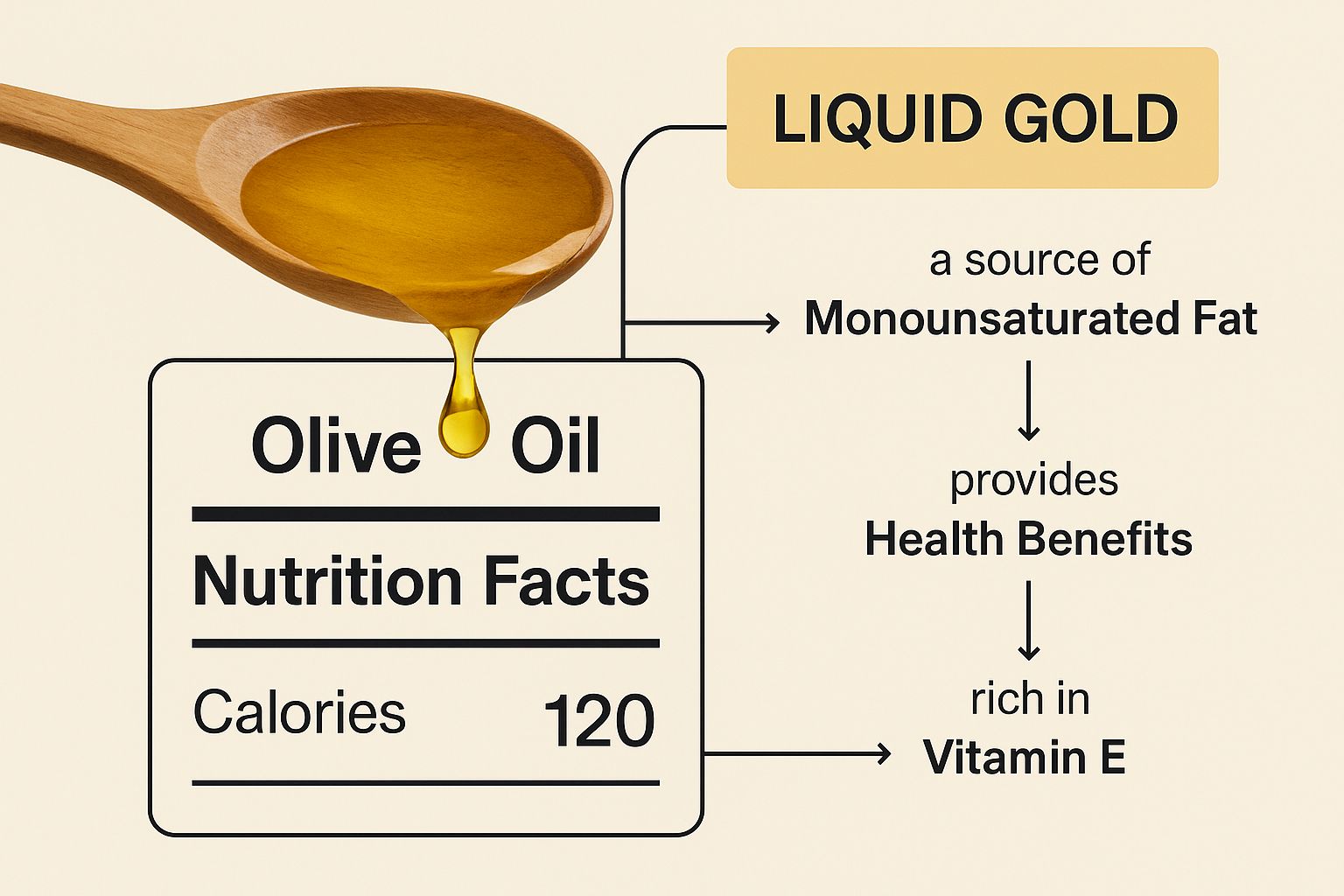
This snapshot drives the point home: while EVOO is a pure fat source, the kind of fat it contains makes all the difference for your well-being.
Why The Fats in Olive Oil Are Your Friend
Let's be honest, the word "fat" still makes people nervous. For decades, we were taught it was the villain on our plates. But when it comes to extra virgin olive oil, fat isn't just an ingredient—it's the main event, and it's time we get reacquainted with the truth.
Not all fats are created equal. Some are like sludge in an engine, clogging up the works. The fats in EVOO, however, are more like a high-performance, clean-burning fuel that helps everything run smoothly.
The Oleic Acid Advantage
The real star of the show here is a monounsaturated fat called oleic acid. This one molecule is the key to unlocking the secret of why olive oil is so profoundly good for you.
Picture your body's cell membranes. Certain fats, like trans fats, make these membranes stiff and brittle. It’s like building a wall with bricks that don't quite fit. But monounsaturated fats are different; they keep your cell membranes flexible and fluid. This allows cells to communicate properly, absorb nutrients, and expel waste with breathtaking efficiency.
This tiny difference at a microscopic level is what sets the stage for massive health benefits, especially for your heart.
In just one tablespoon of extra virgin olive oil, you'll find around 14 grams of fat. But the magic is in the breakdown: a whopping 73% of that is heart-healthy monounsaturated fat.
This isn’t some random mix. That same tablespoon has about 14% saturated fat and just over 10% polyunsaturated fat. The sheer dominance of monounsaturated fat is what makes EVOO a titan of cardiovascular health, helping to lower "bad" LDL cholesterol while protecting "good" HDL cholesterol.
More Than Just Calories
It’s easy to get lost in the numbers, but the big picture is simple. The fats in olive oil aren't empty calories; they are active, functional components that contribute directly to your well-being. To see a full caloric breakdown, check out our guide on olive oil calories per tablespoon.
Embracing these "friendly fats" delivers some clear wins for your body:
- A Better Cholesterol Profile: Oleic acid is proven to help lower levels of oxidized LDL (the truly "bad" stuff) that can lead to plaque in your arteries.
- Smarter Cells: By keeping cell membranes fluid, these fats help your entire body function more effectively, from brain to bloodstream.
- Reduced Inflammation: The fats in EVOO possess natural anti-inflammatory properties, helping to quell the low-grade, chronic inflammation linked to countless modern diseases.
So, the next time you drizzle that liquid gold over a salad or use it to sauté vegetables, know this: you're doing more than just adding flavor. You're adding smart, hard-working fats that defend your health from the inside out.
The Hidden Power of Polyphenols
If the healthy fats in olive oil are its high-performance engine, then you can think of polyphenols as the elite pit crew. They are a class of powerful antioxidant compounds working tirelessly behind the scenes, protecting and repairing your body right down to the cellular level.
This is where you can actually taste the quality of a great extra virgin olive oil. Ever notice that peppery kick at the back of your throat? Or that slightly bitter, grassy finish? That isn't a flaw—that's the signature of potent polyphenols getting to work.
Flavor That Fights for You
Think of these compounds as your body’s personal security detail. Their main job is to combat oxidative stress—the cellular ‘rust’ that accumulates from daily life, exposure to pollution, and a less-than-perfect diet.
One of the most famous of these compounds is oleocanthal. This is the specific polyphenol that creates that distinct peppery sensation, and it possesses incredible anti-inflammatory properties, often compared to a small dose of ibuprofen. It’s flavor with a function—a taste that tells you something beneficial is happening.
Polyphenols are the very soul of what makes EVOO a functional food rather than just another source of fat. They provide the antioxidant and anti-inflammatory activity that separates true extra virgin olive oil from lifeless, refined oils.
The crucial thing to remember is that these valuable compounds are incredibly delicate. They are only preserved through the careful, meticulous cold-pressing process that defines "extra virgin" quality. Refined oils, often labeled as ‘light’ or simply ‘olive oil,’ have been stripped of this protective team during the heating and chemical processing they endure.
Why “Extra Virgin” Is a Non-Negotiable Title
The chasm in polyphenol content between a genuine EVOO and a refined olive oil is staggering. A high-quality EVOO can contain over 30 distinct phenolic compounds, but these are almost entirely absent from the lesser grades.
This means if you're not choosing extra virgin, you’re missing out on the very elements that give olive oil its celebrated health shield. When you choose EVOO, you're choosing an oil that is still alive with these natural defenders.
To ensure you're getting the most potent oil, look for these simple clues:
- A Recent Harvest Date: Polyphenols degrade over time. Freshness is everything.
- A Dark Glass Bottle: This is non-negotiable. It protects the delicate compounds from light damage.
- A Peppery or Bitter Taste: Don't fear it. This is the sensory proof of a high polyphenol count. It's a very good thing!
Understanding the role these compounds play is essential for anyone serious about getting the full spectrum of extra virgin olive oil nutrition information. You can take a closer look at how to identify and measure the olive oil polyphenol content in our detailed guide.
Choosing an oil rich in polyphenols is like choosing an active partner in your health—one that just happens to taste extraordinary while it works.
The Unsung Vitamins in Every Drop
When people talk about extra virgin olive oil, the healthy fats and powerful polyphenols usually steal the show. And for good reason. But that’s not the whole story.
Tucked away in every spoonful is a quiet supporting cast of essential, fat-soluble vitamins. While they aren't present in massive amounts, they play a crucial role in your health and add another layer of goodness to your daily drizzle.
Let's pull back the curtain on the two most important ones: Vitamin E and Vitamin K.
The Antioxidant Partner: Vitamin E
Think of Vitamin E as the perfect sidekick to olive oil’s famous polyphenols. If polyphenols are the body's security guards fighting off invaders, Vitamin E is the specialist that reinforces the walls—your cell membranes. It’s a powerful antioxidant that helps protect your cells from the constant assault of oxidative stress.
A single tablespoon of quality EVOO delivers around 1.9mg of Vitamin E. That’s about 13% of your daily value, a solid contribution from such a simple ingredient. This vitamin also helps protect the delicate fats in your body (and in the oil itself) from going rancid.
The Bone-Building Power of Vitamin K
Then there's Vitamin K. Most people associate it with blood clotting, which is one of its primary jobs. But we're now discovering just how vital it is for building and maintaining strong bones.
Vitamin K acts like a traffic cop for calcium. It expertly directs calcium into your bones and teeth where it’s needed, and keeps it away from arteries and other soft tissues where it could cause serious trouble.
Just one tablespoon of EVOO contains about 7mcg of Vitamin K, which is around 6% of your daily need.
This is a perfect example of how the complete extra virgin olive oil nutrition information reveals a food working on multiple fronts for your health. To truly grasp how these vitamins are protected during production, it helps to understand what olive oil is made of in the first place.
While you probably won't rely on olive oil as your main source of vitamins, their presence is yet another reason this liquid gold is such an intelligent, health-conscious choice for your kitchen.
Putting This Nutrition into Practice
Knowing the incredible nutritional profile of EVOO is one thing. But getting all that goodness from the bottle to your plate? That’s where the real magic happens. This is your guide to making smart choices, both in the grocery store aisle and in your own kitchen.
Too many of us grab the first bottle we see, completely missing out on the amazing flavor and health benefits we think we’re paying for. You can do better.
Reading the Label Like an Expert
Think of an olive oil label less like packaging and more like the oil’s resume. A few key details will tell you everything you need to know about its quality and how potent its extra virgin olive oil nutrition information really is.
-
Harvest Date: This is, without a doubt, the single most important piece of information. Olives are a fruit, and olive oil is its juice—it's always best when fresh. Look for the most recent harvest date you can find, because those precious polyphenols degrade over time.
-
Quality Seals: Keep an eye out for third-party certifications like PDO (Protected Designation of Origin) or seals from reputable quality councils. These act as a stamp of approval, verifying that the oil meets strict authenticity and quality standards.
-
Dark Glass Bottle: Light is one of olive oil’s worst enemies. That dark bottle isn't just for show; it’s a suit of armor protecting the delicate fats and antioxidants from breaking down. Never, ever buy EVOO in a clear bottle.
The Truth About Cooking with EVOO
One of the most stubborn myths in the food world is that you can’t cook with extra virgin olive oil. That’s simply wrong. The key is to understand its smoke point—the temperature where it begins to break down and smoke.
A good quality EVOO has a smoke point between 350-410°F (177-210°C), which is more than high enough for most everyday cooking. The real trick is using the right method to preserve its incredible flavor and nutrients.
The goal isn't just to cook with it, but to cook smart with it. Maximizing the health benefits means protecting those powerful polyphenols from excessive heat whenever possible, ensuring you get the most value from every drop.
Understanding how to apply heat is a cornerstone of learning how to use extra virgin olive oil the right way.
Bringing EVOO into a balanced diet is a fantastic move for your health. For more ideas on building healthy eating habits, resources that cover effective diets for weight loss can offer a broader perspective.
To help you get started, here's a quick reference for choosing the right cooking method.
A Practical Guide to Cooking with EVOO
This table breaks down the best ways to use your EVOO to keep its nutritional powerhouse status intact.
| Cooking Method | Heat Level | Suitability for EVOO | Why |
|---|---|---|---|
| Drizzling & Finishing | None | Excellent | This is the best way to get the full, complex flavor and 100% of the raw nutritional power. |
| Dressings & Vinaigrettes | None | Excellent | It emulsifies beautifully and delivers a potent dose of healthy fats and antioxidants to your salads. |
| Sautéing | Medium | Good | Perfect for cooking vegetables or lean proteins. The heat is moderate enough to cook without destroying the oil. |
| Roasting | Medium | Good | Great for veggies or fish at temperatures up to 400°F. The oil adds wonderful flavor and helps with browning. |
| Deep Frying | High | Not Recommended | While you can do it, the sustained high heat will destroy the delicate polyphenols and flavor profile you paid for. |
Ultimately, choosing the right technique ensures you're not just cooking with oil, but truly nourishing your body with one of nature's best ingredients.
Common Questions About EVOO Nutrition
Even after breaking down the science, a few key questions about extra virgin olive oil always seem to surface. Let's cut through the noise and get you straight, practical answers. Think of this as the final piece of the puzzle—the part that helps you feel completely confident every time you reach for a bottle.
You have the essentials down—the healthy fats, the powerful polyphenols, the vitamins. Now, let’s tackle the day-to-day questions that turn that knowledge into action.
Is It Okay to Drink a Spoonful of EVOO Daily?
You've probably seen wellness gurus touting a morning "shot" of olive oil. This isn't just a modern fad; it's a practice that has been around for generations in Mediterranean cultures. For most people, taking a small amount—say, a tablespoon—on an empty stomach is perfectly fine and might even help with digestive regularity.
But let's be clear: it's not a magic potion. The real, lasting health benefits of EVOO come from making it a consistent part of your diet, especially when you use it to replace less healthy fats like butter or refined seed oils. So, while that morning spoonful won't hurt, weaving it into your meals is where you'll see the most profound long-term impact.
How Much Olive Oil Should I Have Per Day?
There isn’t one magic number for everyone, but most of the research highlighting major health wins points to around one to two tablespoons (15-30ml) per day. This appears to be the sweet spot for getting a meaningful dose of oleic acid, polyphenols, and vitamins without piling on excessive calories.
The goal isn’t just to add olive oil to your diet, but to use it as a strategic replacement. Think drizzling it over a salad instead of a creamy, store-bought dressing, or using it to sauté vegetables instead of reaching for butter.
This approach is all about making a smart swap. You get all the nutritional benefits without simply tacking on more calories to your day.
Why Does Consumption Vary So Much Globally?
It’s always fascinating to see how differently EVOO is used around the world. In Greece, for example, the average person consumes a staggering 24 liters a year! Other Mediterranean countries like Spain and Italy aren't far behind, at about 13 to 15 liters per person.
Contrast that with places like the US and Canada, where consumption is a mere 1 and 1.5 liters per capita, respectively. This huge gap really boils down to culture and culinary tradition. But as more people learn about the nutritional powerhouse that EVOO is, especially compared to oils high in saturated fats, global demand is steadily climbing. If you're curious about the numbers, you can explore more about the global olive oil market.
What’s the Biggest Mistake People Make with EVOO?
Hands down, the most common mistake is thinking all olive oils are created equal. Grabbing a cheap bottle of "light" or "pure" olive oil and expecting the health benefits of a true extra virgin is like buying fruit-flavored candy and hoping for the vitamins in a fresh orange. It simply doesn't work that way.
The magic is in the "extra virgin" classification. That label is your guarantee that the oil was cold-pressed and wasn't treated with chemicals or heat, which is the only way to preserve all those health-boosting polyphenols and antioxidants.
Another classic blunder is bad storage. Leaving your beautiful bottle of EVOO right next to the stove, where it's constantly exposed to heat and light, is the fastest way to kill its flavor and destroy its delicate nutrients. Tuck it away in a cool, dark place like a pantry or cupboard. Your oil—and your health—will thank you for it.
At Learn Olive Oil, we believe that understanding this liquid gold is the first step to truly appreciating it. Our mission is to be your ultimate guide, helping you choose, taste, and use the finest olive oils with confidence. Discover the World of Premium Olive Oil and elevate your cooking and your health.
 Learn Olive Oil
Leave a comment