Decoding Olive Oil: A Guide to Culinary Uses
Choosing the right olive oil can be challenging. This guide clarifies the different olive oil types for cooking, helping you select the best one for each dish. Learn the ideal uses for eight common varieties, from extra virgin to pomace, and elevate your cooking with the perfect olive oil. This guide eliminates the guesswork and helps you make informed decisions in the kitchen.
1. Learn Olive Oil
Before diving into the world of olive oil types for cooking, establishing a foundational understanding of olive oil is crucial. Learn Olive Oil (https://learnoliveoil.com) provides an excellent starting point for this educational journey. This comprehensive online resource caters to everyone from novice home cooks curious about different olive oil types for cooking to seasoned chefs seeking to refine their expertise. Whether you're searching for the perfect olive oil for sauteing vegetables, creating a vibrant salad dressing, or finishing a delicate dish, Learn Olive Oil equips you with the knowledge to make informed decisions. It's your one-stop shop for all things olive oil, empowering you to navigate the often-confusing landscape of olive oil grades, flavor profiles, and culinary applications.
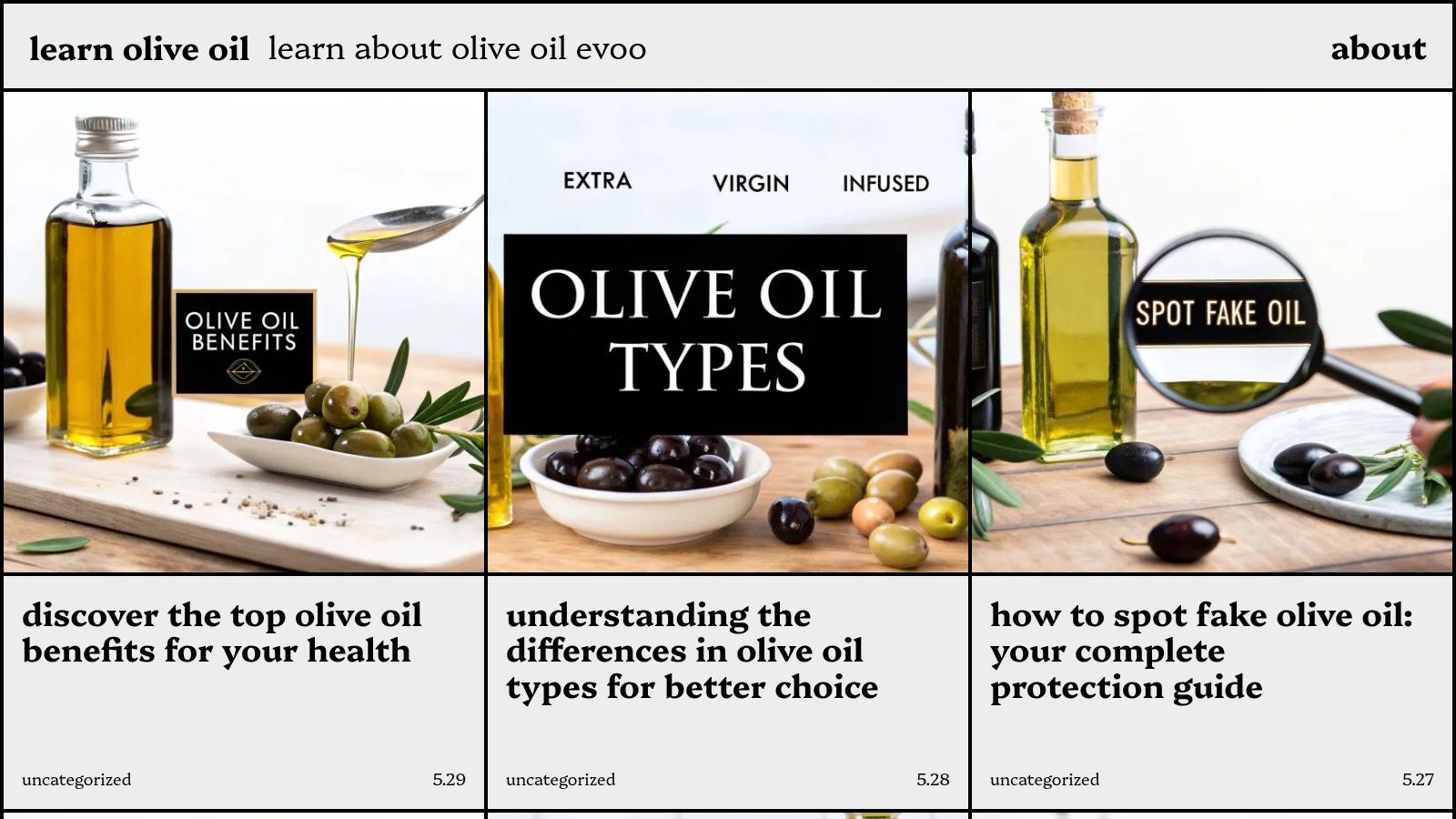
Learn Olive Oil shines as a comprehensive resource, covering various facets of olive oil knowledge. It dives deep into the nuances of different olive oil types for cooking, explaining the characteristics that make each variety unique. For example, it clarifies the distinctions between extra virgin olive oil, virgin olive oil, and refined olive oil, emphasizing their respective smoke points and ideal culinary uses. This information is essential for choosing the right olive oil type for cooking different dishes at various temperatures. Beyond the basics, the platform delves into advanced topics such as identifying authentic olive oils, debunking common myths, and understanding the impact of origin and production methods on flavor and quality.
For those keen on developing their sensory skills, Learn Olive Oil offers detailed tutorials on olive oil tasting techniques. You’ll learn how to discern subtle flavor notes, evaluate aroma profiles, and assess the overall quality and freshness of an olive oil. This skill is invaluable when selecting olive oil types for cooking specific dishes, allowing you to choose oils that complement and enhance the flavors of your ingredients. Imagine perfecting the art of pairing robust, peppery olive oils with grilled meats or delicate, fruity oils with fresh seafood. Learn Olive Oil empowers you to make these informed choices.
Beyond culinary applications, Learn Olive Oil also highlights the scientifically-backed health benefits of incorporating olive oil, particularly extra virgin olive oil, into your diet. It stays up-to-date on the latest research, ensuring that you're informed about the potential advantages for heart health, brain function, and overall well-being. The platform also addresses practical concerns such as proper storage techniques to maintain freshness and prevent oxidation, helping you maximize the shelf life and quality of your olive oil.
While Learn Olive Oil doesn't offer direct product sales or personalized consultations, its strength lies in its educational focus. It empowers consumers with the knowledge to navigate the marketplace confidently. The platform provides curated lists of reputable brands and trusted sources where you can purchase authentic, high-quality olive oils both online and locally. This guidance is especially valuable for avoiding counterfeit products and ensuring that you're investing in genuine olive oils. The website also keeps its content regularly refreshed, providing users with up-to-date information on industry trends, best practices, and new discoveries in the world of olive oil.
One area where Learn Olive Oil could expand is by incorporating interactive tools for personalized taste profiling. This would further enhance the user experience by providing tailored recommendations based on individual preferences and culinary goals. However, as a free educational resource, Learn Olive Oil offers an invaluable wealth of information for anyone seeking to understand and appreciate the diverse world of olive oil, especially when selecting olive oil types for cooking. It deserves a prominent place on this list because it provides a solid foundation for exploring the various types of olive oil and making informed choices that elevate your culinary experiences.
2. Extra Virgin Olive Oil
Extra virgin olive oil (EVOO) sits at the pinnacle of olive oil quality, representing the purest and most flavorful expression of the olive fruit. This "first press" oil is extracted solely through mechanical means, specifically cold-pressing, without the use of heat or chemical solvents. This meticulous process preserves the oil's natural integrity, resulting in a product rich in antioxidants, polyphenols, and vitamins. When considering olive oil types for cooking, EVOO earns its top spot due to its unparalleled flavor profile and health benefits. EVOO's acidity level, a crucial indicator of quality, remains below 0.8%, significantly lower than other grades, signifying a superior product derived from healthy, undamaged olives. This low acidity contributes to its distinct, vibrant flavors.

EVOO's flavor profile is arguably its most defining characteristic. Ranging from mild and fruity to robust and peppery, it offers a complex tapestry of tastes influenced by factors such as olive variety, terroir, and harvest time. This diversity allows EVOO to elevate a wide range of dishes, adding depth and character. From delicate salads and vibrant vegetable sautés to hearty bean stews and grilled fish, a drizzle of EVOO can transform a simple meal into a culinary experience.
When using EVOO for cooking, it's crucial to understand its smoke point – the temperature at which the oil begins to break down and lose its beneficial properties. EVOO generally has a smoke point between 350-410°F (175-210°C). This makes it suitable for low to medium-heat cooking methods like sautéing, baking, and roasting. While EVOO isn’t ideal for high-heat applications like deep-frying, it excels as a finishing oil, drizzled over pasta, soups, or grilled meats to impart its distinctive flavor. This versatility across a spectrum of culinary uses secures EVOO’s place as a kitchen staple.
Compared to other olive oil types for cooking, like virgin olive oil or refined olive oil, EVOO offers a higher concentration of beneficial compounds. The cold-pressing method, without the use of chemicals or high heat, preserves the naturally occurring antioxidants and polyphenols, which are associated with various health benefits, including reducing inflammation and protecting against chronic diseases. This focus on minimal processing makes EVOO a healthier choice for those seeking to enhance their diet.
In terms of pricing, EVOO is typically more expensive than other olive oil grades due to the rigorous production process and the higher quality of the olives used. However, its superior flavor and nutritional benefits often justify the higher cost for many consumers. When purchasing EVOO, look for certifications like the International Olive Council (IOC) seal, which guarantees authenticity and quality. Storing your EVOO in a cool, dark place, away from heat and light, will help maintain its freshness and flavor for longer. More information on quality and standards can be found on the International Olive Oil Council website (https://www.internationaloliveoil.org/).
While the numerous advantages of EVOO make it a prized culinary ingredient, it's essential to also acknowledge its limitations. Its lower smoke point restricts its use in high-heat cooking. Moreover, its potent flavor, while desirable in many dishes, can sometimes overpower delicate flavors, so a light hand is recommended. Despite these minor drawbacks, EVOO remains a versatile and healthy choice for a wide array of culinary applications. Its rich flavor, combined with its nutritional value, elevates it above other olive oil types for cooking, making it a worthwhile investment for any home cook.
3. Virgin Olive Oil
When exploring olive oil types for cooking, virgin olive oil emerges as a versatile and practical choice, striking a balance between quality, flavor, and affordability. Positioned just below extra virgin olive oil in the quality hierarchy, virgin olive oil offers a compelling option for everyday cooking needs. It's produced using the same cold-pressing methods as extra virgin, ensuring a natural extraction process without the use of heat or chemical solvents. This preserves a significant portion of the olives' natural flavors and beneficial nutrients. Its slightly higher acidity level, ranging between 0.8% and 2%, distinguishes it from extra virgin, resulting in a subtly different flavor profile and a slightly lower price point. This makes virgin olive oil an excellent choice for those seeking a healthy and flavorful cooking oil without the premium price tag of extra virgin.

One of the key advantages of virgin olive oil is its versatility in the kitchen. With a smoke point around 420°F (215°C), it's well-suited for a variety of cooking methods, including sautéing, baking, roasting, and even light frying. This higher smoke point compared to extra virgin olive oil allows for more flexibility in cooking techniques without compromising the oil’s integrity or imparting a burnt flavor. While extra virgin olive oil is often reserved for finishing dishes and low-heat applications, virgin olive oil handles medium-heat cooking admirably, making it a workhorse in the kitchen for everyday meal preparation. From pan-searing vegetables to baking flavorful chicken breasts, virgin olive oil provides a healthy and delicious foundation for numerous dishes.
While virgin olive oil delivers excellent value and functionality, understanding its subtle distinctions from extra virgin olive oil is crucial for informed decision-making. Extra virgin olive oil boasts a more robust and complex flavor profile, often described as peppery or fruity, due to its lower acidity level (less than 0.8%). It also contains a higher concentration of antioxidants and polyphenols, contributing to its celebrated health benefits. However, this superior quality comes at a premium price. Virgin olive oil, on the other hand, offers a milder, more balanced flavor, which some may prefer for certain dishes. Though its antioxidant content is slightly lower than extra virgin, it still retains a good amount of these beneficial compounds, making it a healthy choice for cooking.
Choosing between virgin and extra virgin olive oil ultimately depends on your specific needs and preferences. For everyday cooking where a slightly higher heat is required, virgin olive oil shines. Its affordability, versatility, and good nutritional value make it an excellent choice for a wide range of culinary applications. If budget is a concern or if you prefer a milder flavor profile, virgin olive oil provides an excellent alternative to the more expensive extra virgin option. However, if you prioritize the most intense flavor and highest antioxidant content, and are primarily using the oil for finishing dishes or low-heat cooking, extra virgin olive oil remains the top choice. For more detailed information on olive oil standards and classifications, you can visit the International Olive Council's website: https://www.internationaloliveoil.org/.
In terms of pricing, virgin olive oil typically falls within a more accessible price range compared to extra virgin olive oil. The exact cost varies based on brand, origin, and packaging, but the difference can be noticeable, particularly for frequent users. When shopping for virgin olive oil, look for dark-colored bottles or tins to protect the oil from light and oxidation, ensuring optimal quality and flavor. Storing the oil in a cool, dark place will further extend its shelf life and preserve its beneficial properties. By understanding the unique attributes of virgin olive oil, you can make informed choices and incorporate this valuable ingredient into your cooking repertoire, enhancing both the flavor and healthfulness of your meals.
4. Pure Olive Oil (Refined)
When exploring olive oil types for cooking, "Pure Olive Oil," sometimes labeled simply as "Olive Oil," often causes confusion. It's important to understand that this isn't a superior grade of olive oil, but rather a blend designed for specific culinary needs. Pure olive oil occupies a middle ground in the olive oil hierarchy. It combines refined olive oil with a smaller percentage of virgin olive oil, usually extra virgin. This blending process creates an oil that balances affordability, a higher smoke point, and a neutral flavor profile, making it a versatile choice for everyday cooking.

Refined olive oil, the primary component of pure olive oil, undergoes a refining process to remove impurities and strong flavors from olive oil that doesn't meet the standards for virgin grades. This process involves filtering and sometimes chemical treatments, resulting in a nearly flavorless and colorless oil. While this diminishes the oil's inherent olive character and reduces some of its nutritional value, it also significantly raises its smoke point to around 465°F (240°C). This makes pure olive oil suitable for high-heat cooking methods like frying, sautéing, and baking, where virgin olive oils might burn and develop undesirable flavors.
The addition of virgin olive oil to the refined base contributes a subtle fruity note and some of the beneficial antioxidants present in higher grades, albeit in lower concentrations. This blend allows pure olive oil to retain a hint of olive flavor while maintaining a neutral enough profile to complement, rather than overpower, a wide variety of dishes.
Compared to extra virgin and virgin olive oils, pure olive oil boasts several practical advantages. Its higher smoke point prevents burning and acrid flavors during high-heat cooking, making it ideal for searing meats, stir-frying vegetables, and deep-frying. The neutral taste allows the flavors of other ingredients to shine through, making it versatile for everything from baking cakes to roasting vegetables. Furthermore, the refining process removes impurities that contribute to degradation, resulting in a longer shelf life compared to virgin olive oils. This stability also contributes to a lower acidity level than unrefined varieties.
From a pricing standpoint, pure olive oil generally falls between extra virgin and refined olive oil. It's a more affordable option for everyday cooking, particularly when large quantities are needed for frying or baking. While the exact price varies depending on brand and region, the cost-effectiveness of pure olive oil is a significant advantage for budget-conscious consumers.
While pure olive oil is an excellent choice for many cooking applications, it's essential to understand its limitations. The refining process, while beneficial for smoke point and shelf life, does remove some of the beneficial antioxidants and polyphenols found abundantly in virgin olive oils. Therefore, if your primary focus is maximizing health benefits, extra virgin olive oil remains the superior choice for dressings, dips, and finishing dishes where its robust flavor and nutritional value can be fully appreciated.
In terms of implementation, using pure olive oil is straightforward. It can be substituted for other cooking oils in most recipes that require high-heat cooking. However, for dishes where a strong olive flavor is desired, such as Mediterranean cuisine or salad dressings, extra virgin olive oil is recommended. When storing pure olive oil, a cool, dark place away from direct sunlight and heat is ideal to maintain its quality and extend its shelf life. You can refer to resources like the International Olive Oil Council (https://www.internationaloliveoil.org/) for further information on olive oil types and their uses.
Choosing the right olive oil depends on the specific cooking application and desired outcome. Pure olive oil, with its balanced blend of refined and virgin oils, offers a practical and versatile option for everyday cooking, particularly when high heat is involved. Understanding the differences between olive oil types empowers consumers to make informed choices that optimize both flavor and functionality in their culinary endeavors.
5. Light Olive Oil
When exploring olive oil types for cooking, "light" olive oil often causes confusion. Don't let the name mislead you; "light" doesn't refer to lower calories or fat content. Instead, it signifies a highly refined olive oil with a very mild flavor and a lighter color compared to virgin or extra virgin varieties. This refining process strips away much of the natural olive flavor, resulting in a neutral taste and a higher smoke point, making it suitable for specific cooking methods where other olive oil types might fall short. Light olive oil occupies a unique niche in the kitchen, particularly for high-heat applications where flavor neutrality is key.

One of the most significant advantages of light olive oil is its remarkably high smoke point, typically around 470°F (245°C). This characteristic makes it the ideal choice for high-heat cooking methods like searing, sautéing, stir-frying, and even deep frying. Virgin and extra virgin olive oils, while boasting robust flavors and health benefits, have considerably lower smoke points, making them less suitable for these cooking techniques. When heated beyond their smoke point, these oils can break down, producing undesirable flavors and potentially harmful compounds. Light olive oil's high smoke point ensures stability at higher temperatures, allowing you to achieve desired cooking results without compromising the oil's integrity or the taste of your food.
The neutral flavor profile of light olive oil is another key feature that sets it apart in the world of olive oil types for cooking. This neutrality makes it an excellent choice for baking, where a strong olive oil taste might clash with the delicate flavors of cakes, pastries, and other baked goods. It also performs well in dishes where a subtle flavor is desired, allowing the other ingredients to shine. If you're making a delicate white fish or a light vinaigrette, light olive oil ensures the olive oil flavor doesn't overpower the main components of the dish.
Furthermore, light olive oil typically has a longer shelf life compared to its less refined counterparts. The refining process removes impurities that can contribute to oxidation and spoilage, allowing light olive oil to remain stable for longer periods. This extended shelf life can be particularly beneficial for households that don't use olive oil frequently.
While light olive oil offers several practical advantages, it's important to acknowledge its drawbacks. The extensive refining process, while contributing to its high smoke point and neutral flavor, also strips away many of the health benefits associated with olive oil. Virgin and extra virgin olive oils are rich in antioxidants and polyphenols, beneficial compounds linked to various health benefits. Light olive oil, due to its heavy processing, contains significantly lower levels of these compounds.
In terms of pricing, light olive oil generally sits at the lower end of the price spectrum compared to other olive oil types for cooking. This affordability is another factor contributing to its popularity, particularly for high-volume cooking or frying where larger quantities of oil are required.
To summarize, light olive oil earns its place on this list due to its unique combination of high smoke point and neutral flavor. While it lacks the robust flavor and health benefits of less refined olive oils, its specific characteristics make it an invaluable tool for certain cooking applications. For high-heat cooking, baking, and situations where a neutral oil is preferred, light olive oil offers consistent performance and predictable results. You can find more information about different olive oil types for cooking on the International Olive Council website. Ultimately, choosing the right olive oil depends on your specific cooking needs and desired flavor profile.
6. Pomace Olive Oil
When exploring olive oil types for cooking, pomace olive oil often emerges as a budget-friendly choice, particularly for high-heat applications. Extracted from the olive pulp (pomace) remaining after the first pressing, this oil undergoes a different process compared to other olive oil varieties. Unlike virgin or extra virgin olive oils which are mechanically extracted, pomace olive oil production involves the use of solvents and heat to extract the remaining oil from the olive pomace. This extracted oil is then refined and often blended with a small amount of virgin olive oil to enhance its flavor and color. This process results in an oil with a very neutral flavor profile and an incredibly high smoke point, making it suitable for certain cooking methods where other olive oils might not be ideal. This makes pomace olive oil a popular choice for commercial kitchens and large-scale food production.

Pomace olive oil deserves a place on this list due to its distinct characteristics and specific applications within the culinary world. While not suitable for all cooking scenarios, its high smoke point and neutral flavor provide advantages for certain cooking methods. Understanding these attributes allows consumers to make informed decisions when selecting olive oil types for cooking. For instance, if you're deep frying or stir-frying at high temperatures, pomace olive oil offers stability and prevents the oil from breaking down and producing harmful compounds. Its neutral flavor also ensures that it won't impart any unwanted olive-y taste to delicate dishes.
One of the key features of pomace olive oil is its high smoke point of 460°F (238°C). This surpasses the smoke points of most other cooking oils, including many vegetable oils, making it ideal for high-heat cooking methods like deep frying and searing. It's also a more economical option compared to other olive oil varieties, making it attractive for large-scale cooking operations. The refining process also gives it a longer shelf life and increased stability compared to less refined olive oils. This is a considerable advantage for commercial kitchens and restaurants where large quantities of oil are used and stored.
While cost-effectiveness and a high smoke point are significant advantages, it’s important to consider the downsides. Pomace olive oil undergoes significant processing, which diminishes its health benefits compared to virgin and extra virgin olive oils. The refining process removes many of the naturally occurring antioxidants and polyphenols that contribute to the health benefits of olive oil. Furthermore, the use of solvents during extraction raises concerns for some consumers.
In comparison to other olive oil types for cooking, pomace olive oil stands apart. Extra virgin olive oil and virgin olive oil, produced through mechanical extraction without the use of heat or solvents, retain more of the olive's natural flavor and health benefits. These oils are best suited for low-heat cooking, salad dressings, and dipping, where their flavor can shine. Refined olive oil, another category, is also refined, but its starting material is lower quality olive oil, whereas pomace uses the leftover pulp. This difference in source material influences the final product's flavor and nutritional profile.
When using pomace olive oil, understand its limitations. While excellent for high-heat cooking, it's not the best choice for dishes where you want the distinct flavor of olive oil to come through. For salads, dips, or finishing drizzles, opt for extra virgin or virgin olive oil. For everyday cooking at medium heat, virgin or light olive oil is a good alternative.
Pomace olive oil's affordability and high smoke point make it a practical choice for specific cooking applications. However, its lower nutritional value and mild flavor should be considered when choosing the right olive oil type for cooking. For more information about olive oils, you can visit the International Olive Council's website (https://www.internationaloliveoil.org/). By understanding the different properties of various olive oil types, you can make informed decisions to optimize your cooking experience and dietary choices.
7. Single-Origin Extra Virgin Olive Oil: A Taste of Terroir
For the discerning cook, single-origin extra virgin olive oil (EVOO) offers a unique culinary experience. Similar to fine wines, these oils express the specific characteristics of their origin, reflecting the climate, soil, and olive varietals of a particular region. Choosing a single-origin EVOO allows you to explore the nuances of different olive-growing areas, adding depth and complexity to your dishes. Whether you’re drizzling it over a finished pasta or using it as a base for a vibrant salad dressing, single-origin EVOO elevates everyday cooking to an art form. This type of olive oil stands out amongst other olive oil types for cooking due to its distinct flavor profiles and premium quality.

Single-origin EVOOs are typically produced from olives grown within a specific geographic region, often a single estate or a collection of small farms within a delimited area. This focus on provenance allows for meticulous control over the entire production process, from harvest to bottling. The traceability and focus on quality contribute to the higher price point of single-origin oils, making them a premium choice among olive oil types for cooking. Look for labels indicating the harvest date, a sign of freshness and commitment to quality. For example, oils from Tuscany might exhibit peppery notes and a robust flavor, while those from Andalusia might be smoother with fruity and grassy undertones. Californian single-origin EVOOs, on the other hand, can offer a range of flavors depending on the specific region and olive varieties.
One of the primary advantages of using single-origin EVOO is the ability to experiment with distinct regional flavors. Imagine using a Tuscan EVOO with its robust character to enhance a hearty tomato sauce or choosing a delicate, fruity Andalusian oil to complement a fresh seafood dish. The specific flavor profile of your chosen single-origin EVOO becomes an integral part of the dish, adding a layer of complexity and authenticity. These oils are often best appreciated when used as a finishing oil, drizzled over soups, salads, grilled vegetables, or even desserts. This allows their distinct flavors to shine through without being masked by other ingredients.
Compared to blended EVOOs, which combine oils from different regions to create a consistent flavor profile, single-origin oils offer a more nuanced and terroir-driven experience. While blended oils are versatile and suitable for a wide range of cooking applications, single-origin EVOOs provide a unique opportunity to explore the diverse world of olive oil and find the perfect match for specific dishes.
While single-origin EVOOs offer exceptional quality and flavor, there are some considerations. The premium pricing reflects the meticulous production and limited availability. Seasonal variations in weather and olive harvests can also influence the availability and characteristics of specific single-origin oils. Furthermore, the pronounced flavors of some single-origin EVOOs might not be suitable for all dishes. A robust, peppery oil might overpower delicate flavors, while a mild, buttery oil might not provide enough depth for certain recipes.
When selecting a single-origin EVOO, consider your culinary needs and desired flavor profiles. Research different regions and their characteristic olive varieties. Websites like https://www.californiaoliveranch.com/ offer valuable information on specific single-origin oils and their origins. Experimenting with different oils and discovering your personal preferences is part of the enjoyment of exploring this premium category of olive oil types for cooking. Pay attention to descriptions like "estate-bottled" or "small-batch production," which often indicate a higher level of quality control and traceability. Understanding the nuances of different single-origin EVOOs will empower you to make informed choices and elevate your culinary creations.
8. Organic Extra Virgin Olive Oil
Organic extra virgin olive oil (EVOO) stands out among olive oil types for cooking due to its commitment to both flavor and sustainable practices. It offers the same rich taste and health benefits as conventional EVOO, but with the added assurance of being produced using environmentally friendly methods. This makes it a popular choice for health-conscious consumers and those seeking to minimize their environmental impact. Organic EVOO adheres to stringent regulations that govern its entire production process, from the olive grove to the bottle. This guarantees a product free from synthetic pesticides, herbicides, and fertilizers, preserving the natural integrity of the oil and promoting biodiversity within the olive groves.

When considering olive oil types for cooking, understanding the nuances of organic EVOO is essential. Organic certification, typically granted by third-party organizations like CCOF (California Certified Organic Farmers), ensures adherence to specific standards. These standards dictate the use of natural fertilizers, pest control methods like beneficial insects or traps, and cover crops to maintain soil health. The cold-pressed extraction method, a hallmark of high-quality EVOO, is also employed in producing organic EVOO, further ensuring the preservation of its delicate flavor and nutritional profile. This mechanical process involves crushing the olives without the use of heat or chemicals, yielding an oil rich in antioxidants and polyphenols.
The use cases for organic EVOO are diverse. Its robust flavor profile makes it an excellent choice for salad dressings, dips, and finishing dishes. It can also be used for low-heat cooking methods like sautéing or baking, although high-heat cooking is generally discouraged for all EVOOs to avoid compromising their delicate flavor and beneficial compounds. Compared to refined olive oil, which undergoes processing that removes some of its natural flavor and color, organic EVOO retains its vibrant green hue and distinctive fruity, peppery notes. While both can be used for cooking, organic EVOO is often preferred for applications where flavor is paramount. When compared to other high-quality EVOOs, organic EVOO often stands out for its commitment to sustainable farming, which can be a deciding factor for environmentally conscious consumers.
One of the primary benefits of choosing organic EVOO is the absence of chemical residues from synthetic pesticides. This is a significant advantage for those concerned about the potential health risks associated with pesticide exposure. Furthermore, the environmentally sustainable production methods employed in organic olive farming contribute to preserving biodiversity and minimizing the impact on ecosystems. Supporting organic EVOO production often means supporting smaller, family-run farms committed to traditional farming practices.
However, the commitment to organic farming often translates to a higher price point for organic EVOO compared to conventional EVOO. This is due to the increased costs associated with organic certification, labor-intensive farming practices, and potentially lower yields. Another potential drawback is the more limited availability of organic EVOO in some stores, although its popularity is growing and it is becoming increasingly accessible. Fluctuations in weather patterns and potential pest infestations can impact the yield of organic olive crops, further affecting supply and potentially contributing to price fluctuations.
Implementation is straightforward. Simply substitute organic EVOO for conventional EVOO in your recipes. Look for certifications like USDA Organic or CCOF on the label to ensure authenticity. Storing your organic EVOO in a cool, dark place away from direct sunlight and heat will help preserve its quality and extend its shelf life.
For more information on organic farming practices and certifications, visit the CCOF website: https://www.ccof.org/. Choosing organic EVOO is a conscious decision that prioritizes both personal health and the health of the planet, making it a worthwhile investment for those seeking a premium and sustainable olive oil option amongst olive oil types for cooking.
Olive Oil Varieties Comparison Guide
| Product | Core Features/Quality Metrics | User Experience & Value 💰 | Target Audience 👥 | Unique Selling Points ✨ | Price Point 💰 |
|---|---|---|---|---|---|
| 🏆 Learn Olive Oil | Expert guidance, tasting tutorials, latest insights | Comprehensive educational content | Beginners to connoisseurs | Trusted brand guides, health & culinary tips | Free resource |
| Extra Virgin Olive Oil | Cold-pressed, <0.8% acidity, rich antioxidants | Premium flavor, highest nutrition | Foodies, health-conscious | Superior taste & natural compounds | High 💰💰 |
| Virgin Olive Oil | Cold-pressed, 0.8-2% acidity, balanced flavor | Affordable, good nutrition | Everyday cooks | Versatile use, medium heat stable | Moderate 💰 |
| Pure Olive Oil (Refined) | Blend refined + virgin, high smoke point | Neutral taste, good for frying | Home cooks, bakers | High heat cooking, longer shelf life | Affordable 💰 |
| Light Olive Oil | Highly refined, highest smoke point | Neutral flavor, consistency | High-heat cooking pros | Best for deep frying & baking | Affordable 💰 |
| Pomace Olive Oil | Solvent extracted, high smoke point | Very economical, suitable for commercial | Restaurants & bulk buyers | Cost-effective, high volume cooking | Lowest cost 💰 |
| Single-Origin Extra Virgin Olive Oil | Single region, unique terroir flavors | Premium tasting experience | Culinary enthusiasts, gourmets | Estate-bottled, traceable, premium quality | Very high 💰💰💰 |
| Organic Extra Virgin Olive Oil | Certified organic, no chemicals | Health & eco-conscious appeal | Organic buyers, health fans | Sustainable farming, chemical-free | High 💰💰 |
Choosing Your Culinary Companion: The Perfect Olive Oil
Navigating the world of olive oil types for cooking can feel overwhelming, but armed with the knowledge of the different varieties—from robust extra virgin olive oil to the more neutral light and pure olive oils—you can confidently select the ideal type for every culinary creation. Remember that extra virgin olive oil, with its rich flavor and health benefits, shines in low-heat applications like salad dressings and dips, while refined olive oils like pure or light olive oil are better suited for high-heat cooking methods such as frying and baking. Considering factors like flavor profile, smoke point, and intended use will ensure you maximize the taste and benefits of each olive oil type for cooking. Whether you're drizzling a delicate single-origin extra virgin olive oil over a finished dish or using organic extra virgin olive oil in a marinade, understanding these nuances allows you to truly elevate your cooking.
So, the next time you're in the kitchen, choose your olive oil wisely, and savor the flavor it brings to your dishes. For further exploration into the world of olive oil types for cooking, consider visiting Learn Olive Oil for in-depth knowledge and guidance. Learn Olive Oil provides valuable resources and information to help you master the art of selecting and using olive oil in your kitchen.
 Learn Olive Oil
Leave a comment