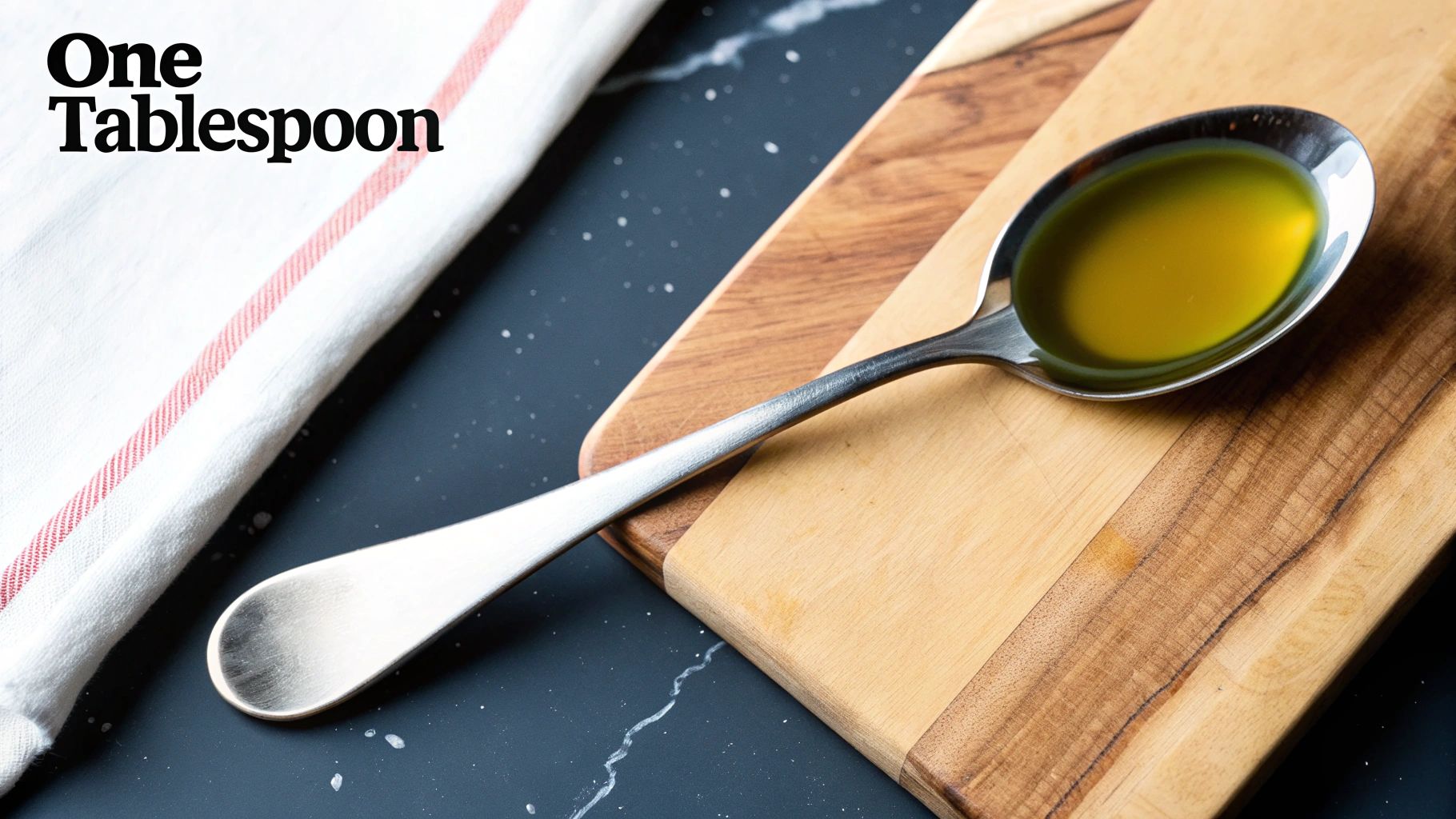
When you look at the back of an olive oil bottle, you'll see a standard serving size listed: one tablespoon. This isn't an arbitrary number. It’s the benchmark used everywhere from nutritional labels to dietary guidelines, and it's the key to understanding how this liquid gold impacts your health.
Think of it as the foundational unit—a small, potent amount roughly the size of a poker chip.
Decoding the Standard Serving Size
So, why just one tablespoon? This amount was carefully chosen. It’s enough to deliver a meaningful dose of health benefits without sending your daily calorie count through the roof.
Each tablespoon is a concentrated shot of wellness, packed with powerful compounds and healthy fats. It’s a simple, effective way to boost your diet. To really appreciate its value, you first need to understand what's inside.
What’s Inside One Tablespoon?
A single tablespoon of olive oil might not look like much, but it's a nutritional powerhouse. Here’s a quick breakdown of what you get in that standard serving:
- Calories: Approximately 120 calories, all coming from fat.
- Total Fat: Around 14 grams, but this is where it gets good—it's primarily the "good" kind of fat.
- Healthy Fats: The vast majority is heart-healthy monounsaturated fat, which is the cornerstone of the famously healthy Mediterranean diet.
This nutritional profile makes the standard serving an incredibly efficient way to add beneficial fats to your meals, especially when it replaces less healthy options like butter or margarine.
The goal is to give you a clear, actionable starting point. That one-tablespoon measure is how you unlock the benefits of one of the world's healthiest foods in a practical, manageable way.
To help you visualize different amounts, here's a handy quick-reference table.
Olive Oil Serving Size Quick Reference
This table breaks down common measurements and their approximate nutritional values, with the standard serving size highlighted for comparison.
| Measurement | Milliliters (mL) | Grams (g) | Approximate Calories |
|---|---|---|---|
| 1 Teaspoon | 5 mL | 4.5 g | 40 |
| 1 Tablespoon | 15 mL | 13.5 g | 120 |
| 2 Tablespoons | 30 mL | 27 g | 240 |
| 1/4 Cup | 60 mL | 54 g | 480 |
Keep this table in mind as you cook. It's a great tool for managing your intake while still enjoying all the flavor and health perks olive oil has to offer.
Why a Tablespoon Is the Standard
Have you ever wondered why recipes and health guides always seem to land on one tablespoon as the perfect amount of olive oil? It’s not just a random guess. This specific measurement is a carefully considered sweet spot, balancing the incredible health benefits of olive oil against its high calorie count.
Think of it as a strategic dose. Health experts needed a simple, consistent way for people to add healthy fats to their diet without accidentally going overboard on calories. One tablespoon does that job perfectly. It's just enough to deliver a powerful punch of those prized monounsaturated fats and antioxidant polyphenols—the very things that make the Mediterranean diet so celebrated.
Striking a Nutritional Balance
The reasoning here is pretty straightforward. While olive oil is packed with goodness, it's also a pure fat, which means it’s dense in calories. A single tablespoon offers a simple way to keep portions in check while still getting all the good stuff. It’s the key to unlocking the benefits without overdoing it.
From a practical standpoint, this measurement makes life easier. Dietary authorities around the world have settled on an olive oil serving size of about 1 tablespoon (or 15 milliliters). This amount clocks in at roughly 120 calories, giving you a clean, simple number for tracking your daily intake. It helps you manage your fats while still enjoying olive oil’s fantastic health perks. You can dig deeper into the official nutritional guidelines on Wikipedia if you're curious.
By standardizing the serving, the guesswork is gone. A complex nutritional concept becomes a simple, everyday action.
By establishing one tablespoon as the benchmark, experts created a bridge between scientific evidence and everyday eating habits. It’s the difference between knowing olive oil is good for you and knowing how to use it effectively.
This standard serving is your foundation. Whether you’re dressing a salad, roasting some vegetables, or adding a final flourish to a finished dish, that tablespoon is your starting point. It’s your minimum effective dose for adding both amazing flavor and a boost of health to your meals.
How Real-World Servings Differ by Culture
While the standard one-tablespoon serving size is a useful guideline, it’s really just a starting point. In many cultures, especially across the Mediterranean, daily olive oil use looks completely different. It’s not just another ingredient; it’s the primary source of fat and a true cornerstone of both their food and their way of life.
In places like Greece, Italy, and Spain, a single tablespoon might just be enough for one person's salad dressing. They cook with it, finish dishes with a generous drizzle, and even pour it into a bowl for dipping bread. This isn't about being excessive—it's about a culinary philosophy that embraces high-quality fat rather than strictly portioning it out.
The Mediterranean Approach to Servings
Nowhere is this cultural difference more striking than in Greece, which leads the world in olive oil consumption. The average Greek uses an incredible 24 liters of olive oil per year. To put that in perspective, people in Spain and Italy consume about 15 and 13 liters respectively. In the United States? It's closer to just one liter per person. You can see more of these global consumption differences on World Population Review.
This infographic breaks down the nutritional data for the standard one-tablespoon serving that’s often used as a baseline in many Western countries.
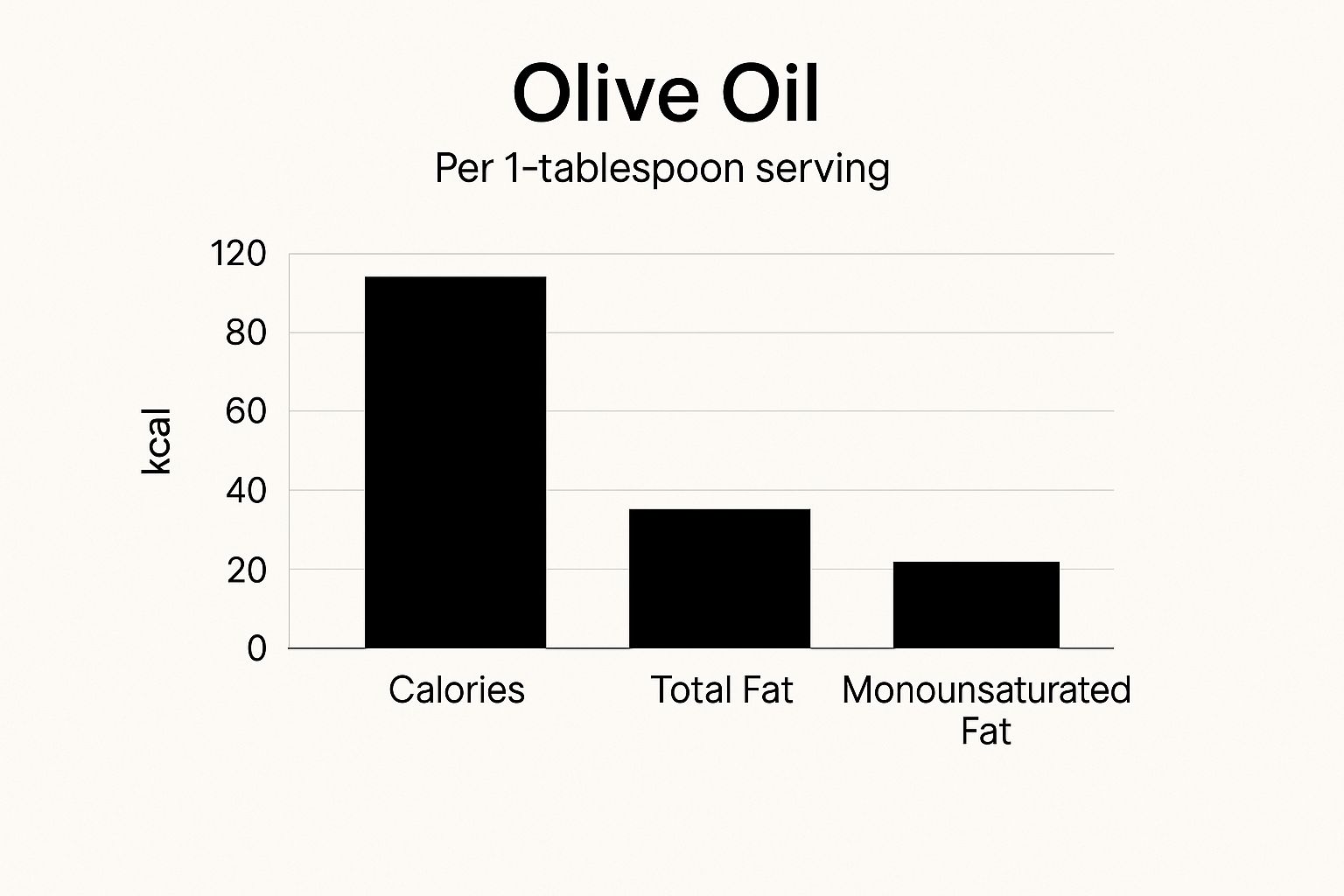
As you can see, it visualizes the calorie and fat content, clearly showing the high concentration of healthy monounsaturated fats.
The amazing health outcomes we associate with the Mediterranean diet are directly linked to this more liberal use of high-quality extra virgin olive oil. A consistent, higher intake ensures the body gets a steady supply of beneficial fatty acids and powerful antioxidants.
This really reframes the one-tablespoon rule. Instead of seeing it as a strict limit, it's better to think of it as a beneficial minimum—the first step toward making this healthy fat a bigger part of your diet.
For those living in Mediterranean regions, the "serving size" is simply whatever the dish calls for, not what a measuring spoon dictates. This generous approach is directly tied to the robust health and longevity for which the region is so famous.
The Health Benefits in Every Tablespoon
It’s easy to think of a tablespoon of olive oil just in terms of calories, but that little spoonful is a powerhouse of wellness. Each serving delivers a rich blend of compounds that team up to support your long-term health, making it one of the simplest and most impactful additions to your daily routine.
The star of the show is its fat profile. A standard olive oil serving size is loaded with monounsaturated fats, especially a champion called oleic acid. These are the "good fats" you hear about, celebrated for helping to lower LDL (low-density lipoprotein), the "bad" cholesterol, which is a big win for your heart.
More Than Just Healthy Fats
But the magic of a great extra virgin olive oil (EVOO) doesn't stop with its fats. It's also packed with powerful micronutrients. We're talking about a fantastic source of antioxidants like vitamin E and a whole family of compounds known as polyphenols. Think of these as your body's personal defense squad, fighting off damage from free radicals and reducing the oxidative stress tied to aging and chronic illness.
One of the most impressive polyphenols is oleocanthal, a unique compound with natural anti-inflammatory properties. Ever tasted a high-quality EVOO that gives you a peppery tickle in the back of your throat? That's the oleocanthal at work, and it's a sure sign you've got the good stuff.
By incorporating a daily serving, you are not just adding flavor to your food. You are actively supplying your body with heart-supporting fats, protective antioxidants, and anti-inflammatory agents that contribute to your overall well-being.
Ultimately, every spoonful really does count. Consistently adding this small amount to your meals helps these benefits build up over time, strengthening your body's defenses and paving the way for a healthier life—one delicious serving at a time. The real key is turning this simple act into a consistent habit.
Here is the rewritten section, designed to sound natural and human-written.
How to Actually Measure Your Daily Olive Oil
So, you know a tablespoon is the magic number. But what does that look like in a real, busy kitchen? The last thing you want is for this healthy habit to feel like a tedious chemistry experiment. Don't worry, it's easier than you think.
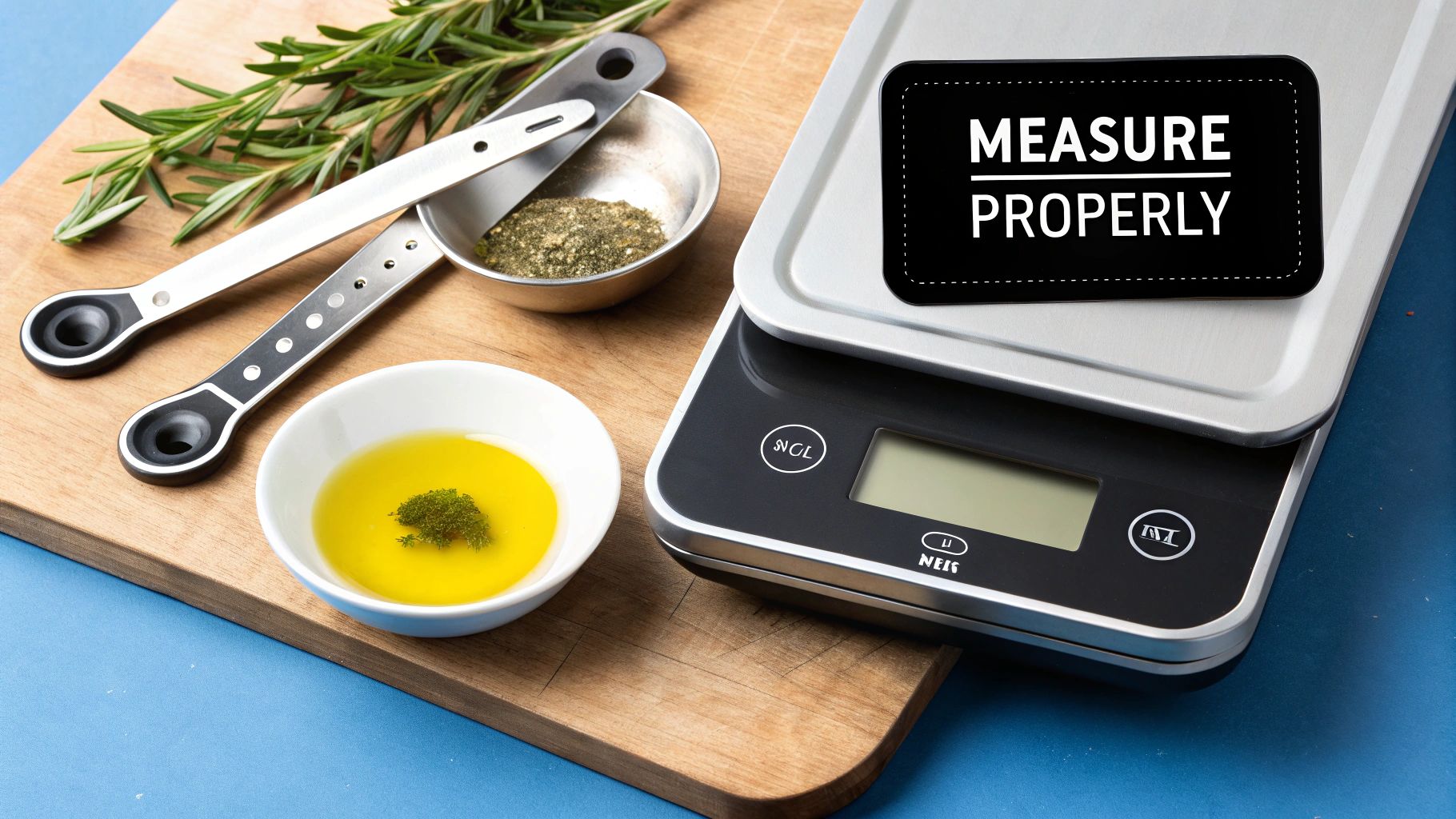
For those who love precision, especially if you're tracking calories or fats closely, a standard measuring spoon is your best friend. It’s the most straightforward and foolproof way to know you're getting exactly one tablespoon. Just keep one in the drawer next to your olive oil, and you're all set.
More Laid-Back Ways to Measure
If you'd rather not fiddle with measuring spoons every time, there are a couple of great kitchen tricks that experienced home cooks use all the time. After a little practice, they become second nature.
- The Three-Second Pour: Pop a pour spout on your olive oil bottle. A steady, three-second pour delivers almost exactly one tablespoon. Try it over a measuring spoon a few times to get your timing down—you'll get the hang of it fast.
- The Dinner Spoon Trick: Grab a regular dinner spoon (the big one, not the teaspoon). It holds just about the same amount as a standard tablespoon. It’s a fantastic, quick substitute when you don’t want to break out the measuring set.
Ultimately, the best method is the one you'll actually stick with. Whether you're a precise measurer or a confident estimator, consistency is what unlocks the incredible health benefits of olive oil over time.
And don't forget how versatile that single serving can be. One tablespoon is just the right amount to perfectly dress a side salad, coat a pan of veggies for roasting, or add a rich, flavorful finish to a bowl of soup. It’s these small, daily habits that make all the difference.
The Global Shift Towards Olive Oil
If you're trying to figure out the right olive oil serving size, you're not alone. It seems like the whole world is catching on to what Mediterranean cultures have known for centuries: olive oil is incredible, not just for its flavor, but for its serious health benefits. This isn't just a trend; it's a fundamental change in how people are cooking and eating.
We're seeing this shift play out in kitchens everywhere, even in places where butter or other vegetable oils have always been the go-to. As health organizations around the world sing its praises, the demand for quality olive oil just keeps growing. It’s all part of a larger, collective move towards more mindful, healthier diets.
A Growing Global Appetite
The statistics really paint a clear picture of this global embrace. The amount of olive oil being consumed isn't just stable—it's climbing steadily year after year. It's officially graduated from a regional specialty to a worldwide kitchen staple.
For instance, in the 2023/24 marketing year, global consumption hit an estimated 2.45 million metric tons. Forecasts predict that number will jump to about 2.84 million metric tons by 2024/25. If you're interested in the numbers, you can dive deeper into the latest market data from the International Olive Council.
This surge in popularity validates what you're doing. By thoughtfully adding olive oil to your meals, you're part of a massive global community making a conscious choice for healthier fats and better well-being.
As more people around the world make olive oil a regular part of their diet, you can bet that the idea of a standard serving size will become an even more common topic. Your personal decision to use olive oil is a small but powerful step that mirrors a positive, worldwide change in how we approach food.
Answering Your Olive Oil Serving Questions
Even with the basics down, you might still be wondering how to best fit olive oil into your daily routine. That's perfectly normal. Let's walk through some of the most common questions I hear, so you can feel completely confident about how you're using it.
So, How Many Servings Should I Really Have Each Day?
While a single tablespoon is the standard serving size you'll see on a nutrition label, many studies looking at the Mediterranean diet point to a more generous amount. For optimal health benefits, an intake of 2 to 4 tablespoons per day seems to be the sweet spot.
The key, of course, is what that olive oil is replacing. Think of it less as an addition and more as a smart swap for less healthy fats like butter, margarine, or processed vegetable oils. Start with one serving and see how it fits into your daily meals and overall calorie needs.
Is the Serving Size Different for EVOO?
Nope, the serving size and calorie count are the same across the board, no matter what type of olive oil you're using. A tablespoon is a tablespoon.
The real difference lies in what you get inside that serving. When you choose Extra Virgin Olive Oil (EVOO), that one tablespoon is packed with powerful antioxidants and anti-inflammatory compounds like oleocanthal. You’re getting a much bigger bang for your buck, health-wise.
The takeaway is simple: All olive oil has the same calories per serving, but not all servings deliver the same health impact. Always reach for a high-quality EVOO.
Is It Possible to Have Too Much Olive Oil?
Absolutely. It’s a wonderfully healthy fat, but it's also a calorie-dense food. At around 120 calories per tablespoon, the numbers can add up quickly.
Like anything else, moderation is crucial. If you start adding large amounts of olive oil on top of your existing diet without making other adjustments, it could contribute to weight gain. The most effective approach is to use olive oil to replace other fats, not just pile it on. That way, you get all the incredible benefits without tipping the calorie scale.
Ready to discover the rich world of high-quality olive oils? At Learn Olive Oil, we provide expert insights to help you choose, taste, and cook with the best. Explore our guides and start your journey.

 Learn Olive Oil
Leave a comment