Understanding What Makes Early Harvest Oil Special
Imagine yourself in an olive grove in Italy as the sun rises. Farmers are carefully hand-picking olives, choosing only the firm, green ones. They leave the riper, softer olives behind, even though those would produce a larger volume of oil. This scene encapsulates the heart of early harvest olive oil: it’s about prioritizing quality over quantity, intensity over volume. Think of it like espresso versus regular coffee; early harvest provides a concentrated burst of flavor and beneficial compounds. This practice often means farmers sacrifice up to 50% of their potential yield – a significant trade-off for creating this liquid gold.
Consider Five Seeds Farm in California's Santa Ynez Valley, a small, family-run olive orchard. Owners Diana and Mike Seder epitomize this quality-first approach, even traveling to Spain for a week-long olive oil production course. This dedication to craft mirrors the care taken in early harvest olive oil production.
The Science Behind Early Harvest
This meticulous process is illustrated in the infographic below, highlighting the key characteristics of early harvest olive oil: harvest timing, polyphenol content, and acidity.
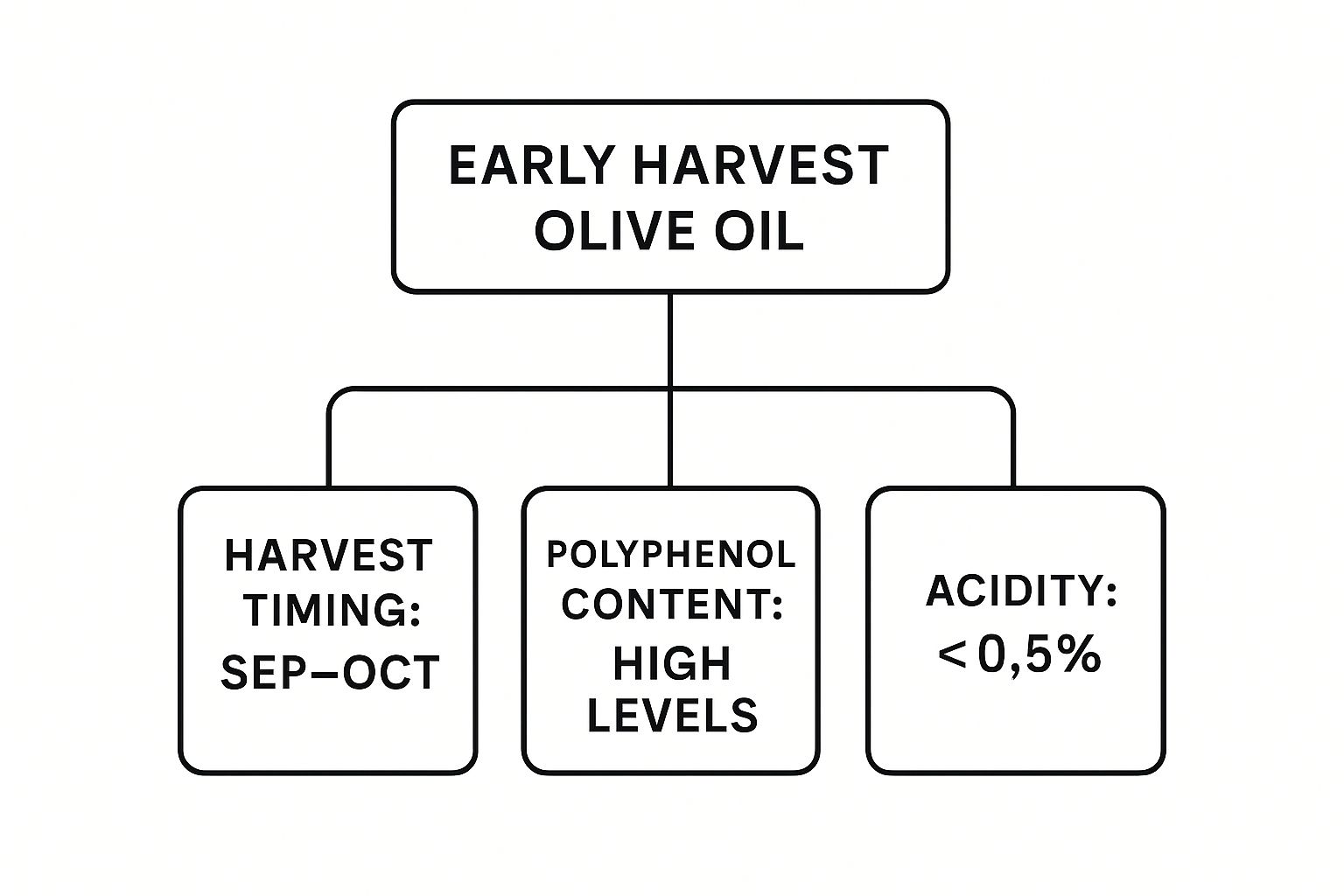
As shown, early harvest olive oil is defined by its early harvest timing (September–October), higher levels of polyphenols, and low acidity (<0.5%). These factors combine to create the oil’s distinctive flavor and health benefits. This focus on quality, however, makes early harvest a specialty product.
Early Harvest: A Niche Market with Growing Influence
While highly prized, early harvest olive oil represents a smaller segment of the overall olive oil market. The International Olive Council estimated the 2023/24 global olive oil production at 2,564,000 tonnes, mostly from regular harvests. Early harvest oil likely accounts for less than 10% of this total, and precise figures are hard to come by. Yet, its influence on market trends is significant. In major markets like Spain and Italy, it commands price premiums of 30-50% over standard extra virgin olive oil.
The early harvest itself plays a vital role in the oil's unique qualities. The stress of early picking causes the olives to concentrate their beneficial compounds. Think of how some herbs develop more intense flavors when grown in harsh conditions. Similarly, early harvest olives respond to this stress by producing an oil that’s exceptionally rich and complex.
To understand the differences more clearly, let’s compare early harvest and regular harvest olive oils:
Early Harvest vs Regular Harvest Olive Oil Comparison: A detailed comparison showing the key differences between early harvest and regular harvest olive oil in terms of flavor, color, polyphenol content, and price.
| Characteristic | Early Harvest | Regular Harvest | Impact on Quality |
|---|---|---|---|
| Harvest Time | September-October | November-December | Earlier harvest means less yield but more concentrated flavor and nutrients. |
| Color | Green | Golden Yellow | Green indicates higher chlorophyll and antioxidant levels. |
| Flavor | Peppery, pungent, bitter | Milder, Fruitier | The intense flavor of early harvest is prized by connoisseurs. |
| Polyphenol Content | High | Lower | Higher polyphenols contribute to health benefits and shelf life. |
| Acidity | <0.5% | <0.8% | Lower acidity signifies higher quality. |
| Price | Higher | Lower | The focus on quality and lower yield results in a higher price for early harvest. |
As this table illustrates, early harvest olive oil distinguishes itself through its unique combination of vibrant flavor, rich color, and high concentration of beneficial compounds, justifying its premium price point.
Mastering the Timing: When Nature Meets Expertise
Imagine walking through an olive grove at dawn, the air still and cool. An experienced olive farmer, weathered hands gently cupping a ripening olive, assesses its firmness and color. This tactile evaluation, a practice passed down through generations, is at the heart of determining the optimal moment for an early harvest.
This isn't simply about picking olives; it's about capturing the essence of the season and translating it into a bottle of exceptional olive oil. The timing is paramount, a critical decision that shapes the final product's unique character. It's a delicate balance, a high-stakes game where a week's difference can transform a good oil into a truly remarkable one.
The Olive Whisperers: Reading the Signs
Master growers have a deep connection with their groves, an almost intuitive understanding of the subtle signs nature provides. They're like seasoned meteorologists, interpreting weather patterns, anticipating how an unexpected rain shower or an early frost might influence their harvest strategy.
They understand the trade-off between quantity and quality. A later harvest will undoubtedly yield more oil, but an early harvest prioritizes flavor and those prized health-beneficial compounds. It's a choice that reflects a commitment to excellence.
For example, consider Five Seeds Farm nestled in California's Santa Ynez Valley. Owners Diana and Mike Seder prioritize quality over quantity. They meticulously tend to their arbequina, picual, and koroneiki olive varieties, carefully observing each cultivar's unique characteristics to determine the perfect harvest window. Their dedication to learning, including traveling to Spain for specialized courses, highlights the commitment required to craft truly premium early harvest olive oil.
The Science of Timing: A Delicate Dance
Determining the optimal harvest time isn't guesswork; it's a complex interplay of art and science. Before the sun rises, growers are in their groves, evaluating moisture content, fruit firmness, and other crucial factors. They draw upon generations of inherited knowledge, combined with modern tools like refractometers to measure sugar levels.
This blend of ancient wisdom and modern technology allows growers to pinpoint the precise moment when the olives reach peak perfection. It also equips them to adapt to unpredictable weather. A sudden cold snap, for instance, might require accelerating the harvest to safeguard the olives, even if it means a slightly smaller yield.
This careful orchestration of timing has far-reaching effects on the global olive oil market. The International Olive Council, for instance, projects a significant rebound in olive oil production for 2024/25, forecasting a total of 3,375,500 tonnes, a remarkable 32% increase. Favorable early harvest conditions in key producing regions like Spain, where production is anticipated to jump by 51% to 1.3 million tonnes, contribute to this positive outlook. Discover more insights about olive oil market trends.
The Human Element: Passion in Every Drop
Ultimately, the timing of the early harvest is a testament to the dedication and passion of olive growers. It reflects a deep respect for the olive and an unwavering commitment to producing the finest oil. It's a story of human expertise, woven into every bottle of premium early harvest olive oil.
The grower's intimate knowledge of the land, their meticulous attention to detail, and their relentless pursuit of quality elevates this agricultural process to an art form. Each bottle doesn't just contain olive oil; it holds the culmination of generations of experience and a profound connection to the earth.
Developing Your Palate: From Novice to Connoisseur
That first encounter with a high-quality early harvest olive oil can be a revelation… or perhaps a little surprising. The intensity might cause a cough, the peppery finish a tingling surprise. But this reaction is actually your palate recognizing something special. Just like learning to appreciate a complex wine or craft beer, what initially seems overwhelming transforms into a nuanced experience once you know what to look for. Let’s begin our sensory exploration with what your eyes can tell you.
Seeing the Quality: A Visual Journey
Even before you raise the glass, the oil's appearance offers hints about its character. Notice the shade of green. A vibrant, deep green suggests high chlorophyll content, a telltale sign of freshness and robust flavor. Golden tones can indicate different olive varietals or perhaps variations in processing. This visual assessment is the first step on your journey to appreciating early harvest olive oil.
The Art of the Swirl: Releasing the Aromas
Think about how you might warm a glass of red wine in your hand to release its bouquet. Warming a small amount of early harvest olive oil in a tasting glass does something similar—it unlocks its aromatic compounds. This step is essential to fully grasp the oil’s depth and complexity.
The Inhale: Capturing the Essence
That sharp intake of breath as you smell the oil? That's not just for dramatic effect. It's a vital tasting technique. This inhale draws the volatile aromatic compounds into your nasal passages, allowing you to perceive the subtle fruity, grassy, or herbaceous notes that are the hallmark of high-quality early harvest olive oil.
The Taste: A Symphony of Sensations
Now, the main event: the taste. Take a small sip, letting the oil coat your palate. Observe the initial fruitiness, the way the bitterness develops, and the lingering peppery finish. That "peppery bite," often described as a tingling sensation in the back of your throat, is a sign of oleocanthal, a powerful anti-inflammatory. This is the "good burn" that distinguishes early harvest olive oil.
Discerning Nuances: Training Your Palate
Learning to separate the desirable peppery bite of polyphenols from unwanted off-flavors takes practice. Think of it like learning a musical instrument. Initially, the notes may seem indistinct, but with training, you start to hear subtle differences in pitch and tone. Similarly, repeated tasting exercises will refine your ability to recognize the distinct characteristics of a truly excellent early harvest olive oil.
Tasting Exercises: Honing Your Skills
Here are a few simple tasting exercises to help you develop your palate:
-
Compare and Contrast: Sample different early harvest olive oils side-by-side. Jot down notes on variations in color, aroma, and the intensity of the flavor.
-
Blind Tastings: Cover the labels and see if you can identify different olive varieties or regions based only on your senses of taste and smell. This is a fun way to challenge yourself and your friends.
-
Food Pairings: Explore different food pairings. Early harvest olive oil can enhance or complement a wide range of flavors. See what discoveries you can make in your own kitchen.
Through these exercises, you'll develop the vocabulary and the confidence to evaluate any olive oil like a pro. You’ll begin to appreciate the distinctive qualities of early harvest olive oil and understand why it's considered such a culinary prize. With dedicated practice, you'll progress from a novice taster to a true connoisseur, unlocking the full potential of this amazing ingredient.
Unlocking the Health Powerhouse Within
Early harvest olive oil isn't just a delicious addition to your pantry; it's a true health elixir. That distinctive peppery kick? It's a sign of something special: oleocanthal, a powerful anti-inflammatory compound that rivals the effectiveness of some over-the-counter medications. Let's explore the science behind this liquid gold and discover why harvesting early makes all the difference.
The Early Bird Gets the Polyphenols
Imagine an olive tree as a tiny fortress. When harvested early, the olives are still slightly green and unripe, essentially under stress. This stress triggers the tree's natural defense mechanism, producing higher concentrations of protective compounds called polyphenols. These potent antioxidants are the key to many of early harvest olive oil's health benefits.
Think of it like this: the earlier the harvest, the more concentrated the defenses, and therefore, the higher the polyphenol content. In fact, early harvest olive oil can boast three to five times more polyphenols than regular olive oil.
The Mediterranean Diet Connection
The Mediterranean diet, famed for its health-boosting properties, relies heavily on olive oil. But not just any olive oil. The quality and harvest time are crucial. The high polyphenol content in early harvest olive oil is a major reason why this diet is so effective against heart disease, certain cancers, and neurodegenerative diseases.
For example, studies have shown a link between consuming oleocanthal and a reduced risk of Alzheimer’s disease. This compound seems to interfere with the formation of beta-amyloid plaques, a key characteristic of the disease.
Antioxidant Power: Flavor Meets Function
Here's a simple rule of thumb: the more intense the flavor of your early harvest olive oil, the higher its antioxidant activity. That slightly bitter, peppery taste is a direct indicator of the high concentration of polyphenols. It’s nature’s way of packing a powerful punch of protection into every drop. So, when you savor that robust flavor, you're also maximizing the health advantages.
Oleocanthal: Nature's Ibuprofen
Oleocanthal has earned the nickname "nature's ibuprofen" for a reason. Research shows it inhibits the same inflammatory enzymes as ibuprofen, offering natural pain relief and anti-inflammatory benefits. This makes early harvest olive oil more than just a culinary ingredient; it’s a functional food with potential therapeutic properties.
Of course, this doesn't mean swapping out prescribed medications without consulting your doctor. But it highlights the remarkable health potential within this golden liquid. Choosing early harvest olive oil isn't just about enhancing the flavor of your meals; it's a proactive step towards supporting your overall well-being.
Let's take a closer look at the specific polyphenols in early harvest olive oil and their related health benefits:
Polyphenol Content and Health Benefits Breakdown
This table provides a detailed breakdown of key polyphenol compounds in early harvest olive oil and their specific health benefits, compared to regular olive oil.
| Compound | Concentration in Early Harvest | Primary Health Benefit | Daily Recommended Amount |
|---|---|---|---|
| Oleocanthal | Significantly Higher | Anti-inflammatory, Neuroprotective | Research is ongoing to establish specific recommendations |
| Oleuropein | Higher | Antioxidant, Cardioprotective | Research is ongoing to establish specific recommendations |
| Hydroxytyrosol | Higher | Antioxidant, Anti-cancer | Research is ongoing to establish specific recommendations |
| Tyrosol | Higher | Antioxidant, Cardioprotective | Research is ongoing to establish specific recommendations |
Note: While daily recommended amounts for specific polyphenols are still under investigation, consuming early harvest olive oil as part of a balanced diet can contribute to overall polyphenol intake.
As you can see, early harvest olive oil offers a higher concentration of beneficial polyphenols compared to regular olive oil, contributing to a wider range of health benefits. Including this potent ingredient in your diet can be a simple yet effective way to enhance your health and well-being.
Shopping Smart: Decoding Labels Like an Insider
Stepping into a store brimming with olive oils can feel a bit like entering a labyrinth. Bottles of all shapes and sizes line the shelves, each boasting different certifications, origins, and prices. How do you know which claims actually matter? Why is that dark bottle twice the price of the clear one? Let's unravel the mystery and equip you with the knowledge to navigate these choices with confidence. This will not only save you money, but it will also ensure you’re bringing home the flavor and quality you expect from early harvest olive oil.
Decoding the Dates: Harvest vs. "Best By"
Think about buying fresh fruit. You’d likely check for ripeness, not just the expiration date, right? The same principle applies to early harvest olive oil. The harvest date is your best indicator of freshness – it's like the olive's "born on" date. While the "best by" date is still useful, it’s less important than knowing when those olives were actually harvested. Look for bottles that clearly display the harvest date, ideally within the past six months for peak freshness.
Origin Stories: Protected Designations of Origin (PDO) and Protected Geographical Indications (PGI)
Just like a fine wine, an olive oil’s origin significantly impacts its character. Protected Designations of Origin (PDO) and Protected Geographical Indications (PGI) certifications offer valuable insights. A PDO signifies that the oil was produced, processed, and prepared within a specific geographical area, adhering to strict traditional methods. Think of it as a guarantee of terroir and tradition. A PGI, on the other hand, indicates a link to a particular region, but with slightly more flexible production rules. Both certifications offer assurance of origin and adherence to quality standards, guiding you towards a more informed purchase.
Package Protection: Dark Glass is Your Friend
Have you ever noticed that early harvest olive oil often comes in dark glass bottles? There's a very good reason for this. Light, heat, and oxygen are the enemies of olive oil, causing it to degrade over time. Dark glass acts as a shield, protecting the delicate oil from these harmful elements. Clear bottles might look appealing, but they offer less protection, potentially speeding up the oil's deterioration. Choosing dark glass helps maximize shelf life and preserve those vibrant, fresh flavors.
Building Trust: Your Olive Oil Allies
Finding a trustworthy olive oil supplier is like unearthing a culinary treasure. Whether you shop locally or online, building a relationship with a knowledgeable vendor can make all the difference. Don't hesitate to ask questions about the harvest date, production methods, and the farm’s story. Passionate producers are happy to share their expertise. Think of it like visiting a local farmer's market – you get to connect with the people behind the product. This connection ensures you're not just buying a bottle of oil, but also gaining valuable insights into the world of early harvest olive oil.
Beyond Price: Evaluating True Value
When it comes to early harvest olive oil, price isn’t always the best indicator of quality. While it's true that early harvest oils often command a higher price due to lower yields and more intense flavor, there are other important factors to consider. Evaluating the harvest date, origin certifications, packaging, and the producer's reputation paints a much more complete picture of value. Don't let a fancy label or a hefty price tag be your sole guide. Armed with the right knowledge, you can confidently choose an oil that balances quality and cost. A truly exceptional early harvest olive oil is an investment in your culinary enjoyment and well-being.
Culinary Mastery: Cooking With Liquid Gold
Early harvest olive oil. It's more than just oil; it's a culinary treasure, a "liquid gold" capable of transforming everyday dishes into memorable experiences. But like any precious ingredient, the key lies in knowing how to use it. This section explores the culinary techniques that maximize both the flavor impact and nutritional value of this remarkable oil.
The Finishing Drizzle: A Symphony of Flavor
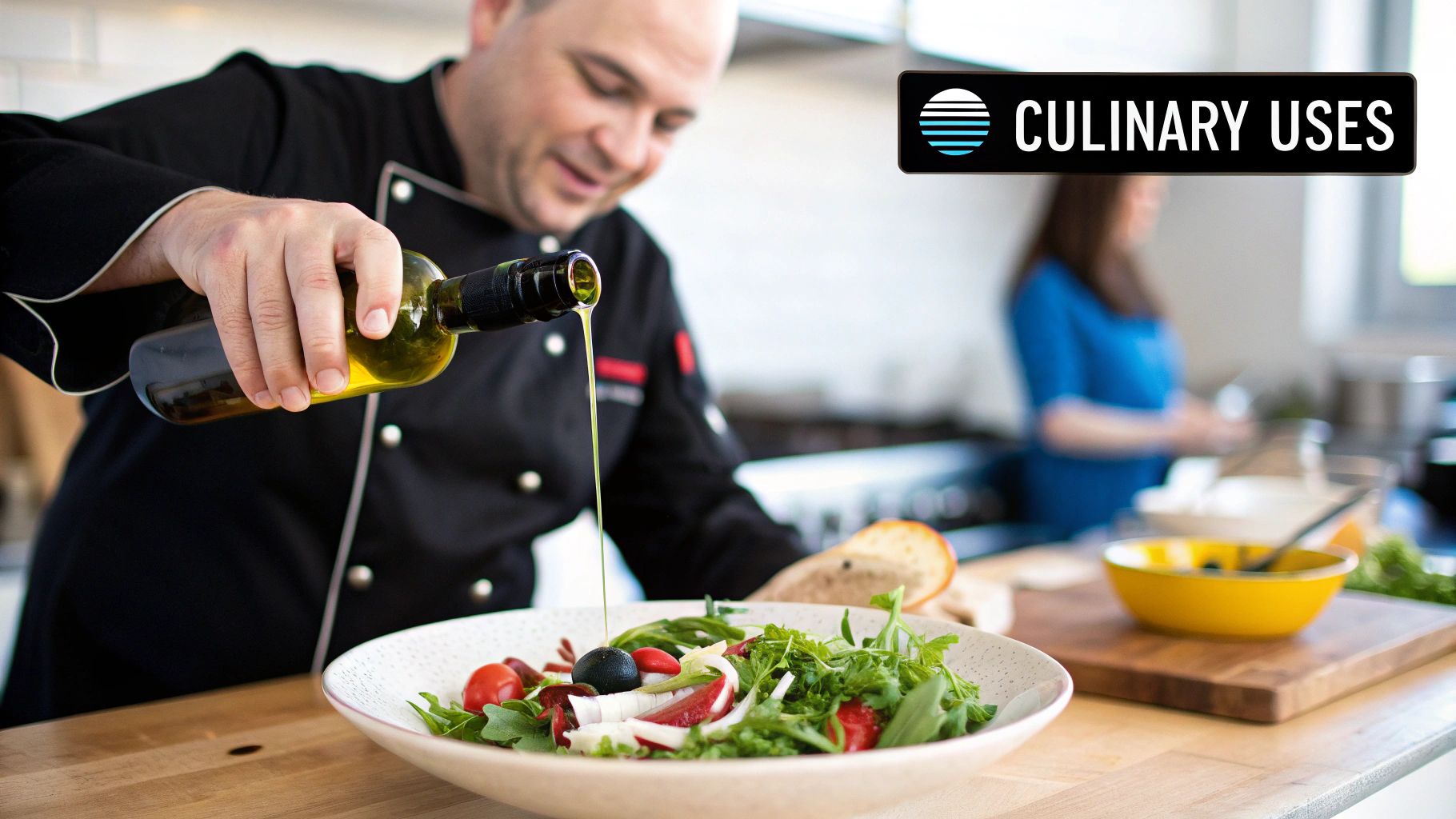
Imagine a final brushstroke on a painting, that perfect touch that brings the whole piece to life. That's what a drizzle of early harvest olive oil can do for your dishes. A delicate drizzle over roasted vegetables, grilled fish, or even a simple bowl of soup adds a layer of complexity.
The oil's peppery notes and vibrant fruitiness elevate ordinary ingredients into something extraordinary. This technique is especially effective with vegetables, highlighting their natural sweetness while adding a touch of sophisticated bitterness.
Infused Oils: Capturing Seasonal Essence
Early harvest olive oil is like a blank canvas, ready to absorb and showcase the flavors of the season. Think of fresh herbs like rosemary or thyme gently steeping in the oil, their essence infusing every drop. Or perhaps a touch of bright citrus zest for a refreshing twist.
These infused oils can be used in marinades, dressings, or as a finishing drizzle, bringing a burst of seasonal aroma and taste to your culinary creations.
Gentle Cooking: Enhancing, Not Overpowering
While early harvest olive oil shines as a finishing touch, it can also be used in gentle cooking. The key is to avoid high heat, which can damage the oil's delicate polyphenols and diminish its distinctive flavor.
Think of it like cooking with a fine wine. You wouldn't boil it away; you'd use it judiciously to enhance the overall flavor profile. Sautéing vegetables over medium heat or using the oil in a slow-cooked stew allows its nuanced flavors to permeate the dish without being overwhelmed.
Unexpected Pairings: From Savory to Sweet
The versatility of early harvest olive oil extends beyond savory dishes. Believe it or not, its robust flavor can surprisingly complement desserts. It adds a unique depth to cakes, ice cream, or even fresh fruit.
Imagine a touch of early harvest olive oil drizzled over a slice of vanilla bean cheesecake, or incorporated into a chocolate cake batter for an unexpected, yet delightful twist.
Temperature Control: Preserving the Gold
Just as a goldsmith carefully controls the temperature of their forge, so too must a cook control the heat when using early harvest olive oil. High heat can degrade the oil’s beneficial compounds and diminish its flavor.
The ideal temperature range for cooking with this oil is between 250-375°F (120-190°C). This sweet spot allows the oil to enhance the dish without compromising its integrity.
Compound Preparations: Layering Flavors
Creating compound preparations, like pesto or tapenade, is another excellent way to showcase the versatility of early harvest olive oil. The oil acts as a binder, marrying the individual ingredients into a harmonious whole while enhancing their flavors.
These preparations can be used as sauces, spreads, or even as a flavorful base for other dishes.
By understanding these techniques, you can ensure that every drop of your precious early harvest olive oil serves a purpose, transforming your culinary creations from simple meals into truly extraordinary dining experiences.
Your Path to Early Harvest Oil Mastery
Now that you understand early harvest olive oil, from the olive grove to your kitchen table, you're ready to experience its unique qualities. This isn't about becoming an expert overnight; it's about appreciating and enjoying something truly special. Whether you want to build a curated collection or simply elevate your everyday meals, these tips will guide you.
Building Your Early Harvest Collection
Think of it like building a wine cellar. You don't need hundreds of bottles to get started. Begin with a few carefully chosen oils from different regions or olive varieties.
- Diversify your selection: Consider oils from Tuscany, Spain, or California. Each region, much like a wine's terroir, influences the oil's final character.
- Consider single-varietal oils: Just like different grapes create distinct wines, different olive cultivars offer unique flavor profiles. Arbequina offers buttery notes, Picual a peppery kick, and Koroneiki a grassy aroma.
- Start small and expand gradually: As your palate becomes more refined, you can add oils with varying levels of intensity and complexity.
Incorporating Early Harvest Oil Into Your Routine
Integrating early harvest olive oil into your daily life is easy. Simply start swapping your regular olive oil for its early harvest counterpart in simple dishes.
- The finishing touch: Drizzle it over salads, soups, or grilled meats for a burst of flavor. It's like adding a final flourish to a painting.
- Dipping companion: Serve it with crusty bread for dipping. This allows you to fully savor its complex flavors.
- Flavor enhancer: Use it to sauté vegetables or create delicious marinades. Remember to avoid high heat to preserve its delicate compounds.
Measuring Your Expertise
Like any new skill, appreciating early harvest olive oil takes time. There's no final exam, just an ongoing journey of exploration and discovery.
- Trust your senses: Pay attention to the oil's color, aroma, and taste. Your palate is your most valuable tool.
- Experiment with pairings: Discover which flavors complement your favorite dishes. Don't be afraid to get creative.
- Share your passion: Introduce friends and family to the world of early harvest olive oil. Sharing what you’ve learned can deepen your own understanding and appreciation.
By following these tips, you can transform how you experience food, appreciating not just the taste but also the quality and craftsmanship behind each bottle of early harvest olive oil. This journey, from novice to connoisseur, enriches your cooking and your overall appreciation for culinary excellence.
Ready to begin your olive oil adventure? Visit Learn Olive Oil and discover a world of premium olive oils waiting to be explored.

 Learn Olive Oil
Leave a comment