Have you ever found yourself paralyzed in the grocery aisle, staring down a wall of olive oil bottles? It’s a familiar feeling. One label whispers "extra virgin," another shouts "pure," a third promises it’s "light." It can feel less like shopping and more like a high-stakes guessing game you’re destined to lose.
But what if I told you there’s a simple secret to decoding it all? The truth is, the vast world of different types of olive oil isn't complicated. It all boils down to one thing: how the oil is made. The journey from olive to bottle dictates its flavor, its purpose, and its power in your kitchen. Once you grasp this, choosing the right bottle will feel less like a chore and more like a chef’s secret weapon you’ve just discovered.
A Cook's Guide to the World of Olive Oil
Think of olive oil not as one ingredient, but as a collection of specialized tools. You wouldn’t use a delicate paintbrush to prime a wall, would you? The same logic applies here. Each type of olive oil has a specific job, whether it's delivering a bold, peppery crescendo to a finished dish or providing a quiet, stable foundation for a high-heat sear.
The defining factor is processing. How much human intervention occurs between the olive grove and your pantry? This is what separates the aristocrats from the workhorses. This journey determines the oil’s acidity, its smoke point, its concentration of health-giving polyphenols, and—most importantly—its taste. An oil that’s barely touched will sing with the bright, vibrant notes of the fruit itself. A heavily refined one will be a silent partner, content to play a supporting role.
The Great Olive Oil Families
At its heart, the olive oil universe is surprisingly simple, organized into just a few key families. Understand these, and you’ll understand everything.
- Extra Virgin & Virgin Oils: This is the top of the pyramid—the pure, unadulterated essence of the olive. Think of it as fresh-squeezed fruit juice, extracted using only immense pressure. No chemicals. No intense heat. This is where you’ll find the most audacious flavors and the most profound health benefits.
- Refined Olive Oils: These oils begin life as virgin oils that don’t quite make the cut. They undergo a purification process—using heat and sophisticated filters—to erase any flaws. The result is a clean, neutral-tasting oil with a much higher smoke point, often blended with a whisper of virgin oil to restore a hint of color and flavor.
- Pomace Oils: After the olives have been pressed for their precious virgin oils, a dense pulp, or "pomace," remains. This final category uses solvents to rescue the very last drops of oil, which is then thoroughly refined. It’s an economical choice you’ll rarely see on store shelves, but it's a giant in the world of industrial food production.
This chart offers a bird's-eye view of how these families relate.
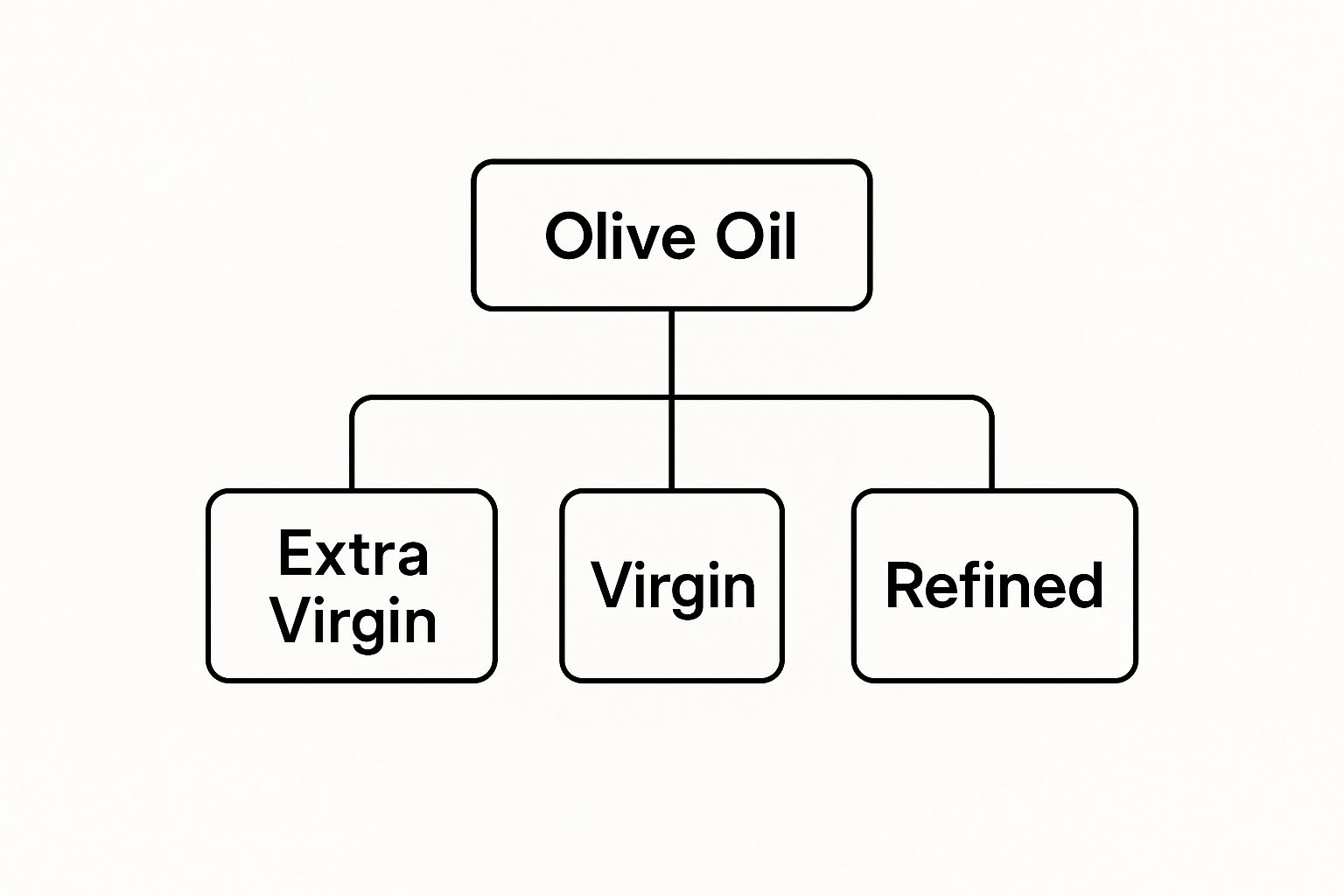
As you can see, Extra Virgin and Virgin oils are in a league of their own—pure and unrefined. The others undergo far more handling to become the products you see. To get the full story, you can explore this complete overview of the different types of olive oil and see exactly where each one belongs.
Olive Oil Types at a Glance
For those who want the facts, fast, here is a quick-reference table that lays out the essentials for the most common types you'll encounter.
| Olive Oil Type | Production Method | Typical Smoke Point | Best For |
|---|---|---|---|
| Extra Virgin | Cold-pressed, mechanical extraction, no chemicals or heat | 350-410°F (177-210°C) | Salad dressings, drizzling, finishing, dipping |
| Virgin | Mechanical extraction, no chemicals or heat | 390°F (199°C) | Sautéing, roasting, dressings |
| Refined (or "Light") | Filtered and refined with heat and/or chemicals | 465°F (240°C) | High-heat cooking, searing, frying, baking |
| Olive Pomace Oil | Solvent extraction from pulp, then refined | 460°F (238°C) | Industrial frying and high-heat applications |
This table should serve as your trusted map, guiding you straight to the right oil for the right job and ending the guesswork for good.
Extra Virgin Olive Oil: The Gold Standard
When you hear the words "extra virgin," think of one thing: purity. Among all the different types of olive oil, Extra Virgin Olive Oil (EVOO) is the highest grade attainable—the undisputed champion of the pantry. This isn't just marketing fluff; it's a promise of quality, earned through a demanding, uncompromising process that tolerates no shortcuts.
Put simply, EVOO is the pure, unadulterated juice of the olive. To earn this coveted title, the oil must be extracted using only mechanical means. Olives are crushed and pressed without the use of high heat or chemical solvents. This ancient technique, often called “cold-pressing,” is the key to protecting the delicate, complex flavors and powerful health compounds that make EVOO a legend.
This fanatical commitment to purity results in an oil with the lowest free fatty acid level of any grade. By law, its acidity must remain below 0.8%, a direct chemical testament to healthy, undamaged fruit and a flawless, meticulous production process from the grove to your kitchen.
The Taste of Authenticity
Unlike its refined relatives, EVOO is a living, breathing product with a distinct personality. Its flavor profile can be breathtakingly complex, a direct reflection of the olive variety, the soil it was grown in, and the very week it was harvested. You are not just tasting an oil; you are tasting a place on the map and a moment in time.
A true Extra Virgin Olive Oil should taste fresh, green, and alive. You might detect notes of freshly cut grass, artichoke, or almond. This is often followed by a pleasant bitterness on the tongue and a distinct peppery tickle in the back of your throat—that is the signature of potent, health-giving antioxidants hard at work.
This robust, assertive character is precisely why EVOO is never meant to be a background player. Its flavors are bold and meant to be celebrated, not hidden, making it the undisputed champion for any dish where the oil itself is a star ingredient.
Why Its Health Benefits and Uses Stand Apart
That gentle, chemical-free extraction does more than just preserve flavor; it locks in an arsenal of health-promoting compounds. EVOO is brimming with monounsaturated fats—particularly oleic acid—famed for their heart-health benefits. It’s also packed with powerful antioxidants called polyphenols that help fight inflammation and cellular damage throughout your body.
Because it is so precious (and often carries a higher price tag), you want to deploy EVOO where its unique talents can truly shine. This typically means using it with little to no heat. Think of it as a finishing oil, designed to add that final, dramatic flourish of flavor and richness.
Its greatest triumphs are in:
- Drizzling over finished dishes like grilled fish, roasted vegetables, or a bowl of hot soup.
- Creating vibrant salad dressings and vinaigrettes where its flavor can take center stage.
- Dipping with fresh, crusty bread for an appetizer that is both simple and profoundly satisfying.
- Finishing pasta dishes just before serving to add a final layer of aromatic complexity.
Using EVOO in this way ensures you receive the full sensory and nutritional experience it was designed to deliver, proving exactly why it has earned its reputation as the gold standard of olive oil.
Virgin and Refined: The Everyday Workhorses
While Extra Virgin basks in the spotlight, two other different types of olive oil are quietly doing the heavy lifting in kitchens worldwide. Meet the everyday workhorses: Virgin Olive Oil and Refined Olive Oil. They may lack the glittering reputation of their famous cousin, but their sheer versatility makes them indispensable for a vast range of cooking tasks.
Imagine Virgin Olive Oil as EVOO’s talented, slightly more easygoing sibling. It’s produced in the exact same way—mechanically pressed from olives without chemicals or intense heat. The only true difference is in the final report card. The standards for virgin oil are a bit more forgiving, permitting a free acidity of up to 2.0% and allowing for minor sensory imperfections that keep it from achieving that coveted "extra" designation.
This doesn't make it an inferior oil; it simply means it has a different mission. It still possesses a pleasant, mild olive flavor, but it’s less complex and peppery than its top-tier relative. This very subtlety is its greatest asset, making it the ideal partner for everyday cooking where you want a hint of authentic olive character without it overpowering the dish.
Virgin Olive Oil: The All-Purpose Player
Because it delivers a gentler flavor profile and is kinder to your wallet than a premium finishing EVOO, Virgin Olive Oil is a superb all-around cooking oil. It boasts a very respectable smoke point, typically around 390°F (199°C), making it a reliable choice for the majority of your daily kitchen maneuvers.
Consider reaching for Virgin Olive Oil when you're:
- Gently Sautéing: It’s perfect for sweating aromatics like garlic and onions to build a deep flavor base.
- Roasting Vegetables: It contributes a light, fruity note to roasted potatoes, broccoli, or bell peppers.
- Making Everyday Dressings: It creates a simple, delicious vinaigrette for when you don’t need the knockout punch of an EVOO.
It’s the bottle you can grab without a second thought, confident it will perform beautifully.
Virgin Olive Oil is the answer when you need quality without ceremony. It delivers genuine olive flavor and solid performance, making it one of the most practical oils you can own.
Refined Olive Oil: The Neutral Expert
Now, let's turn to Refined Olive Oil. You'll often see this labeled simply as "Olive Oil" or "Light Olive Oil," and its story is one of remarkable transformation. This oil starts its journey as a virgin olive oil that, for one reason or another, has noticeable flaws in its taste or aroma.
Rather than being discarded, it undergoes a refining process using heat, pressure, and natural filters. This sophisticated treatment strips away impurities, neutralizes the flavor, and lightens the color, creating an entirely different product.
Its greatest asset is this very neutrality. Because it has almost no taste, it will never interfere with the other flavors in your dish. It also possesses an extremely high smoke point, often reaching 465°F (240°C) or more, making it a stellar choice for high-heat cooking. While EVOO is celebrated for its quality, it is actually refined olive oil that dominates the global market in sheer volume, capturing a 31.1% revenue share in 2022. You can learn more from these olive oil market insights on grandviewresearch.com.
This makes Refined Olive Oil the perfect tool for:
- Frying and Searing: It's your best bet for achieving a beautiful, golden-brown crust on a steak or for deep-frying chicken.
- Baking: Its neutral profile ensures your cakes, cookies, and breads won't carry an unwelcome olive flavor.
- Stir-frying: It can handle the intense, direct heat of a wok without breaking down and filling your kitchen with smoke.
Together, these two oils form a versatile culinary toolkit, proving that for every single job in the kitchen, there is a perfect olive oil waiting.
Understanding Olive Pomace Oil
What happens to the mountain of olive solids—the skins, pits, and pulp—left behind after the first press? It’s not simply discarded. This is where Olive Pomace Oil enters the picture, a product born from the unwritten law of the olive grove: nothing goes to waste.
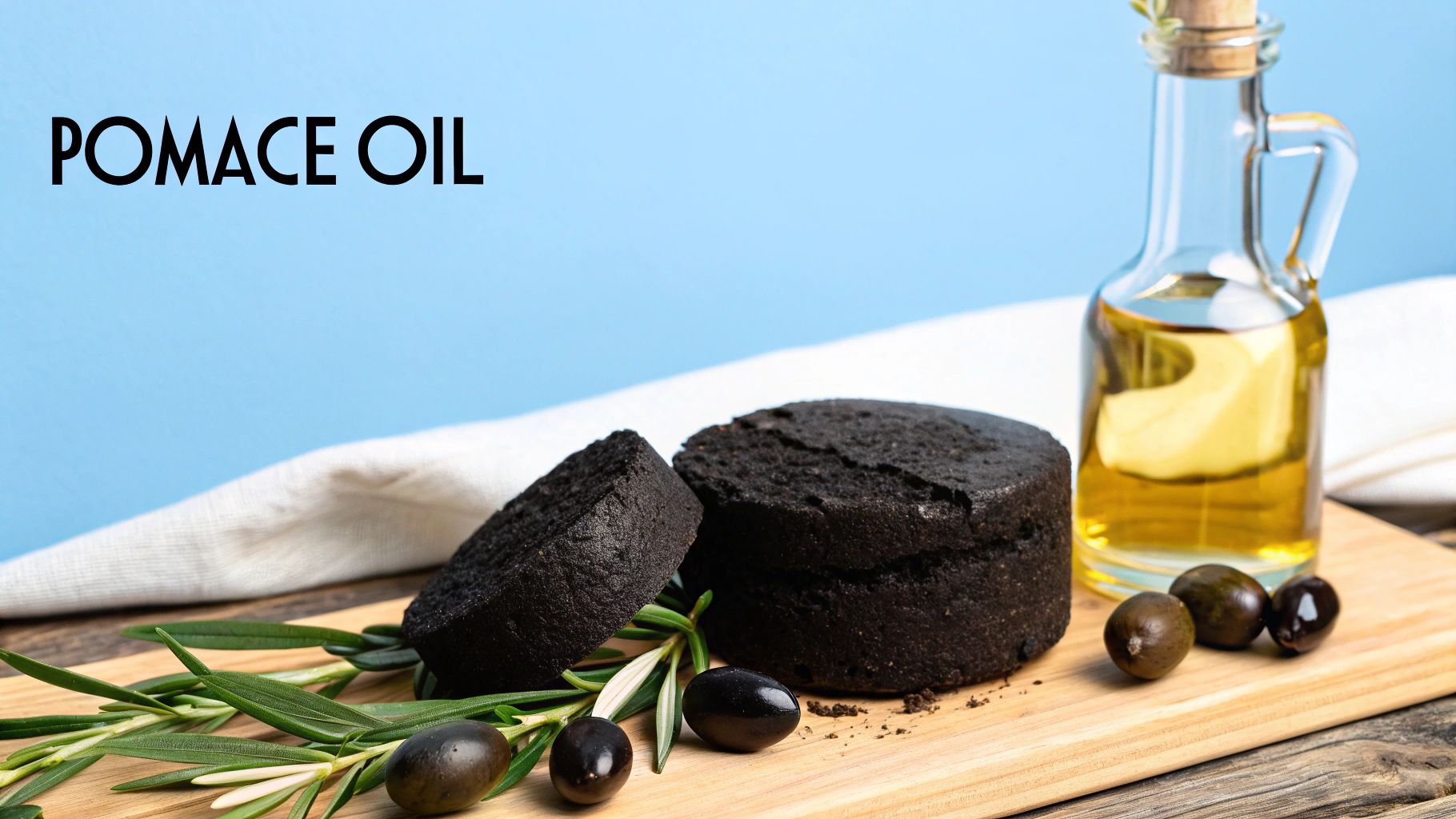
This leftover paste is called pomace, and while mechanical presses have squeezed out all they can, a small amount of oil remains trapped deep within the pulp. To retrieve it requires an entirely different strategy.
The Extraction and Refining Process
Unlike the gentle cold-pressing used for virgin oils, pomace oil extraction involves the use of solvents. This chemical process coaxes out the final remnants of oil from the olive solids, yielding a crude oil that is not yet suitable for consumption.
This crude pomace oil then undergoes the same rigorous refining process as "Refined Olive Oil," which cleanses it, removes the solvents, and neutralizes its flavor. To lend it a faint hint of olive character, producers often blend in a small amount of virgin olive oil before it's bottled.
Its Place in the Kitchen
Let’s be perfectly clear: pomace oil is not trying to compete with extra virgin olive oil. The intense refining process strips away the polyphenols, the antioxidants, and the complex flavors that define a high-quality oil. So, where does it belong? Its value is all about performance under extreme pressure.
Olive Pomace Oil is the unsung workhorse of the olive oil family. Its primary selling points are a super-high smoke point (around 460°F / 238°C) and a very low price, making it a pragmatic choice for high-heat, high-volume cooking.
You are unlikely to find pomace oil lining the cooking aisle at your local supermarket. Its use is almost exclusively confined to commercial kitchens and large-scale food manufacturing, where cost-effectiveness and heat stability are the ultimate priorities.
Here’s where it excels:
- Industrial Deep-Frying: It’s a favorite for restaurants and food producers who need an affordable, dependable oil for their large fryers.
- Commercial Cooking: Food service operations rely on it as a neutral, high-heat oil for countless applications.
It may not be the star of the show, but Olive Pomace Oil is a testament to ingenuity, ensuring that every last gift from the olive harvest is put to good use.
How to Choose and Store Olive Oil Like an Expert
You now know the major players in the olive oil game. But how do you translate that knowledge into action when you’re standing in the grocery store, faced with a sea of bottles? How do you pick a true winner?
It’s simpler than you imagine. The secret is rarely on the flashy front label; it’s usually hidden on the back. Your mission, should you choose to accept it, is to locate the harvest date.
This single piece of information is the master key. Unlike a fine wine, olive oil does not get better with age. It is a fresh fruit juice, and like any fresh juice, its incredible flavors and health benefits are at their absolute peak right after pressing. From that moment on, they begin a slow, inevitable decline. Always—always—reach for the bottle with the most recent harvest date. A "best by" date is a suggestion; the harvest date is the truth.
Decoding the Label
Once you've found a fresh oil, a few other clues on the label can help you seal the deal. Think of yourself as a detective, searching for signs of quality and authenticity.
- Country of Origin: Knowing where the olives were grown and pressed tells you a great deal about the oil's likely character. In 2022, global production hovered around 2.74 million tonnes, with Spain, Italy, and Greece standing as the titans of the industry. Together, these three powerhouses produced over 47% of the world's olive oil, each boasting unique olive varieties and ancient traditions. You can get a full rundown of the global olive oil production statistics on Wikipedia.
- Quality Seals: Be on the lookout for official seals of approval. Certifications like the EU's PDO (Protected Designation of Origin) or PGI (Protected Geographical Indication), or the California Olive Oil Council (COOC) seal for US oils, are your allies. These seals are a guarantee that the oil meets rigorous standards for both its origin and its production methods.
Protecting Your Investment at Home
You've done it. You found a magnificent bottle of olive oil. Now you have one final job: protect it from its three mortal enemies: light, heat, and oxygen.
The moment you open that bottle, a clock starts ticking. Oxygen immediately begins the process of oxidation, which dulls flavor and diminishes the oil's powerful antioxidants. Proper storage isn’t just a recommendation—it’s an absolute necessity.
Your first line of defense is the bottle itself. A serious producer will always package their oil in dark glass or an opaque tin. If you ever see olive oil in a clear glass bottle, turn and walk away. That's a giant red flag, as constant exposure to light is a guaranteed way to ruin an oil before you even get it home.
Next, find it a cool, dark home. A kitchen cupboard or pantry, far from the stove and out of direct sunlight, is ideal. The ambient heat from your oven or stovetop is more than enough to degrade the oil over time. It’s that simple. Get these fundamentals right, and every last drop will taste as extraordinary as the day it was bottled. For a deeper look, check out our guide on how to store olive oil the right way.
Common Questions About Olive Oil
Even after you've mastered the different types of olive oil, a few persistent questions always seem to surface. Let’s tackle them head-on, bust some myths, and give you the final pieces of the puzzle.
One of the biggest debates revolves around cooking with extra virgin olive oil. Can you really fry with it? The answer is a resounding yes.
A high-quality EVOO is surprisingly stable. Its smoke point generally falls between 375–410°F (190–210°C), which is well above the temperature needed for most home cooking, including sautéing.
The only caveat is that prolonged high heat will begin to dismantle the delicate, peppery flavors and some of the health compounds that make EVOO so special. For a task like deep-frying, you are far better off using a more economical refined oil.
What Does Light Olive Oil Mean?
"Light" olive oil is another common point of confusion. Let’s be perfectly clear: this has absolutely nothing to do with calories. All olive oils contain the same amount of calories.
"Light" refers exclusively to the oil's flavor and color. It is a refined olive oil that has been processed to be exceptionally neutral and pale, making it perfect for baking or high-heat cooking where you don't want any olive taste to intrude on your dish.
So, how can you tell if the oil in your pantry has gone bad? Trust your senses. Your nose and tongue are the most reliable instruments you own. Fresh olive oil should smell green and vibrant—like fresh grass or fruit.
If it smells waxy like a crayon, dusty like old peanuts, or sour like vinegar, it has gone rancid. The taste will be equally unpleasant. There is no saving it; throw it away. To get a closer look at what makes up a superior oil, you can explore these extra virgin olive oil nutrition facts.
And always remember, color is not a reliable indicator of quality. A deep green oil is not inherently better than a golden one. It all comes down to freshness and the care and craftsmanship invested in its production.
At Learn Olive Oil, we believe that understanding the nuances of this liquid gold is the first step to truly appreciating it. We provide the expert insights you need to choose, taste, and cook with the world's finest olive oils. Discover the World of Premium Olive Oil.


Leave a comment