An oil mask for hair, particularly one using the liquid gold from your kitchen, is one of the most profound yet simple treatments you can give your hair. By warming a good olive oil and letting it soak into your strands, you are unlocking its ancient power to deeply moisturize, fortify, and restore a brilliant, natural shine. It is a time-tested path to hair that not only looks healthier but feels reborn.
Why Your Hair Craves an Olive Oil Mask
Before you dismiss this as another quaint kitchen remedy, let’s be brutally honest about the daily war your hair is fighting. It is under constant siege from the searing heat of styling tools, relentless sun exposure, urban pollution, and the harsh chemicals in modern treatments. This onslaught leaves your hair feeling parched, brittle, and, frankly, defeated.

But what if I told you that the bottle of extra virgin olive oil sitting in your pantry holds a secret? For millennia, it has been the trusted ally of those seeking deep, restorative hair conditioning. And today, modern science is finally proving what ancient wisdom has always known.
The Science Behind the Shine
Olive oil is not merely a surface-level gloss. It is a complex elixir, loaded with powerful compounds that work in concert to resurrect tired, lifeless hair. It doesn't just sit on top; it gets to the very heart of the problem.
- Oleic Acid: This is the hero of our story. This monounsaturated fatty acid possesses a remarkable talent: the ability to penetrate the hair shaft itself. While lesser oils simply coat the surface, oleic acid ventures deep inside the hair fiber, delivering life-giving moisture where it is desperately needed.
- Squalene and Palmitic Acid: Think of these as your hair's personal bodyguards. They are natural emollients that form a delicate, protective shield, smoothing the outer cuticle and locking in all that precious moisture. This is the source of that coveted silky finish and light-reflecting shine.
- Antioxidants: Brimming with Vitamin E and powerful polyphenols, olive oil acts as a powerful defense against the oxidative stress caused by free radicals—the very same environmental villains that age and damage your skin.
But the true genius of an oil mask for hair lies in its power to combat a little-known enemy: hygral fatigue. This is the relentless cycle of swelling and shrinking your hair endures every time it gets wet and then dries, a process that slowly weakens its very structure. By repelling a portion of that damaging excess water, olive oil stabilizes the hair fiber, making it dramatically stronger and far less prone to splitting.
More Than Just a Quick Fix
Indulging in an olive oil mask is not about achieving a fleeting moment of softness. It is a proactive investment in the long-term health and vitality of your hair. When you embrace this ritual regularly, you will witness a genuine transformation in elasticity, texture, and overall manageability. If you’re curious to dig deeper, you can find out more about how olive oil may also help with hair growth: https://learnoliveoil.com/olive-oil-for-hair-growth.
While an olive oil mask is a phenomenal tool for conditioning and improving your hair's health, it is vital to hold realistic expectations. For more advanced challenges like significant thinning or hair loss, you may wish to explore professional hair restoration options.
Even so, this humble pantry staple forges a powerful link between ancient beauty wisdom and the demands of modern hair care. It might just be the hero your routine has been waiting for.
Choosing Your Liquid Gold: The Best Olive Oil for Hair
Walking down the cooking oil aisle can feel like navigating a minefield, with dozens of bottles clamoring for your attention. But let me be clear: when crafting a hair mask, the type of olive oil you select is the single most critical decision you will make. It is the difference between merely coating your hair in grease and infusing it with profound, restorative nourishment.
Let's cut through the noise and pinpoint exactly what to look for, so you can be certain the foundation of your treatment is as potent as nature intended.

Why Extra Virgin is The Only Real Choice
If you remember only one thing from this guide, let it be this: always, always reach for Extra Virgin Olive Oil (EVOO). This is not a mere marketing term; it is a protected standard signifying the oil was extracted without high heat or chemical solvents—a pristine method known as cold-pressing.
Think of EVOO as the fresh-squeezed, living juice of the olive. It is bursting with every beneficial compound your hair is crying out for: vitamins, potent antioxidants, and anti-inflammatory polyphenols.
Conversely, oils labeled "Light," "Pure," or simply "Olive Oil" are refined. The intense, industrial processing they endure strips them of these vital nutrients. Using a refined oil for a hair mask is like trying to water a plant with distilled water—it may provide moisture, but it delivers no life.
Olive Oil Grades For Hair Care
To see the stark difference, here is a simple breakdown of common olive oil types and their value for your hair.
| Oil Grade | Processing Method | Nutrient Content | Best For Hair Masks? |
|---|---|---|---|
| Extra Virgin (EVOO) | Cold-pressed, no chemicals or heat. | Highest; rich in vitamins, polyphenols, and antioxidants. | Yes, absolutely. The only recommended choice. |
| Virgin Olive Oil | Cold-pressed, but with minor defects. | Good; slightly lower than EVOO but still unrefined. | A decent second choice if EVOO is unavailable. |
| Refined Olive Oil | Processed with heat and/or chemicals. | Low; most beneficial compounds are removed. | No. Lacks the nutrients needed for effective treatment. |
| "Light" or "Pure" Oil | A blend of refined and virgin oils. | Very Low; primarily refined oil with minimal nutrients. | No. Don't be fooled by the name; it's not better for you. |
As you can see, the less processed the oil, the more profound the benefits for your hair. Insisting on EVOO ensures you're giving your hair the maximum nourishment possible.
Reading the Bottle Like a Pro
Once you’ve located the EVOO section, a few more clues on the label can help you unearth a truly exceptional oil.
Look for Low Acidity: A top-tier EVOO should have a free fatty acid level below 0.8%. Lower acidity is a sign of healthier olives and meticulous processing, which translates to a higher concentration of antioxidants for your hair.
Check the Harvest Date: Olive oil is not like wine; it does not improve with age. It is a fresh product, and its potent nutrients degrade over time. Always choose the bottle with the most recent harvest date to secure the most powerful oil.
Spot the Quality Seals: Certifications like PDO (Protected Designation of Origin) or PGI (Protected Geographical Indication) are not just for culinary enthusiasts. They guarantee the oil's origin and that it was produced under stringent quality standards.
Pro Tip: For a serious hydration boost, try a 45-minute treatment combining your high-quality EVOO with a tablespoon of raw honey. This simple mix can increase your hair's moisture retention by up to 40%.
The quality of your olive oil is the bedrock of a successful hair mask. You can dive deeper into market trends and quality indicators in the latest 2026 reports on the US olive oil market.
To become even more adept at spotting the best bottles, take a look at our complete guide on how to choose olive oil. By investing in a quality EVOO, you're not just grabbing a cooking ingredient—you're acquiring a bottle of true liquid gold for your hair.
Crafting Your Perfect Olive Oil Hair Mask
Now, the real artistry begins. Think of olive oil as your canvas—a powerful, nourishing base that you can customize to solve your hair's most pressing problems. We're not just mixing ingredients here; we are composing a personalized treatment ritual.
The true genius of a DIY olive oil mask is its infinite adaptability. By introducing a few targeted ingredients, you can transform a simple oiling into a bespoke elixir for your hair.
The Deep Hydration Recipe for Dry Hair
Is your hair feeling parched, brittle, or cursed with split ends? This intensely moisturizing recipe is your salvation. It's designed to drench thirsty strands in moisture and seal it in for that supple, healthy feel.
For this rich blend, you’ll need:
- 3 tablespoons of Extra Virgin Olive Oil
- 1 tablespoon of raw, organic honey
Honey is a natural humectant, a magical substance that literally pulls moisture from the air into your hair. When you marry that with olive oil’s deep-penetrating fatty acids, you create an unbeatable force for hydration and long-lasting moisture retention. You can learn more about this classic duo in our guide to the honey and olive oil hair mask.
The Stimulating Blend for Growth and Scalp Health
If you’re battling a flaky scalp or feel like your hair growth has hit a plateau, this invigorating mask is your call to action. It helps clear away suffocating buildup and stimulates the scalp, creating the perfect fertile ground for healthier, stronger hair to flourish.
Gather these ingredients:
- 3 tablespoons of Extra Virgin Olive Oil
- 3-5 drops of peppermint essential oil
- 3-5 drops of tea tree essential oil
Peppermint oil is a marvel for boosting circulation right at the scalp, helping to awaken dormant follicles. Tea tree oil brings its legendary clarifying and antifungal powers to the party, ensuring your scalp is pristine and perfectly balanced.
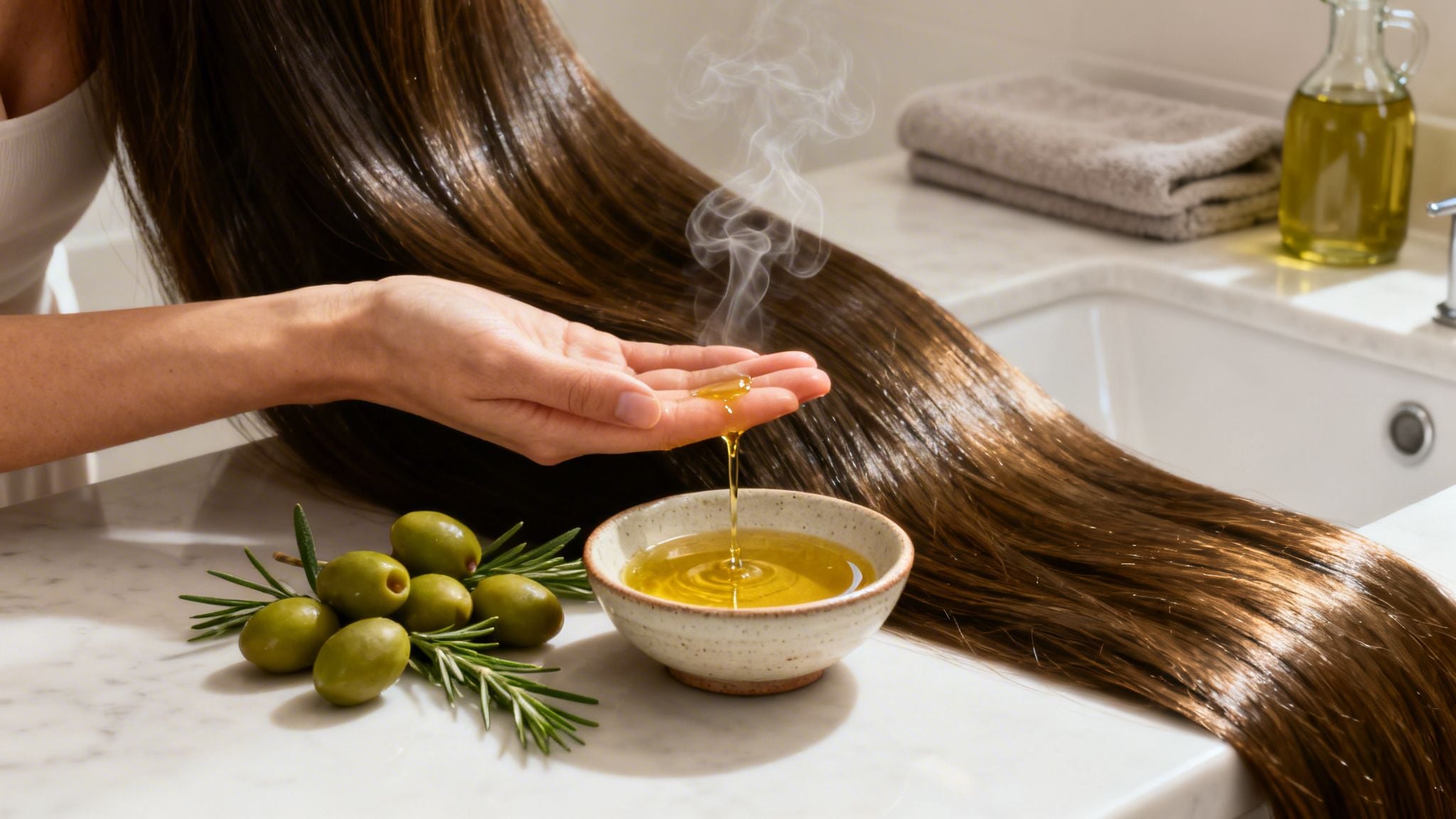
Pro-Tip: The secret to a salon-level treatment at home is hidden in the preparation. Gently warm your olive oil in a heat-safe bowl placed in a larger bowl of warm water. Never, ever use the microwave! This simple act helps open the hair’s cuticle, allowing all those incredible nutrients to penetrate far more deeply.
The Lightweight Mask for Fine Hair
Do you have fine hair that gets weighed down by a mere whisper of product? You don't have to miss out on the transformative benefits of an oil mask. This lighter formulation delivers a wealth of nourishment without sacrificing your precious volume.
For this airy mask, just mix:
- 2 tablespoons of Extra Virgin Olive Oil
- 1 tablespoon of pure aloe vera gel
Aloe vera is intensely hydrating yet exceptionally light, so it won’t leave your hair feeling heavy or flat. When you apply it, concentrate the mixture on your mid-lengths and ends, keeping it far from the roots to preserve all that natural lift and body.
Olive oil has been a haircare hero for centuries, and it’s not just an ancient remedy. The global hair oil market is larger than ever, valued at USD 5.9 billion in 2026 and projected to skyrocket to USD 9.4 billion by 2035. For even deeper nourishment, you can also explore techniques like a hot olive oil treatment to truly maximize the benefits.
Mastering Your Application for Maximum Impact
Mixing the perfect hair mask is a wonderful start, but how you apply it is what truly separates a decent result from a spectacular one. A few professional secrets can make all the difference, elevating a simple oiling into a transformative ritual.
One of the first questions people ask is whether to apply the mask to dry or damp hair. The answer depends entirely on your hair and your goals. If you have very porous, thick, or damaged hair that feels like a desert, applying the mask to dry hair is your best move. This allows for maximum, undiluted absorption of the oil, giving your strands an intense infusion of nourishment.
On the other hand, if your hair is fine or has low porosity, applying the mask to damp, towel-dried hair is a far more strategic approach. The water on the hair shaft acts as a gatekeeper, preventing your strands from becoming oversaturated. You'll receive all the conditioning benefits without your hair feeling weighed down or greasy.
The Section and Paint Method
To achieve flawless coverage without turning your head into an oil slick, borrow a technique from the salon pros: the "section and paint" method. Please, do not just pour the oil straight onto your head! Instead, part your hair into four manageable quadrants and clip them securely.
Working one section at a time, use your fingertips to literally "paint" the mask onto your hair, concentrating from the mid-lengths down to the ends. This is the oldest, most fragile part of your hair, and it craves the most attention. Once the lengths are coated, use whatever remains on your hands for a light, stimulating scalp massage. The goal is to invigorate, not inundate, your roots.
A proper scalp massage does more than just feel divine. It is a crucial step for boosting circulation, which ferries more oxygen and vital nutrients directly to your hair follicles. A healthier scalp environment is the very foundation of better hair growth.
Using a high-quality extra virgin olive oil truly pays dividends here. Oils from top producers are rich in polyphenols that can work their way into the hair cuticle. With consistent application, this can improve elasticity by as much as 20%. For a deeper dive into market trends, you can review this comprehensive report.
This diagram breaks down how you can customize your mask with different ingredients to achieve specific goals like hydration, stimulation, or even gentle lightening.

As you can see, a truly effective mask isn't one-size-fits-all. It's about targeting what your hair needs right now, whether that's moisture, scalp health, or something else entirely.
How Long Should You Leave It On?
With your hair fully coated, it's time to let the mask perform its magic. The ideal timing is flexible, depending on your hair's condition and the time you have to spare.
Quick Refresh (30–45 minutes): This is perfect for a weekly boost to add shine and softness. It’s an excellent starting point if you’re new to oil masks.
Deep Treatment (1–2 hours): If your hair is moderately dry or color-treated, grant it this extra time. This allows the oils to penetrate more deeply and perform genuine repair work.
Overnight Soak: This intensive therapy is best reserved for severely damaged, brittle, or coarse hair that requires a major intervention.
Here’s a professional secret to amplify any treatment: trap the heat. After applying the mask, pile your hair on top of your head and cover it with a shower cap or plastic wrap. This "bagging" method uses your body's natural warmth to gently open the hair cuticle, dramatically increasing how well the oil is absorbed.
For a full video tutorial and more tips, be sure to check out our complete guide on how to use olive oil in hair.
The Perfect Rinse-Out and Fixing Common Problems
You've let the mask sit, patiently working its wonders. Now for the rinse—this is the critical moment where things can go terribly wrong. I've seen it countless times: you anticipate soft, lustrous hair and are left with a greasy, limp disaster. It's a deeply frustrating outcome, but thankfully, it's completely avoidable with one simple, counterintuitive trick.

Here is the secret to a perfect, non-greasy rinse: apply your shampoo before adding a single drop of water.
It sounds completely backward, I know. But think about washing an oily pan. If you just run water over it, the oil repels the water and smears everywhere. You need soap to break down the grease first. The exact same principle applies to your hair.
Before you even think about turning on the shower, work a generous amount of sulfate-free shampoo into your palms and begin massaging it directly onto your dry, oiled-up hair. Really work it in from roots to tips, feeling it emulsify and break up the oil. Only then should you introduce warm water and lather up. The shampoo will grab the oil and escort it cleanly down the drain.
Troubleshooting Your Oil Mask
Even with perfect technique, you might encounter a hurdle. Don't despair. These issues are common, and the solutions are usually simple adjustments.
Problem: "My hair still feels oily or greasy after washing."
This almost always means one of two things: you were a little too generous with the oil, or it wasn't emulsified properly with the shampoo before rinsing.
If your hair feels slick after one wash, simply go in for a second shampoo. It is far better to wash twice than to leave residue behind. For your next treatment, try using a touch less oil. And if you suspect you have lingering buildup in general, a good clarifying shampoo once a month can give your hair a clean slate.
Problem: "My fine hair feels limp and weighed down."
For those with fine hair, an oil mask can be a delicate dance. The weight of the oil can easily crush delicate strands. To reap the benefits without the baggage, you simply need to be more strategic.
- Focus on the ends. Apply your mask from the mid-lengths down, avoiding the scalp and roots entirely. This is where your hair needs moisture most, anyway.
- Less is more. Begin with just a tablespoon of oil. You can always add a fraction more if needed, but it’s impossible to take it away once it's on.
- Keep it brief. A 30-minute treatment is more than enough time for fine hair to absorb nutrients without becoming oversaturated.
- Rinse with purpose. Always plan on shampooing twice. This ensures every last trace of oil is gone, leaving behind nothing but pure softness.
Making these small adjustments will help you achieve that nourished, healthy hair you're seeking, without any of the unwanted weight or grease.
Your Olive Oil Mask Questions, Answered
When you embark on a new hair care journey, questions are bound to arise. It's perfectly normal. Let's walk through some of the most common inquiries people have about using olive oil masks, so you can proceed with total confidence.
Can I Leave an Olive Oil Mask on My Hair Overnight?
Yes, you absolutely can. For hair that is exceptionally dry, thick, or damaged, an overnight mask can be a true game-changer, giving the oil ample time to work its deep, restorative magic.
However, it can be too intensive for those with fine hair or an oily scalp. My advice is to begin with a shorter treatment, perhaps one to two hours, and observe how your hair responds. If you adore the results and wish to try an overnight session, be sure to wrap your hair in a silk scarf or a high-quality hair bonnet to protect your pillowcase.
How Often Should I Use an Olive Oil Mask?
This truly comes down to your hair's unique personality. There is no one-size-fits-all prescription, so you must learn to listen to what your hair is telling you.
For Normal to Dry Hair: A weekly ritual is a wonderful rhythm. It is perfect for maintaining moisture, boosting shine, and keeping your hair consistently soft.
For Severely Damaged Hair: If your hair is recovering from significant heat styling or chemical treatments, you might begin with a mask twice a week. After a few weeks, as your hair's health improves, you can usually scale back.
For Fine or Oily-Prone Hair: Once every two weeks is often the sweet spot. This allows you to receive all the nourishing benefits without ever weighing your hair down.
Pay close attention to how your hair feels a day or two after a treatment. Is it soft and radiant, or a bit heavy? This feedback is your most reliable guide for adjusting the frequency of your mask.
Will Olive Oil Cause an Allergic Reaction?
While a true topical allergy to olive oil is quite rare, it is not impossible. If you have sensitive skin or a history of allergies, it is always wise to perform a quick patch test first.
Simply dab a small amount of the olive oil on a discreet patch of skin, such as behind your ear or on your inner elbow. Wait 24 hours and check for any signs of redness, itching, or irritation. For a deeper dive, our guide on the symptoms of an olive oil allergy offers more information. It's a simple, prudent step that ensures your masking experience is purely positive.
At Learn Olive Oil, we believe understanding this liquid gold is the first step to enjoying all its benefits, from the kitchen to your hair care routine. Discover more at https://learnoliveoil.com.
 Learn Olive Oil
Leave a comment