Picture this: the salty, savory bite of an olive in a crisp salad or a classic martini. Is it a fruit or a vegetable? It’s a debate that has puzzled home cooks for ages.
Let's settle this mystery once and for all: Yes, the olive is, without a doubt, a fruit. If that surprises you, you’re not alone. Our taste buds scream "vegetable," but the quiet truth lies in the world of botany. This is where the art of cooking and the facts of science beautifully collide.
The Botanical Secret: Olives Are Drupes
How can something so savory be a fruit? The answer is revealed in a single, simple botanical term: drupe.
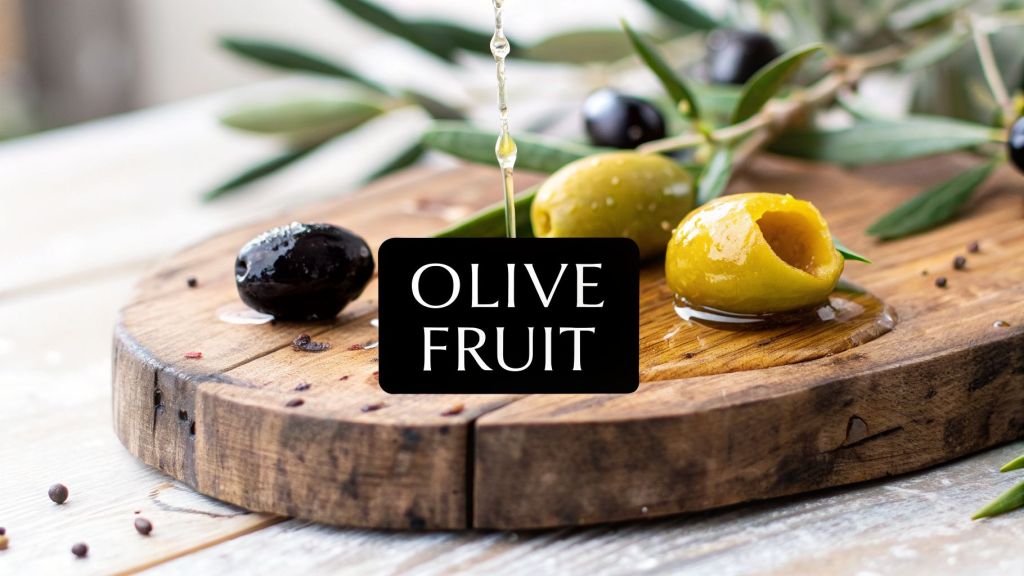
An olive’s structure holds the key. A botanist would show you its fleshy exterior, which surrounds a hard, stony pit containing the seed. This classic "flesh-and-pit" design is the very definition of a drupe.
What is a drupe? Imagine a fruit with a soft, fleshy outer part surrounding a single hard shell (the "pit" or "stone") which encloses a seed.
Suddenly, you’ll see the family resemblance everywhere:
- Peaches possess that fuzzy skin and juicy flesh around a central stone.
- Cherries are the quintessential small, fleshy drupes.
- Plums and even exotic mangoes follow this exact same pattern.
When you see it this way, the humble olive fits right in. It has a skin, a fleshy pulp, and a hard pit. The only reason we get confused is its flavor. We’ve been conditioned to think of fruits as sweet, so our brains file the salty, briny olive alongside vegetables.
This is why there's such a stunning variety in the olive world. Exploring the different types of Greek olives, for instance, reveals the incredible diversity this amazing fruit has to offer.
Olive Classification At a Glance
This simple table lays bare the difference between scientific fact and our everyday kitchen wisdom.
| Classification | What This Means | Common Examples |
|---|---|---|
| Botanical | It’s a drupe, a fruit with a central pit. | Peaches, Cherries, Plums, Mangoes |
| Culinary | It’s used in savory dishes, so we treat it as a veggie. | Cucumbers, Bell Peppers, Tomatoes |
Ultimately, knowing the olive is a fruit isn’t just a fun fact to win a trivia night. It is the key to understanding how it grows and, most importantly, how it produces that liquid gold we call olive oil. After all, you can't get fruit juice without a fruit.
What Makes the Olive a Fruit
So, what’s the final word from a botanist's perspective? To discover why an olive is undeniably a fruit, you don't need a degree in plant science. The proof is hidden in plain sight, right there in its basic anatomy.
From a scientific standpoint, it all comes down to the olive's blueprint. It’s a perfect example of a specific kind of fruit known as a drupe. Once you unlock the meaning of that word, the classification makes perfect sense.
The Anatomy of a Drupe
All drupes share a simple, three-layer structure that develops from the flower's ovary to protect a single, precious seed. An olive checks every box:
- The Exocarp: This is the thin outer skin.
- The Mesocarp: This is the fleshy, pulpy middle we eat.
- The Endocarp: This is the hard, woody pit in the center that guards the seed.
This three-part blueprint is the defining characteristic of a drupe. You've seen it a hundred times before in other classic fruits. Think about a peach, a cherry, or a plum—they all have that same fleshy-part-and-central-pit design. With its savory flesh surrounding a hard inner stone, the olive fits right into this family.
This chart breaks down the simple classification.

As you can see, the hierarchy is clear: the olive is a drupe, and all drupes are fruits.
This fruit structure isn't just a fun fact for trivia night. It's the entire reason we have olive oil. The oil is pressed directly from the fruit’s flesh—the mesocarp—which is what transforms this little drupe into one of the world's most valued culinary treasures.
Understanding that the olive is a fruit is fundamental to everything that follows. The entire production process is built around this fact. To see this in action, you can explore how olive oil is made and notice how every step is tailored to handling this unique fruit. But if it's a fruit, why do we treat it like a vegetable in the kitchen?
Why We Treat Olives Like Vegetables
So, if an olive is technically a fruit, why do you find it next to the pickles at the store and not the pears? The answer has nothing to do with botany and everything to do with the kitchen, where flavor and use are the only rules that matter.
It really all comes down to one thing: taste. Olives are anything but sweet. They have a powerful savory, briny, and often bitter flavor profile that our brains simply don't associate with fruit. You don't see them piled high in a decorative ceramic fruit bowl with ceramic fruit for a reason—they simply don't fit our mental picture of a fresh, sweet snack.
Because of that savory punch, we use olives almost exclusively in savory dishes. They’re tossed in salads, stirred into hearty pasta sauces, or plopped into a classic martini. A sweet cherry would feel wildly out of place in any of those roles, and that's exactly why the olive gets lumped in with the vegetables.
A Common Culinary Practice
And the olive isn't alone in its identity crisis. The culinary world is full of botanical fruits that we all call vegetables. It's a practical way of organizing ingredients that has made sense to cooks for centuries.
Just think about these other "vegetables":
- Tomatoes: A botanist will tell you it's a berry. But its savory, acidic flavor makes it the foundation of countless main courses, not desserts.
- Cucumbers: They're technically a fruit from the gourd family, but their cool, mild profile lands them squarely in salads and savory sandwiches.
- Bell Peppers: These are the seed-filled fruits of a flowering plant. Have you ever considered dicing one up for a fruit salad? Probably not.
In the kitchen, the line between fruit and vegetable gets blurry. The unofficial rule is simple: if it's typically used in a savory dish, cooks will call it a vegetable.
At the end of the day, your gut instinct isn't wrong—it's just following the chef's logic instead of the botanist's. The olive is the perfect example of how two different classifications can be right at the same time. Yes, the olive is a fruit scientifically, but it has more than earned its place among the vegetables with its distinct savory character and versatility in the kitchen.
How Its Fruit Status Defines Your Olive Oil

This is where that little piece of botanical trivia becomes your secret weapon in the grocery aisle. The simple fact that an olive is a fruit completely changes how you should think about olive oil. It’s not just another cooking oil; it’s a fresh fruit juice.
Once you make that mental switch, the vast differences in quality, flavor, and price suddenly make sense. Think about it: you wouldn't expect a carton of generic, from-concentrate orange juice to taste anything like a glass squeezed fresh from an orange. The exact same logic applies to the oil pressed from an olive.
So when you see “first cold press” on a label, it’s not just marketing fluff. It describes the careful, low-heat extraction of juice from fresh fruit—a process designed to preserve every drop of delicate flavor and nutrition. This is fruit processing, pure and simple.
Decoding Quality Through Fruit Factors
The characteristics of the olive itself directly shape the quality of the oil in your bottle. Just as with making fine wine or any other premium fruit product, a few key factors make all the difference:
- Fruit Ripeness: Olives picked when they’re still green and unripe produce a sharp, peppery, and grassy oil. An olive left to ripen until it’s black will give you a much softer, more buttery oil.
- Fruit Variety (Cultivar): Just like you have thousands of apple varieties, there are thousands of olive cultivars. Each one, from the Spanish Picual to the Italian Coratina, has its own unique flavor profile.
- Pressing Method: How and when the juice is extracted is critical. The best oils come from crushing the fruit within hours of being picked to capture maximum freshness and prevent spoilage.
Realizing that olive oil is a fruit juice allows you to see past the marketing and understand what truly makes an oil great. It’s all about the quality of the fruit and the care taken to press it.
This little fruit fuels a massive global agricultural industry. Global olive oil production, for instance, is projected to reach 3.5 million tonnes in the 2026/27 season, with Spain alone contributing an astounding 1,419,128 tons of that. Knowing how these fruit-related factors impact the final product helps you navigate the complex, wonderful world of olive oil.
To go a level deeper, you can explore how olive oil's polyphenol content is a direct result of its fruit origins.
The Global Impact of This Powerful Fruit
That little olive on your plate? It’s far more than a simple garnish. Thinking of the olive as a fruit is the key to understanding its role as the foundation of a massive global industry. The journey from a sun-drenched grove to your kitchen is a fascinating story of agriculture, trade, and tradition, with a few key regions leading the way.
It’s no surprise that Mediterranean countries are the undisputed champions of olive production. Spain, Italy, and Greece, in particular, have climates that are absolutely perfect for cultivating this ancient fruit. For them, olive groves aren't just farms; they are the economic and cultural heart of a worldwide market.
The deep connection to the land is something you can even experience on a small scale. Anyone who has tried their hand at indoor olive tree care knows just how specific these plants' needs are, which gives you a real appreciation for the expertise required for large-scale farming.
From Grove To Grocery Cart
The connection between what happens in those distant groves and the price you pay at the store is surprisingly direct. A fantastic harvest in Andalusia, Spain, can mean lower prices and a wider selection of high-quality extra virgin olive oil on the shelves. On the flip side, a drought in Puglia, Italy, can cause prices to jump and choices to dwindle.
The sheer scale of this operation is written in the numbers.
The EU alone produces well over 50% of the entire global olive oil supply. Worldwide, production is projected to hit a staggering 2.42 million metric tons.
This dominance has a clear impact on the market. Global demand for the good stuff is soaring, with premium extra virgin oil making up 67.3% of all exports. This shows just how many people are seeking out the pure, unadulterated juice of this fruit. For a deeper dive, you can explore the USDA's outlook on the EU's role in the olive oil market.
When you understand this journey, the bottle of oil you choose takes on new meaning. You're not just buying a cooking ingredient; you're connecting with a rich agricultural history that spans centuries. Learning about the origins of olive oil can make you appreciate every single drop.
Why This Matters in the Grocery Aisle

So, an olive is a fruit. This might sound like a simple piece of trivia, but it’s the most important secret you can know when you’re standing in the oil aisle. It completely changes how you should think about buying olive oil.
When you realize that extra virgin olive oil is essentially a fresh fruit juice, everything clicks into place. Just like with orange juice, freshness and quality are paramount. The incredible flavor and powerful antioxidants in a great olive oil come directly from the fruit it was made from and how carefully it was handled.
Think Like a Pro Shopper
This insight helps you understand the olive oil market on a deeper level. Olive harvests can be unpredictable, and knowing a little about the year's production can help you find amazing deals.
For instance, the global market is huge, and output can swing wildly. The 2026/27 global harvest was a record-breaker at 3.5 million tonnes, mostly because Spain had an amazing year, jumping its production by an incredible 66% to 1.419 million tons.
What does that mean for you? Spain produces about 40% of the world's olive oil, so a great Spanish harvest means there will be a lot of high-quality, well-priced extra virgin olive oil on the shelves. You can keep an eye on these trends yourself through olive oil market reports.
Thinking of olive oil as a fruit product encourages you to look for oils that do more than just cook your food—they actively contribute to your health. The natural compounds preserved in top-tier oils are the same ones linked to the heart-healthy benefits of the Mediterranean diet.
Armed with this knowledge, you can walk that grocery aisle with confidence. If you're ready to put it all into practice, our guide on how to buy the best olive oil will show you exactly what to look for. You're no longer just guessing; you're making an informed choice for your kitchen and your health.
Frequently Asked Questions About Olives
Now that we've settled that olives are, in fact, fruits, a few more common questions usually pop up. Let's tackle some of the things people are most curious about when it comes to this fascinating little drupe.
Are Black And Green Olives Different Fruits?
It's a common misconception, but no—they come from the same exact tree. The difference in color, taste, and texture all comes down to timing.
Green olives are picked early in the harvest season while they're still unripe. This gives them that firm, dense texture and a sharper, more astringent flavor. Black olives, on the other hand, are left on the branch to ripen fully, which makes them softer, richer, and more mellow. Think of it like a green banana compared to its sweet, yellow, fully-ripened self.
Can You Eat An Olive Straight From The Tree?
I wouldn't recommend it! If you were to bite into a raw olive right off the branch, you'd be in for a shockingly bitter surprise. This is all thanks to a natural compound called oleuropein.
To become the salty, delicious snack we all know, olives must be cured. This process, which can involve soaking them in brine, water, or even lye, is what breaks down that intense bitterness and develops their wonderful flavor.
Curing is the essential step that transforms the raw olive, a fruit that's completely unpalatable on its own, into a true culinary treasure. Without this crucial process, the olive's powerful bitterness would be overwhelming.
Does The Olive Pit Contain A Seed?
Yes, it certainly does. The hard "pit" in the center of an olive is technically called the endocarp. Its entire job is to be a tough, protective shell for the delicate seed hidden inside.
If you were to carefully crack open that pit, you'd find the actual seed. Given the right soil and climate, that tiny seed has everything it needs to grow into a brand new olive tree.
At Learn Olive Oil, we believe that understanding the olive is the first step to appreciating its incredible liquid gold. Discover the World of Premium Olive Oil and turn your newfound knowledge into smarter, more delicious choices.
 Learn Olive Oil
Leave a comment