Let’s be honest. For years, you’ve been told a lie.
A simple, persistent lie that has kept one of the world’s healthiest and most stable cooking fats locked away in your pantry, only to be used for dressing salads.
The lie? That you can’t deep fry with olive oil.
Today, we’re not just going to debunk that myth. We’re going to shatter it. Because the truth—known for centuries in every Mediterranean kitchen from Tuscany to Crete—is that you absolutely can deep fry with olive oil. And not only is it possible, it’s often far superior to the processed seed oils you’ve been told to use instead.
The real secret isn't about dodging a low smoke point. It's about a hidden strength most other oils can't touch: its incredible stability when the heat is on.
The Surprising Answer to Your Biggest Frying Question
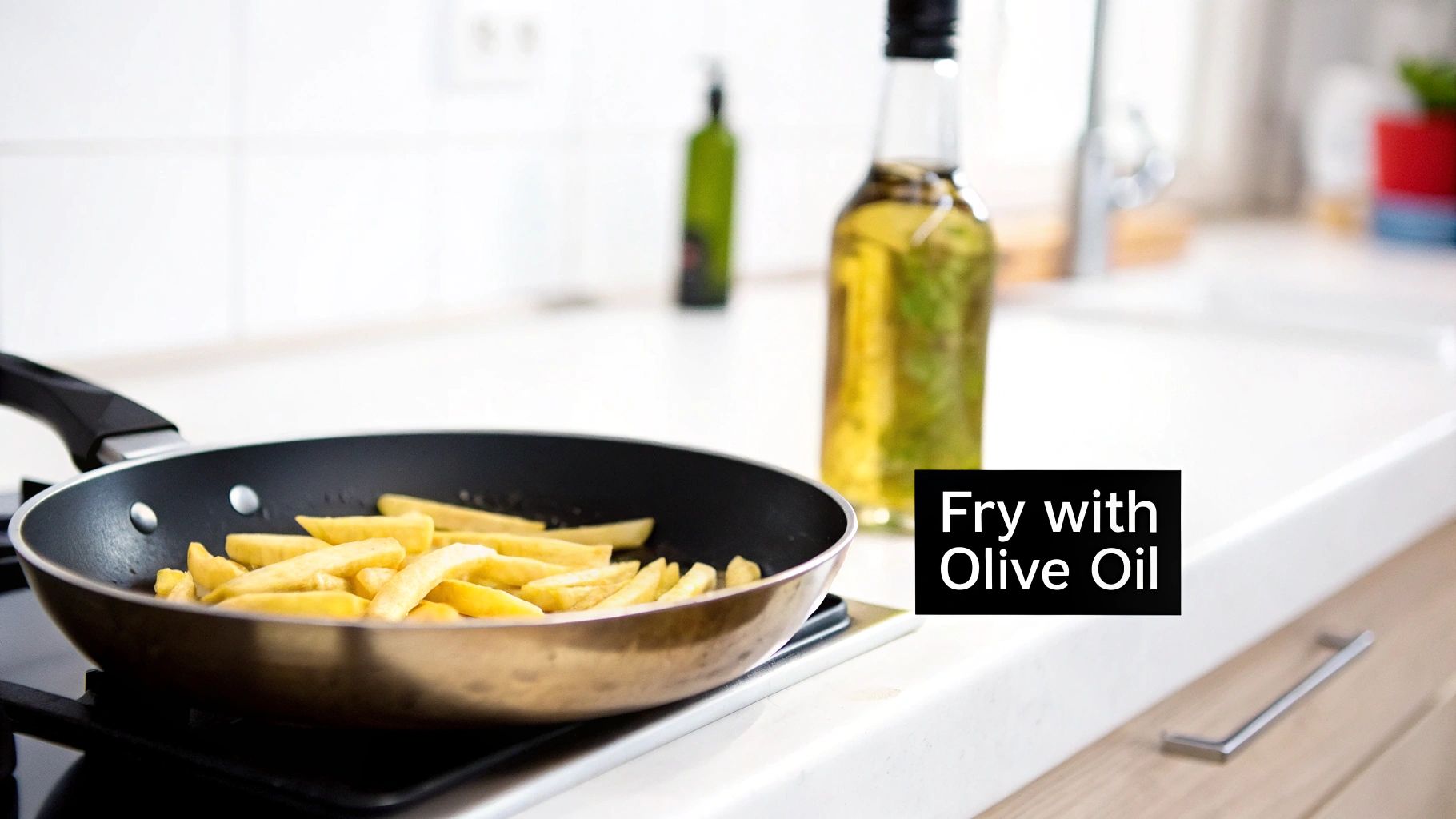
Let's settle this once and for all. You've heard the warnings repeated so often they feel like gospel: deep frying with olive oil is a waste of money, a killer of flavor, or even a health hazard. But what if this old wives’ tale is one of the biggest deceptions to ever haunt the modern kitchen?
This isn’t just an opinion. This is a reality proven by food science and practiced daily by chefs who genuinely understand how fats perform under fire. For far too long, the entire conversation has been hijacked by a single, wildly misleading number: the smoke point.
Beyond the Smoke Point: The Hidden Fortress in Your Oil
The true measure of a world-class frying oil isn't just the temperature at which it begins to smoke. The critical factor—the one that truly matters for your health and the taste of your food—is its oxidative stability. This is its power to resist breaking down and forming harmful compounds when subjected to the prolonged stress of high heat.
Think of an oil's stability like a fortress wall. Some oils boast high smoke points, but their walls are like flimsy drywall, crumbling under the sustained assault of heat. Olive oil's walls, however, are reinforced with something extraordinary: powerful antioxidants.
These natural bodyguards, especially the polyphenols abundant in extra virgin olive oil, fiercely defend the oil’s molecular structure. They keep it stable, safe, and delicious even at typical deep-frying temperatures of 350–375°F (175–190°C).
This remarkable stability is your ticket to a perfect, crispy, golden-brown finish, without the oil degrading into something you’d never want to eat. In fact, as we're about to discover, it can even make your fried foods healthier. To get started on the right foot, learn more about the best olive oils for cooking and find the perfect partner for your next meal.
Decoding the Smoke Point Myth
For decades, the term ‘smoke point’ has been weaponized against home cooks, creating a paralyzing fear of high-heat cooking. We’ve been fed a simple, potent myth: when oil smokes, it's toxic. This single idea has unfairly banished olive oil to the back of the pantry when it’s time to fry.
But what if this laser focus on smoke point is like judging a champion marathon runner by how fast they can sprint 100 yards? It’s a single, irrelevant metric that completely misses the point. The smoke point is merely the temperature where you first see visible smoke; it's a shockingly poor indicator of an oil's true endurance under heat.
The Real Champion is Stability
The true star of this story isn’t smoke point; it’s a concept scientists call oxidative stability. This is an oil’s built-in resistance to breaking down and forming harmful compounds when you crank up the heat.
Here’s a better way to think about it:
- Smoke Point: Imagine this is the warning light on your car’s dashboard. It tells you something is getting hot, but it says nothing about how well the engine was built to handle stress in the first place.
- Oxidative Stability: This is like having a Formula 1-grade cooling system that prevents the engine from overheating to begin with. This is the true measure of performance.
And this is where olive oil, particularly extra virgin, leaves its competition in the dust. For a deeper dive that dispels these common falsehoods, check out a chef's guide to high-heat cooking oils.
So, what gives olive oil this unshakeable stability? It’s teeming with powerful antioxidants like polyphenols. These compounds are like a microscopic army of bodyguards, sacrificing themselves to protect the oil’s fats from the damaging effects of oxygen and heat.
This protective army is precisely why you can deep fry in olive oil with complete confidence. The oil stays robust and intact, even at the ideal deep frying temperatures of 350-375°F (175-190°C). To explore this topic in greater detail, you can take a look at our guide on olive oil smoke temperature.
In fact, scientific research has put this to the most extreme tests. One landmark study held extra virgin olive oil and other common cooking oils at a blistering 180°C (356°F) for six consecutive hours. The results were undeniable: EVOO produced the lowest levels of harmful polar compounds, proving it was the most stable oil tested by a country mile. Smoke point isn't the final word; an oil's antioxidant shield is what truly matters.
Choosing the Right Olive Oil for Frying
Walking into the cooking oil aisle can feel like a pop quiz you never studied for. Bottles screaming Extra Virgin, Light, and Pure all vie for your attention, leaving you paralyzed, wondering which one truly belongs in your fryer.
The good news? Making the right choice is remarkably simple once you understand the distinct personality of each.
Think of the olive oil family as a spectrum. At one end, you have the robust, flavorful character of Extra Virgin Olive Oil (EVOO), the undisputed champion of antioxidant content. At the other, you have the mild-mannered, neutral profile of refined or ‘light’ olive oil—an ideal choice for tasks where you don't want the oil's taste to steal the show.
Extra Virgin vs. Refined Olive Oil
The biggest difference between these oils comes down to a single word: processing.
Extra Virgin Olive Oil is the purest expression of the olive, cold-pressed directly from the fruit with no chemicals or high heat. This gentle handling preserves its bold, sometimes peppery flavor and its full arsenal of health-promoting polyphenols. It's these very compounds that grant it heroic stability under heat.
On the other hand, oils labeled as 'Light' or 'Pure' Olive Oil have been refined. This process filters the oil and tones down its strong olive flavor. The result is a more neutral-tasting oil with a higher smoke point. While some of those precious antioxidants are lost during refining, it remains a highly stable, monounsaturated fat, making it an excellent workhorse for deep frying.
The chart below blows the "smoke point" myth out of the water and reveals what really matters for frying quality.
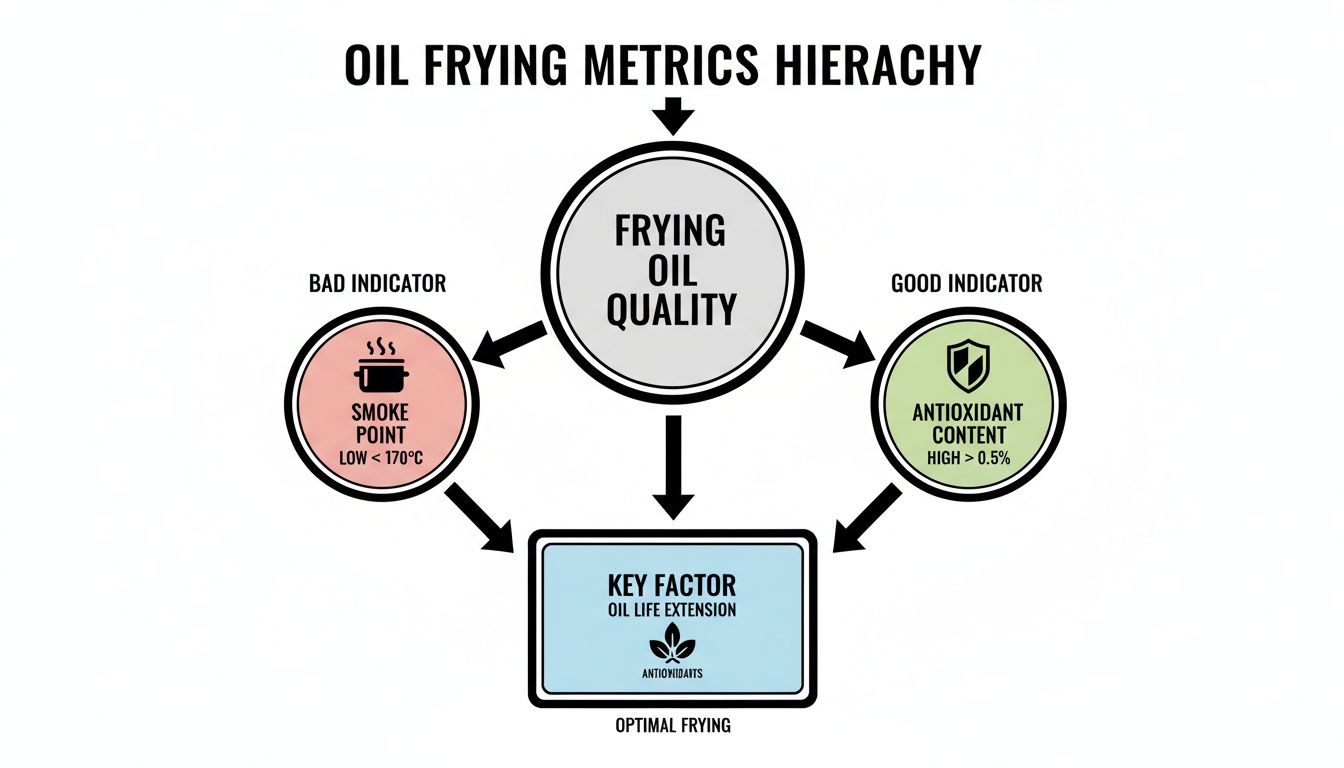
As you can see, the antioxidant content is a far better predictor of a great frying oil than smoke point alone.
To make it even clearer, here is a simple guide to help you decide which bottle to grab from the shelf with confidence.
Choosing Your Frying Champion: A Simple Olive Oil Guide
Use this table to quickly compare different types of olive oil for deep frying, focusing on the factors that matter most: flavor, stability, and ideal use.
| Olive Oil Type | Smoke Point Range (°F) | Flavor Profile | Best For | Key Considerations |
|---|---|---|---|---|
| Extra Virgin (EVOO) | 350-410°F | Robust, fruity, peppery | Pan-frying, shallow-frying, dishes where you want the oil's character to shine. | Choose a quality, fresh EVOO. Its antioxidants provide superior heat stability. |
| Virgin Olive Oil | Around 390°F | Milder than EVOO, but still has a distinct olive flavor. | General-purpose frying when a hint of Mediterranean flavor is welcome. | An excellent middle-ground option that's less expensive than premium EVOO. |
| Refined/'Light' Olive Oil | Up to 470°F | Neutral, very mild taste. | Deep-frying, baking, and cooking delicate foods where you don't want to add flavor. | Exceptionally stable and won't overpower your ingredients, but has fewer antioxidants. |
At the end of the day, picking the right oil is about matching its personality to your recipe's needs.
Making the Right Choice for Your Dish
So, which one should you choose? It all depends on what you're cooking and the final result you crave.
- For maximum flavor and health benefits: A good quality EVOO is spectacular for shallow-frying fish or potatoes where you want that rich, Mediterranean soul to sing. Its antioxidants will not only protect the oil but will also infuse your food.
- For a neutral taste and high heat: When frying something delicate like tempura or doughnuts, a refined or 'light' olive oil is your secret weapon. It delivers all the stability of olive oil without imparting a distinct flavor.
The decision isn't about "good" versus "bad." It's about matching the oil's character to the food's needs. The trade-off is simple: robust flavor and a battalion of antioxidants with EVOO, versus a neutral profile and a higher smoke point with refined olive oil.
Understanding this balance empowers you to make a confident choice, every single time. To go even deeper, you can explore our detailed guide on choosing the best high smoke point olive oil for all kinds of culinary adventures. Ultimately, both paths lead to a stable, healthier alternative to most common seed oils.
How Frying with Olive Oil Actually Makes Your Food Better
Picture your favorite fried chicken for a moment. Imagine pulling it from the fryer not just perfectly golden and shatteringly crisp, but also infused with powerful, health-boosting compounds. This isn't a fantasy. This is exactly what happens when you deep fry with a quality extra virgin olive oil.
It sounds almost too good to be true, doesn't it? Yet the science is undeniable: the natural polyphenols in EVOO don't just protect the oil from heat damage; they actually transfer into the food you're cooking.
- Antioxidant Infusion: You are literally adding a layer of nutrition to your fried dishes.
- Flavor Amplification: The oil imparts a subtle, fruity complexity that boring, neutral oils simply cannot replicate.
- Heart-Healthy Fats: You're enriching the food with monounsaturated fats, the cornerstone of the heart-healthy Mediterranean diet.
So, deep frying with extra virgin olive oil isn't just a possibility—it’s a genuine upgrade to the nutritional profile of your meal.
When researchers put this to the test, frying food for 4 minutes at 180°C (356°F), what they discovered was astounding. Foods fried in EVOO soaked up antioxidants, ending with a concentration of ~6653 ppm. Compare that to canola oil (~407 ppm) or grapeseed oil (~584 ppm), and it’s not even a fair fight. The food also gained a higher percentage of stable monounsaturated fats. You can dive into the science yourself and read the full research about antioxidant transfer.
A Health Boost in Every Bite
How is this possible? The powerful polyphenols in EVOO act as selfless protectors. When the heat is on, they sacrifice themselves to shield the oil's chemical structure, preventing it from oxidizing and breaking down into harmful compounds.
Every antioxidant molecule in your EVOO is a down payment on superior flavor and better health.
This protective effect is a huge part of what makes it such an intelligent choice for cooking. To learn more, check out our complete guide on the benefits of cooking with olive oil.
Practical Flavor Takeaways
Beyond the health advantages, frying with EVOO simply makes food taste better. It elevates humble ingredients into something truly memorable. The oil’s natural fruitiness helps create a remarkably crisp, flavorful crust that enhances both the taste and texture of whatever you're frying.
Let's look at the numbers side-by-side:
| Metric | EVOO | Canola | Grapeseed |
|---|---|---|---|
| Antioxidants (ppm) | 6653 | 407 | 584 |
| Monounsaturated Fats (%) | 75 | 63 | 16 |
| Flavor Profile | Fruity | Neutral | Neutral |
The table makes it painfully obvious just how much EVOO stands apart from common seed oils. By choosing extra virgin olive oil, you’re making a deliberate choice for both superior flavor and nutrition.
Imagine crispy tempura vegetables fried in EVOO. They absorb a delicate hint of green olive that complements their natural sweetness without ever overpowering it.
- Tempura vegetables get a dose of protective polyphenols.
- Fried chicken develops a richer, more golden, and more flavorful crust.
- Homemade fries emerge with an antioxidant advantage.
The takeaway is simple. When you ask, "can I deep fry in olive oil?", the answer is a resounding yes. You not only can, but you should seriously consider it for that unbeatable one-two punch of taste and health.
So go ahead. Enjoy every crispy bite with newfound confidence. Your next frying adventure awaits.
A Practical Guide to Perfect Olive Oil Frying
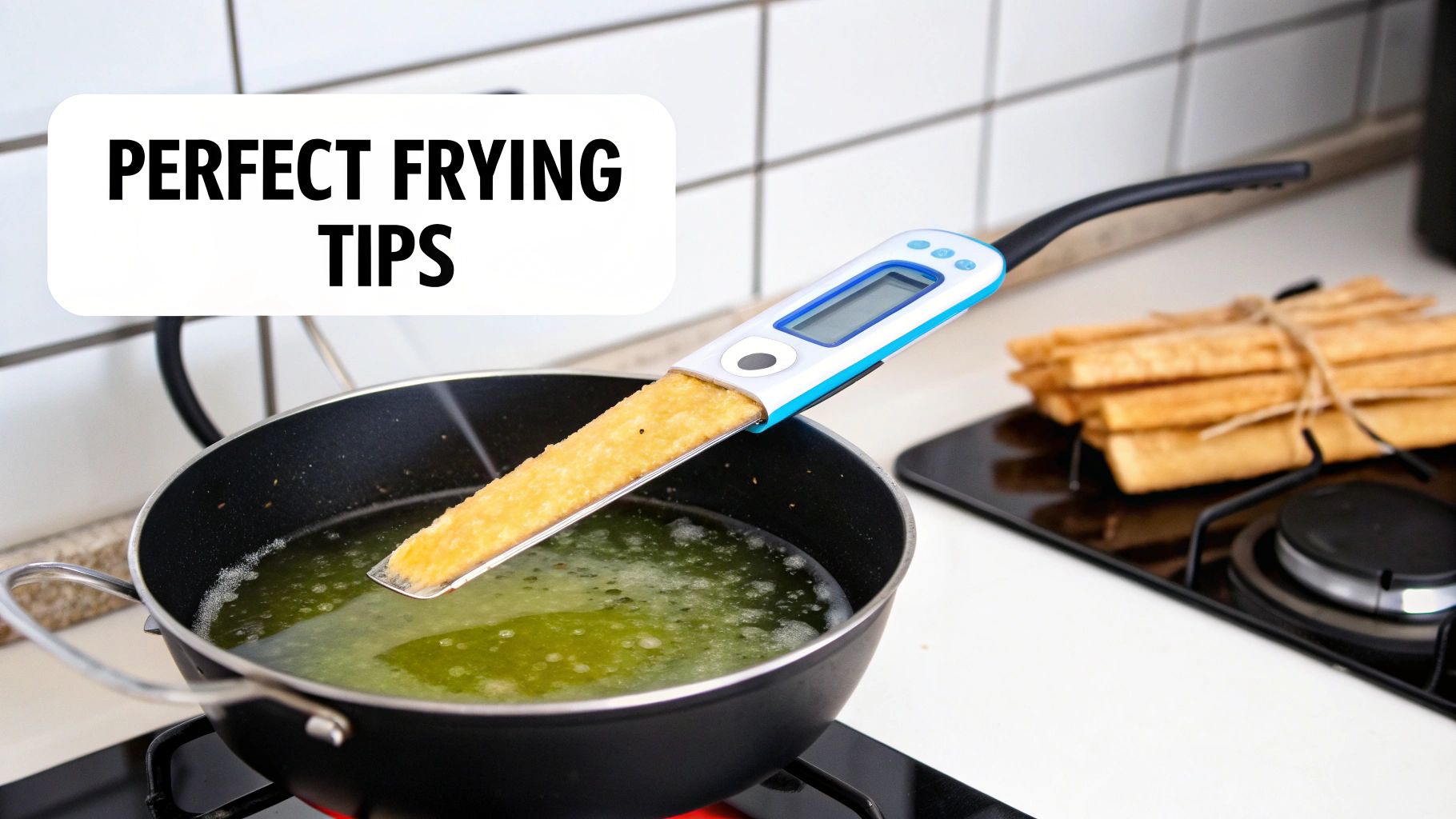
Alright, let's pull all this science out of the laboratory and into your kitchen. Theory is one thing, but achieving that perfect golden, non-greasy crunch is all about technique. This is your hands-on playbook for deep frying with olive oil like a seasoned pro.
The secret to incredible fried food begins with stable heat. You’ll want a heavy, deep pot—a Dutch oven is your best friend here—that can hold a generous amount of oil. The principle is called thermal mass, and it’s your greatest ally in the war against soggy food. A large volume of oil holds its temperature far better when you introduce cold food, preventing the dreaded temperature drop that leads to a greasy disaster.
Mastering Temperature Control
Your most critical tool is a good thermometer, whether it's a lightning-fast digital instant-read or a classic deep-fry model. Do not attempt to guess.
The magic number for frying with olive oil is between 350°F and 375°F (175-190°C). This is the sweet spot where your food cooks through quickly, forming a crispy, protective crust before it has a chance to soak up excess oil.
Keep a vigilant eye on that temperature, especially between batches. It is absolutely essential to let the oil climb back up to your target temperature before adding the next round of food. This single act of patience makes all the difference. To dig deeper into how olive oil performs under fire, our guide on olive oil for high-heat cooking has more detail.
Essential Frying Techniques
Success lives in the details. Follow these fundamental rules, and you'll elevate your frying game from good to unforgettable.
- Don't Crowd the Pan: This is the cardinal rule. No exceptions. Tossing in too much food at once will cause the oil's temperature to plummet. Fry in small, manageable batches, giving each piece an inch or two of personal space.
- Prep Your Food Like a Pro: Water is the enemy of hot oil. Pat your food completely dry with paper towels before it gets anywhere near the pan. If you're using a batter, aim for a light, even coating—not a heavy suit of armor.
- Create a Landing Pad: Before you even begin, set up a wire rack over a baking sheet right next to your frying station. This allows air to circulate all around your freshly fried food, keeping it impeccably crisp. A plate lined with paper towels will only create steam and undo all your hard work.
"Low oil temperature is what makes food greasy because the food is going to absorb too much oil. And then you're going to get these like heavy, laden [foods]." – Sarah Jampel, Test Kitchen Director
Once you’re finished, let the oil cool completely. If you plan to reuse it, strain it through a fine-mesh sieve or cheesecloth to remove any stray food particles. Store it in a sealed, dark container away from heat. For those who fry regularly, proper equipment care is crucial; learn some essential tips for deep fryer cleaning to keep everything safe and in top shape. With these techniques, you'll be deep frying in olive oil with total mastery.
Your Top Questions About Frying With Olive Oil, Answered
Okay, we’ve smashed the big myths. You now know that you can deep fry with olive oil. But knowing something is possible and feeling confident enough to do it are two different things. Let's tackle the nagging questions that always pop up in the kitchen.
Here are the direct, no-nonsense answers you've been looking for.
Isn't It a Waste of Money to Use Expensive EVOO for Frying?
Absolutely not—in fact, it can be surprisingly economical. You should think of it as an investment in both superior flavor and better health.
High-quality extra virgin olive oil is incredibly resilient, which means you can often filter and reuse it several times. When you factor that in, the cost per use plummets. More importantly, you're infusing your food with antioxidants and a wonderful taste that you simply cannot get from a bland, highly processed seed oil. It’s a trade-off that pays delicious dividends in every crispy bite.
Will My Fried Food End Up Tasting Like Olives?
Only if you want it to! The flavor transfer depends entirely on the type of olive oil you choose.
If you use a mild, delicate extra virgin olive oil, it will contribute a very subtle, clean flavor that you'll barely notice—it just makes everything taste better. For savory foods like french fries or fish, a more robust and peppery EVOO can be a fantastic, deliberate flavor choice that elevates the entire dish.
But if you're making doughnuts or a delicate tempura where you need a completely neutral canvas, simply reach for a refined or 'light' olive oil. You get all the stability and health benefits without any of the assertive olive flavor.
How Many Times Can I Reuse the Oil?
Good-quality olive oil holds up beautifully for reuse, provided you treat it with respect.
Once you're done frying, allow the oil to cool down completely. Then, pour it through a fine-mesh strainer or a few layers of cheesecloth to filter out all the tiny food particles. Store it in a sealed, dark container away from heat and light.
As a rule of thumb, you can typically reuse it 3 to 5 times. The best way to know when it's time to retire it? Trust your senses. If the oil looks excessively dark, smells off, or starts to foam when you heat it, its time has come.
What's the Best Temperature for Frying in Olive Oil?
The magic number for almost all deep frying is somewhere in the neighborhood of 350-375°F (175-190°C).
This is the golden zone. It's hot enough to instantly create that perfect, crispy crust on the outside before the inside has a chance to absorb too much oil and become heavy or greasy.
Crucially, this temperature range is well below the smoke point of quality olive oils, including most good EVOOs. The key to staying in this perfect zone is a good kitchen thermometer. Don't guess—measure!
At Learn Olive Oil, we're passionate about helping you understand the "why" behind the "how." We share expert knowledge to help you choose, taste, and cook with the world's best olive oils. Discover the World of Premium Olive Oil and bring your cooking to the next level.
 Learn Olive Oil
Leave a comment