So, is olive oil acidic? Yes, but almost certainly not in the way you're thinking. Forget the tartness of lemon juice or the sharp bite of vinegar. When we talk about acidity in olive oil, we're discussing a secret chemical marker—a hidden score that reveals everything about its quality, even though you can't taste it.
The Acidity Myth You Need to Understand
The word "acidic" conjures a single image: a sour, tangy flavor. This is the great misunderstanding, a trap that even seasoned food lovers fall into. In the world of olive oil, acidity is a ghost; it's a chemical measurement, a silent storyteller of the oil’s journey from a sun-drenched grove to your kitchen.
This measurement has absolutely nothing to do with pH or how sour something tastes. Instead, think of it as a report card—an inside look at how the olives were treated. It reveals the health of the fruit and the speed and care of its pressing. Low acidity isn't a flavor profile—it's a hallmark of purity, freshness, and masterful craftsmanship.
A high-quality extra virgin olive oil must have a free fatty acidity level of 0.8% or less. But the truly exceptional oils, the ones producers stake their reputation on, often boast levels below 0.3%.
This distinction is critical. It is the chasm between the sour taste you might expect and the chemical reality that defines a world-class olive oil. Grasping this difference is the first step to becoming a truly discerning buyer.
It's one of the most stubborn misconceptions out there, and you can dive deeper into other common olive oil myths that keep consumers confused. Once you separate the chemistry from the taste, you'll start to see what makes a bottle of olive oil truly special.
What Acidity Really Means for Your Olive Oil
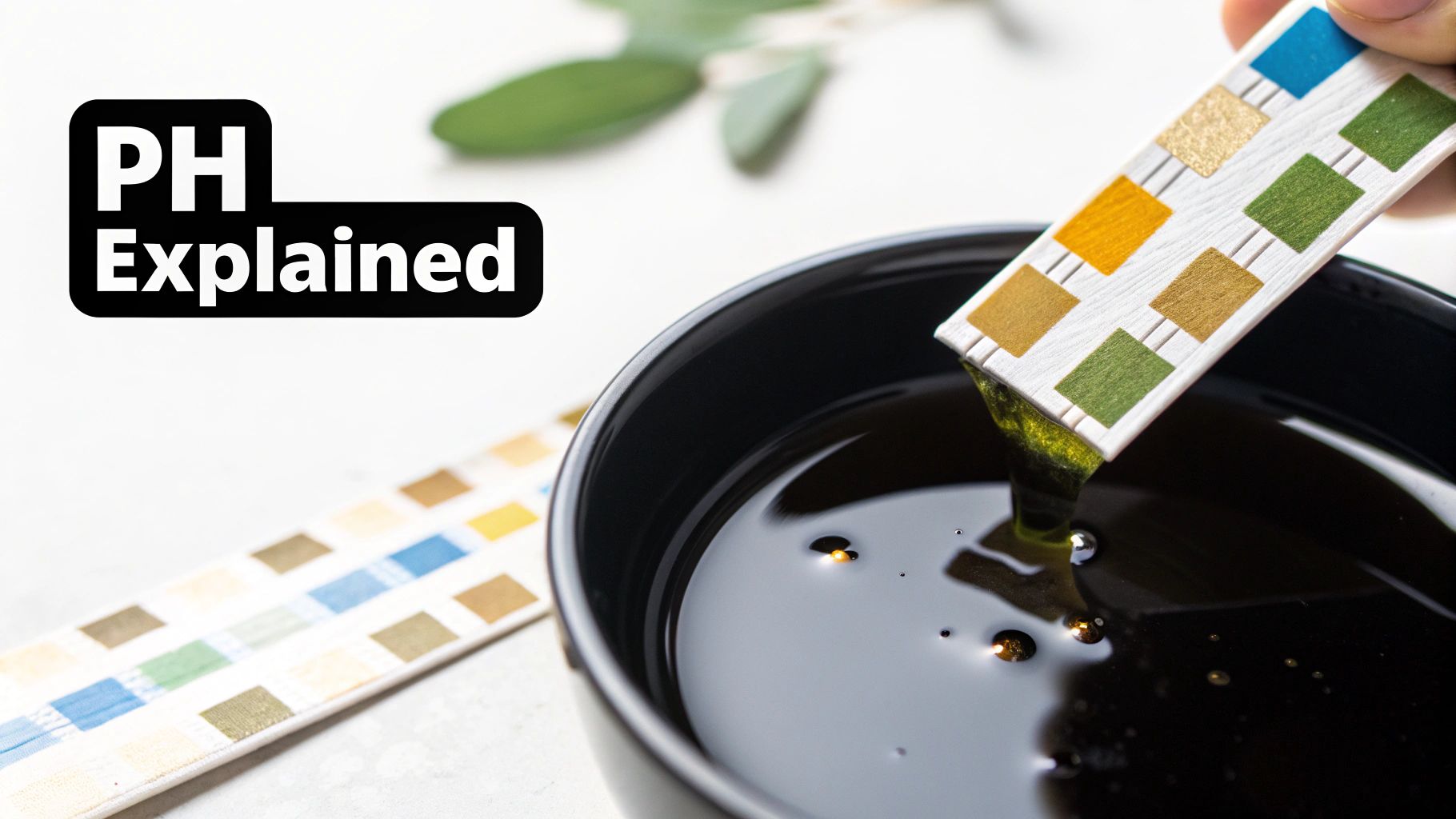
Let's shatter a common misconception right now. When experts discuss acidity in olive oil, they aren't talking about flavor. The conversation is far more precise, centering on a chemical measure called Free Fatty Acidity (FFA)—and it’s one of the most honest indicators of an oil's true quality.
Imagine a perfect, ripe olive on the tree. Inside, its fats are locked into stable molecules called triglycerides. But the moment that olive is bruised, becomes overripe, or sits in a pile for too long after harvest, those triglycerides begin to break down.
This breakdown releases free fatty acids. So, the FFA value is essentially a damage report. A higher percentage whispers a story of compromised olives, of fruit that suffered before it was ever pressed into oil.
The Signature of Quality
A low FFA isn't just a number on a lab report; it’s proof of a producer's unwavering dedication. It tells you the olives were healthy, handled with care, and milled swiftly to preserve their very essence. It’s the first thing experts look for because it reveals so much about the oil's journey. To dig deeper, you can explore the fundamental composition of olive oil and see just why these fats are so important to protect.
In short, the acidity level is a direct measure of quality, not a description of its flavor.
The International Olive Council (IOC) sets the gold standard: for an oil to be classified as 'extra virgin,' its free fatty acidity must be 0.8% or lower. This strict rule is what separates truly great oils from the rest.
This chemical benchmark is non-negotiable. An oil with lower acidity has its natural structure intact. This means you get more of the fresh flavors, vibrant aromas, and powerful health benefits that make olive oil a cornerstone of a healthy life. You can read more about the findings on olive oil standards to see how these criteria are established.
Decoding Olive Oil Grades by Acidity
Walking down the olive oil aisle can feel like navigating a minefield. With so many labels shouting for your attention, how do you know what you're really buying? The secret is to understand one key factor: acidity. This single chemical marker is what separates the best oils from the mediocre, and it's the primary standard regulators use to classify them.
Think of acidity as a final grade for the entire production process. A low acidity level is a testament to healthy, pristine olives harvested and milled with extraordinary care. It's not just a technical detail; it's a direct reflection of the oil's quality and its purpose in your kitchen.
The image below gives a great visual breakdown of how acidity levels correspond to the most common olive oil grades.
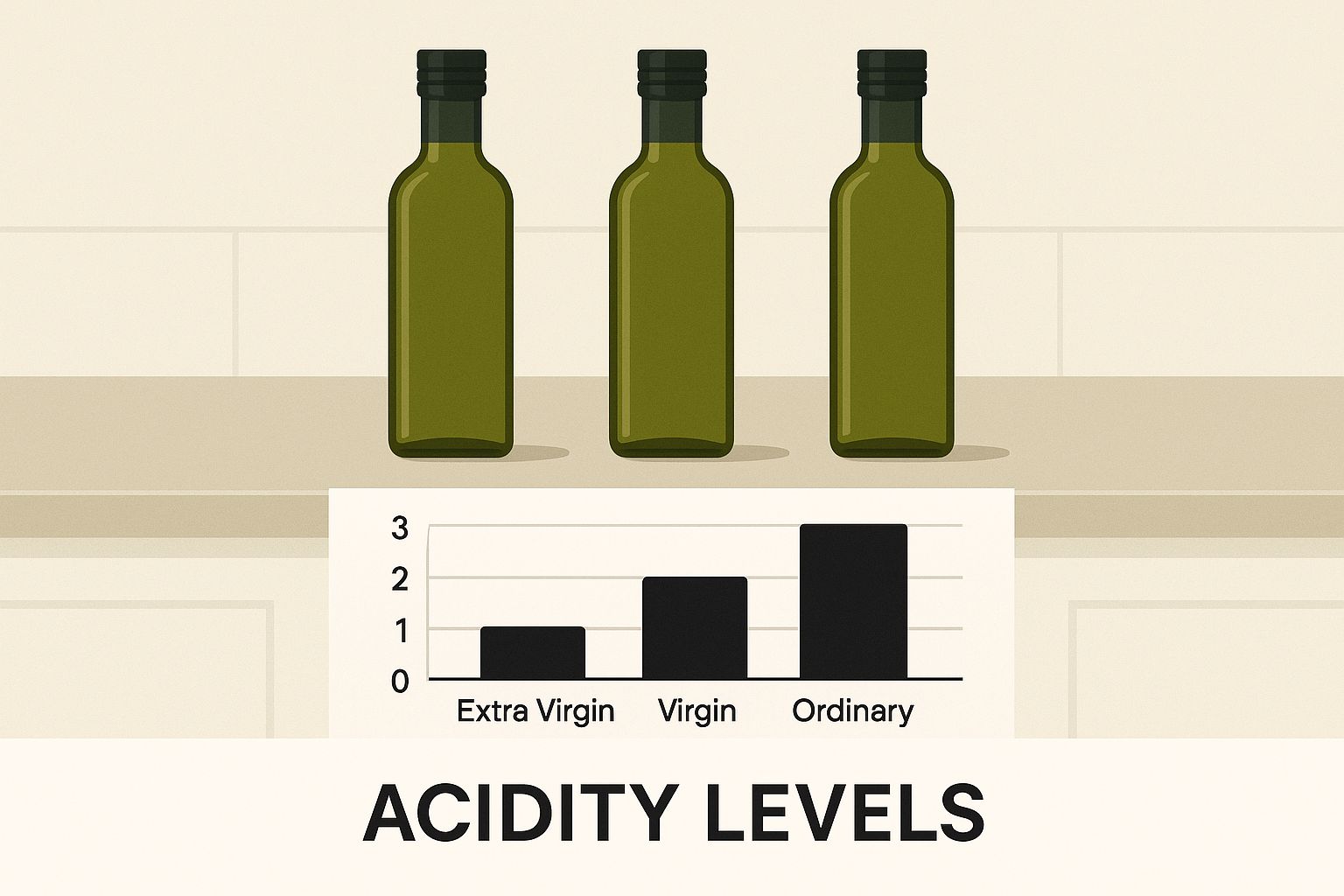
As you can see, the path from a freshly picked olive to a bottle of Extra Virgin Olive Oil is defined by meeting very specific, internationally recognized thresholds.
The Official Tiers of Quality
To help consumers make informed choices, olive oils are sorted into a clear hierarchy. This system ensures that when you pick up a bottle, its label accurately reflects its quality.
Let's break down the main grades you'll encounter.
Olive Oil Grades and Acidity Levels
This table reveals the direct correlation: as the quality grade decreases, the acceptable acidity level rises.
| Olive Oil Grade | Maximum Acidity (% FFA) | Description & Common Use |
|---|---|---|
| Extra Virgin Olive Oil (EVOO) | ≤ 0.8% | The pinnacle of quality. Perfect flavor and aroma. Ideal for dressings, dipping, and finishing. |
| Virgin Olive Oil | ≤ 2.0% | Good quality but may have slight sensory defects. Suitable for general cooking and sautéing. |
| Lampante Olive Oil | > 2.0% | Has significant defects and is unfit for consumption. Must be refined before use. |
This grading system is what empowers you to shop with confidence, knowing that terms like "Extra Virgin" have real, measurable standards behind them.
A Closer Look at the Grades
-
Extra Virgin Olive Oil (EVOO): This is the crown jewel. To earn this prestigious title, an oil must have a free fatty acidity of no more than 0.8%. But that's not all—it also has to pass a rigorous sensory panel, proving it has a superior flavor and aroma with zero defects. There's a lot that goes into it, and you can explore the full meaning of Extra Virgin Olive Oil to see how all these standards come together.
-
Virgin Olive Oil: Think of this as a slight step down from EVOO. Its acidity is a bit higher, allowed up to 2.0%, and it might have very minor sensory imperfections. It's still a pure, unrefined oil, but it just doesn't quite meet the flawless profile of its extra virgin cousin.
It's important to know that these top two grades—Extra Virgin and Virgin—are the only ones produced using purely mechanical methods. They are "cold-pressed" without the use of chemicals or high heat, giving you the truest, most natural expression of the olive.
- Lampante Oil: Any olive oil with an acidity above 2.0% and noticeable taste defects falls into this category. The name comes from the Italian word for "lamp," as it was historically used for lamp fuel. It’s considered unfit for human consumption on its own and has to be sent to an industrial refinery for processing.
Once you understand these grades, you can read any label like an expert. You'll be able to choose an oil that not only tastes incredible but also meets the highest standards of quality.
The Craft Behind Low-Acidity Olive Oil
Achieving an incredibly low acidity in olive oil is never an accident. It is the signature of a producer obsessed with quality, where every single step is a frantic race against time. This is where mass production is left in the dust and true artistry begins.
It all starts with the olive, still on the branch. The best oils come from fruit picked at the perfect moment—often when they're still green, brimming with peppery, health-boosting antioxidants. These olives aren't just dumped into a truck; they're handled like the delicate fruit they are. The singular goal is to rush them from the branch to the mill within hours, because every delay, every bruise, every hint of fermentation will immediately begin to degrade the precious fats inside.
The Art of Preservation
Once at the mill, the focus shifts to careful extraction. Gentle cold-pressing is non-negotiable. This modern olive oil extraction method ensures that heat never enters the equation, which is critical for keeping the oil's chemistry stable and locking in its flavor and nutrients.
This relentless attention to detail is how producers achieve the ultra-low acidity levels that connoisseurs prize. It’s the combination of harvest time, olive variety, and immediate, careful processing that separates an average oil from a masterpiece.
This is exactly why you see ultra-premium olive oils boasting acidity levels as low as 0.2%. Reaching a number that low requires an almost fanatical commitment to harvesting at peak ripeness and crushing the olives within hours to stop oxidation in its tracks. You can explore more about what makes these rare olive oils so exceptional to truly appreciate the craft. That tiny number on the bottle translates directly into a more vibrant flavor, a longer shelf life, and a world of health benefits.
How Acidity Impacts Your Health and Cooking
So, what does all this chemistry mean when you're standing at your stove? As it turns out, it means everything. A low acidity level isn't just a number on a lab report; it’s the secret behind a healthier, better-tasting oil that performs beautifully in your kitchen.
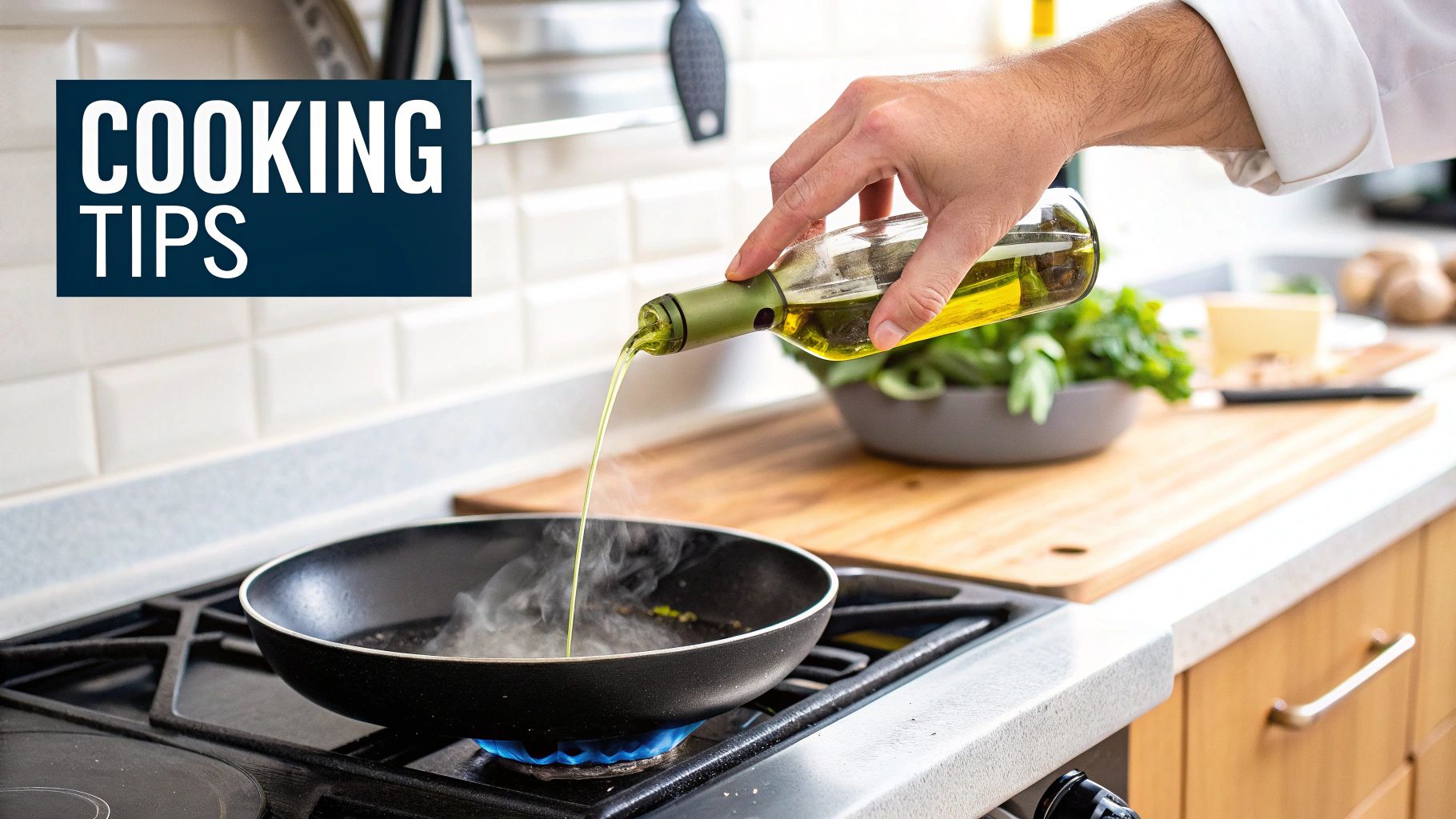
There's a persistent myth that you can't cook with good extra virgin olive oil. That couldn't be further from the truth. In fact, the very low free fatty acidity in a premium EVOO is what makes it more stable under heat.
This stability gives it a surprisingly high smoke point, often around 420°F (220°C). That makes it a fantastic and safe choice for almost anything you can throw at it, from a gentle sauté to a high-heat roast.
A Gateway to Better Health
Here's the real magic: low acidity is a sign that the oil is packed with powerful, health-giving compounds. When the olives are handled with enough care to keep those FFA levels down, it means the good stuff—like antioxidants and polyphenols—is still intact.
Polyphenols are the rockstars of olive oil, famous for their anti-inflammatory properties and a big reason why the oil is so heart-healthy. Ever tasted a top-tier EVOO and noticed a peppery kick or a slightly bitter finish? That’s not a defect. That’s the taste of potent polyphenols doing their job.
Picking a low-acidity oil is like making a direct investment in your well-being. It’s your guarantee that the oil is loaded with its natural goodness, including vitamins A, D, E, and K, which are essential for everything from your immune system to skin health.
Ultimately, the link between low acidity and high polyphenol counts is the key takeaway. The lower the FFA, the more of these antioxidant powerhouses you get. For a deeper dive, checking out the complete olive oil nutrition facts can show you just how much is going on inside that bottle.
This is why we obsess over acidity. It's not about being a food snob. It's about choosing an oil that delivers on every front: superior flavor, better cooking performance, and a real boost to your long-term health.
Your Top Questions About Olive Oil Acidity
Even with the science explained, a few key questions always seem to come up. Let's dig into the most common ones so you can feel completely confident the next time you're standing in front of a shelf of olive oils.
These are the practical, real-world details that turn abstract knowledge into better decisions.
Can I Taste the Acidity in Olive Oil?
This is probably the most important question, and the answer is a simple, resounding no. What we call "acidity" in olive oil is a chemical measure known as free fatty acidity (FFA). It has no taste or aroma and can only be detected with lab equipment.
So, what’s that peppery, bitter, or pungent kick you sometimes taste? That's not acidity! Those are actually the healthy polyphenols doing their job—a fantastic sign of a fresh, high-quality, and antioxidant-rich oil. Never confuse that vibrant sensation for a flaw.
Is Lower Acidity Always Better?
For the most part, yes. A lower FFA is a direct reflection of healthy, undamaged olives that were milled quickly and carefully. It's one of the truest hallmarks of quality. While the international standard for Extra Virgin Olive Oil requires an acidity of ≤ 0.8%, the world's most exceptional oils often come in far lower, typically under 0.3%.
Think of acidity as the foundation of quality. It’s not the only factor—flavor, aroma, and harvest date matter, too—but a low acidity level is your first and most reliable signal that you're looking at a truly premium product.
It’s the difference between an oil that just barely makes the grade and one that genuinely stands out.
Why Don't All Bottles Show the Acidity Level?
In many places, including the United States, listing the specific acidity percentage on the label isn't legally required, as long as the oil meets the official standard for its grade (like being under 0.8% for EVOO).
You'll quickly notice, however, that producers who take immense pride in their work almost always print it on the bottle. They view their exceptionally low acidity as a badge of honor. If a label is silent on the matter, it’s a safe bet the oil likely just meets the minimum standard, rather than being something truly special.
Does Acidity Increase as Olive Oil Ages?
It absolutely does. The moment olive oil is bottled, it begins a very slow, natural process of breaking down, which causes the free fatty acidity to rise over time. This process is massively accelerated by exposure to its three biggest enemies: heat, light, and oxygen.
This is why proper storage is so critical. To protect the low acidity and fresh flavors of your oil, always keep it in a cool, dark place (like a cupboard, not next to the stove). Just as important, make sure you twist the cap on tightly after every use to keep damaging air out.
At Learn Olive Oil, we believe that knowing these details helps you choose better, cook smarter, and truly enjoy the incredible world of authentic olive oil.
Discover the World of Premium Olive Oil at https://learnoliveoil.com.
 Learn Olive Oil
Leave a comment