If you've been searching for the single best olive oil for your health, let me give you the answer right away: it’s always fresh, high-quality Extra Virgin Olive Oil (EVOO). But I must warn you, this isn't just another cooking oil. It’s a treasure trove of oleic acid (a profoundly beneficial monounsaturated fat) and a class of potent antioxidants called polyphenols. This remarkable duo is what elevates authentic EVOO from a simple fat into something with near-medicinal power.
The Secret Inside the Bottle: Why Some Olive Oil Is Medicine
Imagine an ingredient so powerful it could help shield your heart from harm, quiet the silent fires of inflammation throughout your body, and stand guard over your cells, defending them from the relentless assault of daily life.
That’s precisely what authentic, high-quality olive oil can deliver. But here’s the catch: not all bottles are created equal. Not by a long shot. The secret that separates a simple cooking fat from a genuine health-boosting elixir lies hidden inside the oil itself.
Many oils cramming the supermarket shelves are little more than highly processed, empty calories. But the rare few that truly deliver on their promise are teeming with powerful bioactive compounds, transforming a humble kitchen staple into something far more profound.
The Power Duo: Oleic Acid and Polyphenols
At the very heart of olive oil's legendary reputation are two star players: oleic acid and polyphenols.
Think of oleic acid as the sturdy, reliable foundation for your cardiovascular health. It’s a fantastic monounsaturated fatty acid that forms the bedrock of a healthy oil. Then you have the polyphenols, a formidable group of antioxidants that act like vigilant guardians, patrolling your body and protecting its cells from the damage that leads to aging and disease.
When you choose an oil rich in both, you're not just cooking—you're arming your body with one of nature’s most effective defense systems. This potent combination is what separates true liquid gold from the refined, impotent oils that tragically dominate most store shelves.
What Makes These Compounds So Special?
So, what do these unsung heroes actually do? Oleic acid is widely celebrated for its ability to support a resilient heart and help maintain balanced cholesterol levels. In the finest EVOOs, this remarkable fat can constitute 70-80% of the total fat content.
But it’s the polyphenols that deliver the real magic. They are responsible for the signature peppery kick or slightly bitter finish you taste in a world-class EVOO. That flavor isn't a flaw; it's the unmistakable sign that powerful anti-inflammatory and antioxidant agents are present and ready to go to work on your behalf.
The peppery sensation you feel at the back of your throat from a great olive oil isn't a flaw—it's the taste of health. It’s the polyphenols announcing their presence.
Understanding this fundamental difference is your first step toward mastery. To explore the science behind these advantages in greater detail, our complete guide on the health benefits of olive oil awaits you.
Key Health Compounds in Olive Oil at a Glance
To make this crystal clear, let's break down the main components that make high-quality olive oil such a powerful ally for your health. This table gives you a quick snapshot of the key players and their roles.
| Compound | Type | Primary Health Benefit |
|---|---|---|
| Oleic Acid | Monounsaturated Fat | Supports cardiovascular health and helps maintain healthy cholesterol levels. |
| Oleocanthal | Polyphenol | A powerful natural anti-inflammatory agent, often linked to the peppery taste. |
| Hydroxytyrosol | Polyphenol | One of nature's most potent antioxidants, protecting cells from oxidative damage. |
| Vitamin E | Fat-Soluble Vitamin | An antioxidant that helps protect cell membranes from damage. |
| Squalene | Natural Organic Compound | Believed to have skin-protective and antioxidant properties. |
While each of these compounds plays a vital role, it’s their combined, synergistic effect in fresh EVOO that unlocks the full spectrum of health benefits. When you choose your oil, you're essentially choosing the concentration of these invaluable nutrients.
Why Extra Virgin Is the Only Choice for Your Health
Walk down the cooking oil aisle and you’re faced with a wall of confusion: 'Pure,' 'Light,' 'Extra Virgin.' They all come from olives, so it's dangerously easy to assume they’re more or less the same. But when your health is on the line, the difference is as stark as night and day.
Think of it like this: Extra Virgin Olive Oil (EVOO) is fresh-squeezed juice from the olive fruit. It’s pure, unprocessed, and bursting with all the natural goodness the olive has to offer. The other grades? They are more like juice from concentrate—assaulted with intense heat and chemical solvents that strip away nearly every beneficial compound.
Only one of these is the best olive oil for health benefits, and it's not even a fair fight.
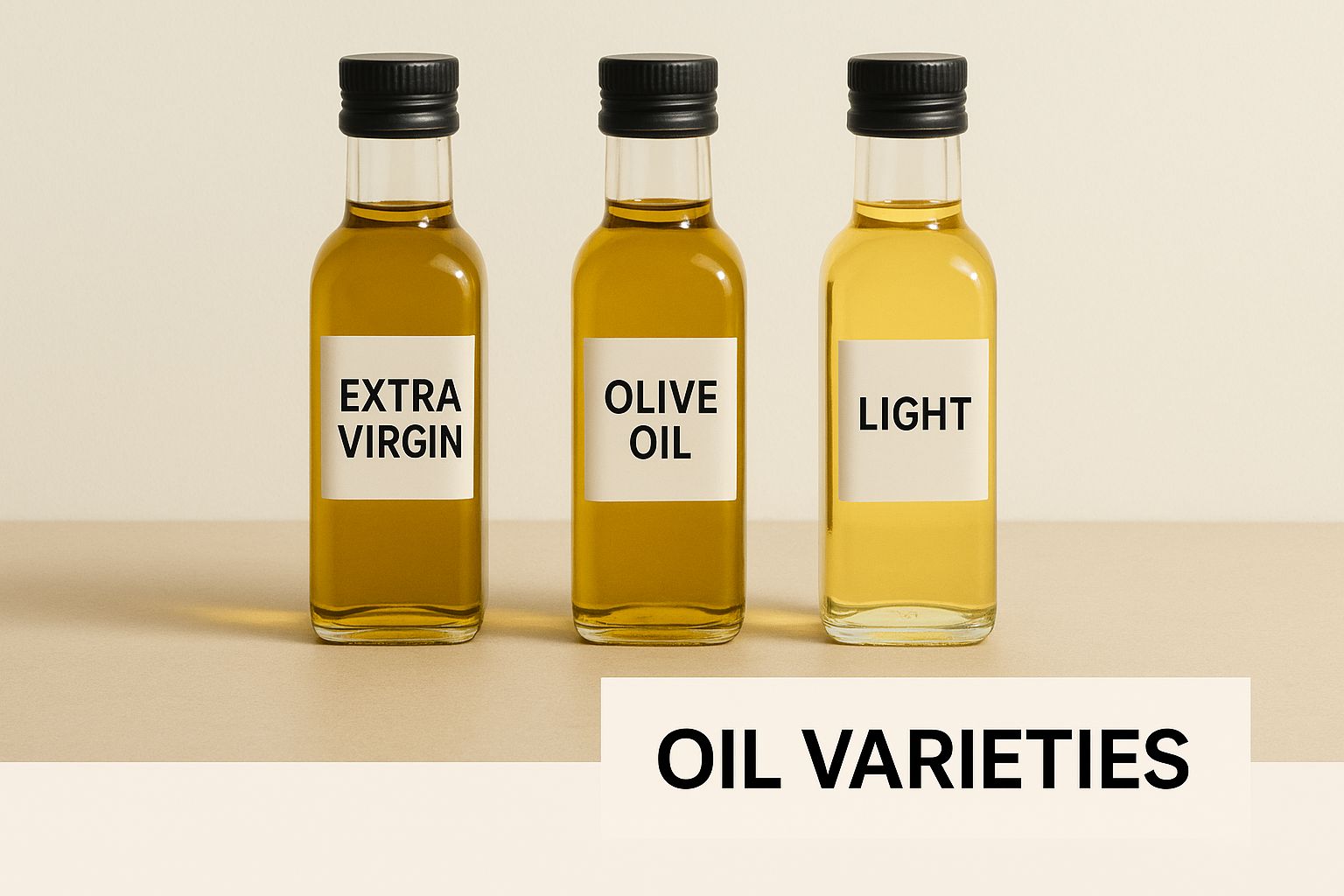
As you can see, Extra Virgin Olive Oil stands alone at the apex of the quality pyramid. Its undisputed superiority comes down to one simple thing: how it’s made.
The Problem with Heat and Refining
The secret to EVOO’s life-giving power is shockingly simple: it’s cold-pressed. This means the olives are simply crushed by mechanical means to release their oil. There are no high temperatures. No chemical solvents. Just pure, unadulterated oil.
This gentle handling is everything. Why? Because the very compounds that deliver the health benefits—especially those potent antioxidants called polyphenols—are incredibly fragile.
The moment you introduce heat and chemicals, which is the standard process for making 'Pure,' 'Light,' and regular 'Olive Oil,' those delicate, health-giving compounds are obliterated. The very molecules responsible for fighting inflammation and protecting your cells are literally burned away. You're left with a bland, neutral fat that has lost its soul.
The term 'Extra Virgin' isn't just marketing fluff; it's a seal of quality. It is a guarantee that the oil is unrefined and still holds the highest possible concentration of compounds that deliver real health advantages.
That refined oil can still cook your food, certainly. But it can no longer be called a health food. The magic is gone.
What Are You Really Buying?
To help you see the dramatic difference for yourself, here is a quick comparison of the common olive oil grades you’ll find on the shelf.
Olive Oil Grades Compared: What You Need to Know
| Olive Oil Grade | Processing Method | Polyphenol Content | Best Use for Health |
|---|---|---|---|
| Extra Virgin | Cold-pressed, no chemicals or heat | Highest | The only choice for maximizing health benefits |
| Virgin | Cold-pressed, no chemicals or heat | Moderate | A decent second choice, but has minor flavor defects |
| 'Pure' or 'Regular' | A blend of refined oil and a little virgin oil | Very Low | Stripped of most health compounds; not recommended |
| 'Light' or 'Extra Light' | Heavily refined with heat/solvents | Virtually None | The most processed; avoid if seeking health benefits |
As this chart reveals, anything other than 'Extra Virgin' or 'Virgin' has been refined in a way that destroys its most valuable assets. 'Light' doesn't even mean fewer calories—it simply refers to the light flavor and color that result from brutal, heavy processing.
Ultimately, when you choose a refined olive oil, you’re paying for a product that's had its most powerful health benefits surgically removed. For a deeper look at what to check for on the label, you can find more tips on choosing the best olive oil for your health. When health is your goal, the choice becomes clear.
How to Read an Olive Oil Label and Find the Real Thing
Walking down the olive oil aisle can feel like navigating a minefield. The labels are a maze of tempting words like "Premium," "First Cold-Pressed," and idyllic images of Italian villas. But most of that is just marketing noise, cleverly designed to sell you a fantasy, not a truly healthy product.
To find the genuine article—the kind of potent, polyphenol-rich oil that actually delivers on its health promises—you must learn to read the story the bottle is telling you. The real clues are often hidden in the fine print on the back. Once you know what to look for, you can spot the impostors and choose a truly great oil with unshakable confidence.
The One Date That Matters Most
If you take away just one tip from this guide, let it be this: always look for the Harvest Date. Think of extra virgin olive oil as fresh-squeezed fruit juice. Its power is in its freshness, and that power begins to fade the very moment the olives are pressed. Over time, those precious, health-promoting polyphenols degrade and disappear.
Don't be fooled by a "Best By" date. It’s a notoriously unreliable guide, often stamped two years after bottling. The problem is, that oil could have been sitting in a massive storage tank for a year before it even saw a bottle. The harvest date is the only true indicator of when the clock started ticking.
- Excellent: Harvested within the last 6-9 months.
- Good: Harvested within the last 12 months.
- Avoid: Anything over 18 months old, or worse, any bottle without a harvest date listed.
Choosing an olive oil without a harvest date is like buying milk without an expiration date. You’re just guessing. When it comes to olive oil, freshness isn't a preference; it's where the health benefits live.
This single piece of information tells you more about the oil's vitality than any marketing claim on the front of the bottle.
Pinpointing the Oil's True Home
Next, you must play detective and find the oil's true origin. A vague label like "Product of Italy" can be a giant red flag. It often means olives from various countries like Spain, Greece, or Tunisia were simply mixed and bottled in Italy to get the prestigious label. High-quality producers, on the other hand, are incredibly proud of where their olives come from and will tell you specifically.
Look for a single estate, a specific region, or the name of the mill. Even better, look for official certifications like PDO (Protected Designation of Origin) or PGI (Protected Geographical Indication). These are legally binding seals that guarantee the olives were grown, pressed, and bottled in a particular place, all according to strict, verifiable rules. That kind of traceability is a hallmark of unimpeachable quality.
If you are ready to become a pro, this detailed guide explains how to choose the best olive oil by digging into these critical signs of authenticity.
Your Quick-Reference Checklist for Buying Great EVOO
Commit these points to memory, and you will never again be tricked by a pretty label. This is your simple checklist for finding an olive oil that will actually benefit your health.
- Harvest Date: First and foremost, is it clearly printed on the label and from the most recent season? This is non-negotiable.
- Specific Origin: Does the label name a single country, or better yet, a specific farm, region, or mill?
- Quality Seals: Are there any third-party certifications like PDO or PGI? These seals act as a guarantee of authenticity.
- Dark Container: Is the oil housed in a dark glass bottle or an opaque tin? Light is the enemy of freshness, so a clear bottle is an instant deal-breaker.
By focusing on just these four things, you can confidently cut through the clutter and pick out the freshest, most potent olive oil on the shelf.
Protecting Your Investment: How to Store Olive Oil Correctly
You’ve done the hard work. You sifted through the impostors, decoded the labels, and brought home a bottle of genuine, polyphenol-rich extra virgin olive oil. But here’s something most people don’t realize: how you treat that oil in your kitchen is just as important as the choice you made at the store.
Think of your high-quality EVOO as a fragile, living ingredient, much like fresh produce or a fine wine. If you leave it in the wrong place, its vibrant, health-giving compounds will quickly begin to wither and die. Don't let your investment in health go to waste on a countertop.
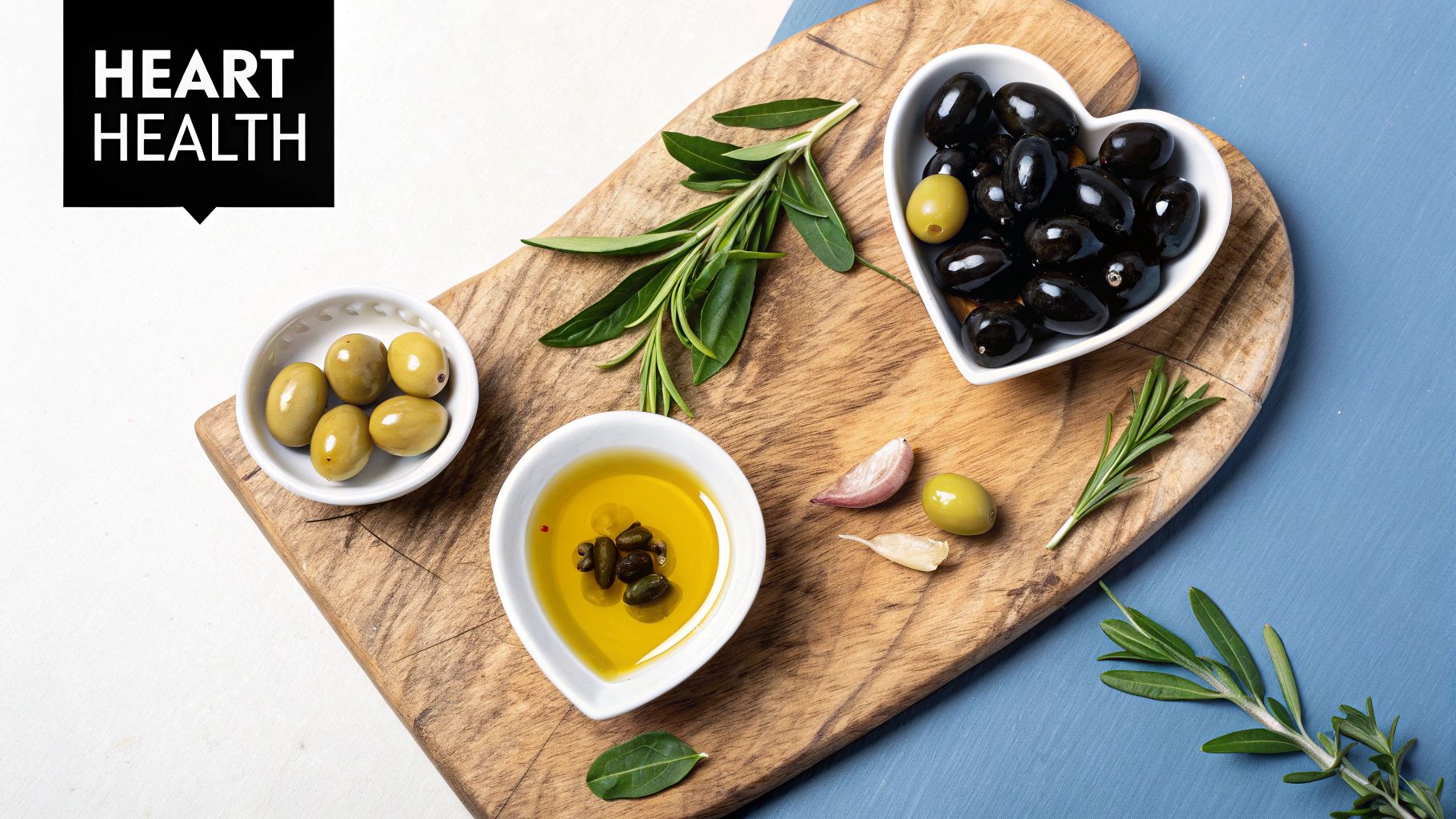
The Three Enemies of Fresh Olive Oil
Your beautiful bottle of olive oil has three sworn enemies constantly trying to rob it of its potency: light, heat, and air. These elements launch a relentless attack on the delicate polyphenols and healthy fats, turning a peppery, vibrant oil into something dull, flat, and far less beneficial.
Learning how to defeat these enemies is the final, crucial step to ensuring every drop delivers the benefits you paid for.
- Light: Direct sunlight and even bright indoor lighting are brutally effective at degrading olive oil. This is precisely why authentic producers use dark green or brown glass bottles, or even better, opaque tins. A clear bottle is a giant red flag that quality isn't the top priority.
- Heat: Heat is a powerful accelerant. It speeds up oxidation, the chemical process that makes oil go rancid. Storing your oil next to the stove, on top of the fridge, or near a sunny window is a recipe for disaster. That convenient spot is slowly cooking your oil before you even get a chance to use it.
- Air (Oxygen): Oxygen is the final villain in this story. Every time you open the bottle, you expose the oil to air, which immediately begins to break it down. A tightly sealed cap isn't just a suggestion—it's an absolute necessity.
Your Simple Storage Strategy
Thankfully, proper storage isn’t complicated. The goal is to create a safe haven for your oil, shielding it from those three destructive forces. All you need to do is find a cool, dark place.
A pantry or a kitchen cabinet is perfect, as long as it's away from the oven and other heat sources. The ideal temperature hovers around 57°F (14°C), but any stable room temperature will do just fine.
Just be sure to avoid the refrigerator. The cold can cause the oil to solidify and create condensation inside the bottle, which can harm the oil's quality. While harmless, this solidification is often why their olive oil is cloudy when people pull it from the fridge.
Treat your olive oil like a vampire: it thrives in the dark and hates the heat. The best place for it is a cool, dark cupboard—never out in the open.
Finally, think about the size of the bottle you buy. It's tempting to grab that giant tin to save a little money, but if you can't use it within a few months of opening, you're losing the very quality you paid for. It's far better to buy a smaller bottle that you can easily finish within 30 to 60 days. This ensures the oil you're using is always at its peak freshness, flavor, and nutritional power.
Bringing High-Quality Olive Oil into Your Kitchen
Knowing which olive oil to buy is only half the battle. Weaving it into your daily life is where the real transformation begins. This isn’t about adding some complicated new ingredient to your pantry; it's about making a simple, powerful upgrade to the meals you already love.
A great many people save their best olive oil just for salads, afraid they might "waste" it on cooking. This is a huge misconception. The truth is, a high-quality extra virgin olive oil has a smoke point hovering around 375–410°F (190–210°C). That makes it perfectly safe and incredibly flavorful for most of the cooking you do every single day.
The goal is to make this healthy habit feel natural and delicious, turning every dish into an opportunity to do something wonderful for your body.
Beyond the Salad Bowl
Let's move past the vinaigrette for a moment. A truly great EVOO can elevate so many of your everyday meals. Those robust, peppery notes aren't just for cold dishes; they add incredible depth and character to cooked foods, too.
One of the easiest ways to unlock its magic is with a simple drizzle over a finished dish. This technique, called "finishing," awakens all the other ingredients and adds a final layer of richness right before you eat.
- Soups and Stews: A swirl of green, peppery oil over a bowl of lentil soup or hearty minestrone is a total game-changer.
- Grilled Meats and Fish: After your steak or salmon comes off the grill, let it rest for a moment, then anoint it with a generous drizzle. It’s magnificent.
- Roasted Vegetables: Once your Brussels sprouts or asparagus are tender and caramelized, toss them with a fresh splash of EVOO. It brings them back to life.
Think of a finishing oil not as a cooking fat, but as a final, powerful condiment. It's the exclamation point for your dish, delivering a fresh burst of flavor and that potent dose of polyphenols.
This simple act takes only seconds but adds an immense amount of flavor and nutritional value.
Cooking with Liquid Gold
Don't be afraid to use your good oil for more than just a final touch. Its stability makes it an excellent choice for sautéing and roasting, where it lends a subtle, delicious character that other oils simply cannot replicate.
For a deeper dive into techniques and temperatures, our guide on how to use olive oil in cooking provides much more detailed advice. But here are a few ideas to get you started right away:
- Sautéed Greens: Gently sautéing spinach or kale with a bit of garlic in a quality EVOO creates a side dish that's as nutritious as it is flavorful.
- Marinades: Use it as the base for marinades for chicken, fish, or vegetables. The oil is a fantastic vehicle for transferring the flavors of herbs and spices deep into the food.
- Baking: You can even swap it for butter or other oils in certain baked goods. Try it in an olive oil cake or savory muffins for a wonderfully moist texture and a hint of fruity complexity.
By embracing these simple uses, you’ll find that incorporating the best olive oil for health benefits into your diet isn't just easy—it’s a delicious journey.
Your Olive Oil Questions, Answered
Let's be honest, the olive oil aisle can be a confusing place. With so many labels, claims, and old wives' tales floating around, it's easy to feel a little lost. Let's clear up some of the biggest questions so you can feel confident you're choosing and using the best possible oil.
Does the Color of Olive Oil Mean Anything?
This is probably the most common myth out there. The simple answer? Not really.
A truly great extra virgin olive oil can be anything from a deep, vibrant green to a shimmering pale gold. The color is all about the olive varietal, how ripe it was at harvest, and how much chlorophyll made it into the final press. A much better sign of quality is that peppery tickle or slightly bitter bite you feel at the back of your throat—that's the polyphenols talking!
What's a Good Polyphenol Count to Look For?
Not every bottle will tell you this, but if you can find it, the polyphenol count is the ultimate measure of an oil's health-promoting power. Think of it as the antioxidant horsepower.
For a high-quality, health-focused EVOO, you'll want to see a polyphenol count of at least 250 mg/kg. If you find an oil that boasts over 400 mg/kg, you've struck gold—that's an exceptionally potent, therapeutic-grade oil packed with anti-inflammatory goodness.
A high polyphenol count isn't just a number on a lab report; it's the source of the oil's peppery kick and its profound ability to support your health. The stronger the bite, the better the benefit.
So, Can I Actually Cook with Extra Virgin Olive Oil?
Yes, you absolutely can! The idea that EVOO is just for drizzling over salads is a stubborn myth that needs to go. A high-quality extra virgin olive oil has a smoke point somewhere between 375°F and 410°F (190-210°C).
That’s plenty high for most of your daily cooking, from sautéing vegetables to roasting chicken. The only thing you'll want to avoid is deep-frying, where prolonged, intense heat can start to break down those wonderful, healthy compounds we're after.
Is 'Light' Olive Oil Lower in Calories?
Nope. This is just a clever bit of marketing that has tripped up shoppers for years. The term 'Light' or 'Extra Light' on a label refers to the oil's pale color and mild flavor—it has absolutely nothing to do with its calorie or fat content.
These oils are so heavily refined that the process strips away nearly all the beneficial polyphenols and antioxidants. From a health perspective, they're not worth your money.
At Learn Olive Oil, our mission is to guide you through the rich world of authentic, high-quality olive oil. Dive into our resources and become an expert in choosing, tasting, and enjoying this incredible liquid gold.
Start your journey at https://learnoliveoil.com

 Learn Olive Oil
Leave a comment