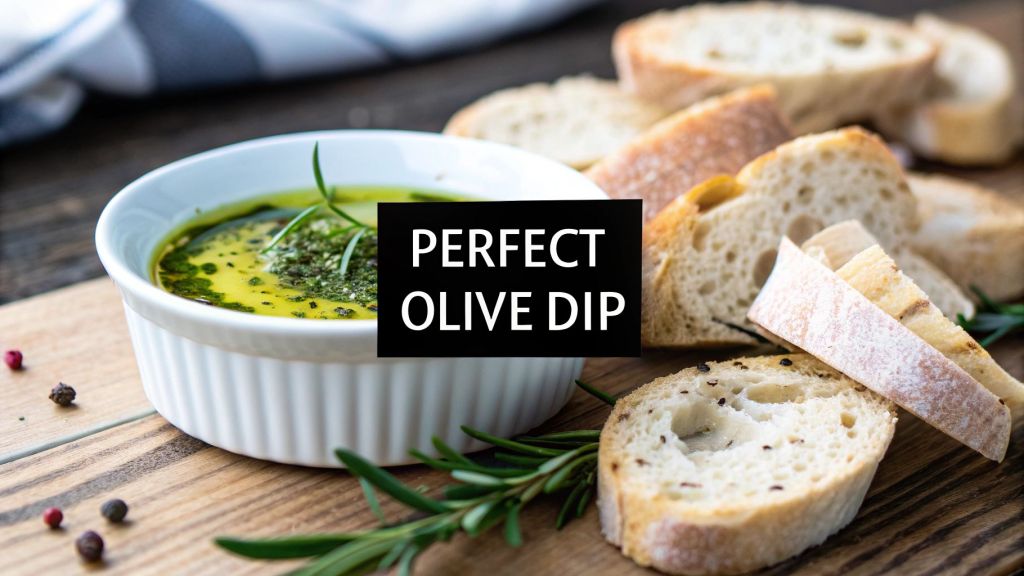
The secret to a restaurant-quality olive oil bread dip—the kind that makes you forget your main course is even coming—is not a complicated, ten-ingredient affair. It's a secret hiding in plain sight. It all comes down to a simple philosophy: let a few extraordinary ingredients perform their magic. When you begin with truly magnificent olive oil, fragrant herbs, and the right whisper of seasoning, you're not just making an appetizer. You're creating an experience.
The Foundation of Flavor
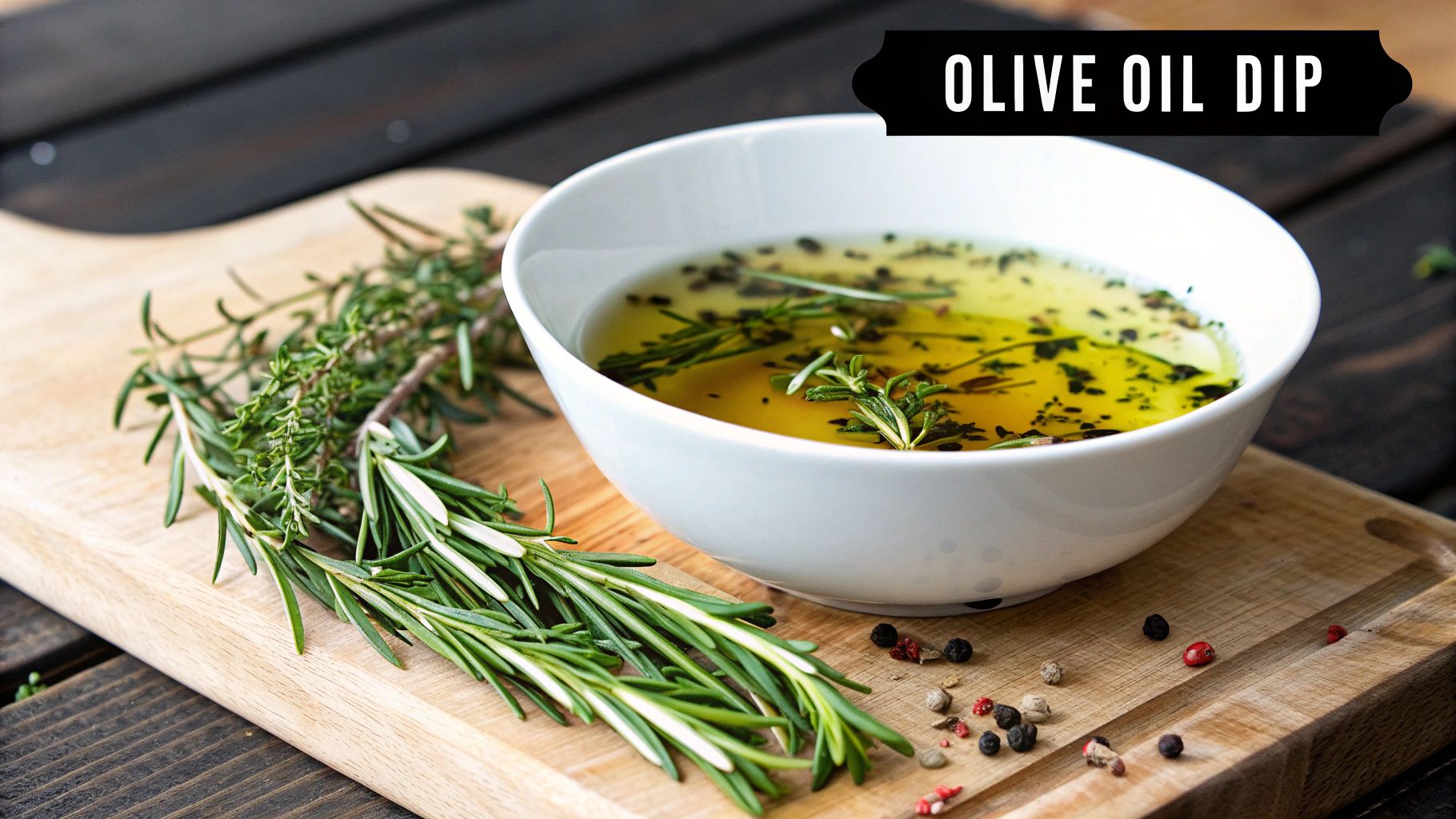
Let's agree to forget those sad, oily puddles you’re sometimes served. The dip we are about to create is an exercise in layering simple, yet profound flavors. It's about crafting something that feels both ancient and elegant. It is a masterpiece in a bowl.
My own journey to perfecting this dip was paved with disappointment. I’d follow recipes from acclaimed chefs, yet the result was always a flat, greasy mess. The breakthrough came when I stopped treating the dip like a rigid formula and started thinking of it as a composition. The magic isn't in the list of ingredients; it's in how you let them sing together.
The Core Components of an Unforgettable Dip
Before we begin, you must understand the role each element plays. I have discovered that every truly great olive oil dip is built upon four pillars of flavor.
| Component | Role in the Recipe | My Top Recommendation |
|---|---|---|
| The Olive Oil | This is the soul of your dip. A rich, flavorful canvas that carries every other note. | A genuine Extra Virgin Olive Oil with a peppery, grassy finish that bites back a little. |
| The Aromatics | These provide the deep, resonant notes and an irresistible fragrance. Think of them as the dip's personality. | Freshly minced garlic is a classic, but roasted garlic offers a sweeter, more profound character. |
| The Herbs | Herbs introduce the high notes of freshness and complexity, cutting through the oil’s richness. | A blend of fresh rosemary and dried oregano offers the perfect balance of woody and savory. |
| The Seasoning | This is the final flourish that makes every other flavor stand up and be counted. | Coarse sea salt, freshly cracked black pepper, and a pinch of red pepper flakes for a subtle fire. |
Thinking of the dip in this way—as a careful balance of these four key players—is what will elevate yours from merely good to truly great.
Why Quality Is Non-Negotiable
The single most important decision you will make is choosing the olive oil. This is not the place for your everyday cooking oil. A celebrated staple of Mediterranean cuisine, premium olive oil is produced with immense care in countries like Spain, Italy, and Greece.
The European Union is a titan in this industry. In a recent season, its output was estimated at a staggering 2.1 million tons—a massive leap from the previous year. You can explore the global olive oil market to grasp just how vital this ingredient is. This rich history and massive scale reveal one truth: quality is everything. The oil is the canvas; every other flavor is painted upon it.
Your goal is not just to make a dip. It is to create an aroma that fills the room and a taste that makes your guests ask for the secret before they've even finished their first piece of bread.
A vibrant, fragrant dip can effortlessly become the star of any gathering. The recipe that follows is built on the same principles the best Italian restaurants use, proving that simplicity, when executed with care, is the ultimate form of sophistication.
Choosing Your Liquid Gold
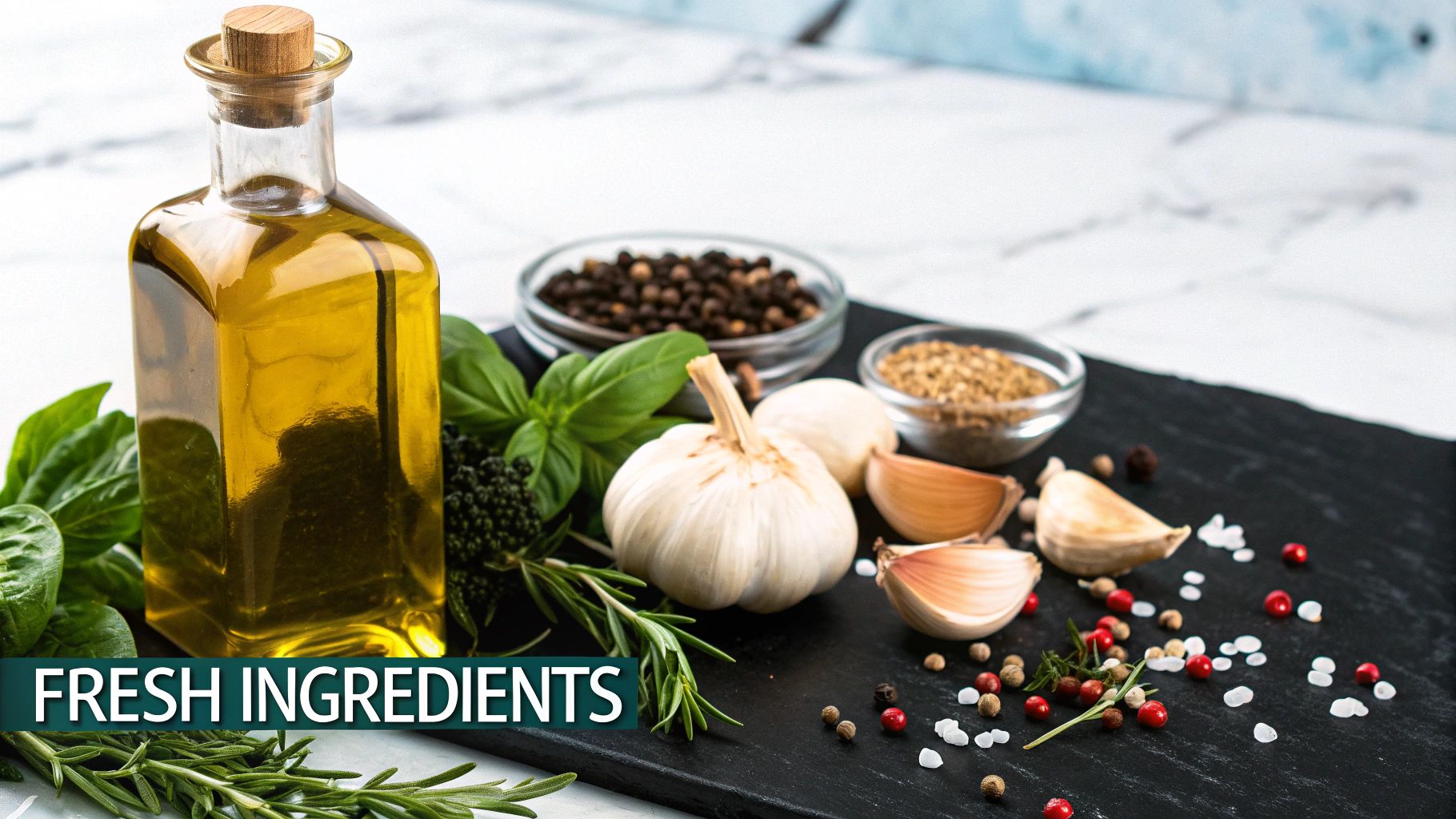
Let me be direct: the olive oil you choose is the heart and soul of this recipe. It is not merely a base; it is the main event. When you're standing in the grocery store aisle, it’s easy to feel paralyzed by the wall of options—pure, light, virgin, extra virgin. What do they all mean?
For a dip where the oil is tasted in its purest form, there is only one choice: a high-quality, cold-pressed Extra Virgin Olive Oil (EVOO). This isn't about snobbery; it is purely about flavor. EVOO is made from pure, cold-pressed olives, while other types are often blended and processed, stripping them of their vibrant, living character. You can discover the critical differences in olive oil types to see why EVOO stands in a class of its own.
Think of it this way: you wouldn't use a cheap blended whiskey in a fine cocktail. The same rule absolutely applies here.
Finding the Perfect Flavor Profile
Not all EVOOs are created equal. Where they come from can completely transform your dip. I once conducted a simple taste test in my own kitchen with two different oils, and the results were startling. One was a robust Italian EVOO—peppery, grassy, giving the dip a powerful, assertive kick. The other was a Spanish Picual, which was much softer, buttery, and fruit-forward, creating a noticeably gentler dip.
Both were magnificent, but they offered entirely different experiences. This is where your own creativity begins.
- For a bold, peppery dip: I suggest an oil from Tuscany, Italy.
- For a fruity, milder dip: Spanish or Californian oils are often fantastic choices.
- For a balanced, all-purpose dip: A Greek Koroneiki usually strikes that perfect middle ground.
Here is the key takeaway: Spending a little more on the right oil is the single best investment you can make in this recipe. It is the difference between a dip that is "good" and one that is genuinely unforgettable.
Decoding Labels and Navigating Price
When shopping, look for the words "first cold press." This certification tells you the oil was extracted without heat, which is crucial for preserving its pure flavor and healthful antioxidants.
The price of olive oil can fluctuate wildly, often tied to production yields around the world. For instance, the USDA recently predicted a 10% decline in global production due to poor harvests in Europe. These shifts directly impact the price tag you see at the store. But do not let a higher price deter you. A great bottle of EVOO will elevate not just this dip, but nearly everything you cook.
Assembling the Perfect Dip
This is where the real artistry begins. Creating an incredible olive oil bread dip isn't about tossing ingredients in a bowl. It’s more like conducting an orchestra—each element must be introduced at the right moment to build a truly harmonious flavor. The foundation must be fragrant, not overpowering.
The first thing to enter the oil is your finely minced garlic. The goal here is not a harsh, raw garlic assault. Instead, you want it to gently infuse the oil, creating a subtle, savory whisper that forms the dip's foundation. Mincing the garlic to an almost paste-like consistency is crucial; this prevents any single chunk from dominating a bite.
Building Aromatic Depth
With the garlic now mingling with the oil, it's time to introduce the herbs. This is the heart of the dip. I have found that a thoughtful mix of dried oregano, basil, and just a hint of rosemary gives it a complex, earthy character that feels authentically Mediterranean. I also add a small pinch of red pepper flakes—not for fiery heat, but for a gentle warmth that slowly blooms on your palate.
This is the simple, yet vital, flow for putting it all together.
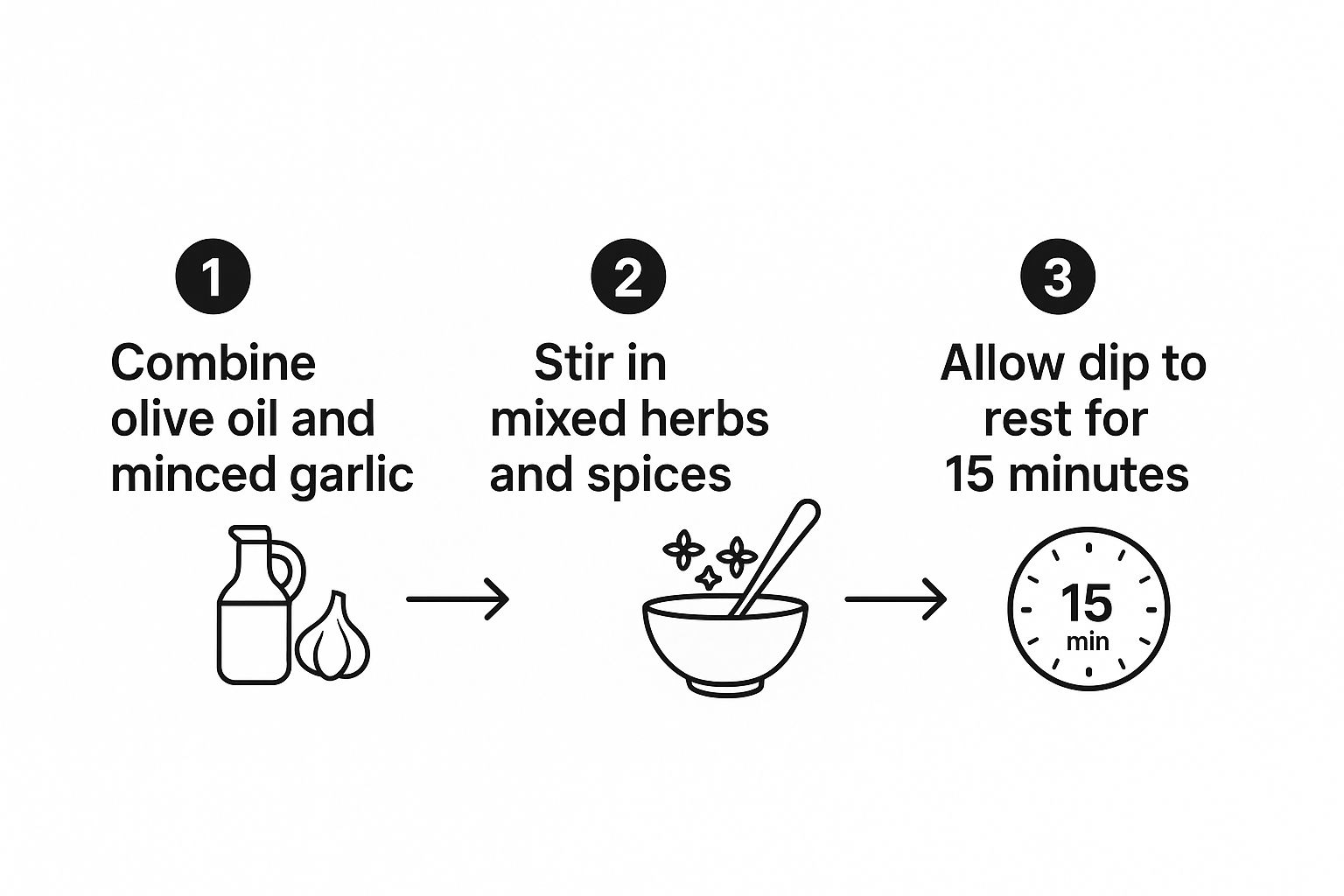
As you can see, letting the dip rest is a non-negotiable step. This is where the individual flavors cease to be separate and become something truly special.
Now for the final touch: seasoning. I always add the salt and freshly cracked black pepper at the very end. This gives you absolute control to taste and adjust, ensuring the final product is perfectly balanced without accidentally overpowering the delicate flavors you've so carefully built. It is this final step that makes everything pop.
The real secret is patience. Giving the finished dip just 15 minutes to sit before serving allows the dried herbs to rehydrate and the garlic to mellow, transforming a simple mix into a truly integrated and fragrant creation.
Even the dish you serve it in matters. I always reach for a shallow, wide bowl. This ensures that every piece of bread can gather a little bit of everything—the oil, the herbs, and that perfect hint of garlic. For a deeper dive into these nuances, our guide on selecting the best olive oil for dipping bread offers some excellent pointers.
Taking Your Dip to the Next Level
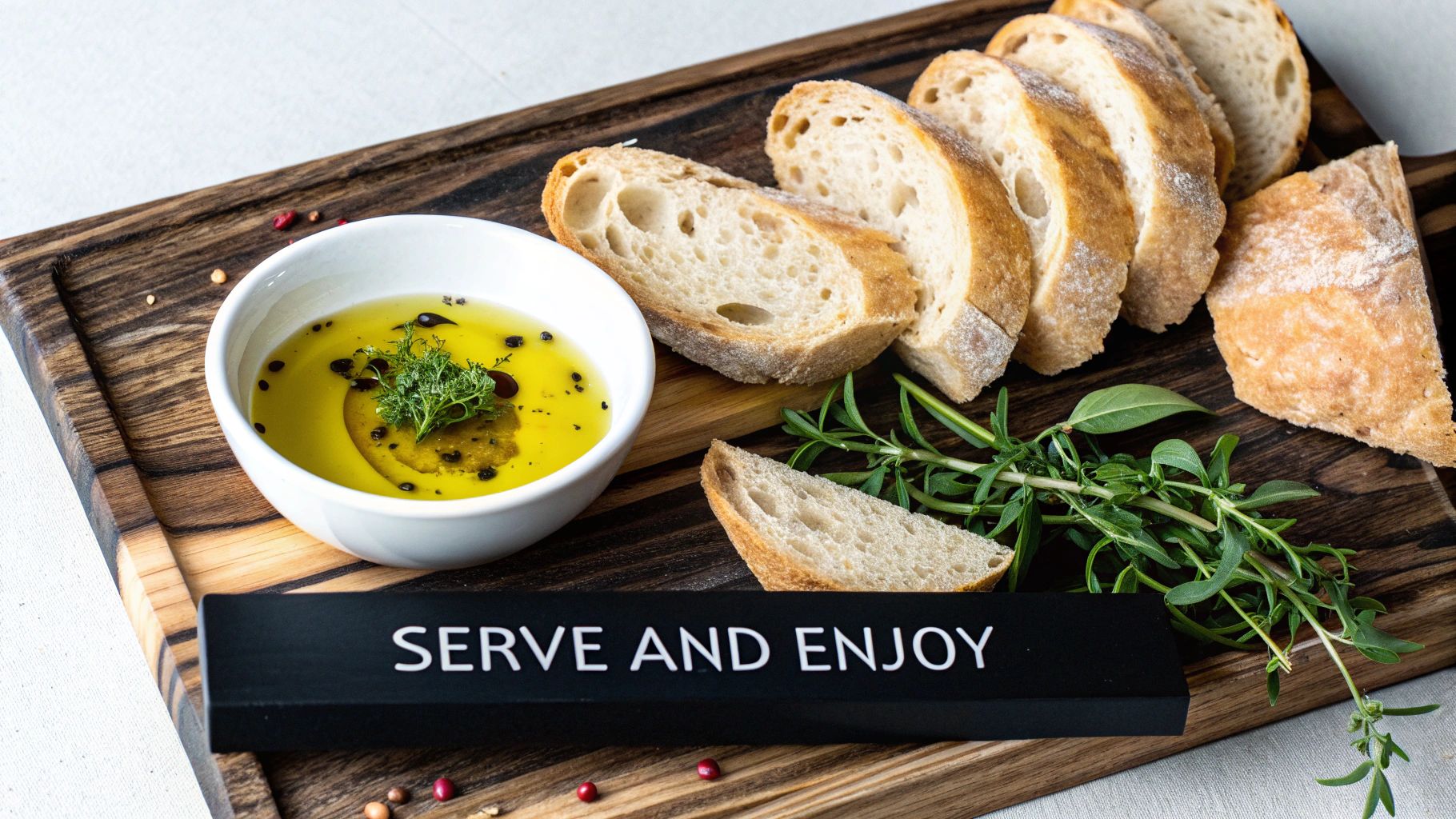
Once you have mastered the classic olive oil bread dip, the real fun begins. Think of that basic recipe as your starting point—a blank canvas awaiting your personal signature. This is where you get to play, to experiment with flavors, and to craft a dip that is uniquely yours.
Over the years, I've tried dozens of combinations, but there are three variations that always earn rave reviews at my dinner parties. These are the ones people demand again and again, and I am excited to share my personal go-to versions with you.
Tuscan Sun Variation
This version is like a trip to the Italian countryside in a bowl. It's a perfect blend of warm, sweet, and tangy that is somehow both rustic and sophisticated. The secret is layering flavors that evoke a sun-drenched afternoon.
- Sun-Dried Tomatoes: Finely chop some oil-packed sun-dried tomatoes and stir them directly into the classic dip. Their intense, sweet flavor is the heart of this version.
- Balsamic Drizzle: Use a quality balsamic glaze, not just the thin vinegar. A light drizzle over the top right before serving adds a beautiful sweet-and-sour finish.
- Best Bread for the Job: A crusty, rustic ciabatta is what you want here. It's sturdy enough to scoop up all those delicious bits of tomato.
Spicy Mediterranean Variation
If you prefer a dip with a bit of a kick, this one's for you. It's a bold, briny, and savory explosion of flavor that instantly transports me to a seaside cafe in Greece. It’s all about creating a powerful taste and an interesting texture.
The combination of ingredients may sound intense, but it all harmonizes in a surprisingly balanced way. This isn't just a dip; it's a full-on flavor experience.
This variation proves that an olive oil dip can be the star of the show. The complex flavor profile is so satisfying it can easily stand on its own as a fantastic appetizer. Plus, you’re getting a great dose of healthy fats, a cornerstone of the Mediterranean diet. You can learn more about the amazing olive oil benefits in our guide.
Zesty Lemon Herb Variation
When I’m in the mood for something bright, fresh, and clean-tasting, this is my go-to. It’s the perfect palate cleanser and a brilliant way to begin a meal without weighing everyone down. It’s wonderfully aromatic and incredibly refreshing.
- Fresh Lemon Zest: The key here is using only the zest and avoiding the bitter white pith underneath. This gives you that pure, fragrant citrus pop without making the dip sour.
- Fresh Parsley: A handful of finely chopped flat-leaf parsley adds a clean, peppery finish that cuts right through the richness of the olive oil.
- Best Bread for the Job: A soft, pillowy focaccia is perfect. Its light texture complements the bright flavors without overwhelming them.
How to Serve Your Olive Oil Dip
A fantastic olive oil bread dip is more than just an appetizer; it is an event. The way you present it and what you serve alongside it can elevate something simple into the unforgettable highlight of your table.
Let's Talk About the Bread
First things first: the bread. This is not a minor detail—it is the co-star. The right bread is all about texture and purpose. A classic, crusty baguette is perfect for that satisfying crunch and for scooping. If you want something to act like a sponge, soaking up every delicious drop, a soft, pillowy focaccia is your best bet. For a more complex flavor, a tangy sourdough adds a whole new dimension.
Honestly, there is no single "best" bread. The goal is to choose one that complements your specific dip. Experiment and discover what you love!
Building an Unforgettable Appetizer Board
Why stop at just bread? Building a small appetizer board around your dip creates a stunning, interactive spread. You want to offer a mix of flavors and textures that dance with the richness of the olive oil.
Here are some of my go-to additions:
- Cheese is a must. Firm, salty cheeses like a good Pecorino Romano or an aged Parmesan are incredible. For a softer, creamier contrast, you can't go wrong with fresh mozzarella or a decadent burrata.
- Cured meats add a savory kick. Thinly sliced prosciutto, spicy soppressata, or a classic Italian salami bring a saltiness that cuts through the oil beautifully.
- Veggies bring freshness and color. Think marinated artichoke hearts, sweet roasted red peppers, or a mix of briny olives. They add a bright, acidic note that cleanses the palate.
One last professional tip: gently warm your serving bowl before pouring in the olive oil dip. It is a simple step, but it makes a world of difference. The warmth helps release the aromas of the garlic and herbs, making the dip even more inviting from the moment you set it down.
And don't forget, that same high-quality EVOO is a powerhouse in the kitchen. It’s just as good for whipping up a quick vinaigrette—our guide on using olive oil for salad dressing shows you just how versatile it can be.
Your Olive Oil Dip Questions, Answered
Even with a recipe this simple, a few questions always arise. It is those small details that can take your olive oil dip from "good" to something truly fantastic. Let's walk through the most common questions so you can achieve perfection every time.
Can I Make This Dip Ahead of Time?
Yes, you can, but there is a trick to it. You can get a head start by mixing your extra virgin olive oil with all the dried herbs and seasonings up to 24 hours in advance. Simply keep it in an airtight container on the counter.
The key is to wait to add any fresh ingredients. Things like minced garlic, fresh parsley, or a bit of lemon zest should be stirred in right before you plan to serve. This preserves their vibrant, punchy flavors.
How Should I Store Leftover Dip?
If you somehow have leftovers, transfer them to an airtight container and place it in the fridge. It will keep well for up to three days.
Do not be alarmed if you see the olive oil solidify in the cold—that is actually a sign of a quality, unfiltered oil! Just let it sit on the counter for about 30 minutes before serving, and it will return to its beautiful liquid state.
A quick but important note on food safety: If you have added fresh garlic to your dip, it is truly best to finish it within a day. Storing garlic in oil at room temperature for an extended time creates a risk of botulism. When in doubt, the refrigerator is always the safest place for leftovers.
Can I Use a Different Type of Oil?
Technically, yes, but I strongly advise against it. The entire soul of this dip comes from the flavor of a good Extra Virgin Olive Oil—its fruity, peppery, and complex notes are the main event.
If you substitute it with a neutral oil like canola or even a "light" olive oil, you will simply end up with a bland, greasy dip that completely misses the point. It is absolutely worth using the good stuff here. If you want to dive deeper, our guide on how to choose olive oil is a great place to start.
At Learn Olive Oil, we believe that understanding your ingredients is the first step to creating unforgettable meals. Explore our resources to deepen your appreciation for this liquid gold.
 Learn Olive Oil
Leave a comment