If you're managing diabetes, you know the drill. Every meal becomes a calculation. Every label is a puzzle. And you find yourself second-guessing even the simplest ingredients in your pantry. It’s a question I hear all the time: "Is olive oil really okay for someone with diabetes?"
Here's the truth, and it might surprise you. The answer isn't just "yes." It's a resounding, scientifically-backed, "absolutely."
In fact, a high-quality extra virgin olive oil isn't just a safe choice—it's one of the most powerful, protective foods you can possibly add to your diet. It's time to stop thinking of it as just another cooking fat and start seeing it for what it truly is: a frontline ally in your quest for better health.
The Hidden Power Inside That Bottle
Let’s be clear. This isn't about some miracle cure. This is about making a simple, strategic change that can deliver profound results. It's about turning every meal into an opportunity to support your body.
Extra virgin olive oil wages a quiet, two-front war against the challenges of diabetes. First, it provides a unique class of remarkably healthy fats. Second, and perhaps more importantly, it delivers an arsenal of powerful antioxidants that most other oils simply lack.
Once you understand how this ancient "liquid gold" really works, you'll never look at that bottle on your counter the same way again.
Here’s just a glimpse of the ground we'll cover:
- How it can dramatically improve your body's sensitivity to its own insulin.
- Its secret role in slowing down the rush of sugar into your bloodstream after a meal.
- The way it helps extinguish the chronic inflammation that so often fans the flames of diabetes.
The Science That Separates Fact from Fiction
For years, we were sold a myth: that all fats were the enemy. Nothing could be further from the truth. And extra virgin olive oil is living proof, standing in a class all its own.
Its real secret isn't just the fat—it's the potent antioxidant compounds called polyphenols. Think of these as your body's elite defense force. They work tirelessly to hunt down and neutralize oxidative stress and chronic inflammation—two of the main culprits that make managing diabetes so difficult.
It’s these very compounds in extra virgin olive oil that help your cells become more receptive to insulin, laying the groundwork for steadier, more predictable blood sugar control.
Don't just take my word for it. In a massive study tracking over 15,000 people, researchers made a stunning discovery: those who regularly consumed olive oil had a 16% lower risk of developing type 2 diabetes. The scientists pointed directly to its remarkable ability to blunt the rise of blood sugar after meals and dramatically boost the body's insulin response.
Discover for yourself how olive oil for blood sugar can become such a powerful tool in your health arsenal.
How Olive Oil Outsmarts Blood Sugar Spikes
Have you ever wondered how something as simple as a drizzle of oil can have a direct impact on your blood sugar readings? It’s not magic. It’s a clever, multi-step process that works in perfect harmony with your body.
First, it acts like a gentle brake on your digestive system. By slowing down how quickly food leaves your stomach, it automatically slows down how fast carbohydrates are broken down and absorbed into your bloodstream.
This simple, natural effect is a game-changer. It helps you dodge those sharp, damaging glucose spikes that can leave you feeling drained and, over time, cause serious harm.
Waking Up Your Cells to Insulin
But that's only half the story. Imagine every cell in your body has a tiny, locked door. Insulin is the key that opens that door, letting sugar in for energy. In type 2 diabetes, those locks get "sticky." It becomes harder for the key to work. This is called insulin resistance.
The healthy fats and potent antioxidants in extra virgin olive oil act like a master locksmith. They help clean up those "sticky" receptors, making your cells far more responsive to the insulin your body already produces. Suddenly, your own insulin starts working more effectively.
This infographic reveals how these components work as a team for superior blood sugar management.
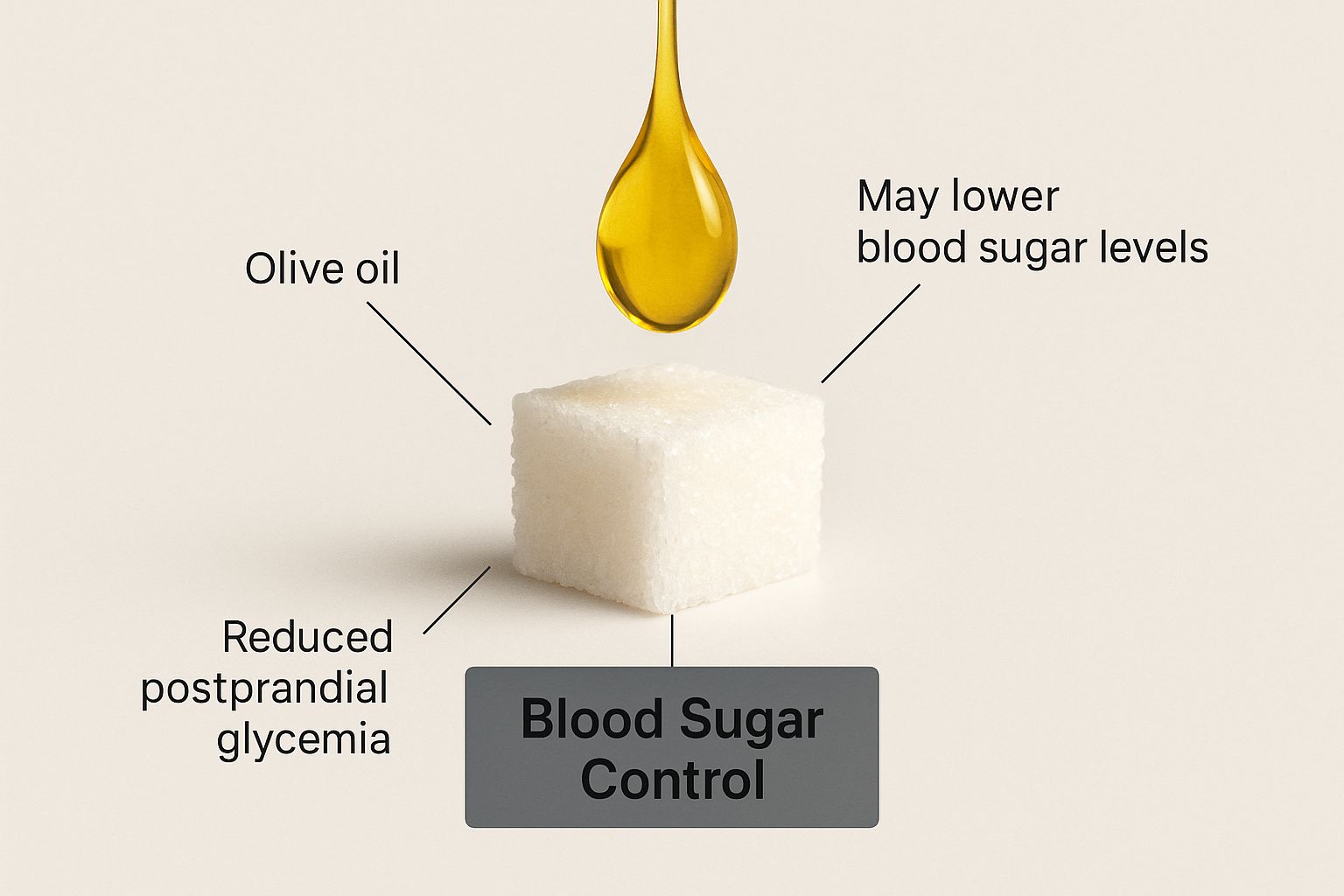
As you can see, it's a brilliant partnership. The healthy fats and antioxidants work together to moderate glucose absorption while simultaneously improving how your cells listen to insulin's signal.
This isn’t just a nice theory. Major studies confirm that a higher intake of olive oil is linked to a 16% lower risk of developing type 2 diabetes. To truly grasp the mechanics, you can explore the relationship between olive oil and the glycemic index, which lays out these powerful effects in plain English.
The Landmark Study That Changed Everything
For decades, the official advice was painfully simple: to fight chronic disease, you had to cut out fat. Then, a massive, game-changing clinical trial came along and turned that entire notion on its head.
It was called the PREDIMED trial, and in the world of nutrition, it was a thunderclap. Scientists followed thousands of people at high risk for heart disease, and what they uncovered was nothing short of revolutionary.
They found that a Mediterranean diet, made rich with generous amounts of extra virgin olive oil, slashed the risk of developing type 2 diabetes by a staggering 40% when compared to the standard low-fat diet.
Read that again. A 40% reduction. This wasn't a minor tweak; it was one of the most powerful signals ever recorded that adding the right kind of fat is infinitely more protective than simply avoiding all fat.
This landmark research proved that a diet built on whole foods and superior fats isn't just delicious—it's one of your most powerful preventative tools.
To get the full picture of this incredible discovery, explore our complete guide on extra virgin olive oil and diabetes. If you love the details, you can also read the full research about these powerful findings.
How to Choose and Use Your Secret Weapon
You walk into the grocery store and face a wall of olive oil. ‘Light,’ ‘pure,’ and ‘virgin’ all scream for your attention. How do you cut through the noise and find the one that will actually deliver the health benefits you're looking for?
It's simpler than you think.
Insist on Extra Virgin. Always.
When your health is on the line, there is only one choice: Extra Virgin Olive Oil (EVOO). This is the real deal—the least processed, first cold-pressed oil that holds onto the highest concentration of those disease-fighting polyphenols.
These are the very compounds responsible for all the health victories we've been discussing. Settling for less means leaving the best part behind.
What to Look for on the Label
To ensure you’re bringing home a champion, look for these three clues:
- Dark Glass Bottle: Light is the mortal enemy of fresh olive oil. It causes the precious polyphenols to break down. A dark or opaque bottle is your first sign of a quality product.
- Harvest Date: Look for a harvest or pressing date. Fresher is always better. The more recent the harvest, the more potent the oil.
- Avoid the 'Light' Trap: Don't be fooled. ‘Light’ olive oil refers only to a lighter color and flavor. It does not mean fewer calories, and it has been stripped of the very compounds you need.
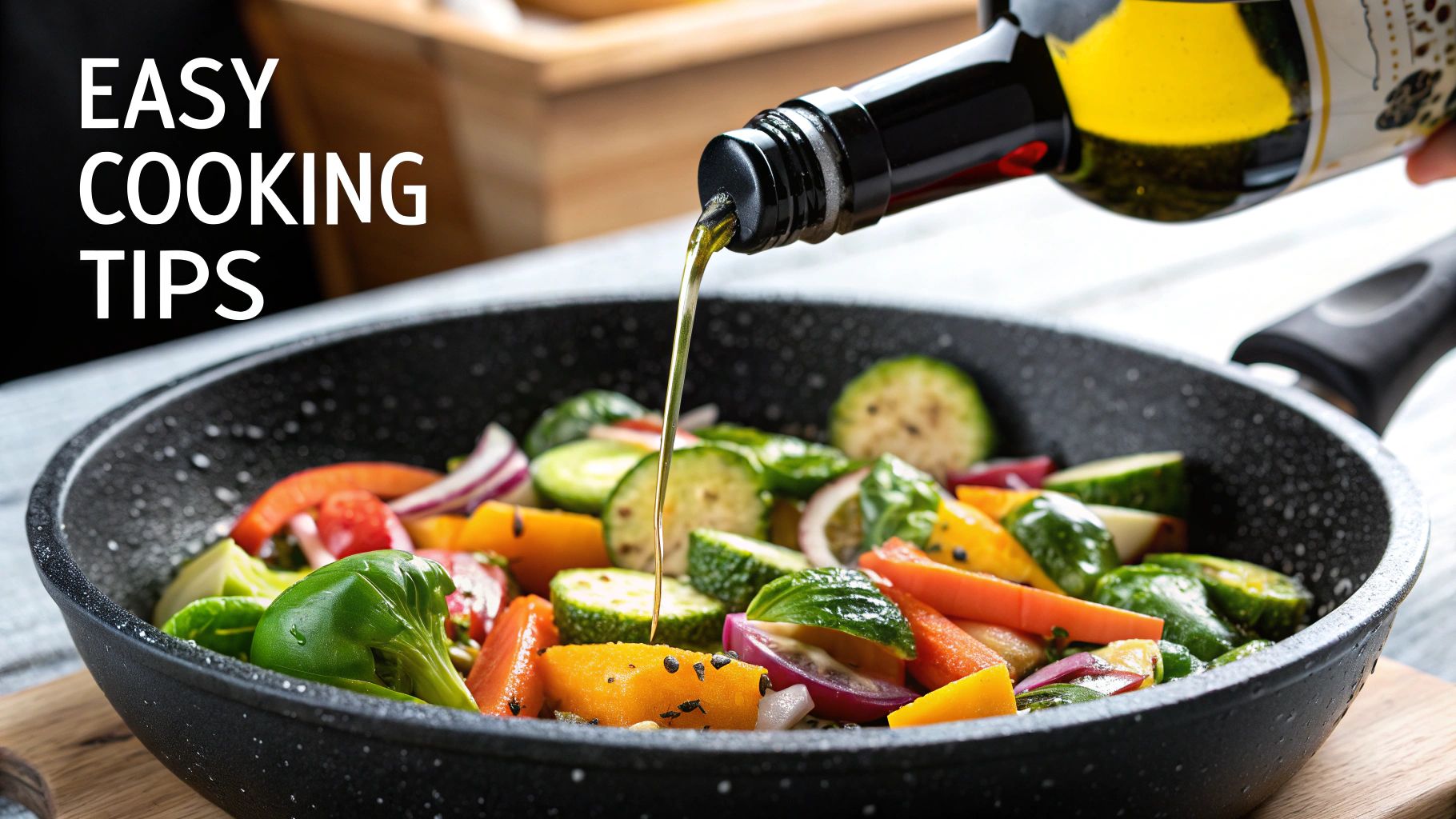
And yes, you can cook with it! A high-quality EVOO has a surprisingly high smoke point, making it perfect for sautéing vegetables, roasting fish, and creating dressings that transform a simple salad into a nutritional powerhouse.
Dive deeper and explore the full spectrum of olive oil health benefits to truly understand the power of this liquid gold.
Your Questions Answered
When you decide to make a real change, questions are natural. I understand. Here are straightforward answers to what people ask me most often.
How Much Olive Oil Should I Use Each Day?
There's no single magic dose, but the science gives us a powerful clue. In many of the breakthrough studies, participants saw profound benefits with about 2 to 4 tablespoons daily.
But the real goal is to make it your primary fat source. Stop thinking of it as a "dose" and start thinking of it as your go-to staple. Use it to roast vegetables, dress your salads, and sauté your proteins. It’s the daily consistency that unlocks the greatest rewards.
Does the Type of Olive Oil Really Matter?
Yes. It matters more than anything. For managing diabetes and protecting your long-term health, you must always choose Extra Virgin Olive Oil (EVOO).
Why? Because EVOO is the only grade that is unrefined and packed with the powerful antioxidants—the polyphenols—that do the heavy lifting. Oils labeled 'light,' 'pure,' or just 'olive oil' have been processed, stripping away these crucial compounds and leaving you with a shadow of the real thing.
To make sure you're getting the best, check out our complete guide on how to choose olive oil and learn to spot a champion on the shelf.
 Learn Olive Oil
Leave a comment