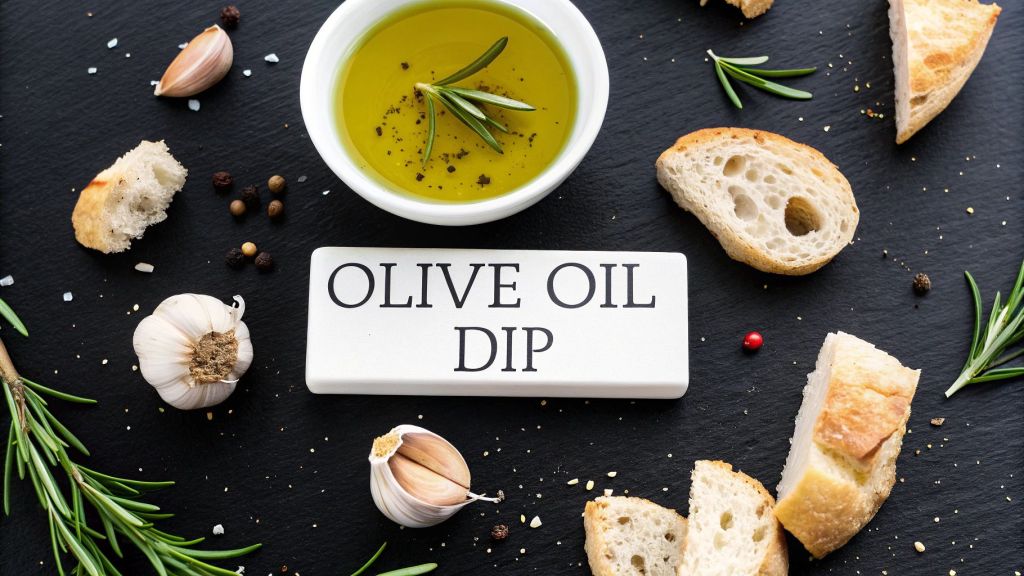
A truly unforgettable olive oil bread dipping recipe isn't born from complexity. It’s conjured from just three things: a fantastic olive oil, the right herbs and spices, and bread with the perfect texture. It's a classic for a reason—it transforms a simple starter into a moment of pure pleasure.
The Soul of a Perfect Bread Dipping Experience
Let’s move past the forgettable, one-note oils you endure at chain restaurants. To create a dipping oil that people genuinely rave about, you must understand that it’s more than a list of ingredients. It’s about orchestrating a symphony of flavor.
Dipping fresh bread into seasoned olive oil is hardly a modern invention. For centuries, it has been a cornerstone of Mediterranean food culture, a philosophy built on celebrating simple, high-quality ingredients. A truly great dipping oil is a quiet conversation between its components.
This timeless ritual is more beloved than ever. In 2021, the global olive oil market was valued at an astonishing $13.58 billion, a testament to a worldwide hunger for authentic Mediterranean flavors. It’s clear this simple pleasure has captured a global audience.
A Harmony of Flavors
The real goal here is to create harmony. You don't just want to taste oil, then garlic, then herbs in a clumsy sequence. You want every element to elevate the others, creating a complex, addictive flavor that has everyone reaching for just one more piece of bread. Think of it as crafting something that feels both rustic and incredibly refined.
The secret to a restaurant-worthy dipping oil lies not in a complicated recipe, but in the quality of your ingredients and the delicate balance you strike between them.
And of course, what is a brilliant dip without its perfect partner? Many would argue that the experience begins with the loaf itself. If you're ready to elevate the entire experience, you could try making the perfect loaf of bread for dipping. After all, the bread isn't just a vehicle; it's half of the magic.
Choosing Your Liquid Gold: The Right Olive Oil
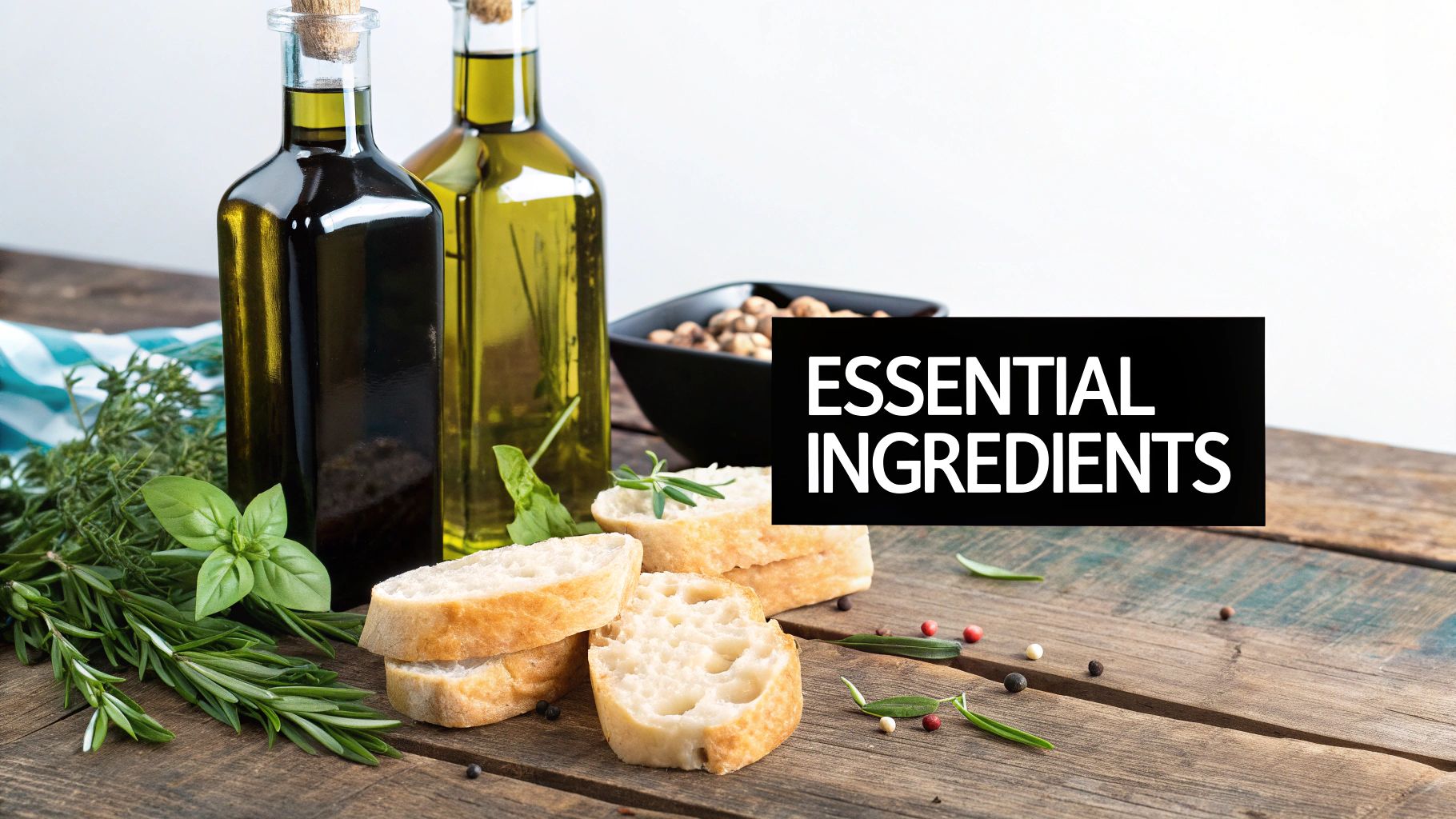
Let’s get one thing straight: your bread dipping oil is only as good as the olive oil you start with. It is the very soul of the recipe. No amount of fancy herbs or aged balsamic can rescue a bland, subpar oil. So, where do you begin?
The most important phrase to look for on the label is Extra Virgin Olive Oil (EVOO). This isn't just a marketing term; it's a guarantee of quality. It means the oil was mechanically pressed from fresh olives without chemicals or high heat, preserving all the beautiful, complex flavors that make it so special.
Think of it this way: EVOO is like fresh-squeezed juice. Anything labeled 'pure' or 'light' olive oil is more like a concentrate—fine for some cooking, but never when the oil is the star of the show.
What to Look for in a Great Dipping Oil
When choosing an oil for dipping, you are searching for character. A great EVOO can present a whole spectrum of flavors—some are grassy and bright, others are robust and peppery, and some are smooth and buttery. None of these are wrong; it's about what you enjoy.
What you don't want is an oil that tastes flat, greasy, or waxy. Those are the tell-tale signs of a low-quality or old product.
A sure sign of a fresh, high-quality oil is that peppery kick or slightly bitter finish you feel at the back of your throat. That sensation comes from oleocanthal, a powerful natural antioxidant found in fresh olives. It's a hallmark of quality.
To help you choose wisely at the store, here is a quick guide to different olive oil profiles perfect for dipping.
Olive Oil Profile for Dipping
| Oil Type | Best For | Flavor Notes |
|---|---|---|
| Robust EVOO | Those who crave bold, intense flavor. | Peppery, grassy, with a pleasantly bitter finish. |
| Medium EVOO | A brilliant all-purpose dipping oil. | Fruity, green, with a gentle peppery note. |
| Delicate EVOO | When you want a subtle, smooth taste. | Buttery, nutty, with hints of almond. |
Ultimately, the best way to find your favorite is to taste a few different kinds. Once you know what to look for, the process becomes far less intimidating.
Navigating the olive oil aisle can feel overwhelming, but a little knowledge goes a long way. If you want to dive deeper, our guide on how to buy olive oil is a fantastic resource for making confident choices. Remember, factors like harvest conditions can cause global production to fluctuate, affecting both price and availability. When you find a bottle you truly love, it’s a real treasure.
Crafting Your Signature Herb and Spice Blend
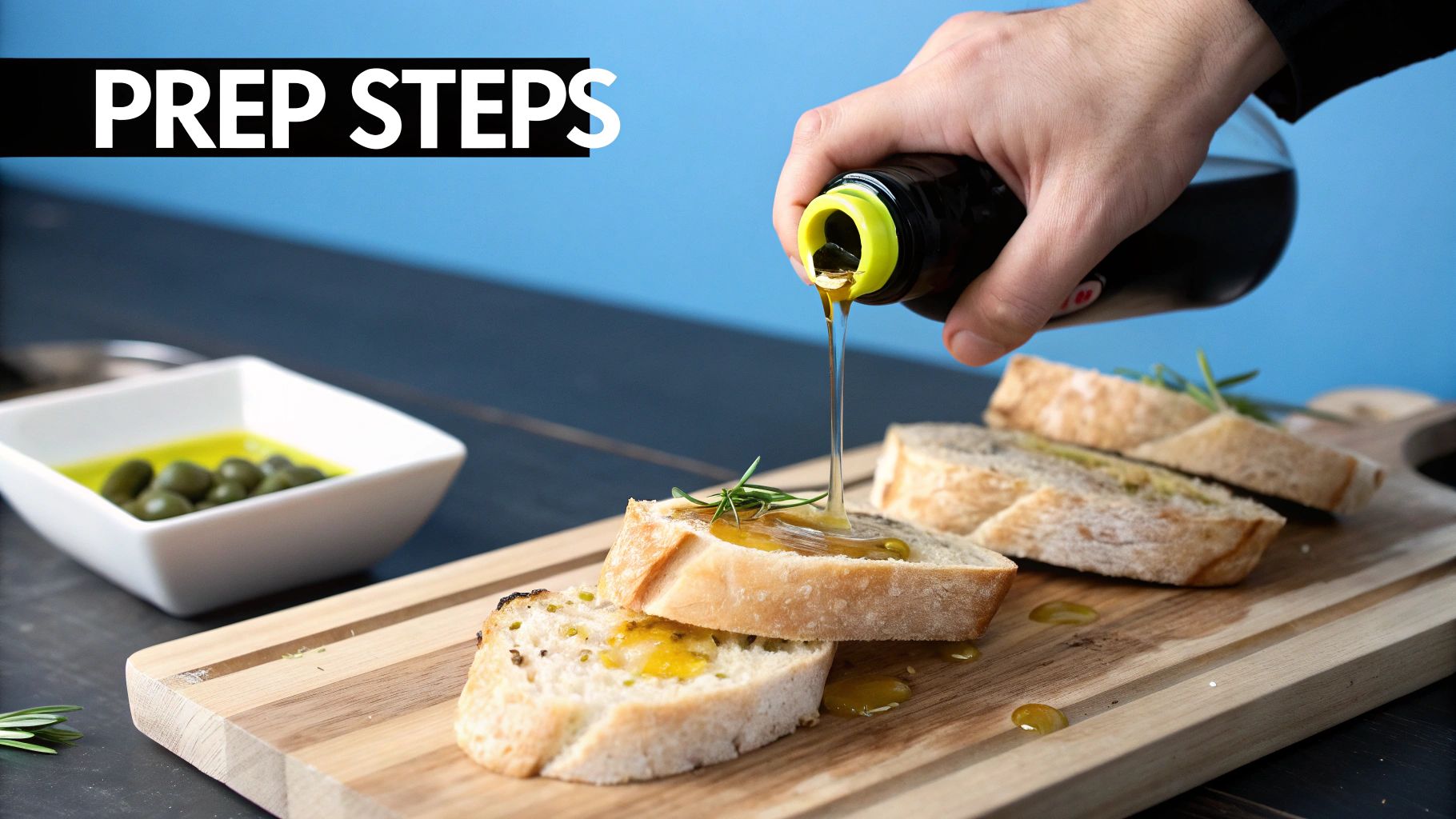
This is where the real alchemy begins. A truly memorable bread dip isn’t just about the oil; it's a story told through the perfect blend of herbs and spices. Forget those generic Italian seasoning shakers. We are going to build a flavor profile from the ground up, creating something that tastes intentional and utterly irresistible.
The secret is balance. You need ingredients that complement each other, with each one playing a distinct role. A classic combination like garlic, rosemary, oregano, and red pepper flakes is a classic for a reason—it creates a complete sensory experience.
You get the pungent warmth from the garlic, the woody, pine-like notes from rosemary, the bright and almost peppery punch of oregano, and just a spark of heat from the pepper flakes. No single flavor screams for attention; they all work together in harmony.
Fresh vs. Dried Herbs: A Critical Choice
The question of fresh versus dried herbs can stump even experienced cooks. My rule of thumb is simple: it depends entirely on the herb itself and when you plan to serve the dip.
- Go Dried for Robust Flavors: For hearty, woody herbs like rosemary and oregano, their dried forms are fantastic. They are often more potent and release their flavor slowly and beautifully into the oil.
- Go Fresh for Brightness: Delicate herbs like basil or parsley lose nearly all of their character when dried. If you want to use them, chop them finely and add them right before serving to capture that burst of fresh, vibrant flavor.
Fresh garlic, however, is non-negotiable. Its sharp, aromatic bite is central to the entire experience, providing a depth that you simply cannot get from garlic powder.
A crucial tip I learned years ago is to let your dried herbs sit in the oil for at least 30 minutes before serving. This brief resting period is a game-changer. It gives the herbs enough time to fully release their essential oils, creating a much richer, more complex flavor.
If you truly want to take things to the next level, there is nothing better than using herbs picked straight from the plant. You might be surprised to discover some of the easiest herbs to grow indoors, giving you a constant supply of amazing flavor. It’s a small effort that yields a huge difference.
Assembling Your Dipping Oil
Alright, let's get to the fun part—putting it all together. Think of this less like a strict recipe and more like a cherished method passed down over countless shared meals. We are not just mixing ingredients; we are building layers of flavor.
Start with the garlic. For a truly great olive oil dip, you need to mince your garlic as finely as possible, almost to a paste. This isn't just about texture; it breaks down the cell walls, releasing all that fragrant, pungent oil without the harsh bite you get from bigger chunks.
Next, it's time to introduce your dried herbs to the star of the show: the extra virgin olive oil. Pour the oil into your serving bowl and stir in the herbs. The key here is to infuse, not cook. You want the oil to gently draw out all the aromatic goodness, creating a beautifully blended base.
The Power of the Pause
Here’s a little secret that makes a world of difference—one that most people rush past. You have to let the mixture sit. Give it at least 15 minutes. This short rest is what allows the flavors to truly meld and deepen. It is a non-negotiable step if you want a cohesive, restaurant-quality dip instead of just oil with stuff floating in it.
This resting period lets the oil become completely saturated with the essence of the garlic and herbs. Skipping it is like eating a stew that hasn't had time to simmer—you have all the right ingredients, but the magic hasn't happened yet.
This simple visual breaks down how to think about building the perfect dip from start to finish.
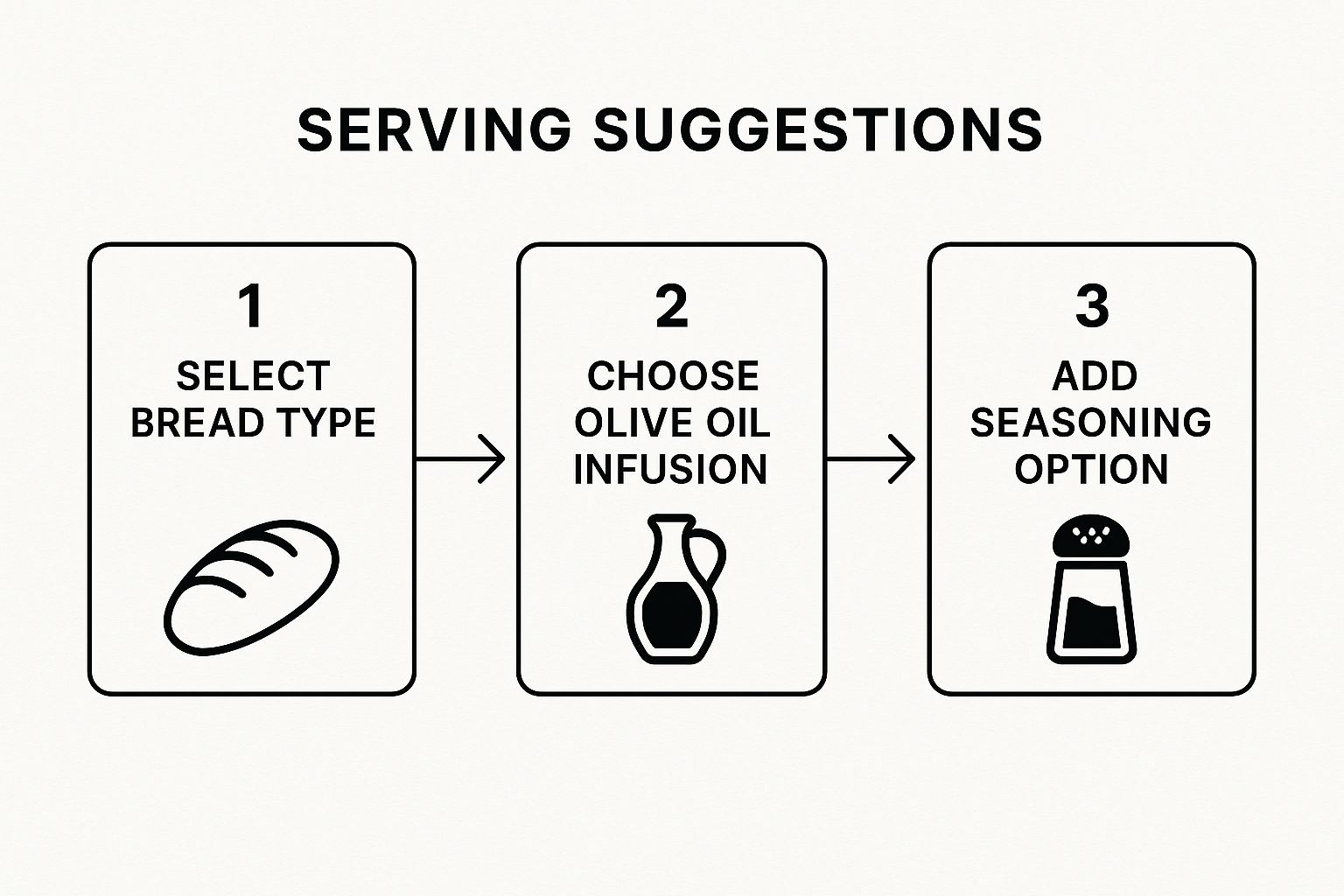
As you can see, the final result is a sum of its parts, from the bread you choose to those last-minute additions.
Just before serving, add the finishing touches that signal this is something special. A generous pinch of flaky sea salt adds a fantastic crunch and brightens everything up. And if you're a fan, a slow drizzle of a thick, aged balsamic glaze adds a sweet and tangy note that elevates the whole experience.
For an even deeper dive into perfecting your base, check out our complete guide on using olive oil for dipping bread, where we get into even more detail.
Creative Variations Beyond the Classic Recipe
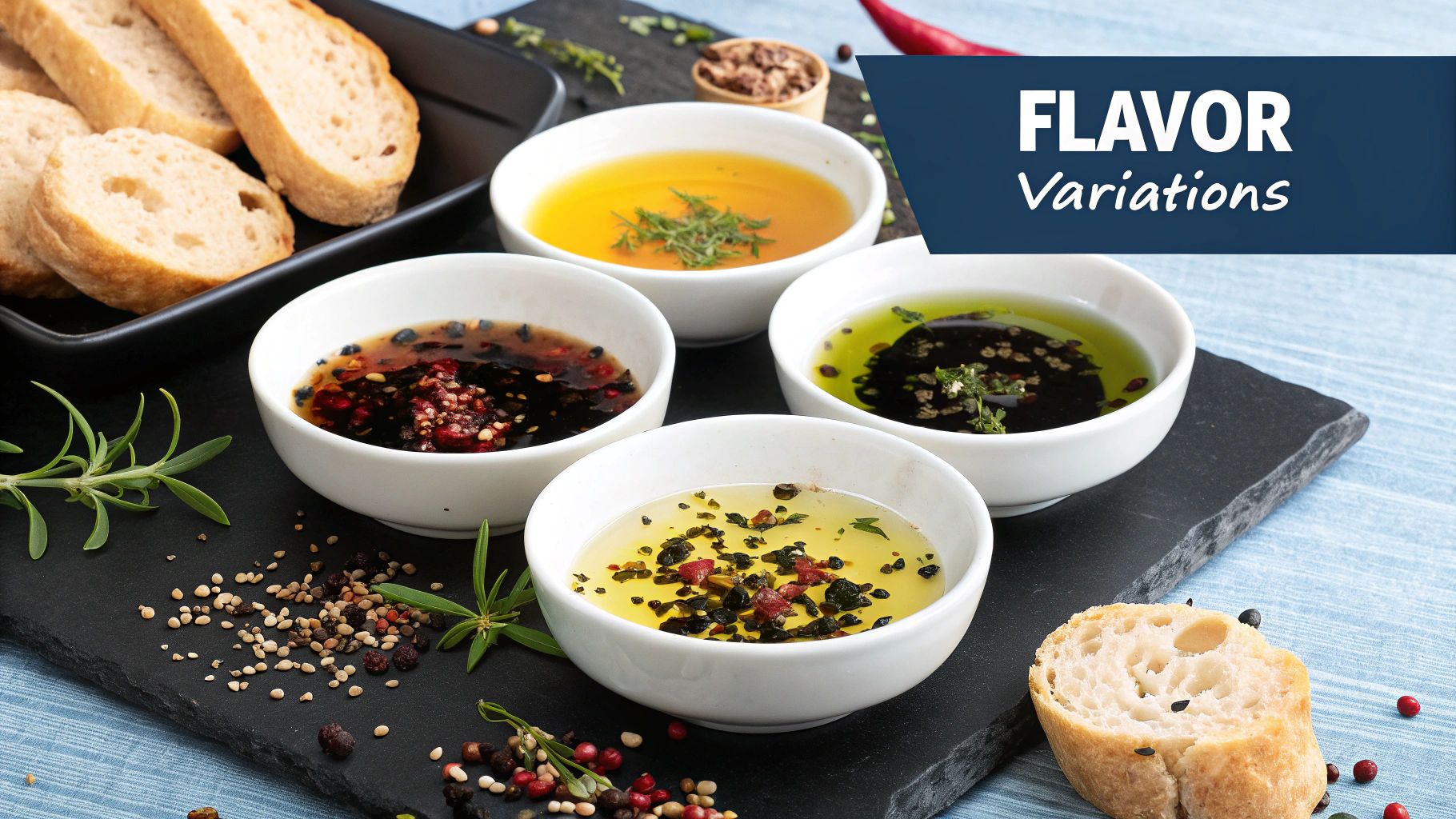
Once you've mastered the basic olive oil dip, the real fun begins. Think of that classic recipe as your blank canvas; now it's time to get creative and paint with flavor. These variations can turn a simple starter into something truly memorable.
The possibilities are nearly endless, limited only by your pantry and your imagination. This versatility is what keeps olive oil so essential in today's kitchens. It’s no surprise that global consumption hit around 2.45 million metric tons in the 2023/24 season. Its role just keeps expanding. You can discover more insights about olive oil consumption on Statista.com if you're curious about the trends.
Three Signature Blends to Try
Here are a few combinations that have been big hits at my own table. Use them as a jumping-off point for your own experiments.
- Tuscan Sunset: Finely chop sun-dried tomatoes and fresh basil. Stir them into the oil for a sweet, herby dip that feels like a trip to the Italian countryside.
- Spicy Calabrian: For anyone who enjoys a kick of heat, mix in a small amount of hot chili paste and a dash of smoked paprika. It creates a bold, warming blend that people can't get enough of.
- Zesty Grecian: Just before serving, stir in fresh lemon zest, chopped dill, and a sprinkle of crumbled feta cheese. The result is a bright, tangy dip that's incredibly refreshing.
The real secret here is to taste as you go. Add a little of your new ingredient, mix it in, dip a piece of bread, and see what you think. Your own taste buds should always be the final guide.
These ideas are just the beginning. The same principles that make a fantastic dipping oil work for other things, too. For example, take a look at our guide on using olive oil for salad dressing to see how these flavor concepts can be adapted elsewhere.
Perfect Pairings and Pro Tips
A truly great olive oil dip is more than just the oil and seasonings in the bowl; it’s an entire experience. And the most important part of that experience? The bread, of course.
What you're seeking is a bread with real character and a great texture. A rustic, crusty ciabatta or an airy, dimpled focaccia are fantastic choices. Their open, porous crumb acts like a perfect sponge, designed to soak up every last drop of your seasoned oil. A standard, pre-sliced sandwich loaf simply won't do—it's too dense and lacks the structure to really shine.
Taking It to the Next Level
Once you’ve got your bread sorted, a thoughtful wine pairing can turn this simple appetizer into a truly sophisticated course.
- For white wine drinkers, a crisp Pinot Grigio or a bright Sauvignon Blanc works beautifully. Their acidity cuts through the richness of the oil, cleansing your palate and making the herbal notes pop.
- If you prefer red, you can't go wrong with a classic, light-bodied Chianti. It’s a natural partner for these Italian flavors.
The biggest mistake I see people make is overpowering the main event—the olive oil. It's easy to go overboard with garlic or use stale, dull spices. Remember, a great dip whispers; it doesn't shout.
These small details make all the difference. It's also worth remembering that you're serving something that's not only delicious but also incredibly good for you. You can read more about the many olive oil health benefits in our full guide.
Answering Your Top Questions
Even with a recipe this simple, a few questions always emerge. Let's walk through some of the most common ones I hear about making the perfect olive oil dip for bread. My goal is to make you feel completely confident, from choosing your oil to taking that first delicious bite.
What’s the Best Bread for Dipping in Olive Oil?
The key here is to choose a bread that can act like a sponge. You are looking for something with a great, sturdy crust on the outside but a soft, airy interior.
My go-to choices are almost always a rustic Italian loaf, a chewy ciabatta, or a classic French baguette. Their open, porous crumb is absolutely perfect for soaking up all that seasoned oil. I would steer clear of standard, pre-sliced sandwich bread; its texture is too dense and it tends to get soggy and fall apart almost immediately.
Can I Make the Dipping Oil in Advance?
You certainly can, but how far in advance truly depends on your ingredients.
If you’re sticking to dried herbs and spices, go ahead and mix it up a day or two before you need it. I actually prefer this method, as it gives the flavors more time to meld and become richer.
But, if you’re using fresh ingredients like minced garlic or delicate herbs like basil, I’d make it no more than four hours ahead of time. This keeps that bright, pungent kick from the fresh garlic without it turning stale or bitter.
The most common cause of a bitter dipping oil is usually one of two things: the olive oil itself or old garlic. A peppery finish in a high-quality EVOO is good, but overwhelming bitterness is not. If your oil is the culprit, try a milder, more 'buttery' variety next time. Also, always check your garlic—if it has started to sprout, it can lend a harsh, unpleasant taste.
At Learn Olive Oil, we believe understanding the soul of your ingredients is the key to creating extraordinary food. From choosing the perfect bottle to mastering flavor pairings, we're here to guide you. Discover the World of Premium Olive Oil and turn simple moments into memorable experiences.
 Learn Olive Oil
Leave a comment