So, can using olive oil for joint pain actually make a difference? The short answer is a resounding yes, particularly when you're using high-quality extra virgin olive oil. Its key compounds have a powerful anti-inflammatory effect that works in a surprisingly similar way to a gentle, natural ibuprofen, helping to calm down angry joints and reduce that familiar ache.
A Natural Approach to Joint Comfort
Let's face it, dealing with stiff, aching joints is a frustrating reality for millions of us. It can turn simple daily activities into a struggle. While over-the-counter medications are a common go-to, more and more research is shining a light on effective natural solutions. And right at the top of that list is extra virgin olive oil—proving it's far more than just a kitchen staple. It's a potent ally in the fight against chronic inflammation.
What makes it so effective? It’s all down to a unique synergy of healthy monounsaturated fats and powerful antioxidants called polyphenols. These compounds work together to soothe irritation right at the cellular level, building a strong foundation for long-term joint health. The best part is its versatility; you can use it topically for direct relief and make it a core part of your diet.
This image breaks down exactly why olive oil can be such a powerful tool against joint pain.
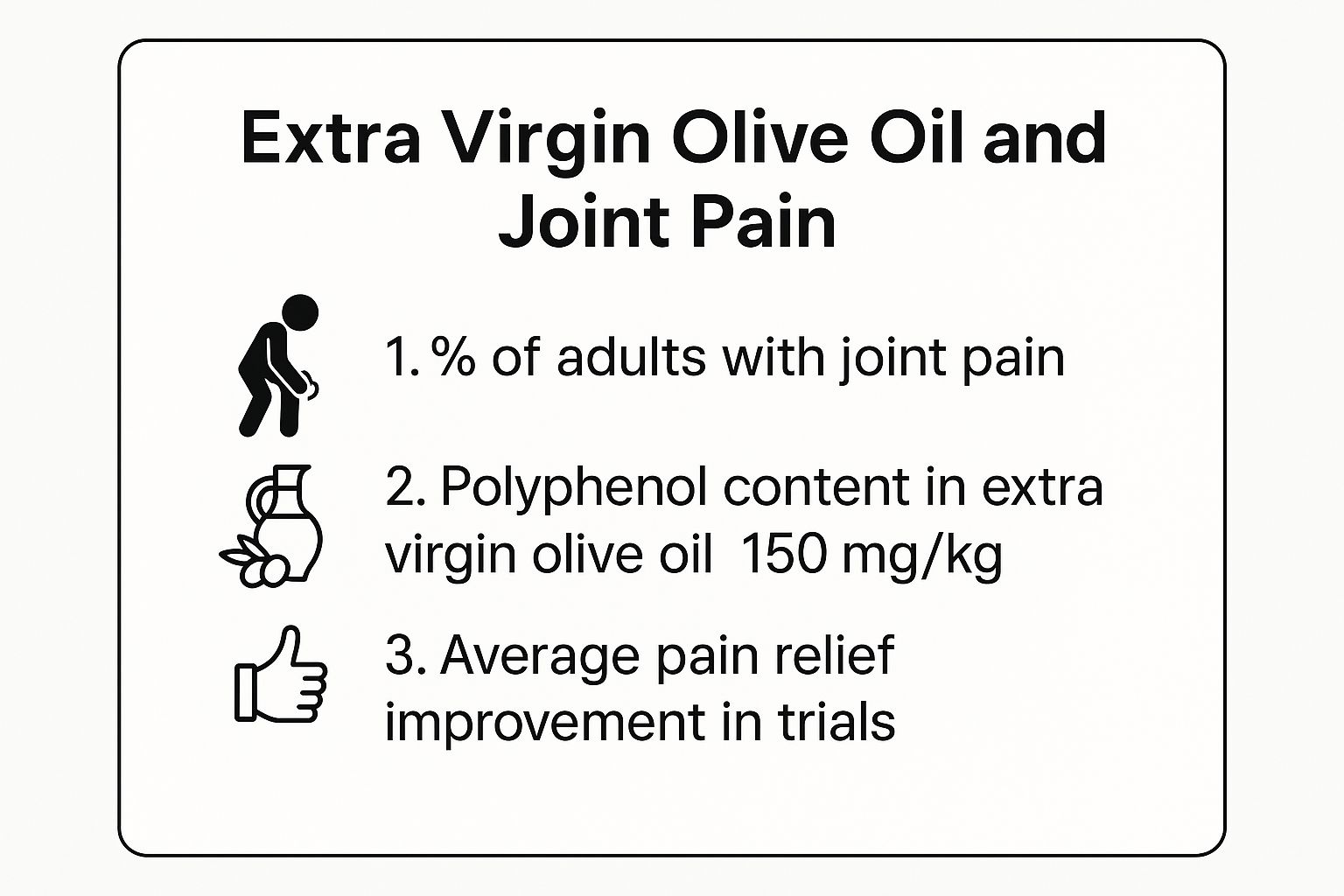
The data really speaks for itself. A huge number of adults are dealing with joint pain, and high-quality EVOO contains the exact polyphenols needed to tackle the inflammation that causes it.
The Power of Topical Application
One of the most immediate ways to use olive oil for joint pain is to apply it directly to your skin. When you massage the oil into sore areas like your knees, hands, or shoulders, its anti-inflammatory compounds get to work, absorbing through the skin to provide targeted relief right where you need it most.
And the results aren't just minor—they can be genuinely impressive. A 2021 clinical study looked at patients with knee osteoarthritis and found that massaging with olive oil was actually more effective at relieving pain than a standard anti-inflammatory gel. In fact, the group using olive oil reported their pain scores dropped by a massive 78%. You can read the full research about these compelling findings on JPRI.
To quickly recap how this works, here's a simple breakdown of olive oil's key benefits.
How Olive Oil Combats Joint Pain at a Glance
| Mechanism of Action | Key Compound(s) | Primary Benefit |
|---|---|---|
| Blocks Inflammatory Enzymes | Oleocanthal | Acts like a natural ibuprofen, reducing pain and inflammation. |
| Reduces Oxidative Stress | Polyphenols (e.g., hydroxytyrosol) | Protects joint cartilage from damage caused by free radicals. |
| Lubricates Joints | Oleic Acid (Monounsaturated Fat) | Improves joint function and mobility, both internally and topically. |
| Enhances Nutrient Absorption | Healthy Fats | Helps the body absorb other fat-soluble, anti-inflammatory nutrients. |
This table shows the multi-faceted approach olive oil takes—it's not just masking the pain, but actively working against the underlying causes of joint discomfort.
Key Takeaway: Both consuming extra virgin olive oil and applying it topically can provide significant relief. The key is consistency and using a high-quality product rich in beneficial compounds.
This dual-action strategy—nourishing your body from the inside while soothing it from the outside—makes olive oil a simple, powerful, and effective tool for managing joint discomfort and reclaiming your mobility.
The Science of Soothing Inflammation
To really get why olive oil for joint pain can be so effective, we have to peek under the hood at what's causing the ache in the first place. For many people with conditions like arthritis, the root of the problem is chronic inflammation. Think of it as a fire alarm that's stuck on—your body’s defense systems are constantly in high-alert mode, which over time leads to pain, swelling, and even damage to your joint tissues.
This is where extra virgin olive oil (EVOO) comes in, acting like a natural firefighter to help cool that chronic blaze. Its magic isn't from one single ingredient, but a whole team of compounds working in harmony. The star player, however, is a polyphenol called oleocanthal. It's the compound responsible for that peppery, sometimes stinging sensation you feel at the back of your throat when you taste a high-quality EVOO.
That little tingle isn't just a quirk of its flavor; it's the signature of some serious anti-inflammatory power at work.
The Ibuprofen-Like Effect of Oleocanthal
You can think of oleocanthal as nature’s answer to ibuprofen. It's fascinating, really—they both work by blocking the very same inflammatory pathways in your body, specifically the cyclooxygenase (COX) enzymes. These enzymes are what produce prostaglandins, the compounds that signal pain and trigger swelling. By putting the brakes on COX enzymes, oleocanthal helps turn down the volume on that inflammatory response right at its source.
A daily dose of about 3.4 tablespoons (50 ml) of an EVOO rich in oleocanthal delivers an effect that’s been compared to about 10% of an adult dose of ibuprofen. Now, this won't replace your medication during a painful flare-up, but that consistent, gentle anti-inflammatory nudge can make a huge difference in managing joint pain over the long haul.
This steady, low-dose effect is exactly why dietary strategies can be so powerful for chronic conditions. It’s not about finding a quick fix, but about creating an internal environment that is naturally less inflammatory day in and day out.
Protecting Your Cartilage
But the benefits of EVOO don't stop with oleocanthal. It’s also loaded with other antioxidants, like hydroxytyrosol and oleuropein, that play a vital protective role. These compounds are master scavengers, neutralizing destructive molecules known as free radicals. In your joints, these free radicals cause oxidative stress, a process that can wear down and degrade cartilage—the smooth, cushioning tissue that lets your bones glide without friction.
This cartilage protection is a critical piece of the puzzle. We have research showing that making olive oil a regular part of your life can directly support cartilage health. For example, a 2017 study revealed that when people combined an EVOO-rich diet with light exercise, it helped prevent cartilage damage. This simple combination was found to boost lubricin, a protein that keeps joints lubricated and running smoothly, all while lowering inflammatory markers. You can discover more about these protective effects from the study's findings.
By both calming inflammation and defending your cartilage from breakdown, extra virgin olive oil offers a powerful two-pronged approach to joint health. It’s more than just temporary relief—it's an investment in the long-term resilience and function of your joints, one delicious drizzle at a time. This science is precisely why so many people are turning to olive oil for joint pain.
Applying Olive Oil Directly for Targeted Relief
While eating extra virgin olive oil is fantastic for long-term health, sometimes you need relief right now. For more immediate comfort, you can apply it directly to your aching joints. This simple, hands-on approach delivers those powerful anti-inflammatory compounds exactly where they're needed most, sending relief straight to the source.
Gently warming the oil before you apply it makes the whole experience much more soothing. It also seems to help the oil absorb better into the skin. When you pair this with a gentle massage, you’re not only helping the oil sink in, but you're also boosting blood flow to the area, which is a big help for reducing pain and stiffness. It's this direct application that makes using olive oil for joint pain topically such a go-to method for so many people.
A Simple Massage for Aching Joints
You don't need any special skills to do this—the idea is just gentle, consistent application. It’s all about creating a soothing ritual.
Here’s a simple way to do it:
- Warm the Oil: Pour about a tablespoon of extra virgin olive oil into a small dish. You can warm it up by placing that dish in a larger bowl of hot water for a couple of minutes. You want it comfortably warm, never hot.
- Apply and Massage: Drizzle the warm oil over the sore joint—your knee, knuckles, or wrist, for example. Using your fingertips, gently massage the oil into your skin with slow, circular motions. Use firm but comfortable pressure and really pay attention to how your joint responds. Keep this up for 5-10 minutes to give the oil a chance to absorb.
Making this a daily habit, maybe once in the morning and once at night, can be incredibly calming. And there's real science to back this up. A 2020 clinical trial looked at women with rheumatoid arthritis and found that a 12-week regimen of topical olive oil massage led to a major drop in their pain levels. They also had fewer swollen, painful joints. You can dive into the details yourself and learn more about these encouraging study findings on PubMed.
How to Create a Soothing Compress
If you're dealing with deeper, more persistent aches, a warm olive oil compress can be a game-changer. This method helps the oil penetrate more deeply into the tissue, bringing a comforting warmth that melts away stiffness.
It's easy to make. Just soak a clean washcloth in warm extra virgin olive oil, squeeze out the excess so it isn't dripping, and wrap it around the painful joint. Cover the cloth with a bit of plastic wrap to hold in the heat and oil, then place a hot water bottle or heating pad on top for 15-20 minutes.
This is especially wonderful for tackling that dreaded morning stiffness or for helping you unwind after a long day. If you want to give it an extra boost, try adding a few drops of an anti-inflammatory essential oil like peppermint or lavender to the olive oil. This combination creates a potent, all-natural remedy for managing your joint pain.
Nourishing Your Joints from Within
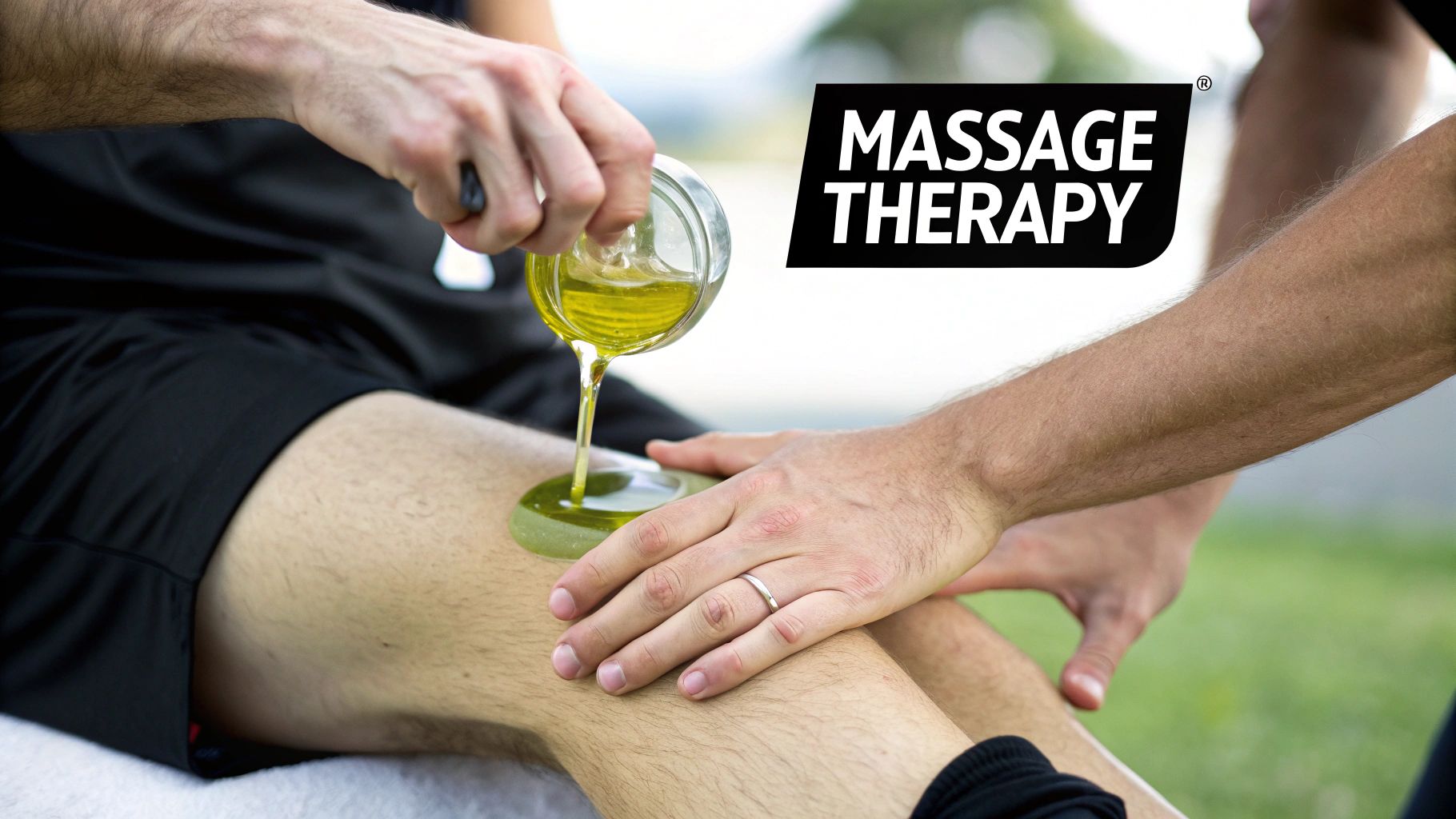
While rubbing olive oil on a sore knee can bring some welcome, targeted relief, true and lasting joint health starts from the inside. When you make extra virgin olive oil (EVOO) a regular part of your diet, you’re fundamentally changing your body’s internal environment to be less inflammatory. This isn't just about temporary relief; it's about managing chronic pain and supporting your joints for the long haul.
Think of it this way: topical remedies are like patching a leaky roof—helpful in a pinch. But consuming EVOO is like reinforcing the entire structure of the house. You're building a stronger foundation that can better withstand daily stress. Eating olive oil for joint pain helps to cool inflammation throughout your entire system, not just where it hurts the most.
Finding Your Daily Dose
You don't need to drench everything in olive oil to see a difference. The key is consistency, not quantity. Most studies point to a sweet spot of about two to three tablespoons (30-45 ml) of high-quality extra virgin olive oil per day. This amount is generally enough to deliver a potent dose of oleocanthal and other powerful polyphenols that get to work soothing your system.
Sticking with it is what truly matters. A spoonful of oil today won’t make your joint pain vanish by tomorrow. But making it a daily habit can slowly and steadily lower your body's overall inflammatory response. It’s this sustained, long-term approach that leads to healthier, more comfortable joints over time.
Remember, the benefits of dietary olive oil are cumulative. It takes time for inflammation to build up and cause problems in your joints, and it also takes time for an anti-inflammatory diet to do its work. Be patient and treat it as a non-negotiable part of your daily wellness routine.
Simple Ways to Add Olive Oil to Your Diet
Bringing EVOO into your daily meals is one of the easiest—and tastiest—adjustments you can make for your joint health. There's no need to completely change how you cook. It's all about finding simple, smart places to make a swap.
Here are a few practical ideas to hit that daily target:
- Elevate Your Salads: Forget the bottled dressings, which are often packed with sugar and cheap oils. Whisking together some EVOO, a squeeze of lemon, and a dash of salt creates a simple, healthy vinaigrette that tastes far better.
- Finish Your Dishes: High heat can break down some of olive oil’s most delicate compounds. So, instead of always cooking with it, try using it as a finishing oil. A generous drizzle over roasted vegetables, steamed fish, pasta, or soup just before serving adds a burst of flavor and nutrients.
- Upgrade Your Dips: Next time you make hummus, blend in a good swirl of EVOO. It's also perfect for whipping up a fresh pesto or simply serving alongside some warm, whole-grain bread as a healthier alternative to butter.
- Morning Boost: This might sound unusual, but try adding a tablespoon to your morning smoothie. The healthy fats not only add a silky texture but can also help your body absorb fat-soluble vitamins from greens like spinach and kale more effectively.
How to Choose the Right Olive Oil
When you're trying to find an olive oil for joint pain, the sheer number of choices on the grocery store shelf can be dizzying. It's easy to assume they're all pretty much the same, but the truth is, the type you pick makes a world of difference. To get those powerful anti-inflammatory benefits, you have to be picky.
The single most important thing to look for is Extra Virgin Olive Oil (EVOO). This is the top-tier, highest-quality olive oil you can buy, and frankly, it's the only one you should consider for your health. EVOO is made from pure, cold-pressed olives. That "cold-pressed" part is key—it means the oil was extracted mechanically, without using high heat or chemical solvents that destroy the very compounds you need.
This gentle process preserves the delicate polyphenols, like oleocanthal, which are the natural compounds that do the heavy lifting in fighting inflammation.
In contrast, oils labeled 'light' or 'pure' have been refined. This industrial processing strips away almost all of those beneficial compounds, leaving behind little more than fat. They might be okay for high-heat cooking, but they won't do a thing to soothe your aching joints.
Decoding the Label: A Shopper's Checklist
So, how can you be sure you're grabbing a bottle packed with anti-inflammatory power? It all comes down to reading the label. Here’s what to look for to make sure you're getting the good stuff.
- "Extra Virgin" is a Must: Don't settle for anything less. This is your guarantee of an unrefined oil that's rich in the polyphenols your joints need.
- Look for "Cold-Pressed": This phrase confirms the oil was extracted without heat, which is vital for protecting its healthy compounds.
- Check the Harvest Date: Think of olive oil like a fruit juice—it’s best when it’s fresh. A recent harvest date, ideally within the last year, is a great sign. An old oil has likely lost much of its potency.
- Choose a Dark Bottle: Light is olive oil's worst enemy, causing its healthy compounds to break down. Always pick an oil that comes in a dark glass bottle or an opaque tin can.
Pro Tip: One of the best ways to tell if you've found a high-quality, oleocanthal-rich EVOO is by its taste. A truly fresh extra virgin olive oil should have a peppery, sometimes slightly bitter, finish that makes the back of your throat tingle or even makes you cough. That little kick? That's the oleocanthal working its magic. It's a sure sign you've found a powerful, authentic oil.
Extra Virgin Olive Oil vs Other Olive Oils
Seeing the differences side-by-side really drives home why EVOO is the only choice when your goal is to manage joint pain. It’s simply in a different league.
| Attribute | Extra Virgin Olive Oil (EVOO) | Refined/Light Olive Oil |
|---|---|---|
| Processing Method | Cold-pressed, unrefined | Processed with heat and chemicals |
| Polyphenol Content | High | Low to non-existent |
| Flavor Profile | Fruity, peppery, robust | Neutral, mild, bland |
| Best Use for Health | Salads, finishing, direct relief | Not recommended for therapeutic use |
Ultimately, choosing a true extra virgin olive oil is an investment in your well-being. By learning what to look for on the label and what to expect from the taste, you can confidently pick a bottle that delivers the powerful, natural relief you’re looking for.
A Holistic Approach to Joint Care
While extra virgin olive oil is a fantastic tool for fighting inflammation, it truly shines when it's part of a bigger picture. To get the most profound relief from joint pain, think of olive oil not as a magic bullet, but as a star player on a well-rounded wellness team.
This means weaving your EVOO-rich diet into a lifestyle that actively supports your joints from all sides. When you address pain and mobility from multiple angles at once, you create a powerful synergy where the combined effect is far greater than what any single remedy could offer. It’s about building a foundation for long-term joint health.
Creating an Anti-Inflammatory Lifestyle
To really unlock olive oil's potential, you need to surround it with other powerful, anti-inflammatory habits. This isn't just about what you eat; it's also about how you move.
A great place to begin is with gentle, low-impact exercise. Things like swimming, walking, or cycling are perfect. They get your blood flowing and strengthen the muscles around your joints without jarring them. Over time, this consistent movement is key to maintaining flexibility and improving mobility.
Key Insight: When you pair a diet rich in high-quality EVOO with regular, gentle movement, you're hitting joint pain with a powerful one-two punch. The oil works from the inside out to manage inflammation, while exercise keeps your joints lubricated and strong.
Foods That Work With Olive Oil
As you start making olive oil a daily habit, think about other foods you can bring in that also fight inflammation. These dietary allies work right alongside the polyphenols in your EVOO, creating an even more robust defense against pain and stiffness.
Some of the best foods to pair with olive oil are:
- Fatty Fish: Think salmon, mackerel, and sardines. They’re packed with omega-3 fatty acids, which have a well-earned reputation for taming inflammation and easing stiffness.
- Turmeric: This golden spice contains curcumin, a potent anti-inflammatory. For a real boost, pair it with a pinch of black pepper and a healthy fat like olive oil to help your body absorb it better.
- Berries and Leafy Greens: These are antioxidant powerhouses. They help shield your joints from the cellular damage caused by oxidative stress.
By thoughtfully including these elements, you’re moving beyond just using olive oil for joint pain. You're building a complete, natural, and sustainable strategy for lasting joint comfort and health.
Answering Your Olive Oil Questions
Whenever you start a new health habit, questions are bound to pop up. Let's tackle some of the most common ones I hear about using olive oil to help with joint pain.
One of the first things people ask is, "How long until I feel a difference?" It's a great question. If you're using it on your skin, you might feel a soothing effect pretty quickly. But when you're eating it, think of it more like a long-term strategy for your joints. The real, deep-down benefits build up over weeks and months of consistent use. It’s not an overnight fix, but a lasting investment in your health.
Another big one: "Can I just use any old olive oil?" The answer here is a hard no. You absolutely need to use extra virgin olive oil (EVOO). This is the only type that has those high concentrations of oleocanthal and other powerful anti-inflammatory compounds. The 'light' or refined olive oils you see on the shelf have been processed in a way that strips out these crucial nutrients.
Keeping Your EVOO Potent
To make sure you're getting all the benefits you paid for, you have to store your oil correctly. Think of EVOO's greatest enemies: heat, light, and air. They will break down those delicate polyphenols and rob the oil of its power.
Here’s how to protect your investment:
- Find a cool, dark spot for it, like a pantry or cupboard—definitely not next to the stove.
- Always buy oil that comes in a dark glass bottle or an opaque tin can. Clear bottles are a red flag.
- Get in the habit of screwing the cap on tight right after you pour. The less air that gets in, the better.
The best part? Olive oil is incredibly safe. When you're simply adding it to your meals as part of a balanced diet, you're consuming a natural food, not a pharmaceutical. Stick to these simple tips, and you’ll ensure every drop is working its hardest to help you manage joint pain.
Ready to find a high-quality EVOO to support your joints? Learn Olive Oil is a fantastic resource for exploring the world of premium olive oils. Start your journey today at https://learnoliveoil.com.

 Learn Olive Oil
Leave a comment