Yes, reaching for olive oil for constipation is a classic home remedy that often works wonders. It’s a gentle, natural approach that can help lubricate the digestive system and soften things up, making it a go-to for many people looking to avoid over-the-counter laxatives.
How Olive Oil Works for Constipation
When you're feeling backed up and uncomfortable, the idea of sipping olive oil might sound a bit strange, but there's solid reasoning behind it. This kitchen staple can act as a remarkably effective tool to get your system moving again, and it does so without the harsh effects that some chemical laxatives can have. It tackles the problem in two key ways.
First, it acts as a natural lubricant for your digestive system. Picture it like this: the fats in the olive oil coat the inner walls of your intestines. This slick coating can help hard, dry stool pass through much more easily, reducing the need for straining.
The Science of Softening
But lubrication is only half the story. Olive oil also helps soften the stool itself. The healthy fats it contains encourage the stool to absorb and hold onto more water. A better-hydrated stool is a softer, bulkier stool, which is exactly what you need to trigger a comfortable bowel movement.
This two-pronged attack is why olive oil has been a trusted remedy for constipation for generations. Just to be clear, constipation is typically defined as having fewer than three bowel movements a week. Olive oil helps by both greasing the wheels, so to speak, and softening the cargo. You can find more detail on its traditional use in a helpful article on constipation relief from Medical News Today.
Key Takeaway: Using olive oil for constipation is more than just an old wives' tale. Its effectiveness comes down to physics: the fats lubricate the intestinal walls while also helping soften the stool, directly addressing two of the main causes of being backed up.
Not Just Any Fat Will Do
It’s crucial to know that the type of fat makes all the difference. Olive oil is packed with monounsaturated fats, especially one called oleic acid. These aren't just good for your heart; they're the reason olive oil works so well for digestive relief.
Go for a high-quality extra virgin olive oil, and you'll get an extra dose of antioxidants and anti-inflammatory compounds that benefit your overall gut health. These compounds can help create a healthier digestive environment, possibly calming inflammation that might be making your bowels sluggish in the first place. This makes olive oil much more than a simple lubricant—it’s a supportive nutrient for your entire digestive tract.
Selecting the Best Olive Oil for Relief

When you're standing in the grocery store aisle looking for olive oil to help with constipation, the specific bottle you grab really matters. It's easy to assume they're all the same, but for therapeutic use, that's far from the truth. While any olive oil offers some lubricating fats, you’ll want to be a bit picky to get the best results.
Your best bet is always going to be Extra Virgin Olive Oil (EVOO). This isn't just a fancy label; it's a guarantee of quality. EVOO is made through a process called "cold-pressing," meaning no high heat or harsh chemicals were used to extract the oil. This gentle method is crucial because it keeps all the oil's powerful, natural compounds intact.
Why Extra Virgin Olive Oil is Superior
What about those bottles labeled "light," "pure," or simply "olive oil"? Those are refined oils. The refining process strips away many of the very components that do more than just lubricate.
In contrast, EVOO is packed with antioxidants. One of the most important is a polyphenol called oleocanthal, which has well-documented anti-inflammatory properties. This is a huge plus because inflammation in the gut can slow everything down. By choosing an oil that actively calms inflammation, you’re tackling the problem from multiple angles, not just one.
Expert Tip: I like to compare it to choosing between a whole apple and processed applesauce. Both technically come from apples, but the whole fruit gives you all the fiber and nutrients. EVOO is the "whole fruit" of olive oil—it delivers the complete package of health benefits.
How to Read the Label Like a Pro
The olive oil section can feel a little overwhelming, but you don't need to be an expert to make a great choice. Just look for a few key things on the label.
-
First and foremost, look for "Extra Virgin." If it doesn't say this on the front, put it back. It's a refined oil that won't be as effective for this purpose.
-
Find the harvest date. Freshness is everything for olive oil. A quality producer will be proud to tell you when the olives were harvested. Try to find an oil that was harvested within the last year to ensure its compounds are at their peak.
-
Choose dark glass or tins. Light and heat are olive oil’s worst enemies—they degrade the oil and destroy its beneficial properties. A dark green or brown bottle, or even better, a metal tin, protects the oil and preserves its quality.
-
A single origin is a great sign. While not a deal-breaker, oils that name a specific country or region (like "Product of Greece" or "Estate-Grown in California") are often a step up from oils blended from multiple, anonymous sources.
Paying attention to these small details ensures the olive oil you bring home is more than just a cooking ingredient. It becomes a powerful, natural tool to help you find gentle relief from constipation.
How to Actually Take Olive Oil for Constipation
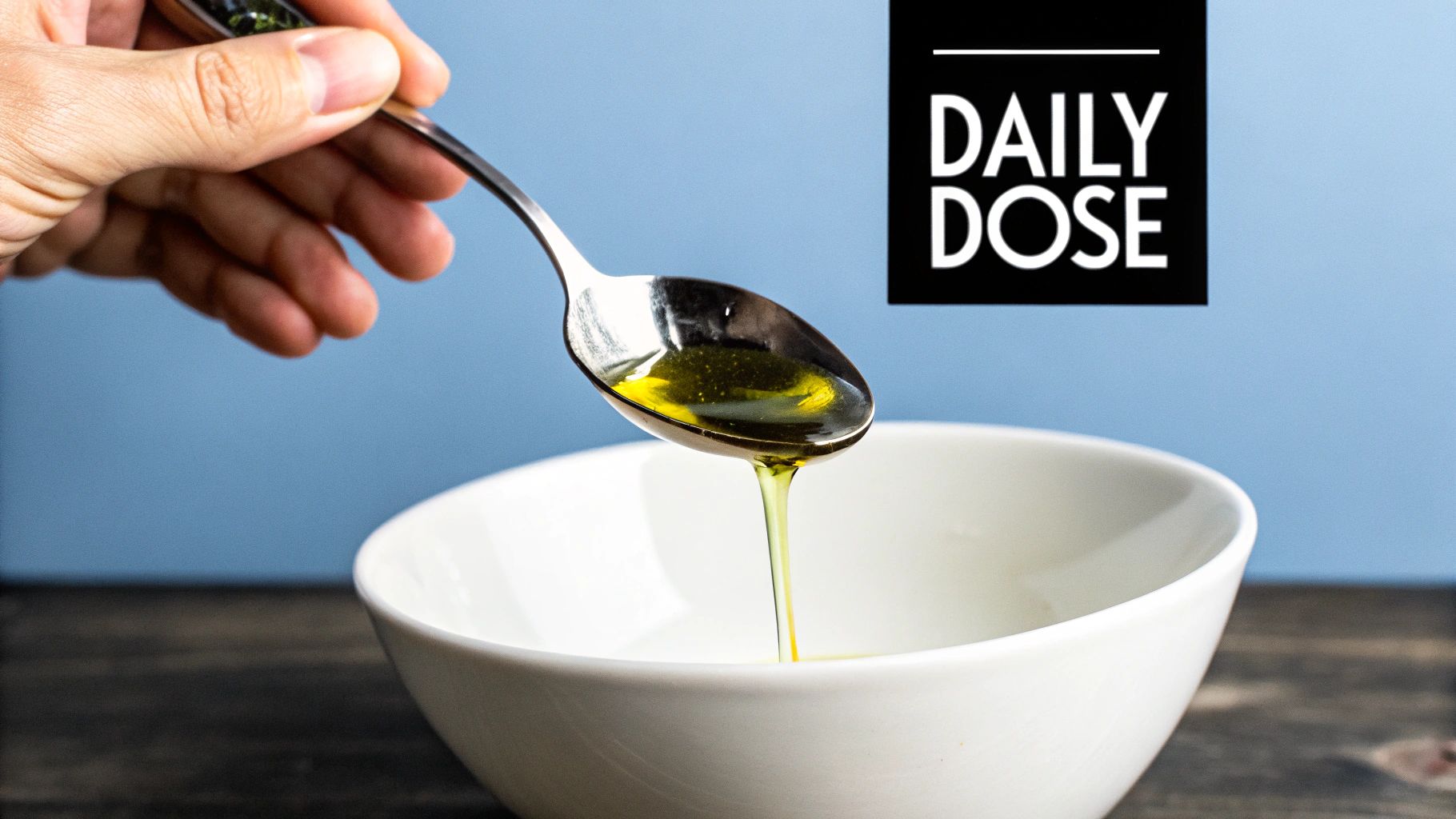
It’s one thing to know that olive oil can help get things moving, but it's another to figure out the best way to take it. You want a method that works, but also one you can realistically stick with. So, let's get into the practical, palatable ways to work this natural remedy into your daily life.
The most straightforward approach is to take one tablespoon of high-quality extra virgin olive oil (EVOO) on an empty stomach. Taking it first thing in the morning is ideal, as it allows the oil to coat your digestive tract without any food getting in the way, maximizing its lubricating effect. For many people, this is the fastest and most direct route to relief.
But let's be real—swallowing a spoonful of straight oil isn't exactly a treat for everyone. A good EVOO has a bold, peppery kick that can be a bit intense on its own. If you find the taste too strong, don't give up. There are some simple ways to make it much more pleasant.
Making It Go Down Easier
A classic trick is to mix your tablespoon of olive oil with a squeeze of fresh lemon juice. The bright, citrusy tang of the lemon does a fantastic job of cutting through the oil's richness, making the whole experience far more manageable. Plus, you get the added mild digestive boost from the lemon itself.
Another great strategy is to just blend it into your existing morning routine. This is where consistency gets a whole lot easier, because you'll barely even know it's there.
- Toss it in a smoothie: Add your tablespoon of EVOO right into the blender with your other ingredients. The fruits, veggies, and yogurt will completely hide the oil's flavor and texture.
- Stir it into breakfast: Mix the oil into a bowl of Greek yogurt or a warm helping of oatmeal. The creamy texture of either will absorb the oil seamlessly, giving your breakfast a healthy fat boost without any fuss.
A Tip from Experience: I've personally found that blending olive oil into a smoothie with a banana and some pineapple is a game-changer. The thickness from the banana and the sharp sweetness of the pineapple make the oil virtually undetectable. It turns your daily remedy into a delicious treat.
Weaving Olive Oil into Your Meals
If taking a "dose" of anything feels a bit too medicinal for your taste, you can simply incorporate olive oil for constipation relief into your everyday cooking. This approach might be a little less direct than the empty-stomach method, but it absolutely contributes to better overall digestive health and can be just as effective, especially for milder issues.
Think of it as a culinary path to feeling better. Drizzling a generous amount of EVOO over a big salad creates a fantastic dressing, but it also pairs the oil with fiber-rich greens—a powerful combination for promoting regularity. The healthy fats lubricate your system while the fiber adds necessary bulk.
You can also use it as a finishing oil, drizzling it over roasted vegetables, into a bowl of soup, or onto grilled fish right before serving. This not only makes your food taste better but also ensures you're consistently getting those beneficial fats. Ultimately, the best method is the one that fits your lifestyle and taste buds, because that's the one you'll actually do.
Using Abdominal Massage with Olive Oil
While most people think of drinking olive oil for constipation, you don't always have to ingest it to get results. A gentle, external approach can be surprisingly effective, especially for those who find the idea of swallowing oil a bit much. Applying it topically with a specific abdominal massage can help stimulate your system from the outside in.
I've found this technique to be a fantastic alternative, particularly for kids, the elderly, or anyone with a sensitive stomach. The massage itself provides gentle mechanical encouragement to your intestines, while the olive oil lets your hands glide smoothly over the skin without friction. The warmth and pressure also help relax tight abdominal muscles, which often cramp up when you're constipated, making the whole situation more comfortable.
Performing the Massage Correctly
To get started, you'll need about a tablespoon of warm extra virgin olive oil. The best position for this is lying flat on your back with your knees bent and feet flat on the floor. This simple adjustment relaxes your abdominal wall, allowing you to massage more deeply and effectively.
Warm the oil slightly by pouring it into your palms and rubbing them together. Then, place your hands on the lower right side of your abdomen, right near your hip bone. This is your starting point.
- Follow the Path of Digestion: Using firm but gentle pressure, begin massaging in a slow, clockwise circle. You'll move up toward your right rib cage, slide across your belly (just under the ribs), head down toward your lower left abdomen, and then move back across the bottom to where you began.
- Clockwise is Key: Why this specific direction? It’s not random. This motion follows the natural path of your large intestine. You're essentially giving things a gentle nudge along the route they’re already supposed to take.
- Be Consistent and Patient: Keep your movements smooth and rhythmic. Spend about 10-15 minutes on the massage. You can do this once or twice a day—I often suggest trying it in the morning to get your system going or in the evening as a relaxing ritual before bed.
While the infographic below details an oral method, it drives home a crucial point that applies here, too: using a specific amount and being consistent is what leads to results.
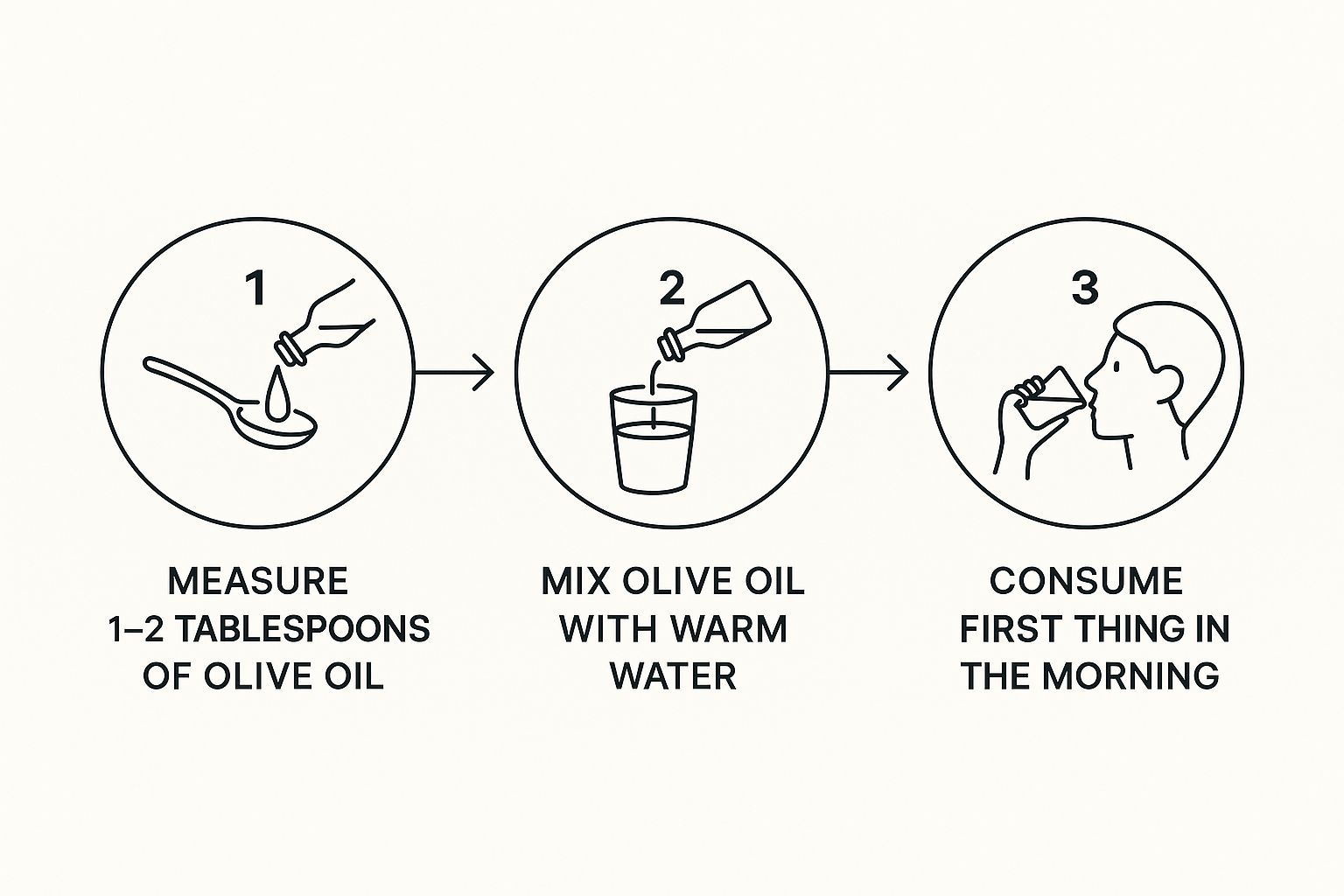
Think of the massage in the same way. The right technique and regular practice are what make it work.
Expert Takeaway: This isn't just an old wives' tale. Combining topical olive oil and massage is a recognized therapeutic technique used in clinical settings, especially for people who can't tolerate oral laxatives.
This gentle approach is even backed by science. One compelling study on elderly individuals found this exact massage and oil combination brought relief, significantly improving their constipation symptoms.
In this context, the olive oil does double duty. It acts as a lubricant for a better massage and its anti-inflammatory properties can soothe the skin. You’re creating a calming, supportive ritual that works with your body, not against it.
How Much Olive Oil Should You Take? (And What Happens If It's Too Much)
When you're trying to find relief from constipation, it's tempting to think that more is better. With olive oil, that’s not the case. The real key is finding that sweet spot—just enough to gently get things moving without sending you running for the bathroom.
For most adults, the magic number seems to be about one tablespoon per day. I've found that taking it first thing in the morning on an empty stomach gives it the best shot at working its magic without anything else getting in the way.
Start Small and Listen to Your Body
Everyone's system is different. What works wonders for one person might be too much for another. That's why I always recommend starting with a smaller dose, maybe just a single teaspoon, for the first day or two.
This approach lets you see how your body reacts. If a teaspoon does the trick, great! You've found your minimum effective dose. If you need a little more help, you can slowly work your way up to that full tablespoon.
A Quick Tip from Experience: The goal here is gentle, predictable relief—not a digestive emergency. Listening to your body is always the smartest move when trying any natural remedy.
The Downside of Overdoing It
So, what happens if you get a little too enthusiastic with the bottle? While olive oil is incredibly healthy, your digestive system can only handle so much fat at once. The side effects are pretty much what you'd expect from a laxative working a little too well:
- Diarrhea: This is the most common result. The same properties that soften stool can lead to loose, watery stools if you take too much.
- Cramping and Nausea: Your gut might protest with some uncomfortable cramps or a bit of queasiness as it tries to process an overload of oil.
- Oily Stools (Steatorrhea): If you notice greasy or fatty-looking stools, it’s a clear sign your body isn't absorbing all that extra fat.
Interestingly, you don't need a lot for it to be effective. Some clinical studies have found that as little as 4 milliliters of olive oil per day (that’s less than a teaspoon!) worked just as well as other remedies for certain groups of people. It’s a great reminder that a little can go a long way. For a closer look at the research, check out these clinical findings on olive oil for constipation at Medical News Today.
When to Be Cautious
There are a few situations where you'll want to be extra careful or check with a doctor before trying this.
If you are pregnant or breastfeeding, have a chat with your doctor first. Olive oil is perfectly safe as part of your diet, but using it as a targeted remedy is a different story. The same goes for infants and children—it’s absolutely essential to get a pediatrician's green light on whether it's safe and what the right amount would be.
Finally, if your constipation is severe, hangs around for more than a week, or comes with other scary symptoms like intense pain, fever, or bleeding, please see a doctor. That could signal a more serious problem that olive oil simply can't fix.
Got Questions? Let's Talk Olive Oil for Constipation
It's smart to have questions. When you're trying something new for your health, even a natural remedy like olive oil, you want to feel sure about what you're doing. Let's clear up some of the most common things people wonder about when using olive oil for constipation.
How Fast Will This Actually Work?
This is the big one, right? The honest answer is that it really depends on your body. Some people might feel the urge to go in as little as 30 minutes to an hour after taking their olive oil, especially on an empty stomach. For others, it might be a more gradual process, taking a few hours or even until the next morning.
Think about it—the severity of your constipation, what you've been eating, your hydration levels, and your unique metabolism all have a say. If you don't get instant relief, don't get discouraged. Give it a day or two; the lubricating and soothing effects of the oil can build up over time.
Does it Have to Be Extra Virgin Olive Oil?
For this purpose, yes, Extra Virgin Olive Oil (EVOO) is absolutely the way to go. You might see "light" or "pure" olive oil on the shelf, but those are highly refined. The refining process strips away the very things that make EVOO so powerful for gut health—namely, the anti-inflammatory compounds and antioxidants like oleocanthal.
Here’s a good way to look at it: regular olive oil can provide some basic lubrication, but EVOO does that and helps soothe the underlying irritation that might be contributing to the problem in the first place. You’re getting much more than just a simple laxative effect.
My Takeaway: When you're using olive oil as a functional remedy, you're after more than just fat. You want the potent polyphenols that come with it. Always reach for a high-quality, cold-pressed EVOO to ensure you're getting the full range of health benefits.
Is It Safe to Use This Remedy Long-Term?
Because olive oil is a whole food, not a harsh laxative drug, it's generally very safe for daily use as part of a healthy diet. That said, if you find you need it every single day for weeks just to have a bowel movement, it's a good signal to check in with your doctor.
Chronic constipation can sometimes point to a deeper issue that needs attention. Olive oil is a fantastic tool for getting things moving when you're occasionally stuck, but it shouldn't be a permanent fix. The ultimate goal is to help your digestive system find its own rhythm.
What Else Can I Do to Support My Digestion?
Olive oil is a great tactic for immediate relief, but building truly reliable, long-term digestive wellness comes down to your daily habits. Here are the pillars that work hand-in-hand with an olive oil routine:
- Bulk Up with Fiber: Fiber is what gives your stool substance, making it easier to pass. Focus on adding more leafy greens, beans, whole grains, and fruits to your plate.
- Hydrate, Hydrate, Hydrate: Water is crucial for softening stool so it can move smoothly. This becomes even more important as you increase your fiber intake, so sip water consistently throughout the day.
- Get Your Body Moving: You don't need an intense workout. Even a brisk daily walk helps stimulate the intestinal muscles, encouraging regularity.
These habits create a powerful synergy. When you combine them, you build a resilient digestive system that's less likely to need a quick fix in the first place.
Ready to explore the world of high-quality olive oil and find the perfect bottle for both your kitchen and your health? At Learn Olive Oil, we offer expert guides, tasting notes, and recommendations to help you choose with confidence.
Discover the Best Extra Virgin Olive Oils on learnoliveoil.com

 Learn Olive Oil
Leave a comment