Right, let's get straight to it. A single tablespoon of olive oil packs about 120 calories. That figure holds true across the board, whether you're reaching for extra virgin, virgin, or a lighter variety.
Your Quick Guide to Olive Oil Calories
While 120 calories might sound straightforward, it’s what makes up those calories that really matters. It's helpful to think of it not just as a number, but as a concentrated package of fuel for your body—a completely different kind of energy than you'd get from, say, a small apple.
One tablespoon is about 15 ml, or 14 grams of oil. All of its energy comes purely from fat, with zero carbohydrates or protein. This is what makes olive oil a calorie-dense food, and it’s why even a small drizzle can have a big impact. If you want to dive deeper, you can explore more about olive oil's nutritional profile on goldenoliveoil.co.
Olive Oil Per Tablespoon (15ml): A Quick Look
To put it all into perspective, here’s a simple table breaking down what you get in that one spoonful. It’s a great snapshot of the valuable nutrients that come along for the ride.
| Nutrient | Amount | % Daily Value (DV) |
|---|---|---|
| Calories | 119-120 | ~6% |
| Total Fat | 14 g | 18% |
| Saturated Fat | 2 g | 10% |
| Monounsaturated Fat | 10 g | N/A |
| Polyunsaturated Fat | 1.5 g | N/A |
| Vitamin E | 1.9 mg | 13% |
| Vitamin K | 8.1 mcg | 7% |
As you can see, you’re adding much more than just calories to your meal. You’re incorporating a significant amount of heart-healthy fats and essential vitamins. This nutritional density is exactly why olive oil is celebrated for its health benefits, not just its taste.
What Those 120 Calories Are Really Made Of
It’s easy to look at that 120-calorie figure and think all calories are created equal. But when it comes to olive oil, what’s behind those numbers tells a much richer story. Every single one of those calories comes from fat—around 14 grams in that one tablespoon.
Before you recoil, it’s crucial to know this isn't the kind of fat that deserves a bad rap. Think of the fats in olive oil like a nutritional dream team, with one player consistently scoring all the points: monounsaturated fat.
This isn't just a random mix; it's a very specific, health-forward profile.
The Power of Oleic Acid
The star player I mentioned? That's oleic acid, a specific type of monounsaturated fat that makes up a staggering 55-83% of olive oil. This single compound is largely responsible for olive oil's legendary health benefits.
When you drizzle olive oil over your salad, you're doing more than just adding flavor. You're adding a dose of oleic acid, a cornerstone of heart-healthy lifestyles like the Mediterranean diet. It’s praised for helping maintain good cholesterol levels and supporting overall wellness.
This means the calories in that spoonful of oil are actively working for you, delivering energy in a form that your body can use to support its most important functions.
More Than Just Healthy Fats
Beyond its incredible fat profile, olive oil also packs in a few other micronutrients that punch well above their weight. They don't contribute any calories, but they certainly add to its value.
In that single tablespoon, you’ll also find:
- Vitamin E: A potent antioxidant that helps shield your body's cells from oxidative stress. You're getting about 13% of your Daily Value (DV) in just one pour.
- Vitamin K: Absolutely vital for proper blood clotting and building strong bones. A tablespoon delivers around 7% of your DV.
So, while the calorie count is a good starting point, understanding the composition is what really matters. You're not just consuming 120 calories; you're getting a powerful blend of beneficial fats and essential vitamins that nourish your body from the inside out. That's a critical distinction for anyone trying to make smarter, more informed dietary choices.
Why Olive Oil Is the Heart of Healthy Eating
It can feel a bit strange to think that a food so rich in calories could be a staple in some of the world's healthiest diets. But if you look to the Mediterranean, olive oil isn't just a cooking ingredient—it's woven into the very fabric of daily life and wellness. The real story isn't about the calorie count, but the incredible functional benefits hiding in every single drop.
Historically, olive oil was a pillar in these regions, valued for its rich flavor and, just as importantly, its energy. A single tablespoon, which weighs about 14 grams, packs around 119 calories, almost all of which come from fat. This made it a vital source of energy for traditional agricultural communities where getting enough calories wasn't always a given. You can explore the full nutritional breakdown of olive oil on nutritionvalue.org.
It was this centuries-old reliance on olive oil for energy that ultimately led us to understand its amazing health advantages.
The Maintenance Crew for Your Body
Imagine the compounds in a good olive oil as a tiny, dedicated maintenance crew working around the clock inside your body. That's essentially what you get from its unique blend of monounsaturated fats and potent antioxidants called polyphenols. Together, they form a powerful team that supports your health for the long haul.
These natural compounds are widely recognized for their ability to fight inflammation, which we now know is a major driver of many chronic diseases. By making olive oil a regular part of your meals, you're giving your body a tool to help keep its internal systems running smoothly.
When you shift your thinking from just counting calories to appreciating these functional benefits, everything changes.
Protecting Your Heart and Beyond
The work of this internal "maintenance crew" isn't just a vague concept; the health benefits are specific and well-studied. The combination of oleic acid and antioxidants team up to deliver some serious advantages, making every drizzle a proactive investment in your well-being.
- Lowering 'Bad' Cholesterol: Monounsaturated fats are champions at helping bring down levels of LDL (low-density lipoprotein) cholesterol, which is the type that can clog arteries.
- Supporting Heart Health: By improving cholesterol numbers and easing inflammation, olive oil is a true friend to your cardiovascular system.
- Fighting Oxidative Stress: The polyphenols in olive oil act like bodyguards for your cells, shielding them from the damage caused by unstable molecules called free radicals.
In the end, the olive oil calories per tablespoon are just one piece of a much larger and more beneficial puzzle. It's less about the energy you're adding and more about the life-enhancing quality of that energy.
How Olive Oil Compares to Other Cooking Fats
To really get a feel for what makes olive oil special, it helps to put it side-by-side with other fats you might have in your kitchen. If you glance at the labels for butter, coconut oil, or even canola oil, you'll notice something interesting: they all have a nearly identical calorie count per tablespoon. But that’s where the similarities end, and the real story begins.
The crucial detail isn't just the total calories, but where those calories come from. It's the type of fat that makes all the difference, separating a genuinely heart-healthy option from one you might want to enjoy less often. The olive oil calories per tablespoon are just the headline; the nutritional breakdown is the full story.
The Good, The Bad, and The Fatty
When we talk about fats in our food, they generally fall into a few key categories. Understanding them is simple:
- Saturated Fat: Think of fats that are solid at room temperature, like a stick of butter or a scoop of coconut oil. Diets heavy in these fats have been linked to higher levels of "bad" LDL cholesterol.
- Monounsaturated Fat: This is the star of the show in olive oil. It's liquid at room temperature and is widely praised for its heart-protective benefits.
- Polyunsaturated Fat: Also a liquid fat, this group includes the well-known omega-3 and omega-6 fatty acids.
Olive oil is overwhelmingly made up of the "good" kind of fat.
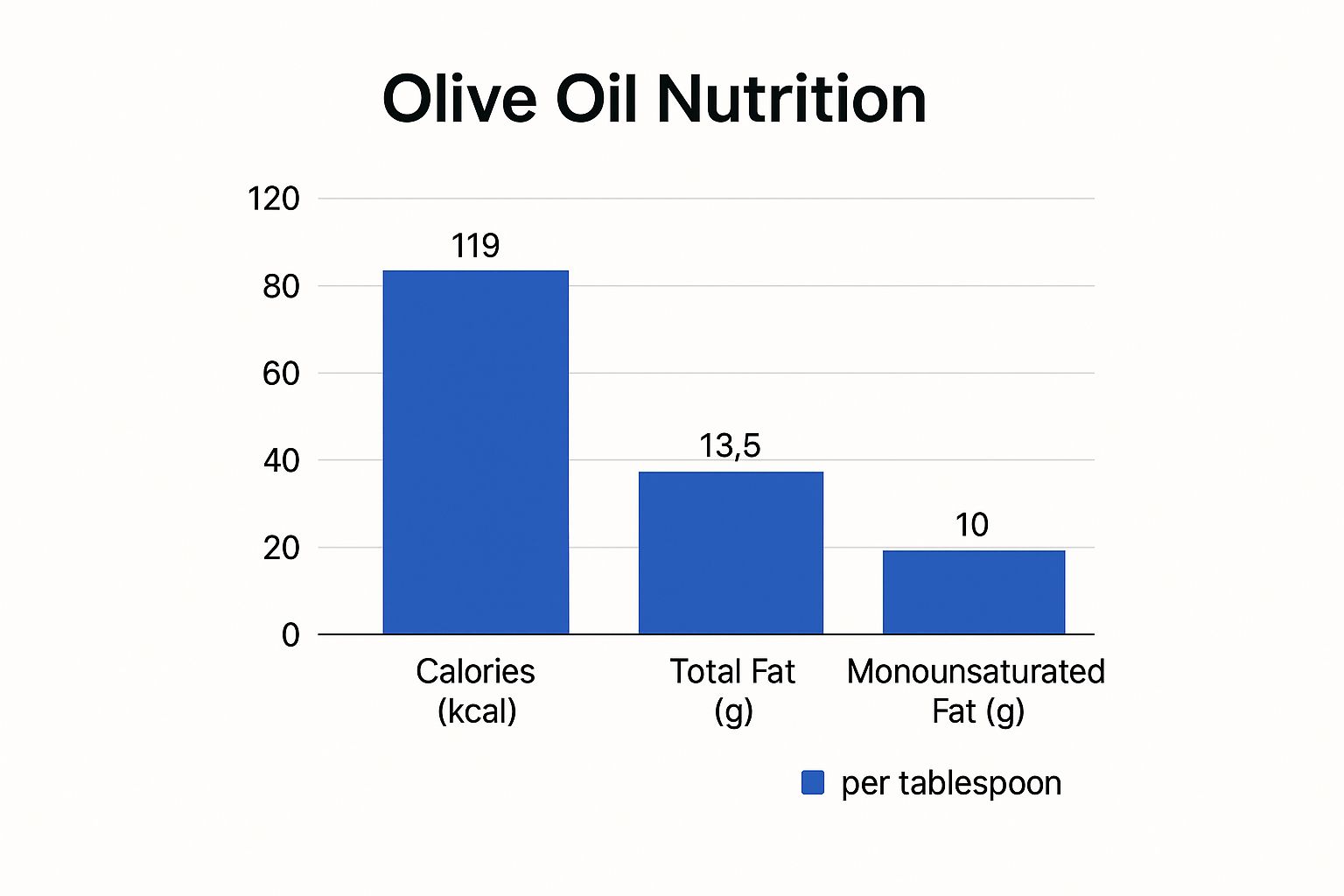
As you can see, a whopping 73% of the fat in olive oil is the healthy monounsaturated kind. This is what truly sets it apart from many other common fats.
To make this even clearer, let's look at how olive oil stacks up against its main competitors.
Cooking Fats Head-to-Head (Per Tablespoon)
| Cooking Fat | Total Calories | Monounsaturated Fat | Saturated Fat |
|---|---|---|---|
| Olive Oil | ~120 | ~10g | ~2g |
| Butter | ~102 | ~3g | ~7g |
| Coconut Oil | ~121 | ~1g | ~12g |
| Canola Oil | ~124 | ~8g | ~1g |
This table really drives the point home. While a tablespoon of butter and olive oil are close in calories, the butter packs in over 7 grams of saturated fat, compared to olive oil's meager 2 grams. Coconut oil is even more extreme, with nearly all its fat being saturated.
The goal here isn't to demonize other fats, but to empower you to make smarter choices in the kitchen. Understanding that the kind of fat matters just as much as the amount is a game-changer. Swapping butter for olive oil is a simple, delicious change that can have a real, positive impact on your long-term health.
Smart Ways to Use Olive Oil Without Overdoing It
It’s easy to love olive oil for its incredible flavor and health perks, but that doesn't mean you need to drown your food in it. Knowing that olive oil calories per tablespoon are right around 120, a little mindfulness goes a long way. The good news is, a few simple habits can help you strike the perfect balance.
One of the biggest culprits of calorie overload? Free-pouring straight from the bottle. We've all done it—it feels so chef-like! But a quick "glug" that lasts just three seconds can easily dump three or four tablespoons onto your food. That’s hundreds of extra calories you never even thought about.
The fix is surprisingly simple: just measure it. Pull out a standard tablespoon and portion out your oil. This tiny step puts you back in control, ensuring the amount you use actually lines up with your health goals.
Practice Smart Swaps and Techniques
Beyond just measuring, a few clever techniques can make a small amount of oil feel much more substantial. These tricks help you get that perfect coating on your food while keeping the calories right where you want them.
- Use an Oil Mister: A spritzer is a game-changer for salads or roasting vegetables. It delivers a super fine, even mist of oil, giving you fantastic coverage with only a fraction of what you'd use from a drizzle.
- Create Lighter Dressings: Instead of grabbing a store-bought dressing, whisk up your own. Combine one tablespoon of extra virgin olive oil with fresh lemon juice, a little Dijon mustard, and your favorite herbs. You get a vibrant, delicious vinaigrette without all the extra sugar and unhealthy fats.
- Swap It for Butter: Try drizzling a high-quality extra virgin olive oil over your morning toast instead of spreading butter. You’ll get a richer, more complex flavor along with those fantastic monounsaturated fats.
Remember, the goal isn't to fear olive oil, but to use it wisely. Treat it like a finishing touch that elevates a dish, not a filler to soak your food in. A mindful drizzle can truly take a meal from good to great.
By folding these small, practical habits into your cooking routine, you can enjoy everything olive oil brings to the table. You get all the heart-healthy benefits and amazing taste, without ever having to worry about accidentally going overboard on calories.
Common Questions About Olive Oil and Calories
Even after breaking down the numbers, it’s completely normal to have a few more questions pop up. Let’s clear the air on some of the things people wonder about most when it comes to olive oil and calories in their daily cooking.
Getting straight answers to these common questions will help you feel more confident in the kitchen.
Does Extra Virgin Olive Oil Have More Calories Than Regular Olive Oil?
This is a really common misconception, but the answer is no. The calorie count is practically the same across all grades of olive oil. Whether you're using extra virgin, virgin, or even a "light" olive oil, you're looking at about 120 calories per tablespoon because they're all 100% fat.
The real difference lies in how they’re made. Extra virgin olive oil is cold-pressed and the least processed, so it hangs on to more of its natural flavor and those powerful antioxidants known as polyphenols. This makes it the healthiest and tastiest option, but it won't save you any calories.
Will I Gain Weight From Eating Olive Oil Every Day?
Not necessarily. You won't automatically gain weight from a daily dose of olive oil, as long as it fits into your total daily calorie budget. Weight gain is all about the big picture—consistently eating more calories than your body uses, no matter the food source.
Olive oil is calorie-dense, so being mindful of how much you pour is key. But here’s the flip side: swapping out less healthy fats (think butter or highly processed vegetable oils) for a moderate amount of high-quality olive oil can actually help with weight management. It's more filling and offers anti-inflammatory perks.
It's all about balance, not banning foods. For most people, incorporating one or two tablespoons a day into a healthy eating plan is a fantastic strategy.
Can I Destroy the Nutrients in Olive Oil by Cooking With It?
It's true that very high heat can diminish some of the delicate flavors and beneficial polyphenols in extra virgin olive oil, but it’s a lot tougher than you might think. Its smoke point is typically between 375–405°F (190–207°C), which is perfectly safe for most everyday cooking, including sautéing and roasting.
The healthy monounsaturated fats, which are the main event, are quite stable when heated, so you won't lose them.
Here’s a simple rule of thumb to get the most out of your oil:
- For Finishing: Use your best, most flavorful extra virgin olive oil for drizzling over salads, soups, and finished dishes where its raw taste can really shine.
- For Cooking: A good quality extra virgin or standard olive oil is a great choice for sautéing, roasting, and other general cooking needs.
At Learn Olive Oil, we believe that understanding these details makes every meal better. Explore our expert guides to choose the best olive oil and master its uses.

 Learn Olive Oil
Leave a comment