An olive oil liver cleanse is a well-known home remedy where you drink a specific mixture of olive oil and citrus juice. The fundamental concept is that this combination prompts the liver to release a surge of bile, which is thought to help flush out toxins and other built-up gunk. Many people view it as a way to "purge" both the liver and gallbladder.
What Is the Olive Oil Liver Cleanse
At its core, the olive oil liver cleanse is a folk remedy built on the principle of triggering an intense detoxification process. The belief is that by drinking a sizable amount of olive oil—usually blended with grapefruit or lemon juice—in a short timeframe, you can cause the gallbladder to contract powerfully. This forceful release is said to push out a flood of bile, clearing metabolic waste, sludge, and even small "stones" from the liver and gallbladder.
The cleanse itself is typically done over a day or two. It usually comes after a few days of preparation, where you stick to lighter, cleaner foods. Because the ingredients are so simple, it’s a pretty accessible option for anyone looking for a natural wellness boost.
The Theory Behind the Cleanse
The logic here is actually quite simple: fats make the gallbladder release bile. Bile is a digestive fluid made by your liver and kept on standby in your gallbladder, and its main job is to break down the fats you eat.
When you suddenly down a lot of fat, like olive oil, it sends a strong signal to the gallbladder to dump its stored bile into the small intestine to handle the load. The theory behind the cleanse is that this large, sudden release acts like a "flush" for your system.
So, what about the citrus juice? It’s not just for show. It serves two key purposes:
- It makes the oil easier to drink. Let's be honest, drinking a cup of straight olive oil is a tough ask for most people. The sharp, tart flavor of lemon or grapefruit juice really helps cut through that richness.
- It adds a dose of antioxidants. Citrus fruits are packed with vitamin C and other antioxidants, which are believed to give the liver's natural detox pathways some extra support.
Why People Try This Cleanse
People are often drawn to this kind of cleanse for all sorts of reasons. Most of the time, it’s because they’re feeling sluggish, bloated, or just "off," and they suspect a burdened liver might be the culprit. They’re hoping to tackle symptoms like fatigue, digestive issues, or even problem skin.
The real appeal is the idea of hitting a "reset" button. While consistent, healthy daily habits are what truly matter for long-term health, the thought of a short, intensive intervention is compelling for many.
It’s also worth noting that research points to olive oil itself, a key part of the healthy Mediterranean diet, as being supportive of liver health by stimulating bile flow and improving how the body metabolizes fat. This scientific backing makes its use in a liver cleanse protocol all the more interesting for those exploring alternative wellness strategies. You can dive deeper into the connection between olive oil and liver detox on cymbiotika.com.
The Science Behind Olive Oil and Liver Function
While there are plenty of personal stories about the olive oil liver cleanse, it's worth diving into the science to see what’s really going on. The idea that olive oil is good for your liver isn't just old-world wisdom; it's backed by its unique chemical profile, especially its high levels of monounsaturated fats and potent antioxidants.
At its core, the main fat in olive oil is oleic acid, a monounsaturated fatty acid (MUFA). Unlike some fats that can put a strain on the liver, oleic acid has been shown to help manage fat metabolism and dial down inflammation. It’s a friend, not a foe, to your body's primary filtration system.
This brings us to one of the most significant areas of research: non-alcoholic fatty liver disease (NAFLD). This condition, which is basically an excess of fat stored in the liver, has become a major health issue worldwide. Fortunately, scientific evidence suggests that olive oil can offer a powerful protective effect.
How Olive Oil Fights Liver Fat and Stress
On a cellular level, your liver can get bogged down by a damaging process called lipid peroxidation. Think of it as a form of oxidative stress where unstable molecules attack and damage fat cells in the liver, sparking inflammation and injury. The antioxidants in extra virgin olive oil, especially polyphenols and vitamin E, step in to neutralize these attackers and shield liver cells.
This protective action is crucial for dealing with hepatic steatosis—the clinical term for a fatty liver. Research consistently shows that diets rich in olive oil can help manage this condition.
To see this in action, we can look at a key Spanish study. It revealed that a diet supplemented with olive oil significantly reduced the amount of fat building up in the liver. In fact, it lowered triglyceride accumulation in the liver by a remarkable 30% and cut serum triglyceride levels by 10% when compared to diets using other types of fats. You can read the full study on liver recovery with olive oil to dig into the details yourself.
A key takeaway from the study was that olive oil's monounsaturated fats are much more stable and resistant to lipid peroxidation than the polyunsaturated fats found in many other vegetable oils. This stability helps stop the damaging chain reaction of oxidative stress that can eventually lead to liver scarring, also known as fibrosis.
Impact of Olive Oil vs Other Fats on Liver Health Markers
This table breaks down the findings from the Spanish study, showing a direct comparison between a diet enriched with olive oil and a control diet using other fats.
| Health Marker | Olive Oil Diet | Control/Other Fat Diet |
|---|---|---|
| Liver Triglyceride Accumulation | 30% reduction | Baseline/Increase |
| Serum Triglyceride Levels | 10% reduction | Baseline/Increase |
| Lipid Peroxidation | Lower rates | Higher susceptibility |
| Oxidative Stress Markers | Decreased | Increased |
The results clearly show that the type of fat you consume matters immensely for liver health. Olive oil didn't just prevent further damage; it actively helped improve key markers of liver function.
What This Means for Your Liver
So, what are the practical implications for you? It means the main ingredient in this cleanse has real, scientifically observed benefits for your liver. When you choose a high-quality extra virgin olive oil, you're giving your body a fat that helps in a few critical ways:
- Reduces Liver Fat: It actively works to manage the buildup of triglycerides, which is the hallmark of a fatty liver.
- Fights Oxidative Stress: Its powerful antioxidants act as a defense system, protecting your liver cells from damage.
- Lowers Inflammation: The compounds in olive oil help calm the inflammatory processes that can cause long-term harm to the liver.
This science-backed evidence explains why olive oil is a cornerstone of famously liver-friendly eating patterns like the Mediterranean diet. It's not about a quick, temporary "flush," but about consistently using a fat that provides genuine support to one of your body’s most essential organs.
How to Properly Prepare for the Cleanse
Think of a successful liver cleanse like a well-planned road trip. You wouldn't just jump in the car and start driving; you'd check the oil, fill the tank, and map your route. The same logic applies here. What you do in the days leading up to the cleanse is just as important as the cleanse itself, setting the stage for a smoother, more effective experience.
This prep phase is all about easing your body into the process. The main goal? To lighten your liver's daily workload. For three to five days before you plan to start, you'll want to begin shifting your diet. This means cutting back on the usual suspects that keep your liver busy: alcohol, caffeine, heavy fried foods, processed snacks, and refined sugar.
Instead, fill your plate with clean, whole foods. Focus on fresh fruits and vegetables, especially things known to be liver-friendly, like apples, beets, and plenty of leafy greens. You can still have lean proteins and whole grains, just keep the portions moderate and the meals easy to digest. And don't forget to hydrate! Drinking plenty of water is non-negotiable.
Selecting Your Core Ingredients
When it comes to the actual cleanse ingredients, quality is everything. You're consuming these in concentrated amounts, so this isn't the place to cut corners. Your results—and your well-being—depend on it.
You really only need two things, but they have to be the right ones:
- Extra Virgin Olive Oil: Go for a high-quality, cold-pressed, extra virgin olive oil (EVOO). This ensures it's unrefined and packed with the good stuff—polyphenols and antioxidants. Look for oils sold in dark glass bottles, which protect them from light damage. If you want to dive deeper into what makes a great oil, resources like Learn Olive Oil offer some fantastic expert guidance.
- Fresh Citrus Juice: You’ll need fresh lemons or grapefruits to make about half a cup of juice. Steer clear of the bottled stuff. It’s often full of preservatives and added sugar, and it just doesn't have the same enzymatic power or vitamin C kick as freshly squeezed juice.
The "extra virgin" label is key. It's the highest grade of olive oil, meaning it was extracted without chemicals or high heat. This gentle process is what preserves the natural compounds that are thought to support liver function and get the bile flowing—the whole point of the cleanse.
A Sample Pre-Cleanse Plan
To give you a better idea of what this looks like in practice, here’s a simple meal plan for your prep days. This is just a guide, not a strict set of rules, so feel free to adapt it to your own tastes.
Sample Meal Ideas:
- Breakfast: Start your day with a green smoothie. Try blending spinach, a green apple, and a scoop of your favorite plant-based protein powder.
- Lunch: A big salad is perfect. Think mixed greens with grilled chicken or a cup of chickpeas, drizzled with a simple lemon and tahini dressing.
- Dinner: Keep it light and clean with steamed vegetables like broccoli and carrots, a side of quinoa, and a piece of baked salmon.
- Snacks: If you get hungry between meals, reach for some fresh berries, apple slices, or a small handful of raw walnuts.
Following this kind of eating plan gets your body primed and ready. It's a simple step, but this careful preparation can make all the difference, minimizing discomfort and helping you get the full benefits of your olive oil liver cleanse.
A Practical Walkthrough of the Cleanse Protocol
Alright, you've done the prep work and have your high-quality ingredients on hand. Now for the main event. The core part of this olive oil liver cleanse happens in the evening, giving your body the entire night to rest and process the mixture. The goal here is to follow a timed schedule, but don't get so rigid that you stress yourself out—that defeats the purpose.
Make sure your last light meal, maybe some simple broth or a small apple, is finished by 2 PM on the day you plan to do the cleanse. This gives your digestive system a head start, ensuring it's mostly empty so the olive oil mixture can do its job without anything getting in the way. From 2 PM onward, it's just water.
This visual guide gives you a great bird's-eye view of the entire process, from what you eat beforehand to how you ease back into normal life after.
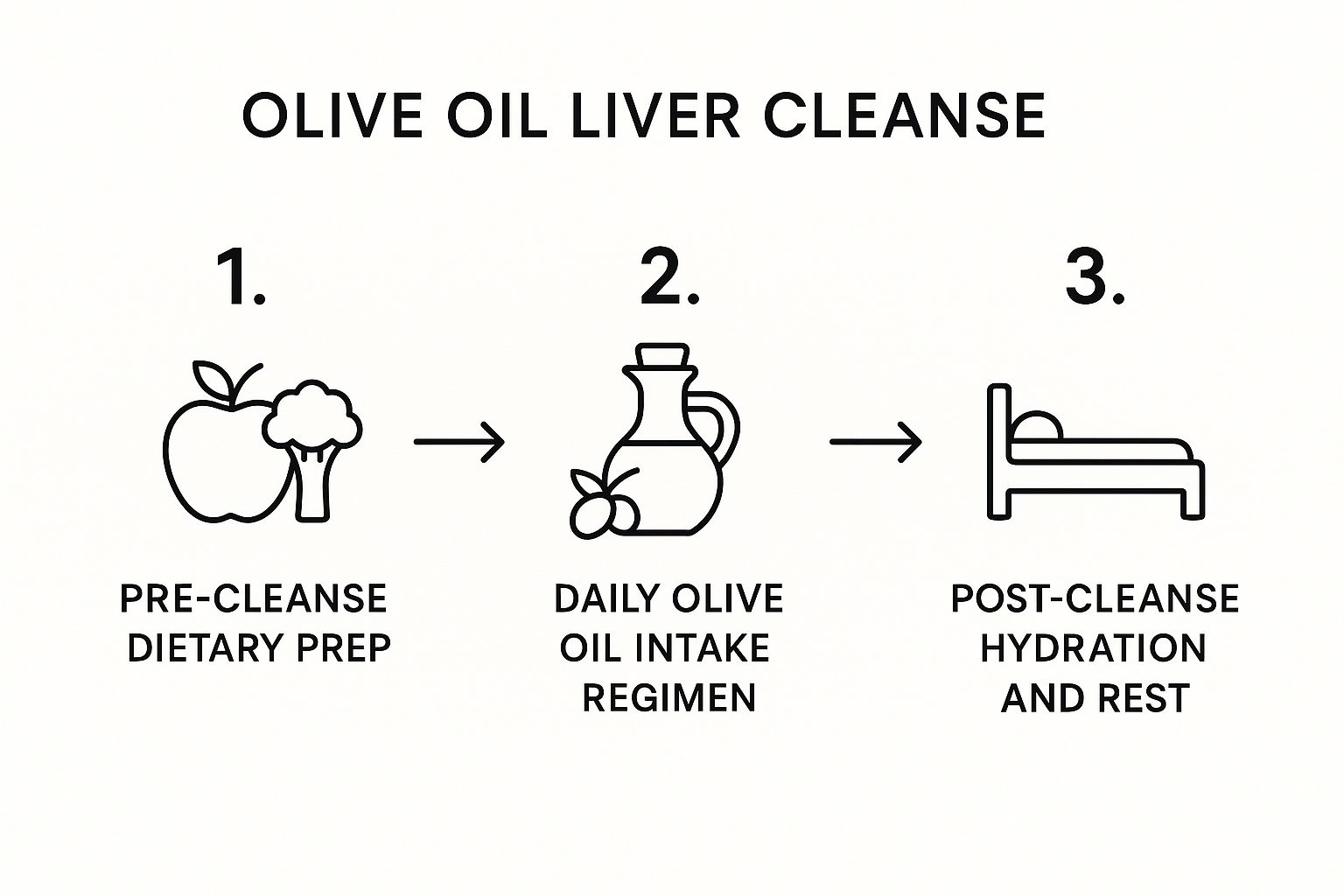
As you can see, each stage logically flows into the next. It’s a good reminder that this isn't just a one-and-done drink, but a process that spans a few days.
Mixing and Consuming the Cleanse Drink
Once evening rolls around, it's time to mix your cleanse drink. The classic recipe is incredibly simple, but getting the measurements right is key to getting the intended effect. Grab a sealable jar, like a Mason jar, which is perfect for shaking everything together.
The Core Recipe:
- 1/2 cup (4 ounces) of extra virgin olive oil
- 1/2 cup (4 ounces) of fresh-squeezed grapefruit or lemon juice
Pour both liquids into your jar, screw the lid on tight, and shake it like you mean it. You're looking for a creamy, uniform consistency—that's when you know it's properly emulsified. To make it easier to get down, most people split it into two doses. A common schedule is to drink the first half around 6 PM and the second half around 8 PM.
Here’s a tip from experience: Keep a glass of water handy to chase it with. The taste is… intense. It’s not for everyone, and a quick rinse helps a lot. Some people also swear by using a straw, which helps the mixture bypass most of your taste buds.
What to Expect During the Process
After you've had the oil and juice mixture, the most important thing you can do is rest. Lie down immediately. Lying on your right side is the traditionally recommended position, as it’s believed to help gravity do some of the work in encouraging your gallbladder to release its contents. Prop yourself up with a few pillows to get comfortable.
Don't be surprised if you feel a little bit nauseous after drinking the oil. That’s a pretty normal reaction to downing that much fat so quickly. Taking slow, deep breaths can really help settle your stomach. Whatever you do, try to resist the urge to get up and move around.
You’ll likely feel the need to visit the bathroom quite a few times during the night and well into the next morning. This is the whole point—the "flushing" action that the cleanse is meant to kickstart. Expect your bowel movements to look different than usual; that's all part of the process.
For this reason, it's wise to stay close to a bathroom and create a relaxing space for yourself. No strenuous activity! Just focus on letting your body do its thing. Remember, the goal of this olive oil liver cleanse is to gently stimulate a natural process, and giving your body a calm, restful environment is the best support you can offer. When you wake up, take it easy and slowly begin reintroducing gentle foods.
After the Cleanse: How to Keep Your Liver Healthy for the Long Haul

Going through an olive oil liver cleanse is a big step, but your work isn't done when the cleanse is over. What you do next is arguably even more important for your long-term health. The first 24 to 48 hours are all about gently reintroducing food, but the real goal is to pivot from a one-time "fix" to building daily habits that support your liver for good.
Think of it this way: your digestive system just ran a marathon. You wouldn't celebrate by eating a five-course meal, right? The same logic applies here. Flooding your system with heavy, complicated foods is a recipe for discomfort. The best path forward starts with simple liquids and foods that are easy on your liver and gallbladder.
Gently Easing Back into Eating
Your first post-cleanse meal needs to be incredibly light. I always advise people to start the morning with fresh-pressed juice—like apple or carrot—diluted with a bit of water. As the day goes on, you can gradually introduce things like simple broths, steamed veggies (hold the heavy oils and spices), and soft fruits like a ripe banana or some melon.
Here’s a practical timeline for that first crucial 24-hour period:
- First Few Hours Awake: Stick with water, gentle herbal tea, or diluted fresh juices. Keep it simple.
- Late Morning to Early Afternoon: Try a light fruit smoothie or a small bowl of plain steamed vegetables.
- Late Afternoon and Evening: A simple vegetable soup or a small portion of quinoa or brown rice works well.
The most important advice? Listen to your body. If you feel any bloating or indigestion, that's your cue to pull back and stick with the lighter options for a while longer. The goal is a slow, steady return to your normal diet over two or three days.
Shifting from a "Cleanse" to a Lifestyle
While a flush can feel like a powerful reset, true liver health is built day by day. You can't rely on intense, periodic cleanses as a substitute for a healthy lifestyle. The real magic happens when you weave liver-friendly habits into your daily routine, embracing a whole-foods diet that naturally supports your body.
The key is to stop seeing high-quality olive oil as just a tool for an intense cleanse and start seeing it as your go-to fat for everyday cooking and eating. You want to nurture your liver daily, not just purge it a few times a year.
One of the best long-term strategies I’ve seen is adopting a Mediterranean way of eating. It’s naturally rich in vegetables, fruits, legumes, and healthy fats, with extra virgin olive oil as the star. This approach nourishes the liver without overloading it.
In fact, a small clinical study on patients with non-alcoholic fatty liver disease showed that a daily intake of just one teaspoon of olive oil led to significant improvements. Participants saw lower liver enzyme levels, less fat buildup in the liver, and better blood flow—all markers of a healthier, happier liver. You can dive deeper into how certain foods support and detoxify the liver on vinmec.com to understand the science behind it.
By making high-quality olive oil a regular fixture in your kitchen—drizzling it on salads, whisking it into dressings, or using it for light cooking—you give your liver the consistent, gentle support it needs to thrive. This moves you beyond the temporary fix of a cleanse and toward a foundation of genuine, lasting wellness.
Common Questions About the Liver Cleanse
https://www.youtube.com/embed/4Wd5a4veej8
It's completely normal to have a few questions before trying something like this. An olive oil liver cleanse is pretty intense, so going in with your eyes wide open is the only way to do it. Let's walk through some of the most common things people ask, so you can figure out if it's right for you.
The first question I always get is, "Is it safe?" The honest answer is no, it’s not for everyone. If you have any existing health issues, especially with your gallbladder, pancreas, or liver, you should steer clear. The same goes for anyone who is pregnant, breastfeeding, or has diabetes. This protocol puts a lot of stress on your system.
Before you even think about starting a cleanse like this, you absolutely must talk to a qualified healthcare professional. They know your health history and can tell you if this is a safe option for your body. Going it alone without medical advice is a risk you don't want to take.
What About the "Stones"?
A lot of the buzz around this cleanse comes from people passing small, soft, greenish "stones." For a long time, the belief was that these were gallstones being flushed out. But science gives us a much more plausible explanation.
What you're likely seeing is a result of saponification. It’s a fancy word for a simple chemical reaction. When that large amount of olive oil mixes with the acidic lemon juice and your own digestive enzymes, it essentially creates little soap-like balls in your gut.
This doesn't mean the cleanse is useless. The whole point is to trigger a strong bile release from the liver and gallbladder, and it certainly does that. Just know that the "stones" you see are probably a byproduct of the ingredients, not hardened stones that were dislodged from your gallbladder.
How Often Should I Do a Liver Cleanse?
When it comes to a flush this powerful, less is more. This is not a regular maintenance routine. A big mistake people make is thinking they can do this frequently. Real, lasting liver health comes from the supportive things you do every single day, not from an aggressive purge every few months.
There’s no hard-and-fast rule, but most experienced practitioners would recommend doing it no more than once or twice a year, if you decide to do it at all. Your main focus should always be on long-term liver care. That looks like:
- Eating a Smart Diet: Think leafy greens, beets, broccoli, and other foods your liver loves.
- Moving Your Body: Regular exercise is fantastic for improving metabolism and burning off liver fat.
- Reducing Your Toxin Load: Go easy on alcohol, processed foods, and anything else that makes your liver work overtime.
Ultimately, the goal is to support your liver's natural ability to clean house on its own. A cleanse can feel like a powerful reset, but a foundation of healthy daily habits is what truly counts.
At Learn Olive Oil, we believe that understanding the quality and benefits of this incredible ingredient is the first step toward better wellness. Explore our guides to choose the best oils for your health journey.
Discover the World of Premium Olive Oil at Learn Olive Oil.
 Learn Olive Oil
Leave a comment