Let's be honest, the right olive oil doesn't just make a salad dressing better—it is the dressing. We're talking about a complete game-changer. A truly great Extra Virgin Olive Oil (EVOO) can take a handful of simple greens and turn them into something you'd rave about. It's not just a background note; it's the heart and soul of any world-class dressing.
Why Olive Oil Is Your Salad's Most Important Ingredient
Too many of us think of salad dressing as just some oil and vinegar shaken up in a jar, where the oil's only job is to be, well, oily. That's a huge missed opportunity. The right olive oil brings its own personality to the party, adding layers of flavor, character, and complexity that you just can't get from a neutral, bland oil.
Think of it this way: you wouldn't build the frame of your house with flimsy, cheap lumber and expect it to be a solid home, right? The same logic applies here. If you start with a low-quality, tasteless oil as the base of your dressing, your salad is doomed to be forgettable, no matter how crisp your lettuce or ripe your tomatoes are. A high-quality EVOO is the foundation, the very thing all the other flavors build upon.
The Shift Toward Quality Ingredients
It's clear that people are starting to catch on. We're all paying more attention to where our food comes from and the quality of our ingredients, and olive oil is front and center in this movement. This growing appreciation has created a fascinating trend: global olive oil consumption has been consistently outpacing production.
Take the 2021/22 crop year, for example. The world consumed 3.215 million tons of olive oil but only produced about 3.1 million tons. This deficit points to a huge global shift toward premium oils, especially for things like homemade salad dressings where the flavor really shines. You can dig deeper into these numbers in this report on global olive oil consumption.
Choosing a high-quality olive oil isn't just about better taste; it's about transforming a simple meal. It’s the single most impactful decision you can make for your salad.
From Ingredient to Main Event
This is where the real fun begins. A bold, peppery olive oil can create a vinaigrette that stands up beautifully to strong flavors like arugula, feta, or grilled steak. On the other hand, a delicate and buttery oil can gently coat tender greens, letting their subtle sweetness come through.
Once you realize that different olive oils have unique flavor profiles—just like different wines—you stop just making a dressing and start designing one.
This guide is here to walk you through those nuances. We'll turn the guesswork of choosing an olive oil for your salad dressing into a confident skill. Before you know it, you'll be identifying different flavor notes and pairing them like a pro, making every single salad intentionally delicious.
How to Read an Olive Oil Label
Ever feel overwhelmed in the olive oil aisle? It’s a sea of bottles all shouting things like "first press" and "cold-pressed," and it’s tough to know what’s real and what’s just clever marketing. For a truly fantastic salad dressing, the answer is always Extra Virgin Olive Oil (EVOO). Here's a simple way to think about it: EVOO is like fresh-squeezed orange juice, while other oils are more like concentrate. It's the pure, unrefined juice of the olive.
Because EVOO is simply pressed from the fruit without any heat or chemicals, it holds onto all its incredible, vibrant flavor and health-boosting properties. This purity is precisely why it’s the non-negotiable choice for any dish where the oil itself is a star ingredient—and that’s especially true for salad dressings.
It's clear people are catching on. The global olive oil market was valued at a staggering $14.19 billion USD in 2023 and is expected to climb to $17.11 billion by 2032. This boom is largely fueled by a growing appreciation for the health benefits and superior taste of high-quality virgin and extra virgin oils. If you're curious about the numbers, you can dive deeper into these market trends and their drivers.
Decoding Key Terms on the Bottle
Let's cut through the jargon so you can pick a bottle with confidence. Some terms are your guide to quality, while others are basically meaningless.
- Extra Virgin (EVOO): This is the top shelf, the highest grade you can get. It's been lab-tested and taste-tested to ensure it has a fantastic flavor and aroma with exceptionally low acidity (under 0.8%). This is what you want for your dressings, period.
- Virgin Olive Oil: Think of this as the next step down. It's also unrefined, but it's allowed a slightly higher acidity and might have some minor flavor imperfections. It’s still a decent oil, just not quite the showstopper that EVOO is.
- Cold-Pressed / First Cold Press: These terms sound impressive, right? Truthfully, for EVOO, they're mostly redundant. By definition, modern EVOO production is a "cold" process to preserve quality, and it always comes from the first pressing of the olives.
- Unfiltered: Sometimes called olio nuovo, this oil looks cloudy because it still has tiny bits of olive fruit in it. This gives it a really robust, almost rustic flavor, but it also means it has a shorter shelf life. It’s a phenomenal choice for a bold dressing if you know you’ll use it up quickly.
When you're exploring different oils, you'll start to notice how unique each one can be. Setting up a little tasting, like the one shown below, is a great way to discover which profiles you prefer for different culinary uses.
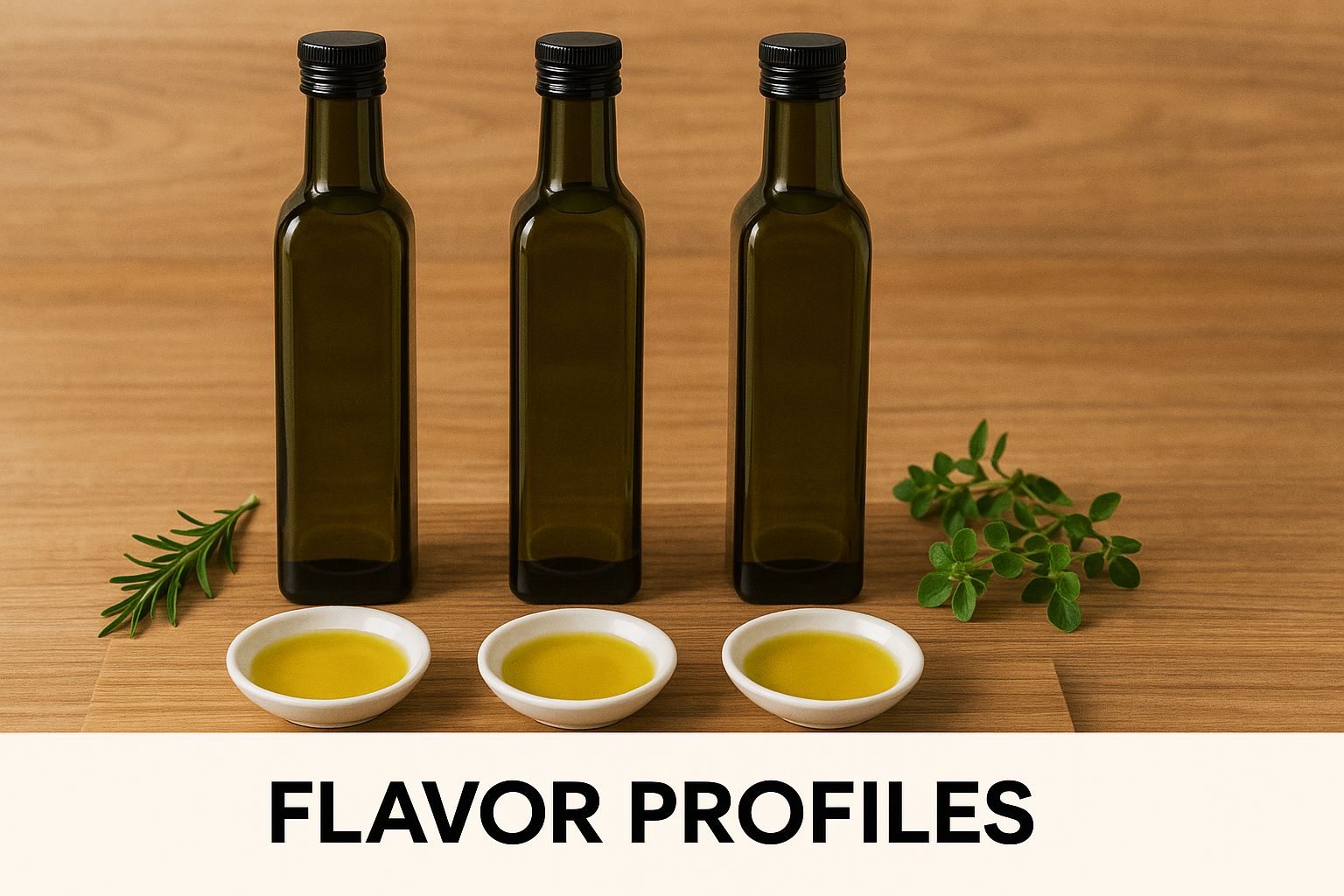
This kind of side-by-side comparison really brings home how an oil's character can transform a dish, and it all starts with picking the right bottle.
For a quick breakdown, here’s a table that compares the most common grades you’ll see and how they stack up for salad dressings.
Olive Oil Grades Explained for Salad Dressings
| Oil Grade | Processing Method | Flavor Profile | Best Use in Salads |
|---|---|---|---|
| Extra Virgin (EVOO) | Mechanical pressing, no heat or chemicals. Low acidity (<0.8%). | Fruity, peppery, grassy, or bitter. Very complex. | The absolute best choice for dressings, dips, and finishing. |
| Virgin | Mechanical pressing, no heat or chemicals. Acidity up to 2.0%. | Milder flavor, may have slight defects. | A good, but not great, choice for dressings. Lacks the "wow" factor. |
| Pure Olive Oil / Olive Oil | A blend of refined olive oil and a small amount of virgin oil. | Very mild, neutral flavor. Lacks complexity. | Not recommended for dressings where flavor matters. Better for general cooking. |
| Light Olive Oil | Refined oil, often filtered for a lighter color. No fewer calories. | Extremely neutral, almost flavorless. | Avoid for dressings. The "light" refers to flavor, not fat or calories. |
Ultimately, for a salad dressing that truly sings, you'll always want to reach for a quality EVOO. The difference in flavor is night and day.
What Really Matters on a Label
So, if you ignore the marketing fluff, what should you actually look for? It's simpler than you think.
The two most crucial pieces of information on any bottle of high-quality EVOO are the harvest date and the country of origin. These tell you far more about the oil's freshness and flavor than any marketing slogan.
Look for a specific harvest date printed on the bottle. Olive oil is a fresh product and, unlike wine, it does not get better with age. You want an oil harvested within the last year, if possible. Also, check for a specific country or, even better, a single estate or region of origin. An oil from a small estate in Tuscany will have a much more distinct and reliable flavor than a generic "Product of Italy" bottle, which is often a blend of oils from several different countries.
The 3 Key Flavors of a Great Olive Oil
To really get what makes an olive oil sing in a salad dressing, you have to taste it on its own. It's a lot like tasting wine—you're looking for character and complexity. When you pour a little oil into a glass, warm it in your hands, and take a sip, you’re searching for three specific things. These are the positive traits that tell you everything you need to know about the oil's quality and how it will play with other ingredients.
Once you learn to spot these flavors, you graduate from just grabbing any oil to consciously picking the right oil. This is how you start to understand, and even predict, how your dressing will turn out.
Fruitiness: The First Impression
The very first thing you'll notice is fruitiness. This is all about the aroma. We're not just talking about the smell of olives; it’s a whole bouquet of scents. Go ahead, close your eyes and give it a good sniff. What does it bring to mind?
- Green & Grassy: Do you get notes of freshly mown lawn, artichoke, or maybe even green tomato leaf? That's the signature of an oil made from young, unripe olives.
- Ripe & Sweet: Or perhaps you smell something softer, like ripe banana, apple, or even a nutty hint of almond. These aromas usually point to an oil made from olives picked a bit later in the season.
This aromatic fruitiness is what will shine through most in a simple vinaigrette. The more aromatic the oil, the more personality it will bring to the table.
A top-notch extra virgin olive oil should always smell vibrant and clean. If you pick up anything that smells stale, musty, or like old crayons, that oil has gone rancid. It's time to toss it.
Bitterness: A Sign of Good Health
Next up is bitterness. Now, I know what you’re thinking—bitter is usually bad, right? Not in olive oil. In fresh, high-quality extra virgin olive oil, bitterness is a badge of honor. It’s a clear sign that the oil is packed with powerful, healthy compounds called polyphenols.
You'll taste this pleasant bitterness along the sides of your tongue. It tells you the oil is not only fresh but also loaded with antioxidants. In fact, a more bitter oil is often a healthier one. The intensity can be subtle, just a hint of green almond, or it can be bold and assertive enough to pair beautifully with strong flavors like arugula, radicchio, or a sharp cheese.
Pungency: That Peppery Kick
The grand finale is pungency. This is that spicy, peppery sensation that hits the back of your throat a second or two after you swallow. It might even make you cough—and believe it or not, olive oil makers consider that a great sign!
That distinctive kick comes from a specific polyphenol called oleocanthal, which has well-documented anti-inflammatory properties. Pungency is the ultimate proof of a fresh, robust, and high-quality oil. It’s this peppery finish that gives a dressing the backbone it needs to stand up to other powerful ingredients like raw garlic, punchy mustard, or a hearty steak salad.
Pairing Olive Oil with Salad Ingredients
Alright, you've learned how to taste olive oil and pick out its flavors. Now for the fun part: putting that knowledge to use in the kitchen. Pairing olive oil with salad ingredients isn't about rigid rules; it's more like an art form, a dance of balance. You're looking for harmony, where the oil makes the food shine without stealing the show.
Think of it like this: you wouldn't play heavy metal at a quiet dinner party, right? You'd choose something softer. It's the same idea with olive oil for salad dressing—you match the intensity of the oil to the intensity of your salad.
This is something that comes naturally in places where olive oil is a way of life. In countries like Spain and Greece, where people consume around 11.2 and 11.1 kilograms per person annually, this kind of intuitive pairing is just part of cooking. It’s not just another bottle in the pantry; it's a fundamental flavor, used generously to finish dishes and dress salads. You can see more on these global olive oil consumption habits and how central it is to their cuisine.
Pairing with Delicate and Mild Oils
Delicate EVOOs are your secret weapon for ingredients with subtle flavors that could easily be bulldozed. These oils are the quiet ones in the room, whispering soft notes of butter, ripe apple, or almond.
Reach for a delicate oil when you want to gently lift your ingredients. It’s the perfect choice for a dressing that lightly coats tender greens without becoming the main event.
Best for:
- Lettuces: Butter lettuce, romaine, and spring mix.
- Vegetables: Cucumber, mild tomatoes, and steamed asparagus.
- Proteins: Poached chicken, white fish, or fresh mozzarella.
- Fruits: Pears, apples, and mild berries.
For a simple butter lettuce salad with thinly sliced radishes, a delicate olive oil vinaigrette with a touch of white wine vinegar is absolute perfection.
Pairing with Medium and Fruity Oils
Think of medium-bodied, fruity EVOOs as the crowd-pleasers of the olive oil world. They have a more noticeable personality—often with notes of green tomato, fresh-cut grass, or artichoke—and a pleasant, slightly peppery finish.
These oils have enough character to make their presence known but are balanced enough not to be overbearing. That makes them incredibly versatile for all sorts of salads.
A medium-fruity EVOO is the quintessential choice for a classic Greek salad. Its bright notes cut through the richness of the feta cheese and complement the sharp flavors of Kalamata olives and red onion.
This is your workhorse oil for everyday dressings. Its perfect balance of fruitiness and light pepper makes it a reliable partner for almost anything you can dream up.
Pairing with Robust and Peppery Oils
When your salad features big, bold flavors, you need an oil that can step into the ring and match that intensity. Robust EVOOs are assertive, with a pronounced bitterness and a powerful, peppery kick that you feel in the back of your throat.
Don't be intimidated by their strength; these oils are made for hearty ingredients. They slice through richness, stand up to bitterness, and add a thrilling layer of complexity to the dish.
Use a robust oil for dressings on salads with:
- Greens: Arugula, radicchio, kale, or endive.
- Meats: Grilled steak, lamb, or cured meats like prosciutto.
- Cheeses: Sharp cheddar, Parmesan, or blue cheese.
- Vegetables: Roasted Brussels sprouts, bitter greens, or raw garlic.
Picture a salad of peppery arugula, grilled steak, and shaved Parmesan. A delicate oil would be completely lost. But a robust, pungent oil? It will wrestle all those powerful flavors into a cohesive, unforgettable meal.
Three Vinaigrette Recipes to Make Your Own
Alright, you've got the theory down. Now it's time to put that knowledge to work and see—and taste—how different olive oils completely change a dressing.
These three recipes are your new playground. Think of them less as strict instructions and more as starting points. Each one is built around a specific olive oil profile, giving you a delicious, hands-on feel for how the oil’s character truly shapes the final result.
Before we dive in, let's talk about the magic behind every great vinaigrette: emulsification. It's just a fancy word for getting oil and vinegar, two liquids that famously don't get along, to hold hands and create something beautiful. When you whisk or shake them like crazy, you're breaking the oil into microscopic droplets and suspending them in the vinegar. That's what turns two separate ingredients into a single, creamy dressing that lovingly coats every leaf of your salad.
A great rule of thumb is the classic 3-to-1 ratio: three parts oil to one part acid. But honestly? The best home cooks I know treat this as a suggestion, not a commandment. If you've got a very mild, buttery oil or a particularly punchy vinegar, you'll want to tweak those proportions. Trust your taste buds.
Classic Lemon and Herb Vinaigrette
This is that bright, can't-go-wrong dressing that belongs in everyone's back pocket. It’s designed to let a beautiful, fruity EVOO take center stage, where its grassy notes can sing alongside fresh lemon and herbs.
Ingredients:
- ¾ cup medium, fruity Extra Virgin Olive Oil
- ¼ cup fresh lemon juice
- 1 teaspoon Dijon mustard (your secret weapon for a stable emulsion)
- 1 small garlic clove, minced
- 2 tablespoons finely chopped fresh herbs (parsley, chives, and dill are fantastic)
- Salt and freshly ground black pepper to taste
Grab a bowl and whisk together the lemon juice, mustard, garlic, and herbs. Now, start drizzling in the olive oil very slowly while whisking continuously. You’ll see it thicken and come together. Once it's creamy, season it generously with salt and pepper.
Creamy Balsamic Vinaigrette
For this recipe, we're reaching for a delicate, almost buttery EVOO. Why? Because we don't want to bully the complex, sweet notes of a good balsamic vinegar. The goal is a smooth, rich dressing that feels luxurious, not heavy—perfect for salads loaded with fruit, nuts, or cheese.
Ingredients:
- ⅔ cup delicate, buttery Extra Virgin Olive Oil
- ⅓ cup good-quality balsamic vinegar
- 1 tablespoon honey or maple syrup
- ½ teaspoon salt
- ¼ teaspoon black pepper
This one is even easier. Just toss all the ingredients into a jar with a tight-fitting lid. Seal it up and shake it vigorously for about 30 seconds. You're done when it looks creamy and totally blended.
Pro Tip: Want an even creamier, dairy-free texture? Add a tablespoon of tahini. It’s a fantastic emulsifier and brings a subtle, nutty flavor that works surprisingly well with balsamic.
Bold and Spicy Red Wine Vinaigrette
Now for something with a bit more attitude. This dressing is practically begging for a robust, peppery olive oil for salad dressing. The oil's assertive, spicy kick is exactly what's needed to stand up to sharp red wine vinegar and a coarse-grain mustard. This is not a vinaigrette that whispers; it shouts.
Ingredients:
- ¾ cup robust, peppery Extra Virgin Olive Oil
- ¼ cup red wine vinegar
- 1 tablespoon coarse-grain mustard
- 1 shallot, finely minced
- A pinch of red pepper flakes (optional, but encouraged!)
- Salt and black pepper to taste
In a bowl, whisk the vinegar, mustard, shallot, and red pepper flakes together. Then, just like with the lemon vinaigrette, slowly stream in that robust olive oil while you whisk. You want it nice and thick. This is the dressing you pull out for hearty salads with greens like arugula, or even to drizzle over a grilled steak.
Common Mistakes to Avoid With Salad Dressings
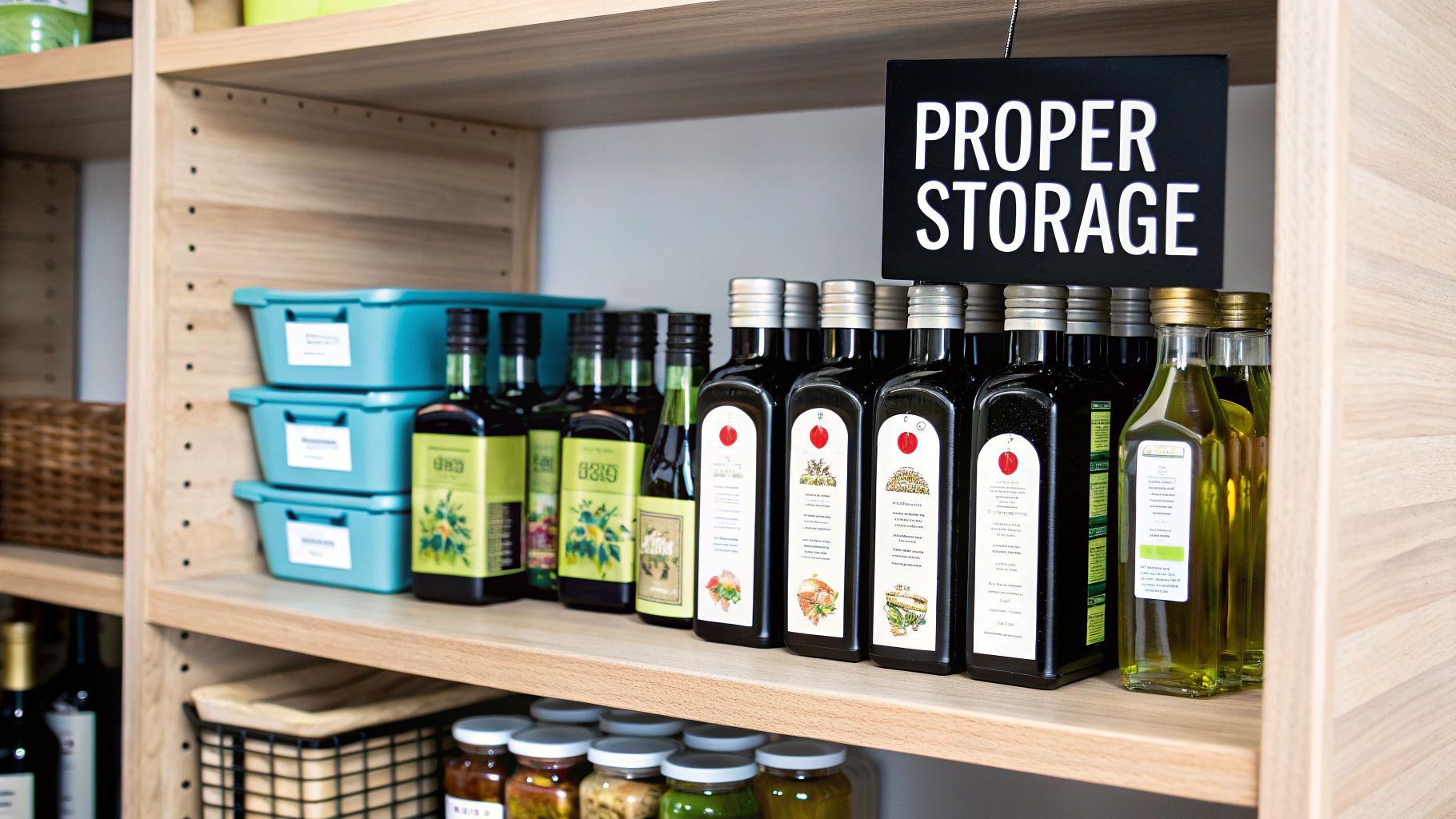
Making a beautiful, perfectly balanced vinaigrette from scratch feels like a real kitchen victory. But it's surprisingly easy to get it wrong, and a few common missteps can turn a promising dressing into a disaster. The single most frequent mistake I see? Starting with a low-quality or expired olive oil for salad dressing.
Remember, in a simple vinaigrette, the oil isn't just an ingredient; it's the main event. If your oil has any off-flavors, there's simply nowhere for them to hide.
Olive oil is a fresh-pressed fruit juice, and unlike a fine wine, it does not get better with age. Using an oil that's past its prime will leave your dressing tasting flat and lifeless. Worse yet is using an oil that has gone rancid. A rancid oil doesn't just taste stale—it can taste waxy like crayons, musty like old nuts, or even like putty.
The quickest way to check for rancidity is with a simple sniff test. Pour a little oil onto a spoon and take a whiff. If you don't smell something fresh, green, and vibrant, that oil has no business being in your salad.
How to Prevent Common Dressing Disasters
The good news is that these classic blunders are easy to sidestep. With a little attention to your ingredients and how you store them, you can nail your dressings every single time.
Mistake 1: Improper Storage
- The Problem: We've all done it—kept the olive oil right next to the stove for convenience. But heat and light are olive oil's mortal enemies. This constant exposure breaks down the oil's delicate flavors and health-promoting compounds, speeding up the process of it going rancid.
- The Fix: Treat your olive oil well. Store it in a cool, dark place, like a pantry or a cupboard away from the oven. The dark glass bottle or tin it came in is its best defense against light.
Mistake 2: Overpowering Delicate Greens
- The Problem: Dousing a tender pile of butter lettuce or spring mix with a super robust, peppery olive oil is a classic case of a flavor mismatch. The aggressive notes of the oil will completely steamroll the gentle, nuanced flavor of the greens.
- The Fix: Think about matching intensities. Pair delicate oils with delicate greens. Save those big, bold, pungent oils for salads with heartier, more assertive ingredients that can stand up to them, like kale, radicchio, or arugula.
Your Olive Oil Questions, Answered
Venturing into the world of high-quality olive oil always sparks a few questions. Let's clear up some of the most common ones so you can choose and use your oil with total confidence.
Can I Just Use Regular Olive Oil for Salad Dressing?
You certainly can, but you'll be missing out on all the flavor. Extra Virgin Olive Oil (EVOO) is celebrated for its fresh, vibrant taste—the very soul of a great vinaigrette. "Regular" or "light" olive oils, on the other hand, are refined. This process strips away all that beautiful character, leaving you with a neutral oil that just adds fat without any personality.
It’s like making a cocktail. You could use a bottom-shelf spirit, but a premium one creates an entirely different, more memorable experience. For dressings, EVOO is that top-shelf ingredient.
My Olive Oil Tastes Bitter. Has It Gone Bad?
Quite the opposite! That bitterness is actually one of the best indicators of a high-quality, fresh EVOO. It comes from beneficial compounds called polyphenols—the powerful antioxidants that make olive oil so incredibly good for you.
A pleasant bitterness, often followed by a peppery tickle in the back of your throat, is a sure sign you've got the real deal. The taste you really want to avoid is anything stale, waxy (like crayons), or reminiscent of old nuts. That's a sign the oil has gone rancid.
What's the Best Way to Store My Olive Oil?
To keep your olive oil's gorgeous flavors intact, you need to protect it from its three biggest enemies: heat, light, and air.
- Store It Cool: Find a spot in a dark, cool pantry or cupboard. The worst place for it is next to your stove or on a sunny windowsill.
- Keep It Dark: Good olive oil almost always comes in dark green glass or an opaque tin for a reason—it blocks out damaging light. Steer clear of clear glass bottles.
- Seal It Tight: After every use, make sure that cap is screwed on tight. Oxygen is the enemy of freshness, and a tight seal keeps it out.
Discover the nuances of exceptional olive oil with Learn Olive Oil. We provide expert guides, tasting notes, and pairing ideas to help you select and enjoy the world's finest oils. Elevate your culinary skills and explore our resources at learnoliveoil.com.

 Learn Olive Oil
Leave a comment