It can be a little jarring to pull a bottle of olive oil from your pantry and find it's turned cloudy. But don't worry—this is almost always a completely natural process, not a sign that your oil has gone bad. The most common reason why your olive oil is cloudy is simply the cold.
Think about what happens to other natural products. Honey crystallizes, and coconut oil turns solid. Your olive oil is doing something very similar. It's just a physical reaction to temperature, not a sign of spoilage.
What to Know When Your Olive Oil Is Cloudy
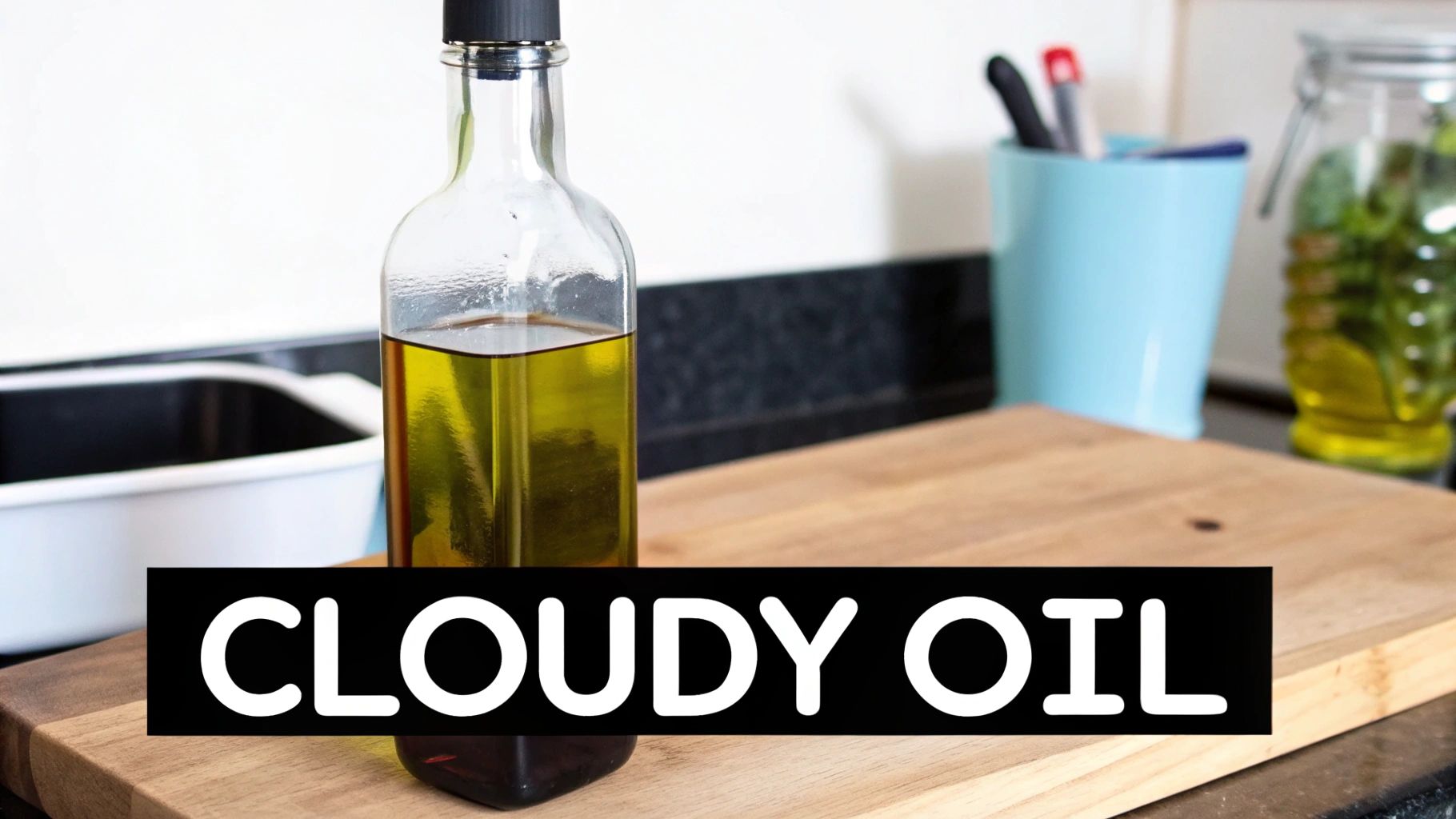
When olive oil gets chilly—maybe in a cool pantry, during shipping in winter, or even in an aggressively air-conditioned kitchen—you might see it turn hazy or notice little waxy, white bits floating inside. This is perfectly normal and totally reversible.
High-quality extra virgin olive oil is packed with natural compounds, including healthy fats and waxes from the skin of the olive. Just like water freezes at a specific temperature, these different fats and waxes start to solidify at their own unique temperature points. As the oil cools, some of these elements begin to harden, creating that cloudy appearance. In fact, this is often a good sign, showing you have a natural, authentic oil, especially if it's unfiltered. You can read more about how these natural elements react to cold for a deeper dive.
The most important thing to remember is this: Cloudiness from cold does not affect the oil's quality, taste, or nutritional value. Just let it sit at room temperature for a bit, and it will return to its beautiful, clear state.
To make it even easier to figure out what's going on with your oil, take a look at this quick guide.
A Quick Guide to Your Olive Oil's Appearance
Use this visual guide to understand what different signs in your olive oil indicate.
| Appearance | Most Common Cause | Is It Safe to Use? |
|---|---|---|
| Hazy or cloudy throughout | The oil has been stored in a cool place (e.g., pantry, cold shipping). | Yes, this is a normal reaction to cold. |
| White, waxy sediment at the bottom | Natural waxes and fats have solidified and settled. | Yes, let it return to room temperature to dissolve. |
| Green, murky, and opaque | This is typical for unfiltered oils like "Olio Nuovo." | Yes, it indicates a fresh, robustly flavored oil. |
| Slimy texture or off-smell | This may indicate spoilage or rancidity. | No, trust your nose; if it smells bad, discard it. |
In almost every case, a little cloudiness is just your olive oil's way of telling you it's been a bit cold. However, always trust your senses. If the oil smells off—like old crayons or stale nuts—it's likely rancid and should be thrown out, regardless of how it looks.
The Science Behind a Cloudy Bottle of Oil
Ever noticed your natural honey crystallize over time or in the cold? Your olive oil is doing something very similar. It's a natural reaction, a feature of a high-quality, unprocessed product—not a flaw.
This all comes down to what olive oil is made of. Unlike water, which is just one type of molecule (H2O) and freezes solid at a single temperature, olive oil is a complex mix of different natural fats known as triglycerides. The key thing to remember is that each of these fats has its own unique freezing point.
Think of it this way: as the temperature drops, some of the fats in the oil start to solidify while others remain liquid. This staggered freezing process is what creates the hazy look, white specks, or waxy sediment you see in a cold bottle. It’s not spoiled; it's just science in action.
What Is Happening Inside the Bottle
The journey from a clear, liquid gold to a cloudy, thick oil is a gradual one. This happens because the diverse blend of molecules doesn't solidify all at once.
The triglycerides in olive oil have freezing points that can range anywhere from 0°C to 23°C (32°F to 73°F). This wide range explains why you might see cloudiness even when the oil is just sitting in a cool pantry, well above the freezing point of water. You can dive deeper into this natural solidification process to learn more.
This infographic breaks down the main reasons your oil might look a bit foggy.
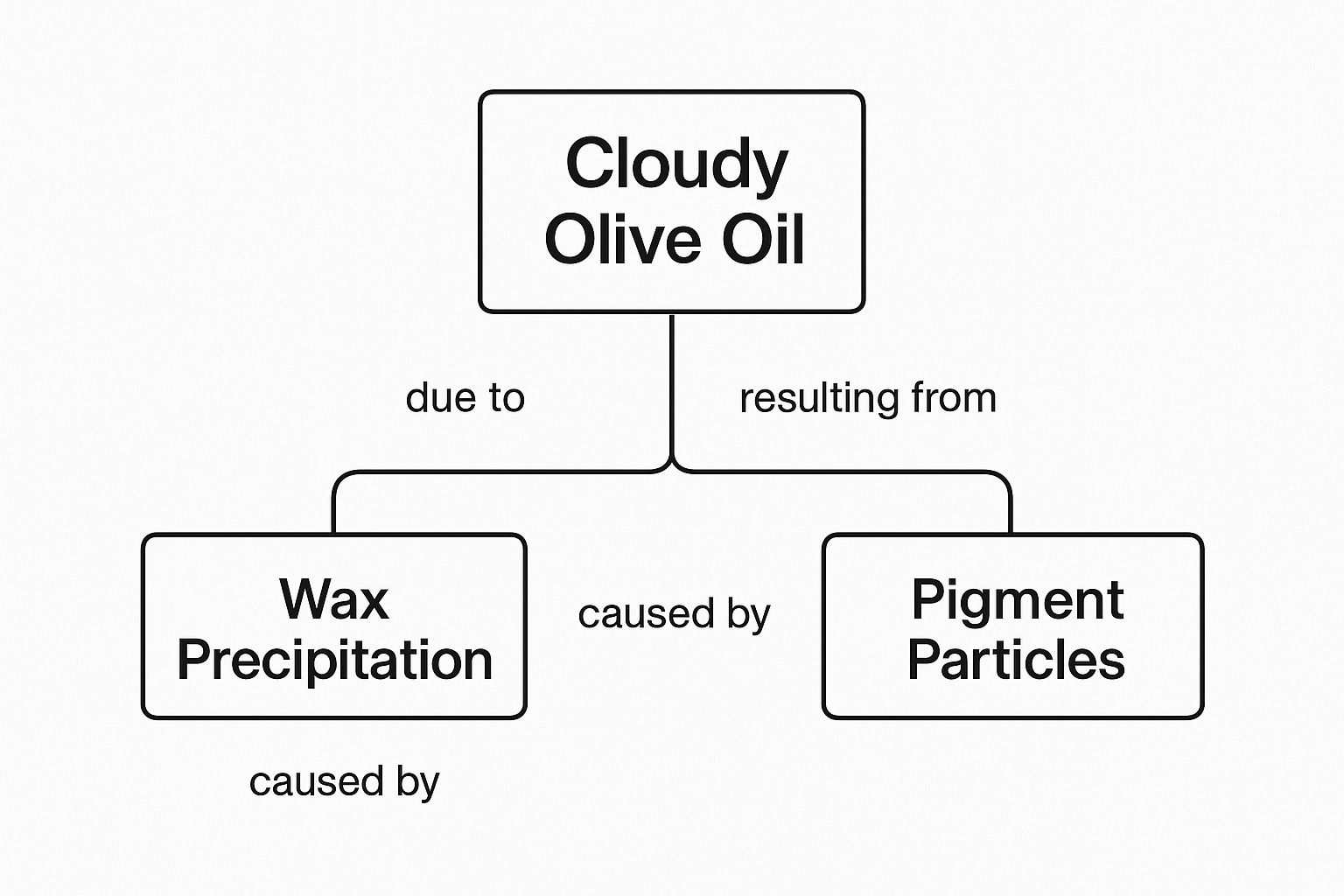
As you can see, temperature is the most common culprit. However, tiny particles from the olive fruit itself can also play a role, especially in unfiltered oils.
Ultimately, a cloudy appearance is just the physical state of the oil changing with the temperature. The components responsible for this visual shift are perfectly natural:
- Solidifying Triglycerides: These are the main fats in olive oil. As they get cool, they begin to harden at different temperatures, creating that hazy effect.
- Natural Waxes: The skin of an olive contains natural waxes. When the oil is chilled, these waxes can separate and form small, white, waxy-looking particles.
- Sediment: With unfiltered oils, you're getting tiny bits of the actual olive fruit suspended in the oil. This contributes to a natural cloudiness that many people prize for its robust flavor.
Differentiating Harmless Cloudiness from Spoilage

This really is the big question, isn't it? When you see a cloudy bottle, your first thought is probably, "Can I still eat this?" I get this question all the time, and the answer is almost always a confident yes. Cloudiness caused by the cold is just a physical reaction, but it’s crucial to know how that differs from actual spoilage.
Luckily, there’s a simple, foolproof test you can do right in your kitchen. Just take the cloudy bottle of olive oil and let it sit on your counter at room temperature for a couple of hours.
If the cloudiness vanishes and the oil becomes clear again, you have your answer. The oil was just chilly! It’s perfectly safe and ready to use. Those solidified natural fats and waxes have simply melted back into the liquid.
Think of it like butter melting on the counter—it's a reversible change. Spoilage, on the other hand, is a permanent chemical change you can't undo.
How to Spot Genuine Spoilage
So, what if warming the oil doesn't clear it up, or you just have a gut feeling something’s off? It's time to trust your senses. Your nose and taste buds are surprisingly accurate tools for detecting rancid oil, which is the most common way olive oil goes bad.
Here are the tell-tale signs that your olive oil has truly spoiled:
- An Off Smell: Fresh, quality olive oil should smell green, fruity, or peppery. Rancid oil has a stale, unpleasant odor. The classic comparison is that it smells like old crayons, stale walnuts, or even putty. If you get that scent, it's a dead giveaway.
- A Fermented Scent: If your oil smells sour or a bit like vinegar, that’s a bad sign. It means fermentation may have occurred, which is a definite form of spoilage.
- An Unpleasant Taste: A small taste can tell you a lot. A good oil might have a pleasant bitterness or a peppery kick at the back of your throat. Rancid oil just tastes greasy and fatty, with none of that fresh character.
Ultimately, if your oil clears up after warming and smells fresh, you're in the clear. But if it reminds you of an old box of crayons, do yourself a favor: toss it and treat yourself to a fresh bottle.
How Filtering Affects Your Oil's Clarity
While a chilly pantry is a common culprit for cloudy olive oil, sometimes that haze has nothing to do with the cold. In fact, for some of the best high-quality olive oils, a little bit of cloudiness is perfectly normal—it’s actually a sign of an authentic, rustic-style product.
This all comes down to a simple choice the producer makes after pressing the olives: to filter or not to filter.
Many food lovers and olive oil connoisseurs specifically look for unfiltered olive oil. You might see it sold as Olio Nuovo (which just means "new oil") or labeled as "unfiltered." These oils are bottled right after pressing and still contain tiny, microscopic bits of the olive fruit itself. These flavorful solids stay suspended in the oil, giving it a natural, permanent haze that won't go away even when it's warm.
That cloudiness is precisely why so many people adore it. Those little particles pack a punch, creating a more robust, peppery, and intensely fruity flavor.
Filtered vs. Unfiltered: A Quick Comparison
Most of the olive oil you grab at the supermarket, on the other hand, has been filtered. This extra step removes all that fruit sediment, leaving behind the crystal-clear, golden liquid we’re all used to. Producers filter their oil for a few main reasons:
- Appearance: It creates that brilliant, clear look that many shoppers have come to expect as a sign of quality.
- Shelf Life: Taking out the olive solids can help the oil stay fresh a bit longer, as those particles can cause it to spoil faster over time.
- Flavor: The taste of filtered oil is often much milder and more mellow than its bold, unfiltered cousin.
So, if your oil stays cloudy even at room temperature, it’s not a sign of a problem—it’s a feature, not a bug! It simply means you've got an unfiltered oil, prized for its raw, potent character and packed with the full flavor of the olive grove. If you find one, celebrate it. You’re holding a delicious, artisanal product.
Storing Olive Oil for Lasting Freshness and Quality
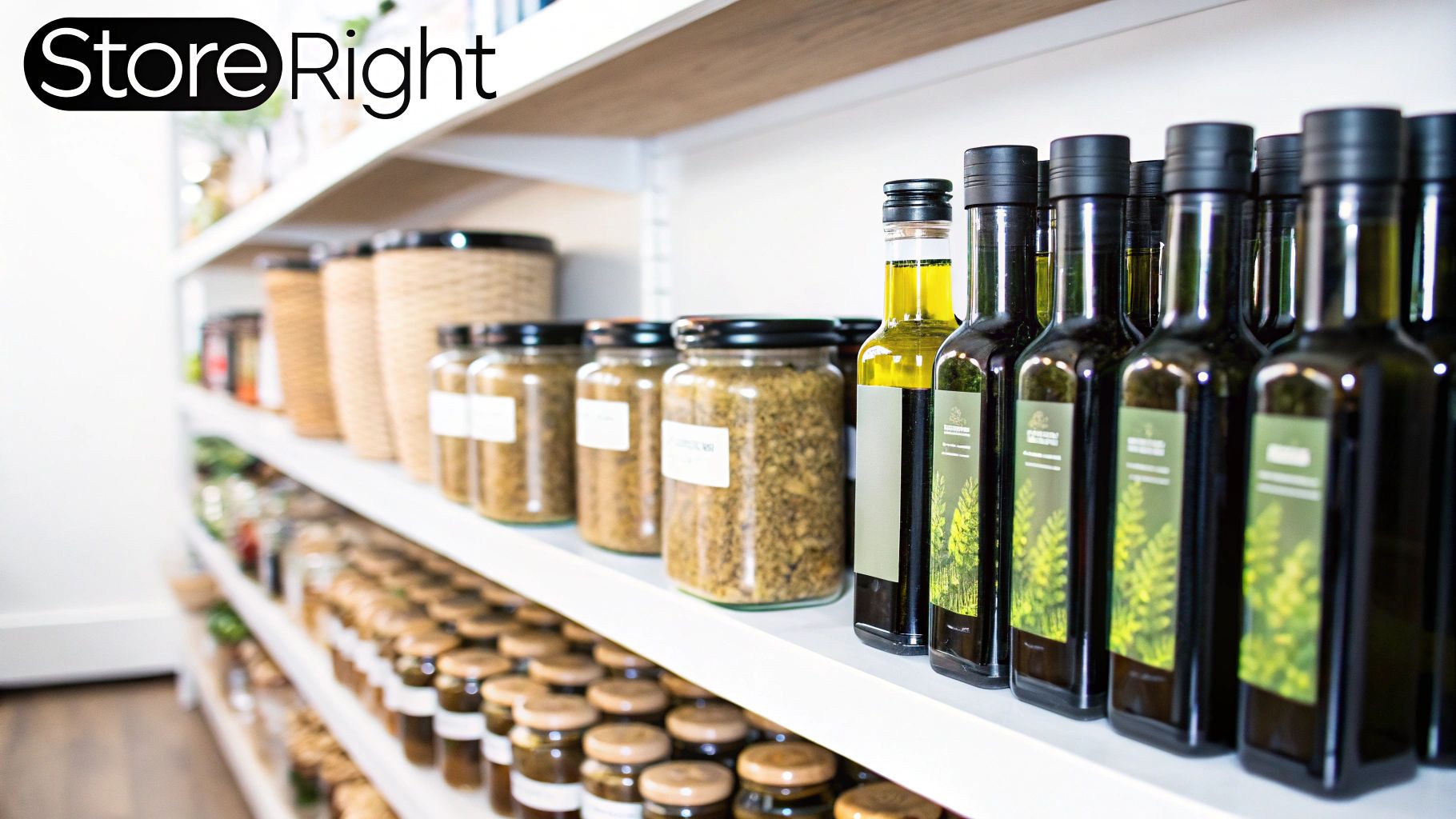
So, now you know that cloudy olive oil isn't necessarily a bad thing. Let's shift gears and talk about how to protect that beautiful bottle you just bought. Proper storage is genuinely your best defense for preserving the fresh flavor, vibrant color, and all the health benefits that make good olive oil worth it.
Think of it this way: your olive oil has three natural enemies—light, heat, and air. Each one of these can trigger chemical reactions that break down the oil and eventually lead to rancidity. High-quality olive oil is a bit like a fine wine; you wouldn't store it on a sunny windowsill, and your oil deserves the same care.
A cool, dark pantry or a kitchen cabinet is your oil’s best friend. You're looking for a spot with a stable temperature, far away from direct sunlight and any heat sources.
The Best Practices for Olive Oil Storage
Keeping your olive oil in peak condition really just comes down to a few simple habits. I see this all the time: people keep their oil right next to the stove for convenience. It makes sense, but the constant exposure to heat will absolutely ruin its delicate flavors faster than anything else.
To keep your oil tasting fresh from the first pour to the last, just remember these key tips:
- Find a Cool, Dark Home: A pantry or cabinet is perfect. Keep it away from the stove and any sunny windows. There’s a reason premium oils come in dark glass bottles or tins—it’s to block out light, a major catalyst for oxidation.
- Seal It Tight: Air is the second enemy. Always screw the cap back on tightly after you're done. This simple step minimizes oxygen exposure and keeps the oil from going stale.
- Avoid the Refrigerator: While a cold fridge will cause that harmless clouding we talked about, it’s not the best spot for long-term storage. The constant cycle of chilling and warming every time you use it can create condensation inside the bottle. This can stress the oil and might actually degrade its quality faster than just keeping it in a cool pantry.
The right temperature makes all the difference. Research has shown that extra virgin olive oil keeps its best quality when stored at a stable 15°C (59°F). This significantly outperforms oil stored at a warmer room temperature of 25°C (77°F). You can read more olive oil storage insights from UC Davis.
By treating your olive oil with just a little bit of care, you’ll make sure it stays delicious and healthy for as long as possible.
Common Questions About Olive Oil Quality
To wrap things up, let's go through some of the most common questions I hear when people notice their olive oil looks a little different. Think of this as your quick-reference guide for handling these situations with confidence, reinforcing what we've already covered about what makes an oil truly great.
Once you get a handle on these specific scenarios, you'll be much better at judging your oil's quality and appreciating its natural state. Let's tackle these concerns head-on.
My Expensive EVOO Is Cloudy—Did I Buy a Bad Bottle?
Probably not! In fact, with a high-quality extra virgin olive oil, a little cloudiness can be a very good sign, especially if you bought an unfiltered oil. It often means that the flavorful, natural fruit particles and waxes from the olive itself are still present, not stripped away during processing.
If your oil turned cloudy after a trip to the pantry or a cold snap, it's almost certainly just the natural fats solidifying. The real sign of a bad bottle is a rancid smell—think old crayons or stale nuts—not cloudiness.
How Long Does It Take for Cloudy Olive Oil to Clear Up?
This really just depends on the room temperature. In most kitchens, leaving the bottle on the counter for 2 to 6 hours will do the trick and bring it back to its clear, liquid state.
You can give the bottle a gentle swirl now and then to help things along, but there’s no need to rush it with heat. And please, never microwave your olive oil! The intense, direct heat will absolutely ruin its delicate flavors and destroy the healthy compounds that make it so special.
Is the Fridge Test a Good Way to Check for Pure Olive Oil?
This is one of the biggest and most stubborn myths in the olive oil world. The so-called "fridge test" claims that only pure extra virgin olive oil will solidify when chilled, but that’s just not true.
The reality is, different olive varieties have unique fatty acid profiles, which means they all have their own freezing points. A top-tier EVOO from one region might stay liquid in the fridge, while a lower-quality blend might turn solid.
A much better way to judge an oil's quality is to trust your senses. A good oil should smell and taste fresh, with fruity, grassy, or peppery notes. If you smell anything stale or off-putting, that's your red flag.
At Learn Olive Oil, we believe that understanding the nuances of olive oil makes every meal better. From deciphering labels to mastering tasting notes, we provide the expert insights you need. Discover the World of Premium Olive Oil and start your journey to becoming a true connoisseur.

 Learn Olive Oil
Leave a comment