Olive oil, the heart of the Mediterranean diet, is a staple in kitchens worldwide. Yet, for all its popularity, it's surrounded by a surprising amount of misinformation. These persistent olive oil myths can lead even savvy consumers astray, causing them to miss out on the incredible flavors and health benefits of high-quality extra virgin olive oil (EVOO). From confusion about cooking at high temperatures to judging quality based on color, these widespread misconceptions prevent us from truly appreciating this liquid gold.
This guide is designed to cut through the confusion with evidence-based insights. We will systematically debunk the seven most common myths, providing you with the clarity needed to choose, store, and use olive oil with confidence. By separating fact from fiction, you'll not only enhance the taste of your meals but also maximize the wellness advantages that authentic EVOO offers. Prepare to transform your understanding and elevate every dish you create.
1. Myth #1: Extra Virgin Olive Oil Cannot Be Used for Cooking at High Temperatures
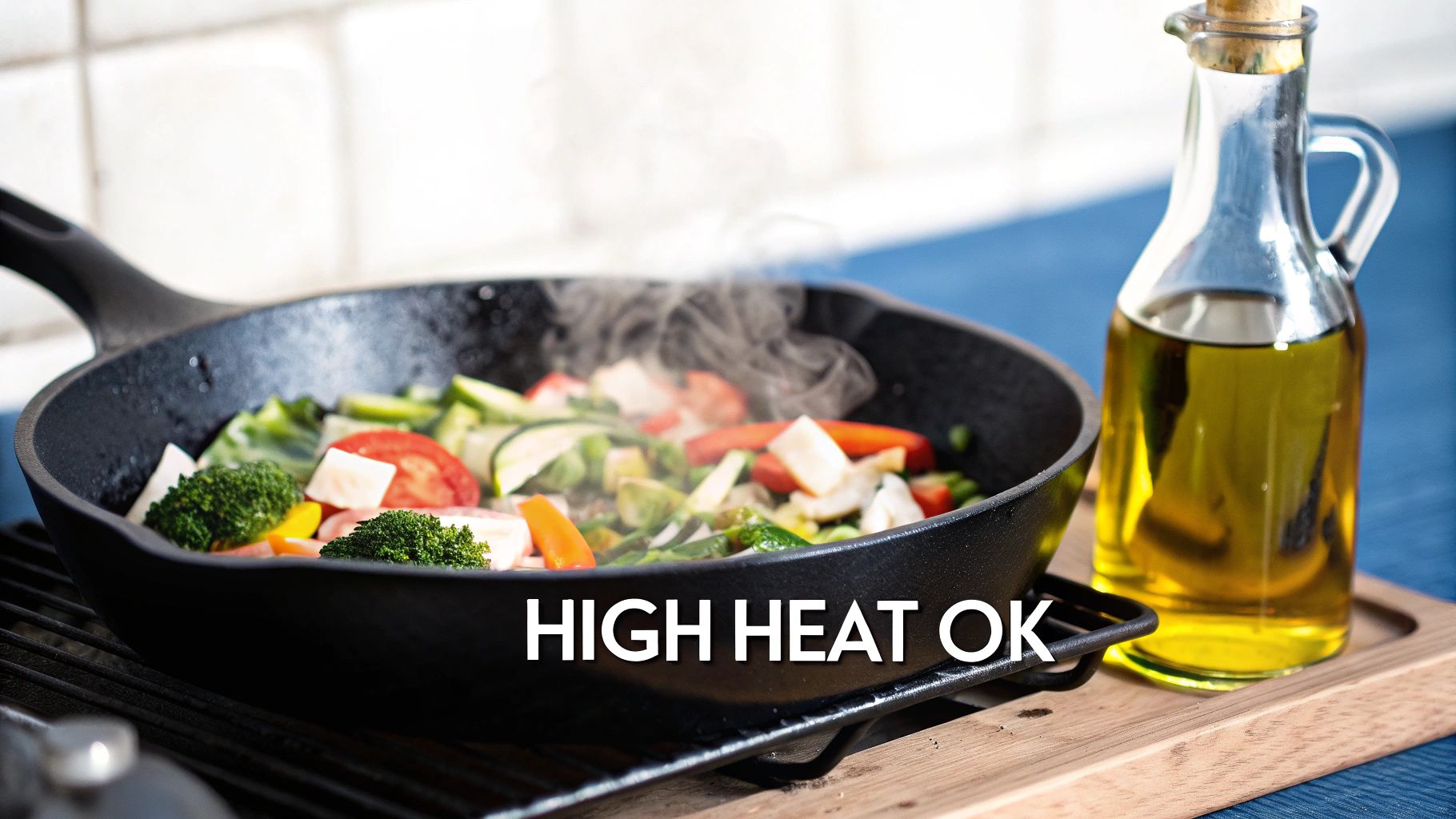
This is perhaps the most pervasive of all olive oil myths: the idea that extra virgin olive oil (EVOO) has a low smoke point, making it dangerous for anything beyond a light drizzle. The fear is that heating it will destroy its nutrients and create harmful compounds. However, this common belief doesn't align with scientific evidence or centuries of culinary tradition.
In reality, high-quality EVOO is surprisingly stable under heat. Its smoke point typically ranges from 375-410°F (190-210°C), which is well within the safe zone for most home cooking methods, including sautéing, roasting, and even shallow frying.
Why EVOO is More Stable Than You Think
The stability of a cooking oil isn't just about its smoke point. It's determined by its chemical structure and antioxidant content. EVOO excels in both areas. It is rich in monounsaturated fats, which are inherently more resistant to heat-induced damage (oxidation) than the polyunsaturated fats found in many common seed oils like sunflower or corn oil.
Furthermore, true EVOO is packed with powerful antioxidants called polyphenols. These compounds not only contribute to its peppery flavor and health benefits but also act as natural protectors, shielding the oil from breaking down when heated. This composition makes EVOO one of the most stable cooking oils available.
Key Insight: Studies have shown that even after hours of deep frying, EVOO retains a significant portion of its beneficial properties and produces fewer harmful compounds compared to other vegetable oils.
Practical Tips for Cooking with EVOO
Cultures across the Mediterranean have been cooking with olive oil for millennia. You can confidently incorporate it into your high-heat cooking with these tips:
- Sauté and Stir-fry: Use a quality EVOO for sautéing vegetables, fish, or chicken. Its robust flavor complements a wide range of ingredients.
- Roast with Confidence: Drizzle EVOO over potatoes, broccoli, or Brussels sprouts before roasting at temperatures up to 400°F. It helps create a delicious, crispy exterior.
- Shallow-Fry Smarter: Traditional Spanish and Italian recipes often call for shallow-frying in olive oil. It’s perfect for dishes like fried eggplant or crispy calamari. Just monitor the heat to prevent it from smoking.
- Save the Best for Last: While you can cook with high-end, peppery EVOOs, it’s often more cost-effective to use a good-quality, everyday EVOO for cooking and reserve your premium, "finishing" oils for drizzling over salads, soups, and bread.
2. Myth #2: Darker Green Olive Oil is Always Higher Quality
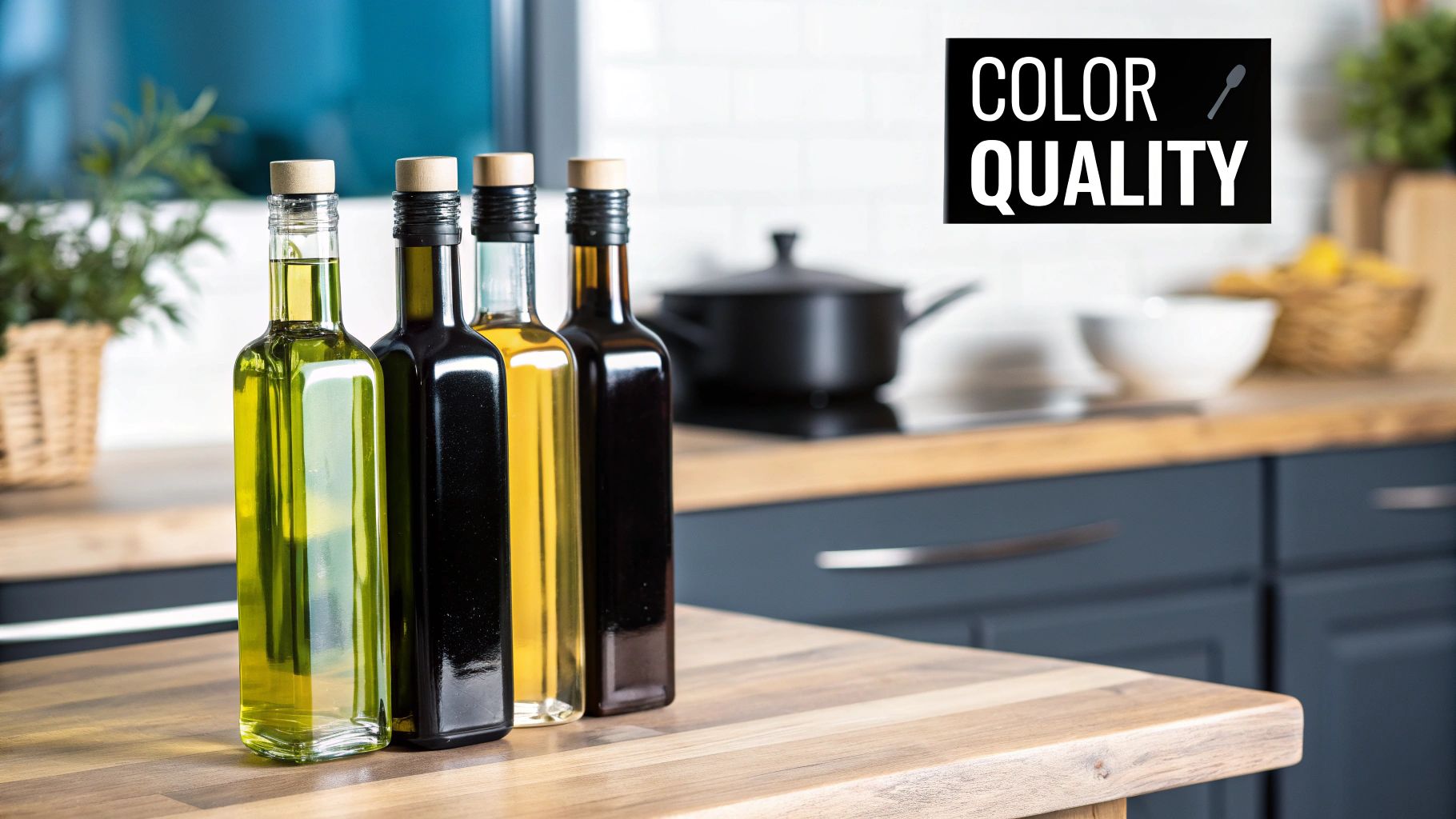
Many shoppers instinctively reach for the deepest green bottle of olive oil, believing its rich color signals superior quality and a higher concentration of healthy compounds. This is one of the most visual olive oil myths, where we let our eyes trick our taste buds. While a vibrant green can be appealing, color is not a reliable indicator of an oil's quality, freshness, or flavor profile.
The truth is that the color of olive oil can range from a pale, straw-like gold to a deep, emerald green, and this variation is influenced by several factors that have little to do with whether the oil is "good" or "bad."
Why Color Isn't a Measure of Quality
The hue of an olive oil is determined primarily by the amount of chlorophyll and carotenoids present in the olives when they are pressed. A deep green color simply means the olives were harvested earlier in the season when chlorophyll levels were high. A golden-yellow color indicates the olives were harvested later, allowing the chlorophyll to break down and reveal the yellow carotenoids.
Different olive varietals also produce different colors. For example, many Tuscan oils are famously green because they are made from early-harvest Frantoio olives. In contrast, a high-quality Spanish Picual or Greek Koroneiki oil might be distinctly golden, yet still offer exceptional flavor and health benefits. Filtration also plays a role; unfiltered oils may appear greener and cloudier due to suspended olive particles.
Key Insight: Professional olive oil tasters use blue-tinted glasses to evaluate oils. This practice deliberately obscures the color, forcing them to rely solely on aroma and taste, which are the true indicators of quality.
Practical Tips for Judging Olive Oil Beyond Color
Instead of relying on color, use more accurate methods to select a great bottle of EVOO. The best approach is to engage your other senses and look for key information on the label.
- Trust Your Nose and Palate: The most reliable indicators of quality are the oil's aroma and taste. A high-quality EVOO should smell fresh and fruity (like green grass, tomato leaf, or apple) and have a balanced flavor profile with notes of fruitiness, bitterness, and a peppery finish in the throat.
- Check the Harvest Date: Look for a harvest or press date on the bottle. Freshness is crucial for quality, so choose an oil from the most recent harvest available. Avoid bottles that only list a "best by" date.
- Don't Fear the Gold: Don't dismiss a golden-hued oil. Some of the world's most awarded and flavorful olive oils are a beautiful shade of yellow. Be open to trying different varietals from different regions.
- Store It Properly: Regardless of its initial color, all olive oil should be stored in dark glass or an opaque tin to protect it from light, which causes the chlorophyll to degrade and the oil to spoil faster.
3. Myth #3: Light Olive Oil is Lower in Calories and Fat
This marketing-driven myth preys on the health-conscious consumer, suggesting that "light" olive oil is a diet-friendly alternative. Many people purchase it believing they are choosing a product with fewer calories or less fat. In reality, the term "light" has nothing to do with its nutritional content and everything to do with its flavor profile and color. This is one of the most misleading olive oil myths on the grocery store shelf.
All olive oils, from extra virgin to refined, contain the same amount of fat and calories. A tablespoon of any olive oil has approximately 120 calories and 14 grams of fat. The "light" descriptor refers to the oil's extremely mild, almost neutral taste and pale, light hue, which is a direct result of heavy industrial refining.
Why "Light" Means Highly Processed
"Light" olive oil is a highly refined product. It starts as low-quality olive oil that is treated with chemicals, high heat, and filtration to remove all impurities, color, and flavor. This process strips away the beneficial polyphenols and antioxidants that give extra virgin olive oil its health benefits and robust taste. A tiny amount of EVOO is sometimes blended back in to meet labeling requirements.
This type of oil is popular in commercial food production and with home cooks who need a neutral-tasting oil with a high smoke point for baking or frying. However, it lacks the very compounds that make olive oil a celebrated superfood.
Key Insight: Choosing "light" olive oil for health reasons is counterproductive. You get the same calories as EVOO but without the powerful antioxidants, anti-inflammatory properties, and rich flavor that define high-quality olive oil.
Practical Tips for Understanding Olive Oil Labels
Navigating the olive oil aisle can be confusing. Use these tips to make informed choices and avoid falling for marketing gimmicks:
- Read the Fine Print: Look past the "light" or "extra light" marketing on the front. The label will often clarify that it refers to flavor, not caloric content.
- Choose for Purpose: If you need a completely neutral oil for high-heat cooking or baking where you don't want any olive flavor, "light" olive oil is a functional choice. However, other neutral oils like avocado or grapeseed oil can serve the same purpose.
- Prioritize EVOO for Health: For health benefits, always choose extra virgin olive oil. The polyphenols and monounsaturated fats are most potent in this unrefined state.
- Don't Fear the Fat: The fat in olive oil is predominantly heart-healthy monounsaturated fat. Focusing on the quality of the oil rather than simply avoiding fat is a better approach to healthy eating.
4. Myth #4: Expensive Olive Oil is Always Better Quality
It's easy to assume that a higher price tag on a bottle of olive oil guarantees superior quality. This is one of the more misleading olive oil myths, as it overlooks the many factors that contribute to cost. While premium extra virgin olive oil (EVOO) requires significant investment in careful cultivation, harvesting, and milling, the final price can often be inflated by marketing, elaborate packaging, and import duties rather than the quality of the oil itself.
Conversely, a moderately priced oil, especially from a direct producer or a reputable store brand, can offer exceptional value and quality. The key is to look beyond the price and understand the real indicators of a well-made olive oil.
Why Price Isn't the Best Indicator
The cost of an olive oil is influenced by many variables that have little to do with the juice in the bottle. A fancy designer bottle, a massive advertising budget, or the costs associated with importing a small batch from a remote region can all drive up the price. At the same time, some producers focus on efficiency and direct-to-consumer sales, allowing them to offer award-winning oils at a more accessible price point.
Many grocery store brands have started working with excellent producers to offer private-label EVOOs that undergo rigorous testing. These oils can compete with, and sometimes even surpass, more expensive "premium" brands in blind taste tests.
Key Insight: Quality in olive oil is determined by factors like the olive varietal, freshness (harvest date), low acidity, and high polyphenol content, not the price on the shelf. Learning to read labels and taste for these attributes is a more reliable skill than simply reaching for the most expensive option.
Practical Tips for Finding Quality Oil at Any Price
Instead of relying on price, use these strategies to identify high-quality olive oil and get the best value for your money:
- Read the Label: Look for a harvest date, which is the most crucial indicator of freshness. Also, check for specific origin information (country, region, or even estate) and quality seals like PDO (Protected Designation of Origin) or third-party certifications.
- Trust Your Senses: A good EVOO should have a fruity aroma, reminiscent of fresh-cut grass, green apple, or herbs. Its taste should have a degree of bitterness and a peppery or pungent sensation in the back of your throat, which indicates the presence of healthy polyphenols.
- Buy from the Source: If possible, purchase from local producers or farmers' markets where you can often taste the oil and speak directly with the maker. This cuts out the middleman and connects you directly to the source of quality.
- Try Before You Buy (or Blind Taste): Many specialty food stores offer tastings. When trying different oils, try not to look at the price first. This helps you judge based on flavor and aroma, avoiding the bias that a high price tag can create.
5. Myth #5: Olive Oil Should Be Stored in the Refrigerator
Another one of the most persistent olive oil myths is the belief that refrigeration is the best way to preserve its freshness. The logic seems sound: we refrigerate other perishable foods, so why not olive oil? Proponents of this myth think the cold temperature extends shelf life and protects the oil's delicate flavors and nutrients, especially after opening.
However, this practice can do more harm than good. Refrigerating olive oil causes its natural waxes and monounsaturated fats to solidify and turn cloudy. This constant cycle of chilling and warming as you take the bottle in and out of the fridge can create condensation inside the bottle, introducing moisture that accelerates oxidation and degrades the oil's quality far faster than proper room-temperature storage.
Why Stable, Cool Temperatures are Superior
The key to preserving olive oil is not extreme cold but stability. Olive oil's enemies are heat, light, and air. A refrigerator introduces drastic temperature fluctuations and potential moisture, disrupting the oil's natural composition. The ideal environment mimics the traditional cellars, or cantine, used by Mediterranean producers for centuries.
These cellars maintain a consistent, cool temperature year-round, protecting the oil from the elements that cause it to go rancid. Storing your olive oil in a cool, dark place away from heat sources achieves the same goal without the damaging effects of refrigeration. The goal is to minimize exposure to any factors that can trigger chemical changes.
Key Insight: When olive oil solidifies in the fridge, the repeated process of liquefying and solidifying can stress the oil, potentially damaging its delicate polyphenol structure and leading to a loss of flavor and health benefits over time.
Practical Tips for Proper Olive Oil Storage
Keeping your olive oil fresh is simple and doesn't require a refrigerator. Follow these professional storage practices to maximize its lifespan and preserve its quality:
- Find a Cool, Dark Home: Store your olive oil in a pantry or cabinet, far from the stove, oven, or a sunny windowsill. The ideal temperature is around 57°F (14°C), but consistent room temperature (around 68-72°F or 20-22°C) is perfectly fine.
- Embrace the Dark: Light is a primary catalyst for oxidation. Always choose olive oil in dark glass bottles or opaque tins. Never store it in clear glass containers unless it's in a completely dark cupboard.
- Keep it Sealed: Air is another enemy. Ensure the cap is screwed on tightly after each use to minimize oxygen exposure. Avoid using decorative pour spouts that remain open to the air.
- Mind the Harvest Date: Don't hoard your olive oil. It's best used within 18-24 months of its harvest date (not the bottling date). Use it generously and enjoy it at its peak.
6. Myth #6: All Extra Virgin Olive Oils Taste the Same
Treating all extra virgin olive oils as identical is a common mistake, much like assuming all red wines taste alike. This myth overlooks the vast and complex world of flavors that EVOO offers. The idea that one bottle of "extra virgin" is interchangeable with another ignores the critical factors that create a unique sensory experience: olive variety, terroir, harvest time, and production methods.
In reality, the flavor profiles of EVOO are incredibly diverse, ranging from delicate and buttery to robust and intensely peppery. This diversity isn't a flaw; it's a feature that allows for perfect culinary pairings, turning a simple ingredient into a star component of a dish.
Why EVOO Flavors are So Diverse
The taste of an olive oil is a direct reflection of its origin and journey from tree to bottle. Just as grapes define wine, olive cultivars (varieties) are the primary driver of flavor. An oil made from Spanish Arbequina olives will be mild, fruity, and buttery, while one from Greek Koroneiki olives will be robust, green, and herbaceous with a peppery finish.
Furthermore, factors like the soil and climate (terroir), when the olives are harvested (early harvest yields pungent, bitter oils; late harvest yields milder ones), and how they are milled all contribute to the final taste. This complex interplay results in a spectrum of flavors, making the exploration of olive oil a rewarding culinary adventure.
Key Insight: The world of olive oil is as nuanced as the world of wine. Different varietals and regions produce distinct aromas and tastes, from the grassy, tomato-leaf notes of an Italian Frantoio to the nutty, artichoke flavors of a Californian Mission.
Practical Tips for Exploring EVOO Flavors
Embracing the variety of olive oils can elevate your cooking. Instead of grabbing the same bottle every time, consider building a small collection for different uses.
- Match Intensity to the Dish: Use a delicate, buttery oil for baking or drizzling over mild fish. Reserve a robust, peppery oil for hearty bean soups, grilled steaks, or bitter greens to stand up to strong flavors.
- Taste and Learn: Seek out local shops that offer olive oil tastings. This is the best way to discover your preferences, whether you enjoy fruity, pungent, or bitter notes.
- Explore Different Regions: Don't stick to one country. Try an oil from Spain, another from Italy, and one from California or Greece. Each will offer a unique expression of its terroir.
- Keep a "Finishing" Oil: Have at least two oils on hand: a versatile, everyday EVOO for general cooking and a premium, flavorful "finishing" oil to drizzle over dishes just before serving.
7. Myth #7: Pure or Virgin Olive Oil is Just a Lower Grade of Extra Virgin
Many consumers walking down the oil aisle assume the labels "Pure Olive Oil" or "Virgin Olive Oil" simply denote slightly inferior versions of Extra Virgin Olive Oil (EVOO). This is one of the more confusing olive oil myths, as it overlooks the fundamental differences in processing, quality, and intended use. These are not just steps on a quality ladder; they are distinct categories of products created through vastly different methods.
Believing they are all similar can lead to buying an oil that doesn't fit your needs, whether for health, flavor, or cooking application. Understanding the hierarchy is key to making an informed choice and getting the most value and benefit from your purchase.
This infographic breaks down the official hierarchy, showing how each type of olive oil is distinct based on its extraction method and quality.
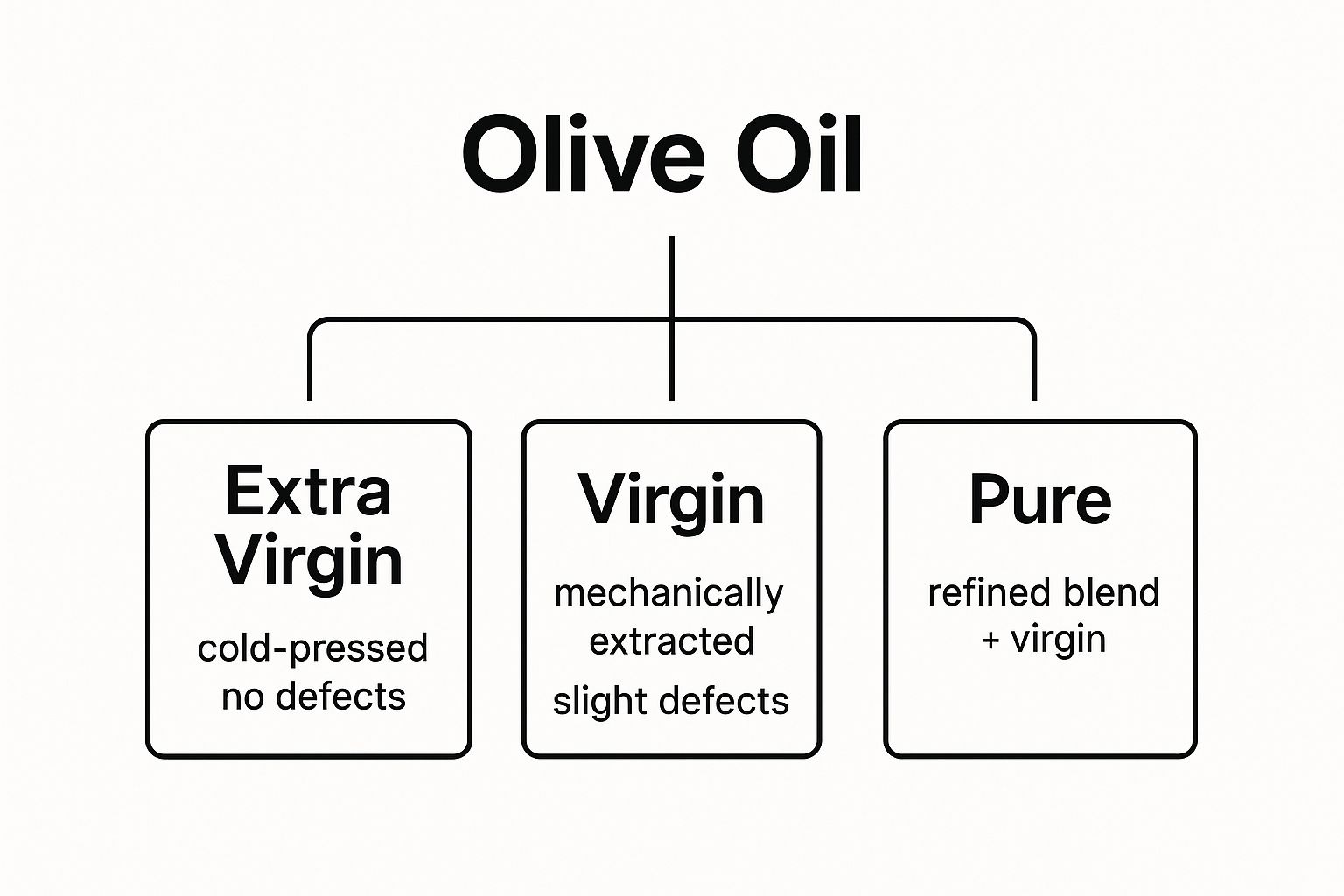
The visualization clearly positions Extra Virgin at the top due to its defect-free, cold-pressed nature, while separating Virgin and Pure oils based on their processing and composition.
Why Processing Defines the Category
The main difference between these oils lies in how they are made and their resulting chemical profile. The terms "Extra Virgin" and "Virgin" refer to oils extracted mechanically (pressed or spun) without the use of chemicals or high heat.
- Extra Virgin Olive Oil (EVOO): This is the highest grade. It is cold-pressed and must pass strict chemical and sensory tests to ensure it has zero defects and a superior flavor profile.
- Virgin Olive Oil: This oil is also mechanically extracted but has minor sensory defects or a higher acidity level, preventing it from earning the "Extra" designation. It's unrefined but not perfect.
- Pure Olive Oil (or just "Olive Oil"): This is where the biggest misunderstanding occurs. "Pure" is a marketing term for a blend. It consists primarily of refined olive oil (oil that has been treated with chemicals and heat to remove defects) mixed with a small amount of virgin or extra virgin olive oil to add back some color and flavor.
Key Insight: "Pure Olive Oil" is not purely from the first press. It is a heavily processed, refined product blended with a small amount of virgin oil. It lacks the robust flavor, antioxidants, and health benefits of EVOO.
Practical Tips for Choosing the Right Oil
Navigating the labels becomes simple once you know what to look for. Use this knowledge to match the oil to your culinary purpose.
- Read the Fine Print: Don't just rely on the main label. Look at the description on the back. If it says "a blend of refined olive oil and virgin olive oil," you know it's not EVOO.
- Choose EVOO for Flavor and Health: For salads, dipping, and finishing dishes where you want the full peppery, fruity flavor and maximum health benefits, always choose a quality Extra Virgin Olive Oil.
- Use "Pure" or "Light" Oil for Neutrality: When you need a cooking oil with a neutral flavor profile and a high smoke point that won't overpower your ingredients, a "Pure" or "Light" olive oil is a suitable, cost-effective choice. It's often used in commercial baking and frying.
- Avoid "Virgin" Unless Necessary: Virgin olive oil is less common in many markets. Given that it has known defects without the low cost of refined oil, it’s usually better to either invest in a quality EVOO or opt for a different type of cooking oil.
7 Common Olive Oil Myths Compared
| Topic | Implementation Complexity 🔄 | Resource Requirements ⚡ | Expected Outcomes 📊 | Ideal Use Cases 💡 | Key Advantages ⭐ |
|---|---|---|---|---|---|
| Extra Virgin Olive Oil Cannot Be Used for Cooking at High Temperatures | Moderate – requires temperature control | Moderate – quality oil, heat monitoring | Stable cooking oil with retained nutrients and flavor | Sautéing, roasting, shallow frying at ≤375°F | High thermal stability, antioxidant-rich |
| Darker Green Olive Oil is Always Higher Quality | Low – simple assessment, but misleading | Low – visual only | Misconceptions corrected, informed purchases | Educating consumers about olive oil selection | Helps avoid color bias, encourages tasting |
| Light Olive Oil is Lower in Calories and Fat | Low – understanding labels | Low – widely available | Neutral flavor oil with same calories as others | Baking, neutral oil needs | Higher smoke point, economical option |
| Expensive Olive Oil is Always Better Quality | Moderate – requires knowledge and tasting skills | Moderate – sourcing, tasting | Quality assessment beyond price | Quality-focused purchasing and tasting | Identifies good value oils, avoids overpaying |
| Olive Oil Should Be Stored in the Refrigerator | Low – proper storage knowledge | Low – pantry or dark bottles | Preserved quality when stored properly | Home and professional storage | Maintains flavor, prevents degradation |
| All Extra Virgin Olive Oils Taste the Same | Moderate – requires diverse tasting | Moderate – variety sampling | Appreciation of flavor diversity | Culinary exploration and pairing | Enhances culinary experience, diverse uses |
| Pure or Virgin Olive Oil is Just a Lower Grade of Extra Virgin | Moderate – label knowledge needed | Low to moderate – depends on purchase | Clarified product differences, better informed use | Selecting appropriate oil for cooking/health | Clear understanding of oil categories |
Your Journey to Olive Oil Mastery Starts Here
Navigating the world of olive oil can often feel like wading through a sea of misinformation. By systematically dismantling the most persistent olive oil myths, you have now equipped yourself with the knowledge to see this ancient food not as a simple commodity, but as a complex, flavorful, and incredibly versatile ingredient. You have moved beyond the marketing claims and can now approach the grocery store aisle with a discerning eye.
The journey from a casual user to an informed consumer is transformative. It's about understanding that the true value of extra virgin olive oil lies not in its color or price tag, but in its freshness, chemical profile, and the care with which it was produced. This knowledge empowers you to unlock its full potential, both for your health and your culinary creations.
Key Takeaways to Guide Your Next Purchase
Let’s crystallize the most critical lessons from debunking these common fictions. Moving forward, keep these core principles at the forefront of your mind:
- Heat is Not the Enemy: You can, and should, cook with high-quality extra virgin olive oil. Its high smoke point and stability make it a superior choice for everything from sautéing to roasting, infusing your dishes with both flavor and powerful antioxidants.
- Prioritize Freshness and Storage: Always check for a harvest or best-by date. Once you bring a bottle home, protect your investment by storing it in a cool, dark place away from heat and light. Never store it in the refrigerator, as condensation can accelerate degradation.
- Trust Your Senses, Not Just the Label: Price can be an indicator of quality, but it isn't a guarantee. Likewise, the color of the oil reveals little about its flavor or quality. The most reliable tool you have is your own palate. Learn to recognize the desirable attributes of fruitiness, bitterness, and pungency.
Your Actionable Path to Olive Oil Confidence
Armed with this information, your next steps are clear and practical. Start by actively applying what you've learned. The next time you shop, ignore the misleading "light" labels and look for specific details like the harvest date and country of origin. Buy a smaller bottle of a reputable extra virgin olive oil and conduct your own taste test at home. Drizzle it on a simple piece of bread, taste it plain, and notice the peppery finish in the back of your throat, a telltale sign of healthy polyphenols.
Embracing this new perspective allows you to confidently select the right bottle for every occasion and use it to its full advantage. You are no longer just a buyer; you are a connoisseur in training, ready to explore the vast and delicious world of authentic olive oil. This is more than just busting myths; it's about reclaiming flavor, enhancing your health, and bringing a new level of excellence to your kitchen.
Ready to deepen your understanding and taste like a professional? At Learn Olive Oil, we provide the expert guidance and resources you need to continue your journey. Explore our courses and guides at Learn Olive Oil to move beyond the myths and truly master the art and science of this liquid gold.

 Learn Olive Oil
Leave a comment