Of course you can bake with olive oil! It's actually one of my favorite swaps for butter or other oils. When you make the switch, you end up with unbelievably moist cakes, tender quick breads, and some of the fudgiest brownies you'll ever have. It also adds a subtle, sophisticated flavor that really elevates the final result.
Why Olive Oil Is a Baker's Best-Kept Secret
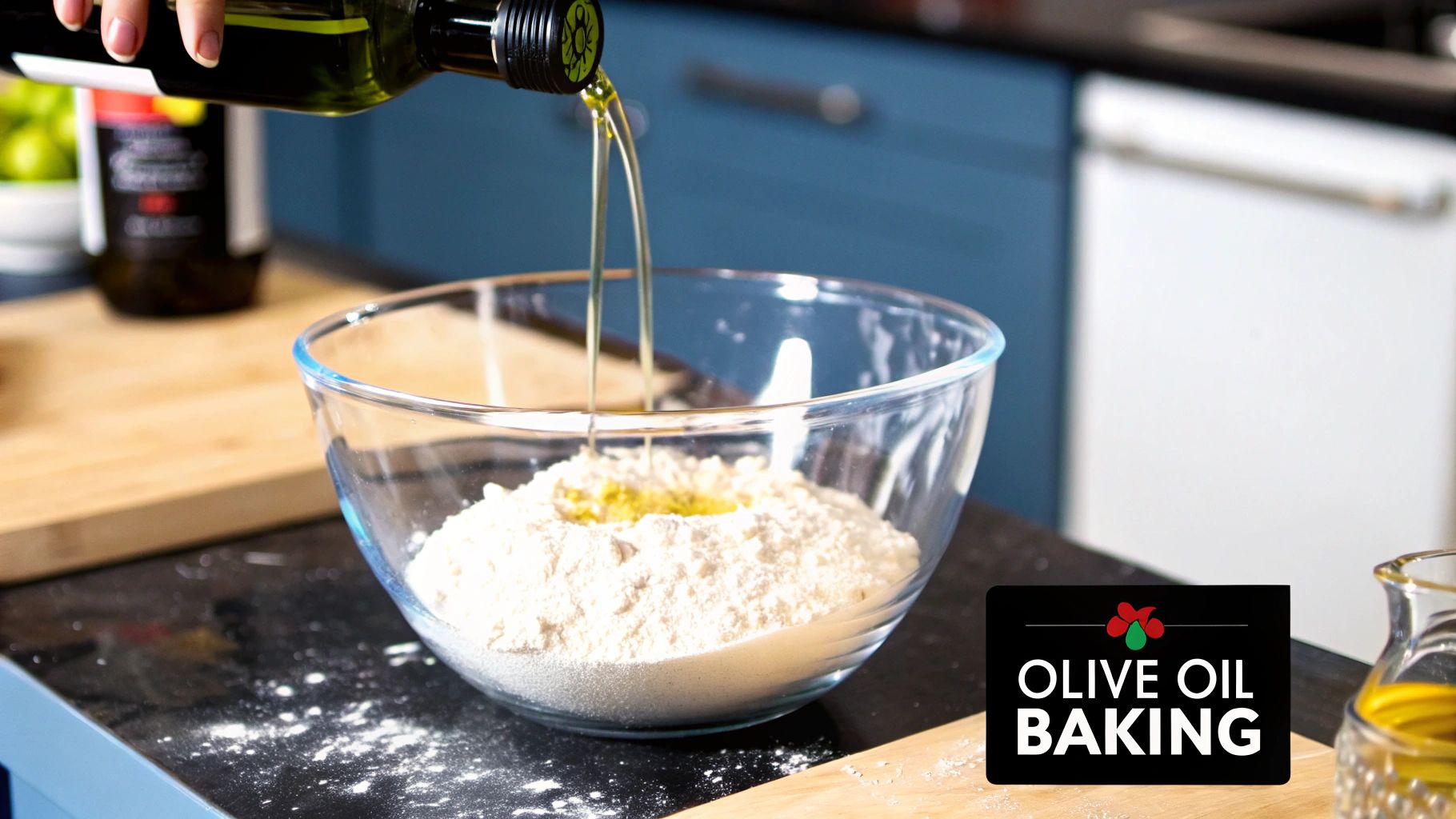
While everyone talks about the health benefits, let’s get down to what really counts in the kitchen: amazing texture and flavor. Using olive oil in your baking isn't just a "healthy" choice; it's a pro move for creating better bakes that stay fresh longer.
Think about it this way: when you trade a solid fat like butter for a liquid one like olive oil, you’re fundamentally changing the texture of your bake. Because olive oil is a pure liquid, it does a better job of coating flour particles, which helps stop too much gluten from forming. That’s the secret to getting baked goods that are exceptionally tender and soft.
The Magic of Moisture and Flavor
Butter is about 15% water and milk solids, but olive oil is 100% fat. That pure fat is what makes the final product so incredibly moist. Have you ever noticed how an olive oil cake tastes even better the next day? That’s the oil working its magic, locking in moisture and keeping your creations from drying out.
This isn't just a niche trick, either. It’s part of a huge culinary shift. The global olive oil market was valued at around USD 15.11 billion last year, and its growing use in home baking is a big reason why. It's even projected to hit over USD 21 billion in the next decade as more and more bakers catch on. If you're curious about the data, you can learn more about olive oil's market growth from the International Olive Council.
Key Advantages for Bakers
So, what does this actually mean for your next batch of muffins or your next birthday cake? Here's the breakdown:
- Superior Texture: You’ll get a finer, more tender crumb that’s hard to achieve with butter.
- Enhanced Moisture: Your bakes will stay fresh and moist for days. No more stale cake!
- Richer Flavor: Depending on the oil you pick, you can add anything from a light, buttery flavor to fruity or peppery notes that add real complexity.
Once you get the hang of how olive oil works with your other ingredients, you’ll see it’s not just a simple substitution. It’s an upgrade—a way to make more delicious treats that last longer.
How To Choose the Right Olive Oil for Your Recipe
Walking down the oil aisle can feel a bit overwhelming, but picking the right olive oil for baking is actually pretty straightforward. Once you get a feel for how each type behaves, you'll know exactly which bottle to grab. The key is deciding whether you want the oil to be a background player or a star of the show.
Your main options will usually be Extra Virgin Olive Oil (EVOO), regular or "pure" olive oil, and light-tasting olive oil. The real difference comes down to flavor intensity and how the oil is processed.
Match the Oil to the Flavor Profile
For bakes where you want that distinct, fruity, and sometimes peppery kick, a good quality Extra Virgin Olive Oil is the way to go. Its robust character is absolutely fantastic in recipes like a rich chocolate olive oil cake or a savory focaccia, where the oil's flavor is a welcome addition. I personally love the way a peppery EVOO cuts through the sweetness and enhances the bright notes in a lemon polenta cake.
But what about those delicate vanilla cupcakes or classic sugar cookies? In those cases, you need the moisture from the oil without any overpowering flavor. This is where light-tasting olive oil shines. It's highly refined, which gives it a completely neutral taste and a higher smoke point, making it a true workhorse in my pantry.
Regular or "pure" olive oil lands somewhere in the middle. It has a mild flavor that’s perfect for most quick breads, muffins, and carrot cakes where you don't need a strong olive taste but aren't worried about a subtle hint coming through.
To make it even clearer, I've put together this quick guide. Think of it as your cheat sheet for the grocery store.
Olive Oil Selection Guide for Baking
| Olive Oil Type | Flavor Profile | Best For (Examples) |
|---|---|---|
| Extra Virgin (EVOO) | Robust, fruity, peppery, grassy | Savory breads (focaccia, pizza dough), rich chocolate cakes, lemon-based desserts, biscotti, polenta cakes |
| "Pure" or Regular Olive Oil | Mild, light olive flavor | Quick breads (banana bread, zucchini bread), muffins, carrot cake, scones, some cookies |
| Light-Tasting Olive Oil | Neutral, virtually no flavor | Delicate cakes (vanilla, white, angel food), cupcakes, brownies, sugar cookies, pancakes, waffles |
Ultimately, choosing the right olive oil comes down to matching its intensity to your desired outcome. Don't be afraid to experiment to find what you like best!
Baker's Tip: Think of olive oil like you would a spice. Use a bold one when you want its flavor to shine and a neutral one when you just want it to play a supporting role by adding moisture.
This distinction is becoming more important as home bakers embrace olive oil. Europe continues to lead the charge in production; in a recent crop year, it produced around 1,531,500 tonnes of olive oil—a 10% increase from the previous year. This robust supply ensures we have access to a wonderful variety of high-quality oils. For those interested, you can explore more on the global olive oil market and its trends.
Mastering the Butter to Olive Oil Substitution
This is where you get to confidently riff on your favorite recipes. Swapping butter for olive oil isn't just a simple pour-and-measure deal. To get consistently delicious results, you need to understand a tiny bit of food science. Once you get the hang of it, you'll be using olive oil for baking like a pro.
The go-to guideline is the 3:4 ratio rule. It’s simple: for every cup of butter a recipe calls for, you'll use ¾ cup of olive oil.
So, why not just swap them one-for-one? It comes down to composition. Butter is only about 80-85% fat; the other 15-20% is water and milk solids. Olive oil, on the other hand, is 100% pure fat. Reducing the amount of oil slightly compensates for this difference, ensuring your batter has just the right amount of fat without becoming greasy.
Pro Tip: When you make this switch, you're doing more than just changing the fat. You're adding a surprising amount of moisture and tenderness. Because you're using a pure liquid fat, the final bake often has a finer, softer crumb and even stays fresh a little longer.
Perfect Swaps and When to Hold Back
So, when should you reach for the olive oil? It's an absolute game-changer in recipes where the fat's main job is to add moisture and richness.
Excellent Candidates for Olive Oil:
- Cakes and Cupcakes: Olive oil creates an incredibly tender, almost velvety crumb.
- Quick Breads: Think banana bread, zucchini bread, or any kind of muffin. The results are fantastic.
- Brownies and Blondies: If you love a fudgy, dense brownie, olive oil is your secret weapon.
But it’s not a universal solution. You’ll want to stick with butter for recipes that depend on the "creaming method"—the process of beating solid fat with sugar to whip air into the mixture. This step is crucial for building the structure of certain cookies and creating the flaky layers in things like croissants or pie crusts.
This chart is a great visual guide for matching the right oil to your baking project.
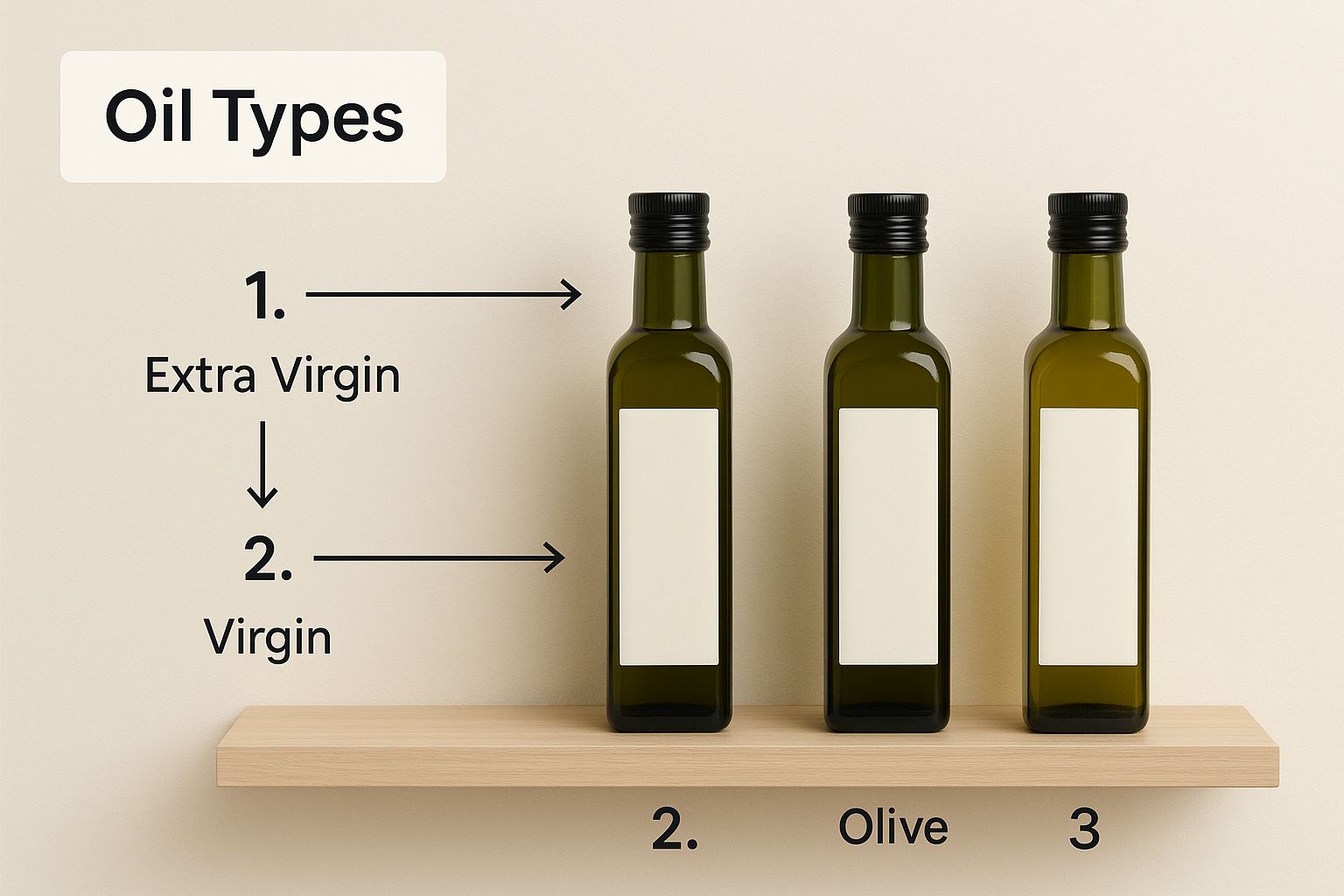
As you can see, the versatility is impressive. Different types of olive oil are suited for everything from rich, decadent cakes to more delicate baked goods.
This shift toward healthier fats in baking isn't just a niche trend; it's happening all over the world. The Asia-Pacific region, for instance, is seeing the fastest growth in olive oil consumption as more home bakers and professionals embrace its flavor and health benefits. It's all part of a larger move toward incorporating more natural, beneficial fats into our diets. If you're curious, you can read more about these global olive oil market trends and see just how popular it's becoming.
Proven Recipes to Start Your Baking Journey
Alright, we've talked theory, but the real proof is in the pudding—or in this case, the cake and brownies. Nothing convinces you like tasting the results for yourself.
To get you started, I’m sharing two of my go-to recipes that I’ve specifically developed to let olive oil shine. First up is a bright, zesty loaf cake, followed by some seriously decadent brownies. Think of these as your first hands-on lesson in just how incredible this simple swap can be.
Classic Lemon Olive Oil Loaf
This is the perfect recipe to see how a good olive oil can amplify fruit flavors. The oil's own fruity, peppery notes work in harmony with the bright lemon, creating a loaf that's unbelievably fragrant. It also creates a tender, delicate crumb that somehow stays moist for days.
Ingredients:
- 1 ½ cups all-purpose flour
- 1 teaspoon baking powder
- ½ teaspoon salt
- 1 cup granulated sugar
- ¾ cup light-tasting olive oil
- 3 large eggs
- ½ cup whole milk
- Zest and juice of 2 large lemons
Instructions:
- First things first: preheat your oven to 350°F (175°C) and get a loaf pan greased and ready.
- In a medium bowl, whisk together your dry ingredients: the flour, baking powder, and salt.
- In a larger bowl, whisk the sugar and olive oil until they're nicely combined. Beat in the eggs one at a time, then mix in the milk, lemon zest, and juice.
- Now, gently fold the dry ingredients into the wet mixture. Stop as soon as you don't see any more flour streaks—over-mixing is the enemy of a tender crumb!
- Pour the batter into your prepared pan. Bake for 50-60 minutes, or until a skewer inserted into the center comes out clean.
My Baker's Tip: Ever wonder why this loaf is so tender? It's because the olive oil, being a pure liquid fat, coats the flour proteins more effectively than the water-and-fat emulsion in butter. This slows down gluten formation, giving you that wonderfully soft texture.
Fudgy Olive Oil Brownies
If you’re convinced that only butter can make a truly fudgy brownie, this recipe is here to prove you wrong. Olive oil creates a dense, chewy texture and a surprisingly complex chocolate flavor that butter just can't replicate. It deepens the cocoa notes, making for a much more sophisticated and grown-up treat.
Ingredients:
- 1 cup all-purpose flour
- ½ cup unsweetened cocoa powder
- ½ teaspoon salt
- 1 ½ cups granulated sugar
- ¾ cup regular or light-tasting olive oil
- 3 large eggs
- 1 teaspoon vanilla extract
- 1 cup chocolate chips
Instructions:
- Preheat your oven to 350°F (175°C) and grease an 8×8 inch pan.
- In one bowl, whisk together the flour, cocoa powder, and salt.
- In a separate, larger bowl, whisk the sugar and olive oil. Mix in the eggs and vanilla until everything is smooth and glossy.
- Gently combine the wet and dry ingredients, then fold in the chocolate chips.
- Spread the batter evenly in the pan and bake for 25-30 minutes. You're looking for the center to be just a little bit gooey for that perfect fudgy finish.
Give these recipes a shot. I find they're the best way to build your confidence and see firsthand what olive oil for baking can do, from creating superior moisture to unlocking richer, more nuanced flavors.
Getting Perfect Olive Oil Bakes Every Time
Once you’ve picked the right oil and figured out the substitution ratio, a few simple habits can really elevate your baking. These are the little details I've learned over the years that turn a good olive oil cake into a truly memorable one.
The most crucial part is making sure the oil is properly emulsified. When you’re mixing up a cake batter, really go for it—whisk your olive oil with the sugar and eggs vigorously. You’re looking for the mixture to become thick, pale, and glossy. This creates a stable emulsion that keeps the oil from separating later, which is what prevents a greasy cake. Trust me, spending an extra minute here is worth it.
Use a Gentle Touch
When it's time to add the dry ingredients like flour, put the whisk away and grab a spatula. Now it’s all about gently folding everything together. Over-mixing is the fastest way to develop too much gluten, and that’s the enemy of a tender crumb.
Your goal is to mix only until you don't see any more streaks of flour. Seriously, stop right there. This one tip is probably the most effective thing you can do to get a soft, delicate texture when using olive oil for baking.
A Baker’s Best-Kept Secret
Here’s one of my favorite things about using olive oil that you just don’t get with butter: your cake will taste even better the next day.
The flavor and texture of an olive oil cake actually improve as it sits. The oil works its magic, continuing to moisten the crumb, while the flavors get a chance to mingle and deepen. The result is an even more delicious and complex cake a full 24 hours after it comes out of the oven.
This makes olive oil cakes a lifesaver for prepping ahead of time. Just wrap the finished cake tightly and keep it at room temperature to lock in all that incredible moisture.
Got Questions About Baking with Olive Oil?
It’s completely normal to feel a bit hesitant before you start pouring olive oil into your cake batter for the first time. I get it. Let’s walk through a couple of the most common questions I hear from bakers, so you can head to the kitchen with total confidence.
Will My Cake End Up Tasting Like a Salad?
This is probably the number one concern, and the short answer is a resounding no—as long as you pick the right olive oil for the job. You are in complete control of the final flavor.
For those classic vanilla cakes, delicate sugar cookies, or anything where you don't want the fat to be a star flavor, reach for a light-tasting olive oil. These are specifically refined to be neutral, giving you incredible moisture without a hint of that characteristic olive taste.
Now, if you're making something bold, that's where a good extra virgin olive oil can really shine. Its fruity, peppery notes are absolutely brilliant in rich chocolate desserts, zesty citrus cakes, or even savory breads. Here, the oil isn't just a fat; it's a flavor enhancer.
The key takeaway is this: Treat your olive oil like any other ingredient. A mild one will blend in, while a robust one will stand out. The choice is yours.
Is Olive Oil Really Healthier Than Butter in Baking?
When you look at the nutritional side of things, olive oil definitely has an edge. It’s loaded with monounsaturated fats, the heart-healthy kind we're often encouraged to eat more of. Butter, on the other hand, is mostly saturated fat.
Of course, a cake is still a treat with sugar and calories. But by making this one simple swap, you're improving the quality of the fat you're using. You get a wonderfully moist, tender crumb and you’re trading saturated fats for healthier unsaturated ones. It’s a win-win that makes your homemade goodies just a little bit better for you.
 Learn Olive Oil
Leave a comment