That bottle of extra virgin olive oil you trust might be hiding a secret. It’s a startling thought, but the problem of counterfeit olive oil is far more widespread than most people realize. In fact, some investigations have estimated that a staggering 80% of olive oil sold on shelves worldwide is mislabeled in some way.
This guide is designed to cut through the confusion. My goal is to give you the confidence to walk into any store, look at a bottle of olive oil, and know exactly what you're getting.
Is Your Olive Oil an Impostor in Your Pantry?
When we talk about "fake olive oil," it's not like the bottle is filled with some lab-created, synthetic green liquid. The reality is a bit more subtle, but just as deceptive. It’s a calculated fraud where a product is deliberately misrepresented, tricking you into paying a premium for something that is anything but. This turns a healthy kitchen staple into a pantry impostor.
This isn't just about a dip in quality; it's a fundamental breakdown of trust. The financial motivation for this kind of deception is huge. Think about it: Italy has built a global reputation for producing exceptional olive oil, yet it accounts for only about 15% of the world's supply. Meanwhile, Spain is the undisputed giant, producing roughly 45% of all olive oil, often at a much lower cost.
This imbalance creates the perfect opportunity for shady bottlers to blend cheaper oils from various places, slap an Italian-sounding label on the bottle, and cash in on the premium image. You can get a deeper look into this global market dynamic over at Citizens of Soil.
What Fake Olive Oil Really Is
So, what are you actually buying when you end up with a fraudulent bottle? The deception typically falls into one of three buckets:
- Dilution with Cheaper Oils: This is the classic trick. A small amount of real extra virgin olive oil gets mixed with cheaper, highly processed oils like soybean, canola, or sunflower oil. It’s a simple way to stretch the valuable EVOO and pad profits.
- Mislabeled Lower Grades: Not all olive oil qualifies as "extra virgin." Sometimes, lower-grade oils like 'virgin' or even 'lampante' oil (which is technically unfit for consumption until it's heavily refined) are chemically treated, deodorized, and then passed off as top-tier EVOO.
- False Origin Claims: You’ve probably seen the "Bottled in Italy" label. This phrase is a masterclass in misdirection. It can mean the oil was simply packaged in Italy, while the olives themselves were sourced from various other countries and blended together.
We're going to break down how to see right through these tactics. By the end of this, you’ll be a much savvier shopper, fully equipped to find the best, most authentic olive oil for your kitchen.
Authentic EVOO vs Fake Olive Oil At a Glance
To make things even clearer, let's put the real deal side-by-side with the common fakes. This table gives you a quick snapshot of the key differences you can look for.
| Characteristic | Authentic Extra Virgin Olive Oil (EVOO) | Common Fake Olive Oil |
|---|---|---|
| Aroma | Fresh, vibrant, and fruity. Smells like green grass, tomato leaf, or fresh olives. | Greasy, waxy, or completely neutral. May smell stale or like crayons. |
| Flavor Profile | Complex and peppery with a pleasant bitterness. You should feel a slight burn at the back of your throat. | Oily, bland, or flat. No peppery kick or bitterness. |
| Color | Ranges from bright green to golden-yellow. Not a reliable indicator on its own. | Color can be manipulated with chlorophyll; often pale and uniform. |
| Acidity Level | Very low, must be below 0.8% to be classified as "extra virgin." | Higher acidity levels, often masked by chemical refining. |
| Processing | Cold-pressed and unrefined, preserving natural antioxidants and polyphenols. | Often chemically refined, bleached, or deodorized to hide defects. |
| Price Point | Generally higher due to the quality, labor, and care involved in production. | Suspiciously low prices that seem too good to be true. |
Remember, these are general guidelines. The most sophisticated fakes can be tricky to spot, but knowing these core differences gives you a massive advantage in the grocery aisle.
The Playbook for Creating Fake Olive Oil
To beat the fraudsters, you first have to understand how they operate. This isn't about a small producer making an honest mistake or having a bad batch. Creating fake olive oil is a deliberate, calculated business built on deception to maximize profits. Once you learn their playbook, you can start to see the red flags they hope you'll miss.
Their methods run the gamut from simple, deceptive labeling to outright chemical fraud. The end goal, however, is always the same: to sell you a cheap, low-grade product disguised as premium, healthy extra virgin olive oil.
The Art of Mislabeling
The oldest and simplest trick in the book is mislabeling. This is when a producer takes a lower-grade oil—like standard 'virgin' olive oil or even refined oil—and just slaps an 'extra virgin' label on the bottle. It's still olive oil, sure, but it's not the good stuff. It won't have the incredibly low acidity, the complex peppery flavor, or the potent health benefits that define a true EVOO.
This tactic works because most of us trust what we read on a label. Unfortunately, with spotty enforcement, these impostors can easily slip onto store shelves, crowding out the honest producers.
Dilution with Cheaper Oils
Things get a bit more sinister with dilution. Here, fraudsters take a bit of real extra virgin olive oil and "cut" it with cheap, highly processed oils to make it go further. The most common fillers include:
- Soybean oil
- Canola oil
- Sunflower oil
- Nut oils
This doctored blend gets bottled up and sold as if it were 100% pure EVOO. You're left paying a premium for a product that's not only a fraud but might also be full of inflammatory fats, completely missing the antioxidant punch you were looking for.
"The most deceptive tactic involves using chemicals and artificial dyes to make inferior oils look and smell like high-quality EVOO."
Chemical and Color Manipulation
The most advanced deception involves outright chemical warfare on bad oil. Shady producers can take old, rancid olive oil—technically called lampante oil, which is so bad it's deemed unfit for human consumption—and chemically treat it to strip away the awful smells and flavors.
Once they have this neutralized base, they can add coloring agents like chlorophyll or beta-carotene to fake the beautiful green and golden hues of real EVOO. Color is a powerful psychological trigger, as this infographic illustrates.
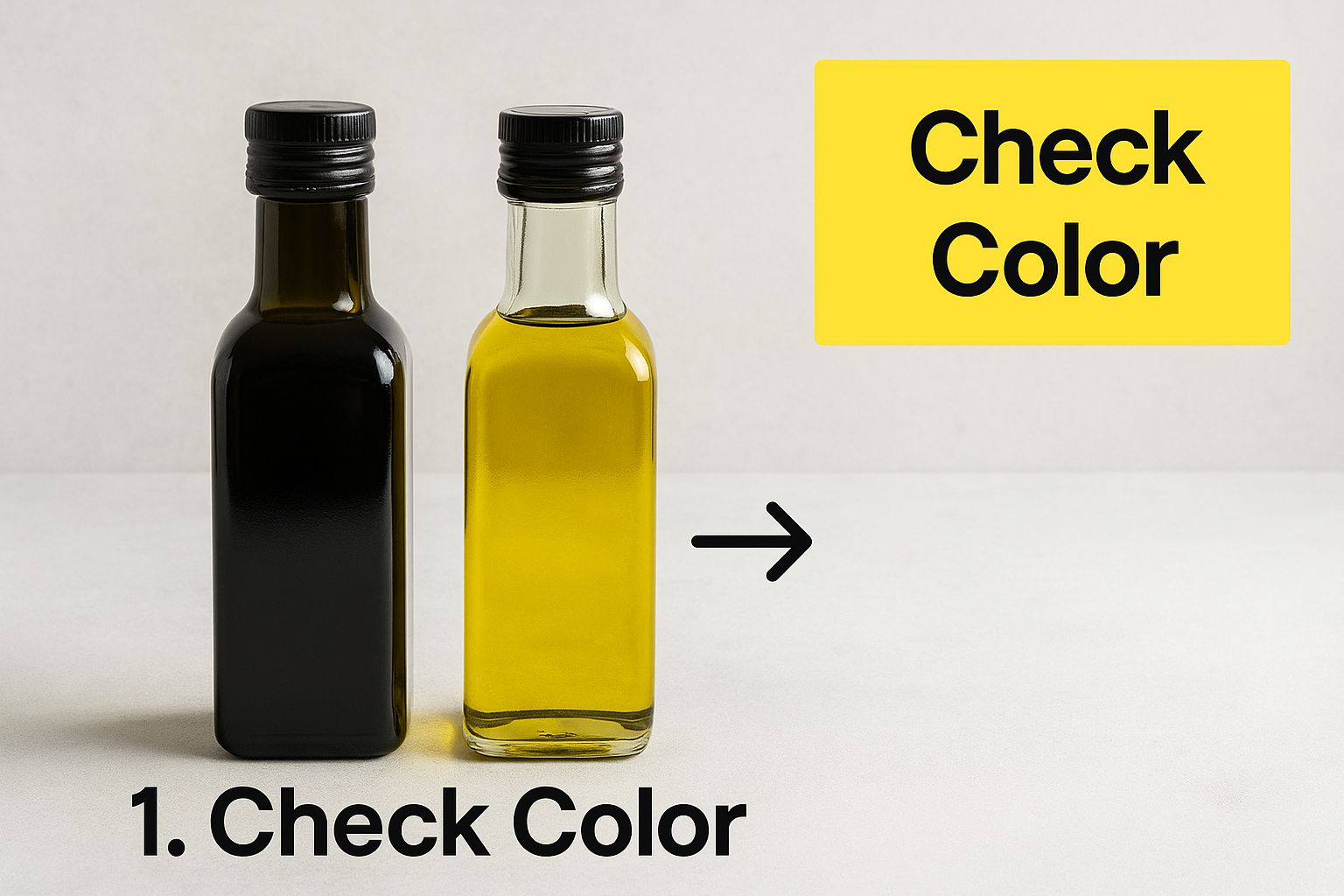
This kind of visual trickery is exactly why you can't judge an olive oil by its color. In one shocking case out of Greece, several people were charged for adding green dye to plain old sunflower oil and passing it off as premium olive oil. That was just one of 32 documented fraud cases the European Commission uncovered between 2016 and 2019, showing just how widespread this problem is. You can explore more details on these olive oil fraud cases to truly grasp the scale of the deception.
Why Is Fake Olive Oil Flooding the Market?
Have you felt the sting of rising olive oil prices at the grocery store? You're not imagining things. That steep price hike is the single biggest reason we're seeing a tidal wave of counterfeit products on the shelves, making it tougher than ever to know if you're buying real extra virgin olive oil (EVOO).
The core of the issue starts in the groves. Mother Nature has dealt a harsh blow to key olive-growing regions, especially Spain, which is the world's top producer. Severe and lasting droughts have absolutely hammered recent olive harvests. When you have fewer olives, you get less oil, creating a classic supply-and-demand squeeze.
This scarcity naturally forces the price of genuine EVOO upward, and that's the higher price you see at the checkout. For criminals and shady producers, this is a golden opportunity.
The Economics of Deception
Soaring prices for the real deal create a massive financial playground for counterfeiters. They see a market where shoppers are already bracing for high costs, which makes it much easier to pass off cheap, fake oils as legitimate. These fake olive oil brands can price their products just low enough to look like a bargain, while still pocketing an enormous profit.
They are essentially preying on the gap between what you think you should pay and what their fake oil actually costs to make. This economic pressure cooker is exactly why the market is swimming in impostors right now.
Think about it from a criminal's perspective: olive oil has become a low-risk, high-reward commodity. The profit margins on fake oil can be shockingly similar to trafficking narcotics, but the legal penalties are far, far less severe.
A Growing Crisis of Fraud
This isn't just speculation. Authorities and industry watchdogs are witnessing a huge spike in this kind of activity. With retail prices for olive oil doubling over the last year, reports of fraud have shot through the roof. In Spain alone, law enforcement has run over 300 operations to crack down on theft—thieves have even started stealing entire olive trees, a sign of just how desperate the situation is.
The problem is global. In 2023, there were 15 major incidents of olive oil fraud officially recorded, a massive jump from years past. It got so bad that Morocco had to ban exports just to protect its own supply after drought devastated its production. You can read more about this alarming trend and the olive crisis to get the full picture.
Ultimately, this direct line connecting climate change, scarcity, and crime is why being a careful, informed shopper has never been more important.
Forget the beautiful, sunny groves you see on the front of the bottle. The real story of an olive oil—its quality, its origin, and its authenticity—is written in the fine print on the back. Learning to decipher that label is your single best defense against bringing home a counterfeit.
Think of an olive oil label as its résumé. A producer who’s proud of their oil will be eager to list its qualifications and provide a clear, detailed history. A fraudulent one? They'll rely on vague language, confusing terms, and outright omissions to hide what's really inside the bottle.
The Only Date That Really Matters
If you only look for one thing, make it the harvest date. This is, without a doubt, the most important piece of information for judging freshness and quality. Remember, olive oil is a fruit juice. It’s at its peak right after pressing and goes downhill from there. A "best by" or "bottling date" can be incredibly misleading, as low-quality oil can languish in giant vats for months or even years before finally being bottled.
Finding a clear harvest date is a fantastic sign of transparency. If a bottle doesn't have one, that’s a major red flag. Always try to buy oil from the most recent harvest to get the vibrant flavor and full health benefits you're paying for.
Reading Between the Lines: Packaging and Origin
The clues don't stop there. The container itself and the wording used to describe the oil's origin can tell you a lot about what you're buying.
- Choose Dark Containers: Light is one of olive oil's greatest enemies. It causes the oil to break down and turn rancid much faster. Any serious producer knows this and will use dark green or brown glass bottles, or better yet, opaque metal tins. A clear glass bottle might look pretty on the shelf, but it's a huge warning sign that the company cares more about marketing than protecting the quality of its oil.
- Watch for Origin Loopholes: The country of origin wording is critical. A label that proudly states "Product of Italy" should mean the olives were grown, pressed, and bottled right there. But be wary of phrases like "Bottled in Italy" or "Packed in Italy." This is a classic trick. It often means cheap oils from various countries (like Tunisia, Spain, or Greece) were simply blended and packaged in Italy to piggyback on its prestigious reputation.
- Specificity Is Your Friend: The more detailed the origin, the better. Does the label point to a specific region, a single estate, or even the name of the mill? That's a great sign. Vague terms like "Product of the Mediterranean" almost always signal a low-quality, mass-produced blend.
Look for Official Seals of Approval
While not every excellent small-batch oil will have them, third-party certification seals are a powerful shortcut to verifying authenticity. They prove that an independent organization has verified the producer's claims.
These seals aren't just fancy stickers; they're a legal guarantee. They confirm the oil's origin and quality, offering you peace of mind that an expert has already checked it out for you.
Keep an eye out for these well-respected certifications:
- PDO (Protected Designation of Origin): This is the European Union's highest standard. It guarantees that every single part of the process, from growing the olives to milling and bottling the oil, happened in one specific, protected geographical area.
- PGI (Protected Geographical Indication): Another excellent EU seal, this one guarantees that at least one major stage of production took place in the named region.
- COOC (California Olive Oil Council): If you're buying American, this seal is the gold standard. It certifies the oil is made from 100% California olives and has passed rigorous chemical and sensory evaluations to confirm it is truly extra virgin.
Now, let's put this all together in a simple checklist you can use right in the grocery aisle.
Olive Oil Label Red Flag Checklist
Use this quick guide to compare bottles and spot the warning signs of a fake versus the positive indicators of an authentic, high-quality olive oil.
| Red Flag (Warning Sign) | Green Flag (Good Sign) |
|---|---|
| No harvest date is listed. | A clear harvest date is printed. |
| Vague "Best By" or "Bottling" date only. | Specific estate or mill is named. |
| Packaged in a clear glass bottle. | Packaged in dark glass or an opaque tin. |
| Vague origin like "Product of the Mediterranean." | Specific origin like "Product of Tuscany, Italy." |
| Wording like "Bottled in" or "Packed in." | A PDO, PGI, or COOC seal is present. |
| The price seems too good to be true. | The price reflects a premium, craft product. |
By learning to spot these red and green flags, you can stop guessing and start buying with confidence. You'll be able to sidestep the fakes and bring home the delicious, healthy, and genuinely authentic olive oil you deserve.
Putting Your Senses to the Test at Home
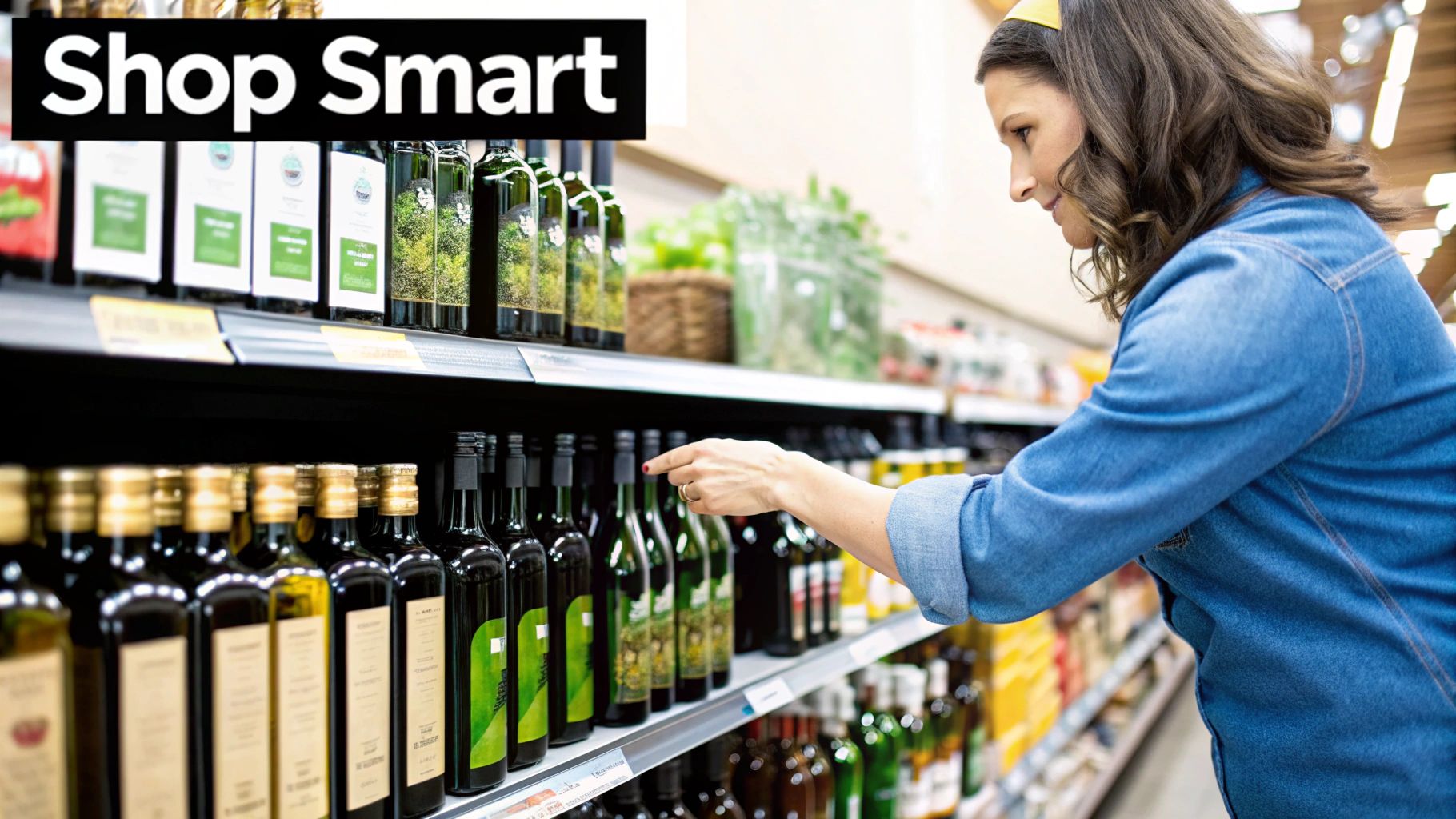
Once you've brought a bottle home, the label's job is done. Now, the final verdict comes down to your senses. While professional tasters follow a strict protocol, you can do a simplified version right in your own kitchen. It's the best way to see if you've got the real deal or one of the many fake olive oil brands out there.
Think of it as bypassing the marketing noise and getting to know the oil's true character. The goal here isn't just to spot a fake, but to train your palate. Over time, you'll build the confidence to know exactly what you're looking for.
The Professional Slurp
First, grab a small, sturdy glass—a little wine glass or even a shot glass works great. Pour in about a tablespoon of olive oil. The idea is to warm it up just enough to coax out all its wonderful aromas.
- Warm the Oil: Cradle the glass in one hand to let your body heat warm it, and cover the top with your other hand. Swirl it gently for about a minute. This little bit of warmth is key to making the aromas pop.
- Uncover and Sniff: Lift the glass to your nose, take your hand off the top, and breathe in deeply. What do you smell? A genuine EVOO should smell fresh and clean.
- Sip and Slurp: Take a small sip. Now for the fun part: do what the pros do. Purse your lips and suck in a quick burst of air. This "slurp" sprays the oil across your tongue and the roof of your mouth, letting you taste all of its nuances.
- Swallow and Wait: Finally, swallow the oil. Pay close attention to what happens at the back of your throat.
What You Should Be Tasting
A top-notch, authentic extra virgin olive oil is far from being just… well, oily. It's an experience defined by three key characteristics: fruitiness, bitterness, and pungency.
- Fruitiness: This is what you smelled earlier. It can be grassy and sharp like green, unripe olives (think artichoke or fresh-cut grass) or soft and mellow like ripe olives (more buttery and nutty).
- Bitterness: This is a taste, not a smell, that you'll notice on your tongue. A pleasant bitterness is a hallmark of fresh, high-quality oil. It shouldn't be acrid or unpleasant, just a distinct bitter note.
- Pungency: This is that peppery kick or spicy tingle you feel in your throat right after you swallow. That sensation comes from oleocanthal, a potent anti-inflammatory polyphenol. It might even make you cough once or twice!
That peppery tickle or cough isn't a flaw—it's the signature of a healthy, high-polyphenol olive oil. It’s the very thing you're paying a premium for.
And please, don't fall for those old myths. The popular "fridge test"—seeing if the oil solidifies when chilled—is completely unreliable. Lots of different oils solidify in the cold. Color is another red herring; scammers often use chlorophyll or other dyes to fake that desirable green hue. Your most trustworthy tools are your own nose and palate. Learn to use them, and they won't let you down.
The Real Costs of Choosing Fake Olive Oil
So, why should you care about any of this? It's easy to think, "It's just olive oil," but the fallout from buying a fake bottle goes way beyond getting ripped off at the checkout. The real price is paid by your health, your wallet, and the very taste of the food you eat.
A High Price for Your Health
Let’s start with the most important part: your health. When you think you're buying extra virgin olive oil, you're looking for its famous health perks. But in a fake product, those powerful, health-promoting compounds like antioxidants and the anti-inflammatory oleocanthal are either watered down to near-nothing or completely missing.
What you get instead can be a bottle filled with cheap, highly processed seed oils. Worse yet, some of these oils can be contaminated with chemicals you’d never knowingly put in your body.
A recent lab test of popular olive oils was pretty shocking: it found that 100% of the bottles analyzed contained phthalates. These are chemicals linked to a whole host of health problems. While it's a complicated issue, carefully selecting your olive oil is one way to cut down on your exposure.
The Impact on Your Wallet and Honest Farmers
Beyond the health concerns, there's a serious economic domino effect. Every time you buy a bottle of fake olive oil, your money goes straight into the pockets of companies built on deception.
These fraudulent operations undercut the honest, hardworking farmers and producers who dedicate themselves to making a legitimate, high-quality product. It's a tough market out there, and every sale of a fake oil makes it that much harder for the good guys to survive.
The Cost to Your Cooking
Finally, let's talk about taste. There's a huge culinary cost to using fake oil. It's often greasy, bland, and brings absolutely nothing to the table. It completely lacks the complex, beautiful flavors that make real EVOO so special—those vibrant notes that can be everything from peppery and grassy to mellow and buttery.
When you get right down to it, choosing authentic olive oil is a win across the board. You're making a better choice for your health, supporting ethical producers, and taking your cooking from just okay to truly delicious.
Common Questions About Olive Oil, Answered
When you're standing in the grocery aisle staring at a wall of olive oil, it's easy to feel overwhelmed. There's a ton of conflicting information out there, and it’s natural to have questions. Let's tackle some of the most common ones so you can feel confident in your choices.
Does a High Price Tag Mean It's the Real Deal?
Not always. While an absurdly cheap bottle is almost certainly a red flag for a fake or low-quality product, a high price isn't a guaranteed stamp of authenticity. In fact, some dishonest producers use premium pricing to fool you into thinking you're buying something special.
Instead of letting the price tag be your guide, let the label do the talking. A producer who is proud of their oil will give you the important details: a specific harvest date, the exact region of origin, and ideally, a seal from a third-party certifier. These facts are far more telling than the price.
Can I Trust the Big Supermarket Brands?
This is a bit of a mixed bag. Some major, household-name brands are incredibly diligent about quality control, while others have been at the center of scandals for passing off low-grade oil as the good stuff. The trick is to look past the brand name on the front of the bottle.
A trustworthy brand, whether it's a small-batch producer or a supermarket giant, will be transparent. Look for the same signs of quality: a harvest date, a specific origin, and legitimate certifications. Your own vigilance is your best defense.
What Does "Light" Olive Oil Actually Mean?
This is a classic point of confusion. Many people assume "light" olive oil is a healthier, lower-calorie option, but that's not the case. The term "light" refers only to the oil's flavor and color, not its nutritional profile. It's a highly refined oil that's been processed to have a neutral taste and a higher smoke point.
This intense refining process strips away the very things that make extra virgin olive oil so great—the bold, peppery flavor, the fresh grassy aroma, and most importantly, the powerful, health-boosting polyphenols. If you're after the famous health benefits of EVOO, "light" oil is not the choice for you.
Ready to become an olive oil expert? At Learn Olive Oil, we provide the insights you need to choose, taste, and cook with the best olive oils from around the globe. Discover the World of Premium Olive Oil and transform your culinary experience.
 Learn Olive Oil
Leave a comment