Let’s cut right to it. A high-quality extra virgin olive oil (EVOO) can be a fantastic tool for managing your blood sugar. I like to think of it as a natural "braking system" for your metabolism, helping you avoid those sharp, sudden glucose spikes that leave you feeling drained. It’s an ancient food with modern, science-backed benefits for better glycemic control.
How Olive Oil Helps Stabilize Blood Sugar
When you eat a meal, the carbohydrates break down into glucose and enter your bloodstream. For a lot of people, this can feel like a rollercoaster ride of high energy followed by a crash. Extra virgin olive oil, packed with healthy fats and powerful antioxidants, works to smooth out that ride.
So, how does it do this? The magic lies in how EVOO changes both the speed of digestion and your body's response to insulin. The healthy fats in the oil slow down how quickly your stomach empties and, in turn, how fast carbohydrates are absorbed. This means glucose trickles into your bloodstream gradually instead of flooding it all at once.
The Two-Pronged Attack on Blood Sugar Spikes
The real power of olive oil for blood sugar comes from its unique makeup. It's not just one thing doing the work, but a whole team of beneficial compounds working in concert. This synergy creates a pretty solid defense against those unpredictable glucose swings.
-
Healthy Fats (Oleic Acid): The main fat in EVOO is a monounsaturated fat called oleic acid. One of its biggest jobs is to improve insulin sensitivity. This makes your body's cells more responsive to insulin's signal to pull glucose out of the blood. Better sensitivity means less work for your pancreas.
-
Polyphenols & Antioxidants: Beyond the fats, EVOO is loaded with powerful plant compounds like oleuropein. These act like tiny bodyguards for your cells, fighting off the inflammation and oxidative stress that can damage the insulin-producing cells in your pancreas.
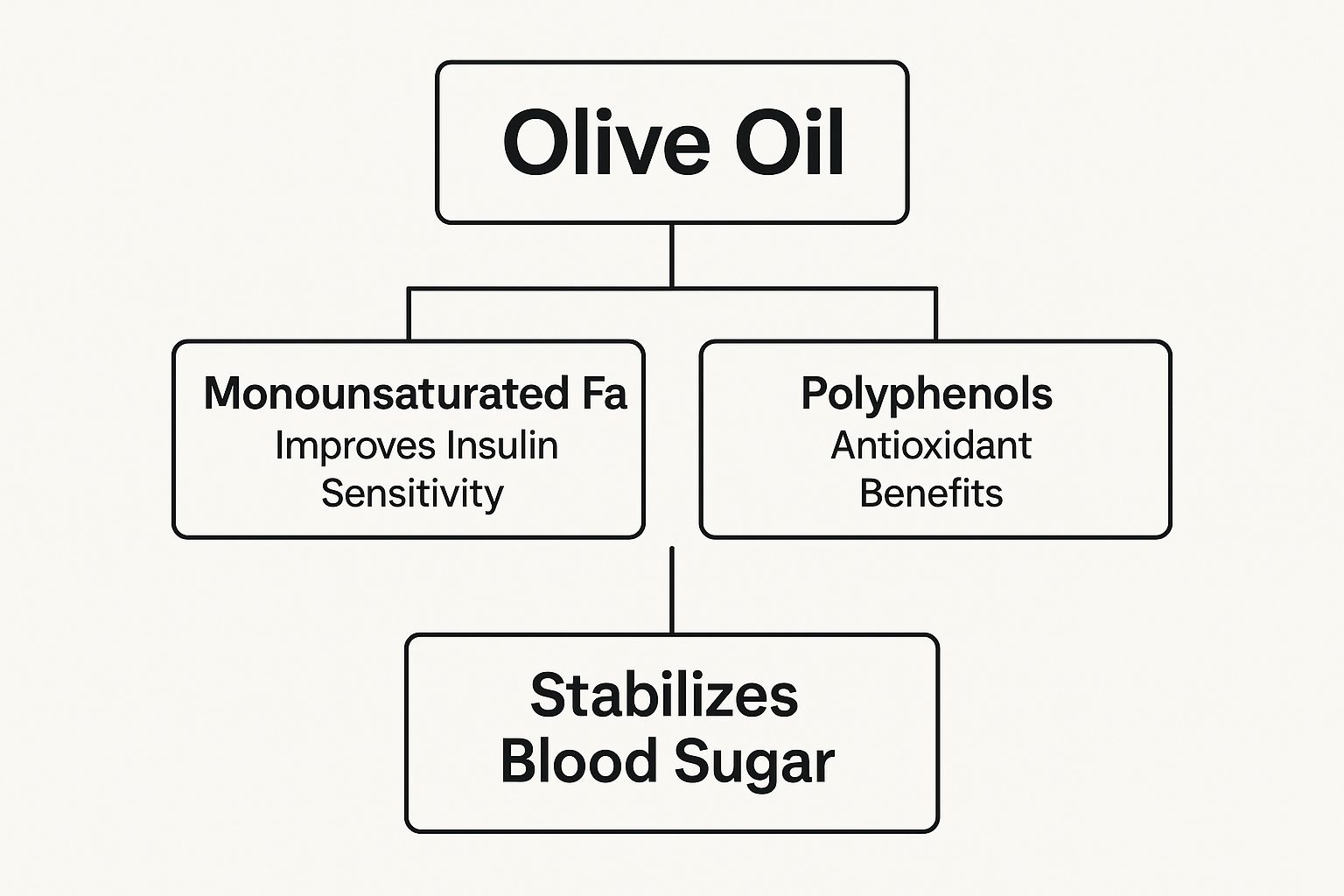
As you can see, it’s this combination of healthy fats and protective polyphenols that really makes a difference, leading directly to more stable and predictable blood sugar levels.
A Quick Summary of Olive Oil's Mechanisms
To help you remember the key takeaways, here’s a simple table breaking down how EVOO works its magic on your metabolism.
| How Olive Oil Influences Blood Sugar Key Mechanisms |
|---|
| Mechanism |
| Slows Gastric Emptying |
| Improves Insulin Sensitivity |
| Reduces Inflammation |
| Fights Oxidative Stress |
This multi-faceted approach is what makes extra virgin olive oil such a valuable addition to a diet focused on metabolic health.
The Proof is in the Science
This isn't just wishful thinking; there's solid research to back it up. A major meta-analysis that looked at data from 15,784 people with type 2 diabetes found a clear pattern: those who consumed the most EVOO had significantly better blood sugar control.
Even more impressive, long-term consumption was linked to a 16% reduction in the risk of ever developing type 2 diabetes in the first place. You can explore more of the fascinating research on how olive oil impacts glycemic response for a deeper dive.
By slowing down glucose absorption from your food and helping your insulin work more efficiently, extra virgin olive oil gives you a delicious, food-first strategy for achieving more predictable energy and better metabolic health all day long.
The Science Behind EVOO and Insulin Sensitivity
To really get how extra virgin olive oil can help with blood sugar, we need to go beyond just thinking of it as a fat. The magic is really in a powerful one-two punch delivered by its monounsaturated fats (MUFAs) and a group of potent plant compounds called polyphenols.
Let’s start with a simple analogy. Think of your body's cells as having tiny doors that need to open to let sugar (glucose) in for fuel. The hormone insulin acts as the key. But if those locks get "rusty," the key doesn't work as well. This is what we call insulin resistance, and it leads to sugar building up in your bloodstream.
This is where EVOO’s main MUFA, a fatty acid called oleic acid, comes into play. It acts like a high-quality lubricant for those sticky cell door locks. By becoming part of the cell membrane itself, oleic acid helps make the membrane more fluid and flexible. This simple structural improvement allows the insulin receptors—the locks—to work much more smoothly.
The bottom line? Your cells become more sensitive to insulin. They can pull glucose out of the blood far more effectively, which helps stabilize your blood sugar levels and takes a lot of pressure off your pancreas.
Protecting the Source of Insulin
While oleic acid helps the cells listen to insulin, the polyphenols in EVOO are busy protecting the factory where insulin is made: the beta cells in your pancreas. These are incredibly delicate cells, and they're vulnerable to two big troublemakers—oxidative stress and chronic inflammation.
Imagine your beta cells are skilled workers in a factory. Oxidative stress is like a constant shower of sparks and corrosive dust (free radicals) that damages the equipment. Chronic inflammation is like a persistent, low-grade tremor shaking the factory's foundation, making it harder for the workers to do their job. Over time, all this damage slows down production, meaning you get less insulin when you need it.
Polyphenols, especially superstars like oleuropein and hydroxytyrosol, are essentially the factory's top-tier maintenance and security team. They expertly neutralize the damaging free radicals and calm the inflammatory signals that threaten the beta cells.
This protective role is absolutely vital for managing blood sugar in the long run. By helping to shield your body’s natural insulin-making machinery, a high-quality EVOO ensures it can keep running smoothly for years to come.
A Powerful Combination for Glycemic Control
It's really the teamwork between these two elements that makes EVOO such a powerful ally for blood sugar control. You’re not just getting a single benefit; you're getting a coordinated attack that tackles the problem from two different, yet complementary, directions.
- Oleic Acid: Improves the "lock-and-key" connection between your cells and insulin.
- Polyphenols: Defend your insulin-producing beta cells from wear and tear.
This dual-action strategy—making insulin work better while also protecting its source—is what makes genuine EVOO stand out. It’s not a quick fix or a temporary patch. It supports the fundamental systems your body relies on to keep blood sugar in balance, which is precisely why choosing an authentic extra virgin olive oil rich in both these compounds is key to getting real results.
What Clinical Studies Reveal About Olive Oil
Understanding the science behind how olive oil works is one thing, but seeing what happens in the real world is what truly matters. Thankfully, the benefits of using olive oil for blood sugar aren't just a theory. A solid foundation of clinical research shows that a daily dose of this golden liquid can lead to real, measurable improvements.
Time and again, studies show that when people make extra virgin olive oil a regular part of their diet, they see positive changes in critical health markers. We're not talking about small blips on the radar, but significant results that can make a real difference in managing your long-term health.
So, let's look at the hard evidence from controlled clinical trials.
Tangible Results from Human Trials
The most direct way to know if something works is to test it. For anyone watching their blood sugar, two numbers are absolutely critical: fasting glucose and HbA1c, which shows your average blood sugar over the past few months.
Across numerous studies, a clear pattern has emerged. When participants add EVOO to their meals—often swapping it in for other fats—they consistently see a noticeable drop in both of these numbers. This isn't just a temporary dip after a meal; it's a sustained improvement in the body's fundamental ability to manage glucose.
A great example is a 2011 controlled study that gave 45 individuals with type 2 diabetes just 30 ml (about two tablespoons) of olive oil each day for four weeks. They made no other changes to their diet or medication. The results were impressive, with a significant reduction in their fasting blood glucose levels. You can dig into the specific findings of this olive oil research yourself, but it's powerful proof that even a simple dietary change can have a big impact.
Key Takeaway: The same study that showed better blood sugar also revealed major improvements in cholesterol, proving olive oil can be a powerful tool for both glycemic control and heart health.
More Than Just Blood Sugar
One of the most encouraging things we see in the research is that olive oil's benefits don't stop at blood sugar. Many people who are focused on glucose levels are also keeping an eye on other related issues, like cholesterol and blood pressure. Here, olive oil proves to be a fantastic multitasker.
The same study that recorded lower fasting glucose also noted other great improvements:
- Lowered Triglycerides: A type of fat in your blood that can increase heart disease risk.
- Reduced LDL Cholesterol: Often called the "bad" cholesterol.
- Increased HDL Cholesterol: Known as the "good" cholesterol, which helps keep arteries clear.
What this shows is that adding high-quality extra virgin olive oil to your diet isn't a single-fix solution. It’s a holistic approach that supports your entire metabolic system, making it a credible, evidence-backed choice for anyone looking to improve their overall health.
How to Choose the Best Olive Oil for Health
When you’re standing in the grocery store aisle, the wall of olive oil bottles can be a bit much. But if you’re focused on your health, the choice gets a whole lot simpler. For managing blood sugar, one type stands head and shoulders above the rest: Extra Virgin Olive Oil (EVOO).
https://www.youtube.com/embed/BiKGydHNjGc
Think of EVOO as the fresh-squeezed juice of the olive world. It’s made by simply cold-pressing olives, a mechanical process that avoids high heat and chemical solvents. This gentle extraction is what keeps the good stuff—the powerful polyphenols—intact. These are the very compounds that protect your pancreas and improve insulin sensitivity.
Regular "olive oil," "light olive oil," or "pure olive oil" are more like juice from concentrate. They undergo refining with heat and chemicals, which strips out most of those delicate, health-boosting compounds. They still offer healthy monounsaturated fats, but they're missing the powerful antioxidant and anti-inflammatory benefits you get from a true EVOO.
A Quick Comparison of Olive Oils
To make it even clearer, let's break down the most common types you'll find on the shelf. This will help you see exactly why EVOO is the top choice for health-conscious shoppers.
| Olive Oil Type | Processing Method | Polyphenol Content | Best For Blood Sugar |
|---|---|---|---|
| Extra Virgin Olive Oil (EVOO) | Cold-pressed, unrefined | Highest | Yes |
| Virgin Olive Oil | Cold-pressed, unrefined (slight flavor defects) | High | Good alternative |
| "Pure" or "Light" Olive Oil | Refined with heat/chemicals | Very Low | No |
| Olive Pomace Oil | Extracted from pulp with solvents | Negligible | No |
As you can see, the less processing an oil undergoes, the more of its natural, beneficial compounds it retains. For the specific goal of managing blood sugar, nothing beats the polyphenol-rich profile of a high-quality Extra Virgin Olive Oil.
How to Read the Label Like a Pro
To make sure you're getting a bottle that’s truly packed with benefits, you need to play detective with the label. The front of the bottle gives you the basics, but the real clues to its quality are on the back.
Here’s what to zero in on:
- "Extra Virgin" is a Must: This is your first and most important checkpoint. It’s the highest grade, and it's the only one that guarantees the oil is unrefined and still full of polyphenols.
- Find the Harvest Date: Freshness is everything. Polyphenols break down over time, so an oil from the most recent harvest is always best. An oil bottled just a month ago will be far more potent than one that's been sitting on a shelf for a year. A "best by" date is less precise but better than no date at all.
- Stick to Dark Glass or Tins: Light is a major enemy of olive oil because it destroys those precious polyphenols. Always reach for oils sold in dark, opaque glass bottles or metal tins. Clear glass is a red flag—just walk away.
Pro Tip: Don't shy away from a peppery or slightly bitter flavor. That little kick you feel at the back of your throat comes from oleocanthal, a potent anti-inflammatory polyphenol. A peppery finish that makes you cough is actually a hallmark of a very fresh, high-quality oil.
Once you’ve brought that beautiful bottle home, storing it properly is crucial for protecting your investment. Keep it in a cool, dark place like a pantry, well away from the heat of the stove. Heat, light, and air are the sworn enemies of fresh EVOO. By choosing and storing your oil with care, you'll ensure that every spoonful delivers the powerful support you need for your olive oil for blood sugar goals.
Simple Ways to Add Olive Oil to Your Diet
Understanding why olive oil helps with blood sugar is great, but the real magic happens when you start using it in your kitchen every single day. The trick is to stop thinking of extra virgin olive oil (EVOO) as just another health supplement or something reserved for salads. Think of it as a culinary tool that adds incredible flavor and richness to almost anything you cook.
When you make it an effortless, delicious part of your meals, it stops feeling like a chore and becomes a natural habit. It’s your secret weapon for making food taste better while doing your body a world of good.
Beyond the Salad Bowl
So, how do you get that recommended one to two tablespoons in without drenching every salad? It's easier than you think. You can use it for gentle cooking or, my personal favorite, as a finishing oil to add a final burst of flavor and those precious antioxidants right before you eat.
Here are a few of my go-to methods:
- Elevate Your Veggies: Toss roasted broccoli, steamed asparagus, or even sautéed Brussels sprouts in a good quality EVOO. It adds a delicious, grassy note and helps your body absorb all those fat-soluble vitamins (A, D, E, and K) from the vegetables.
- Whip Up a Better Smoothie: It might sound strange, but adding a tablespoon of EVOO to your morning smoothie is a game-changer. You won't taste it, I promise. But it will give your drink a wonderfully creamy texture and a dose of healthy fats that keeps you feeling full and your blood sugar stable.
- Finish Soups and Proteins: This is where a high-quality oil really shines. A final, generous drizzle over a bowl of hearty lentil soup, a freshly grilled piece of chicken, or baked fish adds a luxurious, peppery finish that takes the dish to another level.
Even simple swaps make a difference. The next time you're about to sauté onions and garlic in butter, reach for the EVOO instead. You’re making a smart choice for your metabolic health without sacrificing the soul of your favorite recipes.
The most effective way to use EVOO for blood sugar is to pair it directly with carbs. The fat physically slows down how quickly your body digests and absorbs the sugars, which means you get a much gentler, more gradual blood sugar response.
A Sample Day of Eating with EVOO
Curious what this looks like in practice? Here’s a simple way to incorporate it throughout your day.
- Breakfast: Swirl a teaspoon of EVOO right into your oatmeal or Greek yogurt.
- Lunch: Drizzle a full tablespoon over a big salad topped with grilled chicken and lots of leafy greens.
- Dinner: Use one teaspoon of EVOO to sauté your vegetables and another to finish a beautiful piece of baked salmon.
Just like that, you've hit the recommended amount of olive oil for blood sugar control without even trying. The key is making it a consistent, enjoyable part of your routine. It's a small daily ritual that pays huge dividends for your long-term health.
Your Top Questions About Olive Oil Answered
Making a change to your diet, even a simple one like adding more olive oil, naturally comes with a few questions. Let's tackle some of the most common ones I hear about using olive oil for blood sugar.
How Much Olive Oil Should I Have Each Day for Blood Sugar?
The sweet spot, according to most of the research, is somewhere between 1 to 2 tablespoons (15-30 ml) of high-quality extra virgin olive oil per day.
The smartest way to do this isn't just to add it on top of everything else. Instead, use it to replace less healthy fats you might already be eating, like butter, margarine, or other processed vegetable oils. That way, you get all the upside without piling on extra calories.
Will Eating More Olive Oil Make Me Gain Weight?
It's a fair question—olive oil is high in calories, after all. But here's the interesting part: when it's used to substitute other fats in a healthy diet, research consistently shows it doesn't lead to weight gain.
The healthy monounsaturated fats in EVOO are actually quite satisfying. They can increase feelings of fullness, which helps you manage your appetite and support your weight goals rather than working against them.
Essentially, a little bit of the right fat can help you feel fuller for longer, which might even lead to you eating less overall.
Is It Safe to Use Olive Oil if I'm on Diabetes Medication?
Absolutely. Adding extra virgin olive oil to your meals is generally a safe and very effective dietary strategy that works alongside your diabetes medications. Think of it as a helpful teammate, not a replacement for your prescribed treatment.
That said, you should always have a conversation with your doctor before making any significant changes to your diet. Because EVOO can genuinely improve your body's response to sugar, your doctor might need to adjust your medication over time to account for your improved health.
Ready to find a high-quality, polyphenol-rich olive oil that you'll love? At Learn Olive Oil, we have the expert guides, tasting notes, and trusted brand recommendations to help you choose the perfect bottle for your kitchen and your health.

 Learn Olive Oil
Leave a comment