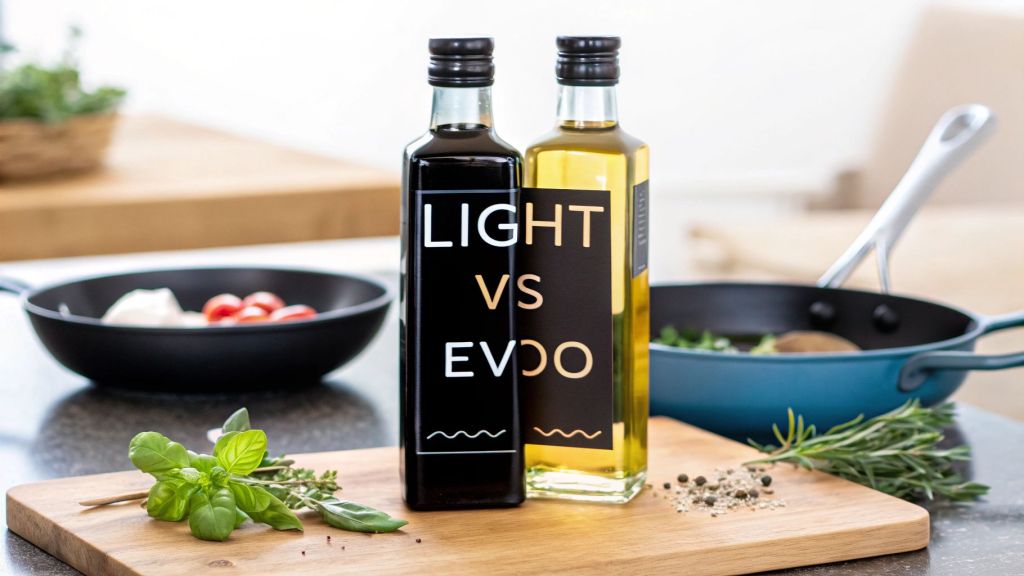
When you get right down to it, the core of the "light olive oil vs. extra virgin" debate is all about the processing. Extra virgin olive oil (EVOO) is the real deal—unrefined and cold-pressed, which is why it keeps its bold, peppery flavor and is packed with nutrients. On the other hand, "light" has nothing to do with calories; it simply means the oil has a lighter color and a neutral taste because it’s been refined.
Light vs Extra Virgin Olive Oil: The Key Differences
Staring at the grocery store shelf, it's easy to get confused. Both oils come from olives, sure, but the path they take from the tree to your kitchen transforms them into two completely different products. Getting a handle on these differences is the secret to making the most of your ingredients and cooking techniques.
The biggest split happens right at the production stage. Extra virgin olive oil is the top-shelf stuff, extracted using only mechanical methods—what’s known as cold-pressing—without any chemicals or high heat. This gentle approach keeps the oil's natural character intact, leading to very low acidity (under 0.8%) and a high level of antioxidants called polyphenols, which are responsible for those delicious fruity or peppery notes.
Light olive oil, however, has a much different backstory. It begins as a lower-grade oil that gets a heavy-duty refining treatment. This involves heat and solvents to strip away strong flavors, color, and any impurities. While this process creates a super stable, neutral-tasting oil perfect for certain jobs, it also removes nearly all the healthy polyphenols and vitamins that make EVOO so special.
At a Glance Comparison: Light vs. Extra Virgin Olive Oil
Sometimes you just need a quick answer. This table breaks down the essential differences to help you choose the right oil in a pinch.
| Attribute | Extra Virgin Olive Oil (EVOO) | Light Olive Oil |
|---|---|---|
| Production Method | The first cold press of the olives. It's unrefined, with no chemicals or heat involved. | Refined using heat and solvents, which neutralizes the original flavor and color. |
| Flavor Profile | Robust and full of character. It can range from grassy and fruity to peppery and pungent. | Extremely mild and neutral. You'll barely taste it, which is sometimes the point. |
| Best For | Perfect for salad dressings, dips, finishing dishes, or sautéing over low to medium heat. | Your go-to for high-heat cooking like frying and baking, or anytime you don't want the oil's flavor to interfere. |
| Antioxidants | Very high in polyphenols, the powerhouse compounds with major health benefits. | Most of the natural antioxidants are lost during the refining process. |
This quick summary gives you the basics, but a visual can often make things even clearer.
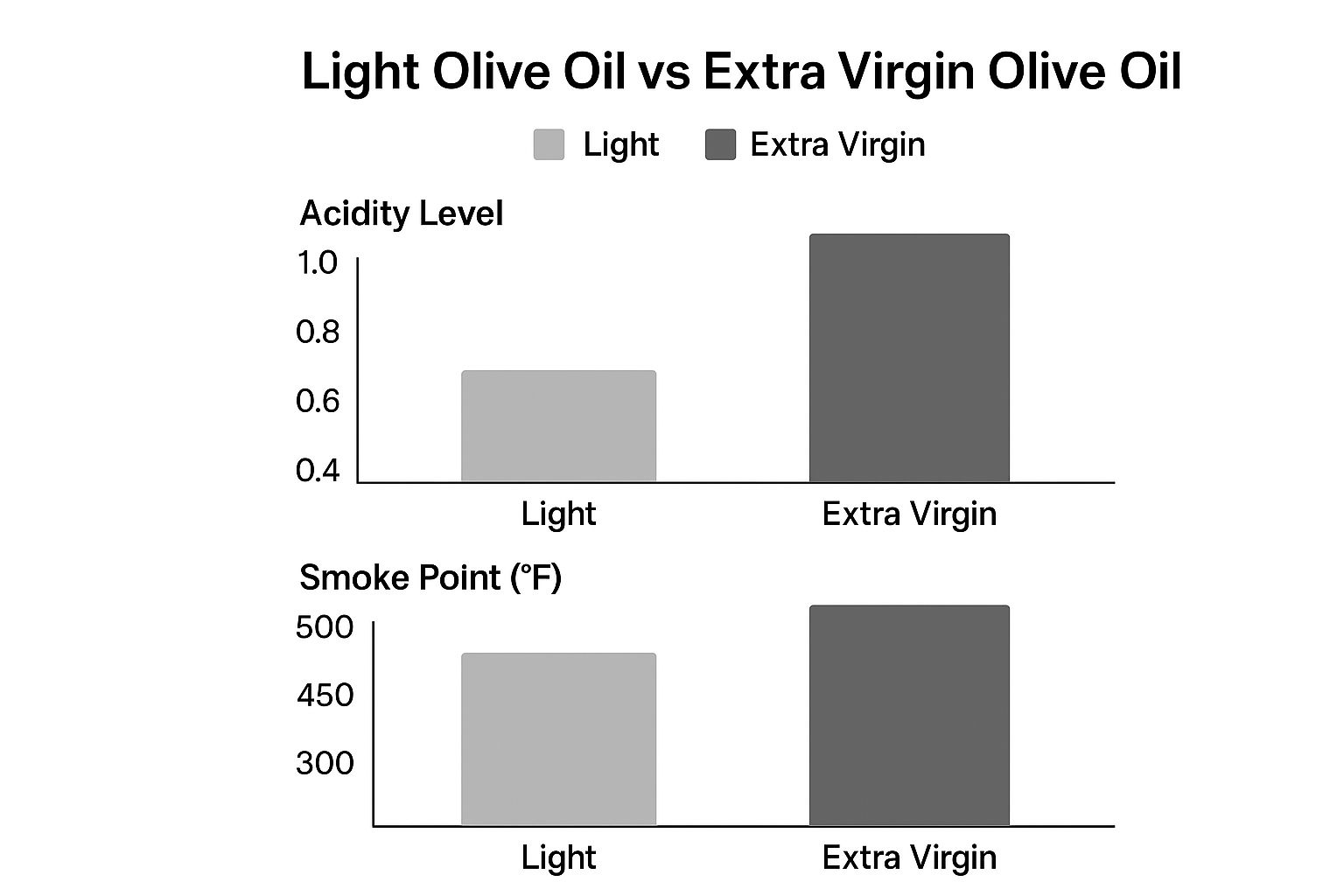
As you can see, light olive oil’s higher smoke point makes it a workhorse for high-heat cooking, but that comes at the cost of the natural compounds that define a true extra virgin olive oil. It really comes down to choosing the right tool for the job.
How Each Olive Oil Is Made and Why It Matters
The real story behind the light versus extra virgin olive oil debate doesn't start on a supermarket shelf, but back in the olive grove and at the mill. The journey from olive to oil is the single biggest factor that dictates flavor, nutrition, and how you should use it in your kitchen. It's truly the difference between a natural, carefully crafted fruit juice and a highly processed cooking fat.
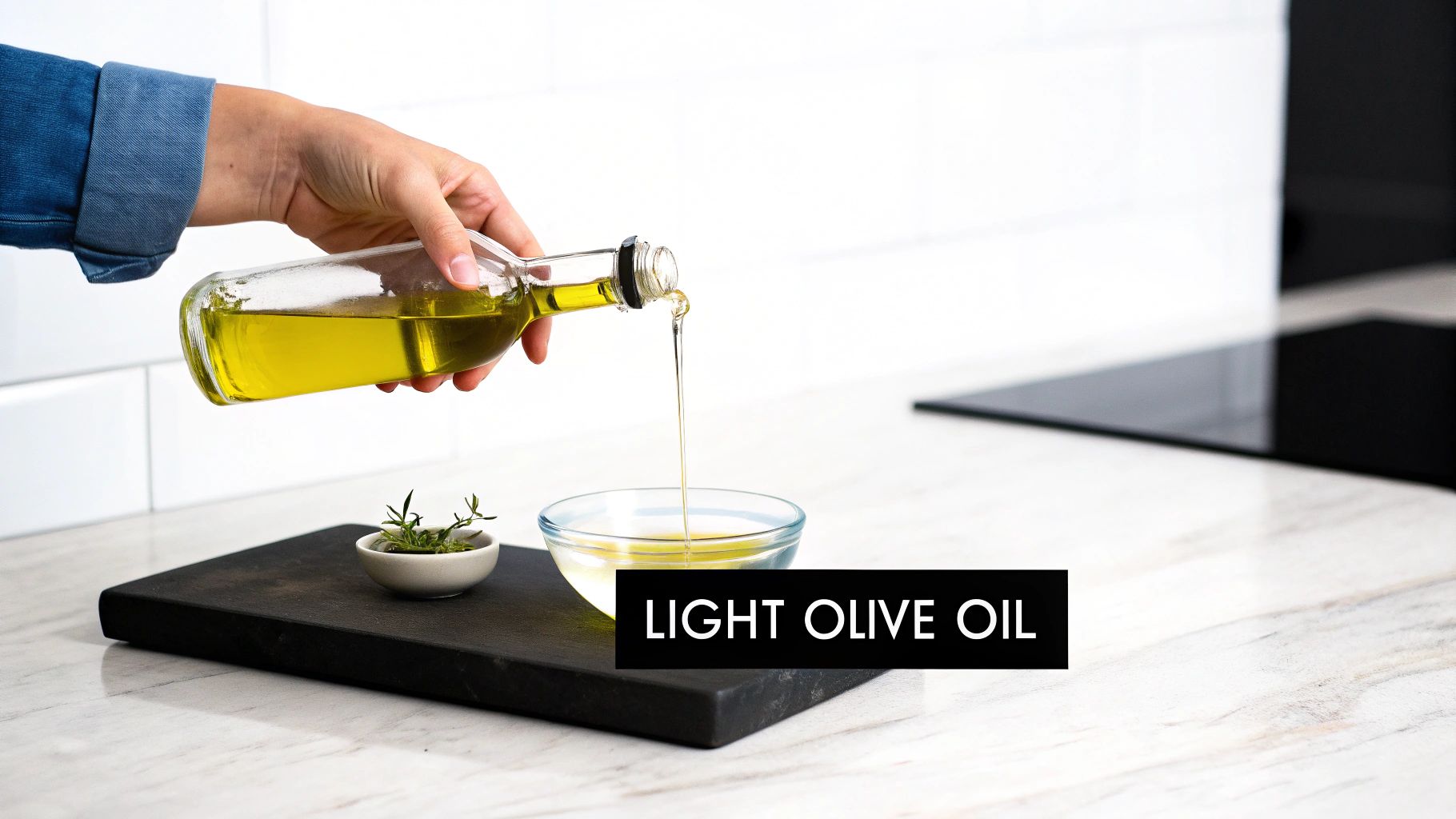
The Unrefined Purity of Extra Virgin Olive Oil
Think of extra virgin olive oil (EVOO) as the gold standard—it’s essentially fresh-squeezed juice from olives. Its creation is all about preserving the natural purity and flavor of the fruit. The entire process is strictly mechanical, a method famously known as “first cold pressing.”
This technique involves crushing whole olives into a thick paste and then applying physical pressure to squeeze out the oil. The "cold" part is critical; the temperature is kept low (below 80°F or 27°C), and no chemical solvents are ever used. This gentle handling is what keeps the oil’s vibrant, natural character intact.
The result is an oil with extremely low acidity—to be legally certified as EVOO, it must be below 0.8%. It also boasts a high concentration of polyphenols, the powerful antioxidants that give authentic EVOO its signature peppery kick, grassy aroma, and incredible health benefits.
The Industrial Journey of Light Olive Oil
Light olive oil has a completely different origin story. It usually starts out as a lower-grade oil that couldn't make the cut for "virgin" or "extra virgin" status because of flaws in its taste, smell, or chemical makeup. To make this oil usable, it’s put through an intense industrial refining process.
This journey is designed to strip away every imperfection, which involves several key steps:
- High Heat Treatment: The oil is heated to very high temperatures, which effectively deodorizes it and removes any off-flavors.
- Chemical Solvents: Solvents are often introduced to extract the maximum amount of oil from the olive pulp and neutralize aggressive tastes.
- Filtering and Bleaching: The oil is then heavily filtered and sometimes bleached with materials like activated carbon, giving it that characteristic pale color and neutral profile.
While this rigorous process creates a very stable oil with a high smoke point, it also strips away nearly all the beneficial polyphenols, vitamins, and authentic olive flavor found in EVOO. A tiny amount of virgin olive oil might be blended back in to add a hint of flavor, but at its core, it's a fundamentally different product.
This stark contrast in production directly shapes how we shop. Extra virgin olive oil is valued as a premium, natural product, which explains why it captured about 48.2% of the olive oil market share in a recent analysis. This trend highlights a clear consumer shift towards more nutrient-dense oils. You can discover more insights about olive oil market dynamics to see the bigger picture.
Ultimately, understanding these paths is key. It clarifies why EVOO is a finishing oil meant to be savored, while light olive oil is a neutral workhorse built for high-heat cooking.
Flavor: From Robust and Peppery to Simply Neutral
When you’re standing in the kitchen deciding between light olive oil and extra virgin, the most immediate and defining difference is taste. It’s not just a subtle variation; these two oils have fundamentally different flavor profiles that serve completely opposite culinary purposes. Honestly, this is the main reason any experienced cook chooses one over the other.
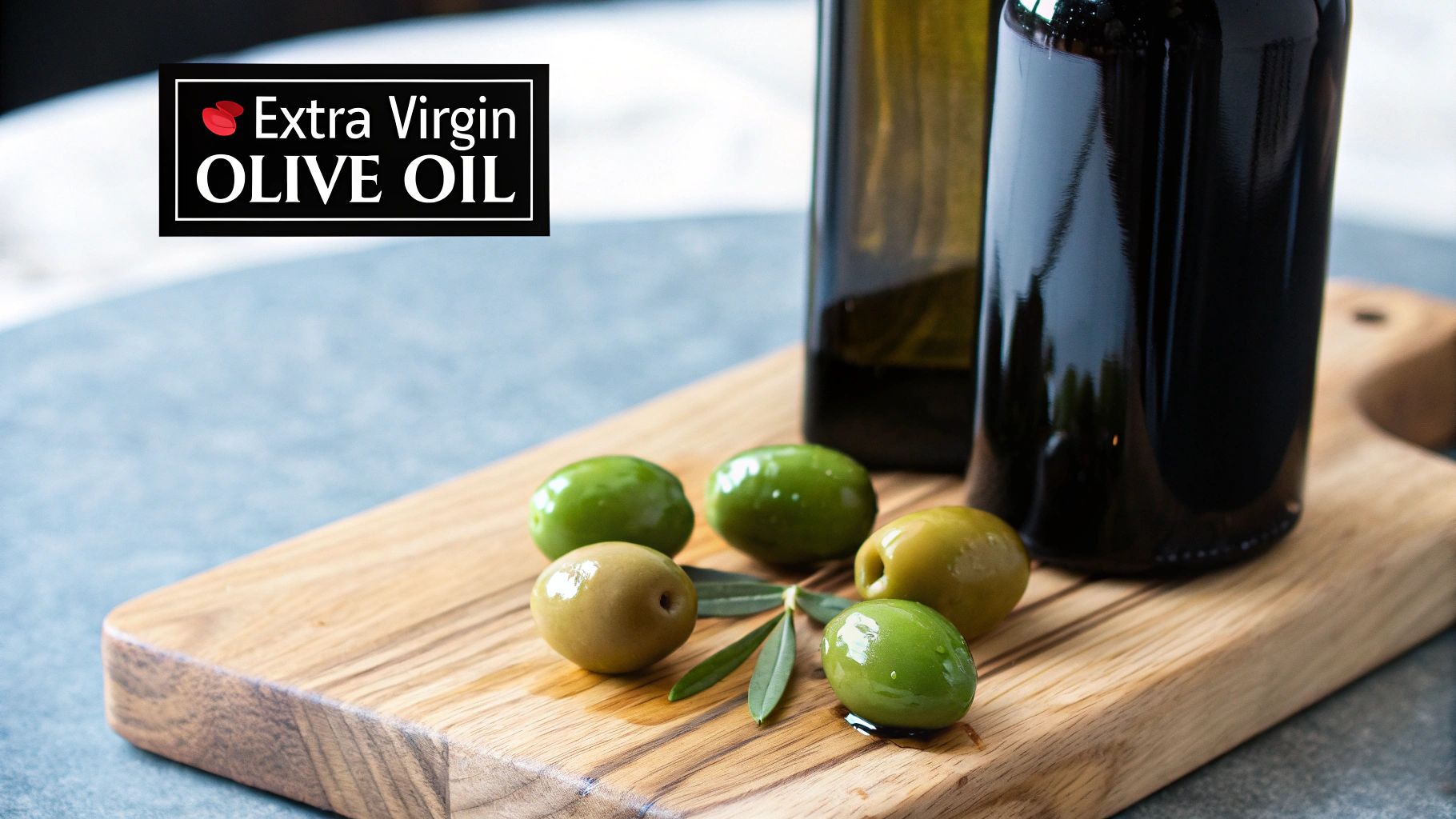
Think of extra virgin olive oil as a key ingredient, something you want to taste. Since it's cold-pressed and unrefined, it hangs on to all the complex, vibrant flavors of the olives it came from. The character can swing wildly depending on the type of olive and where it was grown, giving you a whole spectrum of potential tastes.
A top-notch EVOO might hit you with notes like:
- Fruity: Think hints of green apple, fresh-cut grass, or even ripe tomato.
- Herbaceous: It can have an aroma that reminds you of artichokes or fresh herbs.
- Peppery: This is the tell-tale pungent kick you feel at the back of your throat.
That peppery finish isn't just for show. It comes from oleocanthal, a natural polyphenol that has some impressive anti-inflammatory properties. A strong, peppery bite is often a dead giveaway that you've got a very fresh, high-quality oil in your hands.
The Purposeful Neutrality of Light Olive Oil
On the complete other end of the spectrum is light olive oil, which is defined by its almost total lack of flavor. The refining process it goes through—which can involve heat and even solvents—is specifically designed to strip out all those natural olive characteristics. The entire point is to produce a neutral cooking fat that won't add any of its own personality to your food.
This makes it the go-to choice when you need the other ingredients to be the star. Say you're baking a delicate lemon cake or frying up a batch of donuts. You need a fat for moisture and texture, but you certainly don't want a grassy or peppery flavor crashing the party. Light olive oil provides that clean, neutral base.
The real question is one of intent. Do you want the oil to be a distinct flavor that adds character, or do you need a silent workhorse that lets your other ingredients shine? Your answer tells you exactly which bottle to grab.
For instance, if you're whipping up a classic vinaigrette, a robust, fruity EVOO is what you want. It will emulsify beautifully with the vinegar and herbs, creating a dressing that truly elevates a simple salad. Using light olive oil would just leave you with a bland, greasy coating.
Now, flip the scenario. Imagine you're searing a piece of fish seasoned with delicate herbs. A neutral light olive oil will give you that perfect, crispy crust without masking the subtle flavors of the fish. Using an aggressive, peppery EVOO here could easily steamroll the entire dish. Getting a handle on this fundamental taste difference is the first real step to mastering both oils in the kitchen.
The Nutritional Showdown: Which Oil Is Healthier?
It’s a common misconception that since light and extra virgin olive oils have the same calorie and fat content, their health benefits must be identical. On paper, they both clock in at around 14 grams of fat and 120 calories per tablespoon. But that’s where the similarities end, and the real story begins.
The undisputed champion in the health department is extra virgin olive oil. Because it's cold-pressed and completely unrefined, it hangs onto a whole host of powerful compounds that simply don't survive the intense processing that creates light olive oil. The most significant of these are its polyphenols.
These natural antioxidants are what give a good EVOO its characteristic peppery finish and are prized for their potent anti-inflammatory effects. They’re linked to major health wins, from supporting cardiovascular health to protecting your body’s cells from damage. In stark contrast, the high-heat and chemical refining used to produce light olive oil obliterate almost all of these precious micronutrients.
The Micronutrient Gap
So, while the macronutrients—the fats and calories—are the same, the micronutrient profiles are worlds apart. Think of extra virgin olive oil as more than just a fat; it's a functional food that delivers vital nutrients.
This is where EVOO really pulls ahead:
- Antioxidants: It’s loaded with polyphenols like oleocanthal and oleuropein, which are famous for fighting inflammation and oxidative stress.
- Vitamins: It contains important fat-soluble vitamins, namely Vitamin E and Vitamin K, which are essential for everything from skin health to proper blood clotting.
Light olive oil, on the other hand, is mostly just monounsaturated fat. While this fat is certainly a better choice than saturated or trans fats, you’re missing out on the incredible synergistic benefits that make EVOO a nutritional powerhouse.
A crucial takeaway: The word "light" on an olive oil bottle refers only to its color and flavor profile, never its calorie or fat content. For this reason alone, reaching for EVOO for your salad dressings and dips is one of the easiest health upgrades you can make.
This critical difference is what drives so much of the global market. Consumers increasingly seek out minimally processed foods with superior nutritional value, and EVOO fits the bill perfectly with its wealth of vitamins and antioxidants. This preference has helped shape an olive oil market recently valued at USD 15.11 billion and still projected to grow. You can learn more about these olive oil market findings to see just how much consumer demand for healthier options is influencing the industry.
When it comes down to it, both oils can have a place in a healthy kitchen. But for true, measurable health benefits, extra virgin olive oil is in a league of its own.
Choosing the Right Oil for Your Cooking Method
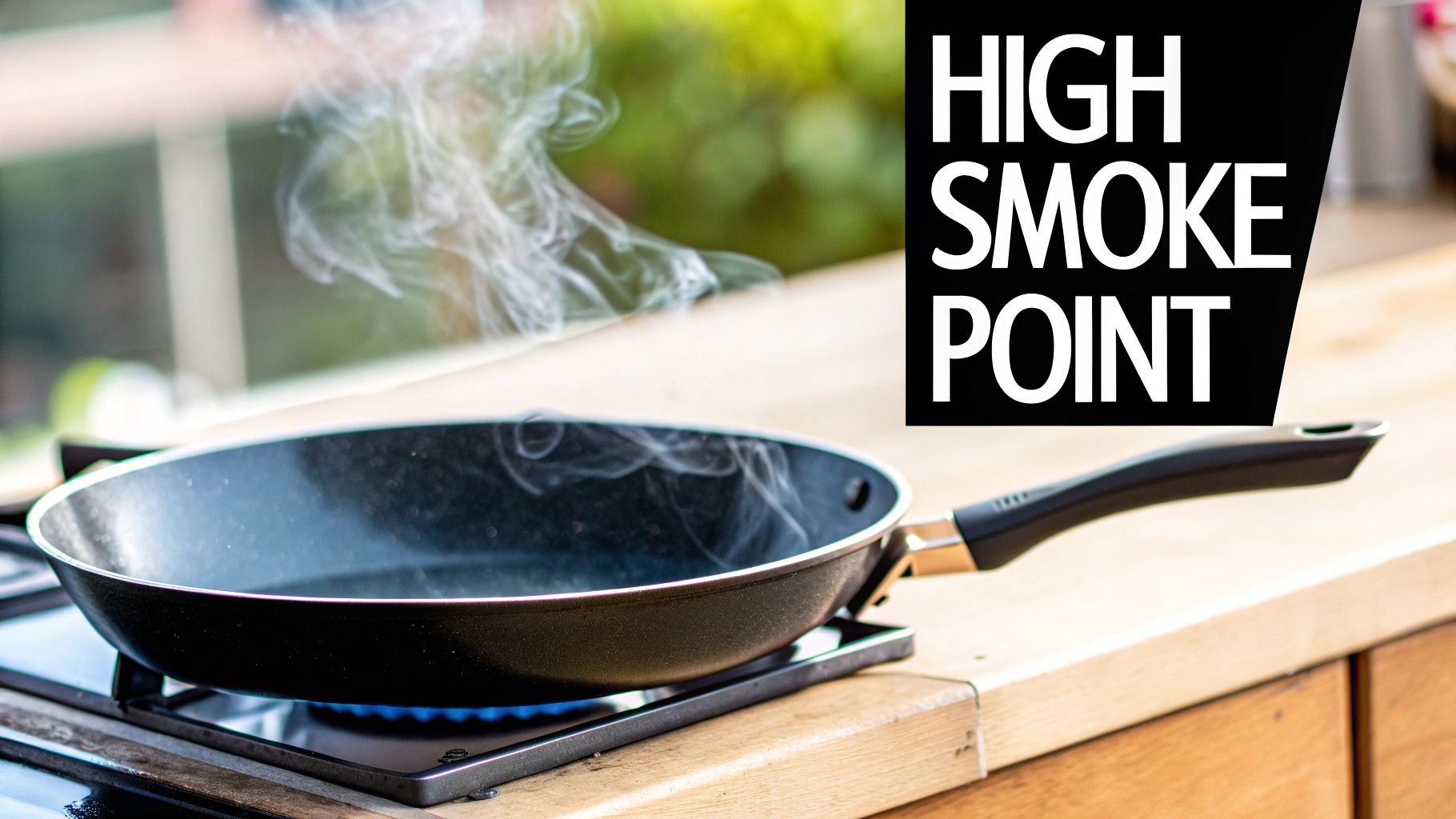
This is where the real-world kitchen debate over light vs. extra virgin olive oil gets interesting: the smoke point. Every cook knows the sight—the moment an oil stops shimmering and starts sending up wisps of smoke. That's its smoke point, the temperature where the oil begins to break down, releasing fumes and creating off-flavors.
So, picking the right oil really comes down to understanding this critical temperature threshold.
Debunking the Smoke Point Myth
There's a common misconception that you can't cook with extra virgin olive oil. Many home cooks relegate their best bottle to salads and finishing drizzles, fearing it's too delicate for any heat. But the truth is, a good quality EVOO is far more robust than most people think. Its smoke point sits comfortably between 350°F and 410°F (177-210°C), which is more than enough for most everyday cooking.
On the other hand, light olive oil has a significantly higher smoke point, reaching up to 470°F (243°C). This isn't magic; it's a direct result of the refining process. That process strips out the very things—free fatty acids and volatile organic compounds—that give EVOO its flavor and cause it to smoke at lower temperatures. This makes light olive oil your go-to for high-heat cooking.
Pairing the Oil to the Pan
The trick is to simply match the oil to the job. Don't think of it as a rigid rule, but more like a practical guideline for getting the best flavor and nutritional value from your ingredients.
Here’s a quick guide for what to grab and when:
- Sautéing and Roasting: For sautéing vegetables over medium heat or roasting anything under 400°F, extra virgin olive oil is perfect. It adds a delicious, peppery note that beautifully complements aromatics like garlic and onions.
- High-Heat Searing and Frying: When you need a screaming hot pan for a perfect crust on a steak or for deep-frying, light olive oil is the undisputed champion. Its high smoke point means it won't burn or introduce any bitterness.
- Baking: Because it’s so neutral, light olive oil is often the better choice for cakes and muffins where you don’t want any olive flavor coming through. But don’t count EVOO out entirely—a mild one can add a wonderful, subtle complexity to things like focaccia or an olive oil cake.
The key takeaway is this: A higher smoke point doesn’t mean it's a "better" oil. It's just a different tool for a different task. You'd use EVOO to build flavor in a pasta sauce, but you'd use light olive oil to get a clean, crispy fry.
In the Kitchen: Real-World Scenarios
Let's make this practical. You're starting a slow-simmered tomato sauce. Gently sweating your onions, garlic, and carrots in extra virgin olive oil builds a foundation of flavor that a neutral oil just can't match. The temperature stays well below the EVOO's smoke point, allowing its fruity character to infuse the entire dish.
Now, let's say you're making fried chicken. You need an oil that can handle sustained high heat without breaking down and turning acrid. This is the perfect job for light olive oil. It provides a clean, stable, high-temperature environment to get that batter golden and crispy, letting the seasoning and the chicken shine.
Understanding these specific uses in the light olive oil vs. extra virgin matchup means you can stop guessing and start cooking with confidence.
Which Olive Oil Belongs in Your Pantry
After diving into how these oils are made, what they taste like, and what they offer nutritionally, the whole "light vs. extra virgin" debate isn't about picking an absolute winner. It's really about knowing their specific jobs in the kitchen. A smart cook understands that the best choice depends entirely on the dish, and a well-stocked pantry has room for both.
Think of it like having the right tool for the job. You wouldn’t use a delicate paintbrush for a large wall, and the same principle applies here. Each oil shines in different situations.
When to Reach for Each Oil
The decision really boils down to two key factors: flavor and heat. Are you looking for the oil to be a star ingredient, or do you just need a functional fat to cook with?
Here’s a practical guide to help you decide:
-
Extra Virgin Olive Oil (EVOO): Reach for this bottle when its flavor and health benefits can really stand out. It’s perfect for salad dressings, dips like hummus, or as a final drizzle over a finished bowl of pasta, soup, or some crusty grilled bread. Those bold, peppery notes are meant to be tasted and will elevate simple, raw, or lightly cooked foods.
-
Light Olive Oil: This is your go-to for high-heat cooking. Grab it when you’re searing a steak, frying chicken, or even baking. Its neutral taste won't mess with the flavor of a delicate vanilla cake, and its higher smoke point means it stays stable when you’re stir-frying vegetables or getting a perfect, crispy crust on fried foods.
Ultimately, the question isn’t which olive oil is better, but which is better for the task at hand. One is a flavor-forward finishing oil, while the other is a neutral, high-heat cooking fat.
A great rule of thumb is to "taste" one and "heat" the other. If the oil's own flavor is a key part of the final dish's profile, EVOO is your answer. If you just need a reliable cooking fat, light olive oil is almost always the more practical and effective choice.
By keeping both in your kitchen, you give yourself the flexibility to make the right call for every recipe. You can discover the world of premium olive oil and gain the confidence to use each bottle to its full potential, making sure every dish turns out exactly how you envisioned it.
Your Top Olive Oil Questions, Answered
Even after breaking down the differences between light and extra virgin olive oil, some practical questions always pop up. Let's tackle a few of the most common ones so you can feel completely confident grabbing the right bottle for the job.
Does "Light" Olive Oil Have Fewer Calories?
This is probably the most frequent question I hear, and it’s a classic case of misleading marketing terms. The answer is a hard no. The word "light" on an olive oil label has absolutely nothing to do with calories or fat content. It refers only to the oil's lighter color and more neutral flavor.
A tablespoon of light olive oil has the exact same calorie and fat count as a tablespoon of extra virgin olive oil. So, if you're watching your intake, don't be fooled—the choice between them should be about flavor and cooking method, not calories.
Can I Substitute One for the Other?
You can, but the real question is, should you? The answer really comes down to what you're trying to achieve in the kitchen. Swapping them isn't a simple one-for-one exchange because they play completely different roles.
Imagine drizzling a bold, peppery EVOO into your delicate vanilla cake batter. The olive oil’s assertive flavor would completely overpower the dessert, and not in a good way. On the flip side, using a flavorless light olive oil in a classic vinaigrette would make it taste greasy and one-dimensional, missing the zesty punch that only a good EVOO can provide.
My rule of thumb is simple: If the oil is a star ingredient meant to be tasted, reach for extra virgin. If it’s just a background player for heat transfer, light olive oil is almost always the better choice.
What’s the Best Way to Store Olive Oil?
Proper storage is non-negotiable for keeping any olive oil fresh, whether it’s a top-shelf EVOO or a workhorse light olive oil. Heat, light, and air are the enemies of quality.
To protect your investment, always keep your oil in a cool, dark place like a pantry or cabinet—never next to the stove. And make sure you seal the cap tightly after every use. These simple habits will preserve the oil's flavor and prevent it from going rancid, ensuring you get the most out of every drop.
For more expert insights to elevate your cooking and appreciation for this liquid gold, Learn Olive Oil is your ultimate guide. Discover the World of Premium Olive Oil and start your journey today.
 Learn Olive Oil
Leave a comment