Dipping a piece of warm, crusty bread into a pool of fragrant olive oil is one of life's simple, perfect pleasures. But to truly elevate that experience from good to unforgettable, you have to start with the right oil. Your search should begin and end with a high-quality Extra Virgin Olive Oil (EVOO)—it’s the only way to go for its incredible flavor, low acidity, and health-boosting properties.
Let's cut through the noise on the supermarket shelf and find you the perfect bottle.
What Makes an Olive Oil Perfect for Dipping
When olive oil is the star of the show, like it is with bread dipping, its quality matters immensely. You aren't just looking for a cooking fat; you're choosing a condiment with its own personality and character. The real secret? Pick an oil whose flavor you genuinely love all by itself.
This tradition is deeply rooted in Mediterranean food culture, where dipping bread is a rustic, everyday ritual that celebrates the quality of simple ingredients. It's no surprise that the global market is dominated by countries where this is a way of life, like Spain, Italy, and Greece. Spain, for instance, is the world's top producer, churning out roughly 1.41 million metric tons annually. For a deeper dive into these trends, you can explore a detailed report on the global olive oil market from Certified Origins.
Key Qualities to Look For
So, what exactly separates a fantastic dipping oil from a bottle that's better left for sautéing? It really boils down to a few key characteristics.
- Flavor Profile: A top-tier dipping oil needs a distinct and appealing taste. This can run the gamut from grassy and peppery to buttery and smooth. A robust, spicy oil is a fantastic match for a hearty sourdough, while a gentler, more delicate oil might be the perfect partner for a soft focaccia.
- Acidity Level: True EVOO must have a free acidity of less than 0.8%. Generally, a lower acidity points to higher-quality olives and better handling during production. This translates to a cleaner, more vibrant flavor without any off-putting harshness.
- Freshness is Everything: Think of olive oil as fresh fruit juice—because that's what it is! It's always best when consumed fresh. Make it a habit to look for a harvest date on the label. An oil from a recent harvest will have its complex aromas and delicate flavors at their absolute peak.
A key term to look for is ‘cold-pressed’ or 'cold-extraction'. This is a great sign of quality. It tells you the oil was extracted without using high heat, which is crucial for preserving the beautiful flavor compounds and antioxidants that make EVOO so special.
Before we move on, here’s a quick table to summarize what we've covered. I find having a little cheat sheet helps when you're actually standing in the store, faced with a wall of options.
Quick Guide to Selecting Your Dipping Oil
| Characteristic | What to Look For | Why It Matters for Dipping |
|---|---|---|
| Type | Extra Virgin Olive Oil (EVOO) | This is the highest grade, offering the most flavor, aroma, and health benefits, making it ideal for raw applications like dipping. |
| Flavor | A profile you enjoy—from peppery and robust to mild and fruity. | Since the oil is the main flavor, its taste profile is front and center. Match it to your bread and personal preference. |
| Freshness | A recent harvest date (within the last year if possible). | Olive oil is a perishable product. Freshness ensures peak flavor and aroma, preventing any stale or rancid notes. |
| Acidity | Labeled as below 0.8% (a requirement for EVOO). | Low acidity indicates healthy olives and careful processing, resulting in a smoother, cleaner taste without any harshness. |
| Origin | Single-origin or from a reputable region (e.g., Tuscany, Andalusia). | A specific origin often points to higher quality control and a more distinct, characteristic flavor profile. |
Ultimately, the best way to find your favorite is to taste a few. Don't be afraid to buy a small bottle from a region you've never tried before. You might just discover your new go-to oil for every bread basket from here on out.
How to Select Your Ideal Dipping Oil
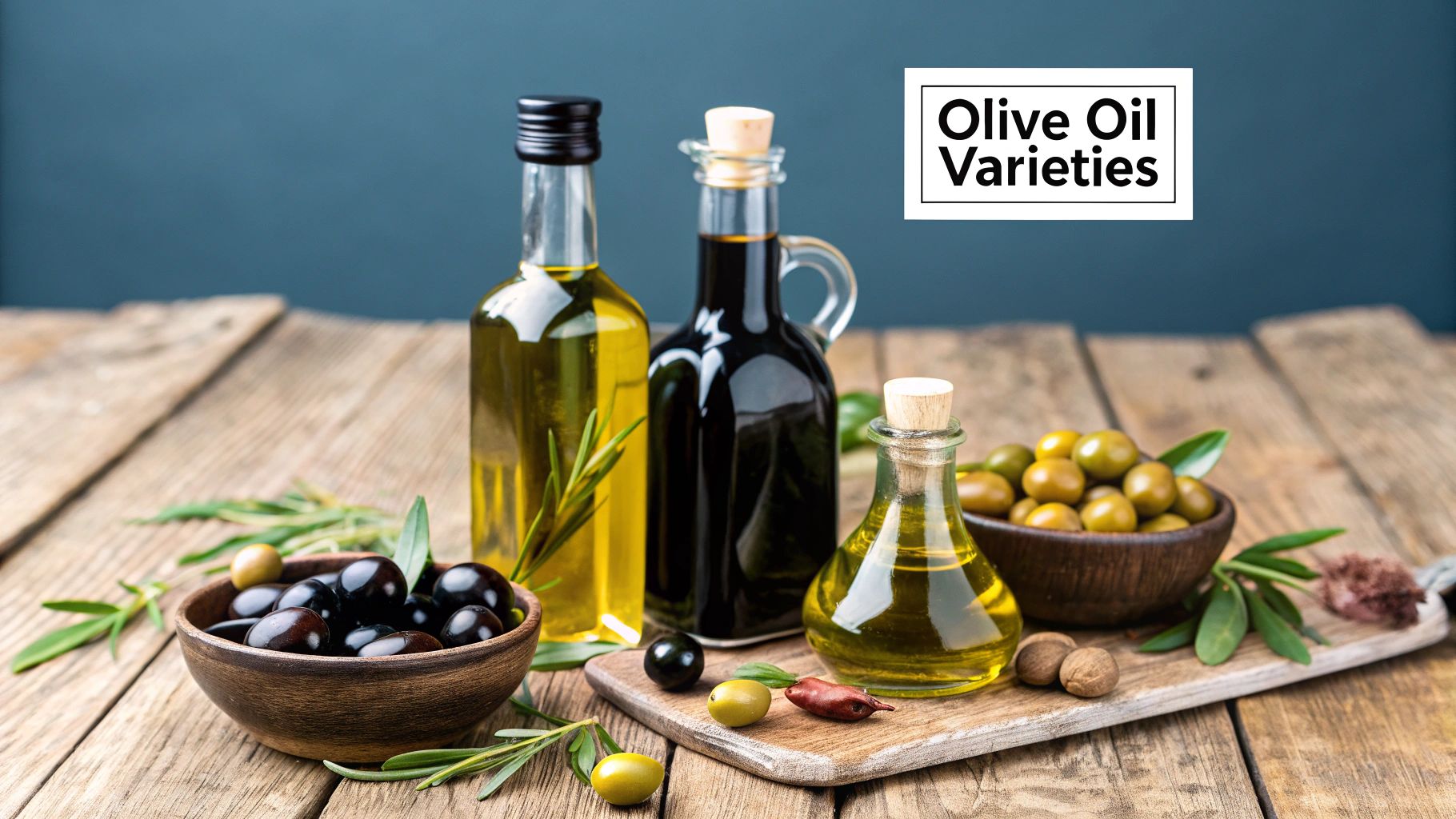
When the olive oil for dipping bread is the star of the show, picking the right bottle is everything. It's less like grabbing a staple for the pantry and more like choosing a fine wine. You’re looking for an oil with a personality that can stand on its own.
The first question to ask yourself is what kind of flavors you lean towards. Extra virgin olive oil runs a huge gamut, from smooth and buttery with hints of ripe fruit to bold and grassy with that peppery zing that catches you in the back of your throat. For instance, a robust, spicy oil from Tuscany is a powerhouse that pairs beautifully with a hearty sourdough. On the flip side, a milder, fruit-forward Spanish Arbequina olive oil could be the perfect, delicate match for a light ciabatta.
Decoding the Label for Freshness and Quality
Flavor is subjective, but freshness is not. Olive oil is a fresh fruit juice, and its best qualities fade over time. My biggest piece of advice is to completely ignore the "best by" date and hunt for the harvest date.
This single detail tells you when the olives were picked and pressed into oil. You should always reach for an oil from the most recent harvest available, ideally one that’s less than a year old. An oil that's been sitting on the shelf for two years might be okay for a quick sauté, but it will have lost all the complex, vibrant aromas that make it special for dipping.
Also, take a good look at the container. The best producers will almost always bottle their oil in dark glass or an opaque tin. Light is a mortal enemy of olive oil, causing it to degrade and turn rancid much faster. A clear glass bottle is a huge red flag.
I’ve learned from experience that spending a few extra dollars on a high-quality, fresh EVOO is always worth it. The difference in taste isn't just noticeable; it's a game-changer. You're not just buying oil; you're buying a flavor experience.
Understanding Regional Differences
While you can find incredible oil from all over the world, certain regions have become famous for specific styles. This isn't a hard-and-fast rule, but it's a great starting point for finding what you like.
- Italian Oils: Often celebrated for their grassy, herbaceous character and a distinctly peppery or spicy finish. These are your bold, assertive oils.
- Spanish Oils: Frequently deliver a fruitier, smoother, and sometimes nutty profile. They can be incredibly complex without the aggressive bite of some Italian oils.
- Greek Oils: Typically offer a softer, more delicate flavor with a gentle peppery note on the finish.
Don't get too hung up on geography, though. At the end of the day, the best olive oil for dipping bread is simply the one that tastes amazing to you. I always suggest buying a few smaller bottles from different producers and doing a side-by-side tasting at home. It’s the quickest way to find out if you’re on team peppery-kick or team smooth-and-buttery.
Creating the Perfect Bread and Oil Pairing
The real art of using olive oil for dipping bread comes alive when you find that perfect harmony between the two. Forget rigid rules. This is all about understanding how flavors play together to create something truly special, where both the bread and the oil are elevated.
Think of it like pairing wine and cheese. You wouldn't serve a bold, aged cheddar with a whisper-light white wine, right? The same logic applies here. A strong, assertive bread needs an oil that can stand up to it, while a more delicate loaf calls for a gentler companion. It’s a partnership, not a competition.
Principles of Successful Pairing
The easiest way to start is by matching intensity. A hearty, dense sourdough with its thick, chewy crust has a powerful tang that pairs beautifully with a robust, peppery Tuscan olive oil. That spicy kick from the oil cuts right through the bread’s sour notes, creating a combination that just sings.
On the other hand, take a lighter bread like a classic ciabatta. With its airy crumb and delicate crust, it’s the perfect stage for a more subtle, fruity olive oil. I often reach for a Spanish Arbequina, which has a buttery, almost sweet profile that won't overpower the bread's quiet flavor.
The ultimate test is simple: after one bite, do you immediately want another? A great pairing feels complete and complex, making you appreciate the best qualities of both the bread and the oil.
And let’s not forget soft, spongy focaccia. Its dimpled top is practically engineered to soak up olive oil, making it an incredibly versatile canvas for almost any high-quality EVOO.
Proven Crowd-Pleasers
Half the fun is experimenting, but if you want a few combinations that I’ve seen win over even the toughest critics time and time again, here are my go-to's:
- Crusty Baguette: The crisp crust and soft, chewy inside are a perfect match for a classic, grassy Italian EVOO.
- Whole Wheat Loaf: The bread's nutty flavor is gorgeously complemented by a moderately fruity and smooth Greek Koroneiki oil.
- Rosemary Focaccia: This one shines with a simple, buttery oil that allows the bread's own herbs to be the star of the show.
Once you start thinking about the texture and flavor of both your bread and your oil, you'll move past just dipping and start crafting genuinely memorable tasting experiences.
Crafting Seasoned Dipping Oils at Home
While a fantastic extra virgin olive oil is a showstopper all on its own, learning to create your own seasoned dipping oil can turn a simple snack into a truly special occasion. This isn't about following a rigid recipe; it's about understanding how to build and balance flavors to create something you love.
The first rule? Don't overwhelm the oil. The point is to complement its natural character, not mask it. A perfect starting point, and often all you need, is a generous pinch of flaky sea salt and some freshly cracked black pepper. These two simple additions are enough to make the oil’s inherent flavors pop.
From there, you can get creative. A swirl of thick, aged balsamic glaze adds a touch of sweetness, while a sprinkle of red pepper flakes can introduce a gentle, lingering warmth. The trick is to add your ingredients a little at a time, tasting as you go to find that perfect balance.
It's no surprise this simple culinary tradition is gaining traction. In fact, global olive oil consumption is expected to climb from 2.45 million metric tons in 2023/24 to around 2.84 million metric tons in 2024/25. This rise is partly driven by its growing popularity in simple, elegant uses just like this. You can actually explore the full consumption data on Statista to see the trend for yourself.
Building Your Flavor Profile
Ready to start experimenting? Often, the most memorable dipping oils are the simplest. One of my go-to methods involves gently warming whole, lightly crushed garlic cloves in the oil over very low heat. You just want them to become fragrant—not browned. This coaxes out a sweet, mellow garlic essence without the sharp bite of raw garlic.
Here are a few combinations I find myself coming back to time and again:
- Rustic Herb: Drop a sprig of fresh rosemary and a few thyme sprigs into your oil. Give it at least 30 minutes for the flavors to really meld.
- Classic Restaurant Style: For that familiar taste, mix in some finely minced garlic, a good pinch of dried oregano, and a touch of red pepper flakes.
- Bright and Zesty: A squeeze of fresh lemon juice and a bit of grated zest can completely lift an oil, especially a milder one. It's a beautiful pairing.
A Note on Restraint: Remember, your high-quality EVOO is the star of the show. The herbs, spices, and other additions are just the supporting cast. Their job is to make the main ingredient shine even brighter, not steal the spotlight.
This visual beautifully captures the elegant simplicity of the process.
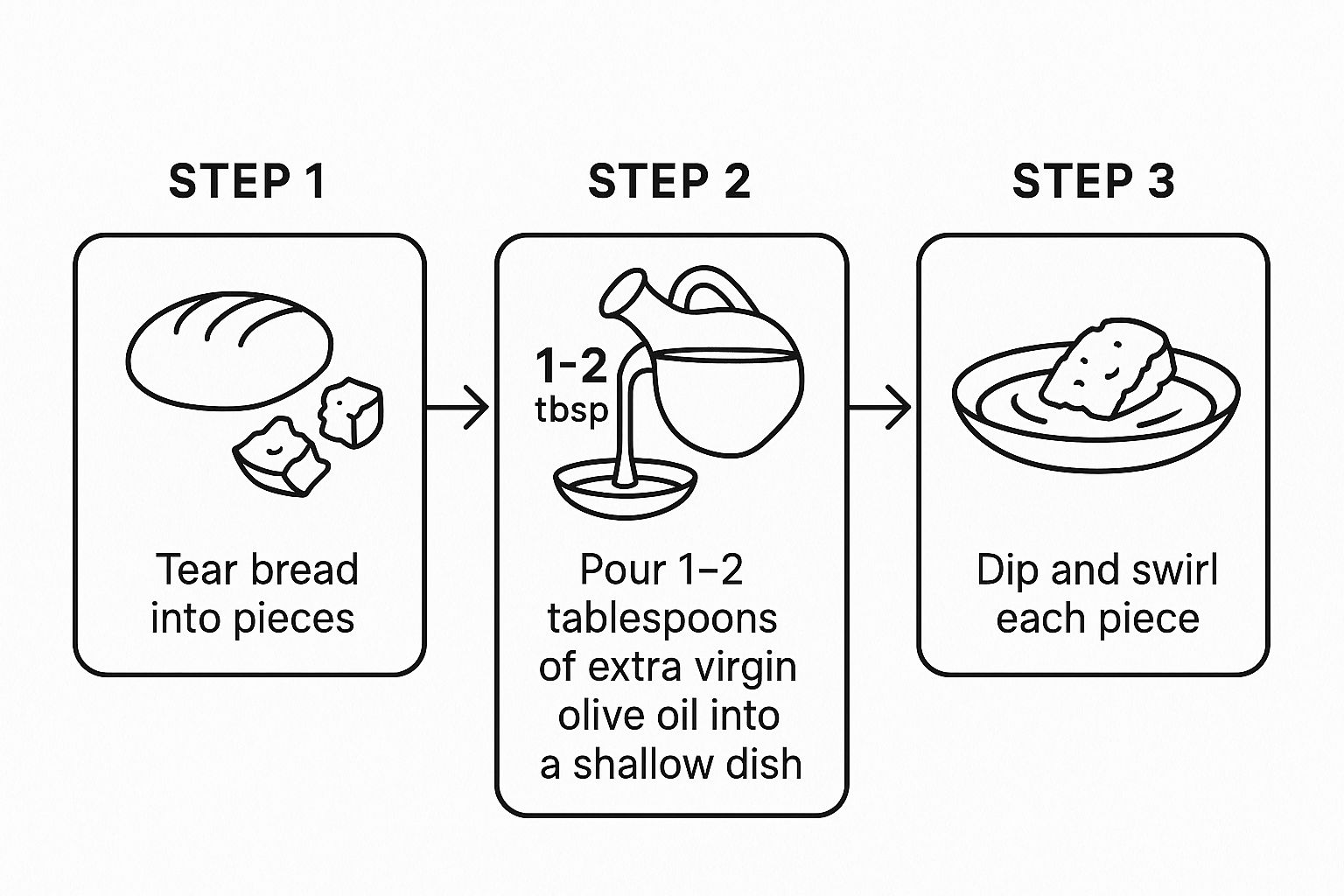
As you can see, the ritual is straightforward and clean. That's why the quality of the olive oil you pour into that dish is everything.
How to Serve and Store Your Olive Oil

You’ve brought home a fantastic bottle of extra virgin olive oil, but the journey to the perfect bite isn't over just yet. How you present and preserve it matters just as much as the initial selection.
A common mistake I see is serving olive oil straight from a chilly pantry. You'll miss out on so much of the character! Always let it come to room temperature first. This simple step awakens the oil, allowing its full, complex aromas to open up and greet you.
When it comes to serving, I always reach for a shallow, wide-mouthed dipping dish. This isn't just for looks; increasing the surface area releases more of those incredible fragrances, whether they're peppery, grassy, or buttery. It truly elevates the entire experience.
Protecting Your Liquid Gold
Once you've opened a bottle of good olive oil, the clock starts ticking. Its three mortal enemies are light, heat, and air. Exposure to any of these will quickly break down the delicate compounds that give the oil its flavor and health benefits, leaving you with something dull and lifeless.
Think of your olive oil like a fresh juice, not a canned good. For the best flavor, you'll want to use an opened bottle within three to six months. It's a living product, and treating it as such makes all the difference.
Your best line of defense is smart storage. Find a cool, dark home for your bottle, like inside a kitchen cabinet away from the oven. Leaving it on the counter, especially next to the stove, is one of the fastest ways to spoil a perfectly good oil.
With factors like a projected 10% decline in global olive oil production for the 2025/26 season, getting the most out of every bottle is more important than ever. Proper storage isn't just about taste; it's about respecting the product and your investment. You can read more about these production forecasts on Olive Oil Times to understand the bigger picture.
Your Top Dipping Oil Questions Answered
When you set out a beautiful bowl of olive oil for dipping, a few questions always seem to surface. It's one of those simple pleasures that sparks curiosity. Let's tackle some of the most common queries so you can serve your next appetizer like a seasoned pro.
Can I Just Use Regular Olive Oil?
I get this one all the time. The short answer is no, not if you want it to taste good. You technically can use a regular or "light" olive oil, but you'd be missing the entire point of the experience.
Extra Virgin Olive Oil (EVOO) is prized for its incredible depth of flavor and powerful health benefits. The refining process that produces standard olive oil strips all of that goodness away, leaving you with a bland, neutral fat. For dipping, the oil is the main attraction, making EVOO the only way to go.
How to Tell If Olive Oil Has Gone Bad
Knowing how to spot spoiled oil is a crucial skill for any home cook. So, how can you tell if that bottle in your pantry has gone rancid? It's simple: trust your nose and taste buds.
Fresh, high-quality olive oil smells alive and vibrant—think fresh-cut grass, green fruit, or even a little black pepper. If you open the bottle and get a whiff of something that reminds you of crayons, wax, or stale nuts, that’s a major red flag. A tiny taste will confirm your suspicions with a greasy, flat, and altogether unpleasant flavor.
I’m a huge fan of using unfiltered olive oil—sometimes called 'olio nuovo' or 'new oil'—for dipping. It’s cloudy because it still contains tiny bits of olive fruit, giving it a uniquely bold and rustic flavor. The trade-off? It has a very short shelf life, so when you get your hands on a bottle, you'll want to enjoy it right away.
What's the Best Bowl for Serving?
Finally, let’s talk about presentation. It might seem like a small detail, but the right dish makes a difference.
The best bowl for serving dipping oil is a shallow, wide one. This design maximizes the oil's surface area, which is key to releasing all those beautiful, complex aromas. Plus, it makes it much easier for guests to get a clean, satisfying dip without making a mess.

 Learn Olive Oil
Leave a comment