The story of olive oil isn't just about food; it's a journey back to the very dawn of civilization. Its origins trace back thousands of years to the ancient Near East, with the first evidence of production popping up around 6000 BC in the lands we now know as Syria and Turkey. From these humble beginnings, the cultivation of the olive tree, Olea europaea, slowly but surely made its way across the Mediterranean, becoming a true cornerstone for entire empires. This "liquid gold" was so much more than a simple condiment—it was light, medicine, and a symbol of immense wealth.
The Ancient Roots of Liquid Gold
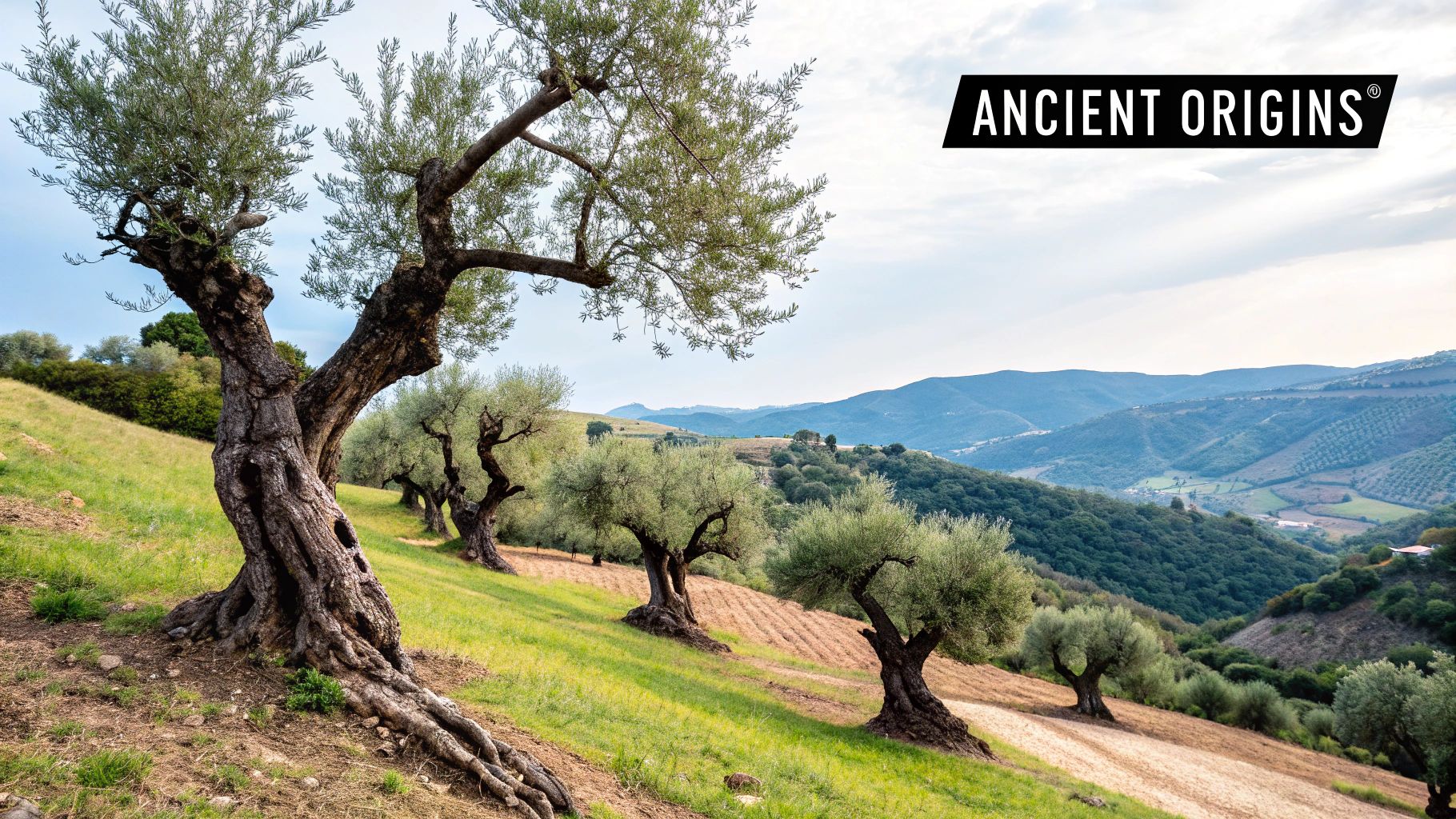
To really understand where olive oil comes from, you have to picture the wild olive tree. Long before it was neatly planted in groves, it was a tough, scraggly plant that stubbornly grew in the rocky, sun-scorched soils of the Mediterranean Basin. It took the cleverness of our earliest ancestors to figure out how to transform its bitter fruit into one of history’s most essential commodities.
Archaeological finds, from ancient pollen samples to preserved olive pits, point to the Levant as the cradle of olive cultivation. This historic region, which includes modern-day Palestine, Israel, Jordan, Lebanon, and Syria, is where people first cracked the code of pressing olives to release their prized oil.
From Survival to Symbol
In the beginning, olive oil was all about function. It was a dependable, high-calorie food source and, just as importantly, a clean-burning fuel for lamps that pushed back the darkness. That alone made it a must-have for daily life.
But as societies blossomed, the meaning of olive oil deepened. It went from a basic staple to a foundation of culture, commerce, and even spirituality. You can see its impact woven through the fabric of the ancient world's most powerful civilizations:
- The Minoans of Crete: For this Bronze Age powerhouse, olive oil was the lifeblood of their economy. Archaeologists at the Palace of Knossos have unearthed massive clay jars called pithoi, some big enough to hold incredible amounts of oil, proving its central role in their trade.
- The Ancient Greeks: The Greeks practically worshipped the olive tree, considering it a sacred gift from the goddess Athena herself. They used its oil to anoint victorious athletes at the Olympic Games, as a key ingredient in perfumes, and in their most sacred religious rituals.
- The Roman Empire: Always the master engineers, the Romans took olive oil production to an industrial scale. They designed more advanced stone presses and planted olive groves all across their vast empire, from the Iberian Peninsula to the shores of North Africa.
For these ancient cultures, olive oil was not merely a product but a pillar of society. The Roman historian Pliny the Elder famously declared that, alongside wine and grain, olive oil was an essential necessity of life.
Uncovering the Past Through Ancient Tech
Our knowledge of olive oil's history isn't just pulled from dusty scrolls; it's literally carved in stone. All across the Mediterranean, archaeologists have found ancient olive presses. These early machines, typically made of a large stone basin and a massive, heavy millstone, are a testament to our ancestors' ingenuity in using simple physics to crush the olives.
The pottery of the era tells its own story, too. By analyzing the residue left inside ancient terracotta jars, known as amphorae, scientists have found traces of oleic acid—the main fatty acid in olive oil. This confirms these vessels were the shipping containers of the ancient world, used to transport liquid gold across sprawling trade networks. This trade moved more than just a commodity; it spread culture, technology, and the very taste of civilization, paving the way for the global industry we know today.
Of course. Here is the rewritten section, designed to sound like it was written by an experienced human expert.
How Spain Became the World's Olive Oil Leader
While olive oil's roots are ancient and spread across the Mediterranean, its modern-day capital is undeniably Spain. The country didn't just become another producer; it scaled up olive cultivation to a level the world had never seen, fundamentally changing the entire industry. This story of dominance comes down to a perfect storm of geography, massive scale, and one incredibly important olive.
The engine room of this global powerhouse is Andalusia, the vast, sun-drenched region in the south. The climate here seems almost tailor-made for growing olives, and the sheer scale of production is hard to wrap your head around until you see it for yourself.
The "Sea of Olives" in Jaén
Nowhere is this more apparent than in the province of Jaén. If you stand on any hill in this part of Andalusia, you'll witness the famous mar de olivos, or "sea of olive trees." It's a stunning, almost surreal landscape—a rolling ocean of silvery-green leaves stretching to every horizon, comprised of more than 66 million individual trees.
This single province is the absolute epicenter of the olive oil world. It's not just a collection of farms; it's a finely-tuned economic machine that dictates much of the global market. To put it in perspective, the world produced around 2.7 million tonnes of olive oil in 2022. Spain contributed a whopping 665,709 tonnes of that—about 24% of the entire global supply. What’s truly staggering is that Jaén is responsible for roughly 70% of Spain’s total production. This means one province in southern Spain produces a huge chunk of all the olive oil consumed on the planet. For more data on this, you can dig into the history of olive oil on Wikipedia.
Meet Picual: The King of Spanish Olives
If Jaén is the kingdom, then the Picual olive is its undisputed king. This one varietal is the most widely planted olive on earth, covering over 900,000 hectares in Spain alone. Its popularity is no accident. For farmers, the Picual is a workhorse—it's a tough, resilient tree that consistently produces a high yield of oil. Crucially, that oil is naturally high in antioxidants, giving it a fantastic shelf life.
But what does it actually taste like? Picual is famous for its big, assertive personality.
- Bold Flavor: It typically has a pronounced bitterness on the tongue and a peppery tickle in the back of your throat, which is the tell-tale sign of healthy polyphenols.
- Fruity Notes: Especially when harvested early in the season, it bursts with green, fruity notes of tomato leaf, fresh-cut grass, and even fig trees.
- Incredible Versatility: Its robust character stands up beautifully to heat, making it a go-to for cooking and sautéing, but it's also perfect for drizzling over a finished dish for a bold kick.
Because the Picual is so dominant, its flavor profile has become what many of us think of as "Spanish olive oil." Those classic bold, peppery notes are, for millions of people, the definitive taste of Spain.
Spain's Influence on Your Kitchen Staple
Spain's massive production volume gives it enormous sway over the global market. Think of it as the world's olive oil price-setter. When the harvest in Andalusia is bountiful, global prices tend to fall or stabilize. But when a drought hits Jaén, the ripple effect is felt in grocery store aisles from New York to New Zealand.
It's this powerful combination—perfect growing conditions, unbelievable scale, and the reliable dominance of the Picual olive—that has cemented Spain's position at the top. It's the engine that keeps the modern olive oil industry running, ensuring this liquid gold remains a staple in kitchens everywhere.
Uncovering Italy's Mosaic of Regional Flavors
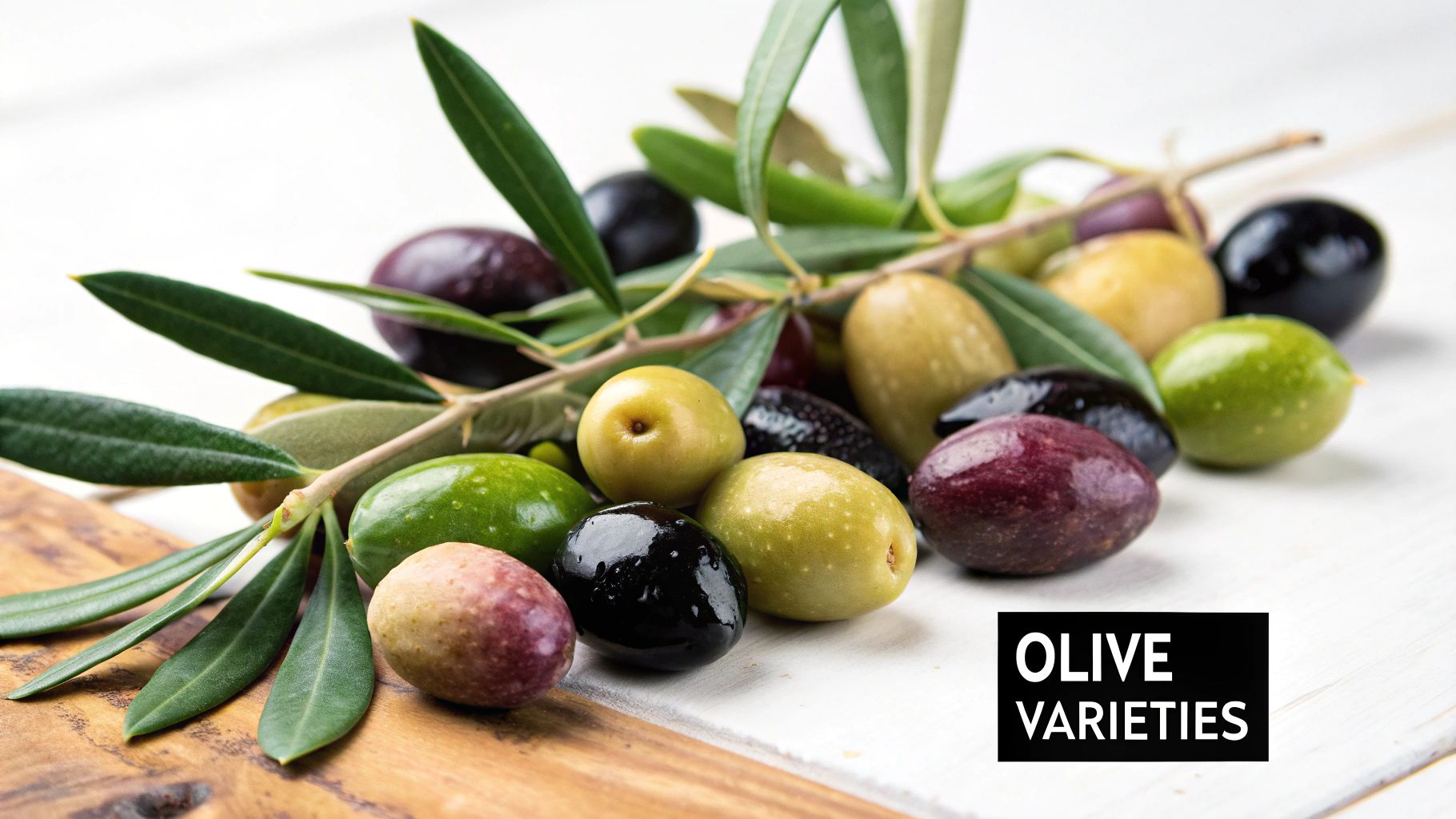
While Spain might be the king of production volume, Italy is the undisputed champion of variety. Diving into Italian olive oil isn't just a tasting; it's a journey. Each bottle tells a story, a direct reflection of its specific corner of the country, its unique microclimate, and the hundreds of native olive cultivars grown there.
Think of Italy not as one producer, but as a patchwork quilt of regional flavors. The country’s long, boot-like shape provides an incredible range of growing conditions, from the sun-drenched south to the cooler, alpine-tinged north. For generations, farmers in each region have cultivated their own specific olives, leading to oils so distinct that an expert can often pinpoint their olive oil origins with a single taste.
A Journey from South to North
As you travel through Italy, the character of the olive oil changes dramatically. It's a spectrum of flavor, running from intensely bold in the south to exceptionally delicate in the north.
-
Southern Powerhouses (Apulia & Calabria): The southern regions, especially Apulia (the "heel" of the boot), are the heartland of Italian olive oil production. This is where you'll find the mighty Coratina olive, which produces robust, intensely fruity oils with a peppery punch and a distinctly bitter finish. These are big, powerful oils that stand up beautifully to hearty dishes like bean soups or grilled steak.
-
Central Elegance (Tuscany & Umbria): Head north into the rolling hills of central Italy, and the oils start to show more refinement. Tuscany, world-famous for its Frantoio and Leccino olives, creates beautifully balanced oils. Expect classic notes of fresh-cut grass, artichoke, and almond, with a pleasant bitterness and a peppery kick that's assertive yet elegant.
-
Northern Delicacy (Liguria): Up in the cool, coastal air of Liguria in the northwest, the Taggiasca olive is king. It yields a remarkably mild, buttery oil with subtle, sweet notes of almond and even pine nut. Its gentle profile is perfect for finishing delicate foods like fresh pesto or steamed fish, where you don't want the oil to overpower the dish.
The Stamp of Authenticity
To safeguard this incredible diversity, Italy uses a system of geographical indications to guarantee an oil's origin and quality. When you spot these seals on a bottle, you can trust you're getting an authentic product tied to a specific place.
These aren't just stickers on a bottle. They're a legal promise that the olives were grown, pressed, and bottled in a particular region following strict, time-tested rules. It's a direct connection to the true olive oil origins of that bottle.
The two main certifications to look for are:
- PDO (Protected Designation of Origin): Known in Italy as Denominazione di Origine Protetta (DOP), this is the gold standard. It guarantees that every single part of the process—from growing and harvesting to milling and bottling—happened within that specific, defined geographical area.
- PGI (Protected Geographical Indication): The Italian term is Indicazione Geografica Protetta (IGP). This label is a bit more flexible, requiring that at least one stage of production took place in the designated region, while others (like bottling) could happen elsewhere.
With over 40 PDO/PGI certified regions, Italy offers a breathtaking range that no other country comes close to matching. From the spicy, tomato-leaf notes of Sicilian oils to the gentle, almond-like flavors from Lake Garda, this diversity is Italy's greatest gift to the olive oil world. For anyone wanting to truly discover the world of premium olive oil, exploring Italy's regions is an essential and delicious adventure.
Greece and Turkey: The Cultural Pillars of Olive Oil
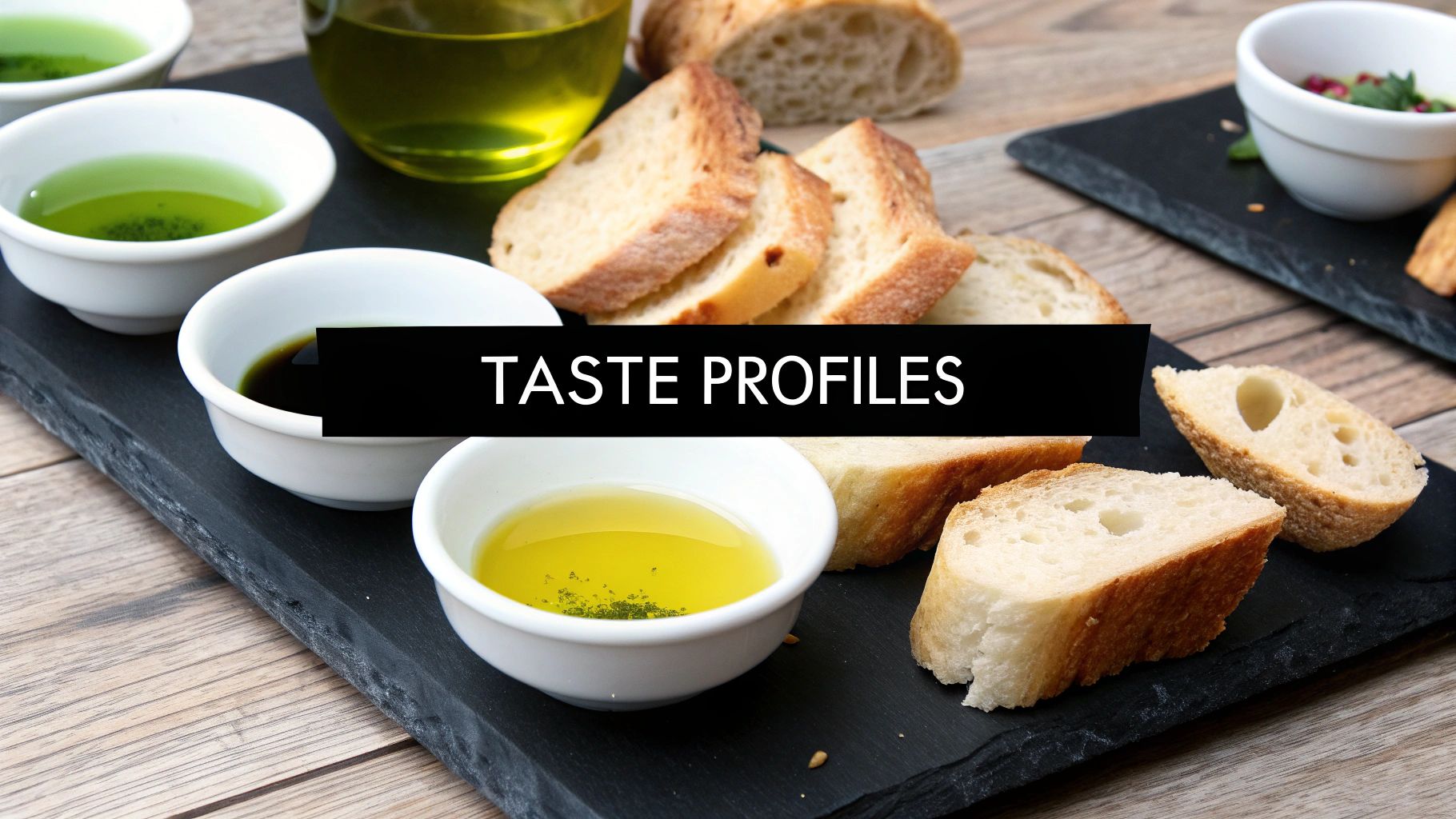
While Spain may lead in production volume and Italy charms with its regional diversity, Greece and Turkey represent the very soul of the olive oil world. In these ancient lands, olive oil isn't just another product on a shelf; it's woven into the fabric of national identity, a cornerstone of daily life, cuisine, and history. Exploring the olive oil origins here reveals a shared, ancient heritage that has since branched into its own beautiful, distinct traditions.
If you want to understand obsession, look at Greece. It's no exaggeration to say that olive oil is a way of life here. Greeks lead the world in per capita consumption, generously drizzling their liquid gold on just about everything. This deep-seated love affair is thousands of years old, with roots in mythology—it was the goddess Athena, after all, who gifted the olive tree to the people of Athens.
The Heartbeat of Greek Olive Oil
At the center of the Greek olive oil scene is the mighty Koroneiki olive. This small but mighty olive is the workhorse of the nation's industry, making up about 60% of all its olive groves. It yields what many consider the quintessential Greek extra virgin olive oil: intensely fragrant with notes of fresh-cut grass, a tell-tale peppery kick, and that famously vibrant green color.
This classic flavor is the taste of the Greek islands and the mainland. It’s the secret behind the freshness of a traditional Greek salad and the perfect, zesty finish for a plate of grilled fish. For a Greek family, having high-quality olive oil in the kitchen isn't a luxury—it's a non-negotiable staple.
This dedication to quality, however, has been a journey. About 40 years ago, the world market was swimming in an olive oil surplus. Economic hardships in countries like Greece led to lower local consumption, and some producers shifted focus to quantity over quality. The industry has worked tirelessly to reverse that trend. For more on the market dynamics and the founding of the International Olive Oil Council, you can explore journals.ashs.org.
Turkey's Ancient Aegean Legacy
Just a stone's throw across the Aegean Sea, Turkey’s olive heritage is just as ancient. The coastal regions of Anatolia are thought to be one of the first places on earth where humans began cultivating olive trees. For millennia, these trees have been a fixture of the landscape, making Turkey one of the world's most important producers.
Though sometimes less familiar in Western markets, Turkish olive oils are wonderfully diverse. The two key varietals you'll encounter are:
- Ayvalık: Grown primarily along the Aegean coast, this olive produces a delicate, aromatic oil with hints of green apple and hay. It's beautifully balanced and a perfect match for fresh salads and vegetables.
- Memecik: A more robust and assertive olive, Memecik creates an oil with stronger grassy notes and a pleasant bitterness. This makes it a fantastic, versatile oil for all-purpose cooking.
For both Greece and Turkey, the olive tree is more than just agriculture; it's a living monument. Many groves are home to "monumental trees," some over a thousand years old, that still bear fruit. These ancient trees are a direct link, connecting modern families to their distant ancestors.
The culinary traditions in each country have been shaped by the character of their native oils. In Greece, the powerful Koroneiki is used generously, often raw, to let its bold flavor shine. In Turkey, the choice of oil is more situational—a delicate Ayvalık for a light Aegean meze, or a heartier oil for a rich Anatolian stew. Though they are neighbors with a deeply connected past, their distinct approaches to olive oil showcase the incredible cultural depth that makes them true pillars of the olive world.
2. Today's Global Olive Oil Market: A Blend of Old and New
Olive oil's story may be rooted in ancient Mediterranean groves, but today's market is a truly global affair. It’s a fascinating landscape where traditional powerhouses are grappling with new pressures, and energetic "New World" producers are adding their own vibrant chapters to this ancient narrative.
The biggest factors shaping the market are now global in scale. Widespread droughts and unpredictable weather patterns, especially in the Mediterranean, are hitting harvest yields hard. This volatility sends ripples across the globe, directly affecting the price and availability of the bottle of olive oil sitting in your kitchen.
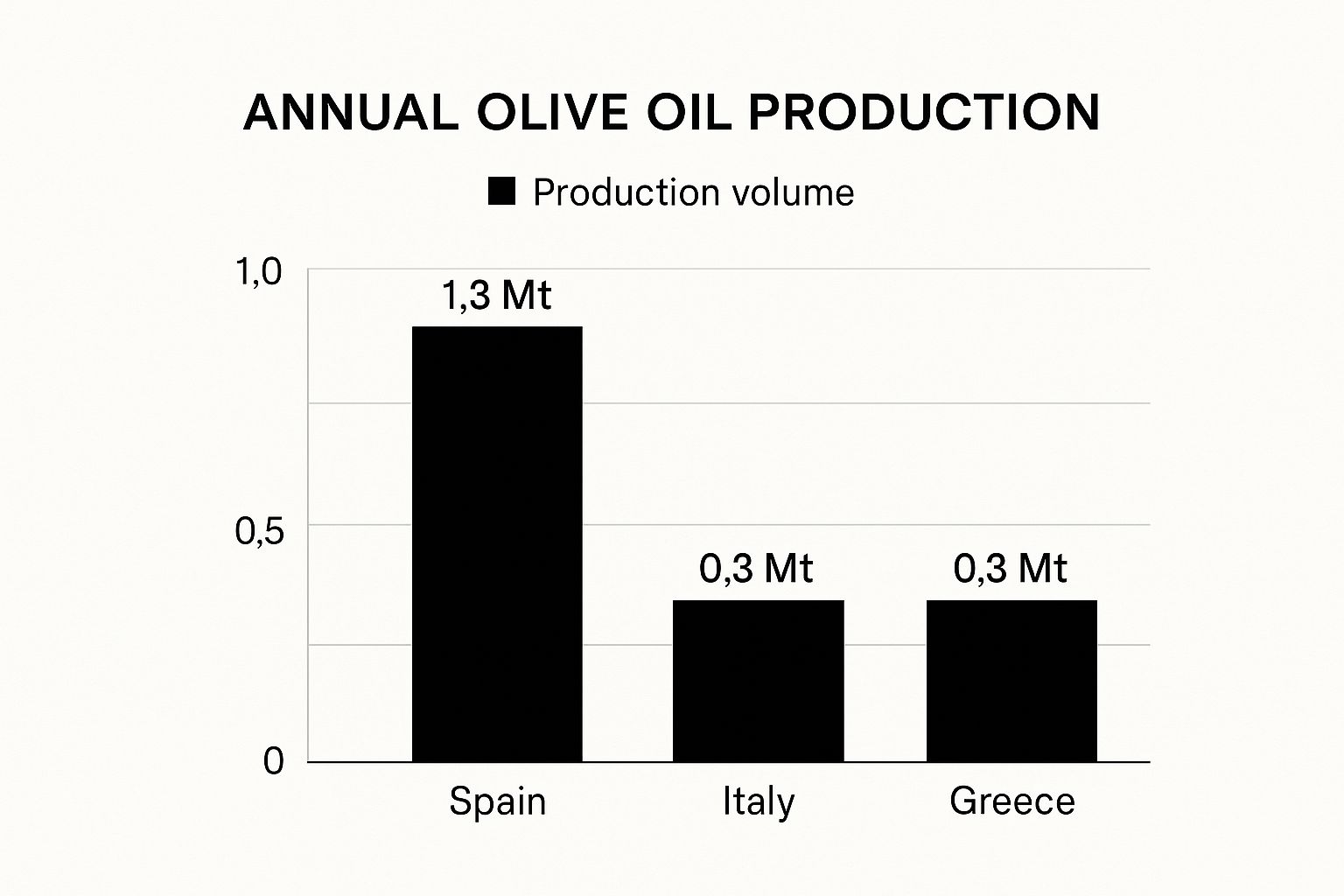
As you can see, Spain is the undisputed giant, producing more than Italy and Greece combined. This means a tough year for Spanish olives is a tough year for the entire world's supply.
Let's put some numbers to that dominance. The following table showcases the sheer volume produced by the top-tier nations, painting a clear picture of where most of the world's olive oil comes from.
Top Olive Oil Producing Countries by Volume (2022 Data)
This table shows the leading olive oil producing countries and their output in tonnes for the year 2022, highlighting the dominance of Mediterranean nations in the global market.
| Country | Production (Tonnes) | Notable Production Regions |
|---|---|---|
| Spain | 1,291,000 | Andalusia, Castile-La Mancha, Extremadura |
| Italy | 337,000 | Puglia, Calabria, Sicily |
| Greece | 330,000 | Crete, Peloponnese, Lesbos |
| Turkey | 287,000 | Aegean Region, Marmara Region |
| Tunisia | 200,000 | Sfax, Mahdia, Kairouan |
| Portugal | 188,000 | Alentejo, Trás-os-Montes |
These figures really drive home how central the Mediterranean remains to the olive oil world.
The Rise of the New World
While traditional regions deal with these climate challenges, a new story is unfolding elsewhere. Producers in places like the United States (mostly California), Australia, Chile, and Argentina are quickly becoming important players. We call them "New World" producers.
Think of it like the wine world, when California and Australia started giving the old guard in France and Italy a run for their money. These new regions aren't just copying old methods; they're innovating.
- Modern Methods: Many New World groves are designed for efficiency. They use high-density layouts perfect for mechanical harvesters, which means they can pick olives at the absolute peak of ripeness, fast.
- Scientific Agriculture: They're often using data-driven techniques, with advanced soil and water monitoring to keep groves healthy and optimize the quality of the oil.
- Flavor Exploration: Free from the weight of centuries-old traditions, these producers are experimenting with different olive varieties. They’re creating some truly unique and award-winning oils that are grabbing attention on the world stage.
A Market in Motion
This shifting landscape brings both risk and opportunity. With production so heavily concentrated in one part of the world, a regional climate disaster can have a massive global impact.
For example, in the 2023/24 crop year, global production was projected to fall to around 2.4 million tonnes—a sharp 18% drop from the year before. Despite this, seven key Mediterranean countries still accounted for about 72% of that total, which shows just how vulnerable our supply chain is. You can dig deeper into these global olive oil production trends on Olive Oil Times.
This volatility highlights a critical point: the future of olive oil may rely on diversifying its origins beyond the Mediterranean. New World producers are becoming essential for stabilizing supply and introducing exciting new tastes to all of us.
It's this blend of old traditions meeting modern pressures and new innovators pushing the boundaries that makes today's olive oil market so compelling. For us as consumers, it means there's a wider, more diverse, and more delicious world of flavors to explore than ever before.
Your Questions on Olive Oil Origins Answered
Diving into the world of olive oil can feel a little overwhelming at first, but a few key ideas can make all the difference. Let's walk through some of the most common questions people have about where their olive oil comes from and why it matters.
Ever see a fancy bottle with a “PDO” seal and wonder what it’s all about? Think of it as a promise of authenticity. Protected Designation of Origin (PDO) is a rigorous certification that guarantees every single part of the process—growing, harvesting, milling, and bottling—happened in one specific, named place. It’s a legal stamp that ties the oil in that bottle directly to its home soil.
Why Do Oils from Different Countries Taste So Different?
You've probably noticed it yourself. A Spanish oil might hit you with a peppery kick, while an Italian one tastes more like fresh-cut grass. That's no accident. The unique character of an olive oil comes down to a trio of powerful influences.
- The Olive Itself: Just like there are countless varieties of wine grapes, there are hundreds of types of olives. Spain’s famous Picual olive, for example, is known for its bold, spicy notes. On the other hand, Italy’s Taggiasca olive creates an oil that's wonderfully mild and buttery. The olive variety is the foundation of the flavor.
- The "Terroir": This is a wonderful French word that covers everything about the olive's home environment—the soil, the climate, the altitude. The hot, sunny plains of Andalusia in Spain will coax a very different flavor from an olive than the cooler, rolling hills of Tuscany.
- The Harvest Timing: When the olives are picked is crucial. An early harvest, when the olives are still green, produces a smaller amount of oil, but it’s incredibly vibrant, peppery, and loaded with healthy polyphenols. Picking them later results in a bigger yield of oil that’s much softer, milder, and more buttery in flavor.
Ultimately, an olive’s geography is its destiny. The precise blend of olive type, local environment, and harvest decisions creates a flavor fingerprint that simply can't be copied anywhere else.
Is Older Olive Oil Better?
This is one of the biggest myths out there. Unlike a fine wine, olive oil does not improve with age. It’s actually the complete opposite. When it comes to great olive oil, freshness is everything—for both taste and health.
The moment an olive is pressed, its oil begins a slow, steady decline. Time robs it of its bright, fruity notes and breaks down the powerful antioxidants that give it that healthy, peppery sensation in the back of your throat. An old, rancid oil doesn’t just taste bad; it has lost the very qualities that make extra virgin olive oil so special. Always look for a harvest date on the bottle and try to use it within 12-18 months for the best possible experience.
At Learn Olive Oil, we're dedicated to helping you explore the rich world of high-quality olive oil. Check out our guides and recommendations to find a new favorite bottle.

 Learn Olive Oil
Leave a comment