Welcome to the world of olive oil, a true cornerstone of both the kitchen and a healthy lifestyle. If there's one thing to take away, it's this: use flavorful Extra Virgin Olive Oil (EVOO) for finishing dishes, making dressings, and other low-heat uses where you want to protect its incredible taste and antioxidants. For high-heat cooking like searing or frying, a regular or light olive oil with a higher smoke point is your best bet. Getting this one difference down is the first real step toward mastering this amazing ingredient.
Your Quick Guide to Using Olive Oil Effectively
Olive oil is so much more than a simple cooking fat; it's a foundational ingredient that can make or break a dish. To really unlock its potential, you have to understand where it comes from and what makes each variety different. The journey from a sun-drenched olive grove to your pantry is a long one, involving careful cultivation, harvesting, and extraction methods that all shape the final product's flavor, quality, and how you should use it.
This process has been perfected over thousands of years, all to capture the pure essence of the olive.
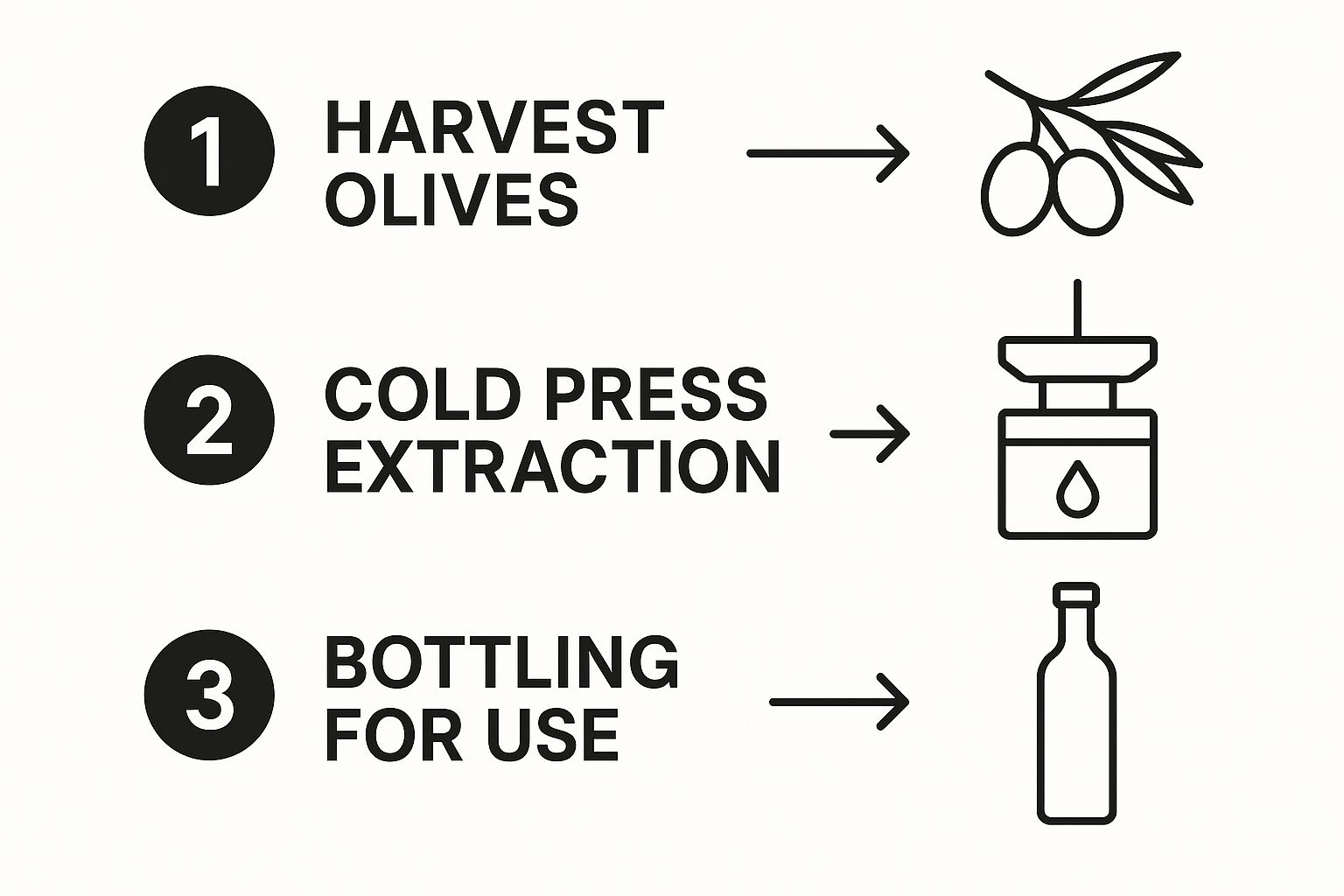
As you can see, the "cold-press" method is absolutely crucial. It means the oil is extracted without any heat, which is how we get that prized, complex flavor and all the beneficial compounds that make Extra Virgin Olive Oil so special.
Understanding Olive Oil Varieties
Not all olive oils are created equal. Those labels you see on the bottles—Extra Virgin, Virgin, Pure, and Light—aren't just fancy marketing terms. They signify real differences in quality, how the oil was processed, and ultimately, what you should be doing with it in the kitchen.
- Extra Virgin Olive Oil (EVOO): This is the top-shelf stuff. It’s made from cold-pressed olives without chemicals or heat, giving you the most authentic, pure olive taste. It's also packed with the highest concentration of vitamins and antioxidants. The flavor can be anything from fruity and buttery to peppery and sharp.
- Virgin Olive Oil: This is also produced without chemicals, but it has slightly higher acidity and a milder flavor than its "extra" cousin. It's a solid, though less common, choice for general cooking.
- Pure or Regular Olive Oil: This is a blend, combining some virgin olive oil with refined olive oil. That refining process tones down the flavor and gives it a higher smoke point, making it a reliable workhorse for everyday cooking at higher temperatures.
- Light Olive Oil: Don't be fooled—"light" refers to its flavor and color, not the calories! This is the most refined version, with a very neutral taste and the highest smoke point of the bunch. It's perfect for baking, frying, or any time you don't want the oil's flavor to take center stage.
People are definitely catching on to the benefits of healthier fats. In fact, the global demand for olive oil recently hit approximately 3.9 million tons, a jump of about 10% from the year before. This isn't just a fad; it reflects a real shift toward ingredients that bring both great flavor and wellness to the table. For a deeper dive, you can explore more data on the global olive oil market from sources like IndexBox.
To help you choose the right bottle for the job, here’s a quick-reference table. I find that having this kind of guide handy makes it much easier to grab the right oil without a second thought.
Olive Oil Quick Selection Guide
| Type of Olive Oil | Best For | Flavor Profile | Smoke Point |
|---|---|---|---|
| Extra Virgin | Drizzling, dressings, dipping, low-heat sautéing | Robust, fruity, peppery | Low (325-375°F) |
| Virgin | General low-heat cooking, roasting | Mild olive flavor | Medium (390°F) |
| Pure / Regular | All-purpose cooking, searing, roasting | Neutral, light olive taste | Medium-High (410°F) |
| Light | High-heat frying, baking, stir-frying | Very neutral | High (465-470°F) |
Think of this table as your cheat sheet for the kitchen. When you match the oil to the cooking method, you're setting yourself up for success every single time.
The Importance of Smoke Point
One of the most critical things to understand when cooking with any oil is its smoke point—that's the temperature where the oil literally starts to smoke and break down. Pushing an oil past this point is a double whammy: it creates a burnt, nasty flavor and destroys the very nutrients that make it good for you. Even worse, it can release harmful compounds.
The rule of thumb is simple: The more delicate and unrefined an oil is (like EVOO), the lower its smoke point. It's best for low-heat or no-heat situations. Refined oils, on the other hand, can take the heat.
This is why you don’t want to deep-fry with your expensive finishing EVOO! The way an oil is processed directly impacts not just its flavor, but its stability under heat. Knowing this is one of the biggest secrets to getting delicious, consistent results from your cooking, every single time.
Getting the Most Out of Olive Oil in Your Kitchen
Alright, so you've got the right bottle. Now comes the fun part: actually using it. Truly understanding how to cook with olive oil is less about following rigid rules and more about developing an intuition for it—how it behaves with heat, how its flavor changes a dish, and what small tweaks can turn a good meal into a great one.
Think of your olive oil like a finishing spice. A bold, peppery Extra Virgin Olive Oil (EVOO) drizzled over a hearty lentil soup just before serving can be a game-changer. But that same powerful flavor would likely steamroll a delicate salad of summer greens, where a lighter, fruitier EVOO would sing. It’s all about the right tool for the job.
Crafting the Perfect Vinaigrette
One of the most valuable skills in any home cook's arsenal is whipping up a balanced vinaigrette from scratch. The classic ratio is a solid starting point, but real mastery comes from tasting and adjusting to the ingredients you have on hand.
The old rule of thumb is three parts oil to one part acid (like vinegar or lemon juice). I see this as a foundation, not a law. Is your balsamic particularly sharp? You might need a little extra oil to mellow it out. Working with a sweet white balsamic? You might dial the oil back.
Here’s a simple method that never fails:
- Start with your acid. Pour your vinegar or citrus juice into a bowl. Add a pinch of salt and a small spoonful of Dijon mustard. The mustard is key—it’s an emulsifier that helps the oil and vinegar bind together instead of separating.
- Drizzle the oil slowly. This is where the magic happens. Whisk constantly as you pour a slow, steady stream of EVOO into the bowl. You’ll see the mixture start to thicken and turn creamy. That’s a successful emulsification.
- Taste and adjust. Once it's combined, give it a taste. Does it need more salt? A few cracks of black pepper? Maybe a tiny bit of honey or maple syrup to round out the edges? This is where you make it yours.
This basic technique opens up a world of possibilities. You can swap red wine vinegar for sherry vinegar, toss in some finely chopped fresh herbs, or add minced shallots for a bit of a kick. It’s all about balancing flavors, not just mindlessly mixing.
The Simple Art of Infusing Oils at Home
Making your own infused oils is an incredibly easy way to add a layer of custom flavor to your cooking. It’s a fantastic trick for using up those last bits of fresh herbs and adds a truly personal touch to your pantry. You can use anything from garlic and rosemary to chili flakes and citrus peels.
The process couldn't be simpler. Gently warm your olive oil in a small saucepan over low heat. For this, it's best to use a standard or light olive oil, not your prized EVOO. Add your flavorings—think whole, peeled garlic cloves or sturdy herbs like rosemary or thyme—and let everything warm together for about 5-10 minutes.
The most important part is to keep the heat incredibly low. You’re aiming to gently coax the flavors out, not fry the ingredients.
Once it smells amazing, kill the heat and let the oil cool down completely. Then, just strain it into a clean, airtight bottle. This homemade garlic or herb oil is brilliant for sautéing vegetables, drizzling on pasta, or as a flavor-packed base for marinades.
Cooking with Heat: How to Preserve Flavor
One of the most common mistakes I see is overheating good olive oil, especially a high-quality EVOO. When oil gets too hot, it doesn't just lose its beautiful, nuanced flavors; it can also take on a burnt, acrid taste that will ruin your dish.
This is where you need to get to know your stove and your pans. For that perfect golden-brown sear on chicken or vegetables, get your pan hot first, then add the oil right before the food goes in. This reduces the amount of time the oil sits under direct heat. For high-heat cooking, reach for a regular olive oil with a higher smoke point.
It's also interesting to know where this liquid gold comes from. The European Union recently produced about 2.1 million tons of olive oil, a significant jump from 1.53 million tons the previous year. This recovery was largely thanks to Spain's impressive output of 1.41 million tons, which helps keep this kitchen staple available worldwide. If you're a data nerd like me, you can dive deeper into recent olive oil production trends in this market report.
Ultimately, the goal is to develop an instinct for temperature control. You want to hear a gentle sizzle, not an angry, sputtering crackle. When you learn to manage the heat, you protect the oil's integrity and guarantee your food tastes exactly how you intended.
How to Choose and Store Olive Oil Like a Pro
Walking down the olive oil aisle can feel like trying to read a foreign language. The shelves are packed with bottles of all shapes and sizes, covered in terms like "cold-pressed" and "first press." It's tempting to just give up and grab whatever is cheapest, but the truth is, the right olive oil can completely change your cooking.
Learning to read the story on the bottle is the key. Those terms—Extra Virgin, Cold-Pressed, Unfiltered—are more than just marketing fluff. They tell you exactly what you're getting, how it was made, and what it’s best for. Once you know what to look for, you’ll never feel lost in that aisle again.
Decoding the Label Language
Let's start by translating the most important terms you'll see. These aren't just fancy words; they're your guide to the oil's quality, purity, and flavor.
-
Extra Virgin Olive Oil (EVOO): This is the good stuff—the highest grade you can get. To be called EVOO, the oil has to be extracted using only mechanical methods, without any chemicals or high heat. It also has to pass strict lab tests and a sensory panel to ensure it has a pure, flawless taste. This is where you'll find the most vibrant flavor and the highest levels of healthy polyphenols.
-
Cold-Pressed: You’ll often see this paired with EVOO. It means the olives were crushed and pressed at a low temperature, specifically below 81°F (27°C). This gentle process protects the delicate compounds that give the oil its incredible aroma and nutritional punch. Think of it as the difference between fresh-squeezed juice and juice from concentrate.
-
Unfiltered: Sometimes you'll find an oil labeled as olio nuovo or "unfiltered." This means it was bottled right after pressing, so it still contains tiny, suspended olive particles. These oils look cloudy and often have a sharper, more peppery bite. They're absolutely delicious, but because of those particles, they don't last as long. Treat them as a special treat and use them up quickly.
Your Checklist for a High-Quality Bottle
Once you've got the lingo down, there are a few other clues on the bottle that scream "quality." I've learned from experience that these details can make all the difference.
A great olive oil starts with a great bottle. Protection from light is non-negotiable, as UV exposure is one of the fastest ways to degrade the oil, stripping it of both flavor and health benefits.
Here’s the simple but effective checklist I run through every time I buy a new bottle:
-
Check the Harvest Date: This is, without a doubt, the most critical piece of information on the label. Olive oil isn't wine; it doesn't get better with age. Look for a harvest date within the last 12-18 months. A "best by" date can be misleading, as it’s often two years from bottling, not from when the olives were actually picked.
-
Look for Dark Glass or a Tin: Light is olive oil’s mortal enemy. I always reach for oils packaged in dark green or black glass, or better yet, an opaque metal tin. Those beautiful clear bottles might look nice on the shelf, but they're a death sentence for the oil inside.
-
Ensure a Secure Seal: Air is the second enemy. Before you put a bottle in your cart, give the cap a quick check to make sure it’s on tight and the safety seal hasn't been broken. Oxidation turns good oil rancid, and a poor seal is a fast track to disappointment.
The Three Enemies of Olive Oil and How to Beat Them
You’ve brought your beautiful bottle of liquid gold home. Now what? Your job is to protect it from its three main adversaries: heat, light, and air. How you store your oil is just as important as how you choose it.
The best place for your olive oil is a cool, dark, and sealed environment.
-
Avoid the Stove: I see this all the time—a bottle of EVOO sitting right next to the cooktop. While it might be convenient, the constant exposure to heat will ruin the oil’s flavor in no time. A pantry or a cool, dark cupboard is a much safer home.
-
Keep It in the Dark: Just as you bought it in a dark container, you need to store it in a dark place. Whether it's sunlight from a window or the fluorescent lights in your kitchen, light exposure will cause the oil to break down.
-
Seal It Tight: Every time you use your oil, make sure you screw that cap back on tightly. Oxygen is what causes oil to go rancid. If you buy oil in a large tin, I recommend pouring a smaller amount into a dark glass bottle for daily use. This keeps you from exposing the entire batch to air every time you cook.
Unlocking Olive Oil’s Health and Wellness Potential
This is where olive oil truly earns its reputation. Beyond making food taste incredible, choosing the right olive oil is a conscious decision to nourish your body from the inside out. Its power isn't magic; it comes down to a unique chemical profile packed with compounds that support long-term wellness.
The most famous of these are monounsaturated fats, primarily oleic acid. This is the "good fat" you hear so much about, and it stands in stark contrast to the unhealthy saturated fats common in processed foods.
When it comes to heart health, this is a big deal. Simply weaving high-quality olive oil into your meals is one of the most effective and enjoyable strategies for keeping your cardiovascular system in good shape.
The “Mediterranean Dose” for Everyday Health
You don't need to completely change your diet overnight to see the benefits. For years, health experts and people in the Mediterranean have relied on a simple daily habit.
The goal is to get one to two tablespoons of high-quality Extra Virgin Olive Oil (EVOO) each day. It’s not a strict prescription, but more of a daily wellness ritual—like taking a vitamin or going for a walk.
Think of it this way: this small, daily habit has a powerful cumulative effect. It’s a practice borrowed from the diets of some of the world's longest-living people, proving that small, consistent actions often have the biggest impact on our health.
This daily dose is your ticket to getting those healthy fats and a potent infusion of powerful antioxidants.
More Than Just Fat: The Power of Polyphenols
What really makes Extra Virgin Olive Oil a superstar compared to other oils is its polyphenols. These are potent, naturally occurring micronutrients that act as antioxidants, shielding your body's cells from the damage caused by oxidative stress.
One of the most talked-about polyphenols in EVOO is oleocanthal, which is celebrated for its impressive anti-inflammatory effects. It’s the compound that gives high-quality oil that peppery kick or slightly bitter finish at the back of your throat. If you feel that tingle, it's a good sign—it means you're getting the real deal.
Consuming an oil rich in these compounds helps your body fight inflammation, which we now know is a root cause of many chronic health problems. It also supports brain function and cognitive health as we age. This is a perfect example of using olive oil for more than just taste, but for targeted, tangible health support.
Smart and Simple Ways to Get Your Daily Dose
So, how do you work one or two tablespoons of olive oil into your day without just drinking it straight? A daily salad is a fantastic start, but let's be honest, that can get old. The secret is to think creatively and look for easy swaps and additions.
Here are a few ideas I use all the time:
- Upgrade Your Breakfast. Skip the butter and drizzle a fruity EVOO over your toast. I also love adding a teaspoon over my morning oatmeal or yogurt with some nuts—it adds a surprising richness and a dose of healthy fats to kick off the day.
- Supercharge Your Smoothies. This might sound odd, but adding a tablespoon of a mild, buttery EVOO to your smoothie works wonders. You won't taste it over the fruit, but it adds an incredible creaminess and a serious nutritional punch.
- Finish Your Soups and Stews. Just before serving a warm bowl of tomato soup or lentil stew, swirl in a robust, peppery olive oil. This adds a final layer of complex flavor and ensures you get those delicate polyphenols, which can be damaged by high heat.
- Revive Roasted Veggies. After you pull your vegetables out of the oven, toss them with a final drizzle of fresh, high-quality EVOO. This brings back the bright, vibrant flavors that can get a little lost during roasting.
By spotting these small opportunities, you can easily make this simple ingredient a cornerstone of your wellness routine. It’s a delicious, effortless choice your body will thank you for.
A Natural Approach to Your Beauty Routine
It turns out that the very same things that make olive oil a star in your kitchen also make it a shockingly effective, single-ingredient wonder for your beauty routine. It's packed with natural fatty acids and antioxidants, offering a simple, time-honored way to nourish your hair, skin, and nails without a long list of synthetic chemicals.
This isn't about tossing every product you own. It's about recognizing how this humble pantry staple can step in to provide deep moisture and gentle care. From a deeply hydrating hair treatment to a surprisingly tough makeup remover, you can get a lot of mileage out of just one bottle.
For Deeply Conditioned Hair
Is your hair feeling dry, brittle, or just fried from heat styling? A simple olive oil hair mask can work wonders to bring back its moisture and shine. The oil’s rich lipids actually penetrate the hair shaft, helping to replenish what’s been lost and smoothing the outer layer for that silky feel we’re all after.
You don't need a fancy recipe; the oil itself does all the heavy lifting. A few tablespoons of Extra Virgin Olive Oil is all it takes.
- Warm it up slightly. Gently warm about 2 to 4 tablespoons of olive oil in a small bowl. You want it pleasantly warm, never hot.
- Work it in. Apply the oil through dry or slightly damp hair. I find it’s best to really focus on the mid-lengths and ends, since that's where damage usually shows up first.
- Let it soak. Wrap your hair in a shower cap or a warm towel. This traps heat, which helps the oil penetrate more deeply. Give it at least 30 minutes, or for a really intensive treatment, leave it in overnight.
- Rinse it out thoroughly. This is the most important step. You'll probably need to shampoo twice to get all the residue out, then follow up with your normal conditioner.
A quick tip from personal experience: If you have very fine hair, just concentrate the oil on the very ends. This gives you all the moisturizing benefits without weighing down your roots and killing your volume.
For Gentle and Effective Skin Care
Your skin can also get a huge boost from olive oil’s gentle, hydrating properties. One of its most practical uses is as a makeup remover. It can dissolve even the most stubborn waterproof mascara without any harsh rubbing that can strip your skin’s natural moisture barrier.
Just put a small amount of oil onto a cotton pad and gently wipe away your makeup. The oil breaks down the pigments in your cosmetics, letting you cleanse your face effectively before you move on to your regular face wash. It’s a simple two-step process that leaves skin feeling soft, not tight and dry.
Beyond just cleansing, olive oil is a fantastic body moisturizer. The trick is to apply it right after a shower while your skin is still a little damp. Massage a thin layer of oil all over—this locks in moisture far better than applying lotion to bone-dry skin. A little really goes a long way.
Here are a few other simple ideas:
- Cuticle Treatment: Massage a single drop of olive oil into each cuticle to soften them up and help strengthen your nails. It's the perfect, easy treatment to do while you’re watching TV.
- DIY Sugar Scrub: For a luxurious and effective exfoliator, just mix olive oil with some granulated or brown sugar. Use it on your body, hands, or feet to scrub away dead skin cells. What's left behind is incredibly smooth, moisturized skin.
Choosing the Right Oil and Why You Must Patch Test
When you're using olive oil for beauty, you'll get the best results from a high-quality Extra Virgin Olive Oil. It's the least processed, which means it holds onto the most antioxidants. But a word of caution: if you have acne-prone or very oily skin, you'll want to be careful.
Olive oil is considered moderately comedogenic, which is a fancy way of saying it has the potential to clog pores for some people. Before you put it all over your face, always do a patch test. Just apply a tiny amount to a hidden spot, like behind your ear or on your inner arm, and wait 24 to 48 hours to see if any irritation or breakouts pop up. This simple step can save you a world of trouble and helps you learn how your unique skin will react.
Frequently Asked Questions About Olive Oil
Even after you've learned the basics, the world of olive oil is so vast that questions are bound to come up. It's completely normal to wonder about the finer points of cooking with it, what the labels really mean, or how to properly care for that beautiful bottle you just bought.
Let's tackle some of the most common questions I hear. My goal is to clear up any confusion so you can use this amazing ingredient with total confidence.
Questions About Cooking and Safety
The biggest point of confusion for most people? Heat. How olive oil reacts to a hot pan is a hot topic, and understanding the nuances is the secret to getting incredible flavor while preserving its health benefits.
Can I Really Fry With Olive Oil?
Yes, you absolutely can. The trick is simply using the right kind of olive oil for the job. Your prized Extra Virgin Olive Oil (EVOO) should be saved for drizzling, dipping, or low-heat sautéing to protect its delicate flavors.
But for high-heat cooking? Grab a bottle of regular or 'light' olive oil. These have a much higher smoke point, often up to 465°F (240°C), making them a fantastic and safe choice for things like deep-frying chicken, getting a good sear on a steak, or roasting vegetables at high temperatures. It’s all about matching the oil to the cooking method.
What Happens If I Cook With EVOO at Too High a Heat?
If you push EVOO past its smoke point (which is typically around 325-375°F), you’re essentially doing two things you want to avoid. First, you're scorching all those beautiful, complex compounds that give it that peppery, grassy flavor, leaving you with something that just tastes burnt. Second, you start to break down the very polyphenols and antioxidants that make it so good for you. It's a lose-lose for both your meal and your health.
Understanding Labels and Quality
The jargon on an olive oil bottle can feel like another language, but it's your best clue to what's inside. Once you know what to look for, you'll be able to shop like a pro.
What Does 'Cold-Pressed' Actually Mean?
This term is a true sign of quality. "Cold-pressed" means the oil was extracted from the olives using only a mechanical press—no chemicals and, crucially, no added heat. The entire process is kept below a strict 81°F (27°C).
Why does this matter? This gentle technique is the only way to preserve the oil's vibrant, fresh taste, its beautiful aroma, and its full payload of powerful antioxidants. It's the reason a top-tier EVOO tastes so alive.
Is Unfiltered Olive Oil Better?
Not better, just different. You might see this style called olio nuovo (new oil). It's cloudy because it still contains tiny, flavorful bits of the olive fruit that haven't been filtered out. This gives it a noticeably bolder, more peppery, and often more intense personality.
The trade-off for all that robust flavor is a much shorter shelf life. Those suspended olive particles can cause the oil to go rancid faster, so it’s something you should buy and use quickly.
Think of it as a special, seasonal treat to be enjoyed right away, not a bottle to store in the pantry for months.
Practical Concerns for Everyday Use
Finally, let's cover a couple of the day-to-day questions that pop up once you bring a bottle of olive oil home.
How Can I Tell If My Olive Oil Has Gone Bad?
Your own senses are the best judge. Rancid olive oil has a very distinct "off" smell and taste. People often describe it as smelling like crayons, old putty, or stale nuts. It's a smell you'll recognize once you encounter it.
A fresh, high-quality olive oil, on the other hand, should smell fruity, grassy, or pleasantly peppery. If it has no aroma at all or just tastes greasy and flat, it's definitely past its prime. When in doubt, trust your nose.
Does Putting Olive Oil in the Refrigerator Ruin It?
This is a persistent myth, but the answer is no, it doesn't ruin it. It’s just not the ideal way to store it. When you chill olive oil, some of its natural waxes will solidify, making it look cloudy and thick. It will turn back into a clear liquid once it returns to room temperature, no harm done.
The real issue is the constant temperature fluctuation from taking it in and out of the fridge, which isn't great for the oil long-term. Your best bet is still the classic method: store it in a cool, dark place like a pantry or cupboard, away from heat and light.
Ready to explore the finest olive oils and put your newfound knowledge to the test? At Learn Olive Oil, we provide expert guides, tasting notes, and recommendations to help you discover world-class producers and find the perfect bottle for your kitchen.
Elevate your cooking and wellness journey by visiting us at https://learnoliveoil.com today.

 Learn Olive Oil
Leave a comment