Making your own olive oil salad dressing is hands down one of the easiest ways to level up your salad game, and it takes less than five minutes. This simple act puts you in the driver's seat, giving you total control over the freshness and flavor—something you just don't get with store-bought dressings that are often packed with preservatives and hidden sugars.
Why Homemade Dressing Is a Game Changer
Once you start making your own dressing, you'll never look back. It’s one of those small kitchen habits that makes a huge difference. Bottled dressings are designed to sit on a shelf for months, and that long life often comes from ingredients you’d probably never add yourself, like cheap vegetable oils, high-fructose corn syrup, and artificial flavorings. When you make it from scratch, you skip all that junk.
You get to decide what goes in. This means you can reach for a beautiful, cold-pressed extra virgin olive oil, the cornerstone of Mediterranean cooking known for its incredible flavor and health perks. It’s a simple swap that instantly boosts not just the taste but the nutritional punch of your meal.
The Taste and Health Difference
The difference in taste is night and day. A freshly whisked vinaigrette has a bright, zesty character that bottled dressings can't even come close to. You can actually taste the peppery, fruity notes of a good olive oil, turning a humble bowl of lettuce into something truly special. There's no weird, syrupy aftertaste or chemical tang—just clean, pure flavor.
The real win here is simple: you're choosing real food over a processed product. This one change helps you eat healthier, cut down on unnecessary additives, and get back in touch with what you're putting on your plate.
Ultimately, learning to whip up a basic olive oil salad dressing isn't just about making a better salad. It's a fundamental kitchen skill that empowers you to create healthier, more delicious meals with almost no effort. It’s about seeing firsthand how a few quality ingredients can create something far more impressive than anything mass-produced. This one small step can completely change how you think about—and enjoy—your daily salads.
Choosing the Right Olive Oil for Your Dressing
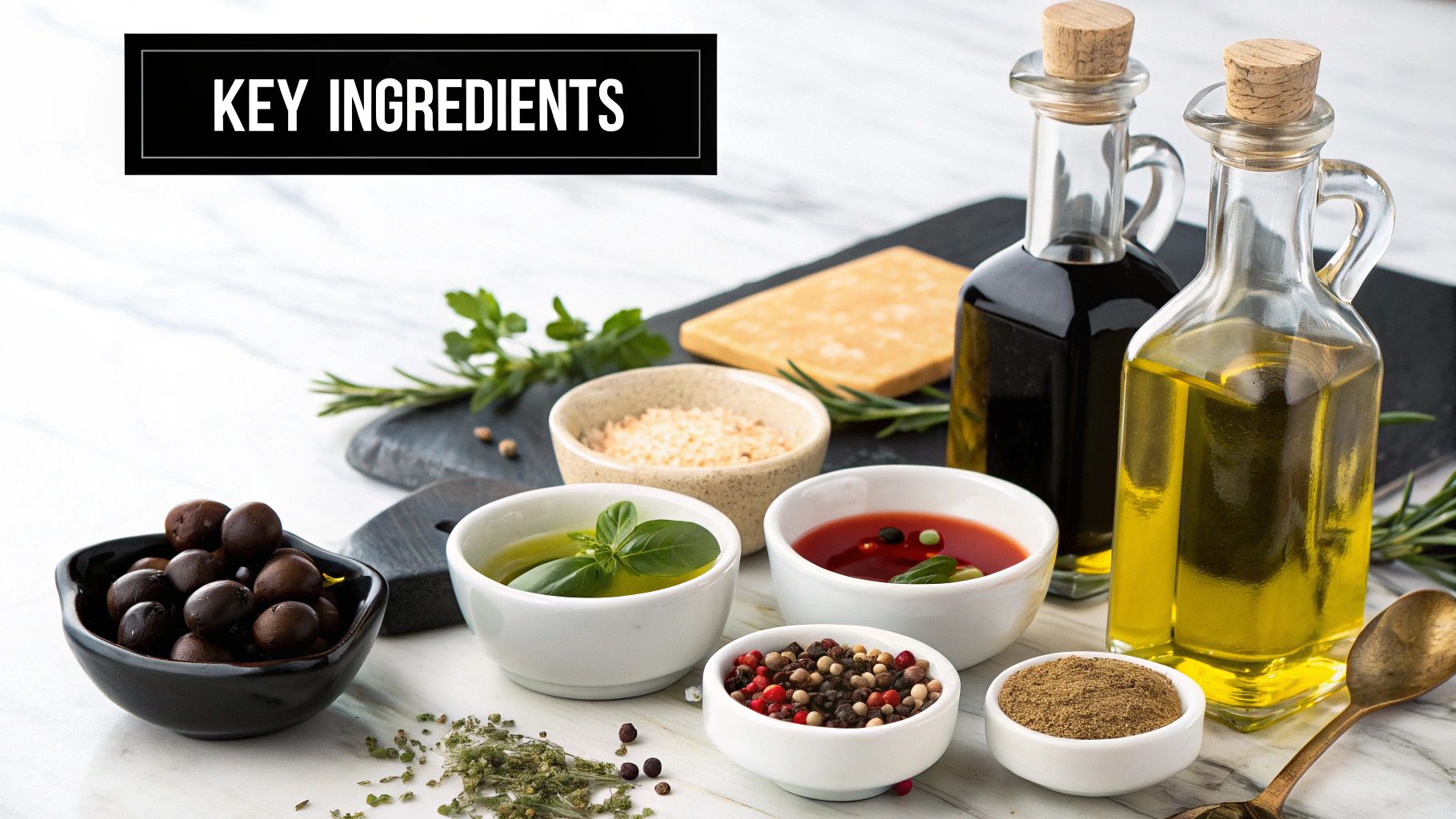
The soul of a truly great salad dressing is, without a doubt, the olive oil. The choice you make here will define the entire flavor of your vinaigrette, so it’s worth getting it right.
For any raw recipe like this, you absolutely have to use Extra Virgin Olive Oil (EVOO). This is not the place for "light" or refined olive oil; those lack the complex character that makes a homemade dressing sing.
EVOO is unrefined and cold-pressed, meaning it's extracted from olives without any heat or chemicals. This gentle process is what preserves all those wonderful, delicate flavor compounds and antioxidants. You get an oil with a real personality, ready to be the star of the show.
It's no wonder people are seeking it out. The global demand for top-tier olive oil is surging, with virgin varieties accounting for roughly 61.9% of the market. Its pure flavor and natural production make it the go-to for recipes where taste is everything. You can dig deeper into this trend by checking out the full olive oil market report from IMARC Group.
Understanding Flavor Profiles
Here’s where it gets fun—not all EVOOs are created equal. Their flavors can vary wildly, and finding one you genuinely love is the secret to making your perfect dressing.
-
Mild & Buttery: Think smooth, delicate, and subtle. These oils are fantastic when you don't want to overpower other ingredients, like in a simple salad with tender greens.
-
Fruity & Floral: These are more aromatic and complex. You might taste hints of green apple, fresh-cut grass, or even artichoke. They bring a vibrant, fresh quality to a vinaigrette.
-
Robust & Peppery: My personal favorite for a bold dressing. These oils pack a punch and often leave a spicy tingle at the back of your throat. That pungency is actually a sign of incredibly fresh, high-quality oil that's loaded with healthy polyphenols.
Here's my advice from years of making dressings: keep two different EVOOs in your kitchen. Have a versatile, milder one for general cooking and a more assertive, flavorful one specifically reserved for finishing dishes and making knockout vinaigrettes. That way, you’re always prepared.
The Perfect All-Purpose Vinaigrette Recipe
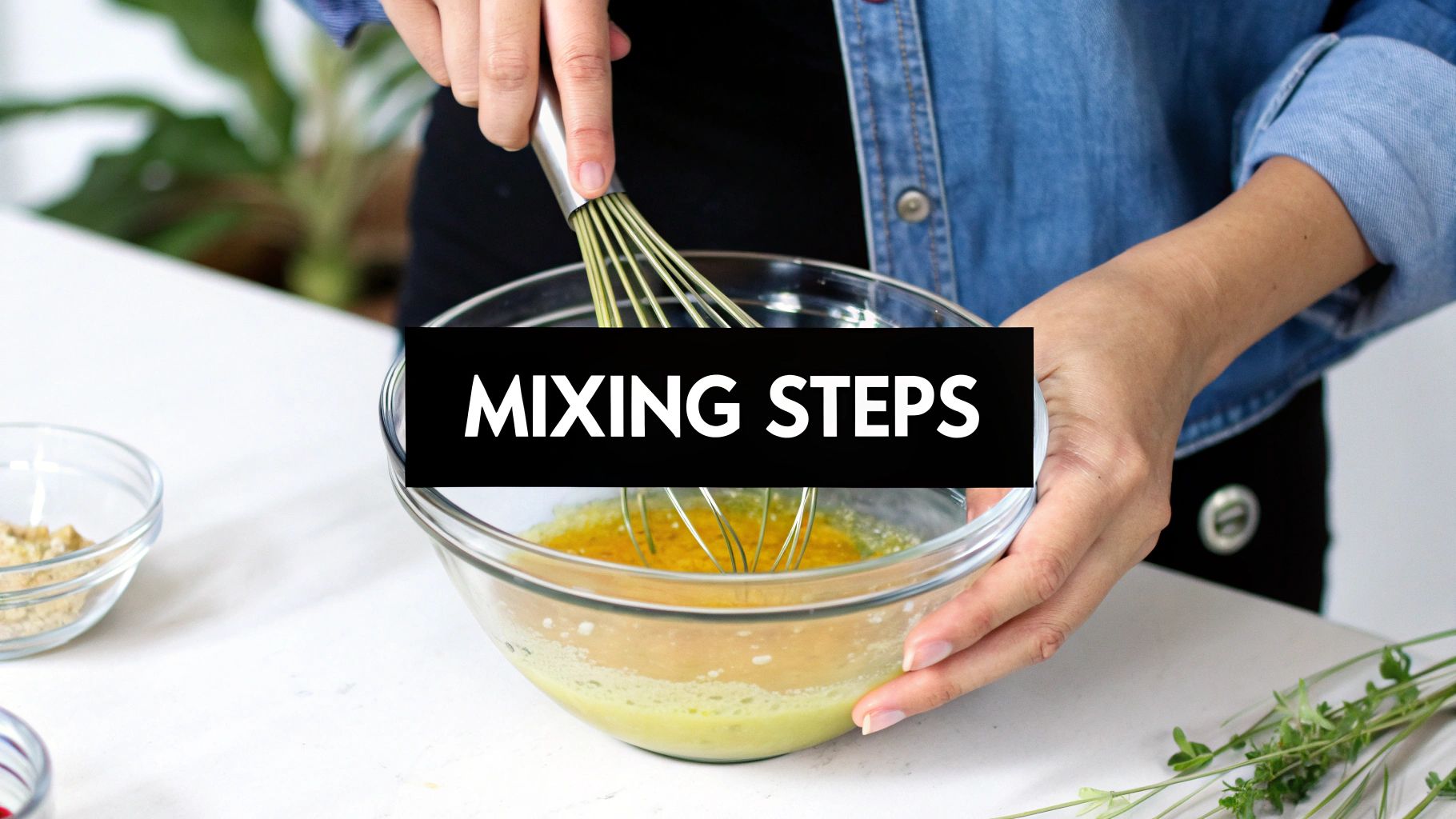
This is the foundational olive oil salad dressing recipe I find myself making again and again. It’s less about rigid instructions and more of a reliable formula you can tweak to your heart's content. The secret starts with the classic 3-to-1 ratio—three parts oil to one part acid—which gives you a perfectly balanced base every single time.
This ratio is a chef's go-to for a reason. It creates a rich dressing that beautifully coats your greens without an overpowering acidic bite. But don't be afraid to play with it! If you love a sharper, tangier kick, try shifting closer to a 2-to-1 ratio. The best part is that you're in complete control.
This particular recipe uses that timeless principle to build a classic Dijon vinaigrette. It's the kind of dressing that works on just about everything, from a simple bowl of mixed greens to a more substantial grain salad.
The Ingredients
Let’s talk about what you'll need. For a truly great dressing, it all comes down to a few quality pantry staples. Each one has a specific job to do in creating that complex, delicious flavor we're after.
- Extra Virgin Olive Oil: ¾ cup of a good quality, fruity, or peppery EVOO is perfect.
- Red Wine Vinegar: ¼ cup. This brings that bright, sharp acidity.
- Dijon Mustard: 1 tablespoon. This is our secret weapon—the emulsifier that creates a creamy, stable texture.
- Honey or Maple Syrup: 1-2 teaspoons. Just a touch of sweetness is all you need to round out the flavors.
- Shallot: 1 small shallot, minced as finely as you can get it. It adds a subtle, savory depth that you'd miss if it weren't there.
- Salt and Freshly Ground Black Pepper: To taste. I usually start with about ½ teaspoon of each and adjust from there.
A great vinaigrette is all about the balance of its core components. Here's a quick breakdown of what each ingredient brings to the party.
Classic Vinaigrette Ingredient Breakdown
| Ingredient | Recommended Type | Purpose in Dressing |
|---|---|---|
| Oil | High-Quality Extra Virgin Olive Oil | Provides richness, flavor, and a smooth mouthfeel. |
| Acid | Red Wine Vinegar, Apple Cider Vinegar, or Lemon Juice | Adds brightness and a tangy "kick" to cut through the oil. |
| Emulsifier | Dijon Mustard | Binds the oil and vinegar together for a creamy, non-separating texture. |
| Sweetener | Honey or Maple Syrup | Balances the acidity and adds a subtle layer of complexity. |
| Aromatic | Finely Minced Shallot or Garlic | Introduces a savory, fresh depth of flavor. |
| Seasoning | Kosher Salt & Black Pepper | Enhances all the other flavors and ties the dressing together. |
Having these essentials on hand means you're always just a few minutes away from a fantastic homemade dressing.
Bringing It All Together
Ready to make it? Grab a small bowl or a mason jar. Combine your red wine vinegar, Dijon mustard, honey, minced shallot, salt, and pepper. Give it a good whisk (or a vigorous shake in the jar) until everything is mixed together.
Now for the most important part. Start drizzling in the olive oil very slowly while you continue to whisk constantly. This slow, steady addition is the key to creating a stable emulsion—that's the magic behind the creamy, cohesive texture that stops the dressing from separating.
The goal is to create a vinaigrette that clings to every leaf rather than pooling at the bottom of the bowl. This method ensures that each bite of salad is perfectly dressed.
Always give it a final taste before you pour it on your salad. It might need another pinch of salt or a tiny bit more honey. Adjust it until it tastes perfect to you.
Mastering the Art of a Creamy Emulsion
Have you ever made a dressing that looked perfect, only to see it separate into a sad, oily puddle moments later? We've all been there. The secret to avoiding that separation and getting that silky, restaurant-quality texture is emulsification.
At its core, an emulsion is just a happy marriage between two ingredients that normally refuse to mix—in this case, oil and vinegar. The goal is to break the oil down into microscopic droplets and suspend them evenly throughout the vinegar. This creates that wonderfully smooth consistency that coats every piece of lettuce, rather than sliding right off.
Two Foolproof Methods for a Perfect Emulsion
Getting that stable, creamy texture is much easier than you might think. I rely on two main techniques, depending on whether I'm in a hurry or have a moment to spare.
-
The Classic Whisk: For the most control and a beautifully stable dressing, you can't beat the whisk. Start by combining your vinegar, a dab of mustard, and any seasonings in a bowl. Then, while whisking nonstop, pour the olive oil in a very slow, thin stream. Taking your time here is key; it’s this gradual introduction that creates a tight, lasting bond.
-
The Jar Shake: Need a great dressing in under a minute? This is my go-to for busy weeknights. Just toss all your ingredients into a mason jar, screw the lid on tight, and shake it like you mean it for 30 to 60 seconds. It's quick, practically effortless, and the jar doubles as your storage container.
The shift toward homemade dressings is part of a bigger picture. The global salad dressing market was recently valued at around USD 74.5 billion and is expected to climb to USD 97.2 billion by 2030. That’s a whole lot of people discovering the joy of using fresh ingredients like quality olive oil at home. You can dig deeper into these trends over at marketresearch.com.
This simple visual breaks down exactly how an emulsion comes together.
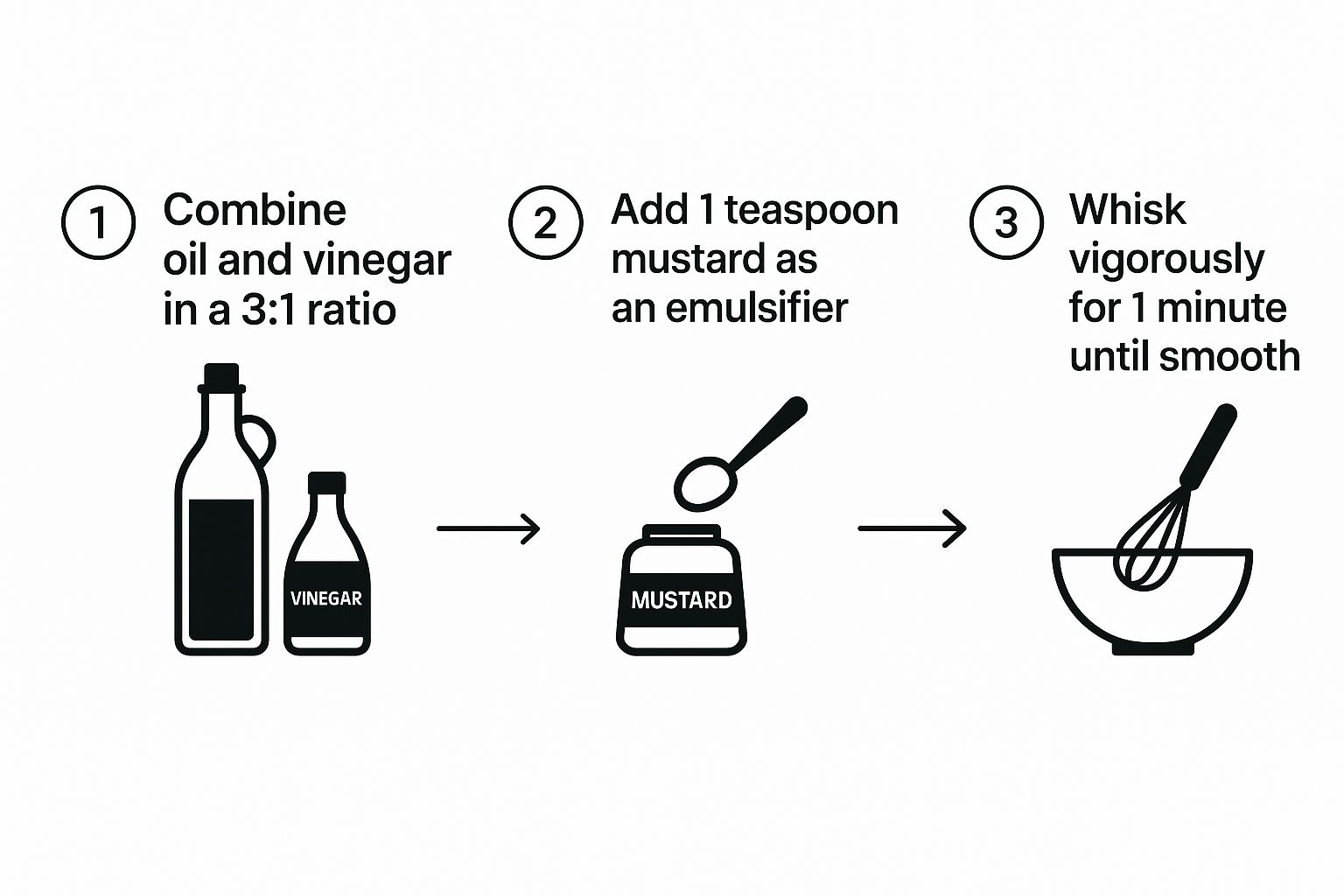
If there's one thing to remember, it's that an emulsifier like Dijon mustard acts as the essential peacemaker, creating a bridge between the oil and vinegar. It’s the magic ingredient that holds everything together.
Creative Twists on the Classic Vinaigrette
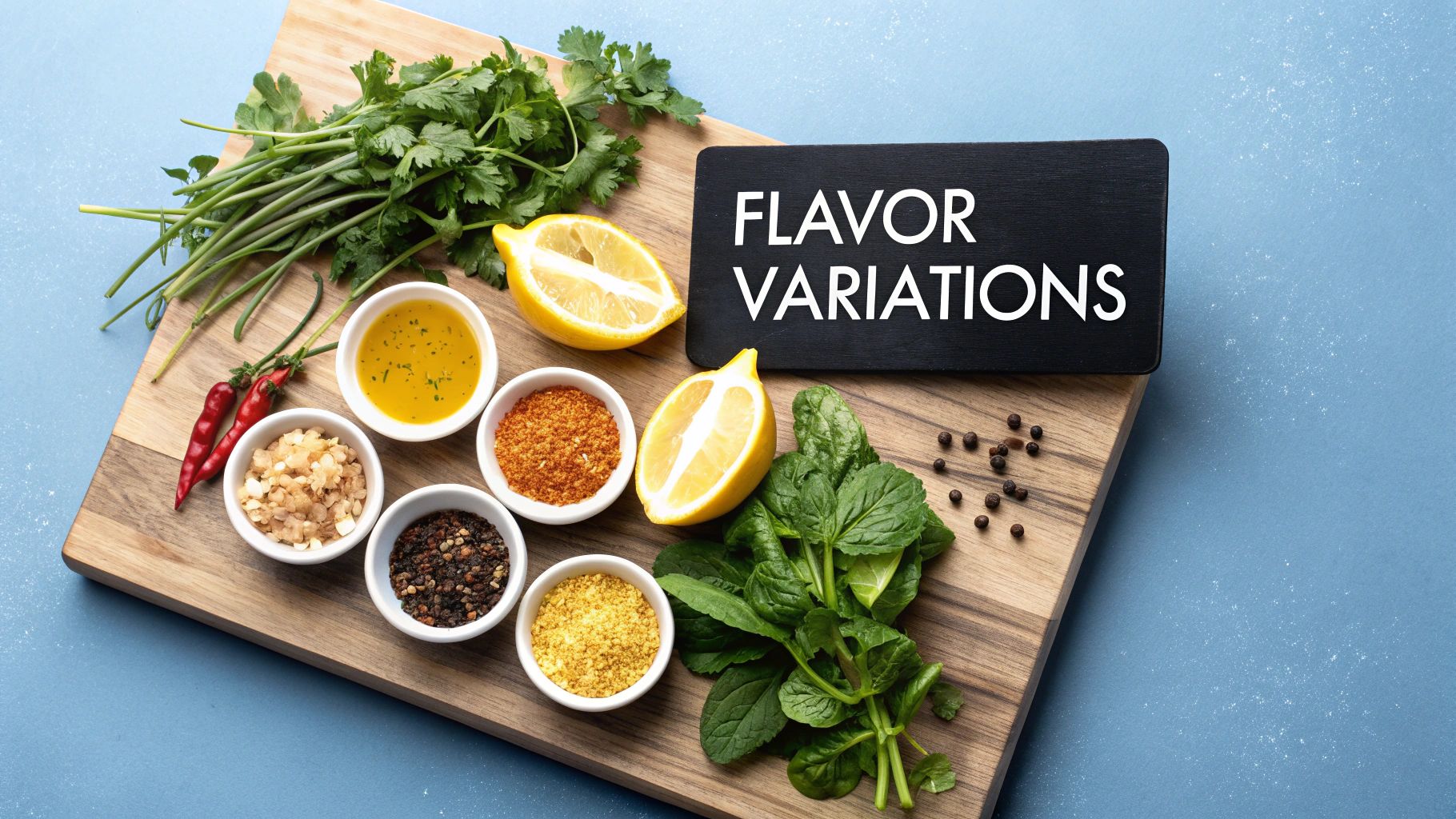
Once you've got the basic olive oil dressing down, the real fun begins. Think of that simple recipe as your starting point—a perfect canvas for all sorts of flavor experiments. This is where you get to move beyond the classic and create a dressing that's all your own.
The easiest way to start is by thinking of your oil and acid as interchangeable parts. Swapping just one of them can completely change the personality of your dressing, letting you customize it for a specific meal or even the time of year.
Bright, Zesty, and Sweet Variations
The most intuitive place to play is with the acid. For instance, swapping out red wine vinegar for fresh lemon juice instantly creates a zesty, vibrant vinaigrette. I absolutely love this version for a summer salad, especially one with berries and some grilled chicken.
If you’re after something a little richer and sweeter, reach for balsamic vinegar. Its deep, complex flavor is a perfect match for salads with bolder ingredients like goat cheese, Parmesan, or toasted walnuts. But don't stop there—your pantry is full of possibilities.
- Apple Cider Vinegar: This one brings a mellow, slightly fruity tang that’s fantastic with heartier greens like kale or a crunchy cabbage slaw.
- White Wine Vinegar: When you want a crisp, delicate acidity for tender lettuces (think butter lettuce or mâche), this is the one to grab.
- Champagne Vinegar: The most delicate of the bunch. It adds a whisper of brightness without stealing the show from other ingredients.
Your pantry is a flavor playground. The goal isn't to follow a strict recipe but to use the base formula as a guide. Start with one simple swap, taste it, and see what you think. Confidence comes from experimentation.
Adding Herbs, Heat, and Umami
Once you're comfortable switching up the acid, you can introduce a whole new layer of complexity with add-ins. Fresh herbs are an obvious but brilliant choice. A little finely chopped basil or dill can transform your standard vinaigrette into something creamy and herbaceous that's amazing on grain bowls or even drizzled over roasted vegetables.
Want a little kick? A pinch of red pepper flakes is all you need. For a deeper, more savory dimension, try adding an umami-rich ingredient. I’ve found that whisking a tiny spoonful of white miso paste into the base creates a dressing with an incredible richness that beautifully complements roasted root vegetables or a hearty spinach salad.
Common Questions About Homemade Dressing
Stepping into the world of homemade salad dressing is a game-changer, but I know it can bring up a few questions. From how long it'll last in the fridge to what to do when the flavor just isn't quite right, let's cover the common sticking points I hear about all the time.
How Long Does Homemade Dressing Last?
You can store your vinaigrette in a sealed container, like a simple mason jar, in the refrigerator for up to two weeks.
Now, here's a little pro tip: if you’ve added fresh ingredients like minced garlic, shallots, or herbs, aim to use the dressing within a week. This ensures you're getting the absolute best flavor and freshness from those delicate ingredients.
Don't be alarmed if you see the olive oil solidify in the cold. That’s perfectly normal and actually a good sign you're using a quality oil. Just pull it out of the fridge 15-20 minutes before you need it, give it a good, hard shake to bring everything back together, and you're ready to go.
My Dressing Tastes Off – How Can I Fix It?
This is where the real fun of making your own dressing comes in—you're in complete control.
-
Too sharp or acidic? The most common issue. Whisk in a bit more olive oil to mellow out that tangy bite. A tiny touch of honey or maple syrup also works wonders to balance the acidity.
-
Too bland or oily? It needs more zing. Add more of your acid (like vinegar or lemon juice), but do it just one teaspoon at a time. Taste after each addition until it’s perfect.
A mistake I see all the time is under-seasoning. If your dressing tastes a little flat or "off," it probably just needs another pinch of salt. Salt is what makes all the other flavors really sing.
Can I Swap Out the Olive Oil?
Absolutely! While this recipe is designed to celebrate a beautiful extra virgin olive oil, experimenting is part of the joy of cooking.
Using a different oil will definitely change the dressing's character. Avocado oil is a great choice for a more neutral, creamy base. For an Asian-inspired twist, try adding a small amount of toasted sesame oil. The main rule is to use an oil you genuinely enjoy the taste of on its own. If you don't like the oil, you won't like the dressing.
The global love for olive oil in dressings isn't just about taste; it's also linked to its impressive nutritional stats, packed with healthy fats and antioxidants. This has shaped how people eat worldwide, a trend you can explore further by checking out global consumption data from Grand View Research.
Ready to become an expert in picking the perfect bottle? At Learn Olive Oil, we have tons of guides on tasting, pairing, and understanding what separates a good olive oil from a great one. Take your cooking to the next level and start your journey with us at https://learnoliveoil.com.
 Learn Olive Oil
Leave a comment