When you hear "extra virgin olive oil," you might just think of a simple cooking oil. But it's so much more than that. EVOO is genuinely a nutritional giant, celebrated for its high concentration of heart-healthy monounsaturated fats. More than just a fat source, a single serving delivers essential vitamins and powerful antioxidants known as polyphenols, elevating it far beyond your average kitchen staple.
What’s Really Inside a Bottle of Extra Virgin Olive Oil?
Looking at the nutrition facts for extra virgin olive oil tells a fascinating story—one where quality truly trumps quantity. It’s not about obsessively counting calories. Instead, it’s about understanding where those calories come from and the incredible health benefits they carry.
Unlike heavily refined vegetable oils, EVOO is simply the natural, unrefined juice pressed directly from fresh olives. This minimal processing is key, as it preserves the oil's impressive nutritional profile. The calories in EVOO are anything but empty; they’re loaded with beneficial compounds that work in harmony to support your overall well-being. Think of it as a functional food, one that offers health perks that go far beyond basic nutrition.
A Snapshot of Key Nutrients
To really get a feel for its value, let's break down what you'll find in a standard serving. Just one tablespoon provides a significant dose of healthy fats and crucial vitamins, cementing its place as a truly nutrient-dense food.
The nutritional makeup of EVOO is a major win for your health. A single tablespoon (which is about 14 grams) contains roughly 119 calories. But what’s inside those calories matters most: 9.8 grams of monounsaturated fats, 1.4 grams of polyunsaturated fats, and only 1.9 grams of saturated fat. It also packs a punch with 10% of the daily value for both vitamins E and K. You can explore a more detailed breakdown of EVOO’s nutritional stats over at GoldenOliveOil.co.
The real magic of EVOO isn't just in its healthy fats. It's in its rich content of polyphenols—potent plant compounds that act as powerful antioxidants and anti-inflammatories in your body.
To give you a clearer picture, here’s a table summarizing what you get in every spoonful. These numbers are the foundation for understanding why EVOO is a cornerstone of healthy eating patterns like the Mediterranean diet.
Extra Virgin Olive Oil Nutrition Facts Per Tablespoon (14g)
This table provides a summary of the primary nutritional components found in a standard serving of extra virgin olive oil.
| Nutrient | Amount | % Daily Value (DV) |
|---|---|---|
| Calories | 119 kcal | 6% |
| Total Fat | 13.5 g | 17% |
| Monounsaturated Fat | 9.8 g | – |
| Saturated Fat | 1.9 g | 9% |
| Vitamin E | 1.9 mg | 13% |
| Vitamin K | 8.1 mcg | 7% |
As you can see, a small amount goes a long way, delivering valuable nutrients alongside its rich flavor. It’s a simple yet powerful addition to a health-conscious diet.
Why the Fats in Olive Oil Are So Important
When you glance at a nutrition label, it's easy to see "Total Fat" and immediately feel a little cautious. But here's the thing: the story of fat is much more interesting than a single number, and extra virgin olive oil proves why the type of fat you eat is what really counts. Not all fats are created equal, and the ones packed into EVOO are precisely what gives it such a stellar health reputation.
Think of your arteries like a busy highway. The wrong kinds of fats—the saturated and trans fats you find in many processed foods—are like constant traffic jams, creating pile-ups and serious long-term problems. The healthy fats in olive oil? They're more like expert traffic controllers, keeping everything flowing smoothly.
This infographic gives you a quick visual breakdown of what's inside a bottle of high-quality EVOO.
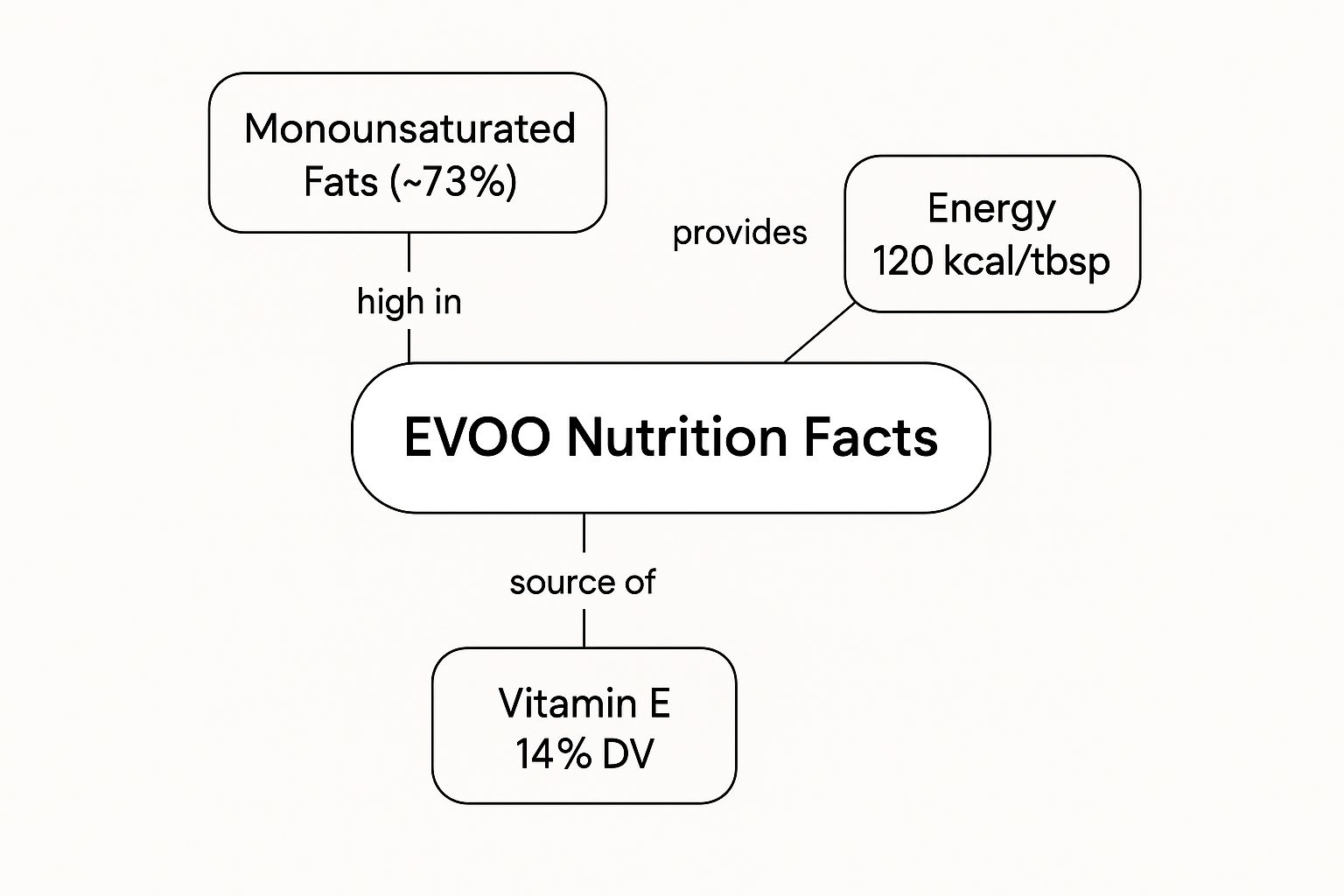
As you can see, the vast majority of the fat here is monounsaturated, and that’s the real headline. It's far more significant than the calorie count or even the vitamin content.
The Star Player: Oleic Acid
The main event in extra virgin olive oil is a monounsaturated fat called oleic acid. This powerhouse omega-9 fatty acid makes up a whopping 55% to 83% of the oil's total makeup. That’s a uniquely high concentration, especially when you compare it to other plant oils that tend to be higher in less stable polyunsaturated fats.
So, why do we care so much about oleic acid? It’s a champion for heart health. Its main job is to help maintain a healthy cholesterol balance in your body. It has been shown to help lower LDL cholesterol (the "bad" kind) without messing with your HDL cholesterol (the "good" kind you want to keep).
Every time you swap out saturated fats—like the kind in butter or fatty meats—for the monounsaturated fats in EVOO, you're making a direct, positive trade for your cardiovascular system.
This one compound is a huge part of why the extra virgin olive oil nutrition facts are so impressive and why diets built around it are consistently linked to better health.
Why Monounsaturated Fat Reigns Supreme
It all comes down to chemistry. The molecular structure of monounsaturated fats makes them more stable and beneficial than other types of fat. Because they're stable, they are less likely to oxidize—a natural process that can create harmful free radicals in the body.
Here's a quick rundown of how the fats compare:
- Monounsaturated Fats (MUFAs): These are the heroes of EVOO. They are famously heart-healthy, chemically stable, and help fight inflammation. Oleic acid is the prime example.
- Polyunsaturated Fats (PUFAs): You'll find these in smaller amounts in olive oil. This group includes essential omega-3s and omega-6s, but the key is keeping them in the right balance.
- Saturated Fats: EVOO contains very little of this. While it’s not the villain it was once made out to be, getting too much from sources like red meat and full-fat dairy is linked to higher LDL cholesterol.
This amazing ratio—mostly good monounsaturated fat with very little saturated fat—is what makes EVOO a clear winner for your pantry. It’s not about cutting out fat entirely; it’s about choosing the right kind. Every drizzle of EVOO is a step toward a healthier fat profile, giving your body the high-quality fuel it needs to thrive.
Uncovering the Hidden Health Heroes in EVOO
While the healthy fats in extra virgin olive oil get all the attention, they’re really only half the story. Just beneath the surface lies a dynamic team of unsung heroes—micronutrients and powerful plant compounds that work tirelessly to protect your body. These are the elements that elevate EVOO from a simple cooking fat into something truly special.
Think of it like this: these compounds are your body's personal, 24/7 maintenance crew. They're always on the job, repairing cellular damage, calming inflammation, and guarding against the oxidative stress that leads to chronic disease. Every drizzle of a high-quality olive oil delivers a potent dose of this protective power.
The Vital Vitamins E and K
Even in small amounts, the vitamins found in extra virgin olive oil are doing important work. It might not be your main source, but the presence of these fat-soluble vitamins adds another layer to its impressive health profile, working in sync with other nutrients to boost your overall wellness.
Two of the key players here are:
- Vitamin E: This is a classic antioxidant, acting like a bodyguard for your cells. It helps shield delicate cell membranes from the damage caused by free radicals—those unstable molecules linked to premature aging and disease.
- Vitamin K: This vitamin is a real multi-tasker. It’s absolutely essential for proper blood clotting, but it also plays a critical role in bone health by helping your body use calcium to build and maintain a strong skeleton.
The Real Powerhouse: Polyphenols
Now, let's get to the true stars of the show: EVOO's polyphenols. These are naturally occurring compounds that olive trees produce to defend themselves against insects, sun damage, and other environmental threats. When you consume real, unrefined EVOO, those protective benefits are passed directly on to you.
That distinctive peppery kick or slightly bitter finish you taste in a top-shelf olive oil? That’s your signal. It’s the flavor of polyphenols at work, a clear sign that the oil is packed with nutritional value.
These compounds are so effective that even a small daily dose can make a real difference. The potent anti-inflammatory and antioxidant properties of polyphenols are at the very heart of the health benefits you see listed in extra virgin olive oil nutrition facts.
Two of the most well-researched polyphenols in olive oil are oleocanthal and hydroxytyrosol. Oleocanthal has become famous for its powerful anti-inflammatory effects, which work in a way that’s remarkably similar to ibuprofen. Hydroxytyrosol, on the other hand, is an exceptionally potent antioxidant that helps protect your blood vessels and support cardiovascular health.
This incredible roster of compounds turns EVOO into a remarkably nutrient-dense food. In fact, with its powerful polyphenols—which include at least nine different categories and more than 24 distinct anti-inflammatory nutrients—EVOO offers significant health benefits even in small amounts. It’s no wonder this golden liquid is a staple in the world’s healthiest cuisines. You can dive deeper into the nutritional composition of EVOO on GoldenOliveOil.co to learn more.
Ultimately, it’s this unique combination of healthy fats, essential vitamins, and a diverse army of polyphenols that makes extra virgin olive oil a true nutritional champion. This complex synergy is what allows it to support your health in so many different ways, from your heart to your brain and beyond.
From Nutrition Label to Real-Life Benefits
So, we've looked at the numbers on the nutrition label. But what does all that actually do for you? Knowing the individual components of extra virgin olive oil is one thing, but the real magic happens when you see how they work together to protect your body.
Think of the extra virgin olive oil nutrition facts not as a list of ingredients, but as a team of specialists. The healthy fats, the vitamins, and the powerhouse polyphenols don't just sit there; they actively work in concert to build a more resilient you. This synergy is what elevates EVOO from a simple cooking ingredient to a cornerstone of daily wellness.
Protecting Your Heart and Brain
The health benefits you hear about aren't just myths; they're tangible outcomes directly tied to what's inside the bottle. Take oleic acid, the main fatty acid in EVOO. It’s famous for its role in cardiovascular health, primarily by helping to maintain healthy cholesterol levels already within a normal range. This contributes to smoother blood flow and puts less long-term strain on your heart.
But it doesn't stop there. The polyphenols step in to amplify this effect, acting like bodyguards for your blood vessels. They help shield them from oxidative damage and calm inflammation—two major culprits in heart-related issues. The benefits ripple out from there, supporting other critical systems.
- A Natural Anti-Inflammatory: One specific polyphenol, oleocanthal, is so effective at fighting inflammation that its action has been compared to that of ibuprofen. It's particularly good at tackling the low-grade, chronic inflammation that can quietly cause problems over time.
- Fuel for Your Brain: The brain is hungry for healthy fats and antioxidants. EVOO delivers both, providing the building blocks needed to protect brain cells from damage and support sharp cognitive function, especially as we age.
It's no surprise that populations known for their longevity often have one thing in common: consistent, long-term use of extra virgin olive oil. Its purpose goes far beyond flavor—it’s about actively building a defense against chronic illness.
The Heart of the Mediterranean Lifestyle
You can't really talk about the practical benefits of EVOO without mentioning the Mediterranean diet. It’s less of a strict "diet" and more of a lifestyle approach to eating, with extra virgin olive oil as its undisputed primary fat source. For generations, people in this region have enjoyed the rewards, consistently showing lower rates of many chronic diseases.
That’s no accident. While EVOO has been a staple in healthy diets for centuries, modern science is now catching up and confirming what tradition has long known. Study after study links regular EVOO consumption to a reduced risk of major health problems, including heart disease and neurodegenerative conditions. It’s a foundational food for anyone wanting to take a proactive stance on their long-term health. If you're curious, you can even explore how EVOO's health reputation has impacted its global market.
By simply making EVOO a regular part of your routine—drizzling it on a salad, sautéing vegetables, or finishing a soup with it—you're doing more than just cooking. You're consciously adding a blend of powerful nutrients designed to support your body from the inside out. Each spoonful is a delicious step toward better health, backed by both ancient wisdom and modern science.
How to Choose and Use EVOO for Maximum Benefits
Knowing the extra virgin olive oil nutrition facts is a great start, but getting those benefits from the grocery store shelf to your dinner plate is where the real work begins. The way you shop for and use your oil can make all the difference in its nutritional punch.
To make sure you're getting the most out of every single drop, you need to learn how to shop like a pro. This means looking past the pretty front label and knowing how to spot the subtle signs that separate a truly superior oil from a mediocre one. After all, the goal is to protect those precious polyphenols and healthy fats that make EVOO so special.
Shopping for Maximum Nutritional Value
When you’re in the olive oil aisle, channel your inner detective. You're searching for clues of freshness and quality, because not all bottles are made equal. The right packaging and a few key details on the label are your first hints that you've found a nutritionally powerful oil.
Here’s what to look for to ensure you're taking home the good stuff:
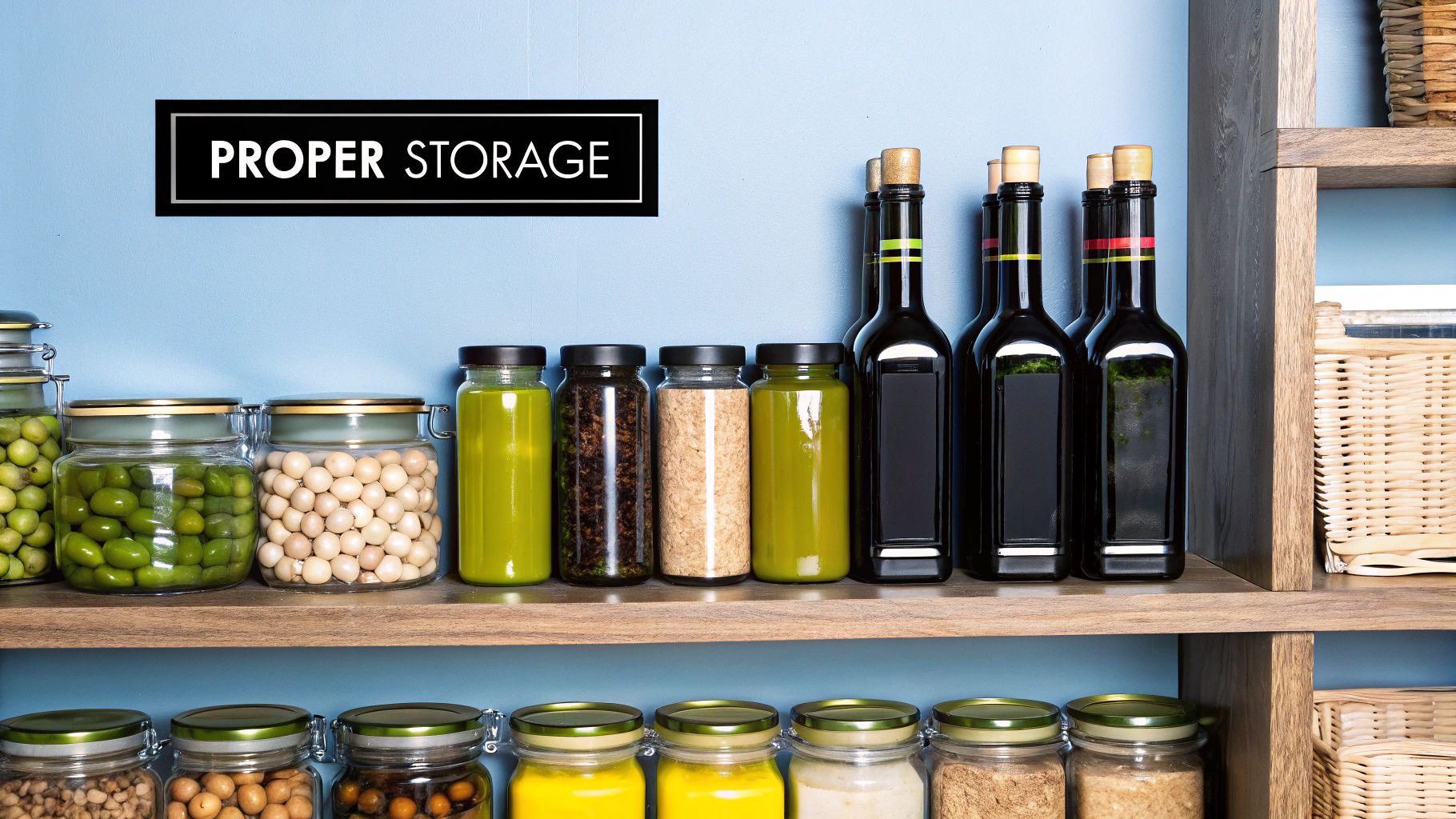
- Dark Glass or Tins: Light is a major enemy of olive oil. Clear bottles might look nice on the shelf, but they let light degrade the sensitive polyphenols and vitamins, effectively draining the oil of its health benefits. Always, always grab an opaque container.
- Harvest Date: This is the single most important date on any bottle. Look for a harvest date from the last year. Fresher oil means a higher polyphenol count and, frankly, a much better taste. An expiration date just doesn't tell you as much.
- "Extra Virgin" Status: This label is your assurance of quality. It certifies that the oil was extracted using only mechanical methods—no high heat or chemical solvents—which keeps its natural compounds intact. If it's just labeled "olive oil" or "light olive oil," it has been refined and won't deliver the same benefits.
A bitter or peppery kick in your EVOO isn't a sign of a bad oil—it's a hallmark of a great one. That sensation comes from potent polyphenols like oleocanthal, telling you the oil is loaded with the anti-inflammatory compounds you're looking for.
Busting the Myth About Cooking with EVOO
One of the most stubborn myths out there is that you can't cook with extra virgin olive oil. Let's put that one to rest: it’s simply not true. The whole concern is based on an oil's "smoke point," which is the temperature where it starts to break down and, well, smoke.
A high-quality EVOO has a smoke point hovering around 375–400°F (190–204°C). That's a surprisingly high range, and it’s perfectly suitable for most home cooking.
Its stability isn't magic; it comes down to chemistry. EVOO is packed with monounsaturated fats and powerful antioxidants, a combination that makes it incredibly resilient to heat-related damage, much more so than many other popular cooking oils.
So, go ahead and confidently use it for:
- Sautéing your favorite vegetables and proteins.
- Roasting potatoes, broccoli, and other veggies until they're golden brown.
- Finishing soups and stews with a flavorful drizzle just before serving.
- Creating incredible salad dressings and marinades from scratch.
By choosing a fresh, high-quality EVOO and making it a staple in your kitchen, you're effortlessly weaving its amazing health benefits into your diet. Every meal becomes another step toward better health.
Common Questions About Olive Oil Nutrition
With so much information out there, it’s easy to get a little turned around on the details of extra virgin olive oil. Let's clear up some of the most common questions you might have. Think of this as your go-to guide for straightforward, science-backed answers.
This will help solidify everything we've talked about regarding extra virgin olive oil nutrition facts and make it easy to see how this amazing food fits into your daily routine.
Are There Fewer Calories in Light Olive Oil?
This is probably one of the biggest myths you'll run into at the grocery store. The label "light" or "extra light" has absolutely nothing to do with calories or fat. Not a thing. It’s purely a marketing term that refers to the oil's lighter flavor, aroma, and color.
Calorie-wise, these oils are identical to extra virgin, clocking in at around 119-120 calories per tablespoon. The real difference? They are heavily refined, which strips them of the powerful polyphenols and vitamins that make EVOO a nutritional superstar. If you're after health benefits, extra virgin is always the right choice.
How Many Calories Does EVOO Actually Have?
As we just covered, a single tablespoon of extra virgin olive oil contains about 119 calories. Yes, it's a calorie-dense food, since virtually all of those calories come from fat. But it's so important to look at the quality of those calories, not just the number.
The calories in EVOO are anything but "empty." They're a vehicle for heart-healthy monounsaturated fats, potent antioxidants, and essential vitamins. Each calorie is working for you, delivering significant health advantages.
What Is the Ideal Daily Amount of EVOO?
There isn't a single magic number that works for everyone, but a great deal of research points to a sweet spot. Many studies on the Mediterranean diet's incredible benefits involved participants consuming about two to four tablespoons per day. This is the range most often linked to better heart health, reduced inflammation, and improved brain function.
The smartest way to hit this target isn't just to pour more oil on top of your existing diet. Instead, use EVOO to actively replace less healthy fats. Try making these simple swaps:
- Use it instead of butter or margarine for cooking or on a slice of crusty bread.
- Make it your go-to for sautéing and roasting instead of refined vegetable oils.
- Whip up a simple vinaigrette to replace creamy, saturated-fat-heavy salad dressings.
This approach lets you reap all the rewards without piling on extra calories. When you make extra virgin olive oil your main source of fat, you're embracing a key pillar of a healthy lifestyle. It’s one of the most delicious and simple investments you can make in your long-term well-being.
Ready to explore the world of high-quality olive oil? At Learn Olive Oil, we provide expert insights to help you choose, taste, and cook with the best. Discover the difference true quality makes and elevate your culinary creations.
Start your journey at https://learnoliveoil.com today.
 Learn Olive Oil
Leave a comment