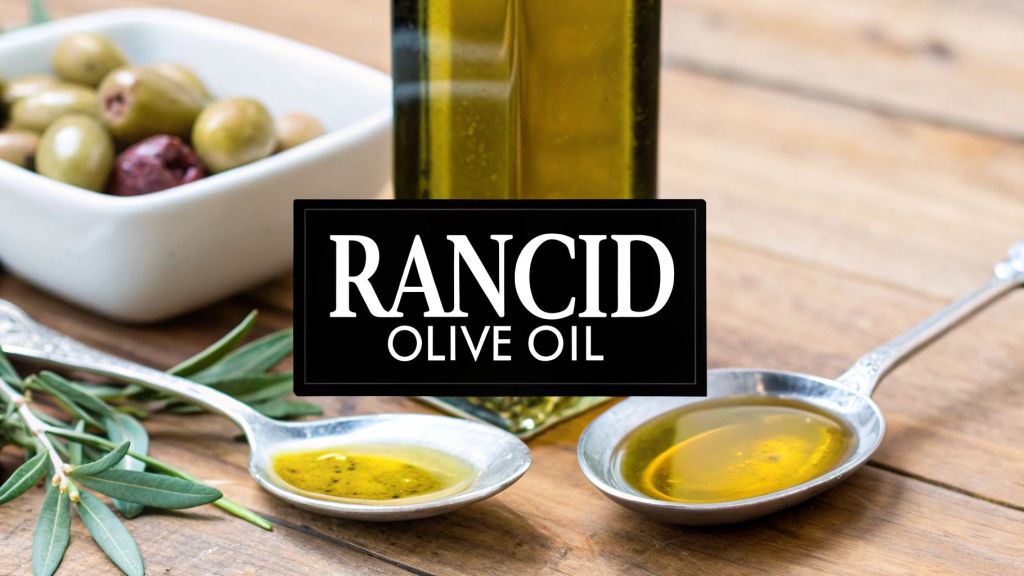
Your own senses—specifically smell and taste—are your best tools for telling if olive oil is rancid. A fresh, high-quality olive oil should smell vibrant and alive, with notes of fruit, fresh-cut grass, or even pepper. Rancid oil, on the other hand, smells dull and stale, often like waxy crayons, old putty, or nuts that have been sitting in a drawer for far too long. A tiny taste will tell you the rest of the story. If it's rancid, you'll get a greasy, waxy flavor with none of the fresh, peppery finish you expect.
Why Olive Oil Goes Bad (And Why It Matters)
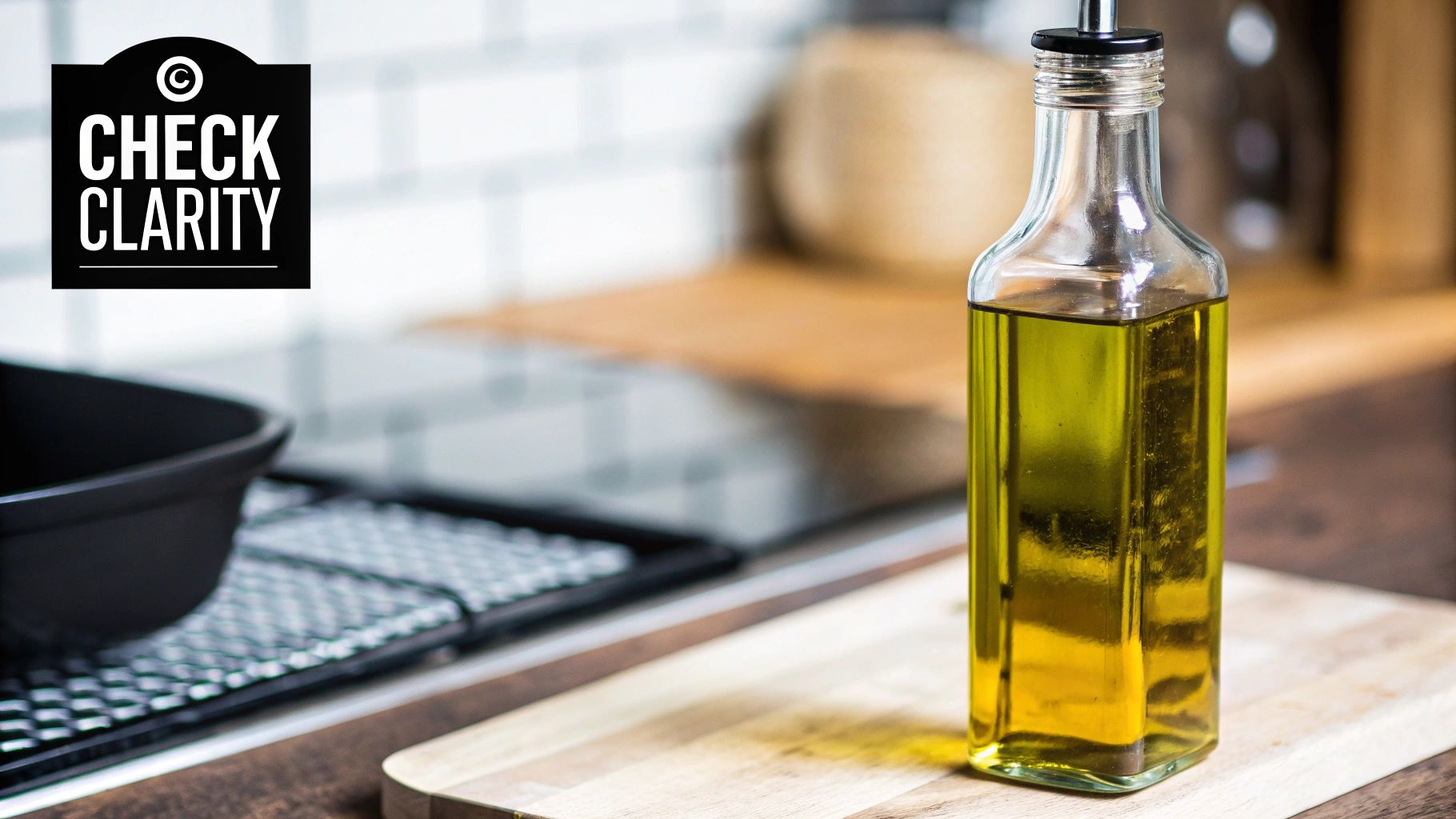
It’s a disappointment we’ve all faced in the kitchen. You reach for your bottle of extra virgin olive oil, maybe even an expensive one you were saving, and discover it's gone bad. This isn't just about a spoiled taste; it's a sign of a chemical breakdown that destroys the very qualities that make olive oil so good for you.
The main villain here is oxidation. Olive oil is packed with healthy fatty acids and potent antioxidants known as polyphenols. But when the oil is exposed to its three biggest enemies—light, air, and heat—these amazing compounds start to degrade. Every time you uncap the bottle, you're letting in more oxygen, which speeds up this decline.
This chemical decay transforms a flavorful, nutrient-rich oil into something genuinely unpleasant. Not only does rancidity create off-putting smells and flavors, but it also strips the oil of its powerful health benefits. The heart-healthy monounsaturated fats and anti-inflammatory polyphenols are lost, leaving you with little more than a bottle of sad, flavorless fat.
Rancidity: A surprisingly common problem
You might think spoilage is just an issue for cheap, mass-produced oils, but freshness is a major challenge across the board. Even the most prestigious oils can turn rancid if they aren't handled or stored properly at any point on their long journey from the olive grove to your pantry.
The problem is so widespread that it's a primary focus in professional olive oil competitions. At one recent NYIOOC World Olive Oil Competition, for instance, rancidity was a massive issue, accounting for 27 percent of all defects found by the judges. In fact, more than 10 percent of all the oils submitted were disqualified for being defective. You can learn more about these olive oil competition findings and see just how seriously experts take this issue.
Key Takeaway: Rancidity isn't just a taste issue. It's a chemical signal that the oil has lost its nutritional punch and healthy properties due to oxidation.
Once you understand this process, you’re already on your way to becoming a smarter olive oil buyer. It’s why knowing how to tell if olive oil is rancid is so critical for both your cooking and your health. With a few simple sensory checks, you can confidently spot bad oil and make sure you're only using the freshest, highest-quality product.
This quick guide below is a great starting point for training your senses.
Quick Guide to Spotting Rancid Olive Oil
This table breaks down the key red flags to look for. Think of it as a cheat sheet for your senses.
| Indicator | Fresh Olive Oil | Rancid Olive Oil |
|---|---|---|
| Smell | Fruity, grassy, peppery, or like fresh herbs. | Smells like crayons, stale nuts, putty, or musty. |
| Taste | Can be fruity, pleasantly bitter, with a peppery kick. | Greasy, waxy, no flavor, or like old peanut butter. |
| Feel | Clean and smooth, with a distinct finish. | Leaves a greasy, unpleasant film in your mouth. |
By keeping these simple distinctions in mind, you'll find it much easier to ensure the olive oil in your kitchen is always fresh and full of flavor.
Using Your Sense of Smell to Detect Rancidity
While a visual check can offer a few clues, your nose is your most reliable tool for spotting rancid olive oil. It’s far more sensitive than your eyes and can detect the chemical breakdown of oxidation long before you’d ever see a difference. This is the first and most important test you should always perform.
Professional olive oil tasters have a specific technique for this, often called "nosing," and it's incredibly easy to replicate in your own kitchen. All you need is a small, clean glass—a wine glass is perfect, but any small cup will work just fine.
The Professional Nosing Technique
Pour about a tablespoon of the oil into your glass. Then, cover the top of the glass with one palm while cradling the bottom with your other hand.
Gently swirl the oil for about 30 seconds. This simple action uses the warmth from your hands to release the oil's volatile aromatic compounds, essentially amplifying its scent so you can get a true sense of its character.
Now, bring the glass up to your nose, uncover it, and take a good, deep sniff. What's your immediate impression?
-
Signs of Freshness: Good, healthy extra virgin olive oil should smell vibrant and green. You might pick up notes of freshly cut grass, green tomato leaf, artichoke, or even a peppery tickle that signals healthy polyphenols. It smells alive.
-
Signs of Rancidity: Spoiled oil, on the other hand, just smells off. The most common comparison is to waxy crayons, old putty, or stale nuts that have been sitting in the back of a pantry for too long. Some people describe it as dusty or musty. If it’s flat and lifeless, that’s a bad sign.
Here’s a great visual guide to performing this crucial aroma check.
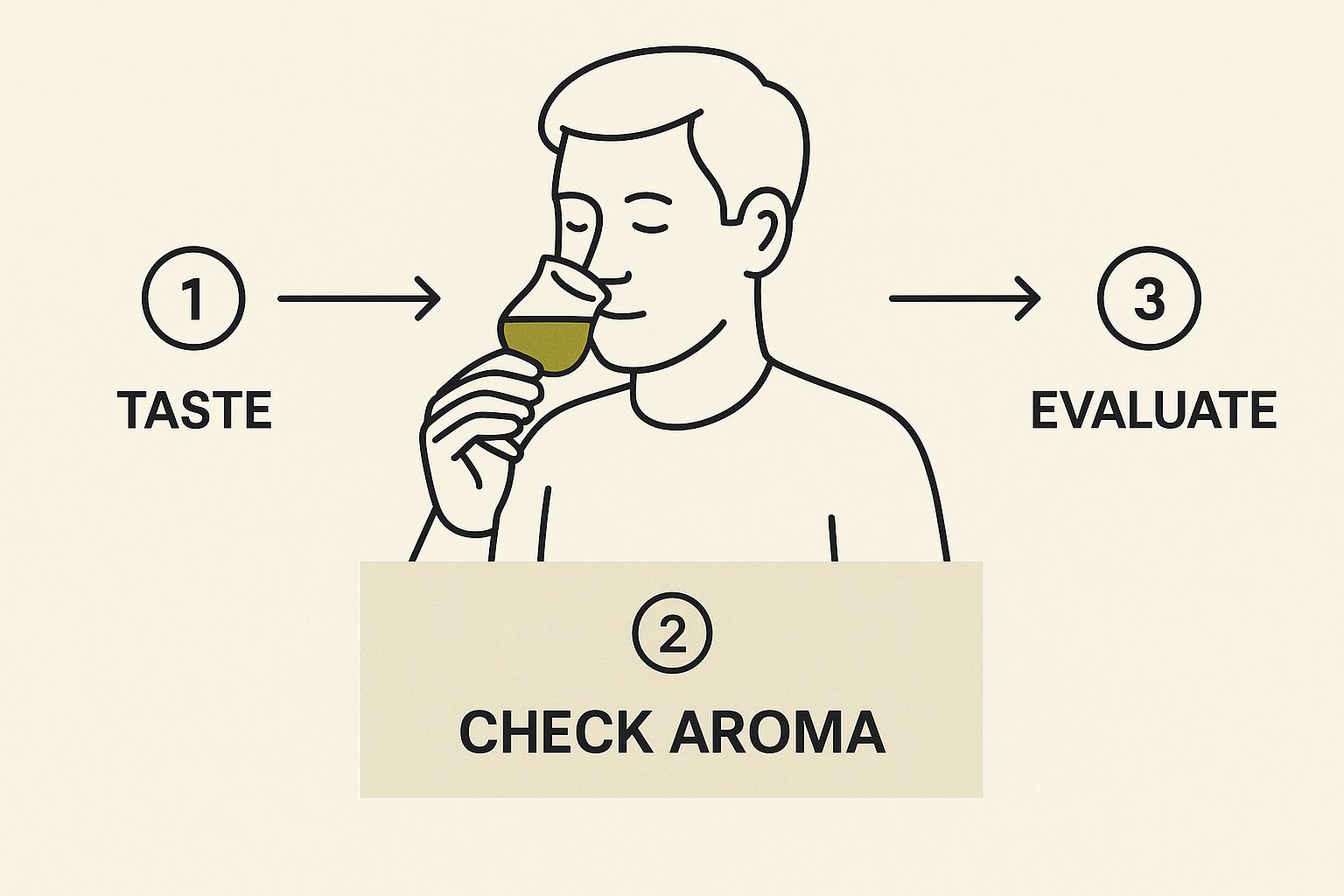
This process isolates the oil's aroma, giving you a clear and immediate verdict on its quality before it ever ruins a meal.
Trust Your Instincts
When it comes to identifying bad olive oil, trusting your senses is key. If the aroma isn't fresh, pleasant, or inviting, the oil probably isn’t either.
That "crayon" smell is the most classic and unmistakable sign of oxidation. It’s a direct result of the healthy fats breaking down into compounds that just don’t smell good.
Expert Tip: Don't overthink it. Your first impression is almost always the right one. The difference between a fresh, grassy scent and a stale, waxy odor is usually very clear.
Once you get the hang of this simple smelling technique, you'll be able to spot spoiled olive oil in an instant. It’s a skill that not only protects the flavor of your food but also ensures you're getting the antioxidant benefits you paid for. If it doesn't pass the smell test, it's destined for the bin.
The Final Verdict: The Taste Test
https://www.youtube.com/embed/jyYNaQ92zEM
While a good sniff gives you your first major clue, the taste test is where the truth really comes out. This is the definitive way to know for sure if your olive oil has gone rancid, and it’s precisely how professionals do it every day. Don't worry—a tiny taste of bad oil isn't going to hurt you, and you don’t even have to swallow it.
Professionals have a fancy Italian word for this: strippaggio, which translates to "stripping." The idea is simply to slurp the oil in a way that sprays it across your entire palate, releasing all its flavors and aromas. It sounds a bit dramatic, but it’s actually a very simple technique anyone can master at home.
How to Taste Olive Oil Like a Pro
Ready to give it a try? Pour about half a teaspoon of oil into a small, clean cup or a spoon.
Take that small sip into your mouth, but hold it on your tongue. Now, for the fun part. Purse your lips and suck some air in quickly through the oil. Think of how you’d slurp a hot soup to cool it down—it’s the same motion. This little trick atomizes the oil, spreading it over every single taste bud. Swish it around for a few seconds, then spit it out into the sink or a napkin. That’s it!
- Good, fresh olive oil feels alive in your mouth. You might get hints of fruit, grass, or even tomato leaf. You should also notice a pleasant bitterness along the sides of your tongue, which is a tell-tale sign of healthy antioxidants. Often, a peppery or spicy sensation will catch you in the back of your throat. That “sting” is a hallmark of high-quality, fresh extra virgin olive oil.
- Rancid oil, on the other hand, is just plain unpleasant. The taste is waxy and greasy, almost like you’re chewing on old crayons or stale walnuts. All the vibrant, fresh notes are gone, leaving behind a dull, fatty flavor that coats your mouth.
Taste, Don't Guess: If what you're tasting is bland, greasy, and stale, your oil has turned. There's no mistaking it. This is the single most reliable way to know if your olive oil is bad.
You Can Trust Your Senses
It might seem low-tech, but your senses of smell and taste are incredibly powerful tools for quality control. They’re the original method, long before we had fancy lab equipment.
Think about it: global olive oil consumption is huge, hitting around 3.1 million metric tons in a recent year. To manage quality on such a massive scale, scientists have even created "e-noses" that can sniff out rancidity with 75-88% accuracy. These machines are far too pricey for a home kitchen, of course, but it shows just how much aroma matters. You can even read more about these aroma-detecting technologies and see how modern science is essentially trying to replicate what our noses already do so well.
By combining what you smell with a quick taste test, you have everything you need to judge your olive oil with confidence.
How to Read Labels to Avoid Bad Oil
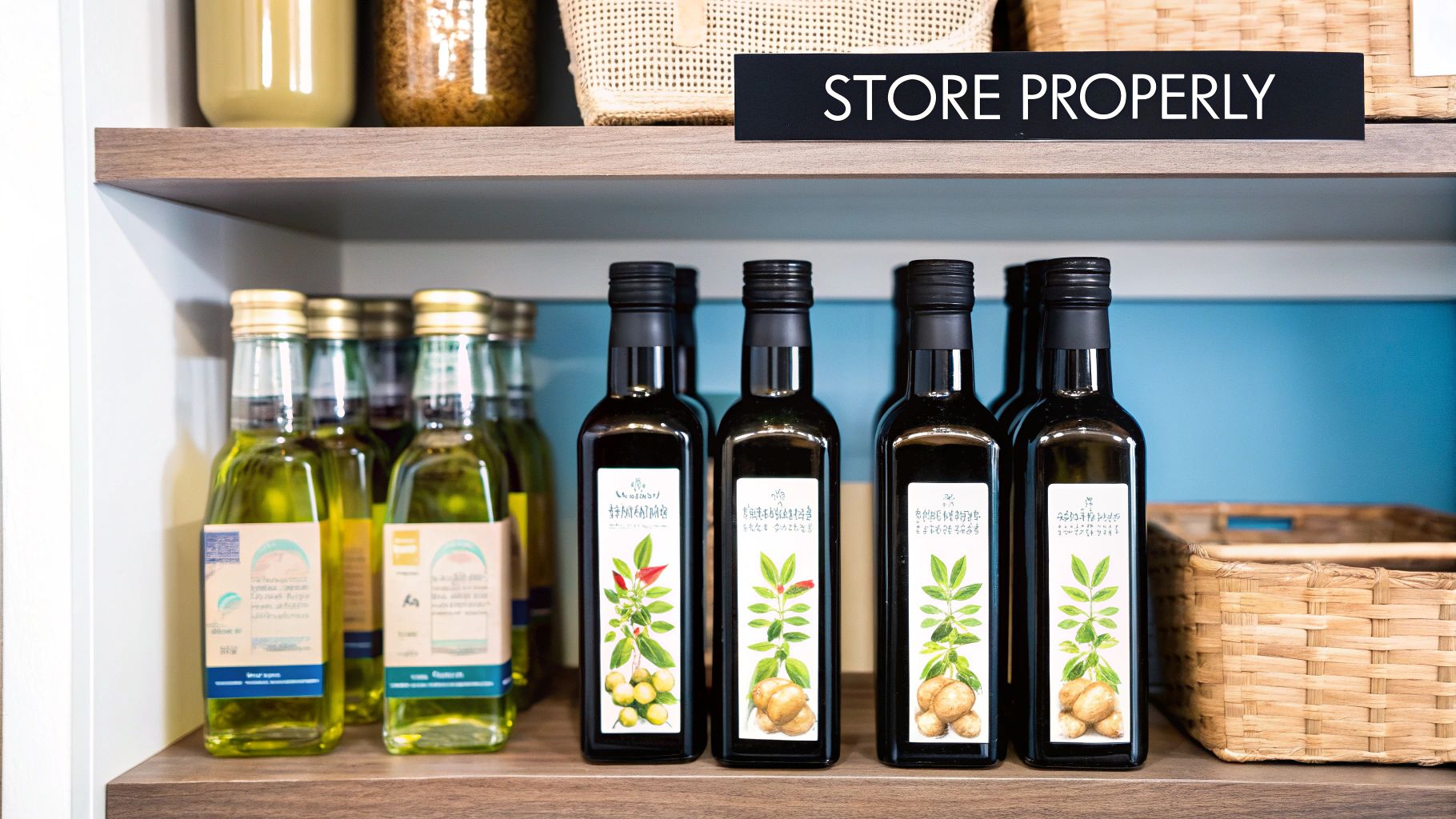
Your best defense against rancid olive oil starts right in the grocery store aisle, long before you ever twist open the cap. The secret is learning to read the story the bottle tells you. If you know what to look for, the label itself can steer you away from a bad purchase.
The most critical piece of information on that label is the harvest date. Sometimes it's called the "press date," but it means the same thing: when the olives were actually picked and turned into oil. This is the oil’s real birthday.
Don't be fooled by a "best-by" or "bottling" date. These can be set as far as two years out from the harvest, which gives a very misleading picture of freshness. Always, always look for the most recent harvest date you can find. It’s the single best indicator of how fresh the oil inside truly is.
Decoding the Label
Once you've found the harvest date, a few other clues on the label can tell you a lot about the oil's quality and its journey to the shelf.
-
Packaging Matters: Light is olive oil’s worst enemy; it accelerates oxidation and turns the oil rancid fast. That’s why you should never buy oil sold in a clear glass bottle. Instead, reach for dark glass (green or brown) or, even better, an opaque tin or ceramic bottle. Good packaging is a sign the producer knows what they’re doing.
-
Look for Quality Seals: Keep an eye out for certifications like PDO (Protected Designation of Origin) or PGI (Protected Geographical Indication). These seals aren't just fancy stickers; they guarantee the oil comes from a specific place and was made according to strict, traditional standards. This level of traceability almost always means better quality control.
-
"Extra Virgin" Is Just the Start: While you should always buy "extra virgin," think of it as the minimum requirement, not the finish line. The term "cold-pressed" (or "cold-extracted") is another great sign. It means the oil was made without excessive heat, which helps preserve its beautiful, delicate flavors and all those healthy compounds.
Pro Tip: If you're holding a bottle that proudly displays a recent harvest date and is packaged in dark, light-proof material, you've probably found a winner. A producer who pays attention to these two details is one who cares about quality, dramatically lowering your odds of bringing home a dud.
One last thing to consider is the term "unfiltered." It might sound charmingly rustic, but these oils contain more olive sediment. While delicious, that sediment can cause the oil to go bad more quickly. If you do buy unfiltered oil, just make a plan to use it up fast.
By paying attention to these simple details on the label, you put the power back in your hands. You can confidently choose a bottle that’s fresh, vibrant, and ready to make your food shine.
How to Store Olive Oil to Keep It Perfectly Fresh
So you've brought home a fantastic bottle of extra virgin olive oil. Great! Now, your job is to protect it from its three mortal enemies: light, oxygen, and heat. Getting this right is much easier than it sounds, and it’s the secret to making sure that vibrant, peppery flavor lasts as long as possible.
Honestly, the biggest mistake I see people make is keeping their olive oil right next to the stove. It’s convenient, I get it, but the constant blast of heat is a one-way ticket to rancidity. Your oil craves a cool, dark home—think of a kitchen cabinet far from the oven or a pantry shelf that doesn't get any direct sunlight.
Treat your olive oil like you would a fine wine. You wouldn't leave a great bottle of red uncorked on a sunny windowsill, right? The same logic applies here. Shielding your oil from the elements is the single most effective thing you can do to preserve its incredible flavor and health benefits.
Defeating the Three Enemies of Freshness
A few simple habits can make a world of difference in extending the life of your oil. Here’s a quick rundown of how to guard against those primary threats.
Fight the Light
Light is a powerful catalyst for oxidation, which is why you should always be wary of oils sold in clear glass bottles. Any serious producer knows this, which is why they use dark green or brown glass, opaque tins, or even ceramic bottles. This isn't just for show—it's built-in protection. Once you get it home, keep it tucked away in that dark cabinet.
Block the Air
Oxygen is the fuel that drives the chemical reactions that make oil go bad. Every single time you open the bottle, you're letting more air in. The solution is simple: get into the habit of screwing the cap back on tightly the second you're done pouring. Don't let it sit open on the counter while you cook. This one tiny action dramatically slows down the degradation process.
Avoid the Heat
Of the three, heat is probably the most aggressive enemy, rapidly accelerating how quickly your oil ages. The absolute ideal storage temperature for olive oil is around 57°F (14°C), but don’t worry, a consistent, cool room temperature works just fine. The key is to keep it far away from any heat source—your stove, oven, dishwasher, or even a sunny patch on the counter.
Common Storage Questions Answered
Even when you know the basics, a few questions always seem to pop up. Let's clear up some of the most common points of confusion.
Should I Refrigerate My Olive Oil?
In a word: no. It seems logical, but refrigerating your olive oil is not a good idea. The cold temperature will cause the natural waxes in the oil to solidify, making it cloudy and thick. This constant cycle of chilling and returning to room temp can introduce condensation inside the bottle, which can actually degrade the flavor over time.
Key Takeaway: A consistently cool pantry is a much better choice than the refrigerator. You want to maintain the oil's quality and complex flavor profile, and extreme cold doesn't help.
What About Buying in Bulk?
Buying a big tin of high-quality oil can be a great way to save money, but it comes with a storage challenge. As you use the oil, that large, half-empty container traps a lot of oxygen inside, which will speed up oxidation.
Here's the pro-tip: decant a smaller amount for daily use. Pour what you think you'll use in a week or two into a smaller, dark glass bottle with a tight-fitting spout. Then, store the large tin, sealed up tight, in the back of your cool, dark pantry. This way, the bulk of your oil stays protected while you have a manageable amount handy for cooking.
Ultimately, knowing how to store your oil is just as important as knowing how to tell if olive oil is rancid—it’s the best preventative measure you have. The freshness of an oil is so dependent on storage that a clear bottle on a warm shelf can ruin it in just a few months. With global olive oil consumption hitting 2.78 million tonnes each year, protecting its quality is more important than ever. You can read the full research about storage impacts to see just how critical these simple steps are. By making these habits second nature, you’ll ensure every last drop is as delicious and healthy as the day it was pressed.
Common Questions About Olive Oil Rancidity
Once you've got the basics down for spotting rancid olive oil, a few practical questions always seem to pop up. It's one thing to know the theory, but another to be standing in your kitchen wondering if that slightly off-smelling bottle is actually dangerous, or if it can be saved.
Let's clear the air and tackle some of the most common concerns I hear. These are the real-world questions that come up when you're actually cooking.
Is It Harmful to Consume Rancid Olive Oil?
This is usually the first thing people ask, and for good reason. The short answer is that a small, accidental taste isn't going to send you to the hospital. It’s not acutely poisonous.
The real problem lies in what's lost and what's created. When olive oil goes rancid, the oxidation process has destroyed its valuable antioxidants and healthy fats. In their place, you get free radicals—nasty little compounds that can contribute to cellular stress over the long term. And on a more immediate note, it will absolutely ruin the flavor of whatever you're cooking. So, for both your health and your taste buds, it's best to just toss it.
The Verdict: While not toxic in a single bite, rancid oil has lost all its health benefits and contains compounds you're better off avoiding. Don't use it.
Can I Fix or Salvage Rancid Olive Oil?
I wish I had better news, but the answer here is a hard no. Rancidity is a chemical change, and once it's happened, it's permanent. It’s like trying to un-burn a piece of toast; you just can't reverse the process.
The delicate, healthy fats have been broken down and degraded by oxygen. No amount of filtering, heating, or adding other ingredients will bring them back. If you try to cook with it, those stale, waxy flavors will just permeate your entire dish. Your only real move is to dispose of it and start fresh with a new bottle.
Does Olive Oil Color Indicate Freshness?
This is probably one of the biggest myths out there. The color of olive oil—whether it’s a brilliant emerald green or a pale, liquid gold—tells you about the olive variety and when it was picked, not its quality or freshness.
A gorgeous green oil can be just as rancid as a golden one. The color simply reflects the amount of chlorophyll from the olive fruit. That’s why professional tasters use special blue glasses, to hide the color and prevent bias. Never rely on color to judge an oil's quality. Your nose and palate are far more reliable tools.
Why Does My Oil Smell Like Crayons?
If you've ever opened a bottle and been hit with a smell that reminds you of a waxy crayon, old putty, or even stale nuts, trust your instinct. Your nose isn't playing tricks on you; it’s giving you a classic, textbook sign of rancidity.
Those specific off-aromas are the direct result of the healthy fats breaking down through oxidation. When you smell that, you are smelling the chemical byproducts of spoilage. Think of it as your body's own built-in alarm system telling you loud and clear that this oil is past its prime. It's a definitive signal to toss it.
Ready to explore the world of truly fresh, high-quality olive oil? At Learn Olive Oil, we provide expert guides, tasting notes, and recommendations to help you discover the best oils from around the globe. Elevate your cooking and your health by starting your journey with us today. Find your next favorite bottle at https://learnoliveoil.com.
 Learn Olive Oil
Leave a comment