What if you could make your meals healthier and more delicious with just one simple change in your kitchen? That's the promise of cooking with olive oil. Its real power comes from a potent one-two punch: a high amount of heart-healthy monounsaturated fats and powerful antioxidants known as polyphenols. This duo works to reduce inflammation, lower bad cholesterol, and shield your body from cellular damage, making it a true foundation for a healthier way of living.
Why Olive Oil Is Your Kitchen's Healthiest Staple
Let's move past the fleeting health trends and get to the heart of it. Olive oil has more than earned its spot as a pantry essential. For centuries, it’s been the cornerstone of the Mediterranean diet—a way of eating celebrated for promoting longevity and reducing the risk of chronic diseases.
So, what’s the secret behind this "liquid gold"? It's not just another cooking fat. Think of it as a functional food, one that actively works to improve your well-being with every meal. The magic is in its unique composition. Unlike butter or coconut oil, which are loaded with saturated fats, olive oil is primarily made up of a monounsaturated fat called oleic acid, which is famous for its anti-inflammatory properties.
A Foundation for Vibrant Health
Making olive oil your primary cooking fat is one of the simplest, yet most impactful, changes you can make for your health. It turns everyday cooking into an act of nourishment.
Here are a few of the science-backed benefits you can expect:
- Better Heart Health: Olive oil is known to help lower LDL ("bad") cholesterol while sometimes raising HDL ("good") cholesterol, which is fantastic for your cardiovascular system.
- Less Inflammation: It contains compounds like oleocanthal, which has anti-inflammatory effects similar to ibuprofen, helping to calm chronic inflammation throughout the body.
- Serious Antioxidant Power: It’s packed with antioxidants that fight oxidative stress—a key driver of aging and disease.
This isn't just a niche health secret anymore; it's a global shift. As more people learn about these benefits, the demand for high-quality olive oil has exploded. The global market recently jumped from $12.86 billion to $13.59 billion, growing at a rate of 5.7% annually. This growth is fueled by people like you, who are actively looking for foods that support their heart health and provide antioxidant benefits. You can find more insights on the global olive oil market and what's driving this trend.
Think of high-quality olive oil as more than just an ingredient. It’s a daily investment in your long-term health, delivering flavor and function in every single drop.
From the Grove to Your Grocery Aisle
To truly appreciate olive oil, you have to understand where it comes from. At its best, extra virgin olive oil is simply fresh-pressed juice from olives—unrefined and bursting with the natural compounds that make it so good for you.
This guide will cut through the noise and give you practical, real-world advice. We'll break down the different types of olive oil, showing you when to reach for that robust, peppery extra virgin and when a lighter, more refined option is a better choice. You'll walk away with the confidence to pick the perfect bottle and use it the right way, making sure you get all the incredible benefits of cooking with olive oil every time you fire up the stove.
Choosing the Right Olive Oil for Your Dish
Walking down the cooking oil aisle can feel a bit like a pop quiz. You're faced with a wall of bottles that all look pretty similar but have vastly different labels and prices. Knowing what those labels actually mean is the secret to getting the most out of your olive oil, both in flavor and health benefits.
The truth is, not all olive oils are the same. Their journey from the olive grove to your kitchen shelf dramatically changes their taste, nutrition, and what you should do with them.
Think of Extra Virgin Olive Oil (EVOO) as the purest expression of the olive—it’s basically fresh-pressed fruit juice. It's made by simply crushing olives and extracting the juice, a process known as cold-pressing, which uses no heat or chemicals. This gentle method keeps the oil packed with polyphenols, the powerful antioxidants that give EVOO its famous health perks and its signature peppery or fruity kick.
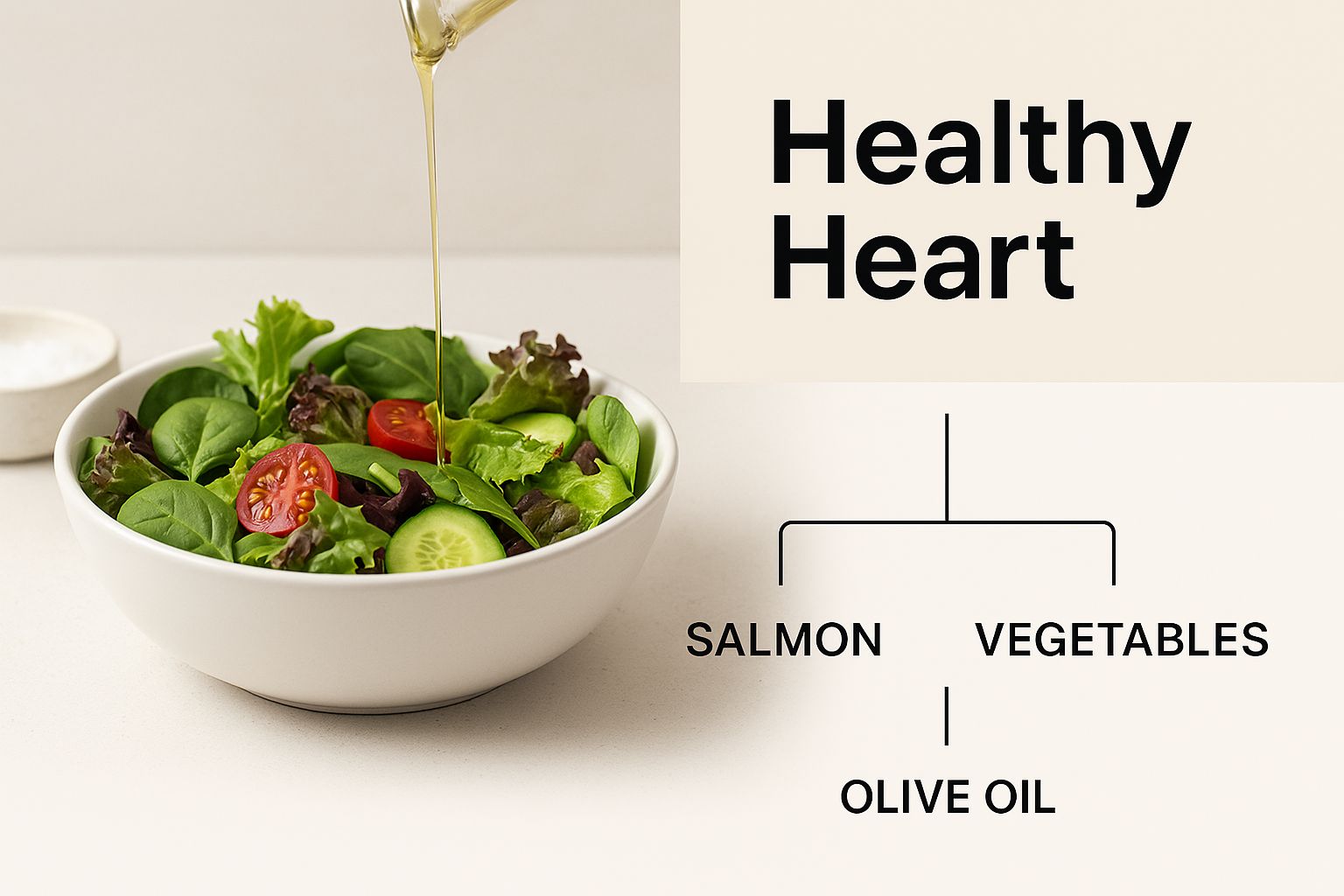
This simple image drives home a powerful point: a drizzle of high-quality EVOO on a salad isn't just delicious; it's a cornerstone of a heart-healthy diet. It’s a perfect illustration of how fresh, minimally processed food can be a form of preventative medicine.
Understanding Olive Oil Grades
Once you move away from EVOO, the oils undergo more processing, which changes their profile and purpose. Here's a quick rundown of the other grades you’ll see:
-
Virgin Olive Oil: This is the next step down. It's also made without chemicals but has a slightly higher acidity, which means it has a few minor defects. The flavor is milder than EVOO, and it has fewer of those beneficial polyphenols. You won't see this one on shelves as often as the others.
-
Refined or 'Light' Olive Oil: Don’t let the word 'light' fool you—it refers strictly to the oil's pale color and neutral flavor, not its calorie count. This oil has been heavily processed with heat and chemicals to strip out any imperfections. While this gives it a very high smoke point, it also removes nearly all of its flavor and antioxidants.
The grade on an olive oil bottle tells a story. EVOO speaks of freshness and a hands-off approach. Refined oil, on the other hand, tells a tale of industrial purification, prioritizing heat tolerance over health benefits and flavor. If you want to dig deeper into choosing the right bottle, you can find great information at Learn Olive Oil.
Matching the Oil to the Cooking Method
Choosing the right oil isn't just about taste; it's also about temperature. Every oil has a smoke point—the temperature where it stops shimmering and starts smoking. When an oil smokes, it's breaking down, which can ruin the taste of your food and release harmful compounds.
It's a common myth that you can't cook with EVOO, but it's simply not true. A good quality EVOO has a smoke point between 375-410°F (190-210°C), which is more than high enough for most home cooking, from sautéing to roasting. In fact, its high antioxidant content actually helps it resist breaking down under heat better than many other oils.
Refined olive oils have a much higher smoke point (up to 470°F or 243°C), thanks to all that processing. This makes them a practical, though less nutritious, option for very high-heat cooking like deep-frying.
Your Guide to Olive Oil Grades and Their Uses
To make it even simpler, here’s a quick-reference table. Think of this as your cheat sheet for matching the right oil to the right job, ensuring you get the best flavor and health benefits every time you cook.
| Olive Oil Type | Flavor Profile | Smoke Point | Best For |
|---|---|---|---|
| Extra Virgin (EVOO) | Robust, Peppery, Fruity | Medium-High (375-410°F) | Dressings, Finishing, Drizzling, Sautéing, Roasting |
| Virgin Olive Oil | Mild, Fruity | Medium (Around 390°F) | Everyday Cooking, Sautéing |
| Refined ('Light') Oil | Neutral, Flavorless | High (Up to 470°F) | High-Heat Frying, Baking (where no flavor is desired) |
So, what’s the final word? The smartest approach is to keep two bottles in your pantry: a high-quality EVOO for its amazing flavor and health benefits, and a refined olive oil for those rare occasions when you need to crank up the heat. This way, you’re always prepared and never have to compromise.
Unpacking the Science of Olive Oil's Health Benefits
It’s one thing to hear that olive oil is good for you, but it’s another to understand why. The health buzz isn't just hype; it's all about the fascinating chemistry happening inside that bottle. Think of olive oil not just as a cooking fat, but as a complex food with a team of powerful compounds working in your favor.
The foundation of olive oil is its fat profile, which is dominated by monounsaturated fats. The main hero here is oleic acid, an impressive fatty acid that makes up about 73% of the oil. This is the "good fat" you hear so much about, and for good reason—it’s a powerhouse for heart health.
Oleic acid goes to work by helping lower LDL (low-density lipoprotein) cholesterol, which is the "bad" kind that can clog arteries. At the same time, it helps keep your HDL (high-density lipoprotein) cholesterol, the "good" kind that whisks the bad stuff away, at healthy levels.
The Antioxidant Cleanup Crew
While oleic acid provides the healthy framework, the real magic in a high-quality extra virgin olive oil comes from its polyphenols. You can think of these as your body’s dedicated cleanup crew, tirelessly working to repair cellular damage and protect you from the inside out.
These natural compounds are what the olive plant itself produces to fend off pests and sun damage. When we consume the oil, we get to borrow that same protective power.
One of the most notable members of this crew is a polyphenol called oleocanthal. It's the compound behind that signature peppery kick you feel at the back of your throat with a really good EVOO. What's fascinating is that oleocanthal has anti-inflammatory properties that work similarly to ibuprofen, helping to calm the chronic, low-level inflammation tied to so many modern health problems.
Fighting Off Cellular Rust
That cleanup crew has another critical job: fighting oxidative stress. Picture what happens to a piece of metal left out in the elements—it rusts. A similar process, known as oxidation, occurs in our bodies from daily stressors like pollution and poor diet. This "cellular rust" can damage our cells and is a key driver of aging and disease.
The polyphenols in olive oil, along with Vitamin E, are potent antioxidants. They step in and neutralize the unstable molecules (called free radicals) that cause all this damage, essentially protecting your cells and DNA from harm. This is one of the most significant reasons why diets rich in high-quality olive oil are so beneficial.
It's the synergy between these components that makes olive oil so special. The monounsaturated fats create a healthy base, while the antioxidant polyphenols actively protect and repair. Together, they form a powerful combination for long-term health.
This teamwork isn't just theoretical; it translates into very real benefits for your body.
- Better Heart Health: The one-two punch of oleic acid and antioxidants helps keep arteries flexible and supports healthy blood pressure, giving your entire cardiovascular system a major boost.
- Sharper Brain Function: Those same anti-inflammatory and antioxidant effects also protect your brain cells. This may lead to improved cognitive function and a lower risk of neurodegenerative conditions down the road.
Once you understand this science, that bottle of olive oil in your kitchen looks a lot different. It’s no longer just an ingredient for frying an egg; it's a functional food packed with protective compounds. Choosing a good extra virgin olive oil means you're turning every meal into a chance to actively nourish your body.
Getting Friendly with Heat: How to Really Cook with Olive Oil
It's time to put what we've learned into practice and finally bust the biggest myth in home cooking: the idea that you shouldn't—or can't—cook with extra virgin olive oil. This one bit of misinformation has stopped so many people from discovering one of the greatest joys of cooking with olive oil—that incredible flavor, backed by serious health benefits, even when you turn up the heat.
The fear always comes down to one thing: the smoke point. That's simply the temperature where an oil starts to break down and, well, smoke. While you never want to overheat any oil, a quality EVOO is tougher than you think. Its smoke point is typically between 375°F and 410°F (190-210°C), which puts it squarely in the safe zone for almost everything you do in the kitchen.
The trick isn't to avoid heat, but to understand and manage it. Once you get a feel for controlling the temperature for different cooking styles, you can confidently use olive oil to make every single meal healthier and more delicious. This isn't just a niche idea; it's a global shift. In a recent marketing year, people around the world used about 2.45 million metric tons of olive oil, a number expected to jump to 2.84 million metric tons. You can see the data on this growing global trend for yourself at Statista.
Sautéing and Pan-Frying with Confidence
Sautéing is where olive oil really gets to show off, infusing everything from crisp vegetables to delicate fish with its signature flavor. Most of the time, you'll be sautéing around 350°F (177°C), which is well under a good EVOO’s smoke point.
Getting it right is easy:
- Heat the pan first. Let your empty pan sit over medium heat for a minute or so before you add anything.
- Add the oil. Pour it in and watch for it to shimmer. That's the sweet spot. If it starts to smoke, you've gone too far—just pull the pan off the heat for a second to let it cool down.
- Add your food. You should hear an immediate, satisfying sizzle. That’s the sound of a perfect sear, locking in flavor without any risk of burning.
This simple method not only cooks your food beautifully but ensures it soaks up all the delicious, heart-healthy goodness of the oil.
The Secret to Roasting Vegetables That Everyone Will Eat
If you dream of roasted vegetables that are unbelievably crisp on the outside and tender on the inside, olive oil is your non-negotiable partner. Roasting usually happens between 400°F and 425°F (204-218°C). While that’s on the higher end of EVOO’s smoke point, the food itself acts as a natural heat regulator, absorbing the energy and keeping the oil from overheating.
When you generously toss vegetables like broccoli, potatoes, or Brussels sprouts in olive oil, two magical things happen. First, it’s what gives them that irresistible golden, crispy finish. Second, the oil helps pull out the vegetables' natural sugars, caramelizing them for a deeper, richer flavor you just can't get any other way.
Pro-Tip for Roasting: Don't crowd the pan! Give your veggies some personal space. When they're packed in too tightly, they steam instead of roast. A single, even layer is the key to achieving that perfect texture every single time.
Change Your Baking Game
Swapping butter for olive oil in your baking is a true game-changer, both for flavor and for health. It creates cakes, muffins, and breads that are wonderfully moist. Because it’s a liquid fat, olive oil coats the flour proteins in a unique way that results in an exceptionally tender crumb that stays fresh longer.
Here's a handy guide for making the switch:
| If the Recipe Calls For | Use This Much Olive Oil |
|---|---|
| 1 cup butter (227g) | ¾ cup (180ml) |
| ½ cup butter (113g) | ¼ cup + 2 tbsp (90ml) |
| ¼ cup butter (57g) | 3 tablespoons (45ml) |
For most recipes, a mild, "buttery" EVOO is a perfect substitute. But don't be afraid to play around! A lemon or blood orange-infused olive oil can add a stunning, bright twist to a classic pound cake or a batch of scones.
The Final Touch: Finishing Oils, Marinades, and Sauces
Sometimes, the best way to enjoy the powerful benefits of cooking with olive oil is to not cook it at all. A high-quality, peppery EVOO makes an incredible finishing oil.
A simple drizzle right before serving adds a final burst of fresh, vibrant flavor and a potent dose of antioxidants. Think about:
- A swirl over a steaming bowl of tomato soup.
- A generous pour over a perfectly grilled steak or fish.
- The final touch on a creamy plate of pasta or polenta.
In marinades and sauces, olive oil is the ultimate flavor vehicle. It helps carry the taste of herbs and spices deep into meats and vegetables while also tenderizing them. Its healthy fats are the perfect foundation for everything from a simple vinaigrette to a rich, complex pesto.
Where Your Olive Oil Comes From (And Why It Matters)
That bottle of extra virgin olive oil sitting in your kitchen? It's more than just a simple ingredient; it’s the final chapter of a story that starts in a sun-drenched grove thousands of miles away. Grasping this journey from tree to table doesn't just connect you to your food—it makes you a much smarter shopper. The price, the quality, and even the availability of your favorite oil are all tied directly to what’s happening in a few key places around the world.
Think of olive oil like you think of wine. It has terroir—a true sense of place. The unique blend of soil, climate, and landscape where the olives grow imparts a distinct personality into the oil. This is exactly why an oil from Spain tastes so different from one grown in Italy.
The Powerhouses of Olive Oil Production
The heartland of olive oil production is, and has always been, the Mediterranean. A handful of countries here dominate the global market, each producing oils with their own signature style.
- Spain: As the world's heavyweight producer, Spain is known for smooth, golden, and often buttery oils, typically from Arbequina or Picual olives. They are fantastic, versatile workhorses for everyday cooking.
- Italy: Italian oils, especially from regions like Tuscany, are famous for their bold, green, and peppery flavor. These are the robust oils you want for finishing a dish, where that flavor can really shine.
- Greece: Often made from Koroneiki olives on islands like Crete, Greek oils tend to be wonderfully aromatic and herbaceous, with a gentle peppery finish that reflects the country's rugged terrain.
The European Union is the engine of global production, and its output creates ripples everywhere. In a recent season, the EU produced around 2.1 million tons of olive oil, a massive 40% increase over the previous year. Spain was the driving force, contributing 1.41 million tons all on its own. If you want to dive deeper into these numbers, the Certified Origins market reports offer a great look at production trends.
Knowing an oil's origin is your first clue to its flavor. A Spanish EVOO will likely be milder and fruitier, while one from Tuscany will probably pack a spicier, grassy punch.
Harvest Time and Climate: The Two Big Variables
Beyond geography, two major factors have a direct impact on the bottle you buy: the timing of the harvest and the year's climate.
An early harvest, when the olives are still green, yields less oil, but what you get is incredibly robust and peppery. This oil is packed with polyphenols—the very compounds responsible for many of the health benefits of cooking with olive oil. On the other hand, a later harvest with riper, darker olives gives you a milder, more buttery-tasting oil.
Climate is the ultimate wild card. A year with perfect weather—the right balance of sun and rain—can lead to a phenomenal harvest, which usually means better prices and wider availability for everyone. But a season marked by drought, a sudden frost, or pest problems can devastate crops. That leads to a smaller supply and, inevitably, higher prices. It’s the main reason why the cost of your favorite bottle can swing so much from one year to the next.
When you understand these global forces, you start to see the story behind each bottle. You realize that a higher price tag might reflect a tough growing season or a painstaking early harvest done for peak flavor and health benefits—and that makes it an investment worth making.
Common Questions About Cooking With Olive Oil
Even after covering all the incredible things olive oil can do, it's totally normal to have a few questions left. Let’s be honest, there are some persistent myths out there about cooking with this "liquid gold" that can make even experienced home cooks a bit hesitant.
It’s time to clear the air for good. Here, we'll tackle the most common questions head-on with direct, science-backed answers. The goal is to help you walk into your kitchen and use your olive oil with complete confidence.
Can I Really Fry With Extra Virgin Olive Oil?
Yes, you absolutely can. This might be the single biggest myth we need to bust. The old notion that extra virgin olive oil is only for drizzling over salads is simply wrong. The secret is to understand its smoke point in a real-world kitchen, not a lab.
A good quality EVOO has a smoke point somewhere between 375°F and 410°F (190-210°C). This range is well above the temperature you’d typically use for most home cooking, like pan-frying or sautéing, which usually hovers around 350°F (177°C).
But here’s the real kicker: EVOO is remarkably stable under heat. Its high concentration of monounsaturated fats and powerful antioxidants makes it much more resistant to breaking down than many other cooking oils. Those antioxidants don't just vanish when you heat them; they act like bodyguards, protecting the oil itself.
So, while you might reach for a more refined olive oil for a massive deep-frying project, using your favorite EVOO for everyday pan-frying is not only safe—it infuses your food with far better flavor and health perks.
How Do I Properly Store Olive Oil to Keep It Fresh?
How you store your olive oil is just as crucial as the bottle you choose to buy. If you get it wrong, you can quickly ruin the very compounds that make it so healthy and delicious. A vibrant, peppery oil can turn into something bland and useless in no time.
Think of olive oil as having three mortal enemies:
- Light: UV rays are notorious for breaking down the oil’s precious antioxidants and chlorophyll.
- Heat: Keeping your oil next to the stove is a big no-no. Heat speeds up oxidation and will make it go rancid much faster.
- Air (Oxygen): Exposure to oxygen is the main reason oil goes bad, which is why a tightly sealed cap is non-negotiable.
To protect your liquid gold, always store it in a cool, dark place. A pantry or a cupboard—away from the stove and sunlight—is perfect. Good producers already know this, which is why they sell their oils in dark glass bottles or opaque tins. Once you pop the top, the clock starts ticking. For the best flavor and health benefits, try to use an open bottle within 3 to 6 months.
An unopened bottle of high-quality EVOO can last up to two years from its harvest date—not the bottling date. Always check the label for a harvest date; it's the truest sign of freshness.
Is 'Light' Olive Oil Lower in Calories?
No, and this is one of the most clever (and misleading) marketing tricks in the food world. "Light" or "Extra Light" olive oil has the exact same amount of fat and calories as any other olive oil—about 120 calories and 14 grams of fat per tablespoon.
The word "light" only refers to the oil's milder flavor, lighter color, and neutral smell. It has absolutely nothing to do with its nutritional profile.
This "lightness" is achieved through intense refining. The oil is treated with heat and chemicals to strip out any strong flavors or colors. While this process does give it a very high smoke point, it comes at a steep price: the almost complete removal of the beneficial polyphenols and antioxidants that make extra virgin olive oil a nutritional powerhouse.
So, while light olive oil is a perfectly fine, neutral-tasting fat for high-heat cooking where you don't want any flavor interference, it offers next to no health benefits. If you're buying olive oil for wellness, EVOO is always the way to go.
Does the Color of Olive Oil Indicate Its Quality?
Here’s another common misconception. The color of olive oil, which can range from a brilliant, almost fluorescent green to a pale, buttery gold, isn't a reliable sign of its quality. What it really tells you is more about the olives themselves and when they were picked.
- Green Oils: A deep green color usually means the olives were harvested early in the season while still young. These oils have more chlorophyll and tend to taste more robust, grassy, and peppery.
- Golden Oils: A yellower, golden hue typically means the olives were picked later when they were riper. These oils are often milder, with a more buttery and less pungent flavor profile.
In fact, professional olive oil tasters use special blue-tinted glasses for their evaluations. Why? To completely mask the oil's color so it can't sway their judgment of its aroma and taste. The real signs of quality are a fresh, fruity smell and a complex, balanced flavor—often with that signature peppery kick in the back of your throat, which is a telltale sign of healthy polyphenols like oleocanthal.
Ready to explore the world of premium olive oil with confidence? At Learn Olive Oil, we provide expert insights, tasting guides, and recommendations to help you find the perfect bottle for your kitchen. Elevate your cooking and your health by starting your journey with us today. Discover more at https://learnoliveoil.com.

 Learn Olive Oil
Leave a comment