Olive oil is a cornerstone of kitchens worldwide, celebrated for its rich flavor and impressive health benefits. But are you truly harnessing its full potential? Many home cooks limit this 'liquid gold' to simple salad dressings or a quick sauté, missing out on a vast spectrum of culinary applications that can transform everyday meals into extraordinary experiences. This comprehensive guide moves beyond the basics to explore the versatile world of olive oil uses in cooking.
We will delve into 8 specific techniques that showcase how different types of olive oil can enhance texture, deepen flavor, and even preserve ingredients. You'll discover how to master everything from the gentle heat of confit cooking and the high heat of roasting to creating robust marinades and sophisticated finishing drizzles.
Prepare to rethink how you cook with this essential pantry staple. This list provides actionable insights and practical examples to help you select the right oil for every dish, ensuring you get the most out of every drop. You will soon be using this ancient ingredient with the confidence and skill of a seasoned chef, unlocking new dimensions of flavor in your home cooking.
1. Sautéing and Pan-Frying
One of the most foundational olive oil uses in cooking is for sautéing and pan-frying. This method involves cooking food quickly in a hot pan with a small amount of fat, creating a beautifully browned exterior while keeping the interior moist and tender. Extra virgin olive oil (EVOO) is particularly well-suited for this, lending its signature peppery and fruity notes to everything it touches.
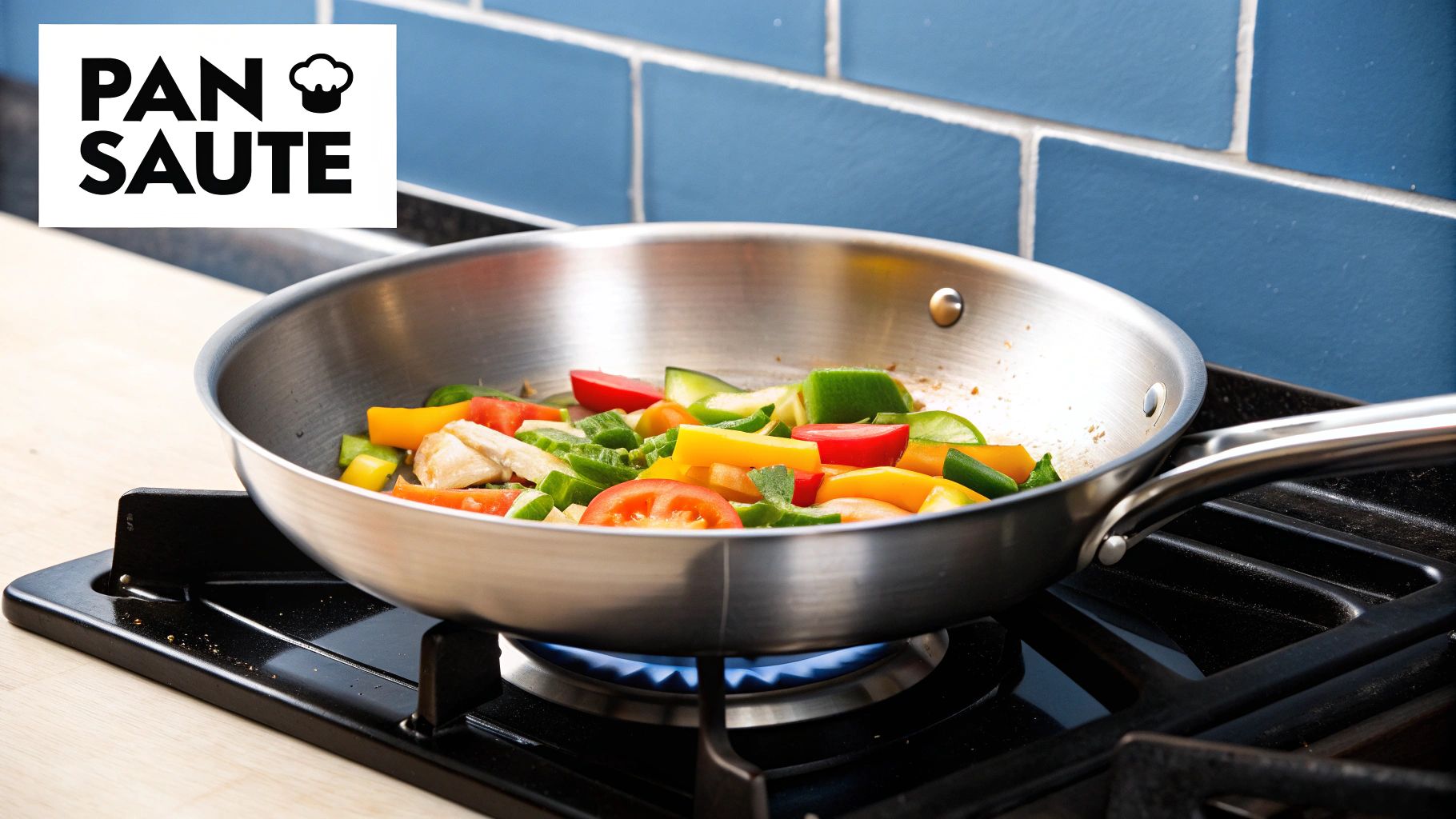
Contrary to common myths, high-quality EVOO has a smoke point between 375-410°F (190-210°C), making it perfectly safe and effective for most medium to medium-high heat stovetop applications. This process not only cooks the ingredients but also infuses them with rich, complex flavors that are central to Mediterranean cuisine.
Best Practices for Sautéing with Olive Oil
To achieve perfect results, mastering the technique is key. Follow these actionable tips for flavorful, evenly cooked dishes every time.
- Heat the Pan First: Always preheat your pan over medium heat before adding the oil. This prevents the oil from overheating and the food from sticking.
- Look for the Shimmer: Add 1-2 tablespoons of olive oil and heat it until it shimmers slightly. This indicates it’s at the ideal temperature for cooking, just before it begins to smoke.
- Don't Crowd the Pan: Sauté in batches if necessary. Overcrowding the pan lowers the temperature, causing food to steam rather than sear, which prevents browning.
- Manage Delicate Ingredients: Add aromatics like minced garlic or delicate herbs toward the end of the cooking process to prevent them from burning and turning bitter.
Real-World Examples
Here’s how to apply this technique in your kitchen:
- Italian-Style Spinach: Sauté minced garlic in olive oil for 30 seconds until fragrant, then add fresh spinach and cook until just wilted.
- Pan-Seared Chicken: Pat chicken breasts dry, season with salt, pepper, and herbs, then sear in hot olive oil for 5-7 minutes per side until golden brown and cooked through.
- Sautéed Mushrooms: Cook sliced mushrooms in olive oil over medium-high heat, allowing them to brown deeply before adding garlic and thyme.
2. Salad Dressings and Vinaigrettes
Creating homemade salad dressings and vinaigrettes is one of the most celebrated olive oil uses in cooking, and for good reason. Extra virgin olive oil serves as the quintessential base, providing a rich, silky mouthfeel and a complex flavor profile that perfectly balances acidic ingredients like vinegar or citrus juice. It emulsifies with these elements to create a cohesive dressing that clings to greens instead of pooling at the bottom of the bowl.
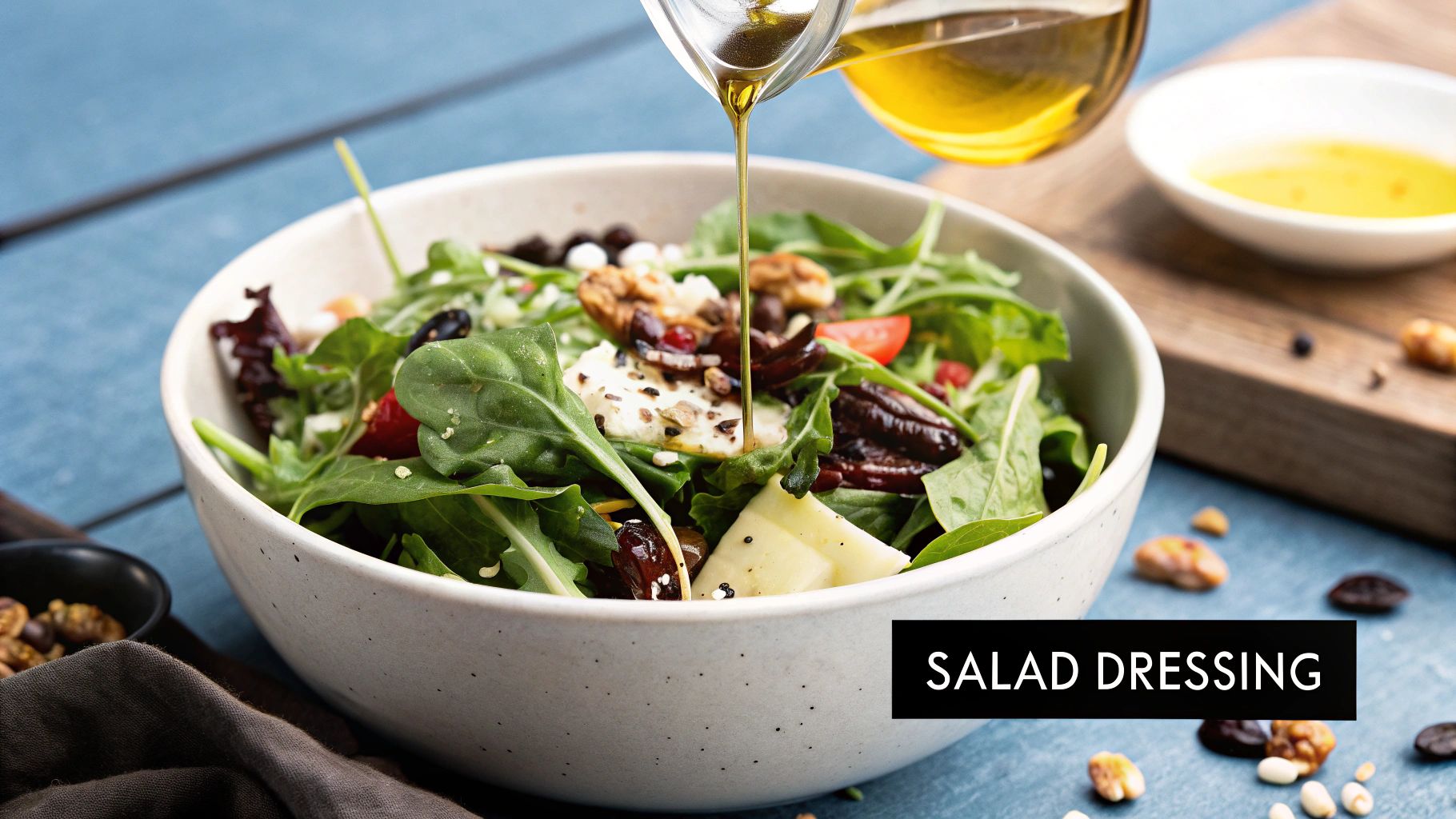
The choice of EVOO can transform a simple dressing from good to exceptional. A peppery Tuscan olive oil adds a spicy kick, while a buttery Spanish Arbequina offers a milder, more delicate touch. This versatility, popularized by Mediterranean, French, and California cuisines, allows you to tailor the flavor of your salad to a specific meal or preference, moving far beyond store-bought options.
Best Practices for Making Dressings
To create perfectly balanced and emulsified dressings, a few key techniques are essential. Follow these actionable tips for a superior dressing every time.
- Master the Emulsion: For a stable dressing that won’t separate, whisk the ingredients vigorously in a bowl while slowly drizzling in the olive oil. Alternatively, use a jar with a tight-fitting lid and shake forcefully, or use an immersion blender for the creamiest results.
- Use Natural Emulsifiers: Ingredients like Dijon mustard, honey, or even a small amount of mayonnaise act as emulsifying agents, helping the oil and vinegar bind together more effectively.
- Taste and Adjust: The classic vinaigrette ratio is three parts oil to one part acid, but this is just a starting point. Taste as you go and adjust the ratio to suit your palate and the specific ingredients you are using.
- Serve at Room Temperature: If you refrigerate your dressing, the olive oil will likely solidify. Allow it to sit at room temperature for about 15-20 minutes and shake well before serving to restore its liquid consistency.
Real-World Examples
Here’s how to apply this technique in your kitchen:
- Classic Balsamic Vinaigrette: Whisk together one part balsamic vinegar with three parts EVOO, a teaspoon of Dijon mustard, minced garlic, salt, and pepper for a timeless dressing for mixed greens.
- Simple Lemon Dressing: Combine the juice of one lemon with three times the amount of a high-quality, fruity EVOO, a pinch of salt, and freshly cracked black pepper. This is perfect for a simple arugula salad.
- Greek Salad Dressing: Mix robust EVOO with red wine vinegar, a generous amount of dried oregano, a squeeze of lemon juice, and salt to create the signature dressing for a traditional Greek salad.
3. Marinating Meats and Vegetables
One of the most effective olive oil uses in cooking is as a base for marinades. Olive oil is an ideal vehicle for carrying fat-soluble flavors from herbs and spices deep into meats and vegetables. It also helps to keep proteins moist during cooking and adds a layer of rich, nuanced flavor that water or citrus-based marinades alone cannot provide.
The fat in olive oil is crucial for extracting and dissolving aromatic compounds from ingredients like garlic, rosemary, and paprika. This allows the flavors to penetrate the surface of the food, creating a more succulent and flavorful final dish whether you're grilling, roasting, or pan-searing.
Best Practices for Marinating with Olive Oil
To create a truly impactful marinade, it’s important to balance the components and follow proper food safety guidelines.
- Mind the Ratios: A good starting point is to use 2-4 tablespoons of olive oil per pound of meat or vegetables to ensure everything is evenly coated without becoming greasy.
- Keep It Cold: Always marinate food in a sealed container or bag inside the refrigerator, not at room temperature, to prevent bacterial growth.
- Pat Before Cooking: When using high-heat methods like searing or grilling, gently pat the excess marinade off the surface of the food. This prevents flare-ups and helps achieve a better crust.
- Time It Right: Allow vegetables to marinate for at least 30 minutes. For meats, a minimum of 2 hours is ideal, but tougher cuts can benefit from marinating for up to 24 hours.
Real-World Examples
Here are some classic examples of how to use olive oil in marinades:
- Greek Chicken Souvlaki: Whisk olive oil with lemon juice, oregano, and minced garlic. Marinate cubed chicken for at least 4 hours before skewering and grilling.
- Marinated Vegetables for Grilling: Toss bell peppers, zucchini, and onions in olive oil with balsamic vinegar, basil, and salt. Let them sit for 30 minutes before grilling.
- Italian Herb-Marinated Pork Tenderloin: Create a paste with olive oil, chopped rosemary, sage, garlic, and black pepper. Rub it all over a pork tenderloin and let it marinate for 2-6 hours before roasting.
4. Roasting and Baking
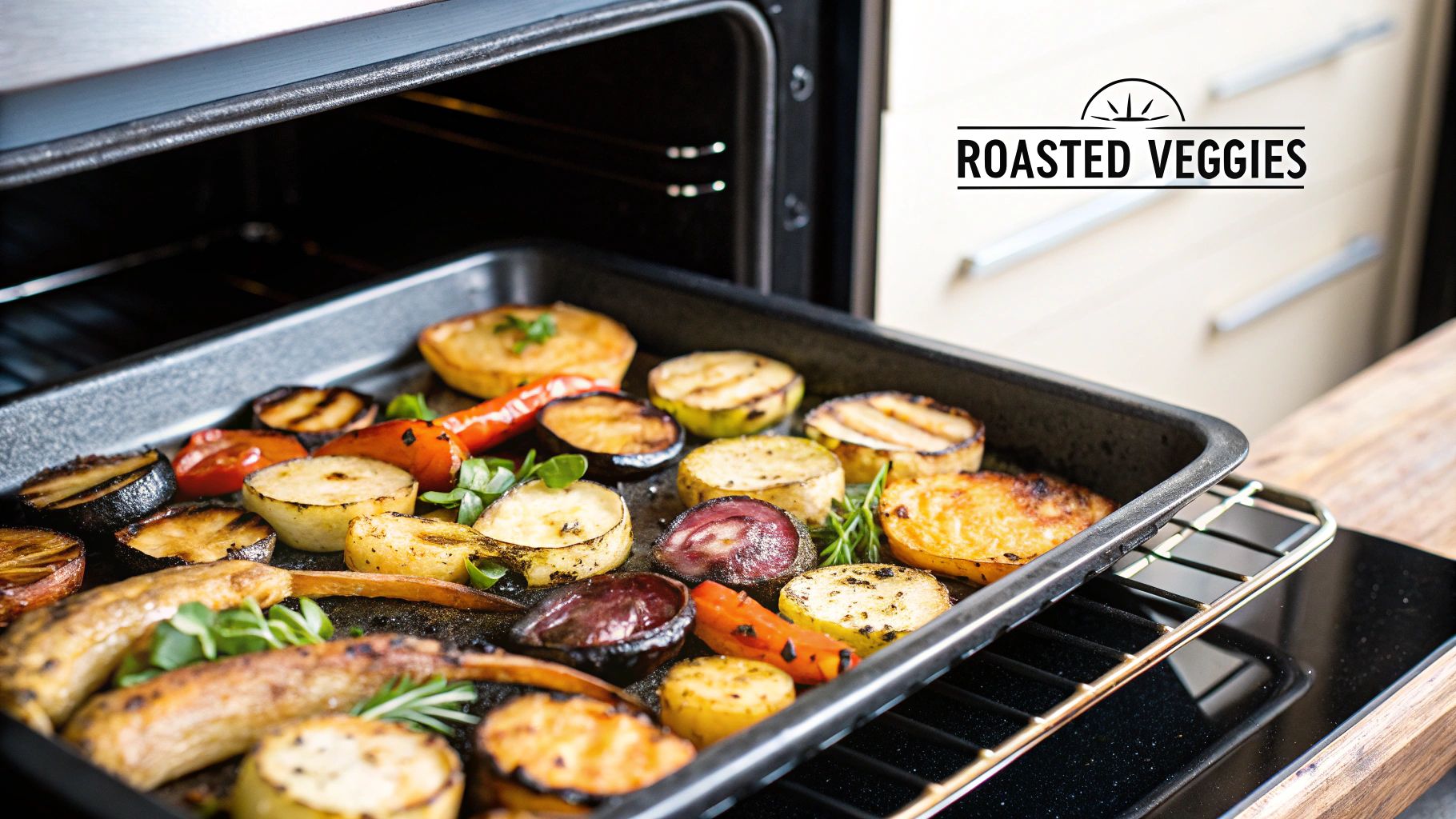
Moving from the stovetop to the oven, roasting and baking represent another core area where olive oil uses in cooking truly shine. This method involves cooking food with dry heat, where the oil acts as a conductive layer, promoting even browning and creating a delightfully crispy exterior. Using a quality extra virgin olive oil not only prevents ingredients from sticking but also imparts a rich, savory flavor that penetrates the food as it cooks.
The high smoke point of good EVOO makes it a stable and healthy choice for the high temperatures typically used in roasting. This technique is fantastic for developing deep, caramelized flavors in everything from root vegetables to poultry, while also helping to lock in moisture for a tender result.
Best Practices for Roasting with Olive Oil
To get that perfect oven-roasted finish, a few key techniques make all the difference. Follow these tips to elevate your roasted dishes.
- Toss Thoroughly: Place your ingredients in a large bowl and drizzle with olive oil before adding seasonings. Tossing them ensures an even, thin coat of oil on all surfaces for uniform browning.
- Use the Right Amount: A general guideline is 1-2 tablespoons of olive oil per pound of vegetables or protein. This is enough to facilitate crisping without making the food greasy.
- Preheat Everything: For the best browning and to prevent sticking, always preheat your oven and your baking sheet. A hot surface sears the food on contact, starting the crisping process immediately.
- Give It Space: Do not overcrowd the pan. Spreading ingredients in a single layer with space between them allows hot air to circulate, which is essential for roasting rather than steaming.
Real-World Examples
Here’s how to apply these roasting techniques at home:
- Crispy Roasted Potatoes: Toss cubed potatoes with olive oil, rosemary, salt, and pepper. Roast on a preheated pan at 400°F (200°C) for 30-40 minutes, flipping halfway through.
- Mediterranean Roasted Vegetables: Combine bell peppers, zucchini, red onion, and cherry tomatoes with olive oil, oregano, and garlic powder before roasting until tender and caramelized.
- Olive Oil Roasted Chicken: Rub a whole chicken with a mixture of olive oil, lemon juice, garlic, and herbs before roasting it to golden-brown perfection.
5. Drizzling and Finishing
One of the most elegant olive oil uses in cooking is as a finishing touch. Drizzling high-quality extra virgin olive oil over a completed dish just before serving adds a layer of fresh, complex flavor, a luxurious mouthfeel, and a beautiful, glossy sheen. This technique is designed to showcase the oil's raw, unadulterated character, preserving the delicate aromatic compounds and polyphenols that would be diminished by heat.
Using EVOO as a condiment, rather than a cooking medium, elevates simple ingredients into a gourmet experience. The peppery, fruity, or grassy notes of the oil become a distinct and intentional flavor component, much like a sprinkle of fresh herbs or a squeeze of lemon. This practice is a cornerstone of Mediterranean cuisine, where the quality of the ingredients is paramount.
Best Practices for Drizzling and Finishing
To make the most of this simple yet powerful technique, a little finesse goes a long way. Follow these tips to perfectly finish your dishes.
- Use Your Best Oil: This is the time to use your highest-quality, most flavorful extra virgin olive oil. Since it isn't being cooked, its nuanced profile will be the star of the show.
- Drizzle Just Before Serving: Add the oil at the very last moment to ensure its vibrant flavor and aroma are at their peak when the dish reaches the table.
- Control the Flow: Pour the oil into a small cruet or use your thumb over the bottle opening to create a thin, controlled stream. This allows for even distribution without drowning the food.
- Enhance with Salt: Pair the finishing drizzle with a sprinkle of coarse sea salt, like Maldon or fleur de sel, to amplify the flavors of both the oil and the dish.
Real-World Examples
Here’s how you can use this finishing technique in your own kitchen:
- Classic Caprese Salad: Arrange slices of fresh mozzarella, ripe tomatoes, and basil leaves, then drizzle generously with a robust EVOO.
- Hearty Minestrone Soup: Ladle hot soup into bowls and finish each with a swirl of peppery olive oil to add richness and depth.
- Simple Bruschetta: Toast or grill slices of crusty bread, rub them with a raw garlic clove, and finish with a liberal drizzle of your best olive oil.
- Creamy Hummus: Once plated, create a well in the center of the hummus and pool a tablespoon of fruity olive oil inside before serving.
6. Confit Cooking Method
A classic technique with roots in French preservation, confit involves slowly cooking ingredients submerged in fat at a very low temperature. Using olive oil for this method is one of the most transformative olive oil uses in cooking, as it imparts a rich, silky flavor while creating an incredibly tender texture. This gentle poaching process, typically done between 200-225°F (93-107°C), breaks down tough tissues without browning the exterior, resulting in pure, concentrated flavor.
While traditionally associated with duck, olive oil confit is a versatile method that elevates vegetables, seafood, and aromatics. The slow, low cooking infuses the ingredient with the nuanced, fruity notes of the olive oil while the oil itself becomes flavored, ready to be reused for dressings or future cooking projects.
Best Practices for Olive Oil Confit
Mastering this technique is about patience and temperature control. These tips will help you achieve perfectly tender, flavor-packed results.
- Monitor Temperature Closely: Use a candy or probe thermometer to maintain a consistent, low temperature. The oil should never bubble or simmer; you’re looking for a gentle, even heat.
- Ensure Full Submersion: The ingredients must be completely covered by the olive oil. This ensures even cooking and prevents any part of the food from drying out or frying.
- Strain and Reuse the Oil: Once finished, allow the oil to cool, then strain it through a fine-mesh sieve or cheesecloth. This flavor-infused oil can be stored in the refrigerator and reused several times.
- Start with Room Temp Ingredients: Bring your main ingredient to room temperature before adding it to the warm oil. This helps maintain a stable cooking temperature from the start.
Real-World Examples
Here’s how you can use the confit method to create luxurious dishes:
- Confit Garlic Cloves: Submerge whole, peeled garlic cloves in olive oil and cook slowly for about an hour until they are soft and spreadable. Use them on toast or in sauces.
- Olive Oil Poached Salmon: Gently cook salmon fillets in olive oil seasoned with herbs and lemon peel until the fish is flaky and succulent, about 20-30 minutes.
- Tomato Confit: Slow-cook cherry tomatoes in olive oil with thyme and garlic until they are soft and bursting with flavor. Toss them with pasta or serve on burrata.
7. Bread Dipping and Spreads
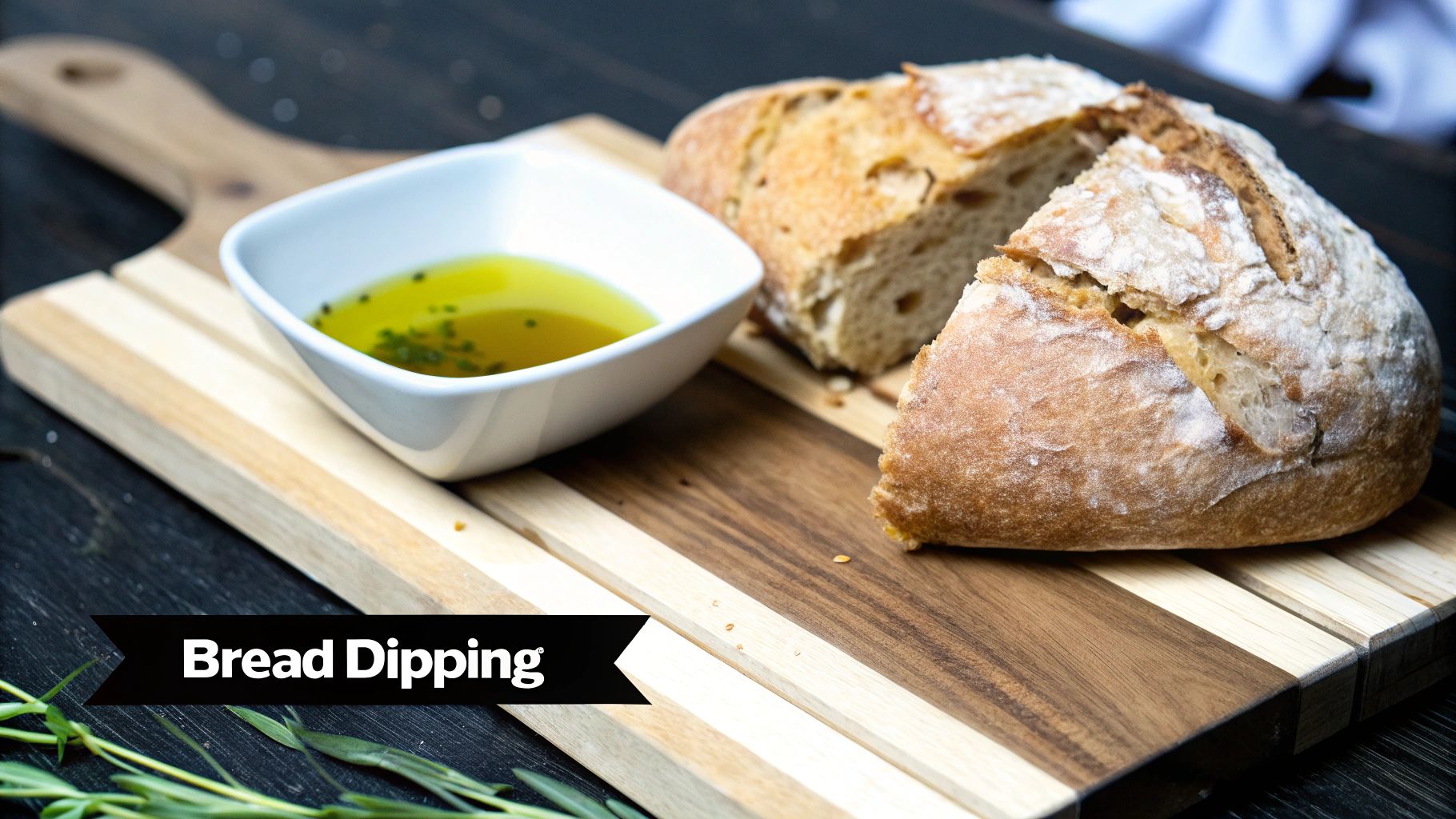
One of the most classic and elegant olive oil uses in cooking is as a base for bread dipping and spreads. This simple yet sophisticated practice, a cornerstone of Mediterranean dining, elevates a humble loaf of bread into a flavorful experience. High-quality extra virgin olive oil (EVOO) shines in this role, offering a healthier and more complex alternative to butter. Its fruity, peppery, and sometimes grassy notes create a perfect medium for herbs, spices, and vinegars.
This method isn’t about cooking but rather about appreciating the raw, unadulterated flavor of the oil itself. The oil's profile is front and center, making it essential to choose a robust, flavorful EVOO that can stand up to the bread and any added seasonings. Its popularity in Italian restaurants and the rise of the Mediterranean diet have made it a beloved appetizer worldwide.
Best Practices for Creating Dipping Oils
To transform a simple bowl of oil into an irresistible starter, a few key details make all the difference. Follow these tips to craft the perfect dipping experience.
- Choose the Right Dish: Use a shallow bowl or plate with a slight well. This allows for easy dipping without having to submerge the bread too deeply, ensuring a perfect oil-to-bread ratio.
- Add Seasonings Just Before Serving: To preserve the vibrant flavors and aromas of fresh herbs and spices, mix them into the oil right before you plan to serve it.
- Select a Robust Oil: A mild, delicate olive oil can be easily overpowered. Opt for an EVOO with a bold, peppery finish that complements the hearty texture of rustic bread.
- Provide a Spoon: Including a small spoon allows guests to drizzle the oil and seasonings directly onto their bread, ensuring they get a good mix of all the ingredients in every bite.
Real-World Examples
Here’s how to create delicious bread dips in your own kitchen:
- Classic Italian Herb Dip: Combine high-quality EVOO with finely chopped fresh rosemary, oregano, minced garlic, and a pinch of red pepper flakes.
- Balsamic and Olive Oil Swirl: Pour EVOO into a shallow dish and then drizzle a high-quality, aged balsamic vinegar over the top for a sweet and tangy contrast.
- Simple Sea Salt and Pepper: For a minimalist approach that highlights the oil's quality, simply pour EVOO into a dish and top with a generous pinch of flaky sea salt and freshly cracked black pepper.
8. Preservation and Storage Medium
Long before refrigeration, one of the most vital olive oil uses in cooking was as a natural preservation medium. Olive oil creates an airtight seal around food, forming an effective barrier against oxygen that prevents the growth of spoilage-causing bacteria and mold. This traditional Mediterranean method not only extends the shelf life of ingredients but also deeply infuses them with rich, fruity flavor over time.
Using a high-quality extra virgin olive oil for preservation enhances the final product, turning simple ingredients into gourmet pantry staples. Cheeses, vegetables, and herbs submerged in oil become tender and intensely flavorful, ready to elevate any dish. This technique beautifully marries practicality with culinary enhancement, a hallmark of rustic, time-honored cooking.
Best Practices for Preserving with Olive Oil
To ensure your preserved goods are both delicious and safe, proper technique is essential. Follow these actionable tips for successful preservation.
- Sterilize Everything: Thoroughly sterilize all jars, lids, and utensils with boiling water to eliminate any potential contaminants before you begin.
- Ensure Complete Coverage: The food items must be completely submerged in olive oil. Any part exposed to air can spoil and compromise the entire batch.
- Store Correctly: Keep the sealed jars in a cool, dark place like a pantry or cellar. Refrigeration can cause high-quality olive oil to solidify, though it will re-liquefy at room temperature.
- Use Clean Utensils: When retrieving items from the jar, always use a clean, dry fork or spoon to prevent introducing moisture or bacteria.
Real-World Examples
Here’s how you can use olive oil as a preservation and storage medium at home:
- Marinated Feta or Goat Cheese: Cube firm feta or place small logs of goat cheese in a jar, add herbs like rosemary and thyme, peppercorns, and chili flakes, then cover completely with EVOO.
- Oil-Packed Sun-Dried Tomatoes: Rehydrate dried tomatoes, then pack them into a jar with garlic cloves and basil leaves before submerging them in olive oil.
- Preserved Fresh Herbs: Create a flavorful herb paste by blending basil or parsley with olive oil, then pour it into ice cube trays and freeze for later use in sauces or soups.
Comparative Uses of Olive Oil in Cooking
| Method | Implementation Complexity 🔄 | Resource Requirements ⚡ | Expected Outcomes 📊 | Ideal Use Cases 💡 | Key Advantages ⭐ |
|---|---|---|---|---|---|
| Sautéing and Pan-Frying | Medium – requires heat control and timing | Moderate – olive oil, stovetop | Even cooking, golden color, rich flavor | Vegetables, meats, seafood at medium heat | Adds complex flavor; healthy; versatile |
| Salad Dressings and Vinaigrettes | Low – simple mixing, no heat | Low – olive oil, acids (vinegar) | Balanced acidity, rich texture | Salads, cold dishes | Preserves nutrients; endless flavor variations |
| Marinating Meats and Vegetables | Medium – advance planning, refrigeration | Moderate – olive oil, herbs/spices | Tender, flavorful, moist | Proteins and vegetables before cooking | Enhances flavor penetration; reduces cooking time |
| Roasting and Baking | Medium – oven preheat and timing | Moderate – olive oil, oven | Crispy exterior, moist interior | Vegetables, potatoes, proteins in oven | Promotes browning; prevents sticking |
| Drizzling and Finishing | Low – applied after cooking | Low – high-quality extra virgin oil | Fresh flavor, visual appeal | Soups, salads, grilled veggies, cheese plates | Maximizes flavor and nutrition; elegant finish |
| Confit Cooking Method | High – precise low-temp, long times | High – large quantity of olive oil | Ultra tender, moist, deeply flavored | Slow-cooked meats, garlic, vegetables | Incredible tenderness; preserves food long-term |
| Bread Dipping and Spreads | Very low – simple serving method | Low – olive oil, optional seasonings | Flavorful, healthy alternative to butter | Bread accompaniment | Healthy fats; versatile flavor additions |
| Preservation and Storage Medium | High – sterilization and safety required | High – large oil volume, storage | Extended shelf life, infused flavors | Cheese, herbs, vegetables preservation | Natural preservative; enhances flavors |
Elevate Your Everyday Cooking with Olive Oil
As we have explored, the journey into the world of olive oil uses in cooking extends far beyond a simple splash in a hot pan. This versatile ingredient is a cornerstone of culinary arts, acting as a foundational flavor, a delicate finishing touch, and everything in between. Moving past its role as a basic cooking fat opens up a new dimension of taste, texture, and aroma in your kitchen.
From the slow, gentle embrace of the confit method to the bright, acidic punch of a homemade vinaigrette, each application harnesses a different characteristic of this liquid gold. We’ve covered how a robust, peppery Extra Virgin Olive Oil can elevate a simple bowl of soup, while a lighter, more neutral olive oil provides the perfect medium for high-heat roasting and sautéing. Mastering these distinctions is the key to unlocking the full potential of every bottle in your pantry.
Key Takeaways for Your Culinary Journey
The true value of understanding these techniques lies in the control and creativity they afford you as a home cook. You are no longer just cooking; you are building layers of flavor with intention and purpose.
- Match the Oil to the Method: Remember the fundamental principle: bold, high-quality EVOO is best for low-heat or no-heat applications like dressings, dips, and finishing drizzles where its flavor can shine. Lighter or refined olive oils are your go-to for higher-heat methods like pan-frying and roasting.
- Embrace Experimentation: Don't be afraid to try new things. Infuse an oil with herbs for a custom bread dip, or use the confit technique on cherry tomatoes for a rich, jammy topping for bruschetta. The possibilities are truly endless.
- Taste and Learn: The most important tool you have is your palate. Taste your oils on their own. Notice the differences between a grassy, pungent oil from Tuscany and a buttery, smooth oil from Spain. This knowledge will guide your pairing decisions and transform your cooking.
Your Next Steps in the Kitchen
The path to mastering the many olive oil uses in cooking begins with a single, deliberate step. We encourage you to choose one technique from this guide and make it your own this week.
Perhaps you can start by replacing your store-bought salad dressing with a simple, homemade vinaigrette. Or maybe you’ll decide to finish your next roasted vegetable dish with a generous drizzle of a high-quality finishing oil. By incorporating these practices one by one, you will build confidence and develop an intuitive sense for how this incredible ingredient can elevate everyday meals into something truly special. This journey is not about perfection, but about the joy of discovery and the delicious results along the way.
Ready to find the perfect bottle to start your culinary adventure? At Learn Olive Oil, we provide expert reviews, detailed tasting notes, and comprehensive guides to help you navigate the complex world of olive oils. Visit Learn Olive Oil to discover top-rated brands and deepen your understanding of what makes a truly great olive oil.

 Learn Olive Oil
Leave a comment