Why Half the 'Olive Oil' on Store Shelves Isn't Real
Picture yourself in the cooking oil aisle, reaching for a bottle confidently labeled ‘Extra Virgin Olive Oil.’ You trust that what's inside is exactly what the label promises. The unsettling truth, however, is that there’s a good chance it isn’t. The global olive oil industry is unfortunately filled with deception, and understanding this is the first step to becoming a smarter shopper. The issue of olive oil authenticity isn't just about misleading labels; it’s a widespread problem affecting everything from flavor to health benefits.
Genuine extra virgin olive oil is far more than a marketing term—it's a strict quality standard. Think of it like a high-performance engine. For an oil to earn the extra virgin title, it must be extracted from olives using only mechanical methods, without high heat or chemicals. This process, known as cold-pressing, is key to preserving the oil’s delicate flavors, complex aromas, and powerful antioxidants. Just as a mechanic tests an engine's output, certified tasters and labs must verify the oil's quality, confirming it has zero flavor defects and meets specific chemical benchmarks.
The Economics of Deception
So, what fuels this widespread fraud? The simple answer is money. The high demand for premium olive oil has created a lucrative market for dishonest producers. The global olive oil market was valued at around USD 15.1 billion in 2024 and is expected to grow significantly. This massive financial incentive makes cutting corners incredibly attractive. You can dive deeper into these market dynamics by exploring the full industry report on Fortune Business Insights.
Here’s a real-world example of how these economics play out: Spain produces about 45% of the world's olive oil and often exports it at lower prices. Italy, which produces only 15% of the global supply, is a top exporter famous for its premium "Italian Extra Virgin Olive Oil." Sometimes, this reputation is built by blending high-quality Italian oil with cheaper oils from other countries while still marketing it as a premium Italian product.
This economic pressure creates a system where a bottle's origin story can be intentionally fuzzy. The journey from a sun-drenched Mediterranean grove to your kitchen pantry is a long one, with many points where authenticity can be lost. From diluting pure oil with cheaper seed oils to mislabeling lower-grade olive oil as "extra virgin," the methods are varied and often invisible to the average consumer. This deception not only cheats you out of your money but also robs you of the health benefits and culinary experience you paid for.
Inside the Criminal World of Olive Oil Fraud
The complex nature of modern olive oil fraud could rival a detective story. This isn't just about a misleading label on a bottle; it's a large-scale criminal operation that spans the globe. The financial rewards are massive, turning "liquid gold" into a prime target for organized crime networks looking for big profits with less risk than other illegal ventures. They formulate convincing fake oils, hide their work with chemical tricks, and build complicated supply chains to get these fraudulent products onto store shelves.
Common Deception Tactics
Fraudsters have a well-stocked playbook for fooling both consumers and regulators. Learning their methods is the first step toward avoiding their traps. It’s like knowing the secret to a magic trick; once you see how it’s done, it loses its power. The techniques range from startlingly simple to scientifically advanced.
- Simple Dilution: This is the most widespread form of fraud. High-quality extra virgin olive oil is blended with cheaper, inferior oils. These can include refined olive oil, which has none of the distinct flavor or health benefits, or entirely different vegetable oils like sunflower, soybean, or canola.
- Deodorization and Blending: Low-grade oils, such as lampante oil (which is not fit for consumption), are put through a chemical process to strip away bad smells and flavors. This bland, neutralized oil is then mixed with a small amount of genuine extra virgin olive oil to restore some color and aroma, creating a believable counterfeit.
- False Origin Claims: A bottle might proudly display a "Product of Italy" label, but the oil inside could actually be a mix from Spain, Greece, and Tunisia. While this isn't always illegal if labeled correctly, it becomes fraud when the origin is intentionally faked to justify a higher price based on a region's esteemed reputation.
The Scale of the Problem
The problem of olive oil authenticity isn't a minor issue involving a handful of rogue producers; it's a major and expanding global concern. Law enforcement operations frequently dismantle massive fraud rings. For example, in one recent bust, Portuguese authorities seized over 16,000 liters of cooking oil that was falsely packaged to be sold as olive oil. That same operation also confiscated another 82,000 liters of other fraudulent olive oil products. You can find more details about how criminals target olive oil on FoodNavigator.com.
These criminal enterprises do more than just mislabel products. They represent a calculated effort to profit from deception at every point in the supply chain. From the initial blending to final distribution, these networks work to make their fake products look just like the real thing to the average shopper. This isn't meant to make you fearful, but to arm you with the knowledge to recognize potential red flags before a fraudulent bottle makes it into your kitchen.
Decoding the Legal Framework That Protects Consumers
Figuring out olive oil regulations can feel like trying to read a foreign language, but understanding these legal protections is a key tool for any smart shopper. A major hurdle in ensuring olive oil authenticity is the wide variation in standards from one country to another. What legally passes as ‘olive oil’ can differ greatly. This patchwork of rules creates loopholes that fraudsters can exploit, while still allowing for legitimate trade. A bottle considered authentic in one country might fail to meet the stricter criteria of another.
Defining Extra Virgin Quality by Law
To be legally called extra virgin, an oil must pass specific scientific and sensory tests. Think of these as the non-negotiable rules that separate the best from the rest. These benchmarks aren't just technical details; they have a direct impact on the taste, quality, and health benefits of the oil you buy. Regulators and certified labs check several key metrics to confirm an oil is genuine.
The table below breaks down the main legal standards that define true extra virgin olive oil, especially under the tough regulations from the European Union and the International Olive Council.
| Parameter | What It Measures | EVOO Legal Limit | Why It Matters |
|---|---|---|---|
| Free Fatty Acidity (FFA) | The breakdown of fats into fatty acids, which signals the freshness and quality of the olives. | ≤ 0.8% | Low acidity means the olives were healthy and processed quickly after harvest, preserving the oil's quality. |
| Peroxide Value | The level of initial oxidation in the oil, which causes rancidity. | ≤ 20 meq O2/kg | A low peroxide value points to freshness and proper storage, protecting the oil from going bad. |
| Sensory Analysis | A trained panel tastes the oil for positive qualities (fruitiness, bitterness, pungency) and any defects. | Zero Defects | The oil must have a noticeable fruity flavor and be completely free of negative tastes or smells like mustiness or rancidity. |
Strengthening Enforcement and Closing Loopholes
Recognizing that fraud is an ongoing problem, regulatory bodies are constantly working to improve enforcement. The European Union, for example, has moved to tighten its oversight. In response to persistent issues, the EU brought in new conformity rules in 2022 that require member states to perform mandatory annual checks on labeling and category compliance. These inspections focus heavily on extra virgin olive oil, the most common type sold in the EU.
Despite these rules and industry efforts, fake olive oil still finds its way onto store shelves, proving that current systems aren't yet foolproof. For a deeper dive into this ongoing fight, you can explore insights on food fraud challenges at FoodNavigator.com. This legal knowledge is your personal shield against misleading claims, helping you make choices based on real quality standards.
Making Sense of Certification Seals and Quality Marks
Walking down the olive oil aisle can feel like trying to crack a secret code. Bottles are covered with an assortment of official-looking seals and quality marks, each one claiming olive oil authenticity. But which of these truly signal a quality product, and which are just marketing decorations? Think of these certifications as a bottle's resume—some show serious, independent vetting, while others are more like self-awarded trophies. Knowing the difference is your key to choosing with confidence.
This infographic shows the hierarchy of trust when you check labels, ranging from simple brand claims to legally protected designations.
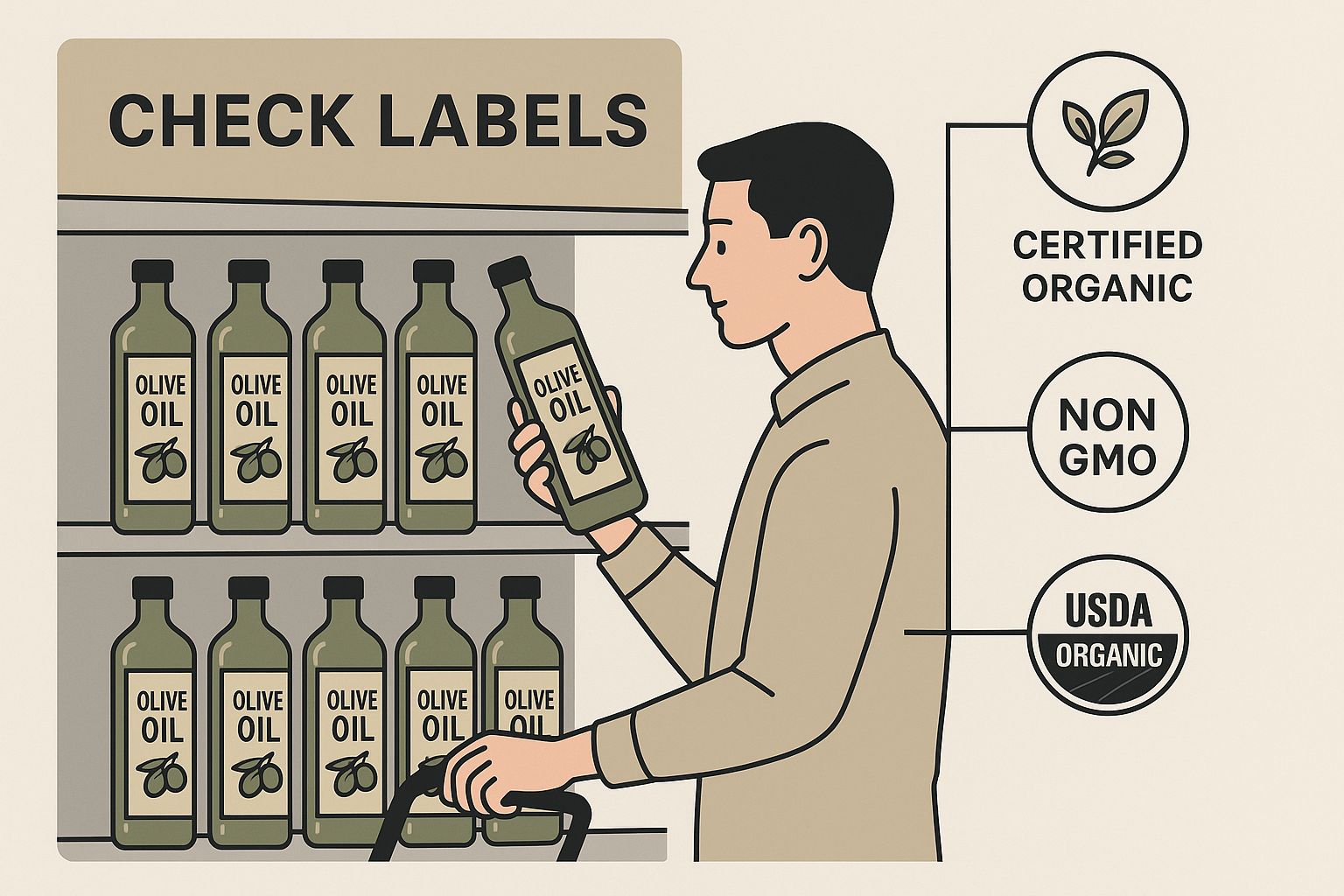
As the image suggests, the most reliable signs of authenticity are often tied to specific geographic protections and third-party verification. These provide much more assurance than a producer's own statements.
The Most Meaningful Seals to Look For
Not all seals carry the same weight. The most trustworthy ones are backed by strict legal rules and independent checks, ensuring the oil inside meets specific standards for both where it comes from and how it was made. They offer a layer of security that goes beyond the producer's own marketing.
Here are the most important certifications to look for:
- Protected Designation of Origin (PDO/DOP): This is one of the strongest guarantees you can find on a label. The red and yellow PDO seal (or DOP in Italian and Spanish) certifies that the olives were grown, harvested, pressed, and bottled all within a specific geographical area. It’s a legally binding promise that the oil is a true product of its region, like Kalamata PDO from Greece or Chianti Classico DOP from Italy. This system protects both consumers and traditional producers.
- Protected Geographical Indication (PGI/IGP): The blue and yellow PGI (or IGP) seal is also based on geography but is a bit less strict than PDO. It guarantees that at least one step of the production process happened in the designated region. For example, the olives might be grown in a specific area, but the bottling could take place somewhere else. It still provides a strong indicator of regional character and quality control.
- Third-Party Quality Seals: Seals from organizations like the California Olive Oil Council (COOC) or the Australian Olive Association (AOA) mean the oil has passed tough chemical and sensory tests that often go beyond international standards. These seals are a solid sign of quality, freshness, and adherence to extra virgin criteria. Similarly, the USDA Organic seal confirms the olives were grown without synthetic pesticides or fertilizers, adding another layer of verification.
When you're shopping, keep an eye out for these marks first. A producer who invests in getting a PDO, PGI, or a reputable third-party seal is showing a real commitment to olive oil authenticity. While not having one doesn't automatically mean an oil is fake, their presence is a powerful and reliable shortcut to finding a high-quality product you can trust.
How Scientists Catch Olive Oil Fraudsters Red-Handed
While legal standards and certifications provide a strong line of defense, the final frontier in confirming olive oil authenticity is the science lab. Every genuine oil possesses a unique molecular fingerprint, a biological signature that tells its entire story—from the olive variety and soil it grew in to the way it was processed. Modern labs use this information to carry out a kind of biological detective work, unmasking even the most clever fakes.
Think of it as food forensics. Just as investigators rely on DNA to identify a person, food scientists use advanced techniques to identify an oil. These methods are so precise they can pick up on tiny traces of foreign oils that fraudsters hope will stay hidden, exposing their deceptive blends for what they are.
The Toolkit of a Food Detective
Scientists have an impressive array of tools to analyze olive oil. Each method examines a different part of the oil's makeup, and together, they build a complete authenticity profile. This multi-layered approach makes it incredibly difficult for fraudulent products to slip through unnoticed.
Key laboratory techniques include:
- Gas Chromatography (GC): This is the go-to method for analyzing an oil's fatty acid profile. Each type of oil—whether it's olive, sunflower, or canola—has a distinct fatty acid composition. GC separates these components and creates a chart that acts like a signature. If the chart doesn't match the signature of 100% pure olive oil, it's a dead giveaway for adulteration.
- Spectroscopy: This family of techniques measures how oil molecules interact with light. Nuclear Magnetic Resonance (NMR) spectroscopy, for instance, is an exceptionally powerful tool. It can detect trace amounts of other oils and even pinpoint the geographic origin of the olives by analyzing subtle chemical differences. It’s like having a high-tech scanner that can spot a single counterfeit bill in a thick stack of cash.
- Isotope Analysis: This technique digs into the oil's atomic structure. The ratio of certain isotopes (variants of elements like carbon and oxygen) can reveal the specific region and climate where the olives were grown. This acts as an almost foolproof check against false origin claims.
Putting Science into Practice
These sophisticated scientific methods aren't just for academic papers; they are actively used to combat fraud on a global scale. For example, the International Atomic Energy Agency (IAEA) and the Food and Agriculture Organization (FAO) use nuclear and spectroscopic technologies to quickly verify extra virgin olive oil. Their work using near-infrared spectroscopy can distinguish between authentic oils from different countries like Slovenia, Italy, and Greece with an impressive accuracy rate between 86% and 93%. You can learn more about how these nuclear innovations combat olive oil fraud on the IAEA website.
Furthermore, new technologies like DNA testing are making it possible to confirm the specific olive cultivars used to make an oil, adding yet another layer of security. While you won't be running these tests in your kitchen, understanding the science behind them makes you a smarter consumer. It gives you a deeper appreciation for the complexity and value behind every legitimate bottle of olive oil.
Kitchen Detective: Testing Olive Oil Authenticity at Home
While scientists use advanced equipment in a lab, you don’t need a special setup to begin checking olive oil authenticity yourself. In fact, professional tasters and seasoned home cooks rely on their senses and a few simple kitchen methods to spot the signs of quality—or its absence. By learning these practical techniques, you can train your palate and feel more confident telling a premium product from a fake.
The Professional Sip: A Sensory Evaluation
The most dependable at-home method for verifying olive oil authenticity is a proper tasting. This isn’t about dipping bread; it’s a focused sensory analysis, much like tasting wine. Your senses of smell and taste are powerful instruments for detecting freshness, complexity, and common defects.
Here’s how to taste like an expert:
- Pour: Add about a tablespoon of oil into a small, clean glass. A small wine glass is ideal.
- Warm: Cup the glass with one hand and cover the top with your other. Swirl the oil gently for about 30 seconds. This action slightly warms the oil, helping to release its aromatic compounds.
- Smell: Lift your hand and take a deep sniff. A high-quality extra virgin olive oil should smell fresh and clean, with notes of fresh-cut grass, green apple, tomato leaf, or herbs. If you detect smells like crayons, stale nuts, or old butter, the oil is likely rancid. A total lack of aroma is also a major red flag.
- Sip: Take a small sip, allowing the oil to coat your entire tongue. A genuine extra virgin olive oil should have a distinct flavor and should not feel greasy or neutral.
- Finish: A good olive oil will leave a peppery or spicy sensation at the back of your throat. This kick, known as pungency, comes from healthy polyphenols and is a classic indicator of a fresh, authentic oil.
Physical Clues and Traditional Tests
Beyond a taste test, a few simple physical observations can provide more clues. One popular method you might have heard of is the refrigerator test. The idea behind it is that the monounsaturated fats in real extra virgin olive oil should solidify when chilled. To try this, simply pour a small amount of oil into a jar and place it in the fridge for several hours.
However, this test is not foolproof. While many authentic extra virgin olive oils will turn cloudy or solid, some high-quality varieties with a lower wax content might not. Furthermore, some oils that have been mixed with cheaper oils can also solidify. It can be a helpful hint, but it shouldn't be the only thing you rely on to judge authenticity.
Another method, the lamp test, is more of a historical curiosity. In the past, people would test oil by seeing if it could cleanly fuel a simple oil lamp. Oils that were adulterated or low-quality would produce smoke or fail to burn properly. While not a practical test for today's kitchens, it shows how people have long sought ways to confirm the quality of their oil.
To help you decide which at-home test might work for you, here is a breakdown of the most common methods, what they look for, and how reliable they are.
| Test Method | What It Detects | Reliability Level | Time Required | Equipment Needed |
|---|---|---|---|---|
| Sensory Tasting (Smell & Taste) | Rancidity, off-flavors (musty, metallic), lack of fruity notes, pungency (peppery finish) | High | 5-10 minutes | Small glass |
| Refrigerator Test | Solidification of monounsaturated fats when chilled. Aims to detect dilution with other oils. | Low | 2-24 hours | Refrigerator, clear jar |
| Visual Inspection | Color (not a reliable indicator of quality), clarity, presence of sediment. | Very Low | < 1 minute | Clear bottle or glass |
| Lamp Test (Historical) | Ability to burn cleanly without smoke. Historically used to detect impurities. | Not Applicable | N/A | Oil lamp, wick |
Ultimately, these home tests are most effective for spotting obvious flaws like rancidity or a complete absence of character. They cannot uncover sophisticated adulteration, such as mixing with refined olive oil, but they offer a great starting point for any kitchen detective wanting to become a more informed consumer.
Your Smart Shopping Strategy for Authentic Olive Oil
Now that you understand the world of olive oil fraud, regulations, and testing, you can walk down the grocery aisle with a fresh perspective. This isn't about memorizing complex chemistry; it's about training your eye to spot the clues that separate the real deal from the imposters. Your best defense against fake olive oil begins not with a taste test, but with a close inspection of the bottle itself.
Reading the Label Like an Expert
Think of an olive oil label as the producer's resume. A company proud of its product will provide clear, specific details that signal quality and transparency. In contrast, fraudulent or low-quality brands often hide behind vague terms and misleading images of idyllic Italian countrysides.
Here are the critical details to look for:
- Country of Origin: By law, the label must state where the oil comes from. Be skeptical of fuzzy phrases like "Packed in Italy" or "Imported from Italy." This often means oils from various countries were mixed and simply bottled there. You want to see definitive statements like "Product of Spain" or "Grown, Harvested, and Bottled in Greece." A single point of origin suggests better traceability and control.
- Harvest or Press Date: This is one of the most vital pieces of information. Unlike a fine wine, olive oil is a fresh fruit juice—it does not get better with age. A "best by" date is not enough. Look for a specific harvest date. An oil produced within the last 12 months is your best bet. If you can't find a harvest date, you have no idea how old that oil really is.
- Specific Region or Estate: Vague origin claims are a major red flag. A quality producer will proudly display the specific region (like Sicily in Italy or Andalusia in Spain) or even the family estate where the olives were grown and pressed. This level of detail shows pride and accountability.
Knowing the major olive oil-producing countries helps you cross-reference the claims on a label, connecting the bottle in your hand to a real place on the map.
Decoding Price and Packaging
While a high price tag doesn't always guarantee superior quality, a suspiciously low price is a major warning. Crafting genuine extra virgin olive oil is a costly and labor-intensive process. A price that seems too good to be true likely indicates a blend of cheap, low-grade oils passed off as something they're not.
You should also pay close attention to the container. Real olive oil is delicate and degrades quickly when exposed to light, which causes it to go rancid. Reputable brands understand this and will always use dark glass bottles (green or brown) or opaque tins to protect their product. Avoid olive oil sold in clear glass bottles. This is a clear sign that the producer either doesn't know the basics of protecting their oil or simply doesn't care about the quality inside.
By combining these simple but effective observational skills, you can filter out the fakes and choose oils that deliver the authentic flavor, health benefits, and quality you're paying for.
Ready to put your new knowledge to the test? Explore a world of verified, high-quality oils and deepen your expertise. Discover the World of Premium Olive Oil with our curated guides and resources at Learn Olive Oil.

 Learn Olive Oil
Leave a comment