Decoding Daily Olive Oil Recommendations
Figuring out how much olive oil per day you should have can feel like navigating without a map. We often hear generic advice, but this guidance is more like a compass—it points you in a healthy direction, but the actual journey is unique to you. The commonly cited two tablespoons a day is a starting point, not a strict rule, because it doesn't consider the personal map of your health, lifestyle, and overall diet.
The right amount of olive oil isn't a fixed number but a flexible guideline that needs a personal touch. Leading nutrition experts and proponents of the Mediterranean diet look past simple measurements. Instead, they champion a more tailored approach, considering your specific needs to find a daily amount that truly works for you.
Factors That Influence Your Daily Intake
Your ideal portion is shaped by a mix of elements that define your daily routine. It's a dynamic calculation, not a one-size-fits-all prescription. Here are the key factors to consider:
- Total Caloric Needs: Your energy requirements are a major driver. An active athlete needs more fuel than someone with a desk job. Since olive oil is rich in calories, your intake should fit within your overall energy consumption.
- Existing Diet: Think about what you're already eating. If you're swapping out other fats like butter or margarine for olive oil, you might use more. But if your diet is already packed with healthy fats from sources like avocados, nuts, and seeds, a more moderate amount would be sensible.
- Health Goals: What are you trying to achieve? For someone focused on improving heart health, a higher intake of around 2 to 4 tablespoons might be recommended to get the full anti-inflammatory and antioxidant effects. In contrast, a person managing their weight might aim for 1 to 2 tablespoons daily.
Global Consumption as a Guide
A look at dietary habits around the world provides some interesting perspective. Olive oil consumption varies widely, often reflecting deep cultural traditions. For example, 2025 projections estimate that the average person in Japan and Brazil will consume about 0.4 kilograms annually.
Meanwhile, North Americans use significantly more, with the United States averaging 1.1 kilograms and Canada 1.2 kilograms per person. You can explore more global olive oil statistics to see how these habits differ. This data shows a broad spectrum of what's considered "normal," underscoring that a personalized amount is more practical than a universal command.
The Fascinating Science Behind Optimal Consumption
Think of your body as a finely tuned engine. While different fuels can get it started, only a premium one will help it run at its best. High-quality olive oil is like that premium fuel, but getting the benefits hinges on using the right amount. Understanding the science behind how much olive oil per day is ideal helps unlock its true power, turning a simple cooking ingredient into a major health asset. The secret is in its unique makeup, especially its high levels of polyphenols and monounsaturated fats.
These components do more than just pass through your system; they get to work. Polyphenols are powerful antioxidants that fight oxidative stress—think of it as a kind of cellular rust that contributes to aging and disease. When you consume olive oil, these compounds are absorbed into your bloodstream, helping to shield your cells from this damage. The amount is critical because your body needs enough of them to build up this protective effect.
From Mediterranean Diets to Modern Labs
For centuries, people living in the Mediterranean region have been known for their long lives and low rates of chronic illness, with olive oil being a staple of their diet. Researchers studying these cultures have noticed their generous and consistent use of olive oil—often much more than the one or two tablespoons typically recommended elsewhere—creates a powerful cumulative benefit. This daily habit supports heart health by improving cholesterol levels and keeping blood vessels flexible.
Modern studies are now confirming these traditional observations with hard data. For example, consuming just over half a tablespoon of olive oil daily is linked to a 28% lower risk of death from dementia, regardless of a person's overall diet. This shows that even a moderate, steady intake can have a significant effect on long-term brain health, drawing a direct line between daily consumption and cognitive protection.
Why Your Body Prefers Olive Oil
Your body handles different fats in unique ways, and the way it processes the monounsaturated fats in olive oil is particularly effective. Unlike saturated fats, which can lead to plaque in your arteries, these healthy fats are easily used for energy and repairing cells. This growing scientific appreciation for olive oil is fueling its global popularity. Global consumption is expected to increase from 2.45 million metric tons in 2023/24 to about 2.84 million metric tons in 2024/25. You can read more about the rising global demand for olive oil. This isn't just a food trend; it's a worldwide acknowledgment of the real health advantages that the right daily dose of olive oil provides.
Mastering Your Perfect Daily Portion
Turning broad nutritional advice into a real, daily habit can feel like trying to follow a recipe with no measurements. To figure out how much olive oil per day is right for you, it helps to visualize the amounts. Think of it like learning a new language—once you understand the basics, making it part of your diet becomes second nature. Let's make those abstract recommendations easy to see.
From Cooking to Drizzling: Understanding Usage
First, it’s important to know how you're using your olive oil, as this changes your total consumption.
- Cooking Oil: When you sauté or roast with olive oil, it's harder to track how much you actually eat. A lot of it stays in the pan or just coats the food.
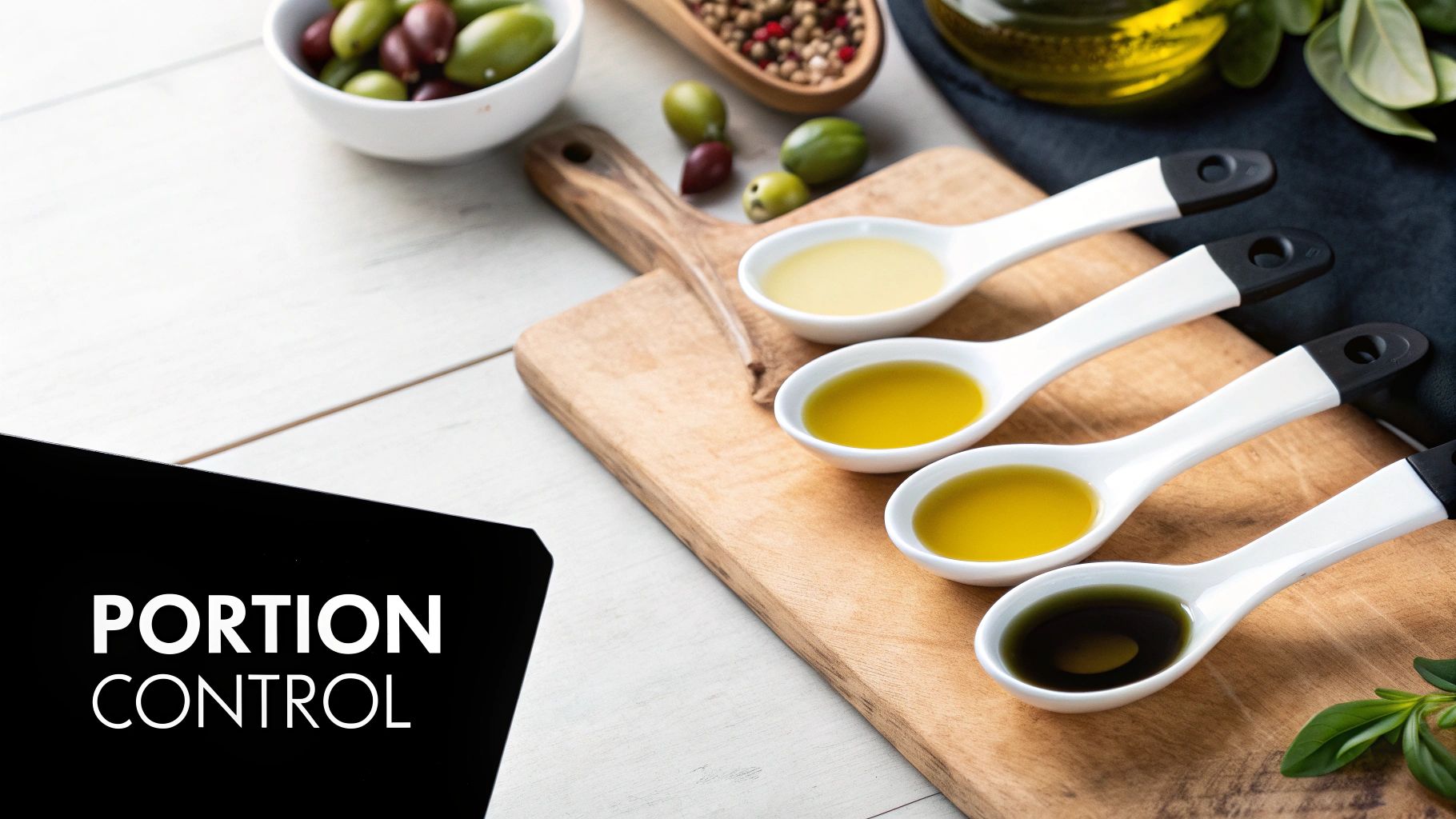
- Finishing Oil: This is where you have total control. Drizzling oil over salads, soups, or grilled bread lets you measure precisely. This is the best way to make sure you’re hitting your daily goal.
A simple and effective trick is to use a specific tablespoon just for your finishing oil. This removes the guesswork and makes it easy to be consistent day after day.
Visualizing Your Daily Intake
The following table breaks down common daily olive oil recommendations into practical measurements, helping you see exactly what these amounts look like.
| Recommended Amount | Tablespoons | Teaspoons | Visual Equivalent | Calories (approx.) |
|---|---|---|---|---|
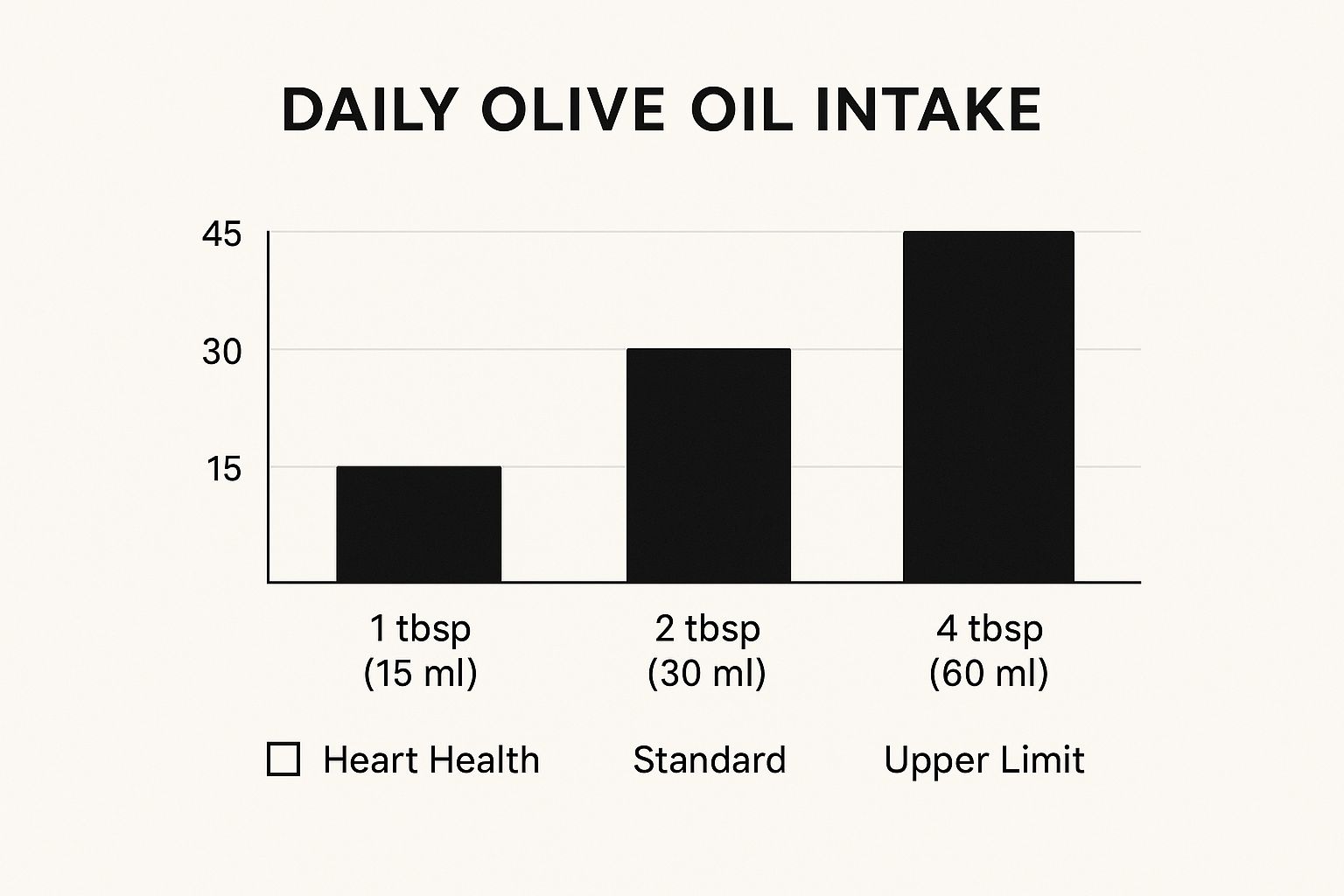
| Minimum for Heart Health | 1 tbsp | 3 tsp | About the size of a poker chip | 120 |
| Standard Daily Intake | 2 tbsp | 6 tsp | About the size of a golf ball | 240 |
| Upper Recommended Limit | 4 tbsp | 12 tsp | A small shot glass | 480 |
As the table shows, even a small amount like one tablespoon (15 ml) can provide heart health benefits. Meanwhile, four tablespoons (60 ml) is generally considered a safe upper limit for most healthy adults.
Adjusting for Your Unique Needs
Your ideal portion isn’t set in stone; it should fit your overall diet and health goals. Someone on a low-fat diet will need to be more careful with their intake than a person following a ketogenic or Mediterranean diet.
If you have specific health conditions, adjusting your olive oil consumption is crucial. Remember to account for fats from all sources—like nuts, avocados, and seeds—to maintain a healthy balance. The goal is to make olive oil a seamless part of your lifestyle, not a strict rule that adds stress to your day.
Unlocking Maximum Health Benefits Through Smart Timing
Figuring out how much olive oil per day you need is just the first step. To truly get the most out of every drop, it’s just as important to consider when and how you use it. Think of it like a finely tuned recipe—the order and preparation of ingredients can make all the difference. The same idea applies to olive oil; timing your intake and pairing it correctly can significantly boost its health-giving power.
With Meals or on an Empty Stomach?
There's a common discussion about whether to take olive oil with food or on its own, but for most people, the science is clear. Consuming olive oil with food is generally the better approach. The healthy fats in the oil help to slow down digestion, which can improve blood sugar stability and help you feel full and satisfied for longer. This natural synergy makes it a smart addition to any meal.
More importantly, olive oil is a fantastic partner for other nutrient-rich foods. It boosts the bioavailability of fat-soluble vitamins—specifically A, D, E, and K—that are present in your meal. In simple terms, it helps your body absorb more of the good stuff. For instance:
- A salad with leafy greens and tomatoes becomes a nutritional giant when dressed with olive oil.
- The lycopene in tomatoes and the lutein in spinach are absorbed far more effectively.
- This pairing elevates a basic vegetable dish into a food that works harder for your health.
The Impact of Heat and Preparation
The way you prepare olive oil also plays a crucial role in its effectiveness. While it's a reliable oil for cooking, exposing it to very high heat can break down its delicate polyphenols. These are the powerful compounds behind many of its antioxidant and anti-inflammatory benefits.
To protect these valuable compounds, try a two-step method. Use a good-quality, standard olive oil for your everyday cooking at moderate temperatures. Save your premium extra virgin olive oil to use as a finishing touch, drizzling it over your food right before you eat. This way, you enjoy the rich, complex flavor while getting the full health benefits where they matter most.
Finally, proper storage is essential. The biggest threats to quality olive oil are light, heat, and air. Always keep your bottle in a cool, dark cabinet and make sure the cap is sealed tightly after each use. By protecting your oil, you're preserving the very qualities that make it a foundation of a healthy diet, ensuring every spoonful delivers exactly what you expect.
Real-World Integration That Actually Works
Moving from theory to practice is often the hardest part of building a new habit. You might know exactly how much olive oil per day is good for you, but making it a consistent part of your routine is another challenge entirely. The goal is to make it feel effortless, not like a strict rule you have to follow.
Think of it as weaving this healthy fat into the fabric of your existing meals rather than overhauling your entire diet. The secret is to look beyond just cooking with it. While sautéing vegetables is a fantastic start, a more thoughtful approach will help you reap the full spectrum of benefits. A simple goal is to make olive oil a key feature in at least one meal every day.
Creative Meal Planning Techniques
You don’t need a major lifestyle change to get more olive oil into your diet. Small, steady additions are far more effective. Here are a few practical strategies that fit into a busy life:
- Breakfast Boost: This might sound a bit different, but it works wonderfully. A drizzle of a mild, fruity extra virgin olive oil over Greek yogurt, savory oatmeal, or avocado toast adds a delightful creaminess and a dose of healthy fats to kickstart your morning.
- Lunchtime Upgrade: Give your midday meal a simple yet sophisticated lift. Create your own vinaigrette by mixing 1 tablespoon of olive oil with a splash of lemon juice and your favorite herbs. You can even keep a small jar at your work desk to dress salads, grain bowls, or drizzle over a sandwich.
- Dinner Finisher: Start treating your best olive oil like a finishing condiment, not just a cooking ingredient. After you’ve cooked your meal, add a generous swirl over pasta dishes, warm soups, grilled fish, or steamed vegetables. This not only helps you meet your daily goal but also adds an incredible burst of flavor.
Overcoming Common Hurdles
Real life can throw curveballs, from picky family members to budget constraints. If your family isn't accustomed to the taste, begin with milder varieties of olive oil that are less peppery and bold. When you’re eating out, don't be shy about asking for olive oil and vinegar for your salad instead of the house dressing.
If budget is a concern, buying in larger quantities from a trusted supplier can often bring down the per-ounce cost significantly. For anyone curious about the process behind this liquid gold, you can learn more about its journey from the olive grove to your kitchen table. These small, practical adjustments can turn a simple dietary guideline into a healthy, sustainable, and enjoyable lifelong habit.
Navigating Common Mistakes and Maximizing Results
Bringing olive oil into your daily diet is a brilliant move for your health, but like any new habit, a few common slip-ups can happen along the way. Think of this as your guide to sidestepping the usual errors, ensuring every spoonful of olive oil works for you, not against you.
One of the most frequent misunderstandings is the "more is better" mindset. While olive oil is a powerhouse of benefits, it's also a calorie-dense food. Going overboard can easily lead to a calorie surplus, which could interfere with weight management goals. The key is to match how much olive oil per day you use with your personal energy needs.
Another common misstep happens in the grocery store aisle: choosing the wrong type of olive oil. With labels like "pure," "light," and "extra virgin," it's easy to get confused. Choosing a low-quality, refined olive oil means you'll miss out on the rich polyphenol content that provides many of its most celebrated health advantages. Always aim for a high-quality extra virgin olive oil to get the most out of it.
Global appreciation for quality is growing, with consumption expected to rebound to around 3,064,500 tons in the 2024/25 season. This worldwide demand, detailed in a report about the olive oil market recovery on certifiedorigins.com, underscores why selecting a premium product is so important.
Troubleshooting Your Intake
Even with the best of intentions, you might run into a few snags. Listening to your body is crucial here. If you notice any digestive upset, you might be having too much at once. A simple fix is to spread your intake across different meals instead of consuming it all in one sitting.
To help you stay on track, we've put together a simple troubleshooting guide. It addresses common issues and provides practical ways to solve and prevent them.
| Olive Oil Consumption Troubleshooting Guide |
|---|
| Common issues and practical solutions for daily olive oil intake optimization |
| Common Issue | Possible Cause | Solution | Prevention Tips |
|---|---|---|---|
| Weight Gain | Overconsumption leading to excessive calorie intake. | Use a tablespoon to measure portions accurately. Stick to 1-2 tbsp per day if managing weight. | Be mindful of total daily fat intake from all sources, including avocados, nuts, and seeds. |
| Digestive Issues | Having a large amount all at once, particularly on an empty stomach. | Divide your daily portion between lunch and dinner. Always take olive oil with food. | Begin with a smaller amount, like one tablespoon per day, and gradually increase it. |
| Lack of Results | Using "light" or other low-quality oils that lack sufficient polyphenols. | Switch to a certified extra virgin olive oil, especially for finishing dishes and dressings. | Read labels carefully. Look for harvest dates and quality certifications to ensure potency. |
By addressing these common issues, you can fine-tune your routine for the best results. The goal is to make your olive oil habit a seamless and beneficial part of your healthy lifestyle.
Your Personalized Action Plan For Success
Think of this part as your personal roadmap to making olive oil a rewarding part of your daily routine. We've covered the science and the strategies, and now it’s time to build a sustainable, individual approach that fits neatly into your life. Figuring out how much olive oil per day is right for you isn't about a one-size-fits-all rule. Instead, it's about creating a flexible plan that aligns with your unique health ambitions. Let’s create a plan that you can actually stick with.
Step 1: Define Your Personal Why
Lasting habits are built on strong motivation. Before you even pour your first tablespoon, take a moment to clarify what you hope to achieve. What is your primary goal?
- Improved Heart Health? If so, your focus will be on consistent daily use. Aiming for the 2 to 4 tablespoon range is a great target to tap into those powerful anti-inflammatory effects.
- Weight Management? You'll want to be more mindful of your portions. Integrating 1 to 2 tablespoons daily is a sound strategy, remembering to account for its calories within your total daily intake.
- Enhanced Flavor and Nutrient Absorption? Your goal might be simpler: using a high-quality extra virgin olive oil as a finishing touch. This helps unlock the full taste and nutritional power of your food.
Step 2: Establish Your Starting Baseline
Now, let's get practical. The best starting point is one that feels almost too easy. A fantastic initial goal is to incorporate one measured tablespoon of extra virgin olive oil into just one meal each day. This is a small, manageable change that helps build confidence and momentum.
Here’s a simple checklist to get you started:
- Find a quality extra virgin olive oil you enjoy.
- Keep a dedicated tablespoon nearby for easy measuring.
- Pick one meal—like a daily salad or evening soup—to start your new habit.
- Track your progress for one week to establish the routine.
Step 3: Monitor and Adjust for Long-Term Success
Sustainable change comes from listening to your body and adjusting as you go. After a few weeks of your new routine, check in with yourself. How do you feel? Does the habit feel easy and automatic? Once your starting baseline feels like second nature, you can tweak your intake based on your "why."
For instance, if heart health is your priority, you might add a second tablespoon to another meal. The trick is to make small, gradual changes. Remember, the objective isn't perfection; it's progress. Be patient with yourself, as noticeable benefits like better digestion or healthier-looking skin can take a few months to appear. By creating a personalized and adaptable strategy, you can turn a simple dietary choice into a powerful tool for your long-term well-being.
Ready to explore the world of premium olive oil and find the perfect bottle to start your journey? Discover the finest olive oils from around the globe and learn how to taste, choose, and cook with them like an expert. Visit Learn Olive Oil to begin your adventure today.

 Learn Olive Oil
Leave a comment