Why Olive Oil Is Nothing Like Other Cooking Oils
It helps to think of olive oil less like a standard cooking ingredient and more like wine. While a bottle of vegetable oil is a dependable but simple kitchen staple, a bottle of olive oil tells a rich story about its origins, the variety of its fruit, and the care taken in its creation. This isn't just clever marketing; the difference is defined by what olive oil is made of and how it is produced. At its heart, high-quality olive oil is simply the fresh juice pressed directly from the olive fruit.
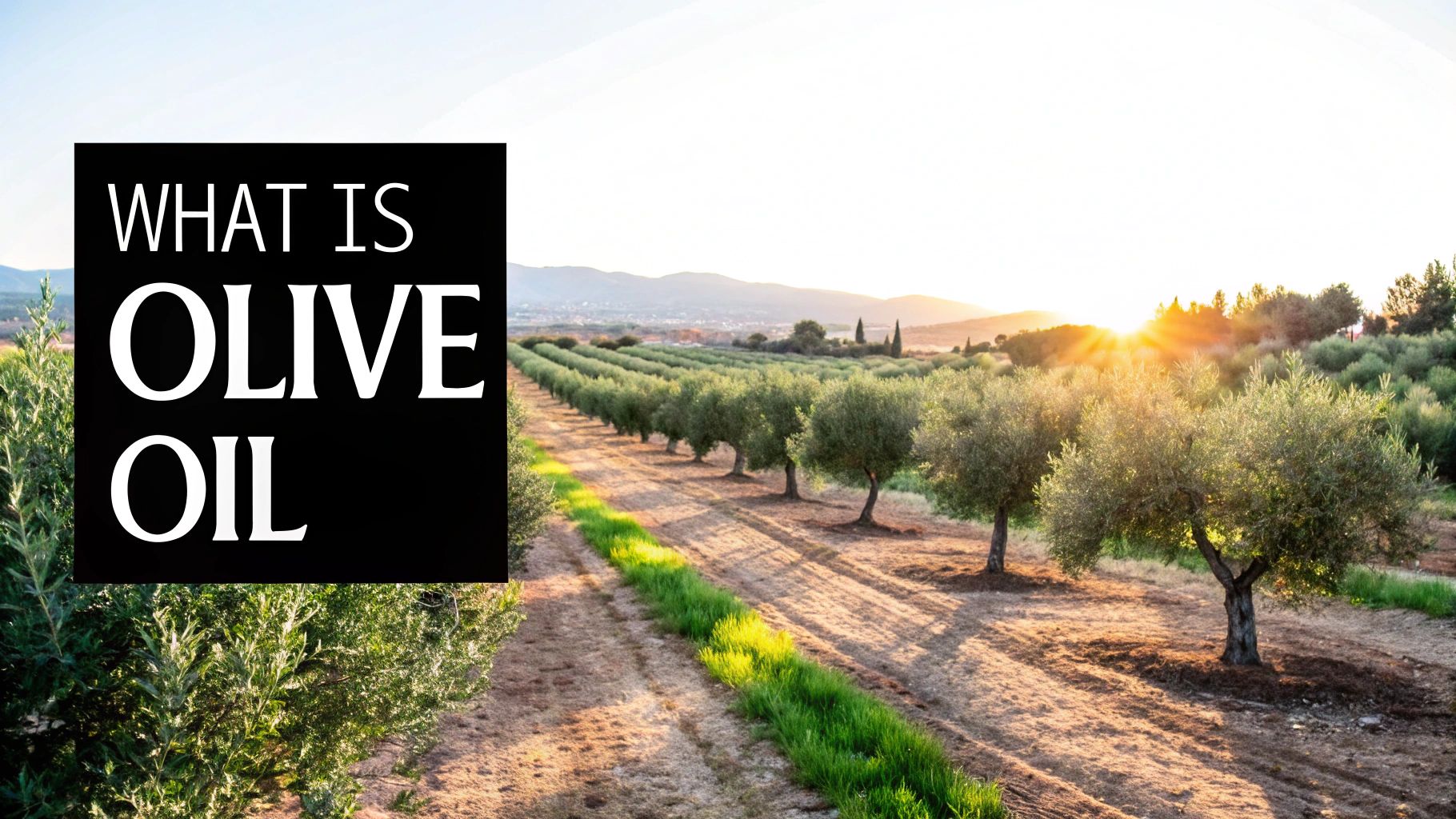
This idea of it being a "fruit juice" is the crucial distinction. Most other common cooking oils—such as canola, soybean, or corn oil—are extracted from seeds. This process typically requires high heat and chemical solvents to extract the oil, which is then refined, bleached, and deodorized to make it suitable for consumption. This industrial process strips away much of the plant's natural character and nutrients.
A Tale of Two Production Paths
By comparison, Extra Virgin Olive Oil is created through a much simpler and more natural method. It is produced by mechanically pressing olives without using high heat or chemicals, a technique known as cold-pressing. This gentle extraction is what preserves the oil’s complex and delicate molecular structure, including its fats and a wide array of beneficial micronutrients. It’s the difference between drinking fresh-squeezed orange juice and a beverage made from concentrate.
The chart below illustrates the leading countries in olive oil production, showing its profound cultural and economic significance in the Mediterranean region.
This data highlights that olive oil is not just another faceless commodity; it's a cherished agricultural product at the heart of specific cultures. This regional heritage is precisely why its composition and quality are so carefully protected, unlike mass-market industrial oils.
From Flavor to Function
This minimal processing means the olive's natural compounds are retained in the final oil. Those distinct grassy, fruity, and peppery notes you taste in a good olive oil are a direct result of powerful antioxidants called polyphenols. These compounds are not only responsible for the unique flavor profile but also for its widely recognized health benefits, which range from reducing inflammation to supporting heart health.
Ultimately, choosing between olive oil and other cooking oils comes down to selecting either a whole, unprocessed food or a highly refined industrial product. Grasping this key difference is the first step toward appreciating why this timeless "liquid gold" has secured its place as a staple of both healthy diets and fine cooking.
The Fatty Acid Symphony That Creates Olive Oil's Magic
To truly appreciate what olive oil is made of, it helps to think of its chemical makeup as a finely tuned orchestra. In this orchestra, the musicians are different types of fatty acids. Each one plays a unique part, and their combined performance gives the oil its distinct character, health benefits, and stability. This specific balance is exactly what sets olive oil apart from other fats.
The Fundamental Structure: Triacylglycerols
At its core, all oil is fat, and fats are constructed from molecules called triacylglycerols, which you might know as triglycerides. Picture a simple E-shaped structure: the backbone is a molecule called glycerol, and attached to it are three prongs, each a different fatty acid. These triacylglycerols are the primary way plants store energy.
The identity of an oil is determined by which fatty acids are attached to that glycerol backbone. In olive oil, the dominant player is the monounsaturated fat oleic acid, which can make up between 55% and 83% of the total fatty acids. This high concentration is a primary reason for its stellar reputation in heart health, as it helps lower "bad" LDL cholesterol. You can explore the detailed chemical characteristics of olive oil to see the full scientific picture.
The Star Soloist: Oleic Acid
If the fatty acids form an orchestra, then oleic acid is the lead violinist. As a monounsaturated fat, its chemical structure has one "mono" double bond, which creates a slight kink in its chain. This bend prevents the molecules from packing together neatly, which is why olive oil remains a liquid at room temperature. This structure not only gives it a pleasant texture but is also a major contributor to its cardiovascular benefits and relative stability.
The Supporting Ensemble: Other Key Fatty Acids
While oleic acid takes center stage, other fatty acids provide crucial harmony and balance to the final composition.
- Linoleic Acid: This is an omega-6 polyunsaturated fat, acting like the intricate woodwind section. "Poly" means it has multiple bends, making it very fluid but also more susceptible to oxidation. It's an essential fatty acid our bodies cannot produce, but its presence in smaller amounts in olive oil helps create a well-rounded profile.
- Palmitic Acid: A saturated fat, this provides the steady rhythm. With no bends in its structure, it is highly stable and solid. Olive oil contains just a small percentage of palmitic acid, which contributes to the oil's overall shelf life without introducing the less desirable qualities associated with high-saturated-fat diets.
The precise ratio of these "musicians" ultimately defines the oil’s character. The table below provides a closer look at the primary components and their roles.
Major Fatty Acid Composition in Olive Oil
Breakdown of the main fatty acids found in olive oil and their typical percentage ranges
| Fatty Acid Type | Percentage Range | Health Impact | Stability |
|---|---|---|---|
| Oleic Acid (Monounsaturated) | 55% – 83% | Reduces bad cholesterol, supports heart health | High |
| Linoleic Acid (Polyunsaturated) | 3.5% – 21% | Essential fatty acid; can be inflammatory in excess | Low |
| Palmitic Acid (Saturated) | 7.5% – 20% | Adds structure; considered neutral in small amounts | Very High |
| Stearic Acid (Saturated) | 0.5% – 5% | Has a neutral effect on blood cholesterol levels | Very High |
This unique fatty acid profile is the very essence of what makes olive oil a standout for both nutrition and cooking. It’s a composition smartly designed by nature to be a stable source of energy for the olive itself and a healthy, flavorful fat for us. The dominance of stable, heart-healthy oleic acid is the secret to its magic.
The Unsung Heroes: Minor Components With Major Impact
While fatty acids make up the bulk of olive oil, the real story of its flavor, color, and health benefits lies in a small but powerful supporting cast. These minor components account for less than 2% of the oil's volume, but they are what separate a generic cooking fat from a vibrant, complex ingredient. They are the unsung heroes that give premium olive oil its soul.

The 2% That Defines Quality
Think of this tiny percentage as the oil's unique signature. It's a rich mixture of sterols, pigments, aromatic compounds, and even microscopic pieces of the olive fruit. Another crucial part of this group is free fatty acids. Their level serves as a report card for the production process; a lower percentage indicates healthier fruit and more careful handling. For an oil to earn the prestigious Extra Virgin label, its free acidity must be below 0.8%. You can explore the complete chemical profile of premium oils here.
Polyphenols: The Guardians of Goodness
Among these minor players, polyphenols are the undeniable superstars. Imagine them as the oil’s personal bodyguards, protecting it from oxygen damage and helping it stay fresh longer. This protective power extends to our bodies when we consume it, as these compounds work as potent antioxidants and anti-inflammatories.
Have you ever tasted an olive oil that delivers a distinct, peppery kick in the back of your throat, maybe even making you cough? That feeling comes from a polyphenol called oleocanthal. This peppery bite isn't a flaw—on the contrary, it is a hallmark of a fresh, high-quality, and polyphenol-rich oil. That pungency is a clear signal that the oil is packed with beneficial compounds.
A Symphony of Sensation and Color
Beyond polyphenols, other minor components add to the rich sensory experience. They are key to understanding what olive oil is truly made of.
- Pigments: The oil's beautiful color is created by pigments like chlorophylls (which provide green hues) and carotenoids (which offer golden-yellow tones). While color isn't a direct measure of quality, it’s a core part of the oil’s personality.
- Volatile Compounds: Hundreds of these compounds create the complex aromas we love in great olive oil, from notes of freshly cut grass and green apple to hints of almond and tomato leaf.
- Sterols: These plant-based compounds play a role in helping reduce the body's absorption of cholesterol.
Together, these trace elements create the vibrant character that makes an oil extraordinary. However, these compounds are delicate and break down over time, which is why freshness is paramount for both flavor and health benefits.
From Grove To Bottle: How Processing Shapes What's Inside
Because the vital polyphenols and aromatic compounds in olives are incredibly delicate, the journey from fruit to bottle is where true quality is forged. Every single step, from the moment an olive is picked to the way the oil is stored, directly shapes the final product. This transformation is the key to understanding what your olive oil is truly made of.
The Critical Role of Temperature
The most important factor in this entire process is temperature. You’ve likely seen the term "cold-pressed" on labels, which signals that the oil was extracted at a temperature below 27°C (80.6°F). This isn’t a marketing gimmick; it’s a standard of quality. Low temperatures are gentle, preserving the fragile antioxidants and volatile compounds that give olive oil its vibrant flavor and health benefits.
On the other hand, applying heat allows producers to get much more oil from each olive, which increases their yield. This efficiency comes at a great cost. Heat acts like a sledgehammer on the oil's delicate molecular structure, destroying the very components that make extra virgin olive oil a healthy and flavorful food.
The Journey from Olive to Oil
The modern extraction process is a marvel of efficiency designed to protect the oil's integrity. After being harvested and washed, the olives are crushed into a thick, uniform paste. This paste then undergoes a crucial stage called malaxation, where it is slowly and gently mixed for 20 to 40 minutes. This step is essential, as it encourages the tiny oil droplets to cluster together, preparing them for separation.
From the malaxer, the paste is pumped into a centrifuge. This machine spins at incredible speeds, using centrifugal force to neatly separate the three components: the pure oil, the water, and the solid olive matter. The term “first press” is a holdover from the old days of hydraulic presses. With modern centrifuges, all extra virgin olive oil is produced from this single, continuous extraction.
To see how these choices play out, let's compare the different production methods. The table below breaks down how temperature and technique influence the final product.
Olive Oil Production Methods Comparison
How different extraction methods affect the final composition and quality of olive oil
| Method | Temperature | Yield | Quality Impact | Composition Preservation |
|---|---|---|---|---|
| Cold-Press (Centrifuge) | Below 27°C | Lower | High | Excellent preservation of polyphenols & aromas |
| Heat Extraction | Above 27°C | Higher | Low | Degrades beneficial compounds and flavor |
| Traditional Stone Mill | Varies | Lower | Good, but higher oxidation risk | Good, but can be inconsistent |
The takeaway is clear: while heat can squeeze out more oil, cold-pressing with modern centrifuges is the gold standard for preserving quality.
While processing is designed to protect these minor components, the bulk of the oil remains a stable blend of fatty acids. The infographic below breaks down the typical fat composition you can expect in a quality olive oil.
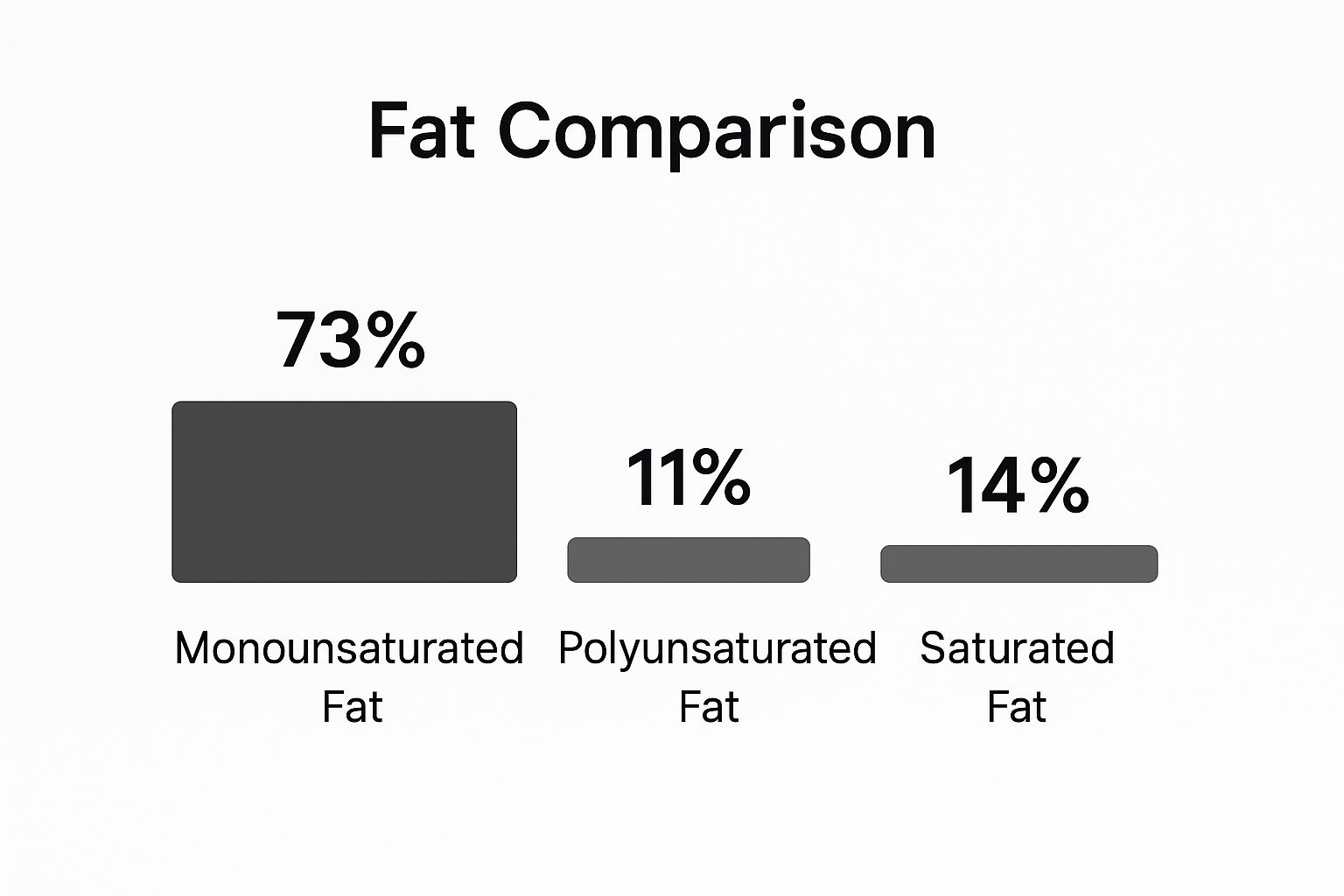
This visual shows that monounsaturated fats are the dominant component, making up nearly three-quarters of the oil.
Ultimately, the decisions a producer makes—harvesting perfectly ripe fruit, processing it quickly, and keeping temperatures low—directly influence what olive oil is made of at a molecular level. A commitment to cold-pressing with modern equipment creates a nutritionally superior product, rich in authentic flavors and health-promoting compounds. This meticulous process ensures the final product is more than just a fat; it's a genuine fruit juice.
Decoding The Quality Grades: What Labels Really Tell You
Walking down the olive oil aisle can feel like a pop quiz you didn't study for. With labels boasting terms like "Pure," "Light," and "Extra Virgin," it's easy to get confused. These aren't just marketing buzzwords; they are legally defined grades that give you a transparent look into the oil's journey from the olive grove to the bottle, directly answering the question of what is olive oil is made of.
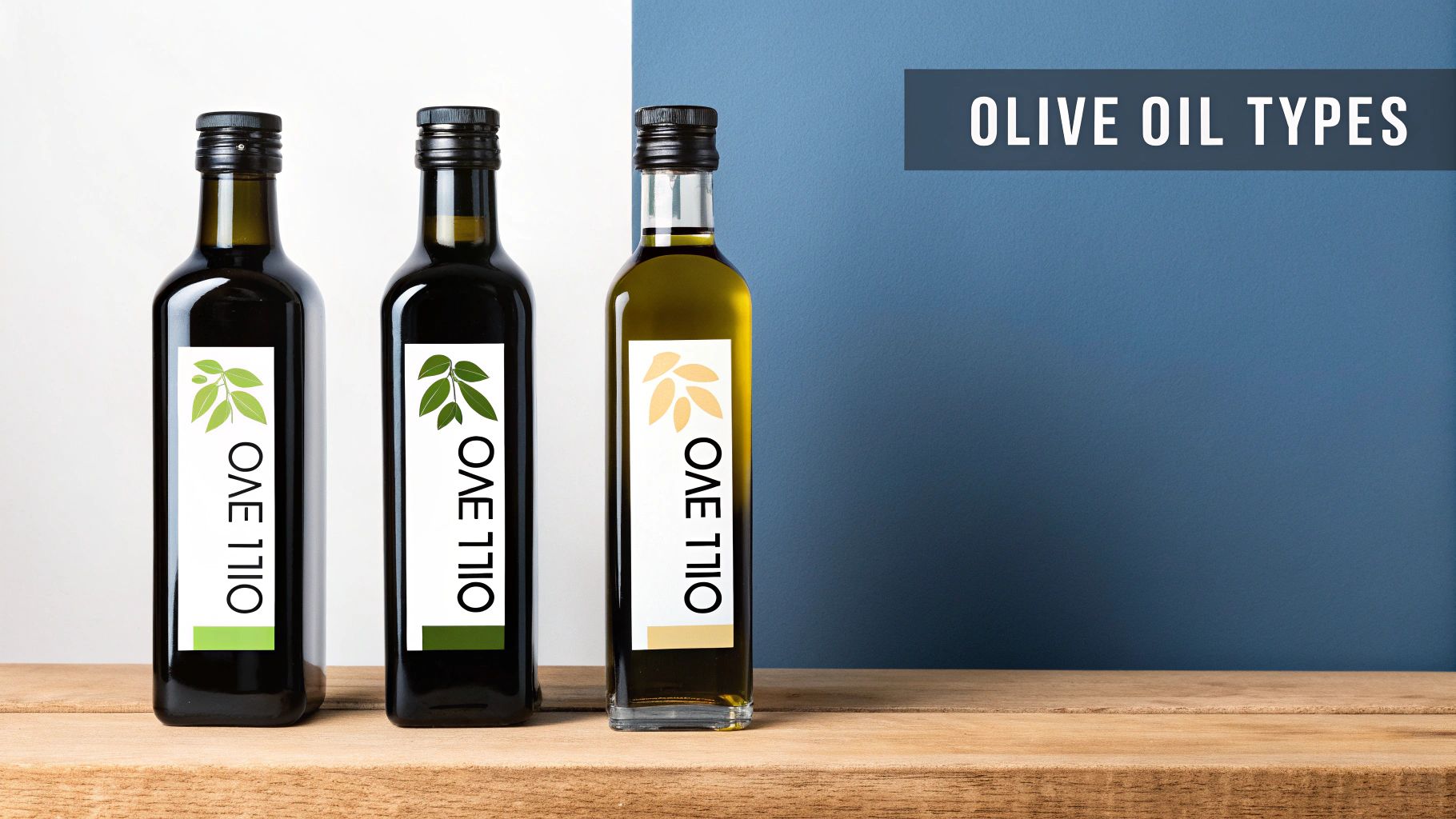
The Gold Standard: Extra Virgin Olive Oil
Extra Virgin Olive Oil (EVOO) sits at the very pinnacle of quality. Think of it as the purest expression of the olive—freshly squeezed fruit juice with no additives or processing. To earn this top-tier classification, the oil must be extracted using only mechanical methods, meaning no high heat or chemical solvents are allowed to interfere. The standards are incredibly demanding.
On a chemical level, the oil’s free fatty acid (FFA) level, a key indicator of freshness and quality, must be below 0.8%. But passing the lab test is only half the battle. The oil must also undergo a sensory evaluation by a certified tasting panel. These experts must find it completely free of taste defects while identifying positive fruity characteristics. This two-part quality control is precisely why authentic EVOO carries a premium price tag.
Virgin vs. Refined: A Tale of Two Compositions
Just below the top grade, you'll find Virgin Olive Oil. It's produced using the exact same natural, mechanical process as EVOO but falls just short of the highest standard. It might have minor sensory imperfections or a slightly higher free acidity, up to 2.0%. It is still a quality, unprocessed product perfect for many uses.
In sharp contrast, oils simply labeled "Olive Oil" or "Light Olive Oil" have a very different backstory. These products start as crude olive oil that failed to meet the standards for virgin quality. This oil is then put through an industrial refining process that uses heat and active filters to scrub away its flaws. While this makes the oil stable, it also strips out the color, aroma, and beneficial polyphenols, resulting in a bland, neutral-tasting fat. To make it palatable, producers blend this refined oil with a small percentage of virgin or extra virgin olive oil to add back a little flavor and color.
This table neatly summarizes the key distinctions between the grades.
| Grade | Production Method | Free Acidity Level | Flavor Profile |
|---|---|---|---|
| Extra Virgin | Mechanical, Cold-Pressed | Below 0.8% | Fruity, no defects |
| Virgin | Mechanical, Cold-Pressed | Below 2.0% | Good, with minor defects |
| Refined ("Olive Oil") | Heat/Chemical Refining | Neutralized (low) | Neutral, very mild |
Understanding these grades empowers you to make smarter choices at the store. The label on a bottle of olive oil is a report card on its contents. Whether you need the robust, peppery, and antioxidant-rich profile of an EVOO for a salad dressing or a neutral oil for high-heat sautéing, the grade tells you exactly what’s inside. By learning to read these labels, you can confidently choose the right product for the job, ensuring you get the quality and characteristics you expect. You can explore our full guide to olive oil on LearnOliveOil.com for more essential tips.
How Geography Creates Olive Oil's Unique Personalities
Have you ever wondered why a bottle of olive oil from Spain tastes so different from one from Greece? Much like a fine wine reflects its vineyard, olive oil carries the unmistakable signature of its homeland. The soil, climate, and even the altitude where an olive tree grows all have a profound impact on what olive oil is made of at a molecular level. This idea, known as terroir, is the secret behind the incredible diversity of flavors you find in olive oils around the world.
The Influence of Land and Sky
Think of the environment as a director, guiding the olive tree to produce a specific kind of fruit. Every element of the landscape plays a crucial part in shaping the final oil’s taste and chemical makeup.
- Climate: The intense, sun-soaked summers of the Mediterranean don't just help olives grow; they beneficially stress the trees. In response, the trees produce more polyphenols as a natural defense. This is why oils from hotter climates are often more robust and peppery, packed with antioxidants that also give them a longer shelf life.
- Soil Composition: The ground beneath the tree acts as its personal pantry. The type of soil—whether it's mineral-rich volcanic earth or limestone clay—determines which nutrients the tree can absorb. This subtly changes the balance of fatty acids and minerals inside the olive itself.
- Altitude: Olive groves perched on higher elevations experience cooler days and wider temperature shifts. This encourages the olives to develop more intense and complex aromatic compounds, leading to brighter, more fragrant oils.
A Tour of Regional Flavors
These environmental factors give different regions a reputation for oils with distinct personalities. It's like a flavor map stretching across the Mediterranean.
- Spain: This region is famous for producing golden, smooth, and wonderfully fruity oils, particularly from the nation’s dominant Picual olive.
- Italy: Here you’ll find amazing diversity. You can get delicate, grassy oils from Liguria in the north or shift to the intensely green and peppery oils from Sicily in the south.
- Greece: Often recognized for its robust, herbaceous, and satisfyingly bitter oils. The Koroneiki olive, in particular, delivers that classic bold Greek flavor.
This geographic variety isn't just a treat for our taste buds; it's a huge driver of the global olive oil economy. The health benefits, closely linked to its high content of monounsaturated fats, have made it a kitchen staple worldwide. For example, oleic acid, which makes up 55% to 83% of olive oil, is widely praised for its positive effects on heart health. Research highlights its important role in supporting heart health. In the end, geography is more than just a setting; it's an active ingredient in every bottle, telling the unique story of where it came from.
Your Smart Shopping And Storage Strategy
Now that you know what makes olive oil tick—from its core fatty acids to its precious polyphenols—you're ready to put that knowledge to the test. Walking down the grocery aisle no longer has to be a guessing game. This understanding helps you get the most quality and value from your purchase, focusing on finding the freshest, most authentic oil rather than just the most expensive.
Reading Labels Like an Expert
Think of yourself as a detective on a mission: to find a bottle where all the beneficial compounds are still present and accounted for. Ignore the flashy, colorful labels and focus on the hard evidence printed on the bottle.
First, look for a harvest date. This is the single most important clue to an oil's freshness. Unlike a 'best by' date, the harvest date tells you when the olives were actually picked and pressed. Always aim for the most recent date you can find.
Next, examine the container itself. Always choose an oil that comes in a dark glass bottle or a tin. Light is one of the biggest enemies of olive oil, quickly breaking down the polyphenols that give it its signature flavor and health perks.
Finally, check for the official classification. The label must clearly state "Extra Virgin Olive Oil." This is your guarantee that you're getting the highest grade of oil, produced without chemicals and with low acidity, signifying it was made from high-quality, undamaged olives.
Preserving Quality at Home
Getting that perfect bottle home is a great start, but the work isn't over. Proper storage is essential to protect your purchase and ensure it stays delicious. Remember that olive oil has three main adversaries: light, heat, and air.
To keep your oil’s vibrant taste and nutritional value intact, follow these straightforward guidelines:
- Find a Cool, Dark Place: Your pantry or a closed cabinet is the perfect home for your olive oil. Keeping it away from direct sunlight is key, so a windowsill is definitely not the right spot.
- Avoid the Stove: While it might seem convenient to keep your oil right by the cooktop, the constant exposure to heat will accelerate its decline and spoil its delicate flavors.
- Keep it Sealed: Air is another enemy that causes oxidation, making the oil taste stale. Always make sure the cap is screwed on tightly after you use it to keep oxygen out.
By using these shopping and storage tips, you can be confident that the olive oil you bought will maintain its exceptional taste and health benefits from the first pour to the very last drop. To continue your journey and explore the world's best oils, Discover the World of Premium Olive Oil on LearnOliveOil.com.
 Learn Olive Oil
Leave a comment