What Olive Oil Acidity Really Means (It's Not About Taste)
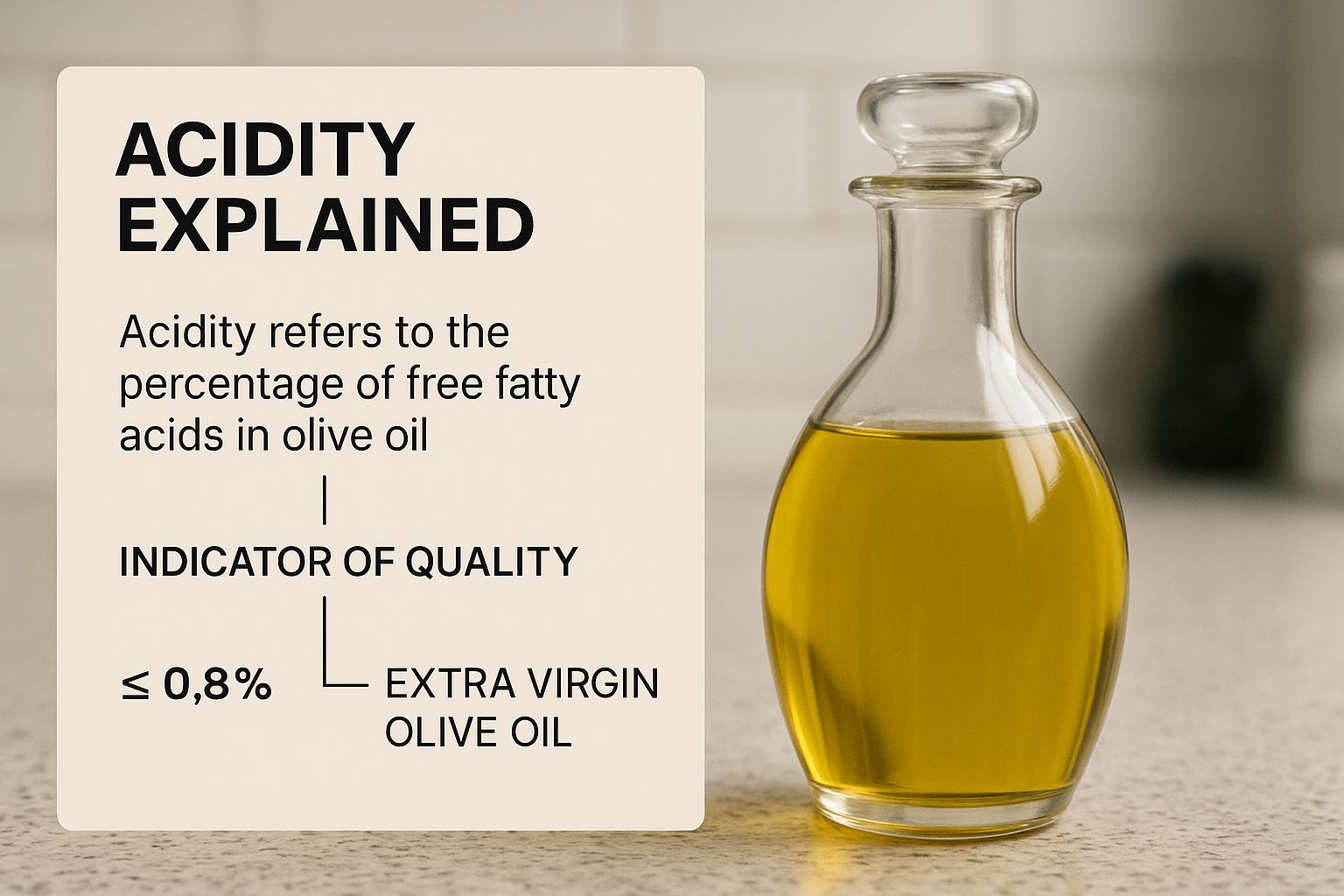
This infographic gives a helpful overview of olive oil acidity. It shows how the chemical breakdown of olives affects the final product. But here's a key takeaway: olive oil acidity isn't about how the oil tastes. It's a scientific measure of the oil's chemical makeup—specifically, the percentage of free oleic acid.
This percentage is a record of the olive's journey, from the branch to the bottle. It tells a story about how the olives were handled and processed.
So, if acidity isn't about taste, what does it tell us? Think of it like a doctor's visit for your olive oil. A low acidity percentage usually means you have a healthy oil, made carefully from fresh, undamaged olives.
A higher acidity, on the other hand, might signal problems along the way—perhaps during harvesting, processing, or storage. Olive oil acidity is the main way we check the quality and purity of olive oil, especially for extra virgin olive oil. This top-tier oil needs an acidity level below 0.8%, according to international standards. Learn more about international olive oil standards here: International Olive Council
Understanding Acidity Levels
Different acidity levels create different olive oil grades. Each grade has its own qualities and best uses in the kitchen. Let's break it down:
To help you visualize the different grades and their acidity levels, let's take a look at this table:
Olive Oil Grade Classifications by Acidity Level
Comparison of different olive oil grades and their maximum allowed acidity percentages according to international standards
| Oil Grade | Maximum Acidity (%) | Quality Description | Typical Use |
|---|---|---|---|
| Extra Virgin Olive Oil | 0.8% | Highest quality, robust flavor and aroma | Dipping, dressings, finishing dishes |
| Virgin Olive Oil | 2% | Good quality, milder flavor | Cooking, baking |
| Refined Olive Oil | – | Acidity reduced through refining, neutral flavor | High-heat cooking |
| Lampante Olive Oil | >2% | Not for consumption before refining | Base for "olive oil" or "light olive oil" after refining |
As you can see, the acidity level is a key factor in determining the grade and ultimate use of olive oil. Extra Virgin Olive Oil, with its low acidity, boasts the best flavor and aroma, while refined olive oil, with a less stringent acidity requirement, is better suited for high-heat applications due to its higher smoke point. Lampante olive oil, with the highest acidity, needs further processing before it's ready for our kitchens.
Knowing these acidity levels helps you choose the right olive oil for what you're cooking. It's like picking the right tool for the job—you wouldn't use a hammer to tighten a screw, right? This knowledge helps you get the best flavor and quality in your dishes.
It also explains why some olive oils are more expensive than others. Understanding acidity unlocks a deeper understanding of the olive oil world, allowing you to make informed choices and appreciate the nuances of this kitchen staple.
The Race Against Time: How Premium Oils Stay Low-Acid
Have you ever wondered why some olive oil producers are out in the groves at the crack of dawn, racing to process their olives before the sun sets? It's a race against acidity. The moment an olive leaves the branch, enzymes start breaking down the oil inside, gradually increasing its acidity level. This natural process, called hydrolysis, is the main reason olive oil's acidity rises.
This screenshot from Olive Oil Times shows the journey of olive oil, from the moment it's harvested to the milling process. It's a visual reminder of how important efficient processing truly is.
The images highlight the delicate dance required to produce top-quality oil. Fast processing, as shown here, is essential to minimize the time olives spend between being picked and pressed – a key factor in keeping acidity low. This speed helps preserve the oil's fresh, vibrant qualities.
From Grove to Mill: A Sprint Against Degradation
Picture a family-owned olive grove in Tuscany. The olives, plump and covered in morning dew, are carefully hand-picked at sunrise and gently placed in crates. Why the early start? Because every minute matters. The longer the olives sit after harvesting, the more time those enzymes have to increase the acidity. Many producers aim to get their olives from tree to mill in under four hours.
Imagine the enzymes as tiny little clocks, constantly ticking. The sooner the olives are processed, the fewer "ticks" those enzymes get, and the lower the acidity remains.
Temperature Control: The Unsung Hero
The race continues inside the mill. Heat is a major culprit in driving up acidity. Traditional stone mills, though picturesque, can generate heat during crushing, which unfortunately contributes to higher acidity. Modern centrifuges, however, offer precise temperature control, allowing producers to extract the oil quickly and at lower temperatures. Think of it like a delicate soufflé—too much heat, and the whole thing collapses. Careful temperature management minimizes enzyme activity and preserves the oil's delicate flavors.
Harvest Dates: Your Insider Tip
The journey from olive branch to bottle culminates in the final product. When you're shopping for olive oil, keep an eye out for harvest dates on the labels. A recent harvest date is a good sign of low acidity, as it indicates how quickly the olives were processed. It's like getting a behind-the-scenes look at the oil's journey. It reveals the care and attention put into crafting that specific bottle. By understanding how time and temperature affect olive oil acidity, you gain a deeper appreciation for the effort that goes into producing truly premium oils. This knowledge empowers you to make informed choices, selecting oils that offer the best freshness, flavor, and quality.
How Low Acidity Protects The Flavors You Actually Taste
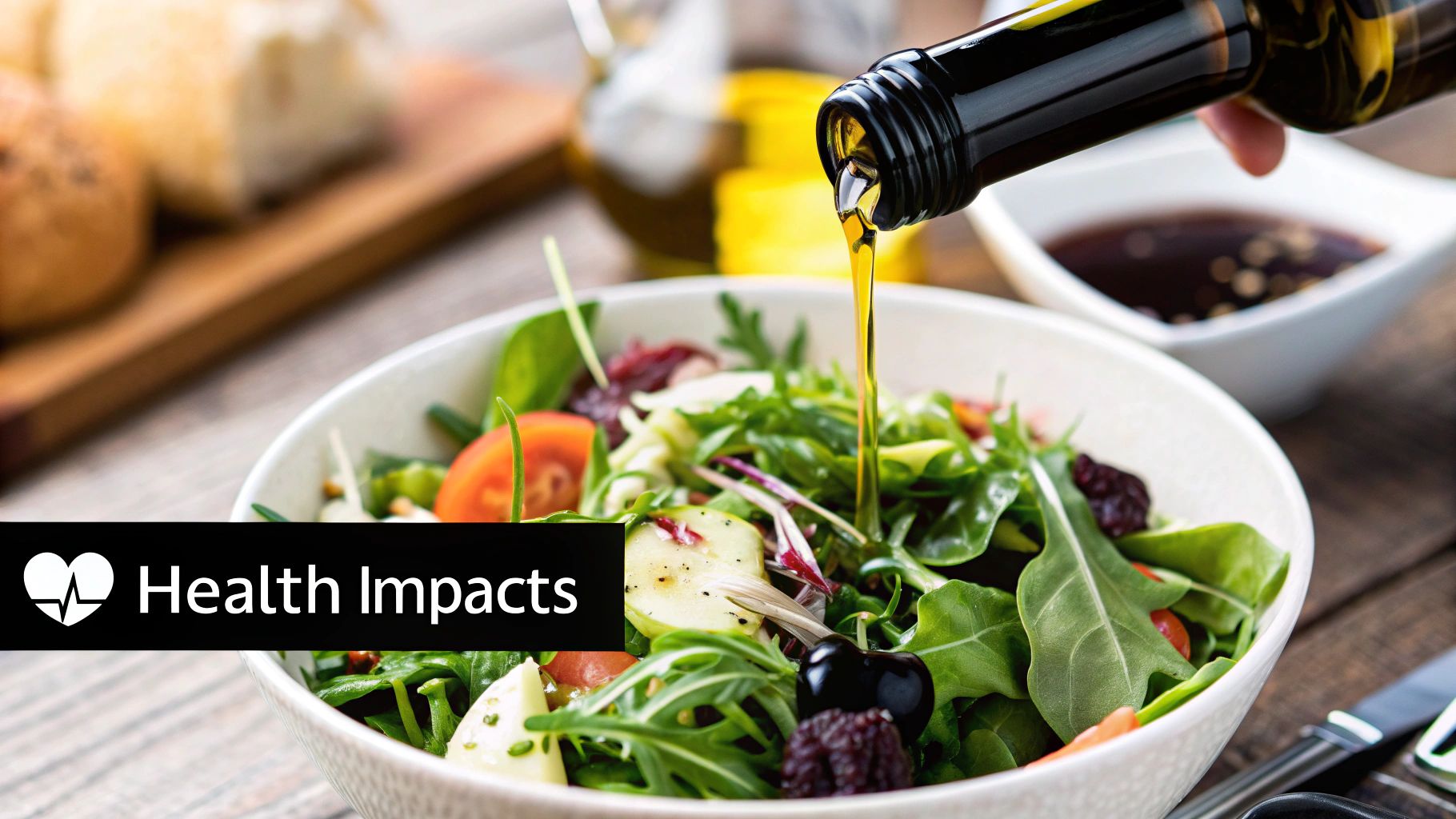
When it comes to olive oil, acidity isn't about how sour it tastes. It's actually a measure of the free fatty acids present in the oil, acting as a sort of quality indicator. Lower acidity doesn't necessarily create flavor, it preserves it. Think of it like this: low acidity safeguards the delicate flavor molecules, antioxidants, and unique olive character throughout its journey from the olive grove to your table.
Imagine these flavorful compounds as passengers on a bus trip. High acidity is a bumpy, chaotic ride, damaging those delicate passengers (flavor molecules) along the way. Low acidity, on the other hand, is a smooth, comfortable journey, ensuring the passengers arrive at their destination fresh and vibrant, ready to deliver a fantastic flavor experience.
The Science Behind the Flavor
Scientific research supports the idea that olive oils with acidity below 0.3% retain a much greater degree of their original flavor complexity. It's the difference between biting into a perfectly ripe peach and one that's been bruised and left to sit. The fresh peach is bursting with flavor, while the bruised one has lost its sweetness and complexity.
This is precisely why professional chefs and olive oil sommeliers gravitate towards low-acidity oils. They understand that these oils will provide the intense, nuanced flavors they need to elevate their culinary creations.
Tasting the Difference
Imagine two olive oils side-by-side. The higher acidity oil might taste bland and dull, lacking depth and vibrancy. In contrast, a low-acidity oil could explode with a symphony of flavors – grassy notes, hints of artichoke, perhaps a peppery finish. The difference can be remarkable.
Low acidity allows the subtle characteristics of the olive variety and the land it was grown on (its terroir) to truly shine. It's like the difference between listening to a simple melody and a richly layered orchestral piece.
Acidity and Your Kitchen
Understanding olive oil acidity changes how we cook and experience food. Even the simplest dishes are elevated by a low-acidity oil. Salads become more vibrant, roasted vegetables deepen in flavor, and pasta dishes gain a satisfying complexity.
Acidity also affects how long the flavors linger. High-acidity oils often have a short finish, the flavor disappearing quickly. Low-acidity oils, however, leave a lasting impression on your palate. This is why many restaurants choose these premium oils both for finishing dishes and everyday cooking.
To help illustrate this, let's look at how different acidity levels relate to sensory qualities:
Let's take a look at how different acidity levels can impact the sensory experience of olive oil:
| Acidity Range (%) | Flavor Profile | Aroma Intensity | Recommended Use |
|---|---|---|---|
| < 0.3% | Intense, complex, fruity, potentially peppery or bitter | High | Finishing oils, salads, dips |
| 0.3% – 0.5% | Medium intensity, fruity, balanced bitterness and pepperiness | Medium | Everyday cooking, sautéing, baking |
| 0.5% – 0.8% | Mild, less complex, may have some defects | Low | Cooking at high heat, frying |
| > 0.8% | Bland, flat, potentially rancid or musty | Very Low | Not recommended for culinary use |
This table highlights how lower acidity oils tend to offer more intense flavors and aromas, making them ideal for uses where the olive oil's character can truly shine. Conversely, higher acidity oils are better suited for high-heat cooking where delicate flavors would be lost anyway.
By appreciating the connection between acidity and flavor, olive oil becomes more than just a cooking ingredient; it becomes a source of vibrant flavor that enhances every meal. This knowledge unlocks a new level of culinary enjoyment and empowers you to choose the best oil for every dish.
Becoming A Label Detective: Reading Between The Marketing Lines
This screenshot shows a collection of olive oil labels, each presenting information differently. Take a moment to notice how they vary in their emphasis on origin, production methods, and certifications. Understanding these details is like unlocking a secret code to olive oil quality.
One key takeaway is immediately clear: labels aren’t all created equal. Some proudly boast harvest dates and specific olive varieties, while others stick to vague marketing terms. This is why becoming a label detective is so important.
Decoding the Language of Quality
Most olive oil bottles won’t shout their olive oil acidity level from the rooftops. But there are subtle hints that speak volumes to the informed consumer. For instance, a prominent harvest date suggests the producer prioritizes freshness, a major factor in low acidity. It’s like selecting fresh produce – the fresher the better.
Origin specificity also plays a role. "Made in Italy" isn’t nearly as helpful as a label specifying a particular region or even a specific estate. This precision suggests a producer proud of their terroir who likely controls the entire production process. This often translates to higher quality and potentially lower acidity.
Certifications and Lab Results: The Gold Standard
Some top-tier producers go above and beyond, voluntarily sharing their lab results, including acidity levels. This transparency is a clear commitment to quality and offers concrete proof of low acidity. It’s like a student confidently displaying their excellent report card.
Meaningful certifications also hold weight. While some badges are just marketing ploys, others represent adherence to rigorous quality standards. Look for a Protected Designation of Origin (PDO) certification. This guarantees the oil’s origin and production methods, often linked to lower acidity and superior flavor.
Spotting the Red Flags
On the flip side, certain omissions should set off alarm bells. A missing harvest date or vague origin information could point to lower quality and potentially higher acidity. Think of it like a resume with unexplained gaps – it raises questions.
Similarly, be wary of generic terms like “premium” or “gourmet” without specific details to back them up. These words often mask average quality. True quality speaks through concrete information, not empty promises.
By learning to decode label language, you gain the power to make informed choices and select olive oils that truly deliver on flavor and freshness. This detective work makes for a much more enjoyable culinary experience.
The Economics Of Excellence: Why Acidity Drives Global Markets
Have you ever wondered how something as seemingly small as olive oil acidity can have such a big impact on the global market? It's a fascinating story of chemistry, consumer preferences, and the pursuit of quality. Behind every bottle of high-end olive oil lies a complex market where acidity plays a leading role.
The Acidity Premium: A Global Phenomenon
Imagine the international olive oil market as a bustling marketplace. Buyers, from large food corporations to independent importers, are all looking for the best product. And one of the primary factors they consider? You guessed it: acidity. This creates what's known as an acidity premium, where oils with lower free oleic acid percentages fetch higher prices.
But why? It's not just about a number on a label. Low acidity is a strong indicator of freshness, careful handling during processing, and a greater chance of vibrant flavor and aroma. It’s like a quality seal, whispering secrets of the olive's journey from grove to bottle.
This market dynamic creates a reward system for producers who prioritize quality. Think of producers who invest in quick processing times, meticulously control temperature, and ensure optimal storage conditions. They're rewarded with the ability to command higher prices, reinvest in their operations, and further enhance their quality. It's a win-win.
Market Trends and Consumer Demand
This increasing focus on quality isn't happening in a vacuum. Consumers are becoming increasingly savvy about the link between low acidity and superior taste. They understand that a bottle with lower acidity likely holds an oil with a more complex and delightful flavor profile, alongside the potential health benefits associated with high-quality extra virgin olive oil.
This shift in consumer demand has created a ripple effect across the entire industry, pushing everyone towards excellence. Global trends show a growing appetite for premium, low-acidity olive oils, driven by increasing health consciousness and evolving culinary tastes. In fact, the olive oil market is expected to reach $17.13 billion by 2029, growing at a CAGR of 5.9% from $12.86 billion in 2024. For a deeper dive into these market trends, check out the Olive Oil Global Market Report.
The Competitive Edge: Thriving vs. Struggling
The implications of this acidity-driven market are significant. Regions that invest in modern practices and consistently produce low-acidity oils are thriving. They attract investment, cultivate strong brand recognition, and secure those premium prices in the global marketplace.
Conversely, regions that stick to older methods and produce oils with higher acidity levels struggle to keep up. They might be forced to sell their oil at lower prices, often for blending or industrial uses, which can have a real impact on local farmers and the overall economic well-being of their communities.
A Virtuous Cycle of Quality
The entire system surrounding olive oil acidity creates a kind of virtuous cycle. Consumer demand for low-acidity oils encourages producers to improve their methods. This leads to better quality oils, which further strengthens consumer demand and market value.
The result? A global market that prioritizes and rewards quality at every level, from small family farms to consumers looking for the very best ingredients. This dynamic is reshaping the olive oil landscape, constantly raising the bar for quality and delivering exceptional products to tables around the world.
Smart Shopping Strategies That Actually Save Money
Finding exceptional low-acidity olive oil doesn't have to break the bank. It's a bit like curating a wine collection – you can develop a refined taste and acquire excellent bottles without needing a sommelier's budget. Here are some reliable strategies to stretch your olive oil budget further.
Timing Is Everything: Seasonal Buying
Like fresh produce, olive oil has peak seasons. Buying oil soon after the harvest (typically fall/winter) often means getting the freshest, lowest-acidity oils at the best prices. Many producers offer early bird discounts or special harvest promotions, so you can stock up on high-quality oil while it's at its prime. It's similar to buying seasonal fruits and vegetables – you get peak quality at the best value.
Cut Out the Middleman: Direct from Producer
Consider going straight to the source. Buying directly from producers, whether online or at farmers' markets, cuts out the middleman markups and gets you closer to the true production cost. This also lets you connect with the people who actually grow and press the olives, offering valuable insights into their practices and quality standards. Imagine getting fresh eggs from a local farm – you know the source and the quality is usually top-notch.
Regional Gems: Quality-to-Price Ratios
Not all olive-growing regions are the same. Some consistently deliver great quality at surprisingly reasonable prices. Researching different regions and their typical acidity levels helps you find the sweet spot where quality and value intersect. This informed approach is like knowing which wine regions offer exceptional value – you can uncover hidden gems that over-deliver for their price.
Storage Smarts: Preserving Your Investment
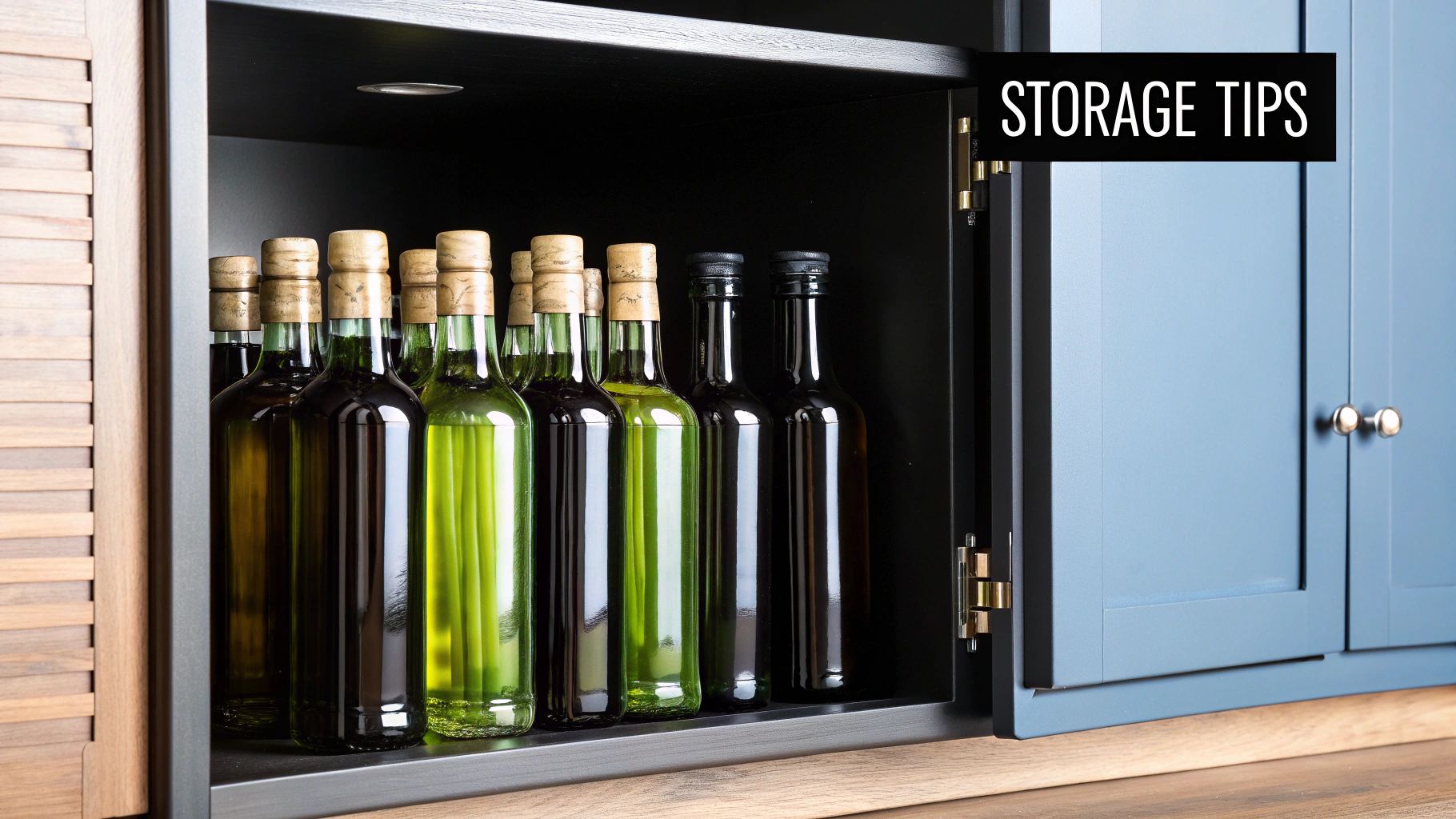
Proper storage is essential to maintaining low acidity and extending the shelf life of your olive oil. Store your oil in a cool, dark place, away from heat and light. Always keep the bottle tightly sealed to minimize oxygen exposure. Think of it like protecting a valuable photograph – proper storage preserves its vibrancy and prevents damage.
Splurge Strategically: Premium vs. Everyday
Not every dish needs top-tier olive oil. Learn to distinguish between occasions that call for a premium, ultra-low-acidity oil (like finishing a delicate salad) and those where a good mid-range option works perfectly well (like everyday cooking). This is like using fine china for special occasions and everyday dishes for casual meals – you maximize value and enjoyment without overspending.
Bonus Tip: Build Relationships and Join the Club
Connecting with knowledgeable shop owners or joining olive oil buying clubs can open doors to exclusive deals, insider tips, and bulk discounts. These connections can also provide helpful advice on selecting the right oils for your specific needs. It’s like joining a book club – you share knowledge, discover new favorites, and benefit from shared wisdom. By using these strategies, you can enjoy high-quality, low-acidity olive oil without impacting your budget. It’s about making smart choices, prioritizing value, and savoring every drop.
Your Action Plan: Putting Knowledge Into Practice
Now that we've delved into the world of olive oil acidity, let's talk about how you can use this knowledge. Consider this your personal guide to becoming an olive oil expert.
Building Your Starter Collection
Begin simply. Start with two high-quality extra virgin olive oils: one with a delicate, fruity flavor, and another with a robust, peppery kick. This lets you experiment and find what you truly enjoy. It’s like starting a spice collection—you don't need everything at once, just a few essentials to begin.
As you become more familiar with olive oil, add oils from different regions and made from different olive varieties to your collection. This brings variety to your cooking and helps you explore the unique flavors each oil offers.
The Taste Test Challenge
Gather some friends or family and have a blind taste test. Compare oils with varying acidity levels and notice the subtle differences in aroma, flavor, and how the oil lingers after you swallow. It’s a fun and informative way to directly experience how acidity affects the taste. Think of it like a wine tasting, where you train your palate to discern subtle notes.
Storage Strategies: Protecting Your Investment
Remember the acronym HALT: Heat, Air, Light, and Time. These are the enemies of good olive oil. Store your olive oil in a cool, dark place, away from the stove and direct sunlight. Always keep the bottles tightly sealed to prevent oxidation. This protects the low-acidity qualities you paid for. Just as you would carefully store a fine wine, you need to protect your olive oil's delicate flavors.
Seasonal Shopping for Maximum Freshness
Just like fresh fruits and vegetables, olive oil has peak seasons. Look for harvest dates on labels and aim to purchase oil shortly after the harvest, usually in the fall or winter. This guarantees the freshest flavor and often coincides with seasonal sales. It’s similar to buying seasonal fruit—you want that peak ripeness and flavor.
Sharing the Knowledge: Spreading the Olive Oil Love
Don't keep your olive oil wisdom to yourself! Share what you've learned with friends and family. Host an olive oil tasting party or give a small bottle of high-quality oil as a gift. It’s a delicious way to spread the word about olive oil quality and the importance of acidity.
Finding Reliable Suppliers: Beyond Marketing Hype
Look for producers who are open about their processes and prioritize quality. Seek out producers who publicly share their lab results or have certifications like PDO (Protected Designation of Origin). These certifications indicate a commitment to producing excellent olive oil. It's like finding a trustworthy mechanic—you look for signs of expertise and reliability.
By following these tips, you’ll become a smart olive oil shopper, getting the most flavor and value out of every bottle. Ready to start your olive oil journey? Explore the world of premium olive oil at Learn Olive Oil.

 Learn Olive Oil
Leave a comment