Unlocking the Secrets of Baking with Olive Oil
Discover the surprising versatility of olive oil in baking. This curated collection of 8 baking with olive oil recipes will elevate your baking game, offering unique flavors and textures. From cakes and cookies to bread and pizza dough, explore how olive oil can transform your favorite treats.
This listicle provides:
- Step-by-step instructions for each recipe
- Tips for selecting the best olive oil for baking
- Guidance on achieving optimal results
Learn how olive oil adds depth and richness to baked goods, resulting in moist, tender creations. Whether you seek a healthier alternative to butter or simply want to experiment with new flavors, baking with olive oil offers a fresh perspective in the kitchen. Explore these diverse recipes, each demonstrating the unique contribution of olive oil to a range of baked goods.
1. Olive Oil Lemon Cake
This moist, tender cake showcases the surprising versatility of extra virgin olive oil in baking. Replacing butter with olive oil creates a uniquely light texture and a delicate flavor profile accented by bright citrus notes. This Mediterranean-inspired dessert also boasts a longer shelf life than traditional butter cakes, making it a perfect make-ahead treat. Its rising popularity stems from the delightful combination of familiar flavors and unexpected lightness. Baking with olive oil offers a healthier twist, as olive oil is rich in monounsaturated fats. This substitution not only enhances the cake's moisture but also adds a subtle, fruity depth. The olive oil lemon cake offers a fresh perspective on classic baking, proving that healthy fats can be incorporated into delicious desserts.
Examples in the Culinary World
This technique isn't just for home bakers. Renowned restaurants and publications have embraced the olive oil cake. Maialino restaurant features a signature version, and both Bon Appétit and Food & Wine magazines have showcased recipes. It's also a beloved staple in Italian-American restaurants nationwide, solidifying its status as a modern classic.
Tips for Baking Success
- Choose the Right Oil: Use a fruity, mild extra virgin olive oil to avoid any bitterness. High-quality olive oil contributes significantly to the final flavor.
- Temperature Matters: Ensure all ingredients are at room temperature for optimal mixing and a smooth batter.
- Gentle Mixing: Don't overmix. Gently fold the wet and dry ingredients together until just combined. Overmixing develops gluten, resulting in a tougher cake.
- Serving Suggestions: Dust the finished cake with powdered sugar for a simple elegance, or serve it with fresh berries for a burst of color and flavor.
The following infographic summarizes key data about the olive oil lemon cake, providing a quick reference for bakers.
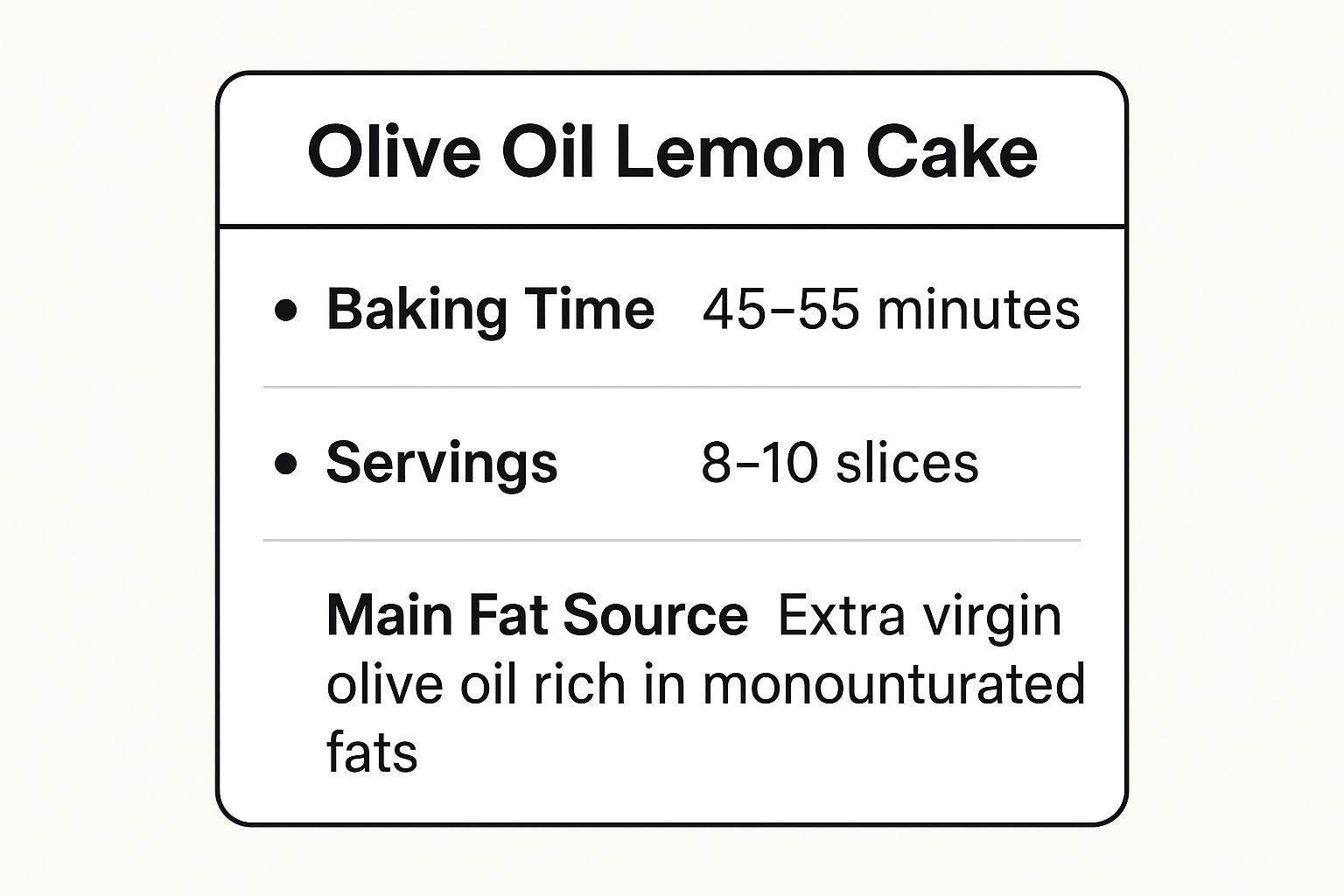
As the infographic highlights, this recipe yields 8-10 servings and bakes in 45-55 minutes, using extra virgin olive oil as the primary fat source, rich in monounsaturated fats. This makes it a relatively quick and healthy dessert option.
Why This Cake Deserves Its Place
The olive oil lemon cake earns its spot on this list for its unique combination of flavor, texture, and health benefits. It's a testament to how baking with olive oil recipes can elevate classic desserts, offering a lighter, healthier alternative without compromising on taste. The contribution of Italian grandmothers, Chef Nancy Silverton, and cookbook author Maura Judkis to the popularization of this cake further emphasizes its significance in the culinary world. This cake presents a delicious way to incorporate the benefits of olive oil into your diet, demonstrating the potential of olive oil beyond savory dishes. It offers a compelling reason to explore baking with olive oil, opening a door to a world of delicious and healthy possibilities.
2. Olive Oil Chocolate Chip Cookies
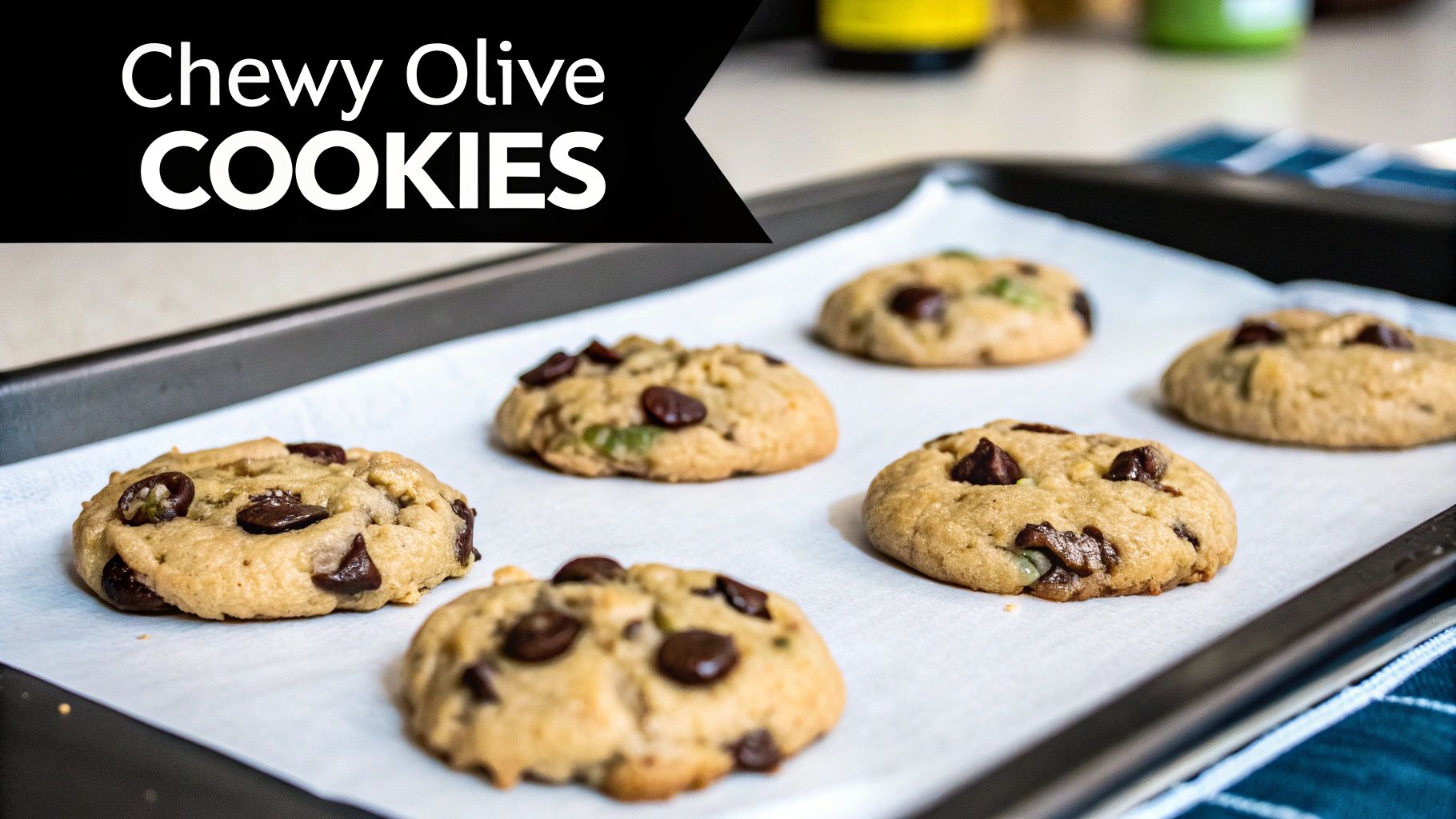
These aren't your average chocolate chip cookies. Substituting olive oil for butter in this classic recipe creates a chewier texture and introduces subtle fruity undertones, elevating the flavor profile while maintaining the comforting familiarity of this beloved treat. This modern twist offers a sophisticated depth of flavor that sets it apart. Baking with olive oil recipes like this one opens up new possibilities for exploring familiar favorites.
Examples in the Culinary World
This olive oil chocolate chip cookie trend has taken the baking world by storm. King Arthur Baking features its own version, highlighting the technique's growing popularity. Artisanal bakeries across California have embraced the recipe, showcasing its gourmet appeal. Its viral presence on Instagram, with over 100,000 shares, further cements its place as a modern baking staple.
Tips for Baking Success
- Mild Olive Oil: Opt for a mild olive oil. This allows the chocolate flavors to shine without being overpowered.
- Underbake Slightly: For the chewiest texture, slightly underbake the cookies. They will continue to cook as they cool.
- Flaky Sea Salt: Sprinkle flaky sea salt on top of the cookies before baking for a touch of salty sweetness.
- Chill the Dough: Chilling the dough for 30 minutes prevents spreading and ensures a thicker cookie.
This recipe is a testament to the versatility of baking with olive oil. The cookies yield approximately two dozen and bake in 10-12 minutes, making them a relatively quick and easy dessert.
Why These Cookies Deserve Their Place
The olive oil chocolate chip cookie earns its spot on this list for its innovative approach to a classic. The combination of familiar comfort and unexpected sophistication makes it a standout. Food blogger Deb Perelman of Smitten Kitchen, Chef Alice Waters, and King Arthur Baking Company have all contributed to the popularization of this recipe, solidifying its influence in the baking community. These cookies offer a compelling reason to explore baking with olive oil recipes, proving that healthy fats can enhance even the most beloved desserts. They present a delicious and accessible way to experience the benefits of olive oil beyond savory dishes.
3. Olive Oil Focaccia Bread
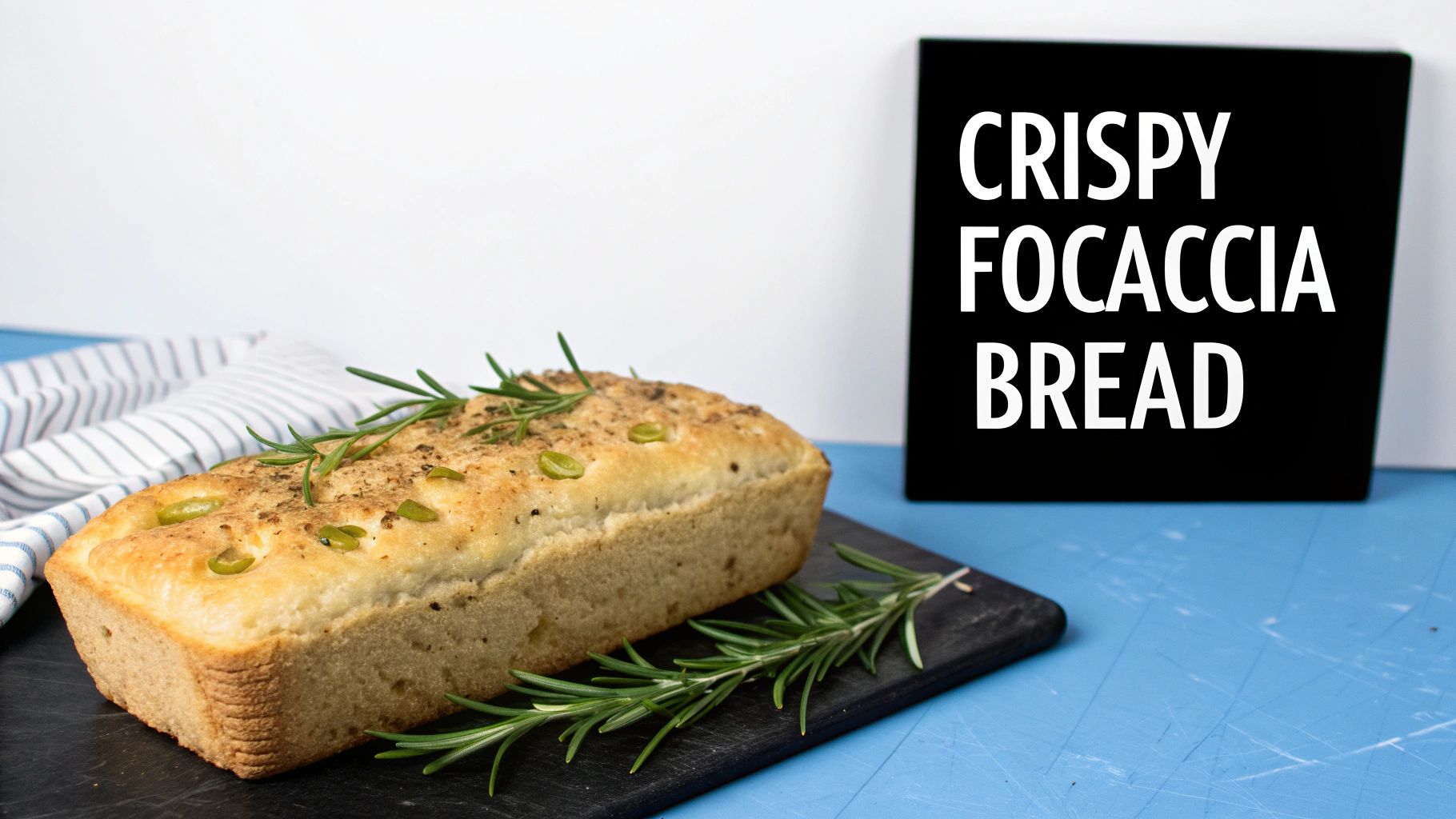
This traditional Italian flatbread showcases olive oil both in the dough and as a finishing element. Replacing other fats with olive oil creates a uniquely crispy exterior and a remarkably soft, airy interior. Olive oil is essential to its characteristic texture and flavor. This rustic bread offers a delicious way to experience the full-bodied flavor of high-quality olive oil. Baking with olive oil recipes like this focaccia highlights the ingredient's versatility beyond dressings and marinades.
Examples in the Culinary World
From renowned bakeries to home kitchens, olive oil focaccia has captured widespread attention. Sullivan Street Bakery's famous focaccia, known for its airy texture and generous use of olive oil, is a prime example. Tartine Bakery's sourdough focaccia demonstrates the successful incorporation of olive oil into sourdough baking. The olive oil focaccia also experienced a surge in popularity among home bakers, becoming a social media phenomenon in 2020.
Tips for Baking Success
- Use Generous Amounts of Olive Oil: Don't be shy! The abundant use of olive oil is key to achieving the signature focaccia texture and flavor.
- Dimple Dough Deeply: Use wet fingers to create deep dimples in the dough, allowing the olive oil to pool and create those characteristic crispy pockets.
- Let Dough Proof Until Very Jiggly and Airy: Proper proofing is essential for a light and airy interior. The dough should be almost doubled in size and very jiggly when touched.
- Finish with Coarse Sea Salt and Fresh Herbs: Enhance the flavor and visual appeal with a sprinkle of coarse sea salt and fresh herbs like rosemary or thyme.
Why This Bread Deserves Its Place
The olive oil focaccia earns its spot on this list for its simplicity, versatility, and delicious flavor. It represents a perfect marriage of rustic charm and culinary sophistication. The contributions of bakers like Chef Jim Lahey of Sullivan Street Bakery, along with generations of Italian nonnas, have solidified its place in baking history. The resurgence of home baking during the pandemic, fueled by social media food influencers, further demonstrates its enduring appeal. This bread offers a compelling reason to explore baking with olive oil recipes, proving that this healthy fat can transform simple ingredients into a culinary masterpiece.
4. Olive Oil Banana Bread
This healthier twist on classic banana bread replaces butter or vegetable oil with extra virgin olive oil. This substitution adds complexity and moisture while maintaining the beloved banana flavor. This variation offers improved nutritional benefits due to the healthy fats in olive oil without sacrificing the comforting taste and texture of traditional banana bread. Baking with olive oil recipes like this allows for exploration of flavor profiles while embracing healthier ingredients.
Examples in the Culinary World
This olive oil banana bread variation has gained traction in the health-conscious food world. Health Magazine featured it in their healthy baking section, highlighting the nutritional advantages. It’s also a popular recipe on Mediterranean diet blogs and is often served at health-conscious cafes nationwide. Its widespread adoption demonstrates the appeal of baking with olive oil.
Tips for Baking Success
- Banana Ripeness: Use very ripe, spotted bananas for optimal sweetness and moisture.
- Olive Oil Selection: Choose a mild, fruity olive oil to complement the banana flavor without overpowering it. High-quality olive oil contributes significantly to the final taste.
- Mixing Technique: Don't overmix the batter. Overmixing develops gluten, resulting in a tougher texture.
- Flavor Enhancement: Add a pinch of cinnamon to complement the banana and olive oil flavors, creating a warm, inviting aroma.
Why This Bread Deserves Its Place
The olive oil banana bread earns its place for its unique combination of health benefits and familiar comfort. It showcases how baking with olive oil recipes can elevate a classic, providing a healthier alternative without compromising on taste. The contributions of health food bloggers, Mediterranean diet advocates, and cookbook author Yotam Ottolenghi have popularized this recipe, further solidifying its relevance. This banana bread offers a delicious way to incorporate the benefits of olive oil into your diet, demonstrating the versatility of olive oil beyond savory applications. It provides a compelling reason to explore baking with olive oil, opening doors to a realm of healthy and delicious possibilities.
5. Olive Oil Honey Cake
This moist, aromatic cake represents a beautiful intersection of Jewish culinary tradition and Mediterranean ingredients. The olive oil honey cake, a staple in Sephardic Jewish cuisine, combines the richness of olive oil with the sweetness of honey, creating a dense, flavorful dessert often served during Rosh Hashanah. This ancient recipe showcases the versatility of olive oil in baking, extending beyond savory dishes to create a celebratory treat. Its unique flavor profile and cultural significance make it a standout example of baking with olive oil recipes.
Examples in the Culinary World
The olive oil honey cake holds a prominent place in Rosh Hashanah celebrations worldwide. It's a cherished tradition in Sephardic Jewish communities and can be found in Sephardic Jewish bakeries across the globe. The cake is also featured prominently in many Jewish cookbook collections, solidifying its position as a culinary classic. These examples highlight the cultural significance and enduring popularity of this unique dessert.
Tips for Baking Success
- Honey Selection: Use high-quality, flavorful honey, such as orange blossom or wildflower, to enhance the cake's aromatic profile. The honey contributes significantly to the final taste.
- Resting Period: Allow the cake to rest overnight before serving. This allows the flavors to meld and the texture to develop fully, resulting in a richer experience.
- Spice Enhancement: Warm spices like cinnamon, cloves, and nutmeg complement the olive oil and honey beautifully. These spices create a depth of flavor that elevates the cake.
- Serving Style: Serve the cake in thin slices due to its richness. A small piece offers a satisfyingly sweet and flavorful experience.
Why This Cake Deserves Its Place
The olive oil honey cake earns its place on this list not only for its delicious flavor and moist texture but also for its cultural significance. It represents a rich culinary heritage, passed down through generations of Sephardic Jewish families. The contributions of cookbook author Joan Nathan and traditional Middle Eastern bakers have helped popularize this cake, bringing it to a wider audience. This cake offers a delicious way to explore baking with olive oil, demonstrating the ingredient's versatility beyond savory applications. It offers a compelling glimpse into a world of flavor and tradition, making it a truly special addition to any baking repertoire. The olive oil honey cake exemplifies how baking with olive oil recipes can be both delicious and culturally enriching.
6. Olive Oil Orange Muffins
These light, citrusy muffins perfectly showcase the natural affinity between olive oil and orange. Replacing butter with olive oil in these Mediterranean-inspired treats creates a wonderfully moist crumb and extends their shelf life. They offer a sophisticated, subtly fruity alternative to traditional butter-based muffins. Baking with olive oil recipes like this one opens up a world of flavor possibilities while offering potential health benefits.
Examples in the Culinary World
Olive oil orange muffins have gained popularity beyond home kitchens. They are a frequent feature in healthy baking cookbooks and often appear on the menus of Mediterranean-themed cafes. Their presence is also common in Italian-American bakeries, highlighting their cross-cultural appeal. This widespread adoption speaks volumes about their deliciousness and versatility.
Tips for Baking Success
- Fresh Flavor Boost: Use fresh orange juice and zest for the most vibrant citrus flavor. The zest provides aromatic oils that enhance the overall taste.
- Prevent Overmixing: Mix the wet and dry ingredients just until combined. Overmixing develops gluten, leading to tough muffins.
- Proper Filling: Fill muffin cups only 2/3 full to prevent overflow during baking. This ensures beautifully domed muffins.
- Texture Enhancement: Add a tablespoon of poppy seeds to the batter for a delightful textural contrast and added visual appeal.
Why These Muffins Deserve Their Place
Olive oil orange muffins earn a spot on this list for their delightful flavor profile, moist texture, and the health benefits associated with olive oil. They represent a delicious way to incorporate the goodness of olive oil into your diet, extending its use beyond savory applications. The contributions of Mediterranean diet cookbooks, health-conscious food bloggers, and Italian-American baking traditions have all helped popularize these muffins, solidifying their place as a healthy and delicious baking option. These muffins demonstrate the potential of baking with olive oil recipes, proving that healthy fats can create exceptionally tasty treats. They offer a compelling reason to explore the world of olive oil in baking, opening a door to a world of delicious and healthy possibilities.
7. Olive Oil Pizza Dough
This authentic Italian pizza dough showcases the transformative power of olive oil. Incorporating olive oil not only enhances the dough's flavor and texture but also improves its workability. This traditional method yields a remarkably tender, flavorful crust that stretches and shapes with ease, a hallmark of classic Italian pizza. Baking with olive oil recipes like this one allows for a deeper exploration of flavor profiles and textures not easily achieved with other fats.
Examples in the Culinary World
Traditional Neapolitan pizzerias have long championed this method, recognizing olive oil's contribution to superior crust. Home pizza-making tutorials on YouTube frequently demonstrate the technique, emphasizing the ease of handling olive oil-enriched dough. Its prevalence in Italian cooking shows further underscores its authenticity and widespread adoption.
Tips for Baking Success
- Use Quality Oil: Opt for extra virgin olive oil for the most robust flavor. The quality of the oil significantly impacts the final taste of the crust.
- Slow Rise: Allow the dough ample time to rise slowly. This enhances flavor development, creating a more complex and nuanced taste.
- Hand Stretching: Stretch the dough by hand instead of rolling. This preserves the delicate gluten structure, resulting in a lighter, airier texture.
- Brush with Oil: Brush the crust edges with olive oil before baking. This promotes a beautiful golden-brown color and adds a subtle crispness.
Why This Dough Deserves Its Place
The olive oil pizza dough earns its place on this list because it represents a fundamental technique in Italian baking. It exemplifies how baking with olive oil recipes can elevate even the simplest of dishes. The improved flavor, texture, and workability make it a superior choice for pizza enthusiasts. The contributions of traditional Italian pizzaiolos, Chef Tony Gemignani, and countless home pizza-making enthusiasts have solidified its status as a cornerstone of pizza making. This dough offers a compelling reason to embrace olive oil in baking, showcasing its ability to transform ordinary ingredients into something extraordinary. It invites exploration into the rich traditions of Italian baking and demonstrates the profound impact olive oil can have on flavor, texture, and overall quality.
8. Olive Oil Rosemary Shortbread
This elegant twist on traditional Scottish shortbread replaces butter with olive oil and incorporates fresh rosemary for a sophisticated, savory-sweet cookie. This modern interpretation creates a more crumbly, delicate texture and introduces complex herbal notes, elevating the classic shortbread experience. Baking with olive oil recipes like this one offers a lighter, healthier approach while adding unique flavor dimensions.
Examples in the Culinary World
Upscale restaurants often feature olive oil rosemary shortbread on their dessert menus, showcasing its gourmet appeal. Artisanal bakeries have also embraced this modern take, offering it as a specialty item. Furthermore, gourmet food magazines frequently feature recipes and variations, highlighting its growing popularity and culinary relevance among baking with olive oil recipes.
Tips for Baking Success
- Choose a Mild Oil: Use a mild extra virgin olive oil to balance the rosemary’s strong flavor. A robust olive oil could overpower the delicate herbal notes.
- Finely Chop Rosemary: Finely chop the fresh rosemary to avoid large, overpowering pieces in the shortbread. This ensures even distribution of flavor and a pleasant texture.
- Score Before Baking: Score the dough before baking for clean, even breaks. This makes it easier to portion the shortbread into elegant rectangles or squares.
- Sea Salt Enhancement: Sprinkle the dough with coarse sea salt before baking to enhance the savory-sweet contrast and add a delightful textural element.
Why This Shortbread Deserves Its Place
The olive oil rosemary shortbread earns its place on this list for its innovative use of olive oil in a classic recipe. It demonstrates how baking with olive oil recipes can transform familiar treats into something truly special. The contribution of modern pastry chefs, gourmet food bloggers, and Mediterranean-inspired restaurants to its popularity solidifies its status as a contemporary baking staple. This shortbread offers a compelling reason to explore the world of baking with olive oil, revealing its potential to create sophisticated and delicious desserts. It exemplifies how healthy fats can be seamlessly incorporated into delightful treats, proving that healthier doesn’t have to mean less flavorful.
Baking with Olive Oil: Recipe Comparison Guide
| Item | Implementation Complexity 🔄 | Resource Requirements 💡 | Expected Outcomes 📊 | Ideal Use Cases 💡 | Key Advantages ⭐⚡ |
|---|---|---|---|---|---|
| Olive Oil Lemon Cake | Moderate – simple mixing, no creaming | Requires high-quality extra virgin olive oil | Moist, tender cake with citrus notes and longer freshness | Desserts needing moist texture and citrus flavor | Longer freshness, healthier fats, distinctive flavor ⭐ |
| Olive Oil Chocolate Chip Cookies | Low – straightforward mixing | Mild olive oil, plant milk for vegan option | Chewy, dense cookies with subtle fruity undertones | Quick, vegan-friendly cookie recipes | Faster prep, soft longer, healthier fat content ⚡ |
| Olive Oil Focaccia Bread | Moderate to High – high hydration dough, long fermentation | Olive oil in dough & finishing, some skill handling dough | Crispy outside, airy interior, versatile savory bread | Entertaining, versatile bread base | Impressive texture, simple technique, versatile toppings ⭐ |
| Olive Oil Banana Bread | Low to Moderate – one-bowl mixing | Very ripe bananas, mild olive oil | Moist, tender crumb with enhanced keeping quality | Healthier banana bread, dairy-free option | Moist longer, healthier fat, simple mixing ⭐ |
| Olive Oil Honey Cake | Moderate – traditional technique, aromatic spices | Quality olive oil and honey | Dense, moist cake with rich complex flavor and cultural significance | Festive desserts, traditional baked goods | Deep tradition, natural sweetness, excellent keeping 📊 |
| Olive Oil Orange Muffins | Low – quick bread method | Fresh orange juice & zest, mild olive oil | Light, citrusy, moist muffins with optional glaze | Quick breakfasts, make-ahead snacks | Quick prep, healthy, bright citrus flavor ⚡ |
| Olive Oil Pizza Dough | Moderate – dough rising and shaping | Good quality olive oil | Tender, flavorful pizza crust that is easy to shape | Homemade pizza, traditional Italian style | Easier handling, authentic, beautifully golden crust ⭐ |
| Olive Oil Rosemary Shortbread | Low – simple dough with delicate handling | Mild olive oil, fresh rosemary | Delicate, crumbly, savory-sweet cookies | Elegant desserts, wine pairings | Sophisticated flavor, dairy-free, unique twist ⭐ |
Embrace the Flavor and Health Benefits of Olive Oil Baking
From cakes and cookies to breads and muffins, the recipes explored in this article demonstrate the incredible versatility of olive oil in baking. We've journeyed through sweet treats like the Olive Oil Lemon Cake and Olive Oil Honey Cake, experiencing the subtle fruit-infused flavors enhanced by olive oil's richness. We've also delved into savory creations like Olive Oil Focaccia Bread and Olive Oil Pizza Dough, showcasing the ingredient's ability to create wonderfully textured, aromatic baked goods. Each recipe highlights the unique characteristics olive oil brings to the table – a delicate fruity flavor, a moist crumb, and a beautiful golden hue.
Key Takeaways for Baking with Olive Oil
Successfully baking with olive oil relies on understanding a few key principles. Choosing the right olive oil is paramount. A high-quality extra virgin olive oil will impart the best flavor and aroma. Consider the intensity of the olive oil and how it will complement the other ingredients in your recipe. Don't be afraid to experiment!
- Flavor Pairing: Consider how the flavor profile of your chosen olive oil will interact with other ingredients. For example, a robust olive oil might overwhelm delicate flavors, while a milder one might get lost in a bolder recipe.
- Texture Enhancement: Olive oil contributes to a wonderfully moist and tender crumb. This is especially noticeable in cakes and muffins. Pay attention to how the olive oil interacts with the other wet ingredients to achieve the desired texture.
- Health Benefits: Remember that using olive oil in baking offers health benefits beyond flavor. It's a good source of monounsaturated fats and antioxidants. Baking with olive oil can be a delicious way to incorporate these healthy fats into your diet.
Elevate Your Baking with Olive Oil
Mastering these concepts allows you to move beyond traditional butter-based recipes and explore the exciting world of olive oil baking. This unlocks not just new flavor profiles, but also the potential for healthier, equally satisfying treats. Think of olive oil as more than just a substitute for butter or other oils; it's a unique ingredient that brings its own distinct qualities to your baking.
Baking with olive oil recipes allows you to experience the rich traditions of Mediterranean cuisine while enjoying the benefits of a healthier lifestyle. By incorporating olive oil into your baking, you add depth of flavor, enhance texture, and create dishes that are both delicious and nutritious. Embrace the versatility of this remarkable ingredient and elevate your baking to new heights.
Want to dive deeper into the world of olive oil and discover the perfect varieties for your baking adventures? Learn Olive Oil provides a wealth of information about different olive oil types, flavor profiles, and culinary applications. Visit Learn Olive Oil to enhance your understanding of this versatile ingredient and take your olive oil baking to the next level.

 Learn Olive Oil
Leave a comment