The Hidden Reality Of Olive Oil Fraud
The olive oil gracing your kitchen table might not be as authentic as you believe. Unfortunately, the olive oil industry is susceptible to fraud, affecting even well-known brands on supermarket shelves. Sophisticated criminal networks have infiltrated global supply chains, taking advantage of labeling loopholes and exploiting consumer trust. This is not a minor issue; it's a billion-dollar industry built on deception.
Why Olive Oil Is a Prime Target for Fraud
Several factors contribute to olive oil's vulnerability to fraudulent practices. The increasing consumer demand for premium extra virgin olive oil has created a profitable market for counterfeiters.
Production challenges in major olive-growing regions, sometimes exacerbated by climate change, can lead to shortages and inflated prices, making fraudulent alternatives more enticing. Simply put, higher demand and tighter supply create more opportunities for fraudulent activity.
The Scale of the Problem: Real-World Examples
This is not just a theoretical concern. Actual cases highlight the audacity and scope of these fraudulent operations. In one instance, Portuguese authorities confiscated more than 16,000 liters of cooking oil falsely marketed as olive oil, along with 82,000 other items, in a single raid. This incident exposed how global supply chains are manipulated, with counterfeit products often ending up in supermarkets and restaurants. Discover more insights about olive oil fraud.
These large-scale seizures underscore the widespread nature of the problem. Moreover, entire product lines have been revealed as elaborate counterfeits, showcasing the sophistication of these criminal enterprises.
The Impact on Consumers: More Than Just Money
The repercussions of olive oil fraud go beyond simply overpaying for a subpar product. It impacts both your finances and your health. Counterfeit olive oil deprives consumers of the health benefits associated with genuine extra virgin olive oil, such as its heart-healthy compounds and antioxidants.
Additionally, adulterated oils may contain harmful substances, potentially causing allergic reactions or other health issues. This deceptive practice poses a serious risk to consumers seeking authentic olive oil for its flavor and health properties. Therefore, learning how to identify fake olive oil becomes essential for protecting yourself and making informed purchasing decisions.
Why Fraudsters Are Targeting Your Olive Oil
The world of olive oil is facing a crisis, and fraudsters are capitalizing on it. A convergence of factors has created an ideal environment for olive oil fraud, transforming this kitchen essential into a prime target. This goes beyond simple dishonesty; it's a complex operation affecting consumers globally.
The Allure of High Profit Margins
The demand for high-quality extra virgin olive oil has surged in recent years. This increased demand, combined with difficulties in production, has pushed prices upward, creating lucrative profit margins for those willing to compromise. Climate change, for instance, has drastically impacted olive harvests in the Mediterranean, leading to shortages and higher prices. These inflated prices make fraudulent olive oil a tempting prospect for criminals seeking substantial profits.
Supply Chain Vulnerabilities
The intricate nature of the olive oil supply chain provides numerous opportunities for fraudulent activities. The process, from olive grove to consumer, often involves many intermediaries, creating weaknesses that can be exploited. This creates openings for substituting or adulterating real olive oil with cheaper alternatives at various stages.
Regulatory Gaps and Global Trade Complexities
Current regulations and oversight struggle to keep up with these increasingly complex fraudulent operations. The international scope of the olive oil trade adds another layer of complexity. The European Union has seen a dramatic increase in olive oil fraud and mislabeling, particularly in recent years. In the first quarter alone, the EU saw a sharp rise in such cases, directly related to rising prices and production issues due to climate change. Explore this topic further These challenges make it easier for counterfeit olive oil to reach unsuspecting consumers.
The Consequences: Beyond the Price Tag
The repercussions of olive oil fraud go beyond simply overpaying for an inferior product. It impacts both your finances and your health. Counterfeit olive oil may lack the health benefits of genuine extra virgin olive oil and could even contain harmful substances. Understanding the motivations behind olive oil fraud empowers consumers to protect themselves and make informed decisions.
The Real Cost Of Fake Olive Oil
Buying counterfeit olive oil has consequences that go beyond simply overpaying for a subpar product. The deception carries significant risks, impacting both your health and your wallet, with broader implications for the entire olive oil market. This isn't merely a question of taste; it's about protecting yourself from potential harm.
The Economic Impact: A Global Issue
The financial ramifications of olive oil fraud are substantial. Recent estimates suggest that adulteration costs the global economy between 8 and 12 billion euros each year. This considerable sum highlights the pervasiveness of the problem and its effects across international markets. The fraud also undercuts legitimate olive oil producers who find it difficult to compete with the artificially low prices of counterfeit products, destabilizing the overall market. At times, it has been estimated that up to 80% of Italian extra virgin olive oil sold globally is fraudulent, further illustrating the magnitude of the issue. Find more detailed statistics here.
Health Risks: More Than Meets The Eye
Even more concerning than the economic impact are the potential health risks linked to fake olive oil. This practice not only defrauds consumers financially but also endangers their well-being. Authentic extra virgin olive oil is valued for its health benefits, which include heart-healthy compounds and antioxidants. Counterfeit versions often lack these vital elements.
Missing Out On Real Health Benefits
When consumers buy counterfeit olive oil believing it to be genuine extra virgin olive oil, they lose out on these important health benefits. This means they may not experience potential improvements to cardiovascular health, reduced inflammation, or cellular protection from damage. Such substitution negates the very reasons people choose extra virgin olive oil.
Hidden Dangers: Adulterants In Olive Oil
The risks go beyond simply losing out on potential benefits. Some adulterated olive oils contain harmful substances, which could trigger allergic reactions or other health issues. For example, some counterfeit oils are diluted with cheaper, refined oils or even dangerous chemicals. These additions can create significant health risks for unsuspecting consumers. Learning to identify fake olive oil is vital not just to protect your finances but also to safeguard your health. It's about making informed decisions that align with your health goals and expectations.
Kitchen Detective: Simple Tests That Reveal The Truth
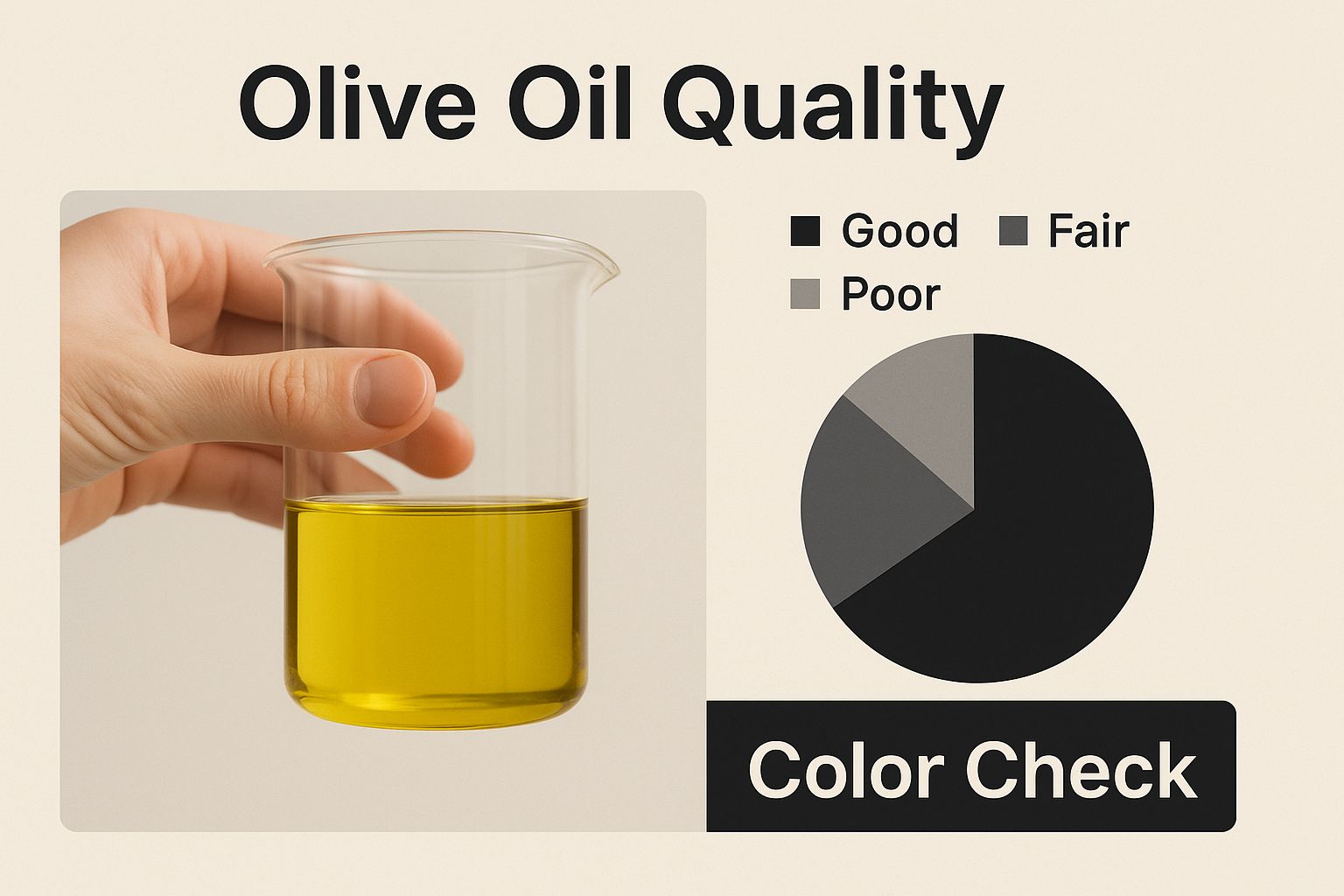
This infographic demonstrates the color check, a quick visual assessment of olive oil's clarity and hue. Authentic extra virgin olive oil usually has a clear, vibrant color, ranging from green to gold. However, color alone isn't a foolproof indicator. A suspiciously intense or unnatural green might suggest adulteration. Therefore, combining visual inspection with other tests is crucial for reliable verification.
Now, let's explore some practical tests you can easily perform at home to detect olive oil fraud. These are simple methods, not complicated lab procedures, that can reveal telling signs of authenticity.
The Refrigerator Test: Separating The Real From The Fake
One of the easiest and most effective tests is the refrigerator test. Authentic extra virgin olive oil, high in monounsaturated fats, will solidify or turn cloudy when refrigerated. This happens because these fats naturally solidify at lower temperatures. Fake olive oils, often diluted with refined oils or other substances, are likely to remain liquid, exposing their inferior quality. This simple test uses a basic property of real olive oil to quickly identify imposters.
Sensory Evaluation: Engaging Your Senses
Beyond the refrigerator test, sensory evaluation provides valuable clues. This involves carefully assessing the oil's aroma, flavor, and texture. Authentic extra virgin olive oil has a fragrant, fruity aroma, often described as grassy, herbaceous, or with hints of green apple or tomato. A peppery sensation at the back of your throat indicates the presence of polyphenols, a hallmark of genuine extra virgin olive oil. In contrast, fake olive oil might have a bland, greasy, or even a metallic taste, signaling adulteration.
The Lamp Test and Paper Absorption Method
Other simple tests offer additional insights. The lamp test, while less reliable, involves observing the oil's appearance under a lamp. Genuine extra virgin olive oil may have a slight fluorescence due to its natural composition. Fake olive oil often appears dull. The paper absorption method checks how the oil absorbs into paper. Real olive oil typically leaves a smooth, even stain. Adulterated oil might produce a greasy, ring-like mark. These practical methods, coupled with sensory evaluation, offer a well-rounded assessment at home.
Before we move on, let's summarize these simple tests in a handy table:
At-Home Olive Oil Authentication Tests
| Test Method | How To Perform | Authentic Oil Result | Fake Oil Result | Reliability Level |
|---|---|---|---|---|
| Refrigerator Test | Refrigerate the oil for a few hours. | Solidifies or becomes cloudy. | Remains liquid. | High |
| Sensory Evaluation | Smell and taste the oil. | Fruity, peppery, grassy aroma and flavor. | Bland, greasy, or metallic taste. | Medium |
| Lamp Test | Observe the oil under a lamp. | May exhibit slight fluorescence. | Appears dull. | Low |
| Paper Absorption Method | Place a drop of oil on paper. | Smooth, even stain. | Greasy, ring-like mark. | Low |
This table provides a quick reference for the tests discussed, along with their expected outcomes and reliability. Remember, combining multiple tests gives you the most accurate assessment.
Temperature Reactions: Unveiling Hidden Ingredients
Observing how the oil reacts to temperature changes can further enhance your analysis. Heating a small amount of olive oil in a pan can reveal if it smokes quickly, a sign of low-quality or adulterated oils. How quickly the oil returns to its liquid state after refrigeration also provides clues. Authentic extra virgin olive oil takes longer to liquefy completely compared to fake oils. By combining these various tests, you can build a strong understanding of your olive oil's quality and authenticity, allowing you to make informed purchasing decisions.
Decoding Labels Like An Industry Expert
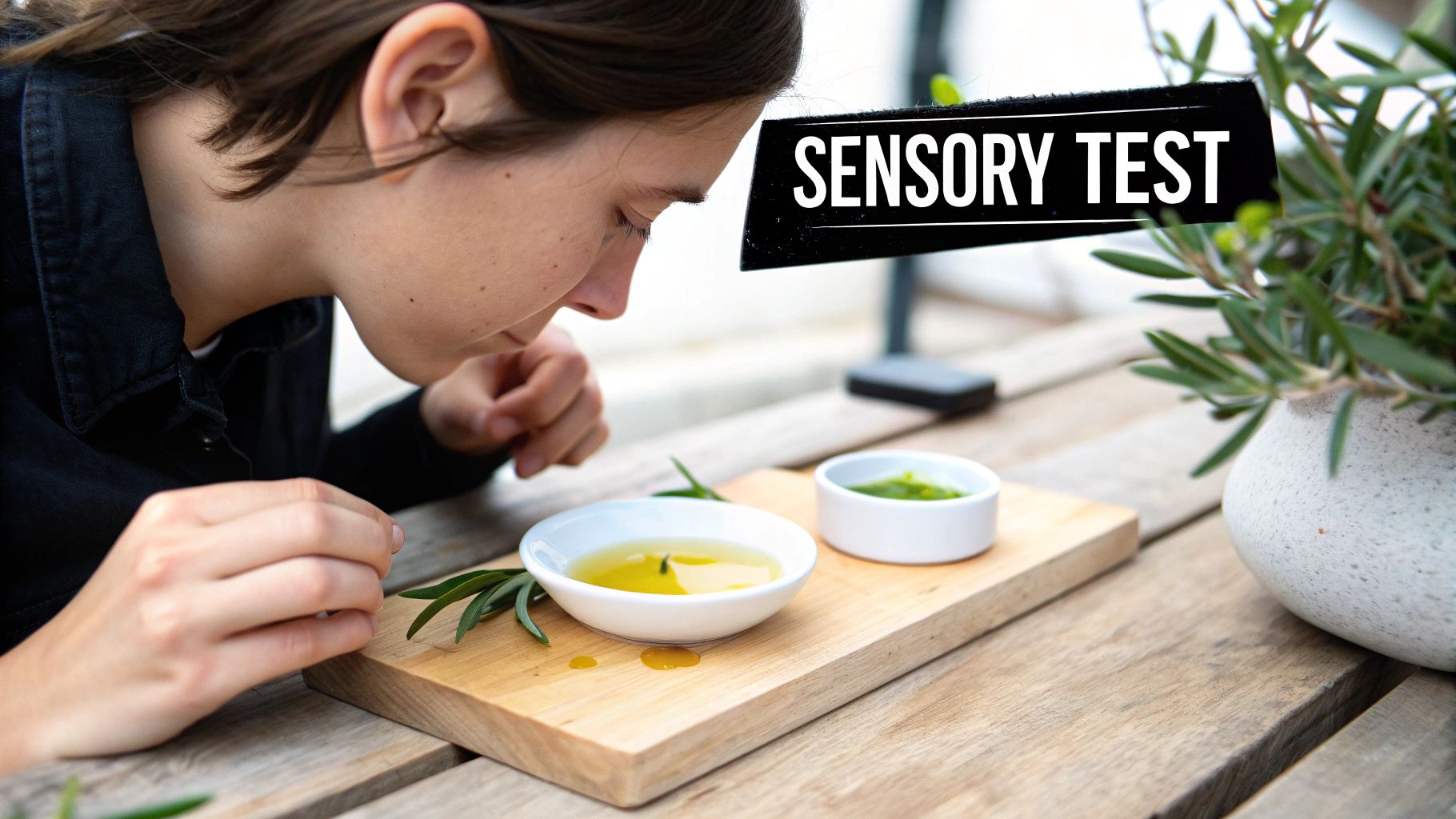
This image showcases a typical olive oil label. It highlights key elements consumers should scrutinize, such as the placement of the "extra virgin" designation, the origin information, and other descriptive terms. Learning to decipher these elements is vital for spotting signs of fake olive oil.
Understanding olive oil labels is crucial for navigating the often-confusing marketplace. This guide will equip you with the knowledge to dissect labels, identify misleading information, and ultimately, select authentic olive oil. You'll learn to differentiate between marketing jargon and genuine quality indicators.
Harvest Dates vs. Expiration Dates: Focusing on Freshness
One of the most crucial details on an olive oil label is the harvest date. This differs from the expiration date, which simply indicates when an oil might go rancid. The harvest date tells you when the olives were picked. Olive oil, like any agricultural product, is best consumed fresh.
A recent harvest date generally signals a higher quality, more flavorful oil. For instance, an oil harvested within the last year will likely have a more vibrant flavor profile than one harvested several years prior. This emphasizes the importance of prioritizing harvest dates over expiration dates.
Decoding Origin Designations: Understanding Geographic Indicators
The origin on the label offers insight into the olive oil's source. However, not all origin designations are created equal. The terms "pure olive oil" or simply "olive oil" can be misleading.
These terms can indicate a blend of oils from various regions or countries. This potentially obscures the oil's true origin and quality. Look for labels specifying a single origin or region, such as "100% Italian Olive Oil."
Certifications like Protected Designation of Origin (PDO) or Protected Geographical Indication (PGI) offer stronger assurances. These certifications adhere to stricter quality standards for a more authentic product.
Unmasking Deceptive Language: Seeing Through Marketing Ploys
Be wary of generic terms like "pure" or "natural." These descriptors often lack specific meaning regarding olive oil and may appear on lower-quality products.
Similarly, avoid overly romanticized descriptions. These evocative phrases often offer little verifiable information about the oil's production. Instead, focus on specific details about the cultivar, acidity level, and extraction method.
Packaging: Unveiling Quality Consciousness
Even the bottle itself provides clues. Dark-colored glass bottles, like green or brown, protect the oil from light and oxidation. This preserves its quality.
Look for clear storage recommendations on the label. Instructions about storing the oil in a cool, dark place demonstrate the producer's commitment to quality and proper olive oil care.
Choosing Wisely: Putting It All Together
By combining these label-reading skills with at-home testing methods, you can confidently navigate the olive oil market. This empowers you to select genuine, flavorful, and healthy olive oil that meets your expectations.
Smart Shopping: Where And How To Buy Authentic Olive Oil
Knowing where to shop for olive oil is just as crucial as knowing what to look for. Understanding pricing, identifying trustworthy retailers, and seeing through misleading marketing tactics are key to finding authentic olive oil that fits both your palate and your pocketbook.
Understanding Olive Oil Pricing
Producing authentic extra virgin olive oil is a meticulous process, from cultivation and harvesting to the final extraction. This care is reflected in the price. If you encounter "extra virgin" olive oil at a suspiciously low price, be wary. For example, a 500ml bottle priced significantly below average for extra virgin likely signals a lower-quality product or even adulteration. This doesn't mean you need to buy the priciest option, but understand that quality olive oil represents an investment.
Finding Trustworthy Retailers
Your choice of retailer matters significantly. Specialty stores often prioritize quality and can provide valuable information about different olive oils. Some online retailers connect you directly with producers, allowing you to trace your oil's origins and production methods. Developing a relationship with a trusted supplier offers long-term quality assurance. Consider subscribing to olive oil subscription boxes for a convenient way to regularly receive curated selections.
Evaluating Value Without Falling For Marketing Tricks
Don't be swayed by generic marketing claims. "Pure" or "natural" on a label doesn't guarantee authenticity. Instead, look for specific certifications like PDO (Protected Designation of Origin) or PGI (Protected Geographical Indication), which indicate adherence to strict quality standards. Check the harvest date, a more reliable indicator of freshness than the best-by date. Finally, remember that olive oil prices can fluctuate seasonally depending on harvest yields, just like other agricultural products.
To help you understand realistic pricing, take a look at the table below:
Olive Oil Price Benchmarks By Quality And Origin
| Quality Grade | Origin Type | Expected Price Range (per 500ml) | Warning Signs | Best Purchase Locations |
|---|---|---|---|---|
| Extra Virgin | Single Estate/Specific Region (e.g., Tuscany, Crete) | $15 – $30+ | Prices significantly below this range, especially if labeled "Italian" or "Greek" without regional specifics | Specialty stores, online retailers specializing in olive oil, directly from producers |
| Extra Virgin | Generic "Italian" or "Greek" | $10 – $20 | Vague labeling, lack of PDO/PGI certification | Supermarkets, online retailers (exercise caution) |
| Virgin | Various | $8 – $15 | Often lacks the robust flavor of extra virgin | Supermarkets |
| Olive Oil/Pure Olive Oil (blend) | Various | $5 – $10 | Bland flavor profile | Supermarkets |
This table offers a general guideline; prices can vary based on brand, retailer, and specific characteristics of the oil. Remember, exceptionally low prices should raise a red flag. Specialty stores and direct-from-producer options usually offer the highest quality assurance.
Tips For Smart Olive Oil Shopping
- Research: Familiarize yourself with typical price ranges for extra virgin olive oil in your area.
- Return Policy: Check the store's return policy in case you are not satisfied with your purchase.
- Direct Communication: Seek out retailers who provide transparent information about sourcing and production methods.
- Specialty Stores: Explore local specialty stores or farmers' markets for unique and often higher-quality olive oil options.
- Build Relationships: Cultivate a relationship with a retailer who demonstrates expertise and prioritizes authenticity.
By following these guidelines, you can become a savvy olive oil shopper, confident in choosing authentic oils that deliver both flavor and health benefits.
Your Fraud-Proof Shopping Strategy
Developing a reliable strategy for purchasing authentic olive oil is paramount. This personalized action plan combines detection methods, smart shopping tactics, and quality indicators into a simple checklist, empowering you to navigate the olive oil market with confidence.
Before You Buy: Your In-Store Checklist
-
Price Check: A suspiciously low price for "extra virgin" olive oil should raise a red flag. Quality olive oil reflects the production process and comes at a reasonable cost. Refer to price benchmarks for guidance.
-
Label Scrutiny: Look for a label clearly stating "extra virgin olive oil." Examine the harvest date, origin, and certifications such as PDO or PGI. Steer clear of vague terms like "pure" or "natural."
-
Bottle Inspection: Choose dark-colored glass bottles, which protect the oil from light and oxidation. A slight sediment at the bottom is normal for unfiltered oil. Clear storage instructions demonstrate the producer's commitment to quality.
Post-Purchase: Verification at Home
-
Refrigerator Test: Authentic extra virgin olive oil will solidify or become cloudy in the refrigerator due to its high monounsaturated fat content. This simple test can offer valuable insights.
-
Sensory Evaluation: Engage your senses. The aroma should be fresh and fruity, while the flavor should be complex with a peppery finish. Authentic olive oil also possesses a smooth, slightly velvety texture.
-
Additional Tests: Consider the lamp test and the paper absorption method for further verification, though these are less definitive.
Building Your Network and Protecting Others
-
Trusted Sources: Cultivate relationships with reputable retailers or explore online marketplaces that connect you directly with producers. Building trust is essential.
-
Report Suspected Fraud: If you encounter suspected fraudulent activity, report it to the relevant authorities. Your actions can protect others from falling victim.
-
Share Your Knowledge: Empower fellow consumers by sharing these strategies. By spreading awareness, you contribute to a more informed marketplace.
This multi-layered approach will ensure you consistently select high-quality olive oil, offering genuine flavor, health benefits, and value. Building your olive oil confidence starts now.
Take the Next Step: Elevate Your Olive Oil Expertise
Ready to enhance your olive oil knowledge? Visit Learn Olive Oil for a wealth of resources. Explore tasting techniques, health benefits, producer spotlights, and buying guides. Begin your journey into the world of premium olive oil today!

 Learn Olive Oil
Leave a comment