The Truth About Olive Oil Classifications

Understanding olive oil classifications is essential for making informed decisions at the supermarket. This knowledge helps you choose the right oil for your cooking needs and appreciate the subtle differences in this culinary staple. Whether you're drizzling oil over a finished dish or using it for high-heat cooking, selecting the correct type of olive oil will greatly impact your results.
Decoding the Grades
Olive oil is available in several grades, each with its own unique properties:
-
Extra Virgin Olive Oil (EVOO): Considered the highest quality grade, EVOO comes from the first pressing of olives without any chemical processing. It offers a robust flavor and aroma, reflecting the distinct characteristics of the olives' origin.
-
Virgin Olive Oil: Also produced from the first pressing, virgin olive oil has a slightly higher acidity level than EVOO and may have minor flavor imperfections.
-
Refined Olive Oil: This oil undergoes processing to neutralize strong flavors and odors. It's often blended with a small amount of virgin olive oil to create a milder, more neutral flavor profile.
-
Olive Pomace Oil: Extracted from the remaining olive pulp after pressing, pomace oil is refined and generally viewed as a lower quality option.
Simply seeing "olive oil" on a label doesn't guarantee a premium product. Understanding the different grades helps you determine the true quality of various oils. The quality of olive oil is frequently categorized based on chemical and sensory factors.
Chemical and Sensory Parameters
Extra virgin olive oil (EVOO), the highest quality grade, must have a free acidity (oleic acid) below 0.8%. This international standard, recognized by organizations like the International Olive Council (IOC), signifies a high-quality product. For example, the 0.8% acidity level is a crucial indicator, but it's not the sole determinant of EVOO status. Sensory evaluation plays a vital role, with trained professionals assessing the oil for desirable attributes like fruitiness, bitterness, and pungency. They also look for defects that could point to quality concerns. This thorough evaluation process guarantees that only the best oils receive the "extra virgin" classification. Proper storage also helps maintain olive oil quality and prevents rancidity, similar to the care required when choosing and maintaining an office chair. Learn more about proper ergonomics in this helpful article on how to choose an office chair. More insights about olive oil standards can be found here.
Beyond the Basics: Other Designations
You might also see terms like Protected Designation of Origin (PDO) and Protected Geographical Indication (PGI) on olive oil labels. These certifications further guarantee quality and authenticity, connecting the oil to a specific region and traditional production methods. These labels assist in identifying oils with unique regional characteristics and offer insight into how the environment influences the final product. From the Italian countryside to the Greek isles, these designations showcase the rich variety of olive oil available. Ultimately, understanding olive oil classifications allows you to appreciate the production process and select the ideal oil for your culinary creations.
Spotting Authentic Extra Virgin Olive Oil
Navigating the vast selection of olive oils in supermarkets can be daunting. But by understanding a few key factors, you can confidently choose authentic extra virgin olive oil (EVOO). This involves scrutinizing labels and recognizing the sensory cues of genuine quality.
Decoding the Label
Don't fall for misleading marketing terms. "Pure" or "light" olive oil often indicates refined oils, lacking the premium qualities of EVOO. Always look for "extra virgin" clearly stated on the label.
Certifications like PDO (Protected Designation of Origin) or PGI (Protected Geographical Indication) link the oil to a specific region and its traditional production methods, providing further assurance of quality and authenticity. The harvest date, more so than the "best by" date, is a key indicator of freshness and flavor. A recent harvest date generally signifies a higher quality EVOO.
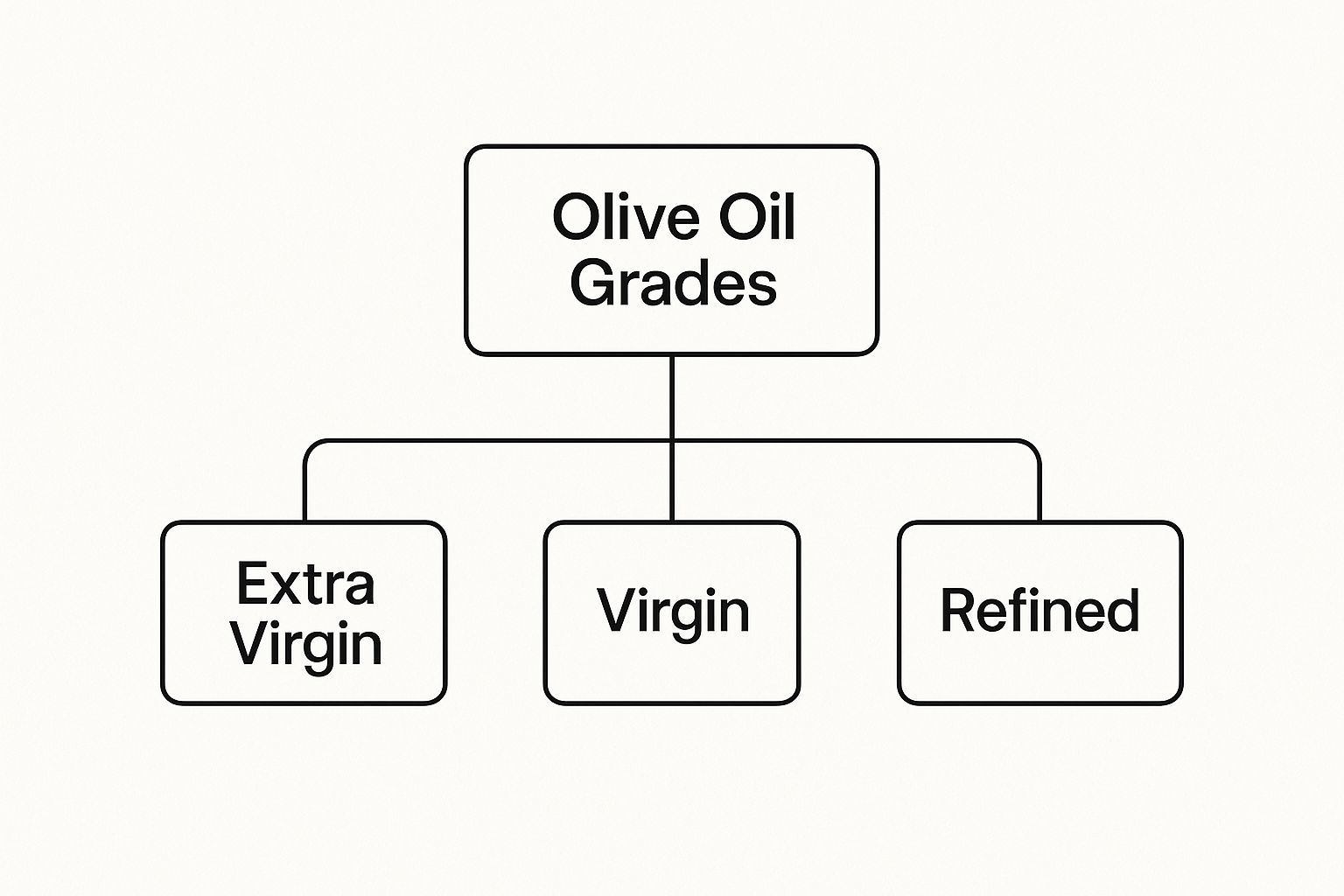
This infographic shows the hierarchy of olive oil grades. Extra virgin sits at the top, followed by virgin, then refined. This top position highlights its superior quality and minimal processing. Understanding this hierarchy helps you make informed decisions.
Sensory Clues: Taste and Smell
Authentic EVOO possesses a distinct, fresh aroma, often characterized by fruity, grassy, or herbaceous notes. The flavor profile should be robust and complex, offering a nuanced tasting experience.
A peppery sensation in the throat, often called a "throat catch," signifies the presence of polyphenols, which are powerful antioxidants. This pungency is a hallmark of high-quality EVOO.
Chemical and Sensory Standards
EVOO must undergo rigorous sensory tests, ensuring the absence of defects and confirming the presence of positive attributes. These include fruitiness, bitterness, and pungency. These standards are vital due to documented instances of olive oil fraud and mislabeling.
To understand the market dynamics and pricing of EVOO, consider consulting resources like the International Olive Council. For instance, Spain's 2022/23 olive harvest was significantly impacted by extreme drought, affecting both price and availability. For detailed statistics on the olive oil market, refer to this report: Olive Oil Market Report February 2025.
Bottle Color Matters
Dark-colored glass bottles are essential for protecting the oil from light degradation. This helps preserve its quality and extend its shelf life. While clear or light-colored bottles may be aesthetically pleasing, they expose the oil to light, increasing the risk of rancidity.
The "Cold-Pressed" Myth
The term "cold-pressed" lacks consistent regulation in the olive oil industry. While traditionally indicating a specific extraction method, it's often used as a marketing tactic. Prioritize the "extra virgin" classification, guaranteeing extraction without excessive heat or chemicals.
To further clarify the different classifications of olive oil, consider the following table:
Olive Oil Classification Comparison
This table compares different grades of olive oil by their production methods, acidity levels, flavor profiles, and best uses.
| Oil Type | Production Method | Max Acidity | Flavor Profile | Best Uses |
|---|---|---|---|---|
| Extra Virgin | First cold-press, no refining | ≤ 0.8% | Robust, fruity, peppery | Dipping, salads, finishing |
| Virgin | First cold-press, no refining | ≤ 2.0% | Milder than extra virgin | Cooking, baking |
| Refined | Chemical extraction and refining | ≤ 0.3% | Neutral | High-heat cooking |
| Olive Oil (blend) | Blend of refined and virgin | ≤ 1.0% | Varies | All-purpose cooking |
This table highlights the superior quality of extra virgin olive oil, emphasizing its low acidity and distinct flavor profile. Choosing the right olive oil allows you to enjoy its rich flavor and reap its health benefits.
Cracking the Code on Olive Oil Labels
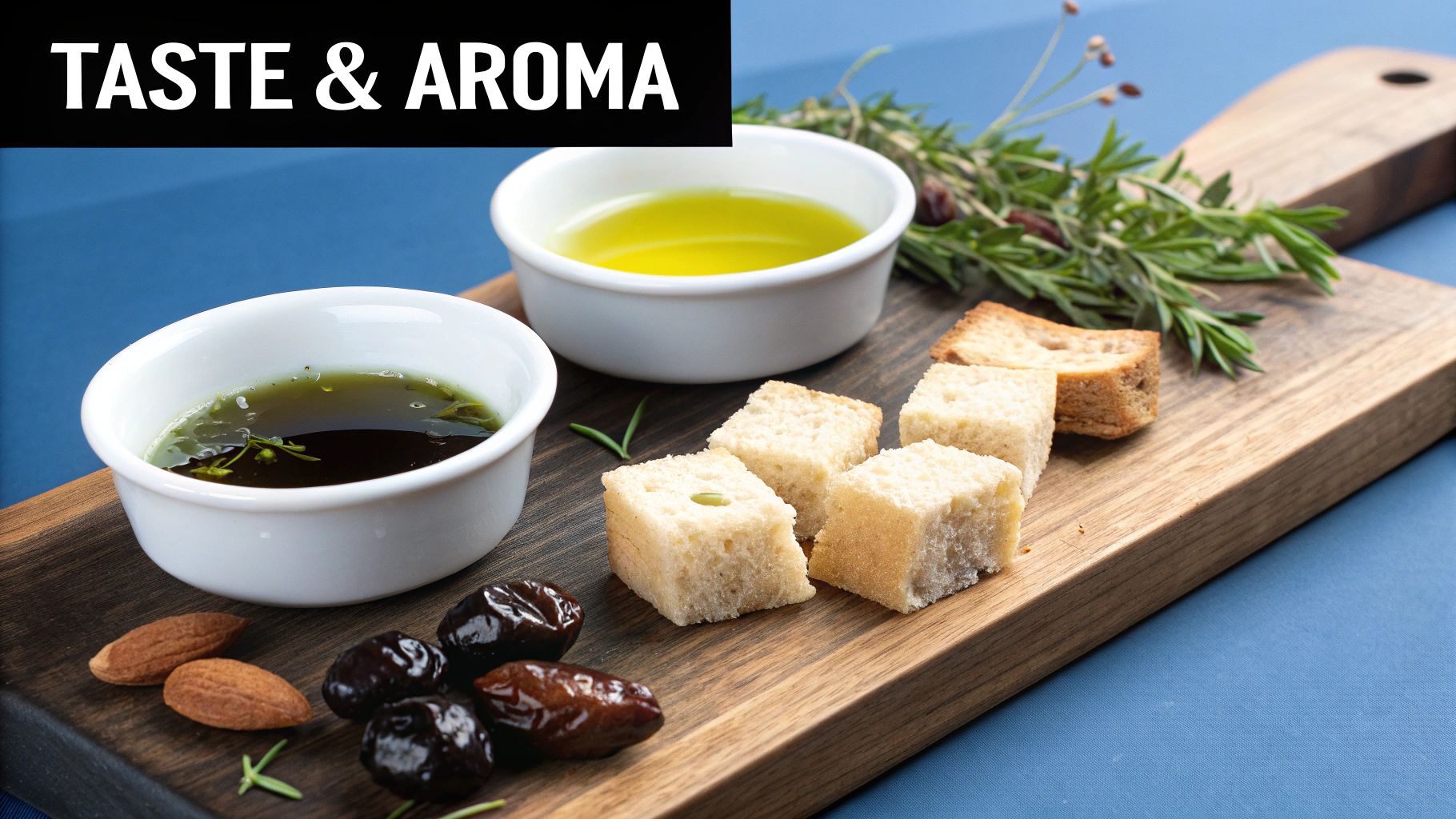
Olive oil labels can seem complex. However, they contain valuable information that can help you select a high-quality product. Understanding the terminology is key to finding the perfect olive oil for your needs. By knowing what to look for, you can navigate the supermarket aisle with confidence.
Demystifying the Terminology
Several key terms frequently appear on olive oil labels. Knowing these distinctions is essential for making informed choices:
-
Extra Virgin Olive Oil: This designation represents the highest quality. It's produced solely through mechanical methods like crushing or pressing, without heat or chemicals. The free acidity must be below 0.8%, indicating a lack of defects and proper processing.
-
Virgin Olive Oil: A grade below extra virgin, virgin olive oil is still derived from the first pressing. It may have a slightly higher acidity level and minor flavor imperfections. It's suitable for general cooking.
-
Refined Olive Oil: This oil has undergone refining to remove defects and create a neutral flavor profile. It's often blended with a small percentage of virgin olive oil to enhance taste and aroma.
-
"Pure" or "Light" Olive Oil: These can be misleading descriptions. They often indicate refined oils that don't meet the criteria for extra virgin. These oils typically have a lighter color and flavor, but lack the rich complexity and health benefits of EVOO.
Certifications and Origin
Look for certifications like Protected Designation of Origin (PDO) and Protected Geographical Indication (PGI). These certifications guarantee the oil originates from a specific region and adheres to strict production standards. A PDO, for example, ensures the olives were grown, harvested, and pressed within a particular area, creating unique characteristics. The bottling location is also important. Oil bottled near the source usually retains freshness and flavor better.
Harvest Date vs. Best-By Date
While the best-by date gives a general timeframe for use, the harvest date provides a more accurate measure of freshness. Like wine, olive oil's quality is best soon after harvest. Choosing oil with a recent harvest date ensures optimal flavor and nutritional value. This helps you avoid oils that may have lost their peak qualities.
Single Estate and Cold-Pressed
"Single estate" signifies the olives are from one farm or orchard, allowing greater quality and consistency control. The term "first cold press," while traditionally important, is now somewhat redundant. All extra virgin olive oil is, by definition, cold-pressed because modern extraction methods maintain low temperatures.
By understanding these label elements, you can quickly assess the quality of olive oil. This enables you to select oils that suit your culinary needs and preferences, ensuring you get the most from this kitchen staple.
Flavor Profiles: Why Origin Transforms Your Cooking
Choosing olive oil isn't simply about grabbing a bottle off the shelf. It's about understanding the subtle, yet significant, impact that origin has on flavor. Just like wine, olive oil's taste is deeply connected to its terroir – the unique combination of soil, climate, and altitude where the olives are grown. This means a Tuscan olive oil will offer a distinct flavor profile compared to one from Greece, even if both are labeled "extra virgin." Exploring these regional variations can revolutionize how you select and use olive oil in your cooking.
Regional Variations: A World of Flavor
The specific olive varieties grown in different regions contribute further to the oil's unique characteristics. For example, Spain's Picual olive produces a robust, peppery oil, ideal for dipping bread or as a finishing touch on dishes. In contrast, Greece's Koroneiki olive yields an oil with a fruity, slightly grassy aroma that pairs beautifully with salads and Mediterranean cuisine. These distinct qualities highlight the important role of origin in shaping an olive oil's flavor profile.
Harvesting and Production Techniques
Harvesting and processing methods also play a critical role in the final product. Some regions maintain traditional practices, hand-picking olives and using stone mills for crushing. Others utilize modern technology for faster, larger-scale production. These varying techniques can subtly influence the oil's overall flavor and aroma. Regardless of the method, preserving the quality standards of extra virgin olive oil is paramount.
From Tuscany to Tunisia: Exploring Flavor Profiles
-
Tuscany, Italy: This region is renowned for its robust, peppery oils, often with hints of artichoke and almond. They are a wonderful addition to grilled vegetables or hearty pasta dishes.
-
Crete, Greece: Crete offers olive oils with a distinctive fruitiness and a slightly peppery finish. They enhance the flavors of salads, dips, and seafood.
-
Spain: Spain boasts a diverse range of olive oils, from the intense Picual to the milder Arbequina. Their versatility makes them suitable for everything from frying to baking.
-
Tunisia: Tunisia produces delicate, fruity oils with subtle floral notes. These oils are perfect for adding a touch of elegance to lighter dishes or as a finishing drizzle.
Understanding global consumption trends is also valuable for buyers. As of the 2024/25 crop year, global olive oil consumption is projected to exceed 3 million tonnes, marking a period of recovery and growth. While Europe, and the EU in particular, once dominated consumption (over 70% in 2004/05), this share has decreased to approximately 45% as non-EU countries increase their consumption. Find more detailed statistics here.
Pairing Olive Oil with Cuisine
Professional chefs often strategically select regional olive oils to complement specific cuisines. A robust Tuscan oil might perfectly accentuate a Florentine steak, while a delicate Tunisian oil enhances a fresh seafood salad. This mindful pairing elevates dishes by creating a harmonious balance of flavors. By considering the origin and flavor profile, you can transform your cooking. Much like a sommelier recommends wines, understanding olive oil origins empowers you to choose the perfect oil for every culinary creation.
Price vs. Quality: Getting Value Without Overpaying
When choosing olive oil, price can be a confusing factor. Many consumers wonder if a higher price guarantees superior quality. The answer isn't always straightforward. This section helps you understand the real reasons behind olive oil price differences and how to find the best value. With this knowledge, you can make informed choices without emptying your wallet.
Production Factors Affecting Price
Several factors legitimately influence the cost of olive oil production. Olive variety, terroir (the environmental factors that affect a crop's qualities), and harvesting methods all contribute. For example, oils made from rare olive varietals cultivated in specific microclimates can command higher prices due to their limited availability and distinct flavor profiles. Hand-harvested olives also contribute to higher labor costs compared to machine harvesting, impacting the final price. Understanding these factors helps differentiate genuine quality from clever marketing.
Marketing Gimmicks to Watch Out For
Beware of fancy packaging and misleading marketing tactics. Sometimes, a higher price tag pays for the bottle's aesthetic appeal, not the oil inside. Terms like "artisanal" or "reserve" lack standardized definitions and don't always signify superior quality. Instead, concentrate on tangible quality indicators like the harvest date, acidity levels, and certification seals. This careful approach helps you avoid overspending on a product that's fundamentally the same, just packaged differently. Interestingly, the growing demand for high-quality olive oil is reflected in global consumption patterns. Global consumption has almost doubled since the 1990/91 crop year.
In the 2023/24 crop year, worldwide consumption reached approximately 2.45 million metric tons and is projected to grow to about 2.84 million metric tons by 2024/25. You can explore more detailed statistics from Statista.
Finding the Sweet Spot: Quality and Value
The ideal balance of quality and value depends on how you plan to use the oil. For everyday cooking, a good quality extra virgin olive oil at a mid-range price is perfectly suitable. However, consider splurging on a premium oil with a unique flavor profile for finishing dishes or special occasions. Think about your culinary needs and budget when making your choice.
The following table summarizes the price-quality relationship for olive oil, providing guidance on selecting the right oil for your needs.
To help you further navigate the complexities of olive oil pricing, we've compiled a table outlining the typical price ranges, expected quality features, best uses, and value indicators for different grades of olive oil.
Olive Oil Price-Quality Relationship
| Price Range | Expected Quality Features | Best Uses | Value Indicators |
|---|---|---|---|
| Low | Refined olive oil, mild flavor | High-heat cooking, frying | Neutral flavor, affordability |
| Medium | Extra virgin olive oil, balanced flavor, moderate fruitiness | Everyday cooking, sautéing, baking | Versatile, good value for money |
| High | Premium extra virgin olive oil, intense flavor, robust fruitiness, specific varietal characteristics | Finishing dishes, dips, salads, dressings | Distinct flavor profile, origin, certification |
This table offers a general guideline. Prices can vary based on brand, origin, and retailer.
By understanding the different price points and associated quality features, you can make informed decisions and choose the best olive oil for your specific culinary applications.
Smart Shopping Strategies
Look for sales and discounts at specialty stores and online retailers. Buying in bulk can often save money, but only if you have proper storage to maintain the oil's freshness. Consider the seasonal availability of olive oil; prices might be lower during the harvest season. Employing these strategies helps you enjoy high-quality olive oil without breaking the bank.
When to Splurge and When to Save
A key element in choosing olive oil is knowing when to invest in a premium oil and when a more affordable option is sufficient. For high-heat cooking, where the oil's delicate flavors are masked, a less expensive refined olive oil will suffice. However, for salad dressings and dips, where the oil's flavor takes center stage, choose a high-quality extra virgin olive oil.
By understanding these pricing dynamics and using smart shopping techniques, you can savor the rich flavors and health benefits of quality olive oil without overspending. Developing your own personalized buying strategy will ensure you get the best value while satisfying your culinary preferences.
Storing Your Liquid Gold: Maximizing Shelf Life
After carefully selecting the perfect olive oil, proper storage is crucial to preserving its delicate flavor and valuable health benefits. Understanding how light, heat, and oxygen affect olive oil can significantly extend its shelf life and prevent it from turning rancid. This means you'll extract maximum value from every bottle and enjoy the delicious, fresh flavor you intended.
Enemies of Freshness: Light, Heat, and Oxygen
Think of olive oil as a delicate, living product. Exposure to light, particularly sunlight or bright kitchen lighting, degrades its quality over time. Heat also plays a significant role, accelerating the breakdown of beneficial compounds. This is why storing olive oil near the stove or in warm pantries is detrimental.
Additionally, contact with oxygen contributes to oxidation, the primary culprit behind rancidity.
The Ideal Storage Environment
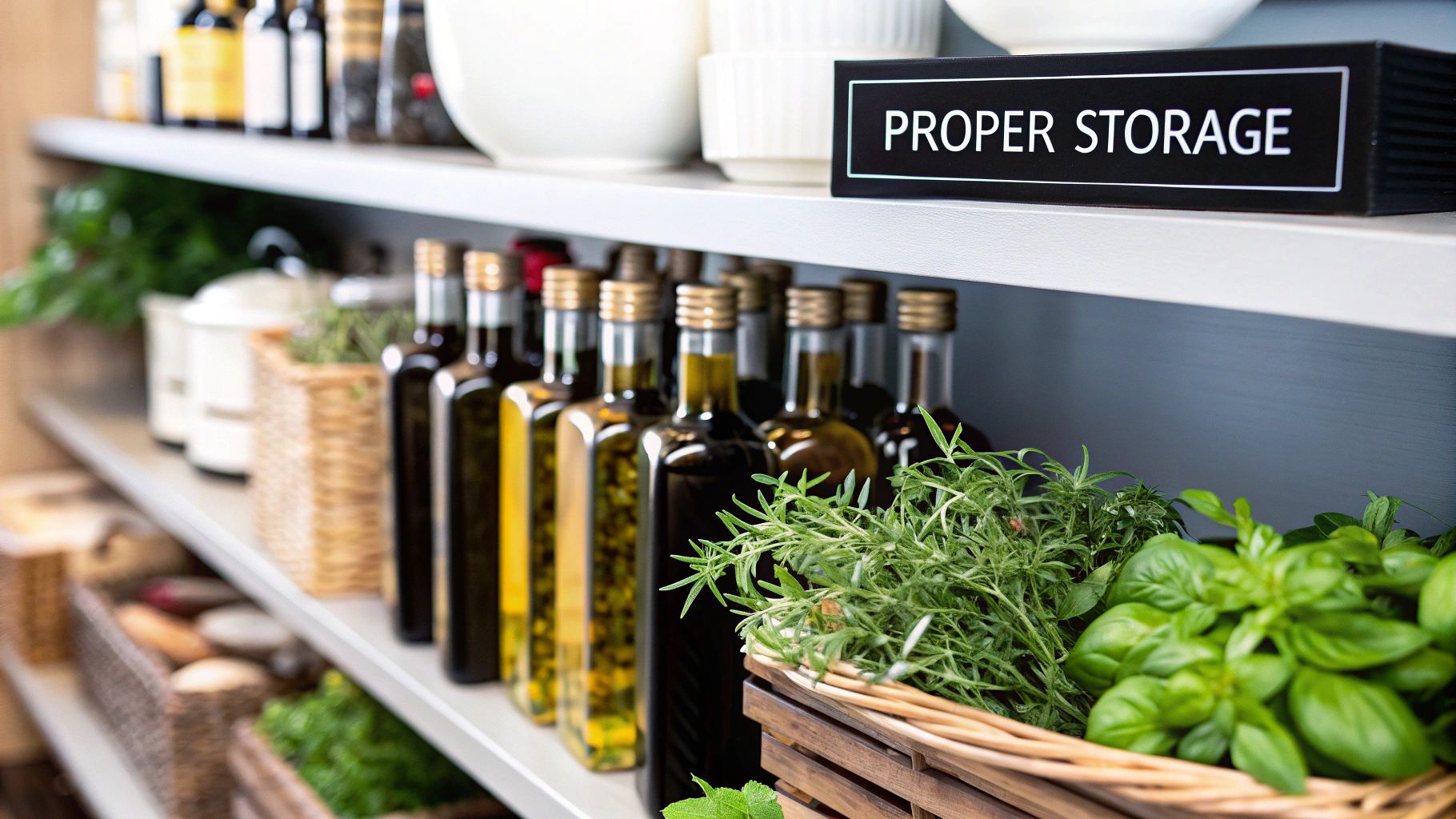
For optimal storage, think cool, dark, and airtight. A dark cupboard away from heat sources is the best location. Dark-colored glass bottles offer additional protection against light degradation.
Always ensure the bottle is tightly sealed after each use to minimize oxygen exposure. This prevents oxidation and preserves the oil's fresh flavor.
Debunking Common Storage Myths
Contrary to popular belief, the refrigerator is not the best place for olive oil. While cooler temperatures slow down oxidation, they can cause the oil to solidify and become cloudy. This doesn't harm the oil, but it can affect its appearance and texture.
For example, once returned to room temperature, the oil will regain its normal consistency, but repeated temperature fluctuations can impact its long-term quality.
Best Practices for Long-Term Storage
- Buy in Moderation: Purchase quantities you can reasonably use within a few months. While buying in bulk can seem economical, it’s counterproductive if the oil spoils before you can use it all. Understanding e-commerce pricing strategies can help you evaluate the real value of olive oils. Explore this helpful resource: Ecommerce Pricing Strategies.
- Transfer to Smaller Containers: For larger quantities, transfer portions to smaller, airtight containers. This limits the amount of oxygen introduced to the oil each time you open the bottle.
- Check for Signs of Rancidity: Regularly check for signs of rancidity, including a musty or sour smell, a bitter taste, or a darkened color. These are clear indicators that the oil has gone bad. Discard any oil showing these signs.
Understanding "Best By" Dates
While "best by" dates provide a general guideline, they don't tell the whole story. The harvest date is a more crucial indicator of freshness, as olive oil, like wine, is best enjoyed within a reasonable time after pressing.
Try to select oils with a recent harvest date and use them within 18-24 months of bottling for optimal quality.
Practical Storage Solutions for Everyday Kitchens
- Dark Glass Bottles: Invest in dark glass bottles or opaque containers to shield the oil from light.
- Stainless Steel Dispensers: Stainless steel dispensers offer an airtight and light-blocking storage solution, perfect for everyday use in the kitchen.
- Cool, Dark Pantry: Designate a specific area in your pantry, away from heat and light, for storing your olive oils.
By following these simple yet effective storage techniques, you can preserve the quality and flavor of your chosen olive oil, allowing you to enjoy its culinary and health benefits for longer. This diligent approach ensures that the care you took in choosing the right olive oil continues long after you bring it home.
Ready to explore a world of premium olive oils and discover the perfect bottle for your kitchen? Visit Learn Olive Oil and embark on your journey to becoming an olive oil connoisseur.

 Learn Olive Oil
Leave a comment