The Secret World of Olive Oil: Your Tasting Foundation
Before you begin swirling and sipping olive oil, it's essential to understand what makes it truly exceptional. This journey starts with exploring the rich history and traditions of olive oil production. We'll also demystify the sometimes confusing classifications, revealing what sets "extra virgin" olive oil apart. This foundational knowledge is essential for anyone wanting to learn proper olive oil tasting techniques.
Understanding Olive Oil Classifications
The term "extra virgin" isn't simply marketing jargon; it denotes a specific level of quality. Extra virgin olive oil comes from the first press of the olives and has a free acidity of no more than 0.8%. This low acidity contributes to its superior flavor and aroma. Furthermore, extra virgin olive oil must pass rigorous chemical and sensory tests to ensure it is free from defects. Knowing these criteria gives you a solid basis for judging any olive oil you encounter.
Factors Influencing Flavor
Much like the terroir affects the taste of wine, several factors influence the sensory experience of olive oil. The olive variety plays a crucial role, with each cultivar offering a distinct flavor profile. Harvest timing is also critical. Olives harvested early in the season generally produce oils with a vibrant, peppery flavor. Later harvests create milder, buttery oils. Finally, the pressing techniques used during production can further shape the final taste.
Global Consumption Patterns
To fully grasp the nuances of olive oil, understanding global consumption patterns is valuable. Top consumers include Greece, Spain, and Italy. Greece consumes approximately 24 liters of olive oil per capita annually. This high consumption stands in stark contrast to the United States, a large market, consuming only about 1 liter per capita each year. This difference highlights the cultural significance of olive oil across various regions. Learn more about olive oil consumption and production at Wikipedia.
Developing Your Tasting Skills
By honing your tasting skills, you're not just learning how to taste olive oil; you're cultivating a deeper appreciation for this culinary gem. This knowledge empowers you to make smart purchasing choices, confidently selecting high-quality oils that are truly worth the investment. Moreover, understanding the subtleties of olive oil will transform your cooking, allowing you to carefully select oils that perfectly complement and enhance your dishes. This is your entry point into a world of flavor most casual consumers never know. Get ready to unlock the secrets of olive oil and elevate your culinary experiences.
Creating Your Perfect Tasting Environment
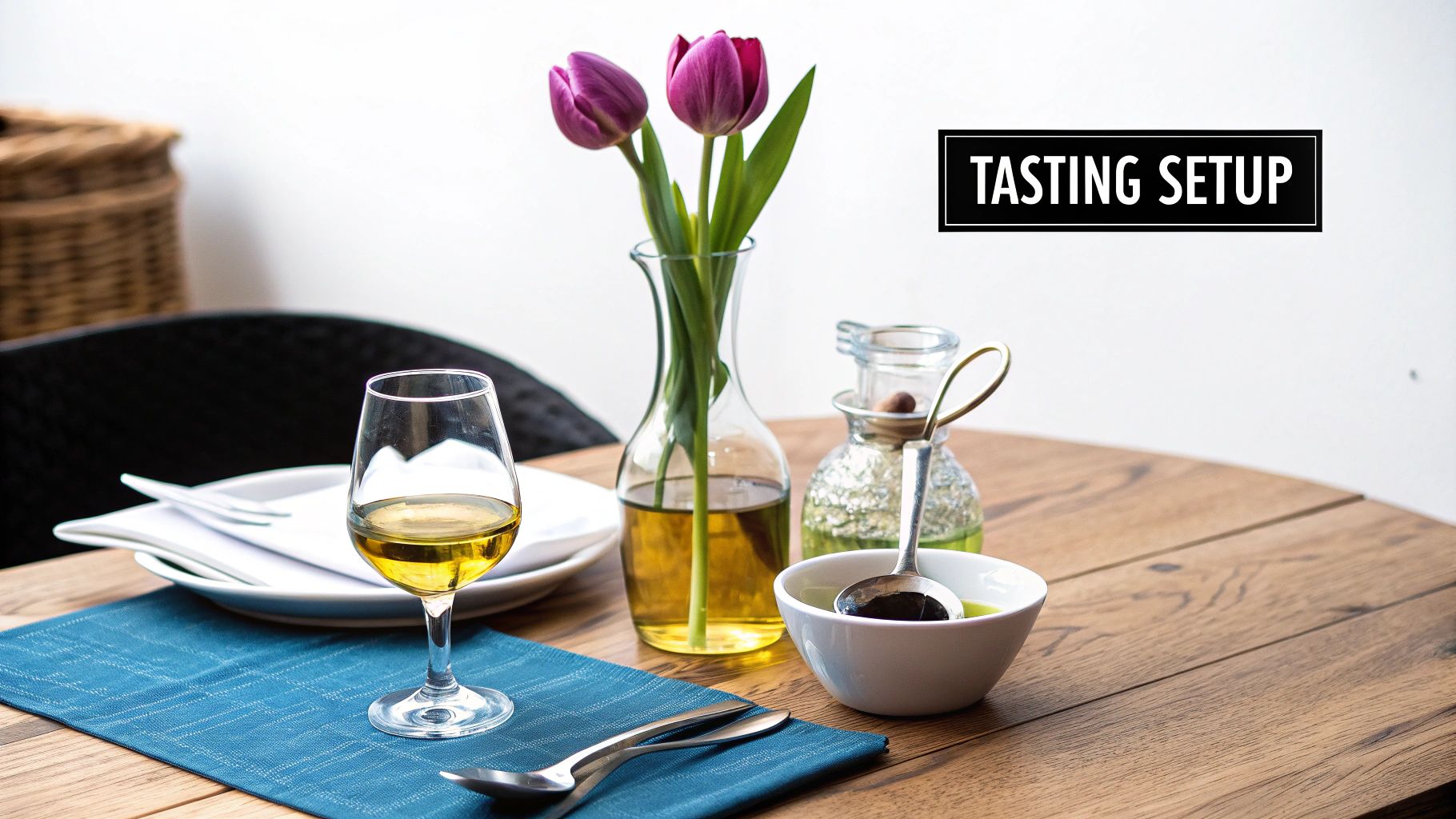
The environment in which you taste olive oil has a significant impact on your ability to perceive its subtle nuances. Just as a sommelier wouldn't evaluate wine in a smoky bar, appreciating the complexities of olive oil requires a controlled setting. This means minimizing distractions and optimizing factors like glassware and temperature to fully unlock the oil's potential.
The Importance of Neutral Surroundings
Creating a neutral sensory backdrop is the first step. Minimize strong smells that can interfere with your tasting experience. Avoid wearing perfumes or scented lotions. Ensure the tasting area is free from competing aromas, such as strong cleaning products or cooking odors.
Even the scent of your clothes can affect your perception. Choose freshly laundered, unscented attire to allow the delicate aromas of the olive oil to take center stage. This focused approach will enhance your sensory experience and allow you to appreciate the true character of the oil.
Choosing the Right Glassware
Cobalt blue tasting glasses are the standard tool for professional olive oil tasters. The blue color masks the oil's visual appearance, preventing preconceived notions about its quality based on color. The tulip-like shape concentrates the volatile aromatic compounds, making it easier to discern the oil's bouquet.
While these specialized glasses are ideal, they may not be readily available at home. A small wine glass can be a practical alternative, allowing you to still appreciate the oil's aromas and flavors.
Temperature's Role in Flavor Perception
Temperature plays a key role in flavor perception. Olive oil should be tasted at room temperature, ideally between 70-77°F (21-25°C). This temperature range allows the oil's aromas to be most expressive.
Tasting cold olive oil mutes the flavor compounds, making it difficult to identify the subtle nuances. On the other hand, overly warm temperatures can create a greasy mouthfeel and mask the delicate flavors.
Essential Tasting Supplies
Before you begin, gather your essential supplies. Having everything at hand will make your tasting experience more enjoyable and informative. The following table provides a comprehensive list of equipment and materials, along with professional options and suitable home alternatives:
To prepare for your tasting, let's review some essential supplies:
Essential Olive Oil Tasting Supplies: A comprehensive list of equipment and materials needed for a proper olive oil tasting session.
| Item | Purpose | Professional Option | Home Alternative |
|---|---|---|---|
| Tasting Glasses | Concentrate aromas; mask color | Standardized cobalt blue glasses | Small wine glasses |
| Unscented Hand Soap | Cleanse palate between tastings | Fragrance-free soap | Mild, unscented dish soap |
| Plain Crackers or Bread | Neutralize palate | Unsalted water crackers | Plain breadsticks or baguette slices |
| Sparkling Water | Cleanse palate | Plain sparkling water | Still water |
| Notebook and Pen | Record tasting notes | Tasting journal | Notepad and pen |
This table summarizes the key items you’ll need for a successful olive oil tasting. While professional tools can enhance the experience, readily available household items can serve as effective substitutes.
By considering these environmental factors, you'll be well-equipped to experience the full spectrum of flavors that high-quality olive oil offers. This attention to detail will enhance your tasting sensitivity and cultivate a deeper appreciation for this culinary gem.
The Four-Step Method Professional Tasters Never Skip
Ever wondered why your olive oil tasting experiences feel a bit lackluster? Professional tasters use a specific method that can completely change how you perceive olive oil. We'll break this expert process down into four easy-to-follow steps: visual assessment, aromatic evaluation, palate examination, and retronasal analysis. Learning this method will give you a much deeper understanding of how to truly appreciate olive oil.
Visual Inspection: Color and Clarity
First, take a look at the oil's color and clarity. While color alone doesn't determine quality, it does offer hints about the olives used and how the oil was processed. A vibrant green often indicates early-harvest olives, while a golden yellow suggests the use of riper olives. The oil should appear clear and free of any sediment. This initial visual check sets the stage for the rest of your sensory experience. The infographic below demonstrates this first step, visual inspection.
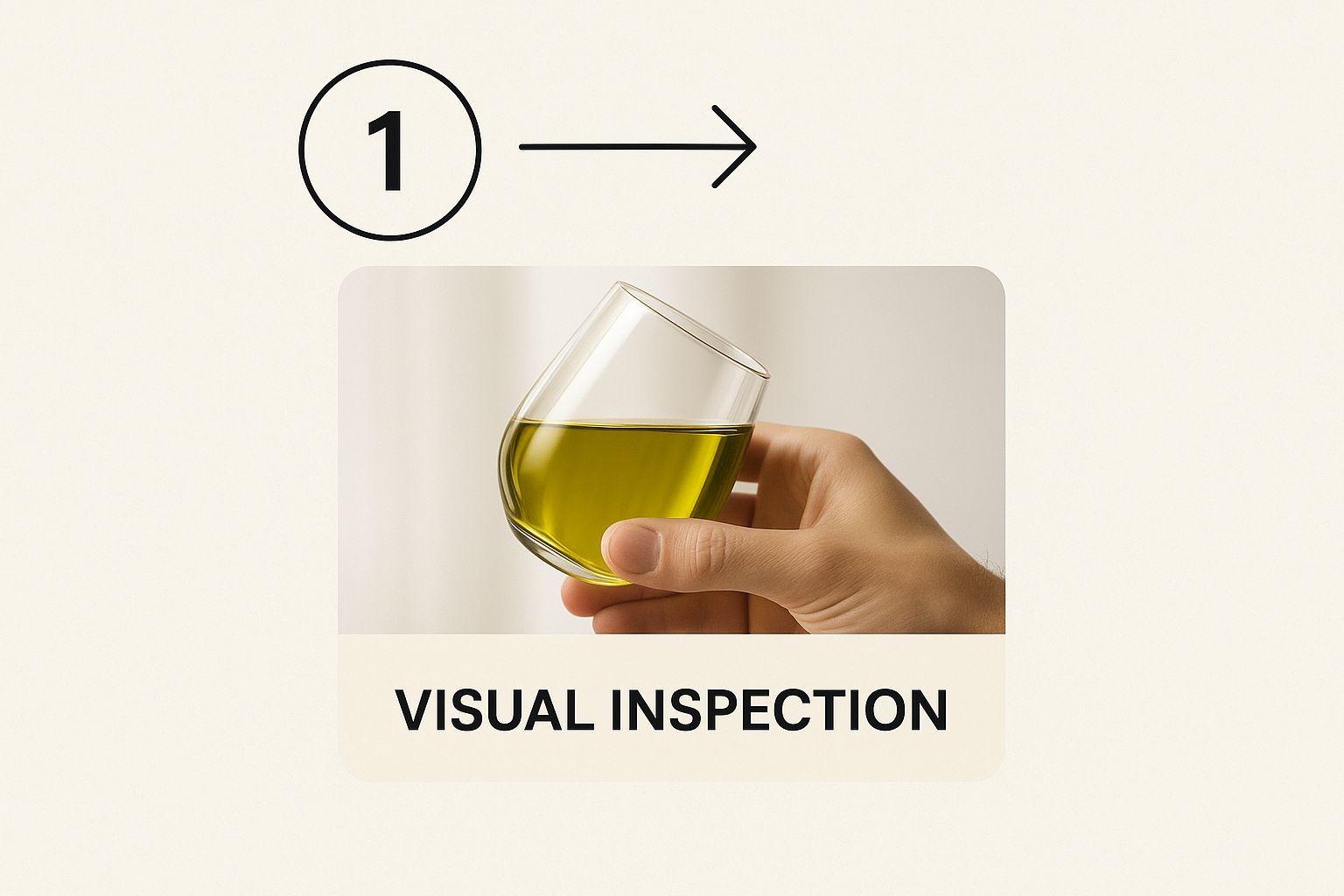
As shown in the image, tilting the glass helps the light reveal the olive oil's true color and clarity, two important factors in this first assessment. This step can help you spot potential problems like cloudiness or sediment, which could impact the flavor.
Aromatic Evaluation: Unlocking the Bouquet
Next, warm the glass by cupping it in your hand to trap the aromas. Gently swirl the oil to release its volatile compounds. Lift the glass to your nose and inhale deeply. What scents can you detect? Freshly cut grass? Green apple? Tomato leaf? This aromatic evaluation unveils the oil's complexity. For instance, a peppery aroma often signals a high concentration of oleocanthal, a natural anti-inflammatory.
Palate Examination: The Strip and Slurp
Now for the most important part: the actual tasting. Take a small sip of the olive oil and let it coat your mouth. Use the "strip and slurp" technique—drawing air across your tongue while your lips are slightly closed—to aerate the oil and fully experience its flavor profile. This might feel a little strange at first, but it's key to spreading the oil over your palate to maximize contact with your taste receptors.
This is where you'll really start to appreciate the oil's fruitiness, bitterness, and pungency. When exploring how to taste olive oil, don't forget to try oils from various regions. The United States, for example, is the third largest consumer of olive oil globally, using about 9% of the world's supply. You can find detailed statistics here: https://worldpopulationreview.com/country-rankings/olive-oil-consumption-by-country. Trying oils from major consumer countries like the U.S. and Turkey will give you a good sense of the diverse flavor profiles available.
Retronasal Analysis: Lingering Flavors
After you swallow (or spit the oil out if you're sampling multiple oils), notice the lingering flavors. This is retronasal olfaction, where aromas move from the back of your throat up into your nasal passages. This is where you can truly grasp the oil's complexity and how long the flavor lasts. Some oils have a long, lingering finish, while others disappear quickly. This last step is like the final echo of a symphony, leaving a lasting impression of the oil’s unique character. Much like creating a suitable ambiance for catering, the right setting enhances the experience. Mastering these four steps will completely transform how you experience olive oil and unlock a new level of appreciation for this culinary gem.
Decoding Flavor Profiles: What Your Palate Is Telling You
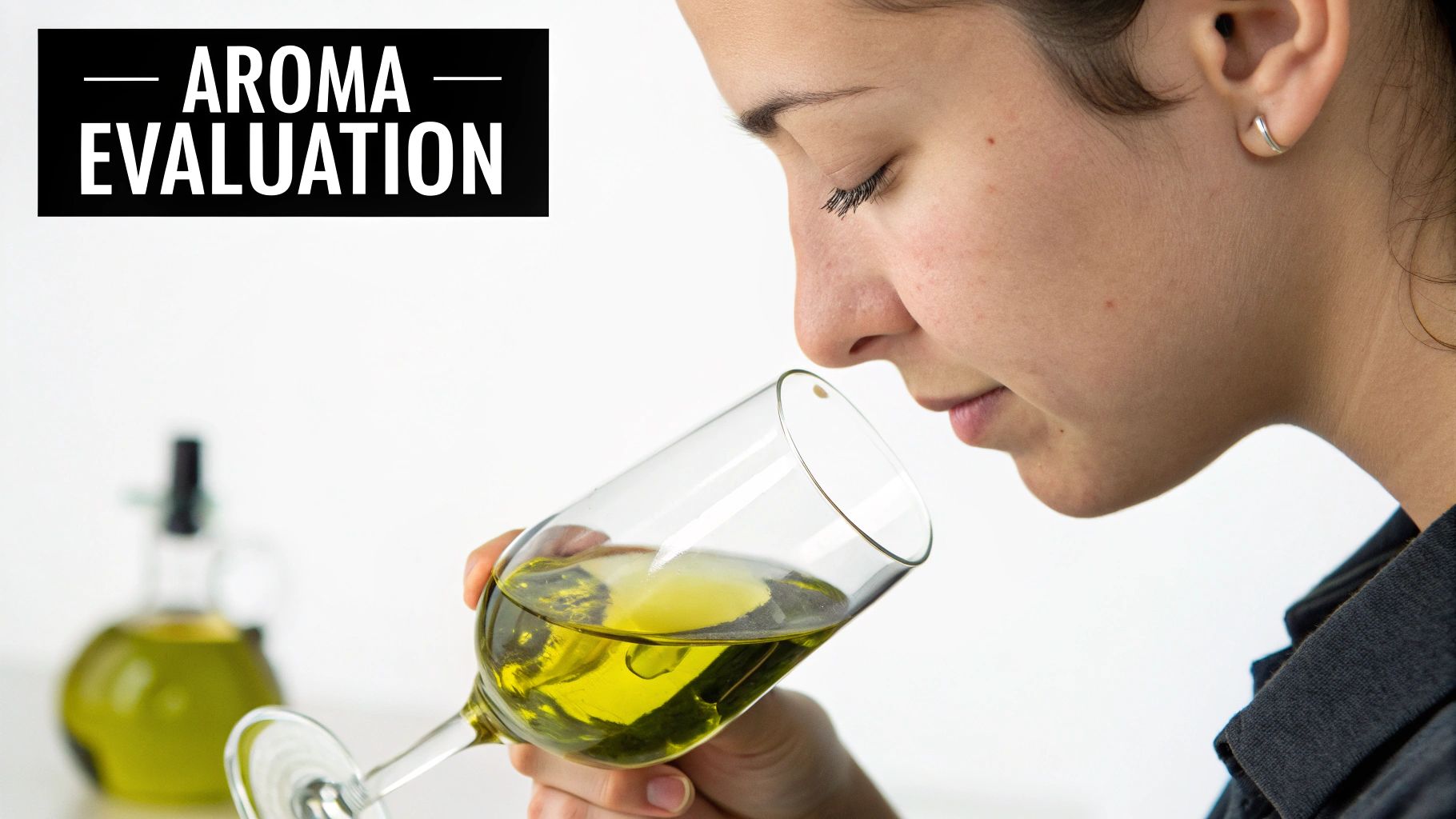
That tingling sensation at the back of your throat? It's not just spice. It's a sign of freshness and quality called pungency, driven by the phenolic compound oleocanthal. This section will help you translate those sometimes confusing sensations into meaningful insights about the olive oil you're tasting. You'll develop a richer vocabulary for describing the flavors you experience, moving beyond simple "good" or "bad."
Positive Attributes: Fruitiness, Bitterness, and Pungency
Learning how to taste olive oil involves recognizing its key positive attributes. Fruitiness describes the aroma and flavor of fresh olives. This can range from green, herbaceous notes of freshly cut grass or artichoke (common in early-harvest oils) to riper, fruitier notes of almond or apple (characteristic of later harvests).
Bitterness, a desirable trait, is often associated with green olive oils and indicates the presence of beneficial antioxidants. Finally, that peppery sensation – pungency – is a sign of freshness and quality. It's a key indicator when you're learning how to taste olive oil effectively.
Regional Signatures: A World of Flavor
Just as wine reflects its terroir, olive oil carries the signature of its origin. Tuscan oils, for example, are often known for their robust, peppery flavor. Andalusian oils might display a smoother, fruitier profile.
Californian olive oils, a relatively new addition to the global scene, are gaining recognition for their diverse range of flavors, from buttery to intensely peppery. By learning to recognize these regional distinctions, you can quickly identify an oil's origin and anticipate its flavor profile.
To further illustrate these regional variations, take a look at the table below:
To help you explore the diverse world of olive oil flavors, we've compiled a table showcasing regional flavor profiles. This table provides a quick reference guide to understanding the unique characteristics of olive oils from different regions.
| Region | Primary Varieties | Flavor Characteristics | Culinary Pairings |
|---|---|---|---|
| Tuscany, Italy | Frantoio, Leccino, Moraiolo | Peppery, pungent, robust, artichoke, grassy notes | Grilled meats, hearty stews, Tuscan bread |
| Andalusia, Spain | Picual, Hojiblanca, Arbequina | Fruity, smooth, almond, apple, green banana | Salads, fish, gazpacho |
| Crete, Greece | Koroneiki | Intensely fruity, peppery, slightly bitter, herbaceous | Salads, grilled vegetables, feta cheese |
| California, USA | Arbequina, Arbosana, Koroneiki | Diverse; ranging from buttery and mild to robust and peppery | Wide range, from delicate seafood to grilled pizzas |
As you can see, olive oil flavor profiles vary significantly depending on the region and the olive varieties used. This highlights the importance of understanding regional characteristics when selecting olive oils for specific culinary applications.
Identifying Defects: Preventing Costly Mistakes
Unfortunately, not all olive oils are created equal. Learning how to taste olive oil also means being able to detect defects that indicate poor quality, improper storage, or processing issues. These defects can manifest as fusty or musty aromas (like damp cardboard or mildew), a winey-vinegary taste, or a metallic flavor.
Recognizing these off-notes can save you from expensive purchases and ensure you're enjoying the true pleasures of fresh, high-quality olive oil. Like a seasoned chef selecting ingredients, a discerning palate knows what to look for.
Building Your Flavor Library: From Confusion to Clarity
Developing your ability to taste olive oil is a journey, not a destination. By consistently practicing and comparing different oils, you'll build a mental library of flavors that enhances your appreciation. Just as a wine connoisseur can describe the subtle notes of a vintage, you'll be able to articulate the specific nuances you encounter in each unique olive oil.
This knowledge transforms the tasting experience from a confusing jumble of sensations into a clear, insightful, and rewarding exploration of flavor. Through practice and focused attention, you'll elevate your understanding of how to taste olive oil, transforming yourself into a true connoisseur.
Comparative Tasting: The Fastest Path to Expertise
Exploring individual olive oils is a good starting point, but to truly develop a discerning palate, comparative tasting is key. This technique, commonly used by industry experts, allows you to directly compare and contrast various olive oils, unveiling subtle nuances that might otherwise be missed. Understanding this method unlocks a deeper appreciation for the complexities of olive oil.
Designing Illuminating Tasting Flights
A tasting flight involves carefully selecting oils to highlight specific attributes. You might compare oils from different regions, such as Tuscany and California, or explore the impact of harvest timing by tasting early and late-harvest oils. Even comparing the same olive variety processed at different temperatures reveals how production methods influence the final taste.
Strategic Combinations for Maximum Impact
One effective approach is to compare a freshly harvested oil with an older one. This clearly demonstrates how freshness impacts flavor and aroma, revealing how quality can degrade over time. Comparing oils made from different olive varieties, like the peppery Koroneiki and the buttery Arbequina, showcases the distinct flavor profiles of each cultivar. Understanding consumer perception can aid in developing a refined palate. Learn more about writing insightful product reviews.
Building Sensory Memory Through Progressive Tastings
Like a musician training their ear, comparative tasting hones your palate. Each experience builds your sensory memory, enabling you to recognize and recall specific flavors and aromas with increasing accuracy. Over time, you'll develop a nuanced understanding of how factors like olive variety, terroir, and processing influence the final product.
Documenting Your Observations: From Casual Taster to Expert
Elevate your tasting experiences by documenting your observations. Create a system for recording tasting notes, including visual appearance, aroma, flavor characteristics, and any potential defects. This creates a personal reference library to track your progress and refine your understanding of olive oil evaluation.
Practical Guidelines for Comparative Tastings
-
Start small: Begin with two or three oils to avoid overwhelming your palate.
-
Cleanse your palate: Use plain crackers or sparkling water between oils to reset your taste buds.
-
Focus on one attribute at a time: Compare the fruitiness of each oil before moving on to bitterness, pungency, and other characteristics.
-
Take your time: Don't rush. Allow ample time to fully appreciate each oil’s unique qualities.
By practicing comparative tasting, you’ll gain the ability to identify subtle differences in quality and flavor that were previously imperceptible. This structured approach empowers you to move beyond basic enjoyment to become a true olive oil connoisseur.
Beyond Tasting: Transforming Your Cooking With Olive Oil
Tasting olive oil is an art form, but its true potential is unleashed in the kitchen. This section connects the dots between analytical tasting and practical cooking, demonstrating how different olive oil profiles can elevate your dishes. Instead of reaching for the nearest bottle, you'll learn the art of intentional pairing, selecting oils that complement and contrast with your ingredients.
From Tasting To Table: A Culinary Transformation
Imagine drizzling a robust, peppery Tuscan olive oil over a grilled steak. The oil's pungency cuts through the richness of the meat, adding a depth of flavor that a milder oil couldn't achieve. Now, picture a delicate salad dressed with a buttery, mild Arbequina olive oil. Its smooth texture and subtle fruitiness enhance the fresh flavors of the vegetables without being overpowering.
This is the power of choosing your olive oil wisely. By understanding how to taste olive oil, you unlock its potential to transform your cooking, creating harmonious flavors that elevate every meal.
Complementary and Contrasting Flavors: The Art of Pairing
Just as wine is paired with food, so too can different olive oil profiles harmonize with specific ingredients. Professional chefs strategically choose oils for various applications, understanding the interplay of flavors. A peppery oil might balance a rich, creamy soup, while a milder oil could highlight the sweetness of roasted vegetables.
For instance, a robust Picual olive oil, with its grassy and slightly bitter notes, can cut through the fattiness of grilled fish. This creates a balanced and flavorful dish. In contrast, a delicate, buttery oil like a Leccino would be lost against the strong flavors of the fish.
The Transformative Power of Heat: Timing Is Everything
Heat significantly impacts an olive oil's flavor compounds. High heat can diminish the delicate aromas of a premium extra virgin olive oil, making it less suitable for frying or high-temperature cooking. Gentle heating, however, can enhance the fruity and buttery notes of milder oils, making them ideal for sautéing or sauces.
When you add the oil also matters. Adding it at the beginning of cooking infuses the dish with its flavor, while a finishing drizzle preserves the oil's fresh, vibrant character. Understanding how heat and timing affect flavor allows you to refine your cooking techniques.
Practical Cooking Applications: Putting Knowledge Into Action
-
Robust, peppery oils: Ideal for finishing grilled meats, soups, and roasted vegetables. Their bold flavor adds complexity.
-
Mild, buttery oils: Perfect for salad dressings, dips, and sautéing delicate vegetables. Their subtle fruitiness enhances without overwhelming.
-
Medium-intensity oils: Versatile choices for everyday cooking, suitable for both low and medium-heat applications.
By understanding how to taste olive oil and applying that knowledge in your cooking, you can create truly memorable meals. You'll move beyond simply using olive oil as an ingredient to appreciating it as a culinary tool that unlocks a world of flavor.
Ready to explore the world of olive oil? Visit Learn Olive Oil to discover premium olive oils and their transformative potential in your kitchen.

 Learn Olive Oil
Leave a comment