The Truth About First Press Olive Oil
The term "first press olive oil" often brings to mind romantic images of old-world stone mills and artisanal production. But what does this term actually mean in the context of modern olive oil production? Understanding the truth requires separating marketing myths from actual practices. Let's explore the heart of olive oil production and uncover the significance of "first press" for flavor and quality.
Understanding the Extraction Process
Historically, "first press" literally meant the initial pressing of olives, which yielded the highest quality oil. Subsequent pressings, often involving heat and chemicals, resulted in lower grades. Modern production has evolved, replacing traditional presses with efficient mechanical systems. However, the core principle remains: extracting the oil with minimal processing preserves its quality.
Cold-Pressed vs. First Press: Defining the Difference
The terms "cold-pressed" and "first-pressed" are often used interchangeably, but they have distinct meanings. First press, as discussed, refers to the initial extraction. Cold-pressed indicates that the oil was extracted at temperatures below 80°F (27°C). This low temperature is vital for preserving the delicate aromas, flavors, and beneficial compounds, such as polyphenols. Heat can degrade these attributes, leading to a less flavorful and nutritious product.
Extra Virgin Olive Oil: The Gold Standard
Today, the term "extra virgin olive oil" largely replaces "first press" on labels. Governed by international standards, this designation signifies that the oil is from the first pressing and meets specific chemical and sensory criteria, including low acidity, absence of defects, and a distinct fruity flavor. Essentially, "extra virgin" implies a "first press." This high-quality oil is prized for its flavor and nutritional value. In the 2023/24 crop year, global olive oil production reached 2,564,000 tonnes. European countries contributed 1,531,500 tonnes, a 10% increase. Spain, Italy, and Portugal saw production increases of 28%, 36%, and 28%, respectively, while Greece experienced a 49% decrease. Find more detailed statistics here. These variations underscore the impact of climate and cultivation practices.
Why Terminology Matters
While “first press” holds historical significance, "extra virgin" offers a more reliable indicator of quality. Consumers should prioritize this designation and look for certifications that ensure adherence to strict standards. This empowers informed decisions and a true appreciation for the rich heritage and health benefits of high-quality olive oil. Understanding these nuances allows you to confidently navigate the world of olive oil and choose a product that delivers both flavor and nutritional value.
Health Benefits Beyond the Hype

First press olive oil, often labeled as extra virgin olive oil, offers a range of health benefits backed by scientific research. These benefits extend beyond general "healthy fat" classifications and explore specific compounds and their impact on overall well-being. This is what truly sets premium first press olive oil apart.
The Power of Polyphenols and Antioxidants
First press olive oil is rich in polyphenols, powerful antioxidants that protect cells from damage caused by free radicals. These compounds are a major contributor to the oil's anti-inflammatory properties. Think of antioxidants as safeguards for your cells. For instance, oleocanthal, a specific polyphenol found in high concentrations in first press olive oil, has shown anti-inflammatory effects similar to ibuprofen. This makes first press olive oil a natural way to bolster your body's defenses.
Cardiovascular Health: A Heart-Healthy Choice
The primary fat in first press olive oil is monounsaturated fat, a type of fat known for its cardiovascular benefits. Monounsaturated fat helps lower "bad" LDL cholesterol while maintaining "good" HDL cholesterol levels. This balance is essential for reducing the risk of heart disease and stroke. The antioxidants in first press olive oil provide additional protection against LDL cholesterol oxidation, a process that can lead to plaque buildup in arteries.
Anti-Inflammatory Benefits: Supporting Overall Wellness
Chronic inflammation is a major factor in many chronic diseases. The anti-inflammatory properties of first press olive oil, due largely to its polyphenols, can play a key role in reducing this risk. This can lead to potential benefits for a range of conditions, from arthritis to certain types of cancer. It's important to note that first press olive oil isn't a cure, but a valuable part of a healthy lifestyle.
The Mediterranean Diet Connection: Lessons from Longevity
People who follow the traditional Mediterranean Diet, with its emphasis on first press olive oil, consistently show impressive longevity and lower rates of chronic disease. Many factors contribute to this, but the high consumption of first press olive oil is undoubtedly important. This traditional diet provides a practical example of how to incorporate this beneficial oil into a balanced diet. It highlights the potential of first press olive oil to promote long-term health and wellness, not just in cooking, but as a foundation for a healthier life.
From Grove to Bottle: The Global Production Story
First press olive oil, also known as extra virgin olive oil, begins its journey in olive groves around the world. These groves, shaped by unique microclimates and soil compositions, impart distinct characteristics to the final product. From grove to bottle, the journey is a fascinating exploration of tradition, innovation, and the delicate balance between nature and human intervention.
The Influence of Terroir
Much like wine, olive oil's flavor profile is deeply connected to its terroir – the environmental factors influencing the olive's growth. Olives grown in cooler climates, for example, may produce oils with a peppery bite. Those from warmer regions often yield smoother, buttery flavors. Soil composition also plays a crucial role, impacting the olive’s nutrient content and the oil’s complexity.
Traditional Practices Meet Modern Challenges
Many producers still adhere to centuries-old cultivation practices, harvesting olives by hand and using traditional methods. However, changing climate patterns are forcing adaptations in traditional growing regions. Some producers are exploring new territories previously unsuitable for olive cultivation. This leads to innovative techniques and the potential for exciting new flavor profiles. Additionally, understanding the impact of olive oil production leads to considerations about limiting agricultural byproducts. One way to mitigate this is by exploring methods to reduce water pollution.
The Economic Impact of Olive Oil Production
Olive cultivation forms the backbone of many Mediterranean communities' rural economies. The global market for olive oil is heavily influenced by production trends and consumer preferences. In 2022, world production reached 2.7 million tonnes. Spain led the way, contributing 24% of the total, followed by Italy and Greece. The first press olive oil market benefits from high demand for premium products, produced in limited quantities and prized for their quality.
Regions like Andalucía in Spain and Apulia in Italy are renowned for their high-quality first press olive oil. Despite fluctuations in global production, demand for first press olive oil remains strong, driven by growing interest in health and culinary excellence. You can learn more about olive oil production here.
To further illustrate the major production regions, let's take a look at the table below:
Top First Press Olive Oil Producing Regions
Comparison of major olive oil producing regions and their characteristics
| Region | Country | Annual Production (tonnes) | Notable Varieties | Flavor Profile |
|---|---|---|---|---|
| Andalusia | Spain | (Data varies annually – See source) | Picual, Hojiblanca | Fruity, slightly bitter |
| Apulia | Italy | (Data varies annually – See source) | Coratina, Ogliarola | Robust, peppery |
| Crete | Greece | (Data varies annually – See source) | Koroneiki | Intense, herbaceous |
| Peloponnese | Greece | (Data varies annually – See source) | Manaki | Fruity, balanced |
| Tuscany | Italy | (Data varies annually – See source) | Frantoio, Leccino | Delicate, fruity |
Note: Annual production figures fluctuate. Refer to the provided Wikipedia link for up-to-date statistics.
This table provides a snapshot of some key olive oil producing regions, highlighting the variety of cultivars and resulting flavor profiles. Each region's unique terroir contributes to the distinct characteristics of its olive oil.
Technological Advancements in Olive Oil Production
Technological innovations are transforming the industry, helping producers maintain quality while addressing sustainability challenges. These advancements include improvements in irrigation techniques, pest control, and extraction methods. Such innovations aim to optimize yield and ensure the long-term viability of this ancient agricultural practice. This commitment to both quality and sustainability is crucial for the future of first press olive oil.
The infographic below compares first press olive oil (extra virgin) to refined olive oil across three key metrics: polyphenol content, monounsaturated fat percentage, and antioxidant capacity.
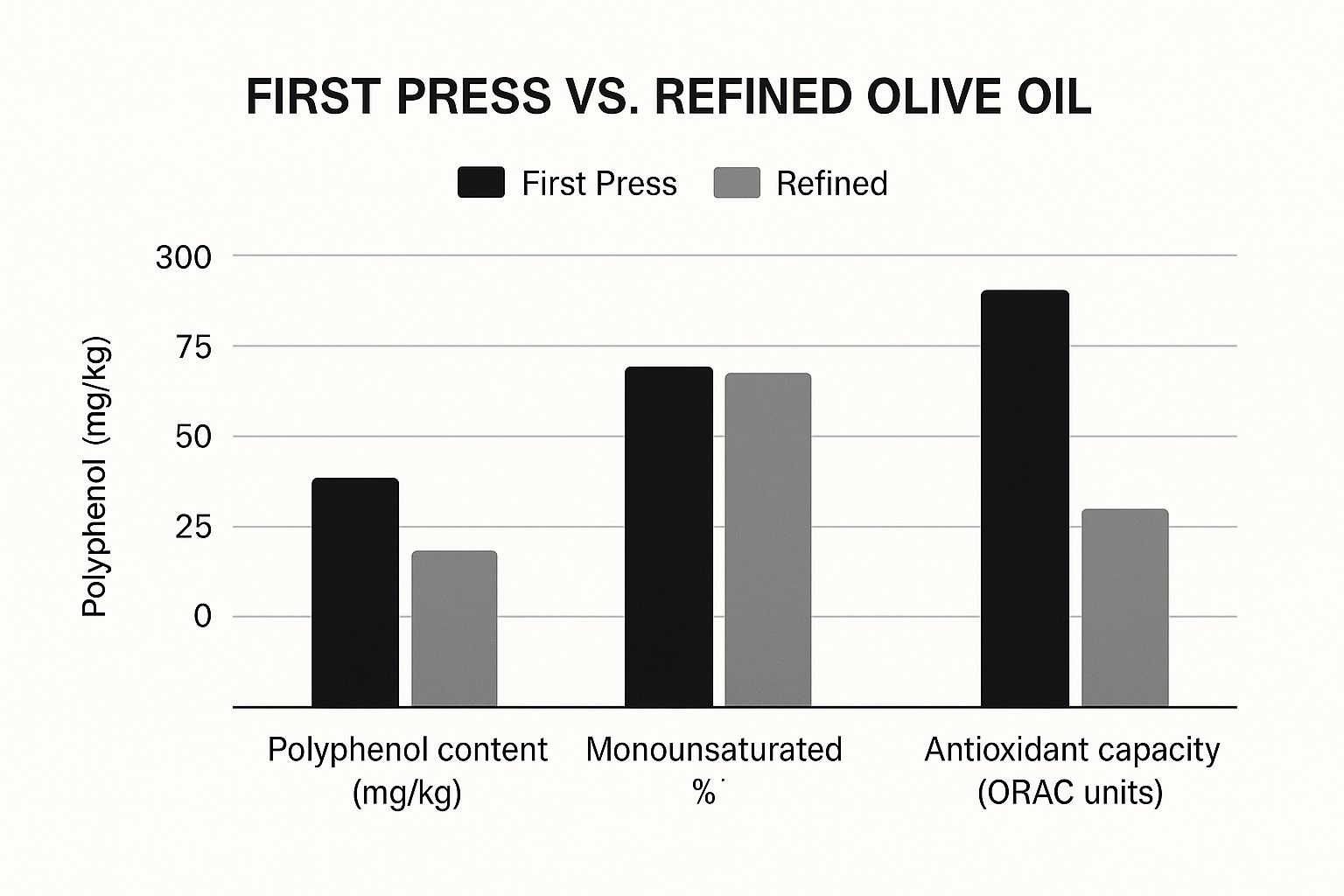
As the data illustrates, first press olive oil boasts significantly higher levels of beneficial compounds, underscoring its nutritional value. This difference highlights the importance of choosing first press/extra virgin olive oil for maximum health benefits. From careful cultivation to innovative extraction, the journey of first press olive oil reflects a rich history and dedication to quality.
Spotting the Real Deal: Authentication Secrets

The world of olive oil is susceptible to fraudulent practices. Knowing how to identify authentic extra virgin olive oil, often labeled as first press olive oil, is essential for both health and budgetary reasons. This guide provides the information you need to confidently choose premium olive oil.
Sensory Evaluation: Engaging Your Senses
One of the best ways to judge olive oil quality is through sensory evaluation. This involves using your senses of sight, smell, and taste to determine the hallmarks of genuine extra virgin olive oil. With a little practice, anyone can develop this skill and become a more informed consumer.
-
Visual Inspection: Authentic extra virgin olive oil typically exhibits a vibrant, greenish-gold color. Cloudiness can sometimes indicate unfiltered oil, often containing more robust flavor compounds. However, excessive or consistent murkiness may be a sign of spoilage.
-
Aroma Test: Gently swirl a small quantity of oil in a glass to release its aroma. High-quality extra virgin olive oil will possess a fresh, fruity scent, potentially with notes of grass, herbs, or even a subtle peppery aroma. Avoid oils with musty, rancid, or metallic odors.
-
Taste Test: Take a small sip, allowing the oil to coat your palate. A good extra virgin olive oil will have a noticeable peppery or bitter taste—a positive characteristic indicating the presence of beneficial polyphenols. A smooth, buttery flavor is also desirable, often dependent on the specific olive variety.
Decoding Labels and Certifications
Understanding olive oil labels can be challenging. Look for the "extra virgin" designation, signifying the oil is from the first pressing and meets certain quality criteria. Be aware that labels can sometimes be deceptive.
-
Beware of Vague Terms: Terms like "light," "pure," or simply "olive oil" frequently indicate refined oils. These oils often lack the distinct flavor and health benefits of extra virgin olive oil.
-
Seek Certifications: Look for certifications from reputable organizations like the International Olive Council (IOC) or the California Olive Oil Council (COOC). These certifications help ensure quality and authenticity.
-
Check the Harvest Date: Fresher olive oil generally offers the best flavor. Choose oils with a recent harvest date, ideally within the past year.
Proper Storage: Preserving Quality
Even the highest quality extra virgin olive oil can deteriorate if stored incorrectly. Understanding how light, heat, and oxygen affect the oil is crucial for maintaining its quality.
-
Dark Glass Bottles: Dark glass protects the oil from light exposure, which can lead to oxidation and rancidity. Premium olive oils are typically packaged in dark-colored bottles for this reason.
-
Cool, Dark Place: Store your olive oil in a cool, dark cupboard, away from heat sources such as the stove or direct sunlight. Heat can degrade the oil's delicate flavor and aroma profile.
-
Sealed Tightly: Always ensure the bottle is tightly sealed after each use to minimize exposure to oxygen, another factor that can contribute to rancidity.
By understanding these authentication secrets, you can select true extra virgin olive oil and enjoy its full flavor and health benefits. Empower yourself with this knowledge and experience the difference that quality makes.
Culinary Magic: Transforming Your Cooking
Extra virgin olive oil, derived from the first press of olives, is more than just a healthy fat. It's a versatile ingredient that can elevate your everyday cooking. Understanding its nuances is key to unlocking its full potential in the kitchen.
Raw vs. Cooked: Maximizing Flavor and Benefits
Extra virgin olive oil excels in both raw and cooked applications. Used raw, in dressings or as a finishing drizzle, its flavor profile truly shines. For example, the peppery notes of a Tuscan olive oil can transform a simple Caprese salad. When cooking with extra virgin olive oil, be mindful of its smoke point. While lower than some other oils, it's still suitable for most cooking methods. Avoid excessive heat, which can compromise both flavor and beneficial properties.
Heat and Flavor: A Delicate Balance
Heat subtly changes the flavor of extra virgin olive oil. Gentle heating softens the peppery edge, revealing underlying fruity or nutty notes. High heat, however, can diminish these delicate flavors and even introduce bitterness. It's similar to toasting spices: gentle heat enhances, while excessive heat burns. Finding the right balance is essential.
Regional Pairings: Elevating Your Dishes
Like wine pairings, different regional olive oils complement specific ingredients. A robust Tuscan olive oil pairs well with grilled meats and hearty vegetables. A smoother Spanish variety complements delicate seafood and salads. Exploring regional variations opens up a world of culinary possibilities.
Traditional and Modern Applications: Showcasing Extra Virgin Olive Oil
Traditional Mediterranean cuisine offers a wealth of recipes that showcase extra virgin olive oil. From simple bread dips to complex stews, these dishes highlight the oil's versatility. Modern culinary approaches also embrace it, incorporating extra virgin olive oil into creative sauces, desserts, and even cocktails. The possibilities are endless.
Developing Your Palate: Tasting Like a Sommelier
Learning to appreciate the subtleties of extra virgin olive oil is a rewarding journey. Engage your senses. Observe the oil's color. Inhale its aroma. Savor its taste. Look for fruity, grassy, or peppery notes, hallmarks of high-quality extra virgin olive oil. With practice, you'll develop a discerning palate, enabling you to select and enjoy the finest olive oils like a connoisseur. This deeper understanding will further enhance your culinary experience.
Finding Premium Olive Oil in America
Navigating the American olive oil market can feel overwhelming. With so many brands and varying prices, finding authentic first press olive oil requires careful research. This guide will give you the knowledge to source premium olive oil, ensuring you experience the true flavor and reap the health benefits.

Understanding the American Olive Oil Landscape
The United States represents a significant share of the global olive oil market. The U.S. imports a substantial amount annually, accounting for roughly 35-40% of global imports. During the 2023/24 crop year, imports reached 362,618 tonnes, a 1% increase from the previous year. Find more detailed statistics here. This data demonstrates the growing demand for olive oil among American consumers, particularly for high-quality first press olive oil. This increased demand reflects a shift towards more discerning tastes seeking authentic and flavorful olive oil.
Domestic vs. Imported: California's Rising Olive Oil Industry
While olive oil production is traditionally associated with Mediterranean countries, it's thriving in California. California olive oils are gaining recognition for their quality, often rivaling imported varieties. When choosing premium olive oil, focus on using the best. Whether for cooking or finishing, the quality of your ingredients, including the olive oil, impacts the final result. And speaking of cooking, using the right tools and having a well-designed kitchen can enhance your culinary experience. Consider exploring resources like this guide on cabinet materials for inspiration. Comparing domestic and imported oils involves factors beyond price, such as flavor profiles, production methods, and certifications, to find what best suits your needs.
Navigating Retail Channels: Where to Buy Premium Olive Oil
Finding authentic first press olive oil requires knowing where to look. Specialty food stores, farmers' markets, and online retailers specializing in olive oil are all excellent resources. These vendors often prioritize quality and transparency, offering carefully chosen selections of premium oils.
-
Specialty Retailers: These stores often carry smaller-batch, artisanal olive oils, giving you access to unique, high-quality options. They also typically have knowledgeable staff who can offer guidance.
-
Farmers' Markets: Connecting directly with local producers offers insights into their growing practices and allows you to sample oils before buying.
-
Online Retailers: Reputable online olive oil retailers offer convenient access to a wide variety of domestic and imported oils, often with detailed information about each product.
Shopping Strategies for Every Budget: Value vs. Price
Premium olive oil can be more expensive, but it doesn't have to break the bank. Prioritize quality over quantity. A smaller bottle of exceptional olive oil offers more flavor and health benefits than a larger bottle of a lower grade. Explore different sizes and brands to find a balance between quality and affordability. Consider subscription services that deliver fresh-pressed oils directly to your door, as they often provide access to higher-quality oils at competitive prices.
To understand the differences between various olive oil grades, refer to the table below:
First Press Olive Oil Characteristics Comparison
Comparison of different quality levels of olive oil available to consumers
| Characteristic | First Press/Extra Virgin | Virgin | Refined | Pomace |
|---|---|---|---|---|
| Acidity | ≤ 0.8% | ≤ 2.0% | N/A | N/A |
| Extraction Method | First cold-press | Cold-pressed | Chemical extraction | Solvent extraction |
| Flavor | Robust, fruity, peppery | Mild, fruity | Neutral | Neutral |
| Aroma | Fresh, olive-like | Slightly less intense | Bland | Bland |
| Color | Green-gold | Yellow-gold | Pale yellow | Pale yellow |
| Uses | Best for dipping, salads, finishing dishes | Suitable for cooking and general use | Used for blending with other oils | Used in industrial applications |
This table summarizes key characteristics of each olive oil grade, helping consumers make informed choices based on their needs and preferences. Extra Virgin stands out for its low acidity and rich flavor, while other grades offer different characteristics suitable for various culinary applications.
Embracing the Olive Oil Journey: Taste, Learn, and Explore
Discovering premium olive oil is a continuous exploration. Engage your senses. Attend olive oil tastings. Learn about different varieties and regions. By actively engaging with the world of olive oil, you'll develop a deeper appreciation for its nuanced flavors and health benefits. Ready to experience the world of premium olive oil? Start your journey with Learn Olive Oil and enhance your culinary creations.

 Learn Olive Oil
Leave a comment