The Growing Crisis of Olive Oil Fraud
The world's love for olive oil, particularly extra virgin olive oil, has unfortunately made it a prime target for fraudulent practices. This isn't simply a matter of receiving a subpar product; it's a widespread issue impacting both your health and your wallet. Some producers, for instance, dilute pure olive oil with cheaper oils like sunflower or canola oil, then mask the adulteration with artificial colors and flavors. This deceptive practice undermines the very qualities consumers seek: the distinct flavor and health benefits of real olive oil. This growing problem requires a deeper understanding of how to spot fake olive oil.
The Scale of the Problem
The scale of olive oil fraud is alarming. Surprisingly, even experienced consumers can be deceived, as sophisticated fraud techniques often bypass traditional quality checks. Between 2015 and 2021, international media reported between zero and four cases of olive oil fraud annually. However, in 2022, reported cases jumped to six. This increase points to a rise in fraudulent practices within the industry. As demand and market pressures increase, maintaining authenticity becomes more challenging, necessitating vigilance from consumers and regulators alike. Find more detailed statistics here. Furthermore, these fraudulent activities aren't limited to small operations; even large, established brands have faced mislabeling and adulteration scandals.
The Driving Forces Behind Olive Oil Fraud
Several factors contribute to the rise of olive oil fraud. A key driver is the basic economics of supply and demand. High demand for extra virgin olive oil, combined with fluctuating olive harvests and production costs, creates opportunities for unethical producers to cut corners and maximize profits. The complex olive oil supply chain, with multiple intermediaries between the olive grove and the consumer, also presents ample opportunities for adulteration and mislabeling. This complexity makes tracing the oil's origins and verifying authenticity difficult. When evaluating olive oil, understanding document verification techniques can be helpful. vérifier l’authenticité d’un document This knowledge empowers consumers to become more discerning about the quality and authenticity of their purchases.
The Impact on Consumers
Ultimately, consumers bear the brunt of olive oil fraud. Not only are they paying premium prices for potentially inferior products, but they’re also losing out on the genuine health benefits of authentic extra virgin olive oil. Consuming adulterated olive oil can also have unintended health consequences, especially for those with allergies or sensitivities. Therefore, learning to identify fake olive oil is crucial for anyone valuing quality and authenticity in their food. This knowledge allows consumers to make informed choices and protect themselves from fraudulent practices.
Deception Tactics: How Your Olive Oil Gets Compromised
The sad truth is, olive oil's popularity has made it a prime target for fraud. These deceptive practices range from diluting the oil with cheaper alternatives to elaborate mislabeling schemes. To spot fake olive oil, you need to understand these tactics.
Common Adulteration Methods
One common method involves diluting extra virgin olive oil with lower-quality oils like sunflower, canola, or even lampante oil, an olive oil deemed unfit for human consumption. Visually detecting this adulteration can be difficult. Dishonest producers often use coloring agents to mimic the characteristic green hue of real extra virgin olive oil. Flavorings may also be added to mask the taste of the inferior oils.
Mislabeling: Playing the Label Game
Mislabeling is another widespread tactic. This can involve labeling lower-grade oils, such as virgin or refined olive oil, as "extra virgin." Producers may also mislead consumers about the oil's origin or production methods. Falsely claiming "cold-pressed" or "first cold press" when these standards haven't been met is a common practice. This misrepresentation allows producers to charge premium prices for inferior products, deceiving consumers about the quality and authenticity of their purchase. This is particularly concerning for those seeking specific flavor profiles or the health benefits of genuine extra virgin olive oil. Between 2016 and 2019, the European Commission's Joint Research Centre (JRC) documented 32 cases of olive oil fraud globally, with 20 in Europe. These cases highlighted mislabeling and substitution as prevalent fraud types, emphasizing the need for consumer awareness. Explore this topic further.
Exploiting Loopholes: The Regulatory Maze
Fraudsters often exploit regulatory loopholes. Blending lower-quality imported olive oil with domestic oil and falsely exporting it as a higher grade is one example. This practice is particularly challenging to detect, as the label might appear legitimate. The complex supply chains and varying international regulations further complicate matters. These factors create opportunities for misrepresentation and make tracing the oil's true origin difficult. However, informed consumers can better navigate the olive oil market and make sound purchasing decisions.
Impact on Flavor and Nutritional Value
These deceptive practices significantly impact both flavor and nutritional value. Adulteration diminishes the distinct taste and aroma of real extra virgin olive oil, resulting in a blander culinary experience. Moreover, it reduces the concentration of beneficial compounds like polyphenols, antioxidants known for their health benefits. Therefore, understanding how to identify fake olive oil is crucial for ensuring you get the authentic product you expect.
Trust Your Senses: The Taste, Smell, and Look Test
Authentic extra virgin olive oil offers a unique sensory experience. Developing your palate to recognize these nuances is key to identifying genuine olive oil and avoiding fake products. This journey transforms you from a passive consumer into a discerning connoisseur. Let's delve into how sight, smell, and taste can guide you.
Visual Inspection: Clarity and Color
Begin by examining the oil's clarity. Pure olive oil typically has a clear appearance, potentially with some sediment settling at the bottom, especially in unfiltered varieties. However, if the oil appears cloudy or murky with suspended particles, it could indicate issues with processing or adulteration. 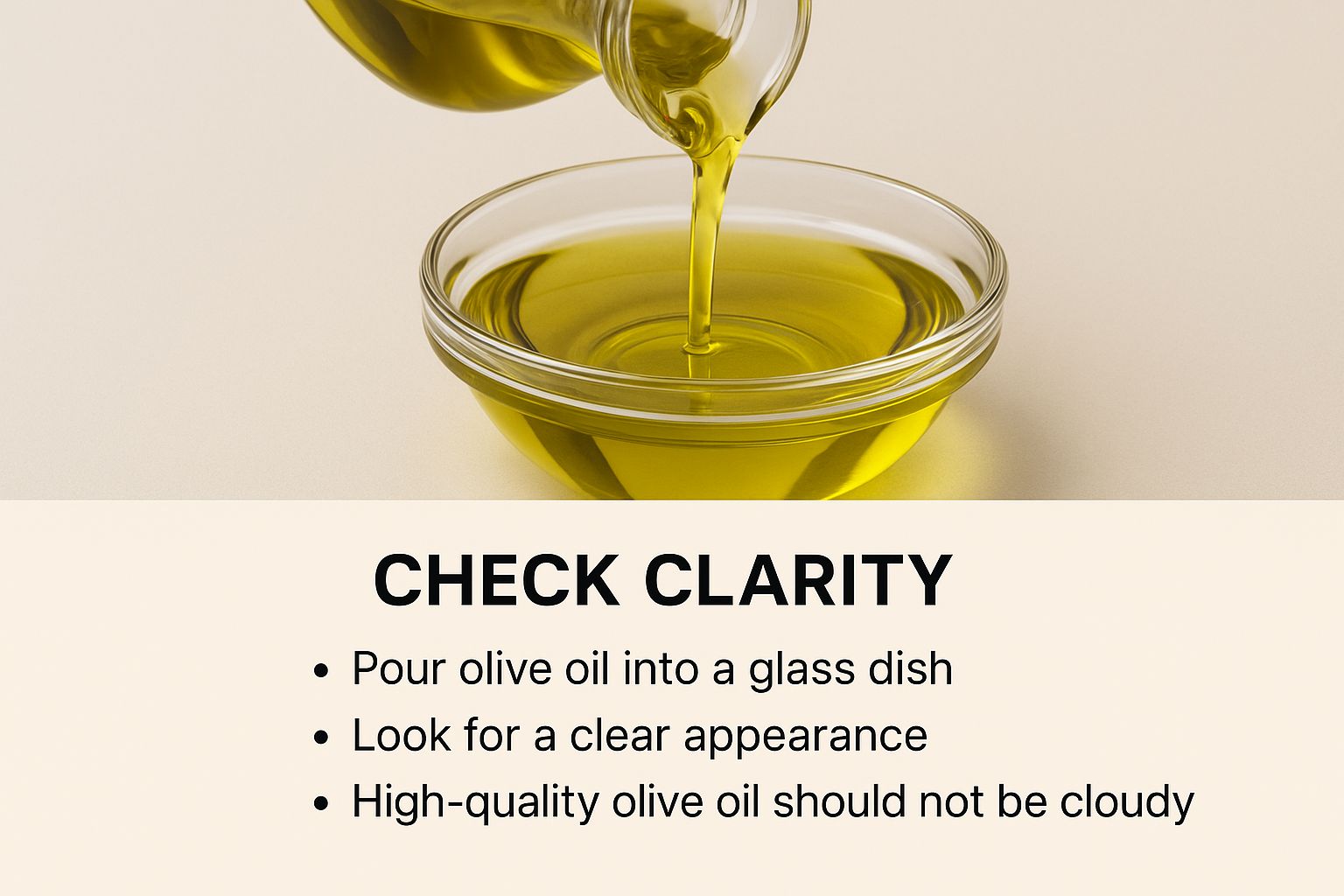 This image illustrates the significance of clarity as a visual cue. A clear oil suggests proper filtration and processing, while cloudiness might signal problems.
Next, observe the color. While olive oil color can range from vibrant green to a rich gold depending on the olive variety and its ripeness, an excessively vivid, almost artificial green hue should raise suspicion. This unnatural color may indicate the addition of artificial coloring agents designed to mimic the appearance of fresh olive oil.
The Aroma Test: Detecting Freshness and Purity
Engage your sense of smell. Gently swirl the oil in a glass to release its aroma, then inhale. Authentic extra virgin olive oil exhibits a fragrant, fruity scent, often accompanied by notes of fresh-cut grass, herbs, or fruits like green apple.
Fake olive oil, on the other hand, may have a musty, stale, or even rancid smell. Such off-putting odors suggest the oil is old, improperly stored, or adulterated with lower-quality oils. The deceptive practices used in counterfeit olive oil production share similarities with online scams; understanding how to identify these tactics can be beneficial. You can learn more about spotting and avoiding phishing threats.
The Flavor Profile: Bitterness, Pepperiness, and Fruitiness
Finally, the taste test. Drizzle a small amount of olive oil onto a spoon and allow your palate to experience its flavor. Genuine extra virgin olive oil presents a complex flavor profile characterized by a balance of fruitiness, a pleasant bitterness, and a distinct peppery sensation at the back of the throat.
This peppery kick, a hallmark of real extra virgin olive oil, comes from polyphenols, powerful antioxidants known for their health benefits. Fake olive oil often tastes bland, greasy, or even metallic, lacking the characteristic fruitiness and peppery bite. This flat flavor profile often indicates the absence of the vital components that define true olive oil. An unpleasant aftertaste can further signal adulteration or low quality.
To help you differentiate between real and fake olive oil, let's look at the key sensory differences:
Authentic vs. Fake Olive Oil: Your Sensory Guide
| Characteristic | Authentic Extra Virgin Olive Oil | Potential Fake/Adulterated Olive Oil |
|---|---|---|
| Clarity | Clear, possibly with sediment | Cloudy, murky, floating particles |
| Color | Green to gold | Excessively vibrant, artificial green |
| Aroma | Fruity, grassy, herbal | Musty, stale, rancid |
| Flavor | Fruity, bitter, peppery | Bland, greasy, metallic, lacking fruitiness and pepperiness |
This table summarizes the key sensory indicators that can help you distinguish authentic extra virgin olive oil from potential fakes. By paying attention to these characteristics, you can become adept at recognizing the real deal. Developing your sensory evaluation skills empowers you to confidently select high-quality olive oil.
Decoding Labels: What Quality Certifications Really Mean

Navigating the world of olive oil labels can feel overwhelming. Terms like "extra virgin," "cold-pressed," and "first pressing" appear frequently, but what do they actually signify? This section will give you the tools to understand what different certifications truly represent, allowing you to confidently choose a quality product.
Understanding "Extra Virgin"
The term "extra virgin olive oil" denotes the highest quality grade. It indicates the oil has been extracted using only mechanical methods (such as a first cold press) and meets specific chemical standards, including low acidity. However, the presence of "extra virgin" on a label alone isn't a guarantee of quality. Some producers might mislabel inferior oils. This underscores the need to look beyond the label and examine certifications for greater assurance.
Decoding Other Common Terms
Terms like "cold-pressed" and "first pressing," while traditionally linked with high-quality oil, are not always reliable indicators. They are sometimes used loosely, even if the oil's production doesn't adhere to traditional methods. Understanding the limits of these terms is essential for informed purchasing decisions.
The Power of Certifications
How can you ensure you're getting what you pay for? Seek out certifications from reputable organizations. These certifications offer independent verification of quality and authenticity, providing valuable reassurance in a market susceptible to fraud. The European Union, for example, saw a significant increase in olive oil fraud in the first quarter of 2024. This was driven by rising prices and a sharp decline in production – from 3.4 million metric tons in 2023 to 2.3 million in 2024. Read the full research here. This makes understanding certifications more crucial than ever.
Key Certifications to Look For
Several certifications signal high-quality olive oil, backed by rigorous standards and regular inspections. The following table summarizes some of the most reliable certifications:
To help you navigate the often-confusing world of olive oil labels, we've compiled a table outlining some important certifications. This table provides a quick reference for understanding what each certification verifies and its overall reliability.
Olive Oil Certification Guide: What Really Matters
A comprehensive breakdown of key certification programs and what they actually verify about your olive oil
| Certification/Label | Issuing Organization | What It Verifies | Reliability Level |
|---|---|---|---|
| PDO (Protected Designation of Origin) | European Union | Specific geographical origin and traditional production methods | High |
| PGI (Protected Geographical Indication) | European Union | Links product to a specific region but allows for some flexibility in production | Medium-High |
| USDA Organic | United States Department of Agriculture | Organic farming practices | Medium |
| California Olive Oil Council (COOC) | COOC | Quality and authenticity of California olive oils | Medium-High |
| NAOOA (North American Olive Oil Association) | NAOOA | Quality and purity standards | Medium |
This table highlights key certifications and their significance. PDO offers the highest reliability, verifying both origin and production methods, while PGI connects the oil to a specific region with some production flexibility. USDA Organic focuses on organic practices. Both COOC and NAOOA certifications represent quality and purity benchmarks. Knowing what these certifications represent empowers you to choose the best olive oil for your needs.
Kitchen Detective: Simple Home Tests That Work
After exploring the intricacies of olive oil labeling and sensory evaluation, let's equip you with some practical home tests to further assess your olive oil's authenticity. While not foolproof, these tests can offer valuable clues when combined with other verification methods.
The Refrigerator Test: Solidification Secrets
One of the easiest and most effective tests is the refrigerator test. This test is based on the principle that pure olive oil solidifies at lower temperatures, unlike other vegetable oils sometimes used in adulteration.
- The Process: Pour a small amount of olive oil into a clear glass jar and refrigerate it for 24-48 hours. Genuine extra virgin olive oil will start to solidify and turn cloudy, eventually developing a thick, almost buttery texture. If the oil stays liquid or only partly solidifies, it may suggest the presence of other oils. Keep in mind, however, that your refrigerator's temperature and the specific olive variety can influence the solidification rate. This means the test isn't conclusive on its own.
The Oil Lamp Test: A Flickering Flame of Truth
Another time-honored method is the oil lamp test. This involves burning a small quantity of olive oil in a lamp or shallow dish. Although not a scientific method, this test can offer some insight into the oil's purity.
- What to Look For: Pure olive oil burns with a clean, consistent flame, giving off a subtle, pleasant aroma. Adulterated oil, on the other hand, might produce a sputtering flame, excessive smoke, or an off-putting odor. Factors such as wick material and surrounding conditions can affect the burn, so interpret the results with caution.
The Hot Pan Test: Sizzling Clues
The hot pan test can reveal how olive oil reacts to high temperatures. Heat a small amount of olive oil in a pan over medium heat.
- Indicators of Authenticity: Authentic extra virgin olive oil should flow smoothly and evenly across the pan. If it smokes excessively at a relatively low temperature, it could indicate adulteration or poor quality.
Combining Your Detective Toolkit
These home tests provide useful insights, but it's crucial to remember that no single test provides a definitive answer. The most effective approach combines these methods with sensory evaluations and careful label reading. This multi-pronged approach creates a robust verification system, significantly improving your ability to identify fake olive oil. By incorporating these techniques into your olive oil selection process, you can ensure you're choosing genuine, high-quality olive oil that maximizes both flavor and health benefits. Much like protecting yourself from online fraud, verifying olive oil quality requires a comprehensive strategy. For further guidance on improving your detection skills, resources on spotting and avoiding phishing threats can offer helpful parallels.
Strategic Shopping: Where Real Olive Oil Hides in Plain Sight
Knowing how to spot fake olive oil at home is important, but your best defense begins at the grocery store. This section unveils the secrets to smart olive oil shopping, directing you to where the authentic product is most likely found.
Harvest Dates vs. Expiration Dates: A Fresh Perspective
Disregard expiration dates; instead, concentrate on harvest dates. A harvest date indicates when the olives were picked, offering valuable insight into the oil's freshness. Like all agricultural products, olive oil degrades over time. A recent harvest date typically signifies a fresher, higher-quality oil. Look for oils bottled within a year of harvest for the best flavor and nutritional value.
Storage Matters: Protecting Your Liquid Gold
Proper storage is essential. Olive oil is susceptible to light, heat, and air. These elements can cause oxidation, leading to a decline in quality and the development of unwanted flavors. This means that even real olive oil can spoil if stored incorrectly. Opt for dark glass bottles that shield the oil from light, and store them in a cool, dark place away from heat sources like your stove.
Navigating the Price Maze: The Sweet Spot
While the cheapest olive oils are often a red flag, the most expensive aren't always better. Exceptionally low prices may indicate adulteration with other oils or poor production methods. However, high prices don't guarantee superior quality. Aim for a reasonable price that reflects responsible sourcing and production.
Where to Shop: Finding Your Olive Oil Oasis
Your shopping environment plays a crucial role in finding authentic olive oil. Specialty stores and gourmet food shops often carry a better selection of high-quality oils, along with knowledgeable staff who can assist you. These stores are more likely to prioritize authentic products and can provide valuable information about specific brands and producers.
-
Specialty Stores: These shops often carry smaller-batch, artisanal oils, offering a greater diversity of flavor profiles and origins for you to discover.
-
Farmers' Markets: Buying directly from local producers gives you a chance to learn about their farming practices and sample their oils firsthand.
-
Online Retailers: Reputable online retailers can offer a broader selection and the convenience of home delivery. However, it's essential to carefully research the retailer and choose those specializing in high-quality food products. Building a relationship with a reliable supplier is key to consistently purchasing genuine olive oil.
Building Relationships: Connecting With Quality
Developing relationships with specialty producers or knowledgeable store owners can greatly enhance your ability to find authentic olive oil. These individuals can offer insights into harvest quality, production practices, and flavor characteristics. This personalized advice empowers you to make informed choices and uncover hidden gems you might otherwise overlook. This personalized attention elevates your shopping experience from guesswork to informed decision-making, resulting in greater culinary enjoyment and health benefits.
By understanding how to interpret labels, evaluate sensory cues, and navigate the retail world effectively, you'll become a more discerning olive oil consumer, ensuring you experience the real deal.
Your Olive Oil Authentication Game Plan
Now that we understand the deceptive practices sometimes used in the olive oil industry and the importance of sensory evaluation, label scrutiny, and home testing, let's create a practical, step-by-step authentication plan. This plan will empower you to confidently select authentic olive oil.
Step 1: Visual Inspection
Begin by carefully examining the olive oil's appearance. First, check for clarity. Authentic olive oil is typically clear, although unfiltered varieties may contain sediment. Avoid oils that appear cloudy or murky. Next, assess the color. While color can vary naturally, be wary of excessively vibrant, artificial-looking green hues. Lastly, observe the consistency. Pure olive oil possesses a slightly thick, viscous texture. Be cautious of oils that seem too thin or watery.
Step 2: Sensory Evaluation
Engage your senses of smell and taste. The aroma should be pleasant and fruity, potentially with hints of grass, herbs, or fruit. The flavor should be complex, offering a balance of fruitiness, bitterness, and a peppery finish. The texture should feel smooth and slightly velvety in your mouth.
Step 3: Label Deciphering
Become a label expert. Look for the specific term "extra virgin olive oil." Be wary of vague terms like "cold-pressed" without accompanying certifications. Carefully examine the country of origin and approach the "Product of…" designation with skepticism, as it doesn't always indicate where the olives were grown. Prioritize certifications like PDO (Protected Designation of Origin) or COOC (California Olive Oil Council), which signify higher quality standards.
Step 4: Strategic Purchasing
Choose your shopping location wisely. Specialty stores, farmers' markets, and reputable online retailers are generally more reliable sources of authentic olive oil. Look for harvest dates as opposed to expiration dates, as these provide a better indication of freshness. Consider the price—unusually low prices could be a warning sign.
Step 5: Home Testing (Optional)
For added assurance, consider performing the refrigerator test to observe solidification patterns or the hot pan test to assess smoke points. Keep in mind that these tests are not definitive but can offer additional clues when combined with other authentication methods.
Step 6: Reporting Suspected Fraud
If you suspect fraudulent activity, report it to the appropriate authorities. This protects other consumers and encourages accountability within the olive oil industry. By following this authentication plan, you will not only increase your likelihood of purchasing authentic olive oil but also cultivate valuable knowledge that simplifies and strengthens your future purchases.
Ready to enhance your olive oil experience? Visit Learn Olive Oil for expert advice on selecting, tasting, and enjoying premium olive oil.
 Learn Olive Oil
Leave a comment