Unlocking the Secrets of Liquid Gold: Your Guide to Olive Oil
From extra virgin to olive pomace, understanding the different types of olive oil is key to maximizing its health benefits and culinary potential. This guide clearly explains the distinctions between eight different types of olive oil, including extra virgin olive oil (EVOO), virgin olive oil, pure olive oil, and others, so you can choose the perfect one for your needs. Learn how these variations impact flavor, cooking methods, and nutritional value, empowering you to make informed decisions in the kitchen and beyond.
1. Extra Virgin Olive Oil (EVOO)
When discussing different types of olive oil, Extra Virgin Olive Oil (EVOO) reigns supreme. It represents the highest grade of olive oil available, prized for its superior taste, aroma, and nutritional profile. EVOO is produced by mechanically cold-pressing olives without the use of heat or chemicals, resulting in the purest form of olive oil. This process preserves the natural flavors, vitamins, and antioxidants present in the olives. To be classified as "extra virgin," the oil must meet stringent chemical criteria, including an acidity level below 0.8%, and pass a rigorous sensory evaluation by a panel of trained tasters. This ensures its exceptional quality and distinct characteristics.

The infographic above visualizes a simplified decision tree to determine if an olive oil qualifies as EVOO. The process starts with evaluating the oil's free acidity.
EVOO earns its place at the top of the olive oil hierarchy due to its numerous benefits. Its rich, complex flavor profile, ranging from peppery to fruity and grassy, elevates the taste of any dish. Furthermore, EVOO is packed with polyphenols and antioxidants, beneficial compounds associated with various health benefits, including reduced inflammation and improved heart health. Examples of renowned EVOOs include Laudemio from Tuscany, Castillo de Canena from Spain, Cobram Estate from Australia, California Olive Ranch from the USA, and Gaea Fresh from Greece.
The decision tree clarifies that if the free acidity is greater than 0.8%, the oil cannot be EVOO. If it's less than or equal to 0.8%, the oil proceeds to a sensory evaluation. If the panel detects any defects, it's not EVOO. Only if the oil passes both the chemical and sensory tests can it be labeled as Extra Virgin Olive Oil. This rigorous process ensures that only the highest quality oils earn the EVOO designation.
However, EVOO's premium quality comes at a price. It tends to be the most expensive type of olive oil. It also has a lower smoke point (320-375°F/160-190°C) compared to refined oils, making it less suitable for high-heat cooking. Additionally, EVOO has a shorter shelf life (typically 12-18 months) and is more sensitive to heat, light, and oxygen. Its strong flavor, while desirable in many cases, can sometimes overpower delicate dishes.
Pros:
- Highest nutritional value among olive oils
- Contains beneficial antioxidants and anti-inflammatory compounds
- Richest, most authentic olive flavor
- Retains all natural vitamins and minerals
- Associated with numerous health benefits, including improved heart health
Cons:
- Most expensive type of olive oil
- Lower smoke point than refined oils
- Shorter shelf life
- More sensitive to heat, light, and oxygen
- Strong flavor may overpower delicate dishes
Tips for using EVOO:
- Store in a cool, dark place away from heat sources.
- Ideal for drizzling on finished dishes, salad dressings, and dips.
- Use for low to medium-heat cooking applications.
- Purchase in dark glass bottles to protect from light degradation.
- Look for the harvest date (fresher is better) rather than the expiration date.
EVOO's popularity has been fueled by Mediterranean cultures, particularly Italy, Spain, and Greece, where it is a staple ingredient in their cuisines. Celebrity chefs and premium producers have further championed its use, emphasizing its quality and health benefits. The International Olive Council (IOC) plays a crucial role in setting and maintaining quality standards for olive oil worldwide, ensuring consumers can trust the EVOO designation.
2. Virgin Olive Oil
When exploring different types of olive oil, virgin olive oil stands as a strong contender, occupying the second tier of quality just below extra virgin. While not boasting the same premium status as EVOO, virgin olive oil offers a compelling balance of quality and affordability, making it a versatile choice for various culinary applications. This natural product, derived solely through mechanical means without any chemical intervention, retains many of the health benefits associated with olive oil, making it a popular choice among home cooks and food manufacturers alike.
Virgin olive oil is produced using the same mechanical extraction process as extra virgin olive oil – crushing and pressing the olives. The key differentiator lies in the chemistry and sensory evaluation. Virgin olive oil has a slightly higher free acidity level, ranging between 0.8% and 2.0%, compared to the maximum 0.8% allowed for extra virgin. This higher acidity can sometimes translate to a milder flavor and potentially subtle sensory defects, although it remains a wholesome and flavorful oil. It also possesses a good, albeit lower, polyphenol content compared to EVOO, meaning slightly reduced antioxidant properties.
Features of Virgin Olive Oil:
- Acidity level between 0.8% and 2.0%
- Produced by mechanical means only (no chemical processing)
- Milder flavor than EVOO
- May have slight sensory defects
- Good but lower polyphenol content than EVOO
Pros:
- Less expensive than extra virgin olive oil
- Still retains many natural nutrients, including beneficial monounsaturated fats
- Good flavor profile suitable for cooking
- No chemical refinement
Cons:
- Lower antioxidant content than EVOO
- Slightly less complex flavor
- Not as widely available in mainstream markets as other types of olive oil
- Higher acidity can affect taste and stability over time
- Shorter shelf life than refined oils
Examples of Virgin Olive Oil:
- Many Italian and Spanish regional producers offer virgin grade oils.
- Often found at specialty food stores and Mediterranean markets.
- Some brands, like Partanna and certain Bertolli products, offer virgin olive oil.
- Regional cooperatives in olive-producing countries often sell virgin grade.
Tips for Using Virgin Olive Oil:
- Excellent for everyday cooking: Virgin olive oil performs admirably in sautéing, baking, and other cooking methods where the intense flavor of EVOO isn't essential. It's a good alternative to EVOO when cooking at medium temperatures.
- Versatile in marinades and dressings: Its milder flavor profile makes it a suitable base for marinades and salad dressings, allowing other ingredients to shine.
- Proper storage is crucial: Store virgin olive oil in a cool, dark place in a sealed container to maintain its quality. For best quality, use within 12 months of opening.
Why Virgin Olive Oil Deserves Its Place in the List of Different Types of Olive Oil:
Virgin olive oil fills an important niche in the olive oil market. It offers a valuable compromise for those seeking a quality oil with a good flavor profile and health benefits at a more accessible price point than extra virgin. Its versatility in the kitchen makes it a practical choice for various cooking applications, and its presence in the market contributes to the diversity and accessibility of different types of olive oil. Understanding the nuanced differences between various olive oil grades empowers consumers to make informed choices based on their needs and preferences.
3. Pure Olive Oil (Regular Olive Oil)
When navigating the world of olive oils, you'll frequently encounter "Pure Olive Oil," often simply labeled as "Olive Oil." This type isn't a singular olive pressing, but rather a blend of refined olive oil and a smaller percentage (typically 15-25%) of virgin or extra virgin olive oil. The refining process involves chemical treatments to neutralize undesirable flavors, odors, and acidity from lower-quality olives or oils that have experienced damage. This results in a neutral-tasting oil with a higher smoke point than virgin olive oils, making it suitable for a wider range of cooking methods. This blending process makes pure olive oil a versatile and generally affordable option, but it also means it lacks the robust flavor and many of the health benefits found in higher grades like extra virgin olive oil. It occupies a middle ground within the different types of olive oil, balancing affordability with some of the benefits of olive oil.
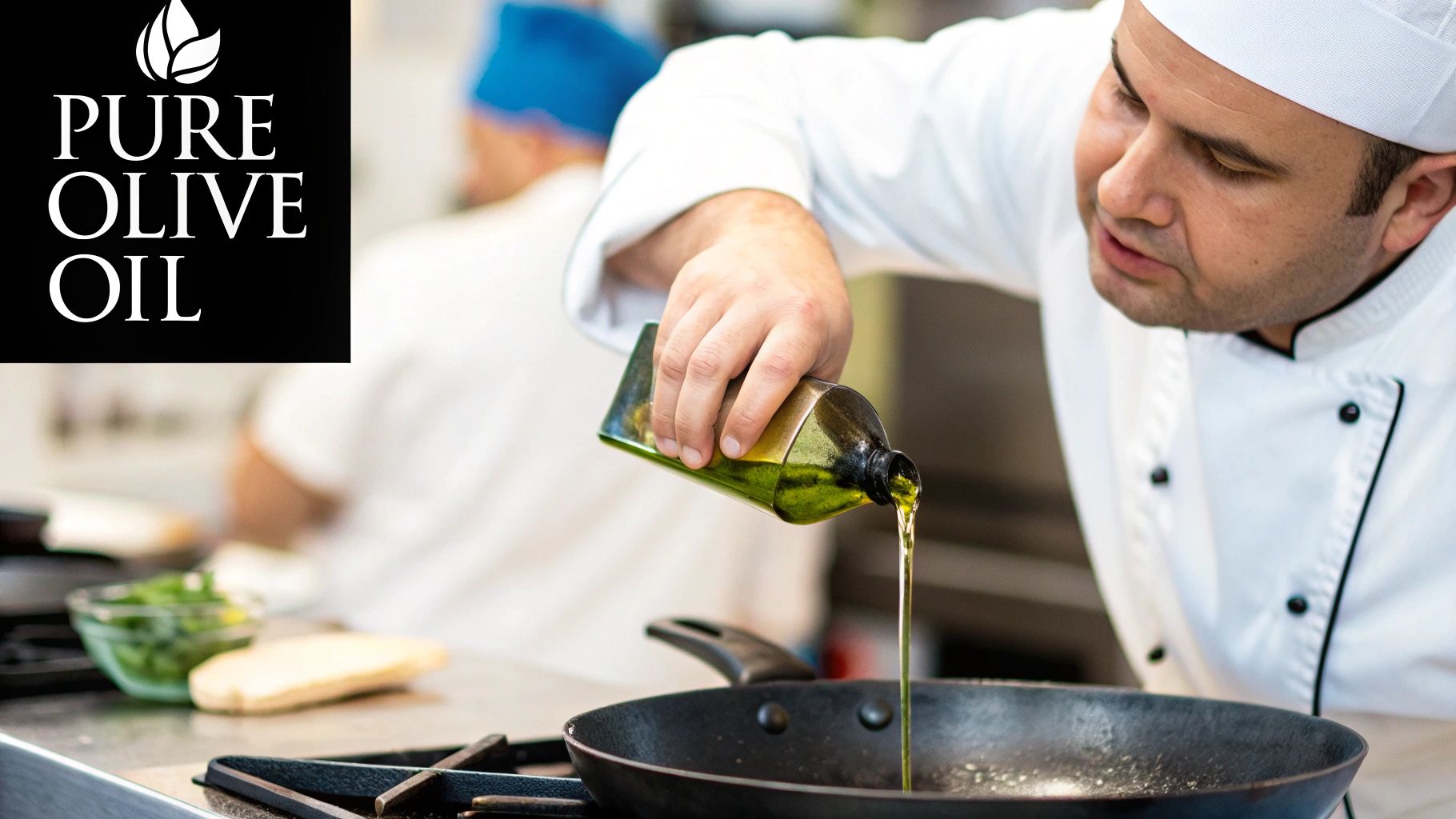
Pure olive oil's lighter color and mild flavor distinguish it from more robust varieties. Its higher smoke point (390-470°F/199-243°C) makes it well-suited to various cooking applications, and its longer shelf life contributes to its popularity. While pure olive oil offers certain advantages, it's crucial to understand its limitations compared to other types of olive oil. For example, the refining process, while creating a neutral flavor and higher smoke point, significantly reduces the concentration of beneficial polyphenols and antioxidants naturally found in virgin olive oils.
Features:
- Blend of refined and virgin olive oils
- Lighter color than virgin grades
- Mild, neutral flavor
- Higher smoke point than virgin and extra virgin oils
- Longer shelf life
- Lower price point
Pros:
- More affordable than virgin and extra virgin olive oils
- Higher smoke point makes it good for various cooking methods (frying, sautéing, roasting)
- Neutral flavor works well when you don't want a strong olive taste
- More stable for cooking than virgin grades
- Still contains some monounsaturated fats
Cons:
- Significantly fewer polyphenols and antioxidants than EVOO
- Chemical refining process removes many beneficial compounds
- Lacks the distinctive flavor of higher grade olive oils
- Often misleadingly marketed as a premium product
Examples:
- Bertolli Classic Olive Oil
- Filippo Berio Pure Olive Oil
- Colavita Olive Oil
- Goya Pure Olive Oil
- Many store and generic brands
Tips:
- Good for all-purpose cooking including frying, sautéing, and roasting.
- Ideal for recipes where you don't want a strong olive flavor.
- Can be used for making mayonnaise and other cooking applications requiring a neutral oil.
- Use for high-heat cooking where you still want some olive oil benefits.
- Store at room temperature away from heat and light.
Pure olive oil earns its place among the different types of olive oil due to its versatility and affordability. While it may not possess the intense flavor profile and health benefits of extra virgin olive oil, its neutral taste, high smoke point, and lower cost make it a practical choice for everyday cooking. Understanding its unique characteristics enables informed choices for specific culinary needs and preferences.
4. Light Olive Oil: A Neutral Choice for High-Heat Cooking
When exploring different types of olive oil, you'll likely encounter "light" olive oil. It's important to understand what this category represents within the olive oil spectrum. Light olive oil earns its place on this list because it offers a unique set of characteristics that cater to specific cooking needs, particularly high-heat applications where the robust flavor of other olive oils might not be desired.
Light olive oil is a highly refined product, meaning it undergoes significant processing. This processing involves chemical and heat treatments to neutralize its natural flavor, odor, and color. The term "light" refers solely to its sensory qualities – its pale yellow color and mild taste – not its caloric content. Light olive oil contains the same amount of calories per serving as extra virgin, virgin, and other olive oil varieties. It's primarily composed of refined olive oil, often with a small percentage of virgin olive oil added back in for a hint of flavor.
Features of Light Olive Oil:
- Highly refined product: Undergoes extensive processing.
- Very light color: Pale yellow appearance.
- Neutral, almost flavorless taste: Minimal olive flavor.
- High smoke point (465-470°F/240-243°C): Suitable for high-heat cooking.
- Long shelf life: Resistant to oxidation.
- Same caloric content as other olive oils: "Light" refers to flavor, not calories.
Pros:
- Highest smoke point of olive oils: Excellent for frying, deep frying, searing, and stir-frying.
- Neutral flavor: Doesn't overpower delicate ingredients.
- Good for baking: Won't impart an olive oil taste to cakes, cookies, and other desserts.
- Less expensive than virgin grades: A budget-friendly option.
- Still contains basic benefits of monounsaturated fats: While reduced, some healthy fats remain.
Cons:
- Minimal antioxidants and polyphenols: Heavy refining removes many beneficial compounds.
- Lacks the characteristic flavor and aroma of olive oil: Not ideal for dishes where olive oil flavor is desired.
- Heavily processed with chemicals and heat: Some consumers prefer less processed options.
- Few of the health benefits associated with EVOO: Lacks the robust antioxidant profile of extra virgin olive oil.
- Potentially misleading name: Consumers may mistakenly believe it's lower in calories.
Examples of Light Olive Oil:
- Bertolli Extra Light Olive Oil
- Pompeian Light Taste Olive Oil
- Crisco Light Olive Oil
- Star Extra Light Olive Oil
- Many store brands and private labels
Tips for Using Light Olive Oil:
- High-heat cooking: Ideal for frying, deep frying, searing, and stir-frying.
- Baking: Perfect for cakes, cookies, and other desserts where a neutral oil is preferred.
- Substitute for vegetable oil: A healthier alternative in recipes where olive oil flavor isn't desired.
- Mayonnaise and aioli: Creates a neutral base for these emulsions.
When and Why to Use Light Olive Oil:
Choose light olive oil when you need a neutral-tasting oil with a high smoke point. It's a practical choice for high-heat cooking methods where the distinct flavor of extra virgin olive oil would be undesirable or where burning might occur. This type of olive oil is also valuable for baking and as a healthier substitute for other vegetable oils. However, if you're seeking the full flavor and health benefits of olive oil, opt for extra virgin or virgin varieties. Understanding the different types of olive oil allows you to make informed choices based on your culinary needs and preferences.
5. Olive Pomace Oil
When exploring different types of olive oil, olive pomace oil often stands out, albeit not for its premium qualities. It occupies a specific niche in the olive oil world, offering a highly economical option for certain applications. Understanding its production process, features, and limitations is crucial for making informed choices about its use.
Olive pomace oil is extracted from the leftover olive pulp and pits (pomace) after the first pressing used to produce extra virgin, virgin, and lampante olive oils. Unlike these higher grades, which are extracted mechanically, pomace oil production requires chemical solvents, typically hexane, and heat. This process strips the pomace of its remaining oil. The resulting oil is then refined to remove impurities and neutralize its flavor and color. Finally, a small amount of virgin olive oil is added back to impart a minimal olive flavor.
This extraction method results in an oil with a very mild or neutral flavor and a pale yellow color. Its high smoke point (460-470°F/238-243°C) makes it suitable for high-heat cooking methods like deep frying. This, coupled with its low cost, explains its popularity in commercial food service operations. Think restaurant deep fryers, especially in chain restaurants, and some commercial salad dressings and packaged foods. You'll find brands like Admiration Pomace Olive Oil, along with many white-label and industrial food service products using this type of oil.
Features of Olive Pomace Oil:
- Extracted from olive residue using chemical solvents
- Highly refined and processed
- Extremely mild or neutral in flavor
- High smoke point (460-470°F/238-243°C)
- Pale yellow color
- Longest shelf life among olive oils
Pros:
- Most economical of all olive oil products
- Very high smoke point suitable for commercial frying
- Neutral flavor makes it versatile for various uses
- Contains some basic olive oil fatty acid profile
- Stable for high-temperature cooking
- Excellent for bulk commercial applications
Cons:
- Chemical extraction methods include solvents like hexane
- Contains virtually no antioxidants or polyphenols
- Past concerns about harmful compounds from processing
- Cannot legally be labeled simply as 'olive oil'
- Minimal health benefits compared to virgin olive oils
- Not allowed in certified organic products
Tips for Using Olive Pomace Oil:
- Best for high-volume commercial cooking applications.
- Suitable for deep frying due to its high smoke point and low cost.
- Can be used in soap making and cosmetic applications.
- Good for industrial food production where cost is a major factor.
- Store like other refined oils at room temperature.
Who Popularized Olive Pomace Oil?
The commercial food service industry seeking economical cooking oils, restaurant chains, industrial food manufacturers, cost-conscious food producers in Mediterranean regions, and some soap and cosmetic manufacturers have all contributed to the prevalence of pomace olive oil.
Olive pomace oil earns its place on the list of different types of olive oil due to its distinct characteristics. While not a premium option like extra virgin olive oil, its affordability and high smoke point make it a practical choice for certain applications, primarily in the commercial food industry. Understanding its limitations and production methods empowers consumers and businesses to make informed decisions about when and how to use it. If you're looking for health benefits and rich flavor, explore higher grades of olive oil. However, for large-scale frying operations where cost is a significant concern, pomace olive oil serves a practical purpose.
6. Flavored/Infused Olive Oil
Flavored or infused olive oil offers a simple way to elevate your cooking with complex and exciting tastes. This type of olive oil, typically made with extra virgin olive oil (EVOO) or virgin olive oil as a base, is created by infusing the oil with herbs, spices, fruits, or other aromatics. This process adds depth and specialized flavor profiles to dishes, transforming ordinary meals into culinary experiences with minimal effort. It's a prime example of how diverse different types of olive oil can be.
There are several methods for creating these flavorful oils. The agrumato method involves crushing herbs or fruits directly with the olives during the milling process. Maceration, another common technique, involves soaking the desired ingredients in the oil to extract their flavors. Alternatively, some producers use essences or extracts to achieve the desired flavor profile.
Flavored olive oils are available in a seemingly endless array of variations, from the bright citrus notes of lemon and blood orange to the savory warmth of rosemary, garlic, or chili pepper. You can even find specialty infused oils like truffle or smoked paprika. Often sold in specialty or gourmet food stores, these oils range in intensity from subtle hints of flavor to robust, prominent notes. Some may contain visible herbs or spices, while others are filtered for a clear appearance.
Pros:
- Adds complex flavors to dishes instantly.
- Allows for creative culinary applications.
- Makes special finishing oils for elegant presentations.
- Simplifies food preparation with pre-infused flavors.
- Makes great gifts and specialty items.
- Some infusions (e.g., garlic, chili) may add additional health benefits.
Cons:
- Shorter shelf life than plain olive oils.
- Premium price point compared to unflavored oils.
- Quality varies greatly between producers; some commercial versions use artificial flavors.
- Risk of bacterial growth if fresh ingredients aren't properly processed.
- May not be as versatile for multiple cooking applications.
Examples:
- Citrus oils: Lemon, orange, blood orange
- Herb-infused: Rosemary, basil, thyme, garlic
- Spice-infused: Chili pepper, truffle, smoked paprika
- Specialty brands: O&Co, Williams Sonoma, and numerous regional producers
- Small-batch artisanal producers at farmers markets
Tips for Using Flavored Olive Oils:
- Use as finishing oils: Drizzle over dishes after cooking to preserve the delicate flavors and aromas. Heating these oils can diminish their character.
- DIY infusions: Make your own infused oils at home by adding fresh herbs or spices to EVOO and storing in the refrigerator for short-term use.
- Pair flavors appropriately: Citrus oils work beautifully with fish, while rosemary complements lamb and other roasted meats. Experiment to find your favorite combinations. For a unique twist, you can even infuse your EVOO with flavorful, low sodium miso paste for an umami boost. This adds a depth of flavor that complements many dishes, as discussed on Buy Me Japan's blog post about using low-sodium miso paste in cooking.
- Proper storage: Store flavored olive oils in dark bottles away from heat and light to maintain quality.
- Shelf life: Use within 3-6 months for the best flavor.
- Check for spoilage: Look for any sediment or cloudiness, which could indicate spoilage.
Flavored and infused olive oils deserve a spot on any olive oil enthusiast's shelf because they provide a convenient and delicious way to explore a world of flavors. Whether you're a seasoned chef or a home cook looking to add a touch of flair to your dishes, these different types of olive oil offer an exciting avenue for culinary creativity.
7. Organic Olive Oil
Organic olive oil stands out among the different types of olive oil due to its commitment to sustainable and chemical-free agricultural practices. It is produced from olives grown according to stringent organic standards, which prohibit the use of synthetic pesticides, herbicides, fertilizers, and genetically modified organisms (GMOs). This commitment extends beyond the olive grove itself, encompassing the entire production process, from milling to bottling. These processes must adhere to strict organic certification requirements, which, while varying slightly between countries, all share core principles of environmental sustainability and chemical-free production. Importantly, the organic label can apply to any grade of olive oil—extra virgin, virgin, or refined—but it’s most commonly associated with premium extra virgin olive oils, reflecting a dedication to both quality and sustainability.
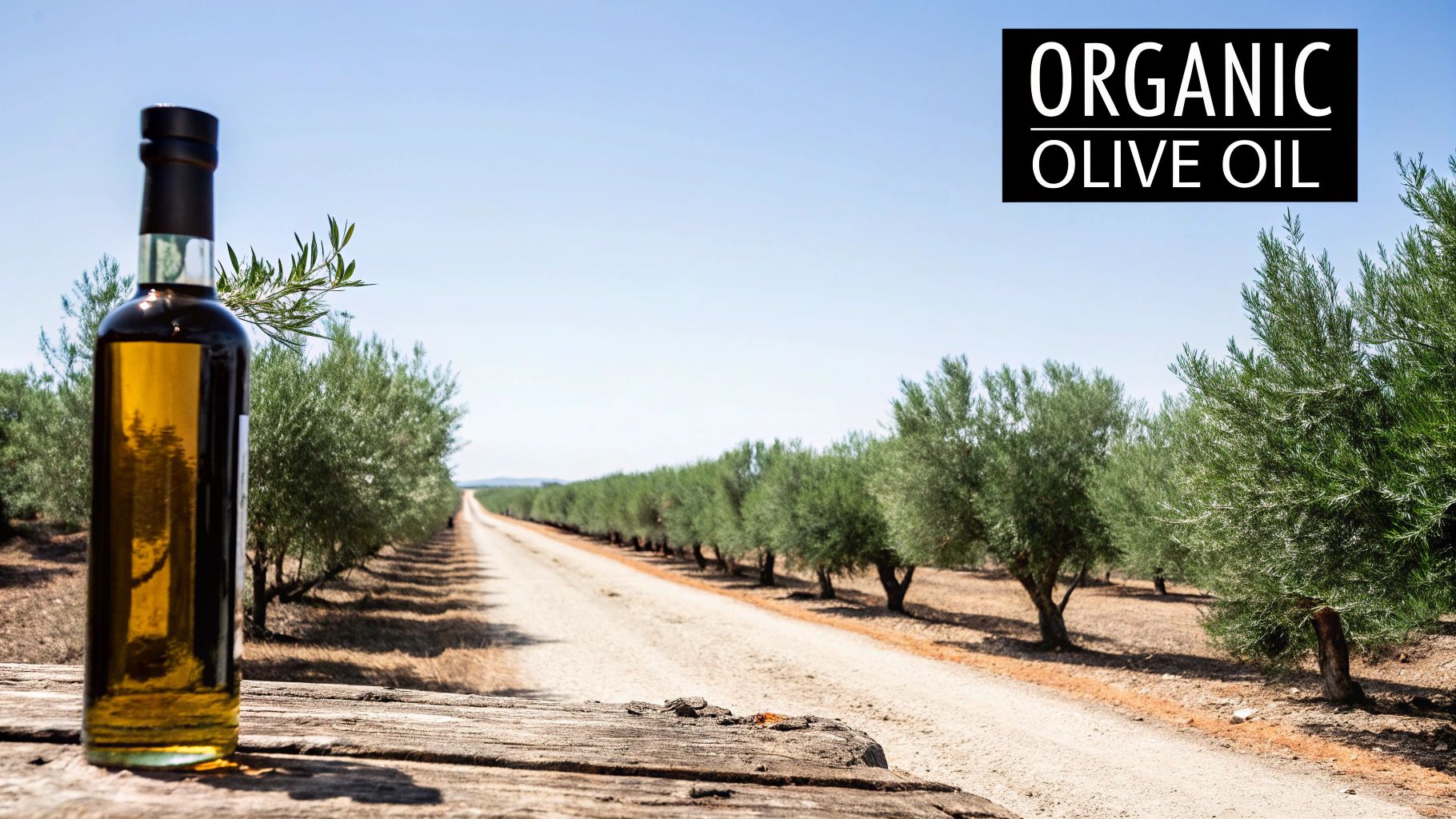
Organic olive oil offers several distinct features. It is certified by recognized organic certification bodies, guaranteeing adherence to specific production standards. It is subject to additional inspections and documentation, ensuring transparency and traceability throughout the supply chain. Furthermore, organic olive oil often, though not always, comes from smaller producers who prioritize environmentally sustainable practices and meticulous attention to quality.
Pros:
- Free from pesticide and chemical residues: This is a primary benefit for health-conscious consumers.
- Environmentally friendly production methods: Organic farming contributes to soil health, biodiversity, and reduces chemical runoff.
- Often produced with greater attention to quality: Many organic producers prioritize traditional methods and meticulous care.
- Supports sustainable agricultural practices: Choosing organic olive oil encourages environmentally responsible farming.
- May have higher polyphenol content due to growing methods: Some studies suggest organic farming practices can lead to higher levels of these beneficial antioxidants.
- Transparent production chain and processing: Certification and documentation requirements enhance traceability.
Cons:
- Higher price point than conventional olive oils: The added costs of certification and often lower yields contribute to a higher price.
- Not necessarily higher in quality (depends on producer): While many organic producers prioritize quality, the organic label itself doesn't guarantee superior flavor or characteristics. The grade (extra virgin, virgin, etc.) is the primary indicator of quality.
- Less widely available in some markets: Distribution of organic olive oil might be limited in certain areas.
- Certification requirements vary between countries: This can sometimes create confusion for consumers.
Examples: California Olive Ranch Organic Extra Virgin Olive Oil, Burroughs Family Farms Organic Olive Oil, Bragg Organic Extra Virgin Olive Oil, Terra Delyssa Organic Extra Virgin Olive Oil, Napa Valley Naturals Organic Extra Virgin Olive Oil.
Tips for Choosing and Using Organic Olive Oil:
- Look for certification seals: Recognize and understand the different organic certification labels (USDA, EU Organic, etc.).
- Use like other olive oils of the same grade: An organic extra virgin olive oil should be used in the same way as a conventional extra virgin olive oil.
- Store properly: Keep in a dark glass bottle away from heat and light to preserve its quality.
- Consider organic for finishing oils: Since finishing oils are used uncooked, the absence of pesticide residues can be particularly appealing.
- Refrigeration: Some organic olive oils without preservatives may require refrigeration after opening.
Organic olive oil earns its place among the different types of olive oil because it caters to a growing demand for transparency, sustainability, and chemical-free food production. It aligns with the values of health-conscious consumers, environmental advocates, and those seeking to support responsible agricultural practices. For those prioritizing these values, organic olive oil is a worthwhile choice within the diverse world of olive oils.
8. PDO/PGI Certified Olive Oil
When navigating the world of olive oil, quality and authenticity are paramount. Among the different types of olive oil, PDO (Protected Designation of Origin) and PGI (Protected Geographical Indication) certified olive oils stand out as beacons of regional excellence and tradition. These certifications, governed by the European Union, provide a guarantee of origin and production methods, ensuring consumers are getting what they pay for. This makes them a noteworthy inclusion in any exploration of different types of olive oil.
PDO and PGI certifications signify a commitment to preserving traditional practices and upholding specific quality standards. PDO is the stricter of the two, requiring all stages of production, from olive cultivation to oil extraction and bottling, to occur within a precisely defined geographical area. PGI offers slightly more flexibility, allowing for some stages to take place outside the designated region, as long as crucial steps, like processing, are carried out within it. Both certifications rely on recognized local know-how and ingredients, linking the final product inextricably to its terroir.
Features and Benefits:
PDO/PGI certified olive oils are characterized by:
- Officially certified geographic origin: This provides assurance of provenance and connection to a specific region known for its olive oil production.
- Traditional, region-specific methods: Production adheres to time-honored techniques, preserving cultural heritage and often resulting in unique flavor profiles.
- Strict quality control and inspection: Rigorous checks ensure the olive oil meets the high standards set by the certification.
- Distinctive regional flavor profiles: The terroir, including soil type, climate, and olive variety, imparts unique characteristics to the oil.
- Detailed regulations: These cover everything from permissible olive varieties and growing conditions to processing techniques.
Pros:
- Guaranteed authenticity and provenance: Protection against counterfeit or misleading products.
- Preserves traditional production methods and cultural heritage: Supports local communities and their unique practices.
- Often represents the highest expression of regional olive oil character: Showcases the specific terroir and expertise of the region.
- Supports local economies and traditional producers: Provides economic benefits to the designated regions.
- Typically higher quality due to stringent requirements: Offers a premium olive oil experience.
Cons:
- Premium price point: Reflects the higher production costs and stringent certification requirements.
- Limited production volumes: Smaller quantities are produced compared to non-certified oils.
- Less widely available: Often found primarily in specialty stores and gourmet food retailers.
- EU-specific certification: While recognized globally, the certification itself is tied to the European Union.
- Potential for counterfeiting: Despite protections, counterfeit products can still exist.
Examples of PDO/PGI Olive Oils:
- Kalamata PDO (Greece): Known for its robust flavor and fruity aroma.
- Terra di Bari PDO (Italy): Characterized by a balanced flavor profile with hints of almond and artichoke.
- Baena PDO (Spain): A fruity, slightly peppery oil with a green, herbaceous aroma.
- Sierra de Cazorla PDO (Spain): Intensely fruity with a slightly bitter and pungent finish.
- Toscano PGI (Italy): A delicate oil with a fruity and slightly spicy flavor.
- Terra d'Otranto PDO (Italy): Known for its fruity aroma and balanced flavor.
- Nyons PDO (France): A rich, buttery oil with a distinct hazelnut flavor.
Tips for Using PDO/PGI Olive Oils:
- Look for the official PDO/PGI seals on the packaging.
- Use these oils where their distinctive regional characteristics can shine. Consider them as finishing oils for salads, bruschetta, or drizzled over grilled vegetables.
- Serve at room temperature to fully appreciate the flavor profile.
- Learn about the specific region to understand its terroir and traditions. This will enhance your appreciation of the oil.
- Store properly in dark glass bottles away from heat and light to preserve quality.
Popularized By:
The popularity of PDO/PGI olive oils has been driven by the European Union's agricultural quality policy framework, the Slow Food movement, culinary tourism, gourmet food retailers, and regional producer cooperatives. These forces have highlighted the importance of regional food traditions and the value of authentic, high-quality products. When exploring different types of olive oil, PDO/PGI certified options offer a unique opportunity to experience the true essence of a specific terroir and the dedication of its producers.
Comparison of 8 Olive Oil Types
| Olive Oil Variety | 🔄 Implementation Complexity | ⚡ Resource Requirements | 📊 Expected Outcomes | 💡 Ideal Use Cases | ⭐ Key Advantages |
|---|---|---|---|---|---|
| Extra Virgin Olive Oil (EVOO) | Cold-pressing only; no chemicals; strict quality controls | Higher cost due to careful harvesting and processing | Superior flavor and nutrition; rich antioxidants; low acidity (<0.8%) | Finishing oils, dressings, low-medium heat cooking | Highest nutritional value and authentic olive flavor |
| Virgin Olive Oil | Mechanical extraction without chemicals; moderate quality control | Moderate resources; less stringent than EVOO | Good flavor and nutrients; acidity 0.8-2.0%; slight sensory defects | Everyday cooking, medium heat applications | Retains natural nutrients at lower cost than EVOO |
| Pure Olive Oil (Regular) | Blend of refined + small virgin oil; chemical refining involved | Lower cost; industrial refining processes | Neutral flavor; higher smoke point; fewer antioxidants | High-heat cooking, general-purpose frying | Affordable with higher heat stability |
| Light Olive Oil | Highly refined with chemical processing; flavor neutralization | Low quality olives; extensive refining required | Very high smoke point; almost no flavor or antioxidants | High-heat frying, baking, stir-frying | Best for high temperature cooking without olive flavor |
| Olive Pomace Oil | Chemical solvent extraction from pomace; heavy refinement | Minimal production cost; industrial scale | Very high smoke point; neutral flavor; minimal health benefits | Bulk commercial frying, industrial use | Most economical; high heat and neutral taste |
| Flavored/Infused Olive Oil | Uses EVOO or virgin oil base; additional infusion steps | Additional flavoring ingredients and processing | Specialized, intense flavors; shorter shelf life | Finishing oils, salads, dips, presentation | Instant flavor enhancement and culinary creativity |
| Organic Olive Oil | Organic farming and processing certified; regular oil grade | Higher cost farms, certification processes | Chemical-free, sustainable; often premium quality | Health-conscious use, finishing oils | Chemical-free, sustainable, often higher polyphenols |
| PDO/PGI Certified Olive Oil | Strict geographic, production regulations; frequent inspections | Regional artisan methods; limited scale | Authentic regional flavors; guaranteed origin and quality | Specialty dishes, finishing oils | Guaranteed provenance and premium regional character |
Elevate Your Culinary Experience with the Perfect Olive Oil
From the robust flavor of Extra Virgin Olive Oil (EVOO) to the lighter notes of Pure Olive Oil, the diverse world of olive oil offers a spectrum of options for every palate and purpose. Understanding the differences between these oils, including Virgin Olive Oil, Light Olive Oil, Olive Pomace Oil, and specialty oils like flavored/infused and organic varieties, empowers you to make informed choices that elevate your cooking and maximize the health benefits of this liquid gold. Remember that factors like extraction methods, acidity levels, and certifications (like PDO/PGI) play a crucial role in determining an oil's quality and ideal use. Mastering the nuances of different types of olive oil isn't just about becoming a more knowledgeable consumer; it's about unlocking a world of culinary possibilities and enriching your overall well-being.
By carefully selecting the right olive oil for each dish, you can enhance its flavor profile, whether it's a simple salad dressing, a vibrant sauté, or a delicate baked good. From the everyday cook to the aspiring chef, appreciating the subtleties of different types of olive oil opens doors to a more vibrant and flavorful culinary journey.
Want to dive even deeper into the world of olive oil? Explore our comprehensive guide, Learn Olive Oil, at Learn Olive Oil. This invaluable resource provides in-depth information about different types of olive oil, helping you select the perfect oil for every culinary creation.

 Learn Olive Oil
Leave a comment