Yes, you can absolutely use olive oil for high heat cooking. In fact, for many dishes, it's one of the best and healthiest choices you can make. The old myth that olive oil is only good for salad dressings is just that—a myth. The real secret lies in understanding an oil's stability, not just its smoke point.
The Truth About High Heat Cooking With Olive Oil
For years, many of us were told to keep our prized extra virgin olive oil away from the stovetop. We were warned that high heat would destroy its flavor, ruin its health benefits, and even create harmful compounds. This advice, while probably well-intentioned, doesn't tell the whole story.
When you're deciding which oil to cook with, especially when turning up the heat, two factors really matter:
- Smoke Point: This is simply the temperature where an oil starts to break down and produce a continuous, visible stream of bluish smoke. It’s a sign that the oil is getting too hot.
- Oxidative Stability: This is the oil’s natural ability to resist breaking down when exposed to oxygen and heat. An oil with high oxidative stability is a workhorse in the kitchen, holding up beautifully even as the temperature rises.
What Makes Olive Oil So Resilient to Heat?
Olive oil's secret weapon is its chemical makeup. It's primarily composed of monounsaturated fats, which are structurally very stable and much more resistant to heat than the polyunsaturated fats found in many seed oils. This built-in stability is what makes it such a reliable cooking partner.
The true test of a cooking oil isn't just its smoke point. It's how well it resists degradation under heat. Because olive oil is loaded with stable fats and protective antioxidants, it stands up to heat far better than most people have been led to believe.
Different types of olive oil have different smoke points, which makes the entire category incredibly versatile. A good quality extra virgin olive oil (EVOO) generally has a smoke point between 190°C and 215°C (374°F and 419°F). Refined or light olive oil can go even higher, reaching up to 240°C (464°F). This flexibility is a big reason why its use is on the rise, a trend backed by global consumption data.
This chart breaks down how the smoke point changes as olive oil goes through different levels of refinement.
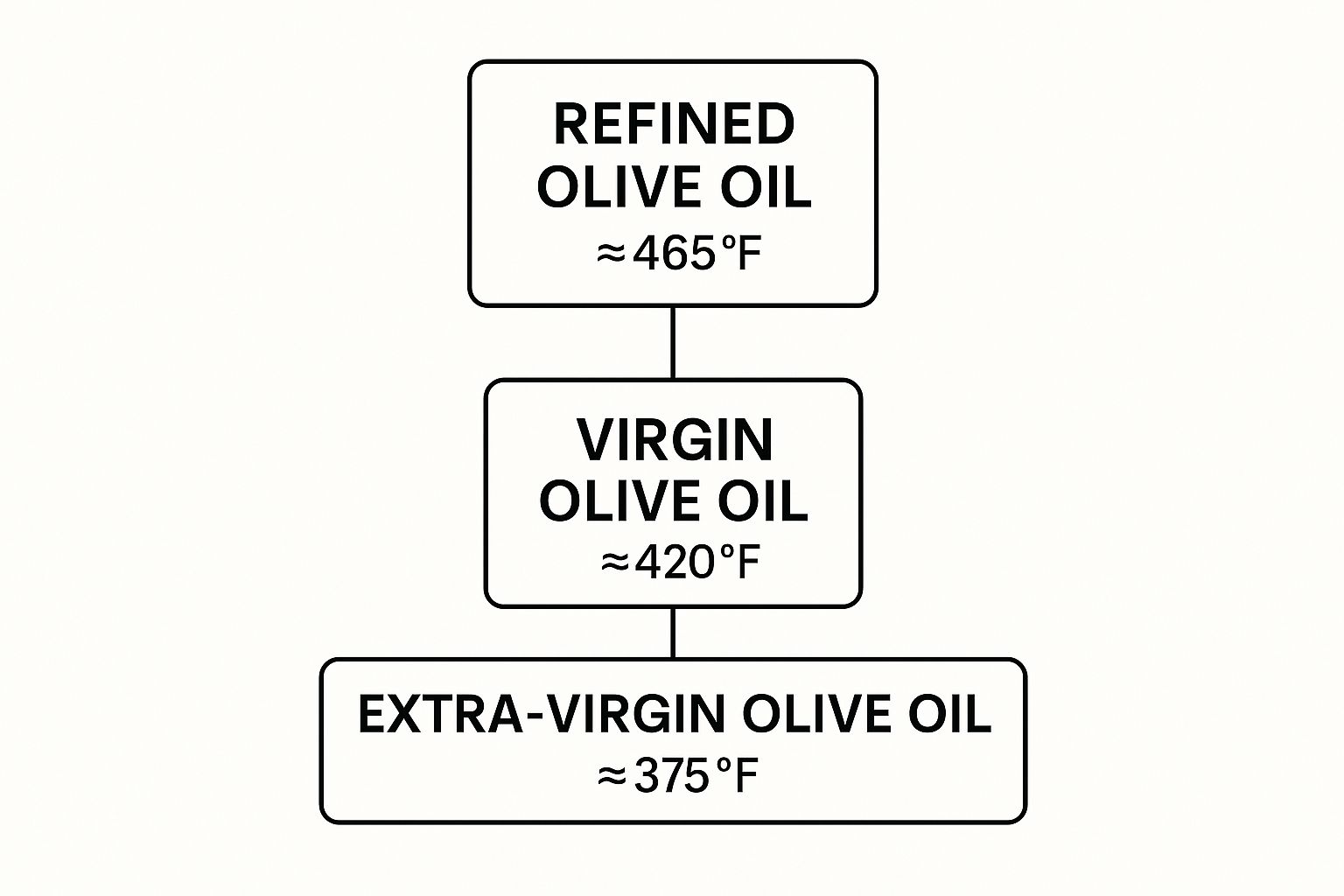
As you can see, the more refined the olive oil, the higher its smoke point. This makes refined varieties a fantastic, safe choice for searing, deep-frying, and other high-temperature techniques.
Olive Oil Types And High Heat Suitability
To make choosing the right olive oil easier, here’s a quick guide that matches the type of oil to its smoke point and best use in your kitchen.
| Olive Oil Type | Smoke Point (Approximate) | Best For High Heat Cooking |
|---|---|---|
| Extra Virgin (EVOO) | 190-215°C (374-419°F) | Excellent for sautéing, pan-frying, and roasting. Use a quality EVOO. |
| Virgin Olive Oil | ~210°C (410°F) | Good for general, moderate-heat cooking like sautéing. |
| Refined Olive Oil | ~240°C (464°F) | Ideal for high-heat applications like searing, deep-frying, and stir-frying. |
| Olive Pomace Oil | ~240°C (464°F) | Best reserved for high-heat frying where neutral flavor is desired. |
This table should help you feel confident grabbing the right bottle of olive oil, whether you're making a delicate sauce or searing a steak.
What Smoke Point Really Means For Your Food
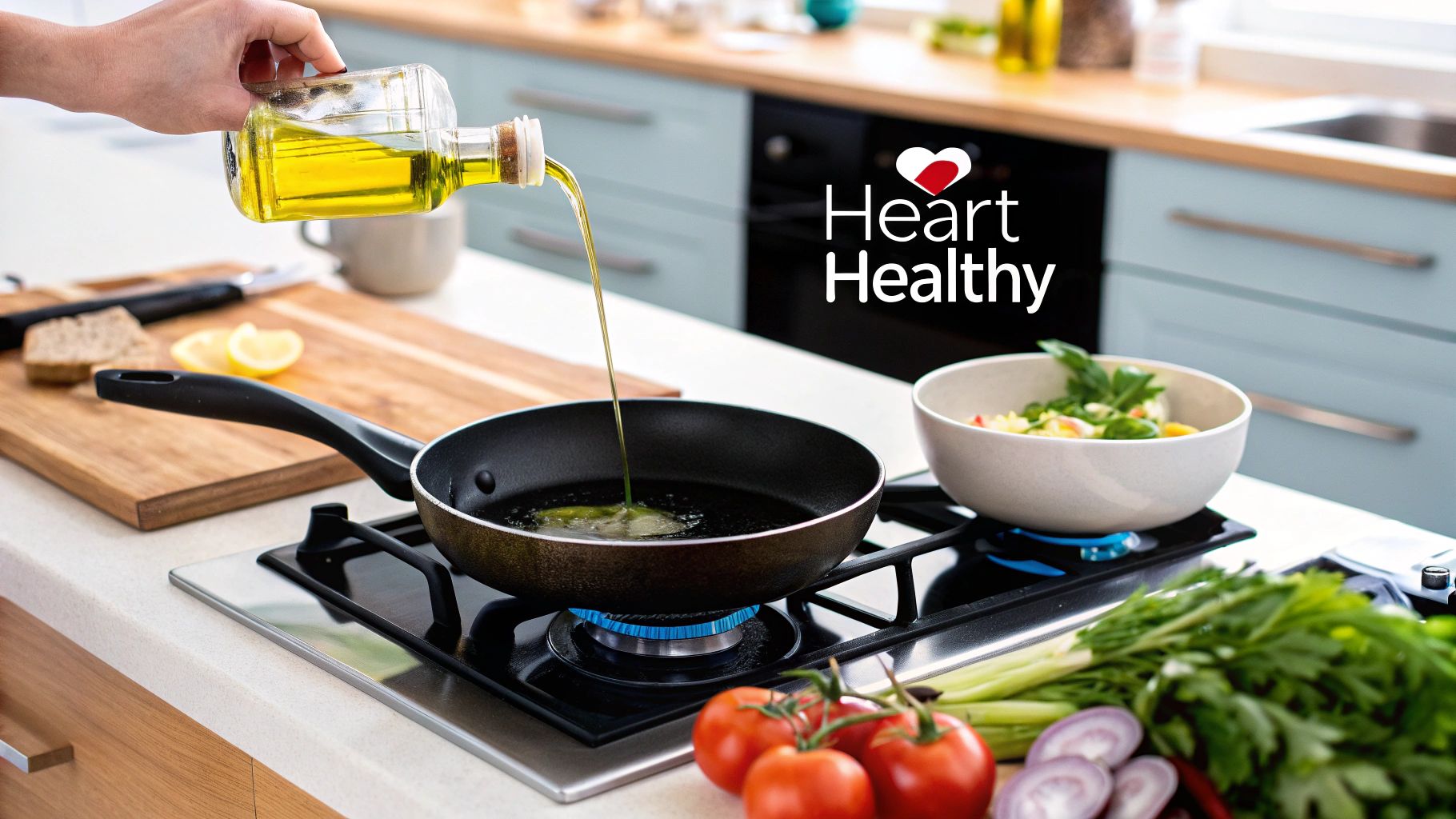
The term smoke point gets thrown around a lot in conversations about high-heat cooking, but frankly, it's just one part of a much bigger story. We've been taught to see that first wisp of smoke as a sign of disaster, but it's really just a visual cue. It's the temperature where an oil starts to visibly break down and release some particles into the air.
Think about it like toasting a slice of bread. When it first starts to turn golden brown, delicious new flavors are developing. That’s similar to an oil just beginning to smoke—it's changing, but it's not ruined. But if you walk away and come back to a blackened, bitter piece of charcoal? That's what happens when an oil is heated far past its smoke point. It degrades, creating nasty flavors and harmful compounds.
So, when you see a little smoke while using olive oil for high heat cooking, don’t panic. Just take it as a signal to turn down the stove a bit. You’re still well within a safe and delicious cooking zone.
The Real Hero: Oxidative Stability
While smoke point is a handy visual guide, the true indicator of a cooking oil’s quality under heat is its oxidative stability. This is all about how well an oil can resist reacting with oxygen when things get hot.
An oil with high oxidative stability is like a well-built brick house in a hurricane—it holds its structure and stays strong under pressure. On the flip side, an oil with low stability is more like a house of cards, collapsing the moment things get a little rough. This internal strength is far more important for both the flavor and health of your food than a simple temperature number.
Oxidative stability, not smoke point, is the key factor determining how well an oil performs under heat. It’s the oil's internal defense system against heat-induced damage, making it a better indicator of a healthy cooking choice.
Why A High Smoke Point Isn't Everything
Don't be fooled into thinking that a higher smoke point automatically means a better or healthier oil. Many highly refined seed oils boast impressive smoke points, but they often lack the structural integrity to handle the heat without breaking down on a chemical level.
Here’s what really counts:
- Chemical Structure: Olive oil is primarily made of stable monounsaturated fats. Their molecular structure is simple and sturdy, making them less likely to break apart when heated.
- Antioxidant Content: Real, high-quality extra virgin olive oil is loaded with natural antioxidants, specifically polyphenols. Think of these compounds as tiny bodyguards that protect the oil from heat damage by sacrificing themselves first.
This one-two punch of a stable fat structure and protective antioxidants means that good olive oil often performs better—and creates fewer harmful byproducts—than many oils with technically higher smoke points. For almost everything you do in your kitchen, from a quick sauté to pan-searing a steak, the superior oxidative stability of olive oil makes it the winning choice.
Why Olive Oil Resists Heat Better Than You Think
The ability of olive oil for high heat cooking isn't some kitchen myth; it's pure chemistry. Its impressive resilience comes down to a powerful team-up between its fat structure and a whole host of natural protective compounds. This combination is precisely why a good olive oil can often outperform other oils, even some with higher smoke points.
First, let's talk about the star player: oleic acid. This monounsaturated fat is the backbone of olive oil, making up about 73% of its composition. Think of monounsaturated fats as a simple, sturdy chain link fence. Their chemical structure is less complex and has fewer vulnerable spots for heat to attack and break down.
This built-in stability is a huge reason why olive oil holds its own when you're sautéing, roasting, or even doing a light fry. It’s a world away from the fragile polyunsaturated fats in many seed oils, which tend to fall apart under pressure. This growing understanding of fat stability is a big deal, and it's helping propel the global olive oil market, which was valued at around $12.86 billion in 2024 and is expected to hit $17.13 billion by 2029. Consumers are catching on and actively looking for healthier, more reliable cooking fats. You can learn more about what's driving olive oil's market growth.
The Protective Power of Antioxidants
Now for the second part of this dynamic duo: the polyphenols and other antioxidants. If the monounsaturated fats are that sturdy fence, think of the polyphenols as a crew of dedicated security guards patrolling the perimeter. These natural compounds are especially abundant in high-quality extra virgin olive oil.
The moment you heat the oil, these antioxidants leap into action. They take the initial brunt of the heat, essentially sacrificing themselves to shield the oil’s fatty acids from breaking down and oxidizing. This is a crucial protective mechanism that keeps the oil from going bad on you.
An oil's ability to withstand high heat is a team effort. The stable structure of monounsaturated fats provides the core strength, while the antioxidants provide a frontline defense, working together to prevent degradation.
This dual-protection system means that even as some polyphenols get "used up" during cooking, the underlying structure of the oil stays remarkably sound. This is what experts call high oxidative stability, and it's what really counts.
What This Means For Your Cooking
The tag team of a stable fat base and a strong antioxidant defense system is what truly sets olive oil apart. It's the scientific reason why study after study shows olive oil produces fewer harmful compounds during heating when compared to many common seed and vegetable oils.
So, when you're reaching for a bottle, keep these things in mind:
- Fatty Acid Profile: Oils rich in monounsaturated fats, like olive oil, are just naturally more stable.
- Antioxidant Content: Fresh, high-quality extra virgin olive oil is going to give you the biggest dose of those protective polyphenols.
- Processing Method: Cold-pressed and unrefined oils hold onto far more of these natural protectors than their heavily processed cousins.
At the end of the day, the science backs up what Mediterranean cooks have known for generations. Good olive oil isn't just a finishing touch; it's a robust, healthy, and reliable choice for your everyday high-heat cooking.
How To Choose The Right Olive Oil For Frying
Walking down the olive oil aisle can feel a bit like a pop quiz you didn't study for. With so many bottles labeled "extra virgin," "light," and everything in between, how do you know which one to grab? Choosing the right olive oil for high heat cooking is actually pretty simple once you know what to look for.
It all comes down to understanding the main grades of olive oil and what they were made for. Each type has its own personality and purpose in the kitchen.
-
Extra Virgin Olive Oil (EVOO): This is the top dog. It's the least processed, highest quality oil, and as a result, it’s bursting with flavor and antioxidants. Many people think it’s just for salads, but a good EVOO is incredible for sautéing and pan-frying, lending a beautiful, peppery flavor to your food.
-
Virgin Olive Oil: Think of this as EVOO's close cousin. It's still unrefined, but it might have some minor flavor imperfections. It’s a great all-rounder for everyday cooking over moderate heat.
-
Refined or 'Light' Olive Oil: This oil has been filtered and processed to give it a much more neutral flavor and a higher smoke point. The word "light" only refers to its mild taste and color—it has the same calories as any other oil. This is your go-to, budget-friendly choice for deep-frying or high-heat searing.
Reading Labels Like a Pro
To get the best results in your pan, you need a fresh, high-quality oil. The label is your cheat sheet. Ignore the fancy graphics and look for one key piece of information: the harvest date.
Olive oil is essentially a fruit juice, so freshness is everything. An oil harvested within the last year will have the most vibrant flavor and the highest concentration of those protective antioxidants we talked about.
Keep an eye out for third-party quality seals, too. Stamps of approval from organizations like the California Olive Oil Council (COOC) or the international EVA (Extra Virgin Alliance) are a good sign that the oil inside has passed rigorous tests for quality and authenticity.
When choosing an olive oil for frying, freshness is non-negotiable. A recent harvest date ensures the oil’s polyphenols—its natural protectors against heat—are at their peak, providing maximum stability in the pan.
Matching the Oil to the Method
Choosing the right olive oil is all about matching the tool to the task. Just like you wouldn't use a sledgehammer to hang a picture frame, you shouldn't use a delicate, expensive finishing oil for deep-frying.
The table below breaks down which olive oil to use for common cooking methods to ensure you get the best flavor and performance every time.
Cooking Methods And Recommended Olive Oil
| Cooking Method | Recommended Olive Oil Type | Reasoning |
|---|---|---|
| Sautéing & Pan-Frying | Extra Virgin Olive Oil | Adds excellent flavor and its antioxidants provide stability at medium-high heat. A good all-purpose choice. |
| Deep-Frying | Refined or "Light" Olive Oil | The high smoke point and neutral flavor make it ideal for high-heat immersion cooking without altering the food's taste. |
| Roasting (below 400°F) | Extra Virgin or Virgin Olive Oil | Perfect for coating vegetables or meats, adding flavor and preventing sticking at typical roasting temperatures. |
| Searing | Refined or "Light" Olive Oil | Searing requires very high, sustained heat. A refined oil's stability prevents it from breaking down and smoking excessively. |
| Salad Dressings & Drizzling | High-Quality Extra Virgin Olive Oil | This is where you want the oil's flavor to shine. The bold, peppery, or fruity notes are the star of the show. |
Ultimately, knowing which oil to use is what separates a good cook from a great one. For your daily sautéing where you want that rich, classic flavor, a quality EVOO is your best bet. When it's time to break out the deep fryer for some crispy goodness, reaching for an affordable refined olive oil is the smart move. This simple distinction will give you more confidence in the kitchen and much tastier results.
Pro Tips for Frying and Sautéing With Olive Oil
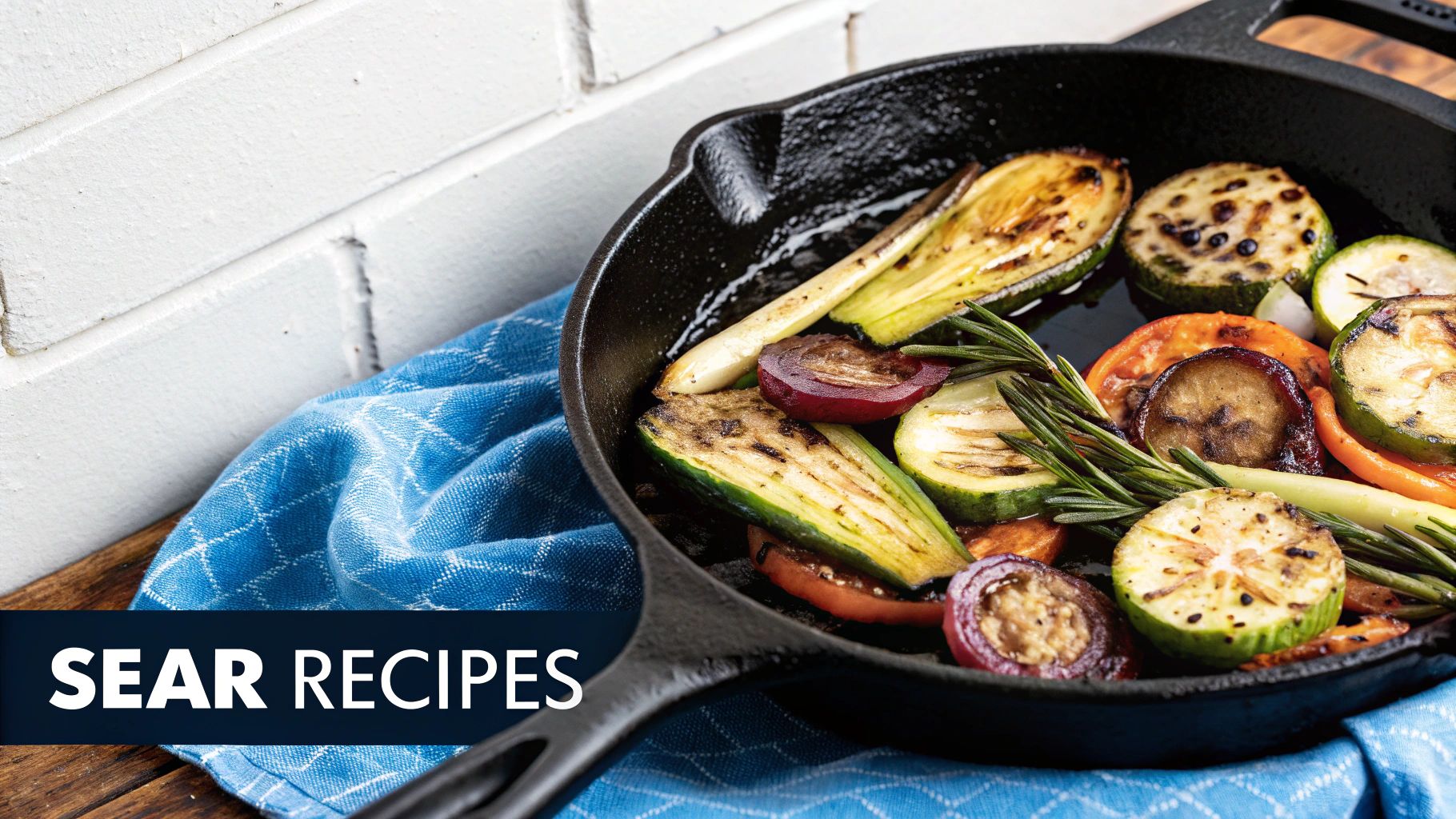
Alright, let's move from the science to the stove. Knowing how to properly handle olive oil in the pan is what separates a good meal from a great one. These aren't complicated rules, just a few key habits that will help you get delicious, perfectly cooked food every single time.
First and foremost, get your heat right. You never want to see plumes of smoke billowing from your pan before the food goes in. Look for a gentle shimmer across the oil's surface—that’s the sweet spot. Heating it past that point starts breaking the oil down before you've even started cooking.
Another simple but crucial trick: always start with dry ingredients. Whether it's chicken, steak, or even vegetables, pat them dry with a paper towel. This little step does two things: it stops the hot oil from splattering everywhere and, more importantly, it helps the food get a beautiful, golden-brown sear instead of just steaming.
How to Get the Best Results From Your Oil
If you're after that crispy, satisfying texture, maintaining a consistent oil temperature is non-negotiable. The number one mistake I see people make is overcrowding the pan. Tossing in too much food at once instantly cools the oil down, resulting in a soggy, greasy mess instead of a perfect crunch.
Pro Tip: Cook in batches. It might take a few extra minutes, but giving each piece of food its own space keeps the oil hot and guarantees a fantastic sear. Your patience will absolutely pay off in the final dish.
This hands-on approach is becoming more common everywhere. As people get more comfortable with olive oil, they're using it in all sorts of new ways. In fact, global olive oil consumption is expected to hit over 3 million metric tons in the 2024/25 season, which shows just how much it's becoming a go-to fat in kitchens around the world. You can read more about current olive oil market trends to see how its role is expanding.
Reusing and Storing Your Olive Oil
So, what about reusing your frying oil? The short answer is yes, you can, but you have to do it right. After you're done cooking, let the oil cool down completely. Then, strain it through a fine-mesh sieve or a few layers of cheesecloth to get rid of all the little food bits. Store it in a dark, sealed container, away from the stove and any sunlight.
Here’s a quick checklist for reusing oil:
- Do a quick smell check. Before you use it again, give it a sniff. If it smells funky, stale, or rancid, it's time to toss it.
- Know when to say when. A good rule of thumb is to reuse frying oil no more than two or three times. Its quality drops a little bit with every heating cycle.
With these practical tips in your back pocket, you can confidently use olive oil for high-heat cooking, knowing you're getting the most out of its flavor and quality to create some truly incredible meals.
Got More Questions About Cooking With Olive Oil?
Even after you get a handle on smoke points and stability, a few practical questions almost always pop up. Let's tackle these common hang-ups so you can feel completely at ease using olive oil for high-heat cooking in your own kitchen. It's time to clear up any final doubts.
Will Frying With EVOO Ruin Its Health Benefits?
This is probably the number one question I hear, and the answer is thankfully no, not really. While it's true that some of the subtle flavor notes and a portion of the antioxidants will fade with heat, the core health-promoting structure of extra virgin olive oil stays remarkably strong.
The magic is in its high concentration of monounsaturated fats, which are incredibly stable and don't break down easily under heat. What’s more, studies have shown that a good amount of its protective polyphenols stick around even at typical cooking temperatures. So, while it’s not quite the same as drizzling it raw, cooking with EVOO is still a much healthier move than using unstable polyunsaturated oils that can create nasty compounds when heated.
What Does "Light" Olive Oil Actually Mean?
The word "light" on an olive oil bottle is a classic bit of confusing marketing. It has zero to do with calories or fat—all oils are pure fat and have the same caloric value. Instead, "light" simply refers to the oil's pale color and very neutral flavor.
This is a refined olive oil, meaning it has been filtered and processed to strip out impurities. This process gives it a much higher smoke point, way up around 240°C (464°F). That makes it a brilliant and affordable choice for high-temperature cooking like deep-frying, searing, or baking when you don't want the taste of olive oil coming through.
Remember: 'Light' olive oil means a lighter taste, not fewer calories. Its high smoke point makes it the perfect workhorse for your most demanding high-heat cooking tasks.
How Can I Tell If My Olive Oil Has Gone Bad?
Your best tools here are your senses—especially your nose. Fresh, high-quality olive oil should smell good. It might have a vibrant, grassy aroma or smell fruity and peppery.
If your oil smells musty, like old crayons, or reminds you of stale nuts, it’s gone rancid. Rancid oil has already oxidized, and heating it will just fast-track the creation of gross flavors and unhealthy compounds. It's best to just toss it. To keep your oil fresh, always store it in a cool, dark place away from the stove and keep the cap screwed on tight to protect it from air.
Is It Cheaper To Use Another Oil For High Heat?
Well, it depends on what you're doing. If you're deep-frying and need a whole bottle of oil, then a more economical refined "light" olive oil or another high-smoke-point oil can definitely be easier on the wallet.
But for everyday high-heat cooking like sautéing vegetables or roasting chicken, you’re only using a tablespoon or two at a time. When you think about its fantastic health profile, great flavor, and top-notch stability, many people find that using a quality EVOO for these daily jobs is a worthwhile investment—both for the taste of their food and for their well-being.
Ready to explore the world of high-quality, stable, and delicious olive oils? Visit Learn Olive Oil to discover our expert guides, tasting notes, and recommendations that will help you choose the perfect bottle for any dish. Elevate your cooking and your health.


Leave a comment